
Leaderboard



Popular Content
Showing content with the highest reputation on 07/22/2026 in all areas
-
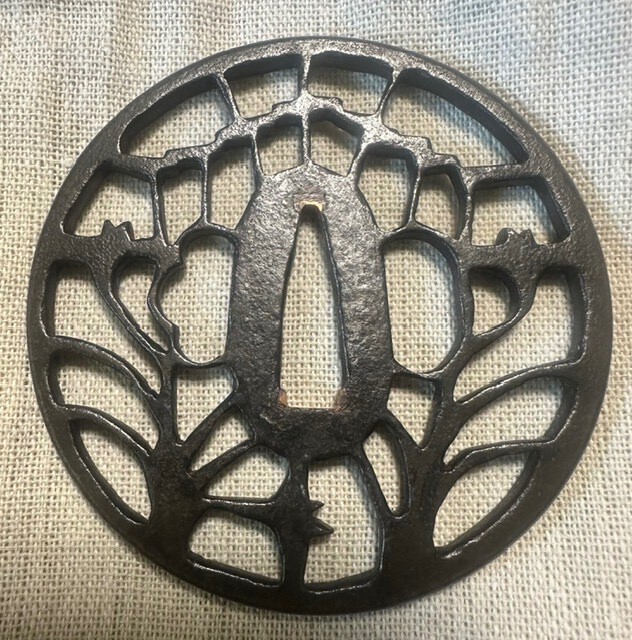
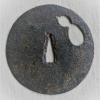
Just as an example: the collegiate church in Quedlinburg here in Germany is an important Romanesque building that was constructed between 1070 and 1130 and, fortunately, escaped destruction during World War II. What’s particularly interesting are the pre-Romanesque decorative elements. They look very much like Celtic or North Germanic endless knots. When I asked a student who gives tours there and is studying art history why these decorative elements on such an important church didn’t look particularly Christian, she replied as follows: 1. That’s misleading! Because such knot patterns didn’t appear in Ireland or Northern Europe until the Christian era. 2. Their origin likely lies in Coptic art from Egypt and influenced both Europe and the Arab world, though it draws on ancient design motifs. 3. Variations can be found, among other places, in stonemasonry, woodcarving, calligraphy, as patterns on clothing, tapestries, weapon fittings, sword pommels, and much more. 4. The creators of the decorations in Quedlinburg were Lombard sculptors from northern Italy. The designs were taken from their pattern books and simply reflected the tastes of the time. And particularly in those German regions where the Romans had not ventured at the time, there was great interest in Lombard and Byzantine architectural styles. 5. Motifs that originated in earlier times can be reinterpreted and adapted regionally and culturally, and can thus take on a Christian meaning—just as churches were built on pagan sites of worship, or Christian holidays were modeled after pagan ones. But I don’t want to digress here. To bring the focus back to the tsuba, I simply want to point out that the origin sometimes lies in quite mundane, popular decorative motifs from woven and embroidered patterns that were in fashion at the time. I’m not concerned with claiming exclusive authority over the interpretation of what’s depicted, but simply with decorative elements—sometimes with folkloric or other religious backgrounds. These were taken up by artists, who in turn inspired other artists, who in turn inspired yet others, leading to different interpretations and executions—especially when they’re produced in larger series due to demand. But since you’re expecting a specific answer: if I personally had to describe this particular tsuba from this thread, I would refer to the Shippo pattern. Perhaps with the addition that the brass pins (added later, perhaps?) do indeed resemble a (fictional) constellation. But as a representation of a specific constellation, this decoration would be too geometric according to Japanese understanding.

 7 points
 -
Tempted to reply but 「武士に二言はない」...nothing to add to what I said on page one, except to repeat it in different words. The Japanese actively enjoy the subtlety of ambiguity in artistic interpretation. Two or even three aspects may meld and overlap in the same cameo. An extreme example. This is green. 「これは緑色です。」Kore wa *midori iro desu. My Japanese teacher in Massachusetts gently pulled me up on this back when I was starting out on the language. The Japanese do not like -desu/masu endings to things, she said. It's too abrupt, too challenging, too confrontational, too point-blank, and does not allow for inclusion of the other person. Be gentle, and soften your utterances and gain friends. Avoid offense in your use of language. Rephrase 'This is green.' by saying: "Can we not (Would you not) agree that this is green?' Or 'This is green, right?' 「これは緑色でしょう。」Kore wa *midori iro desho. (*Cha-iro, etc. Plenty of other words in Japanese for green!)6 points
-
Hi! The outside sticker is way out of my league, but the inside one says 日本江戸拵 ("Japan Edo Koshirae") at the top, read from right to left. (perhaps?) ながさきや (Nagasaki Ya, probably meaning a shop named Nagasaki) at the bottom, also read from right to left. Right to the bird (a crane?) in the middle looks like 横浜 (Yokohama, a place near Tokyo/Edo), not sure what's on the left. Wait, am I seeing things now or does the outside sticker vaguely say 安綱 (Yasutsuna) on the top-right?3 points
-
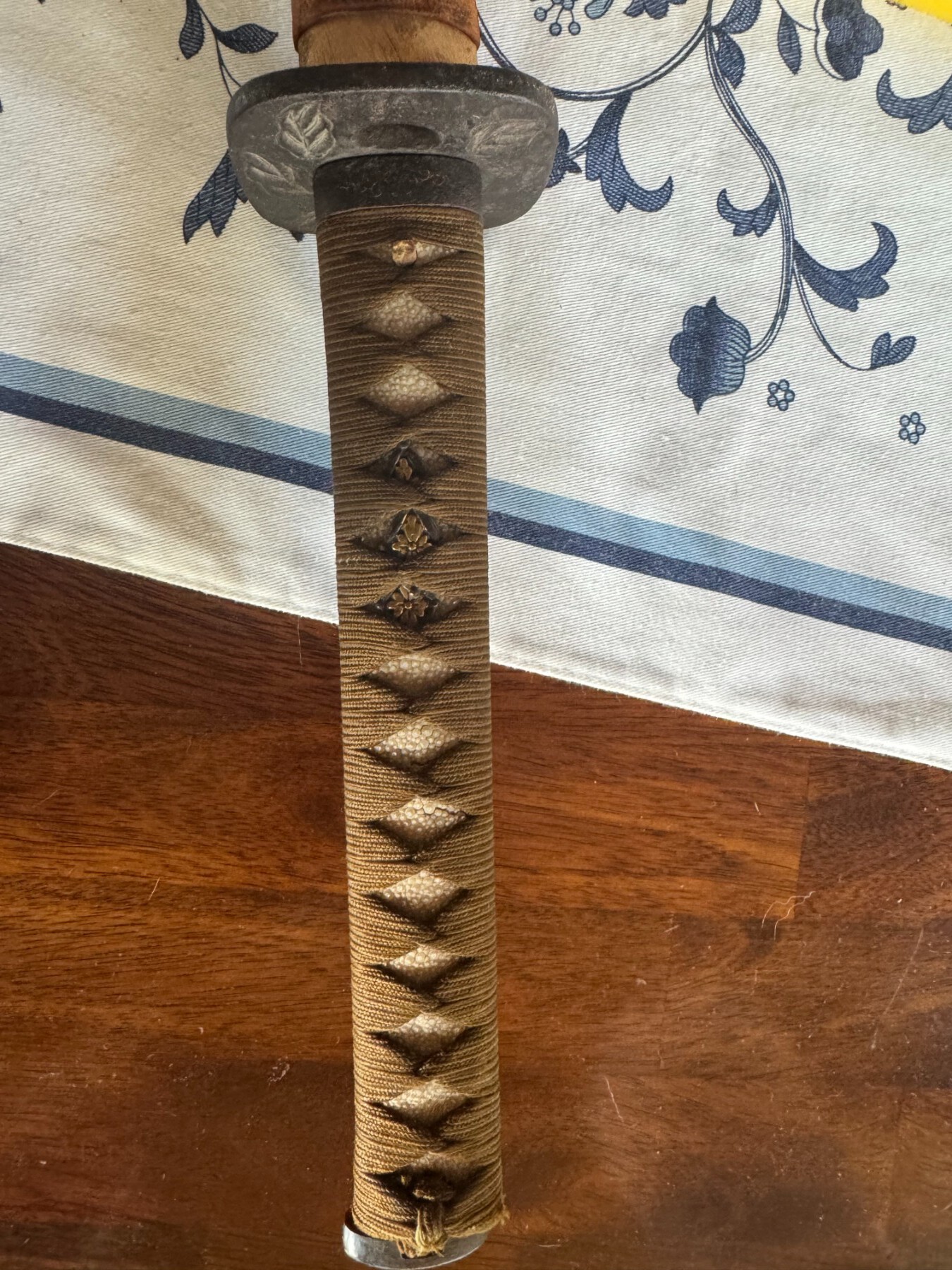
For completeness, the kanji on the end of the handle do indeed read "Machida" (町田) indicating this was the name of the owner, at least during the war when the fittings were made. Machida, however, is a very common family name, and there is nothing that explicitly ties it to any famous family bearing that name. Having said that, to me it indicates the family who possessed it during the war had enough money to spend on this small customization, which is something. And it ties the sword to an actual person, even though we may not know that person's full name. So its a nice thing to have on a bit of militaria. Well, this is one of those swords that straddles the gap between militaria and antique "samurai" sword. Or, militaria and "nihonto", if you like. In regard to Hoshi's comments above, I agree with just about everything he has written, except for this one bit which I think is highly unlikely, Pretty hard to imagine this was a spelling error. I think the second part of that sentence is much more likely; i.e. some kind of disfiguration intended to deceive, or maybe someone started to erase the signature and either gave up, or abandoned it for some other reason. And I think the person to whom he is referring towards the end of his post is @Andrew Ickeringill, NMB member, Australia-based polisher, and occasional poster here.3 points
-
Why on earth would you think that dealers in Japan would be experts on motifs? They deal in tsuba, they likely know age and schools and metals and techniques very well. What makes you think they have studied the motifs and themes to any degree at all? In fact I bet that many forum collectors could quite easily educate them on many of the legends and scenes depicted on their fittings. Guys like Dale and others. Don't assume antique dealers are experts in astronomy or legends. They know about as much as the average collector who has been studying for years, although they likely know more about schools, quality and value.3 points
-
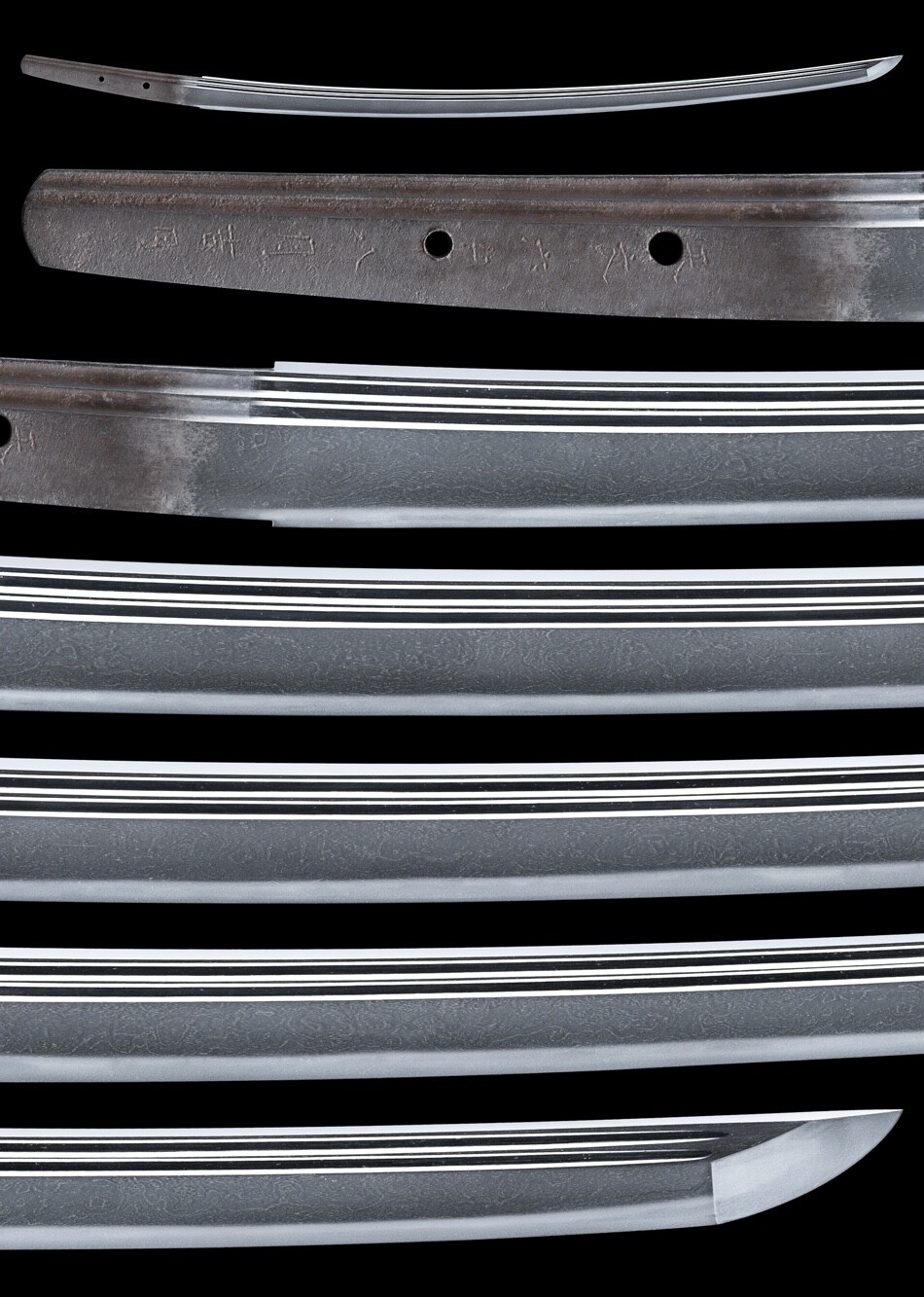
Hi Caleb, Welcome to the forum. This is an interesting blade you posted, could you tell us more about its history and how it came into your family? The signature looks old, but the first kanji does not appear to make sense. The best guess is that it is a "助真" (Sukezane) with a missing radical for the first character (possibly erased, damaged, or omitted by a forger). The style of the sword is not consistent with Ichimonji Sukezane, one of the foremost smiths of all time (https://nihontowatch.com/artists/sukezane-SUK460). It could, however, based on the gentle suguha pattern be the work of Senoo Sukezane, a great and extremely scarce Bitchu province smith of the Middle Kamakura period (https://nihontowatch.com/artists/sukezane-SUK456) This is your best candidate, as far as I can tell. This is the good news. Now, the bad news. One of the mekugi-ana is in a meaningless position (the bottom one) - which is a sign of shenanigans (something trying to be passed off as old). A radical is missing on the signature, which can be forger error - or, in the best case, a deliberate disfiguration to avoid "gift-giving" ceremonies (sword extorsion by powerful feudal families). For a sophisticated forger, it may also be an attempt at imitating disfiguration. Someone appears to have heavily damage the area near the base of the blade causing significant and irreparable damage. There is what appears to be an extended chu-kissaki or even O-kissaki (hard to discern, I can't see the shape properly on your photos), which are inconsistent with the period attribution of smiths signing Sukezane. This can also be a sign of shenanigans. This can invalidate the call. The "真" character deviates significantly with the way these smiths executed the kanji although the variance is admittedly large. For these reasons, the odds are stacked against you, just to set expectations. But nonetheless, it is well worthy of further investigation. My recommended course of action, given that you live in Australia, is to send it to Andrew Ackermill. Posting more and better quality photos would also help going a step further. What you have could be precious, and it is well worth further investigation. Best, Hoshi
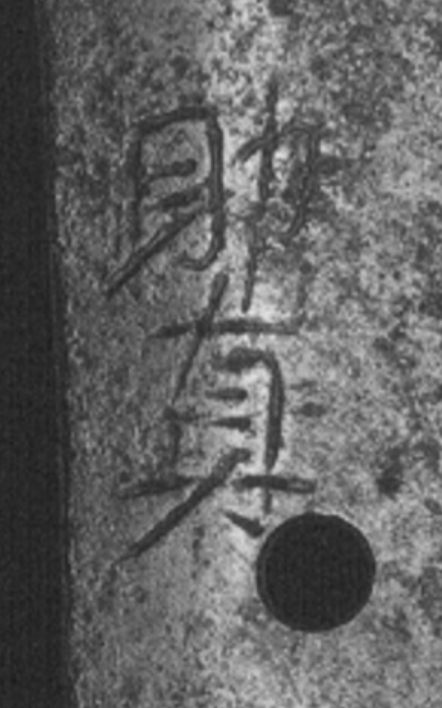
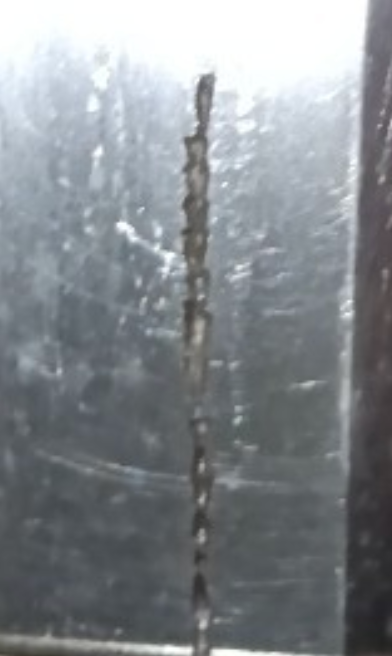 3 points
 -
A forensic examination of the mei suggests its carved sakutagane by a lefthanded carver. The position of micro burrs on several strokes show the sharp left side and rough right side expected for someone holding the hammer in the dominant hand (left) and chisel in the right hand. It could also be chiselled gyakutagane by a lefthanded individual but the corrosion is obscuring the chisel marks to be able to make that differentiation. This style of carving is unique amongst the early Soshuden masters and is used to authenticate Norishige's signature (Nihonto Kantei Hikketsu). This lefthandedness can also account for the unique upward sloping angle of shige commonly seen on his swords.
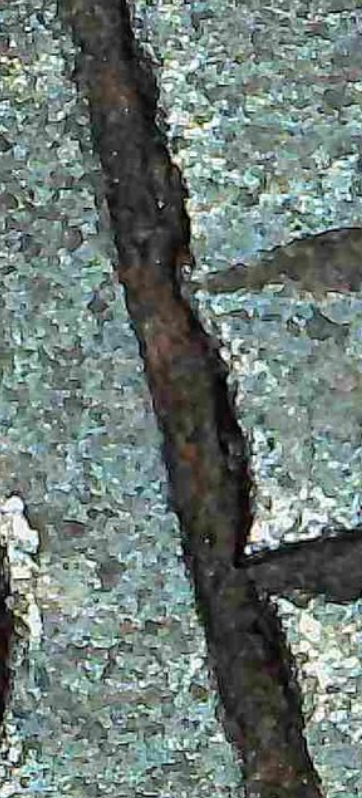 3 points
 -
Gyakutagane and Sakatagane have the same meaning (right to left). The only deference is how the kanji is read. 逆鏨 (gyakutagane/sakatagane) –reverse tagane (right to left) 順鏨 (juntagane) – forward tagane (left to right)3 points
-
This is a modern tsuba made by Yamazaki Takashi (山崎隆司), working under the name Ryūken (隆剣) out of Setagaya, Tokyo. He has been referenced on the NMB in another thread as people were worried these tsuba - or similar - would later find their way onto the market labelled as antiques. Therefore, I thought it might be useful to give you a close-up of one of his pieces which I own and a breakdown of what I was able to find out about his techniques. He’s been making tsuba since 1995, largely self-taught, hand-cutting the sukashi pattern with a itokogiri (fret saw) and finishing by file. His signature technique is a 'secret' aging process; after shaping, he buries the new iron plate in a bed of mixed sands and soils for three months to develop a patina that mimics 300 years of age - something which he says he researched himself from old texts. He’s not folding and hammering the billet himself from ore the way a traditional tsuba maker would. He claims to obtain pre-forged, period-composition 'tamahagane-adjacent' iron stock (not raw, mild steel plate), does the sukashi cutting, filing, and shaping himself and then finishes with his own three-month burial aging process. His work has picked up a following among iaido practitioners specifically for practical durability, and he’s built an overseas clientele through his website. Interestingly, his original master was supposedly the person commissioned to make the 'hero' tsuba for Kurosawa Akira’s films Seven Samurai and Yojimbo, and Yamazaki’s workshop still produces those same designs.


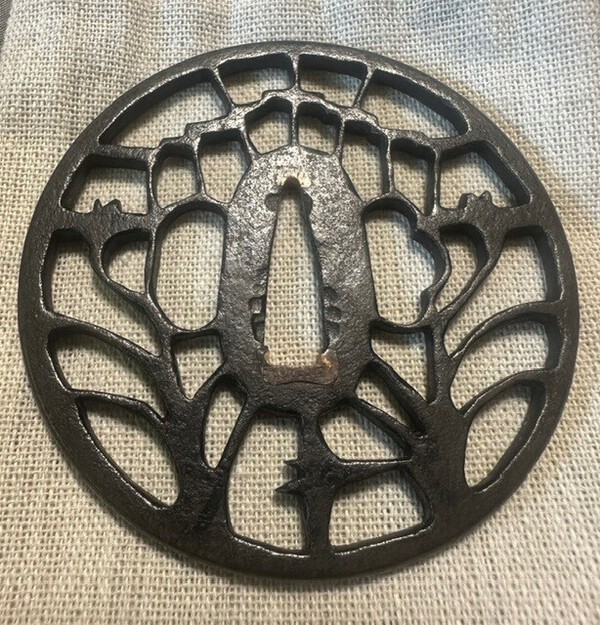


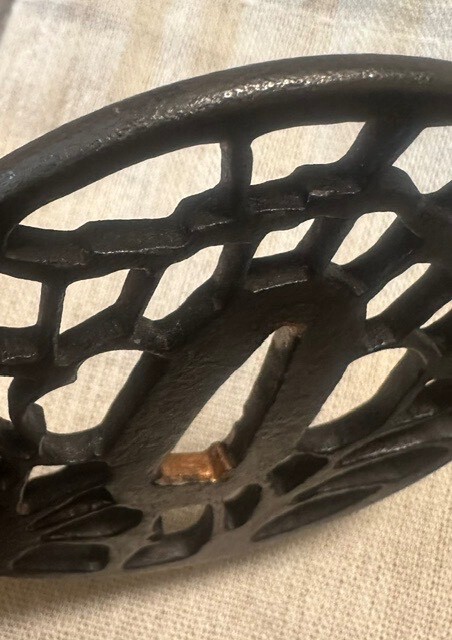 2 points
 -
But just when you thought is safe to go back in the water….. some big names giving opinions here….2 points
-
No-one is saying constellations NEVER appear on tsuba. Of course they do. As does just about any subject you can think of. But you are seeing them everywhere and not accepting that sometimes random patterns are just that...random patterns. There is no point showing that constellations have been seen before on tsuba, we know that. And to Colin...thanks, those are some lovely examples and are clear in their depictions.2 points
-
@Colin, The most important phrase my “teacher,” Michael Hagenbusch, ever said—one that has really stuck with me—was, “There is nothing that does not exist.” So I would be the last person to categorically reject anything, since everything is simply the current state of our knowledge. And I’m always open to other perspectives and interpretations. But, just as in the Kantei, I always follow the path of greatest likelihood. And in my subjective opinion, that would be the Shippo pattern. But if someone sees a constellation in it, that’s fine by me. Your examples almost certainly depict constellations. As for depictions of constellations in Japanese art, I have very little experience. I would point out, however, that there are some very interesting depictions, especially when the artist has no idea about the subject matter—whether they’re cat-tigers or a meaningless attempt to reproduce Latin letters without any significance. Some constellations will be more astronomically accurate, while others are highly stylized. I’m trying to depict what I mean by “very geometric” in this image.
 2 points
 -
Getting to understand the Navy belts a little more. Here's a discussion provided by Akira Komiya HERE at Warrelics in answer to my question about a belt "This is a post February 26, 1914 sword belt for wear by line admirals (since 1923, admirals ranks in the engineering branch was abolished and those engineer officers making it to admiral rank became admirals of the line branch in name only) with their full dress uniform (tailcoat with epaulets and bicorn hat). The pattern of braid on the belt follows the same patterns as on shoulder boards; single broad gold stripe denotes admirals, two gold stripes field grade (or whatever they call them in the navy), and a narrow gold stripe, company grade officers (I thought I once read they were called subalterns in the navy?). Non-line officers’ belts had their branch colors in the margins. Prior to February 26, 1914 the buckles also reflected the rank of the wearers; line admirals’ buckles had a silver colored paulownia with 5, 7 and 5 flowers within a rope and laurel, line field grade officers had a silver paulownia with 3, 5 and 3 flowers on a silver anchor within a rope border and line company grade officers had a silver cherry blossom on a silver anchor, which was to become the universal buckle design not just for line officers but also for non-line officers in 1919. Non- line officers had different buckles with gold colored badges until October 3, 1919 when they switched to the universal design. I will attach a drawing showing the sword belt buckles. The bottom row shows buckles for line officers and the top row those for non-line officers." So, Ian's belt above, with two row of gold, separated by a black line, make it senior, or we would say Field grade, and the red edges are apparently medical non-line officer. Belts, like Marcin posted, with a single, narrow gold strip down the middle are Company grade. I'll see if I can find out a color scheme for the various non-line jobs.2 points
-
You keep repeating “antique tsuba dealers in Japan” like a broken record. Let me explain this again: your so-called antique tsuba dealers are mostly sword dealers who also happen to sell tsuba. They are dealers, not researchers, and most have little interest in seriously studying tsuba as a field. Many people on this forum have spent years researching tsuba in far greater depth. If you took the time to listen to them, you might find they actually know more about the subject than the dealers you keep referring to. Thomas wrote two excellent posts, which are probably beyond your comprehension. Instead of thanking him for his time, you go right back to “but antique tsuba dealers in Japan…” You keep looking for an answer that confirms what you already want to believe. That’s the main reason so many people end up frustrated when trying to have a discussion with you. It’s also why so many of your threads end up running to 20 pages before eventually being locked. Personally, I just don’t want to see this thread keep resurfacing, so I’d ask the other members NOT to respond to your replies anymore.2 points
-
I just discovered that the Gō Yoshihiro sword known as the Kishu Gō in the Soshu Den Meisaku Shu by Honma Junji, that was allocated as Juyo Bijutsuhin in July 31, 1934 and appears in the Juyo Bijutsuhin Book 7 was acquired by Emperor Hirohito on February 28, 1938 becoming part of the Imperial Household Collection and that it was stored at the Imperial Household Museum. As with all Gyubutsu swords it was removed from the Juyo Bijutsuhin list when it was acqured and reclassified as a Gyubutsu sword. I am not aware of any other sword acquired by Emperor Hirohito, will continue digging, but this for now is rather novel. That brings the total of number of Gō Yoshihiro Gyubutsu swords to three: Kishū Gō - Emperor Hirohito Kitano Gō - Emperor Meiji Nabeshima Gō - Emperor Meiji At the end of the war, it was, like the other Gyubutsu swords, handed over to the Nation of Japan as payment in kind for the Tax debt levied by GHQ on the Emperor. It now forms part of the Tokyo National Museum Collection, although they do not call it the Kishū Gō and it is labelled as an Important Art Object which is not correct. It was named the Kishu Gō as it belonged to the Kishu Tokugawa family and was said to be the sashi-ryo (favoured sword) of the second Kishu Tokugawa Mitsusada (January 28, 1627 – September 25, 1705).
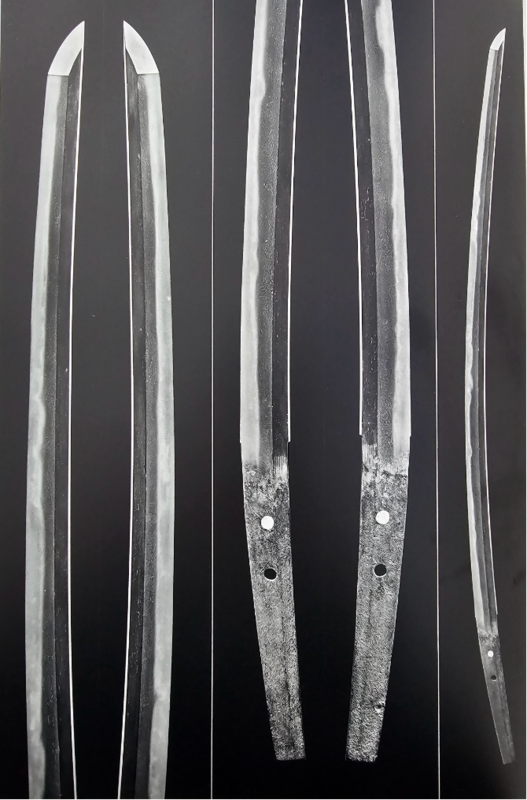 2 points
 -
I thought so, too, but it seems that there are a few exceptions! All of these Sukenaga are Hozon or above.2 points
-
Thomas, this is what I call research! I think that’s the problem here from the beginning: an idea was too hastily presented to the public and not researched properly which takes certainly a longer time (not that AI instant research). Instead assumptions and speculations have been backing up the hypothesis.2 points
-
In the past, when I commissioned a sword for kobudo, the smith asked me if I had any preference in how he should sign. So there's that to consider as well.2 points
-
Probably just depended on his mood, or who it was made for.2 points
-
Yes, assembly number "4" in Japanese. Put there to keep fitted parts together during production process. Kaigunto sell for slightly more than Army gunto. I haven't followed them lately, post-Covid, but they're likely in the $1,800 - 2,400 USD range.2 points
-
I think he's asking solely about stainless blades, John. In general, I'd say no. However, if you have two kaigunto - one signed the other mumei, all else equal - you might see the signed one sell.2 points
-
Wow, this is actually a pretty good signal. Thank you for the examples! Now if I could only know the provenance of the piece...given the fact mitsu-mune required a high level of skill to execute it makes sense. The piece I have also has original futatsujibi, so it must have been a high level order.

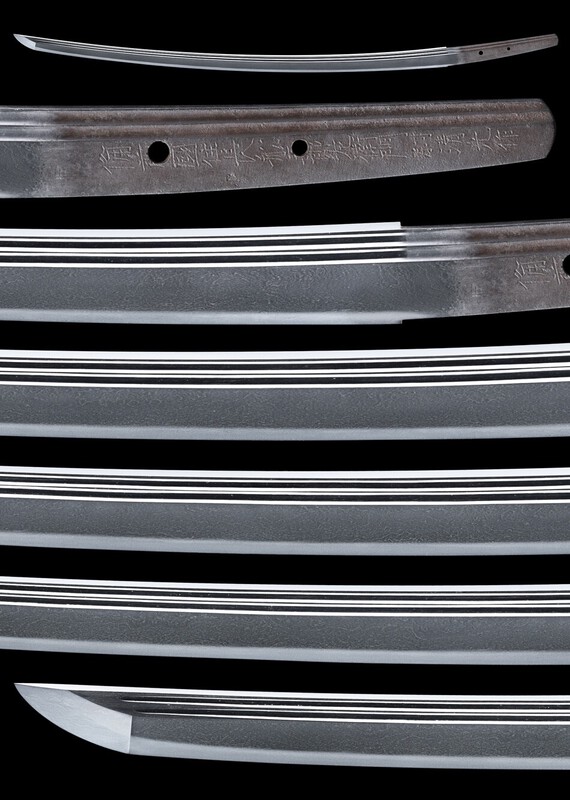 2 points
 -
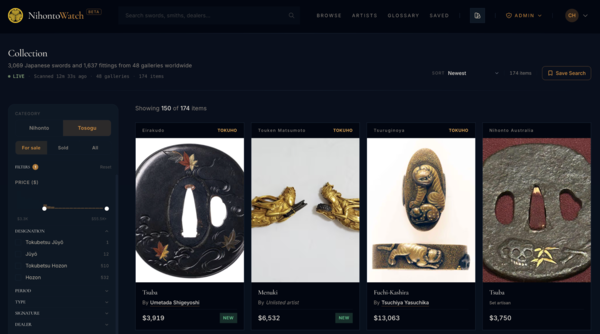
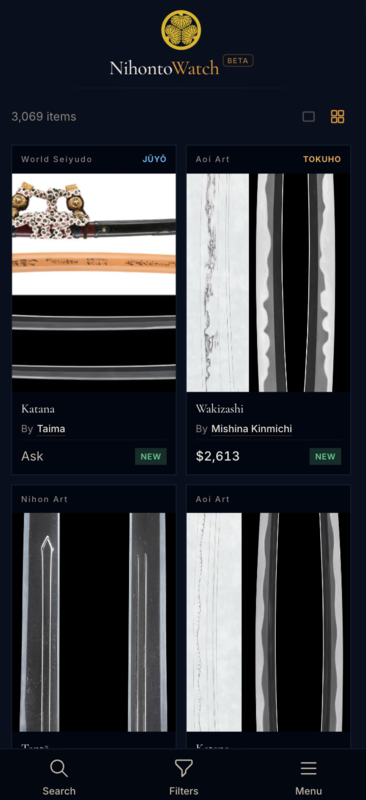
Hello everyone, TLDR: Interested in Japanese swords and fittings? I made this to help the field. Open nihontowatch.com on your phone browser, and add to home screen (Share → Add to Home Screen). Thank me later. --------------------------------------------------------------------------------------------- I have been thinking for quite some time about the future of our field. I have been blessed with incredible mentors and opportunities, most notably the late Darcy Brockbank, who was so generous in sharing his knowledge. Since his tragic passing, I have felt a responsibility to carry that work forward. What I am about to present, I built as an homage to his memory. Our field has problems. We operate in a field of extraordinary depth without being equipped with the knowledge and tools to understand what we're looking at when we browse the market. Refreshing dozens of dealer websites every week, most in Japanese, copy-pasting listings into translation apps, pinching to zoom on sites built twenty years ago — market awareness is just painful and you miss things constantly. You spend an hour and walk away unsure you have seen everything. And this is just the market experience. The deeper problem is access to knowledge. There are no catalogues raisonnés for artists. Yuhindo would have grown into it — it was planned. But alas, Yuhindo is no more. No way to know, with any confidence, whether a price is reasonable without decades of experience or tens of thousands of dollars invested in published references. No way to know why something costs what it does. Communication with Japanese dealers remains daunting for most. No easy way to know who is a reputable dealer. The barrier to entry is simply too high, and this friction keeps our field artificially small. Fine art has Artnet. Watches have Chrono24. Antiquarian books have AbeBooks — markets with comparable depth and comparable opacity, served by platforms that bring transparency and accessibility. These fields have benefited immensely: they have enabled new entrants in droves to collect in confidence. Our field needs more knowledge and transparency to build interest and trust.Japanese swords and fittings. Eight hundred years of collecting history at the highest levels. The category that contains the most national treasures in Japan. The indefatigable search for perfection of an entire civilization. And yet, we have nothing. This had to change. As I write this, there are 3,021 Nihonto and 1,607 Tosogu items for sale across 44 dealers, Japanese and international, in a single searchable interface. Every listing is structured with attribution, certification, measurements, and artist intelligence data. NihontoWatch is on track to follow 100% of the online market for genuine items with NBTHK papers. Refreshed 12 times a day. Everything is translated and structured, as it trickles in live. But what is this worth, if it's so hard to know what you're looking at? Especially for newcomers, it is so hard to tell what you're looking at. This is where the magic is. I am nostalgic of reading through Yuhindo's artist descriptions. It made me deeply appreciate the field. It got me in. NihontoWatch scales this experience and creates something approaching a living catalogue raisonné for every Tosogu and Nihonto artist. It matches every listing against a database combining the complete Juyo, Tokubetsu Juyo, Juyo bunkazai, Kokuho, and Gyobutsu designation data — over 23,000 items at the highest level, with rich text in classical Japanese. This data is then processed, synthesized, and presented into NihontoWatch's artist directory in a way that is respectful of the NBTHK's copyright. With this, you'll be able to discover a maker's historical reputation through quantitative analysis of exhaustive provenance records, in ways never seen before. Over time, all of these artist pages will come alive, forming an ever-expanding knowledge base. - How rare is it? - How many Tokuju? - How many designated works ranked Juyo and above? - Why is this important? - Where does it rank relative to other works? - What is for sale right now? - What was for sale recently? All the answers are in. These are questions that come up constantly in our community, and until now, answering them required years of collecting published references worth tens of thousands of dollars, and patiently indexing them with post-its or one-by-one in a spreadsheet. Only professional dealers or major collectors could afford to do this. This is a BETA, so there are errors. The more obscure the artist, the higher the error rate, and there are still basic errors I need to fix with some famous artists. A lot of algorithmic tinkering and curation ahead. It will keep getting better with your feedback. See the results for yourselves: - Soshu Masamune: https://nihontowatch.com/artists/masamune-MAS590 - Ichimonji school: https://nihontowatch.com/artists/NS-Ichimonji - Yasuchika (tosogu): https://nihontowatch.com/artists/yasuchika-TSU001 - Goto school: https://nihontowatch.com/artists/NS-Goto Click one and explore the designations, the provenance abalysis, the measurement distributions. This is just a first shot — over time this data will grow. Here is one where I have published an item I studied for my Substack article on Mitsutada: - Osafune Mitsutada: https://nihontowatch.com/artists/mitsutada-MIT281 Imagine Yuhindo, but with a page for every artist and every piece ever captured on camera. Saw a national treasure at an exhibition in Japan? Share your photos on NihontoWatch's artist catalogue. In the future, owners of particular works will be able to publish them to the artist's catalogue. Think of it as a growing, community-curated knowledge base for every artist in the field. And so much more Browse and filter: Designation, dealer, item type, school, province — all filterable, all instant. Prices display in JPY, USD, or EUR. Every filter combination is a shareable URL. The sold archive tracks thousands of items for pricing research. And it works for every budget, for collectors at every level. - All Tokubetsu Juyo Nihonto on the market - All Tsuba with Hozon or Tokubetsu Hozon, maximum price $2,000 Setsumei translations: On some items, you can press the floating book icon on any Juyo item to toggle between photos and the Juyo setsumei translated text. For most Juyo and above items, the NBTHK evaluation text from the dealer's page is identified by computer vision and translated into English. It will fail if the dealer has not posted the Juyo Zufu extract, but in the majority of cases they do, and the result is remarkably accurate. Do use responsibly — the quality is great, but not perfect. Always purchase professional translation from Markus Sesko when contemplating the purchase of a Juyo-designated piece. Search alerts: Never miss an item again. Define keywords and filters and save them. NihontoWatch will run your search every 15 minutes, and when something new appears, immediately send you an alert email. In practice, missing a listing that fits your interests becomes almost impossible. Tip: I recommend avoiding overly specific queries. "Juyo tsuba" or "Kamakura signed tachi" are safer than specific artists such as "Yozozaemon Sukesada," which would be more fickle. Broad queries give you the best market coverage. Inquiry emails: Press "Inquire" on any listing to draft a professional inquiry in Japanese. Handles etiquette and formality, and can help you request the 10% consumption tax exemption available to overseas buyers. Did you even know you could get 10% off? How many new entrants lost 10% on this, at least at the beginning? I for one did. I've seen countless high spenders neglect to request it while shopping across Japanese galleries. Glossary: The technical language of Nihonto and Tosogu is deep and specialized — needlessly so for non-Japanese speakers. Anytime a technical term comes up, you can click and see what it means. Over 1,200 terms, searchable, automatically linked from the setsumei translations. Who remembers always keeping an index open to keep track of terms when studying Juyo items? https://nihontowatch.com/glossary How best to use NihontoWatch While it works wonders on desktop, NihontoWatch works most beautifully on your phone. I use it every day — it feels like I have the market in my pocket. Open nihontowatch.com on your phone, hit Share → Add to Home Screen. And voila, you have an app. It becomes something you check with your morning coffee, the way one might check the news. A word of caution The data has errors — always verify independently. This is a tool to explore the market, not a substitute for critical thinking. If it looks too good to be true, it likely is, and this system can't easily correct online misrepresentations. Old listings where dealers have not marked items as "SOLD" will still appear as available. Listing errors will slip through, but data quality improves continuously as the system learns over time. Get involved - Missing a listing or dealer you like? PM me or post here. - Bug? PM me or post here with steps to reproduce. - Dream feature request? Reply in this thread. I will keep this thread active and share major updates when time permits. Everything is free right now, and will remain so until ready for official release. This is no trivial task, and it is expensive to operate — it will need to be covered in some way down the line. It will be tempting to keep it for yourself. But if we want our field to grow, we must share knowledge and expand market access and transparency. The single most impactful thing you can do right now is help others discover and use the tool. Share it with your study group. Share it with your collecting circle. Share it with a friend who has been curious about Nihonto and Tosogu but found the barrier to entry too high. That barrier just got a lot lower. Farewell, Darcy. This is for the teacher in you. Hoshi

 1 point
 -
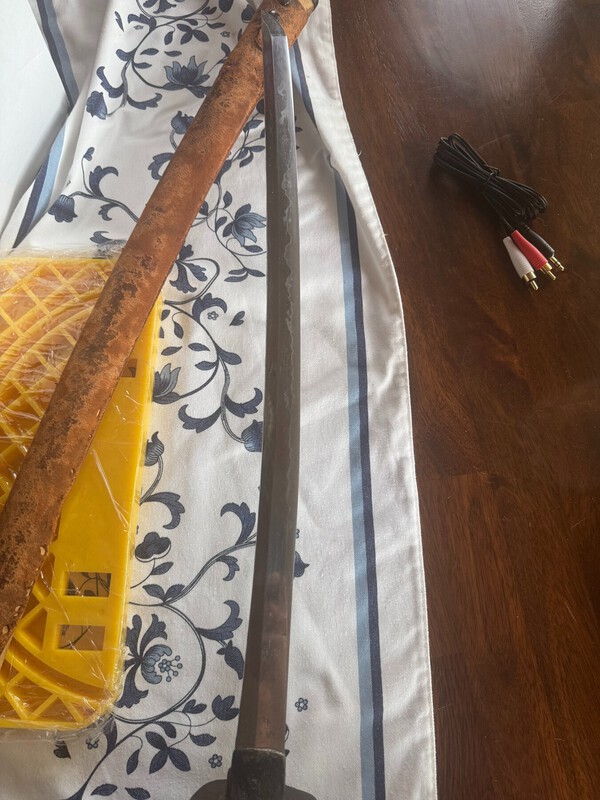
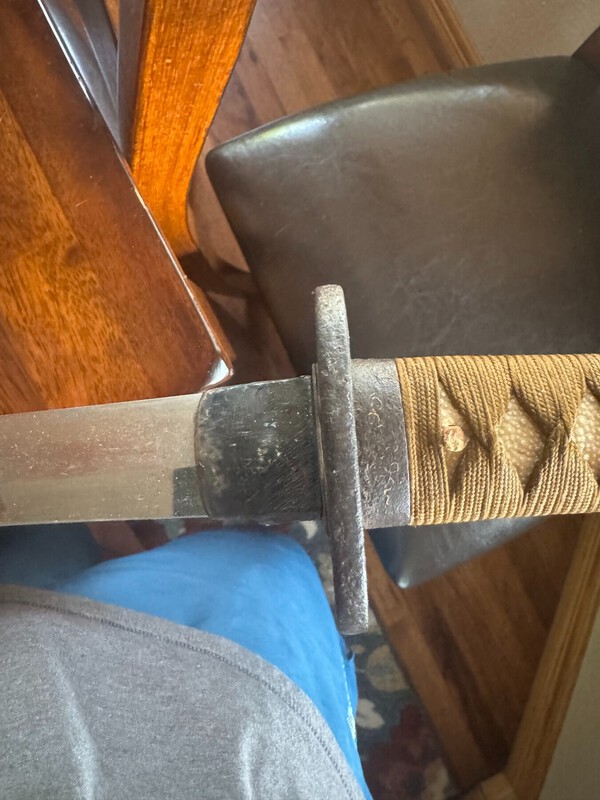
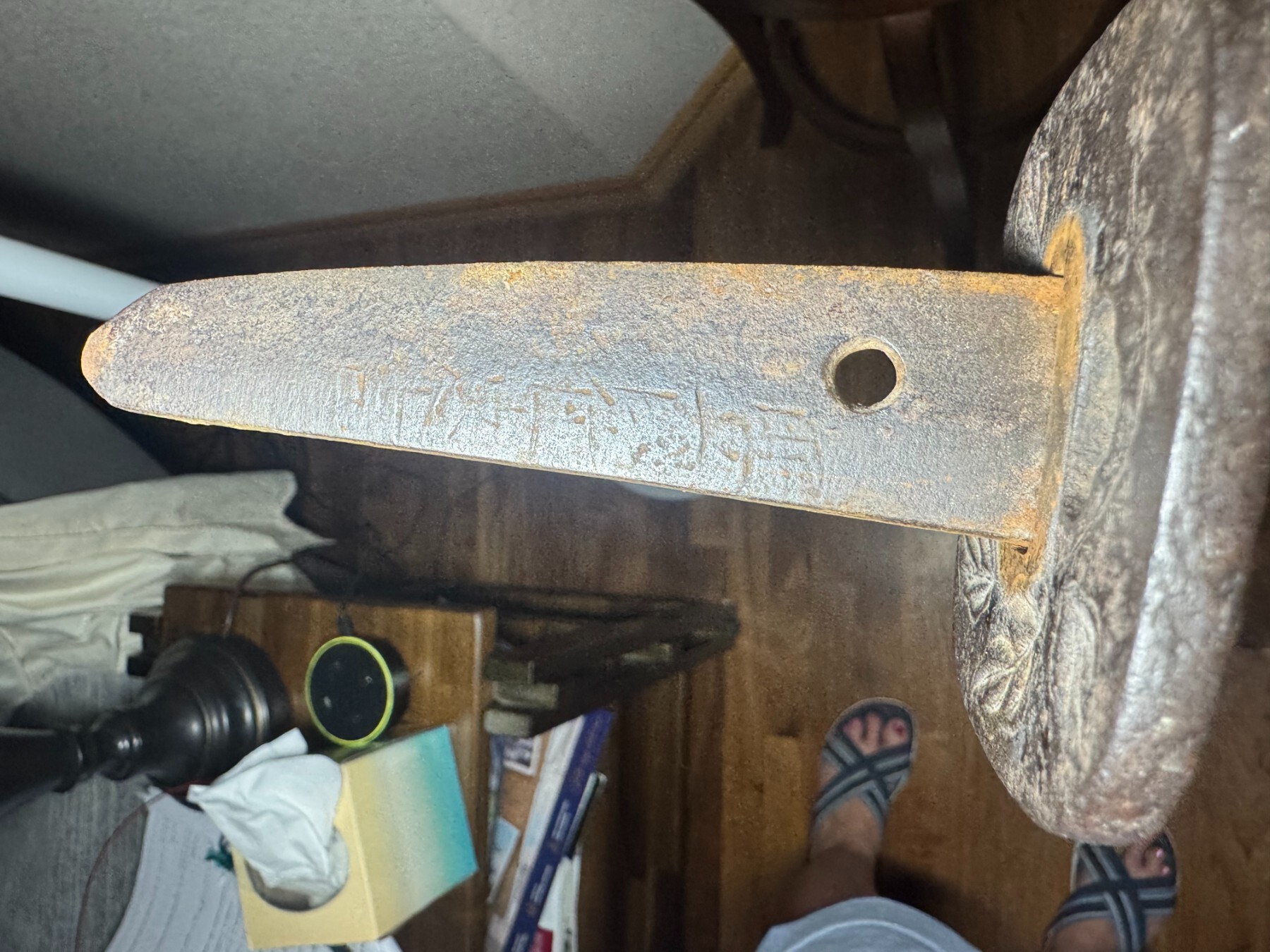
Hello, I received this sword about a decade ago from my family while they were sorting through some items in the shed. My great uncle served in the Pacific theater in World War 2 and I believe he brought back this sword, but I do not have definitive proof whether it is i) a fake/reproduction, ii) mass produced military distributed sword, iii) a family heirloom refitted for military service, or iv) a more traditional sword or something else entirely. I have attached the photos of the entire sword, but it is extremely difficult to get a clear picture of the markings on the tang. The markings on the tang only appear on one side, and they are difficult to distinguish even with the naked eye. Any help is appreciated. Thank you in advance!


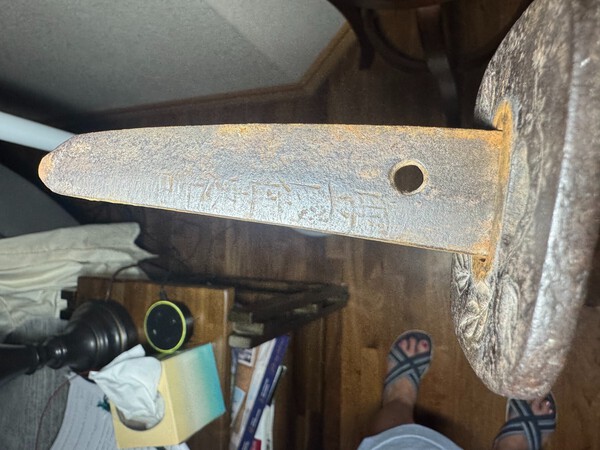
 1 point
 -
The problem is slightly more general. Aside from a handful of shrines and alike, there are no records of collections pre 1500-1550 or so. The named swords in particular often come with a legend or textual description completely disconnected and abstract with respect to any existing objects and on the other hand - specific objects given names with no pre 1500 or even pre 1700 history of them actually being associated with one. There were many cases when meito until Meiji was shared by 2, 3 even more than 10 blades, and then quietly one was selected by the community as "the one". And by means of selection it receives pre 1550 history which it might actually never had.1 point
-
My opinion: ignore that internet sales blurb. There is nothing to indicate that sword was handed down from any illustrious person or clan. It has a name on it, as many WW2 swords do. The name is reasonably common. The location of the engraving is unusual. Often the family name or crest will be pressed onto a small steel or alloy cartouche (something about the size of a small button), which is then affixed to the pommel. A name engraved on the handle (tip of the pommel) is slightly unusual to me, but as I said, it indicates some level of customization, which is a good thing to have in WW2 memorabilia. Forget about any presumed samurai clan affiliation. Its just the seller trying to add some romantic allure to the item.1 point
-
Thank you Baby Jo! I know that the outide sticker is a real challenge to be translated!1 point
-
Bruce, Steve explained it above. It is "MACHIDA" (町田)1 point
-
Not a saya cover, but a tsuka rain cover. Posted by Matthew Brice HERE1 point
-
Here's the link to view the New Listings: https://stcroixblades.com/product-category/Japanese-swords/ Thank you. --Matthew Brice St. Croix Blades


 1 point
 -
A good example why we need much better photography of these important swords. So much of the beauty is lost in poorly illuminated, drab photos and reason why I hope Paul Martin's project comes to fruition.
 1 point
 -
Thank you Baby-BjornBo, I wasn't sure about it. I thought Sukenaga normally used a chrysanthemum mon as part of his mei, so I was not sure if this was right or not. thank you again.1 point
-
Hi! This is signed 横山祐永作之 備前長舩住人 Yokoyama Sukenaga Sakushi ("Yokoyama Sukenaga made this") Bizen Osafune Junin ("dweller in the Bizen Osafune").1 point
-
Hi Bruce. When I put a magnet on the hibaki it does stick. However the hibaki is still on the blade so I’m not sure if it is the blade’s magnetism or the hibaki itself. It’s pretty difficult to remove from the blade so haven’t been able to test isolated by itself yet. Thanks.1 point
-
Fujiwara Kanenaga and Tenshozan Tanrenjo signed examples are a step above most other stainless swords.1 point
-
Chuck, the first photo is upside-down.1 point
-
Do you mean Iwamoto Konkan? They might be expensive… I once had a complete Koshiraé with fish depicted all over…
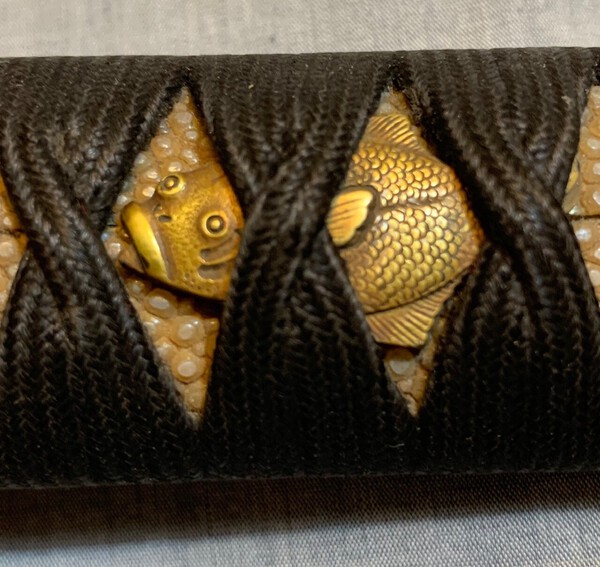 1 point
 -
These swords are so badly faked that It's typical "what is good here case". Any element isn't corresponding with genuine example - at least not in full like NCO serial yeah it have some number but where is NAgoya arsenal stamp? etc. I hoped to find exactly these blades offered recently but couldn't. Please visit http://ohmura-study.net/900.html as a scratch-start.1 point
-
Yes, quite nice! James, you have a Type 97 Japanese Naval officer sword, or kiagunto. You can read up on them at Ohmura's great site: Naby Officers Sword - 1937 Some care and cleaning tips: Japanese Sword Care.1 point
-
Nope. I have the intellegence of a rabid hamster. I just keep a large file of signatures and I recognized it. John C.1 point
-
High class? Matsubashi Masashige It is lovely for me to look at.


 1 point
 -
Love the hamon, looks like a storm on the sea,1 point
-
Thanks Ray.1 point
-
I want to highlight the Shintogo Kunimitsu tanto held by the Atsuta Jingu Temple in Nagoya. This blade represents an important reference not only because it is yet another example of Kunimitsu mei with atypical carving but also its deki, which is a significant departure from what could be termed the classical Shintogo style. It appears to be a very healthy survivor and dated 1308 (although earlier in the Lunar calendar than mine). Nagasa: 28 cm; Sori : 0.2 cm; Motohaba: 2.5 cm. The subject of this tanto was raised by Tanobe sensei after he examined my blade. He stated that besides the 1306 Shintogo he was aware of a 2nd blade, namely the 1308 Atsuta Shintogo, with atypical carving. I looked hard for images of this sword without success, but was recently contacted by a member here who had acquired photos of the tanto whilst on display at the Shrine, as well as photos of the mei and nengo. Its suriage and the carvings are slightly cut off but there is enough remaining to get a good impression of the kanji. Interestingly, the style of mitsu is very similar to that posted by @Hoshi on p1. There he suggested that it could be daimei by Kunihiro. Thinly chiseled with an extended vertical radical and a characteristically different north crown element that connects to the vertical strike. I also see similarities in the structure of kuni too. Clearly a notable variation from the archetypal Shintogo Kunimitsu signature and therefore likely by a different hand. The Atsuta tanto not only has this putative Kunihiro-esque signature, signing daimei Kunimitsu, but the deki is reminiscent of his Bunkazai 1324 dated tanto shown below. The shape of the Atsuta tanto is also a departure from the norm for Shodai work, presenting a more robust and extended shape more characteristic of blades from the dying days of the Kamakura Bakufu into the Nanbokucho period. I also want to highlight the tight ito-suguha hamon running very close to the Ha, a feature that is evident on my tanto. It would appear this was a forging style being produced in the Shintogo workshop in and around 1306-8. Further evidence in my mind that dated, daimei work by various apprentices, was coming out of the atelier as early as 1306.


 1 point
 -
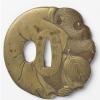
I think it is a constellation star design. Please find herewith one of my tsuba with the same topic.

 1 point
 -
I am rooting for you @lewis, this is a great adventure. This has always been the case. There is no assurance that they will read it, though, given the volume that they face. It is one of the only ways to get certain fittings unstuck from the perpetual "Horyu" state. Furthermore, when it comes to provenance information, they are unfortunately not consistent in incorporating the information, even when provided with well-respected primary source data. For high-level submissions, I can be helpful to write a short dossier on a submission, but not engage in theories outside the mainstream. Remain 100% factual, and collate only canonical or primary sources. Best, Hoshi1 point
-
Kris, Welcome to the addiction! If you haven't already done so, read up on sword care - Japanese Sword Care - Japaneseswordindex.com, and go online for a cleaning kit. You can get them for less than $20. Just google "Japanese sword cleaning kit." Now you need an Army officer sword and a Navy kaigunto!1 point
-
Good questions. Ultimately the blade has to speak for itself irrespective of the mei. Tanobe has seen the blade in its current state and I was relieved this was the first time in his hands. He commented on the current poor condition (not surprised), primarily regarding the hamon. As for the mei, he agreed with the 2018 Shinsa that more research was needed, that the mei has an archaic style and most importantly at this stage, that the mei was not obviously gimei. Regarding the blade itself, what ticks the boxes for me?: 1) sugata is typical late Kamakura (confirmed by Tanobe) 2) referencing the 1306 tanto also with atypical mitsu kanji. The style and positioning of the boshi relative to the tip and Ha, the length, form and position of the single koshi-bi horimono on the omote side, the sugata and the nagasa. All these aspects closely match the 1306 blade. A reviewer of this blade in the 80's stated the style of mei reminded him of Yukimitsu thus opening the possibility the 1306 tanto might be daimei-daisaku Yukimitsu (its also been argued the Midare-Shintogo tanto is Yukimitsu's work). All this evidence suggests to me both blades originated in the same workshop and around the same time. The coincidence is too strong to ignore. 3) the boshi and deki from what I saw in the dealers photos is typical Shintogo. Flowing bands of chikei, nie-rich kaeru boshi tending to hakikake and thin nie-based suguha hamon. Couldn't see any kinsuji under the poor lighting and through the oxidized surface outer layer. Hopefully the polish will reveal a lot more subtle detail eg ji-nie, for which Shintogo is renowned. A full polish has been requested. I'm just waiting to hear back from the togishi after he has inspected it to know if he will accept the commission. If my first choice is reluctant I will find another top level togishi with experience polishing Soshuden blades. One way or another it will be polished to preserve it going forward. If the polished blade really does have an air of the Soshu grandmaster it will be submitted for Shinsa together with as much supporting evidence as I can find to give the panel a reason to accept the sword as daimei. My goal is that it passes Hozon, at best TH but that might be expecting too much, however I will have a better idea of its potential after a sympathetic polish.1 point


.thumb.png.54593db2789c8a1dcb235543b184ce39.png)





















This leaderboard is set to Johannesburg/GMT+02:00