
Leaderboard


Popular Content
Showing content with the highest reputation on 03/31/2026 in all areas
-
7 points
-
I am almost as far away from high end collector as you can be but I have spent lot of time with Jūyō data. First of all as a disclaimer I have to say I don't really like either of the swords. The den Gō should in my mind be a slam dunk for Jūyō - Date family ownership, excellent polish, Kanzan Sayagaki, Tanobe Sayagaki. Still every year I know that items that are in my mind bound to pass fail, and some other items that are unimpressive to me pass. The mumei Shintōgo Kunimitsu katana just passed Tokubetsu Hozon in 2025. Now take the following what I will write with a big grain of salt but I have sometimes really felt that way, just as a disclaimer I am not quality focused collector but historical. If you throw away the NBTHK papers attributing to Shintōgo Kunimitsu, would you pay 7,500,000 yen for that mumei sword? In my own opinion the NBTHK attribution sometimes carry too large value but market works how it works. Of course the fine workmanship of Shintōgo can not really be seen in few pictures. Still if I saw that mumei sword looking like it looks on the pictures I would just skip it without really even second thoughts about it, even if the price would be extremely lower than it currently is. I know it is a controversial take but hopefully it can get the discussion going.5 points
-
Well no surprise there - I have compiled my own book with dozens [at least 62] of tsuba designs replicated over and over [and not all cast copies] One particular pattern of the rain dragon has now reached 162 individual examples. A question better asked of Grev Cooke as he did the book - but yes I would say it was iron. A great number of guards were copied between schools so once again it is very possible for a design to be attributed to more than one school.
 5 points
 -
Robert, analyses of TAMAHAGANE show that it is very pure, regarding alloy metals, but I have no data of KOTO and SHINTO era steel for comparison. What I think is important is that there is a very narrow temperature margin in the bloomery/TATARA process. Unlike many other metals, iron has a slightly wider temperature span between 'solid' and 'liquid'. This feature is making the direct reduction process possible. But you cannot leave this temperature area by much without metallurgical changes taking place. Usually, the intent is to have a good degree of efficiency in the process which rises with the temperature. Celtic and early medieval bloomery furnaces were around 30% (= 30 kg iron from 100 kg of iron ore) and were run at about 1.250 to 1.300°C. The temperature in a TATARA can be even a bit higher which means that near the vents, the iron wil be closer to melting temperature. The problem is that with rising temperature, the iron 'absorbs' more carbon. The malleability of iron ends with a carbon content of 2,02%; this is the limit where cast iron/pig iron starts to be formed. Crystallization can only take place from a liquid state, so if TAMAHAGANE was made at very high temperatures (= above 1.350°C), there is a high risk that it would not be workable on the anvil. Cast iron (roughly 2 - 5% C) will shatter like a cookie under the hammer. As far as I know, historical Japanese iron technology is not known for decarburizing processes (with the exception of OROSHIGANE, but this worked in another way) as we had them in the Middle Ages in Europe. So, the Japanese were forced to stay with the TATARA method. We should not forget that in medieval Japan, ALL iron was produced solely in TATARA, and most of the products coming out of the forge were made from (low carbon) iron, not steel! This was the same in Europe, by the way. Coming back to a potential technological leap after the KOTO era, a slightly higher carbon content in the steel might indeed make a difference in working it and in the properties, but we can exclude 'secret' alloy metals mixed in the TAMAHAGANE - or missing in EDO times. There are still more factors which can influence steel properties and the performance data of steel blades, but that would lead a bit far. BUT we should consider the fact that - starting with EDO JIDAI - many swordsmiths no longer made their own steel, and as you know, there is a big difference between potatoes that you grow in your own garden, and those you can buy in the supermarket!4 points
-
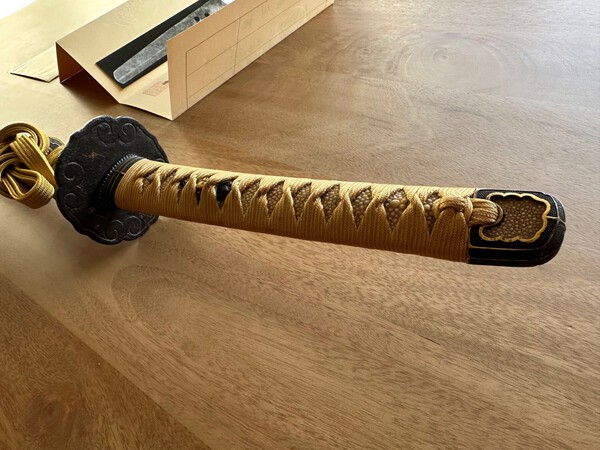
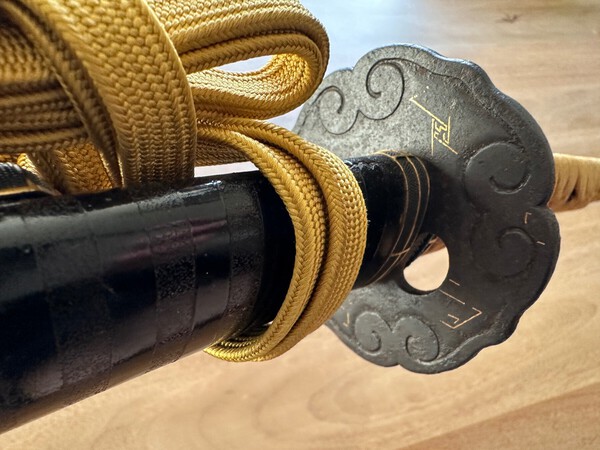
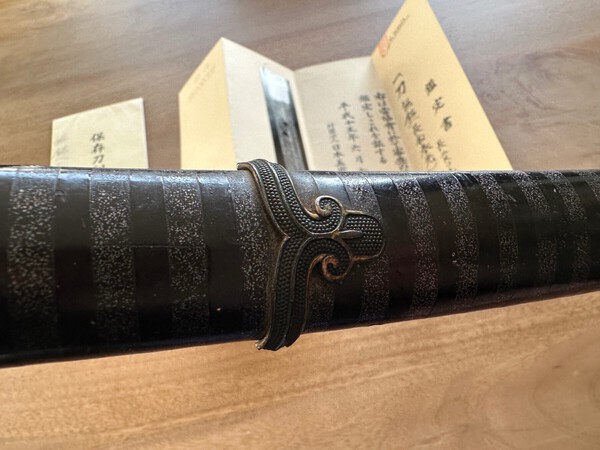
Extra pictures of the koshirae:
 4 points
 -
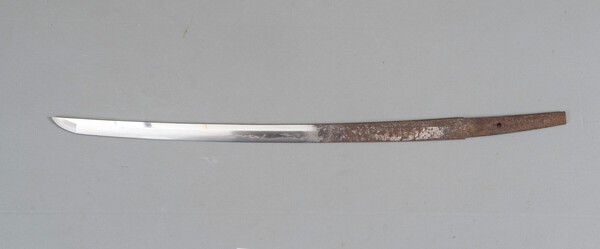
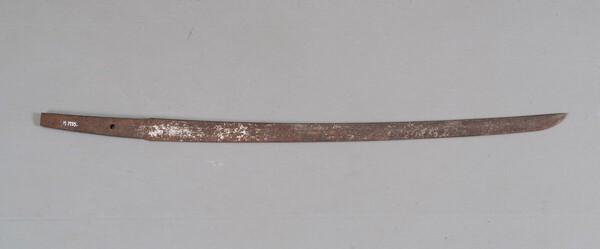
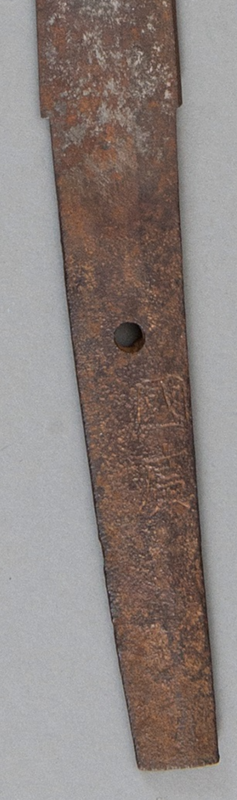
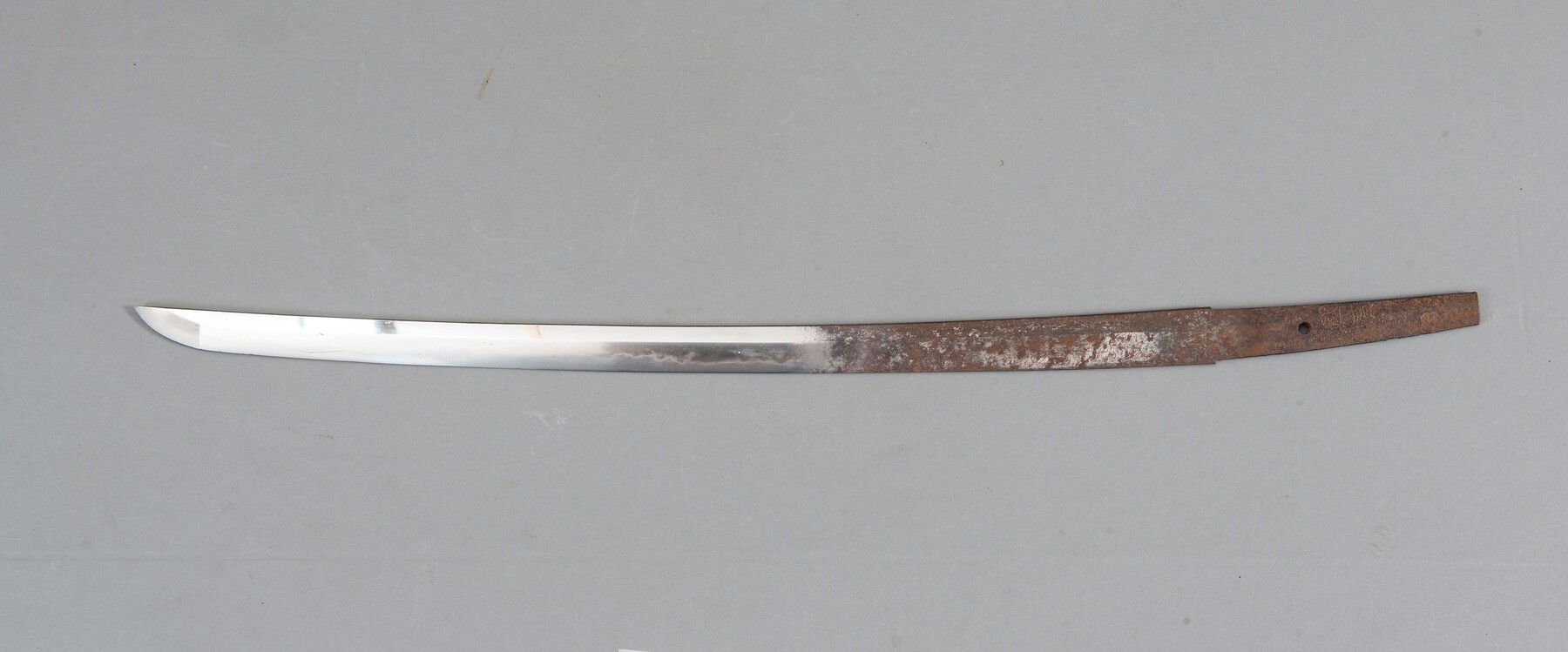
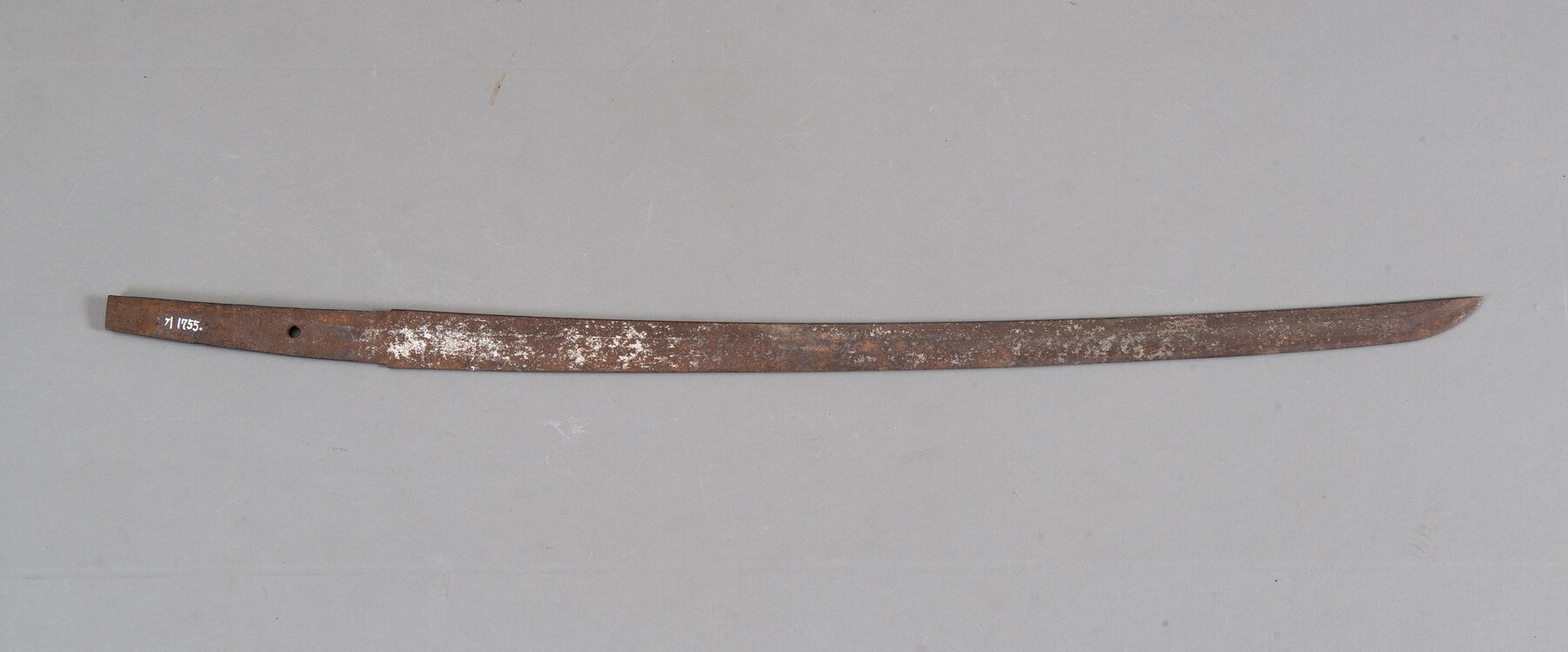
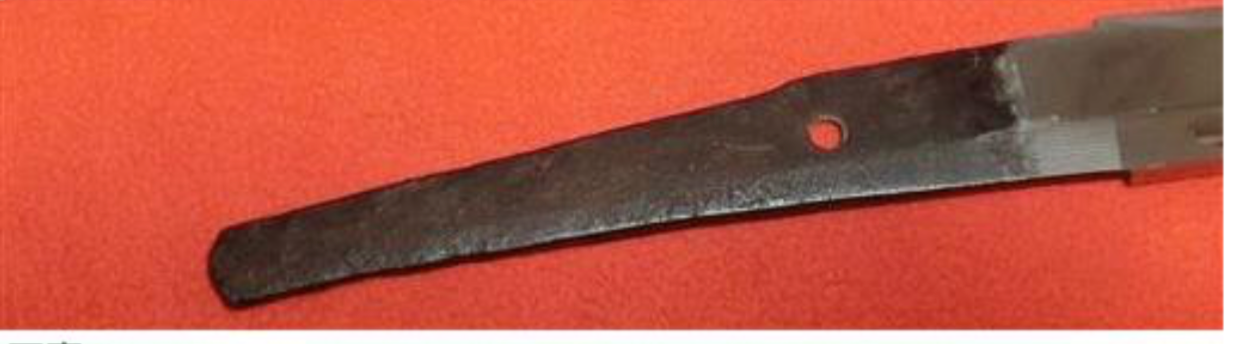
Hello NMB members, Few days ago, I come to find an old news article written in 2006 sayingㅡ "우메다씨는 일본도 고도(固刀) 시기의 장인 쿠니히로가 1614년 게이쵸 시대에 만든 78㎝ 길이의 일본도 한 점도 부산박물관에 기증했다." which can be translated to "Mr. Umeda also donated a 78cm-long nihonto made in 1614(Keichō) by Kunihiro, a craftsman from the Koto period to the Busan Museum." According to the news, Mr. Umeda(Kōtetsu? Umeda) donated the blade at May, 2004 with about 400 copies of Korean translated <The Connoisseurs Book of Japanese Swords>. I assumed that it means one of Horikawa Kunihiro's blade is in Korea now(at least that is what the news argued so...), so I've done some research. The blade is covered with red rust, and nakago looks like suriage. Almost no sori. I assume 78cm means the whole length(including nakago) since the blade looks bit... short? There is 國廣 mei, but don't know where "made in 1614" came out. For better photos I've called the museum if I could get some but they told me that don't have any plans to take shots of the blade nearby. So, these two photos are all I can get right now. I'm no expert of Kunihiro, so I wanted to ask NMB members how everyone thinks about this blade. What do you think? Gimei?
 3 points
 -
The dark side of the moon.
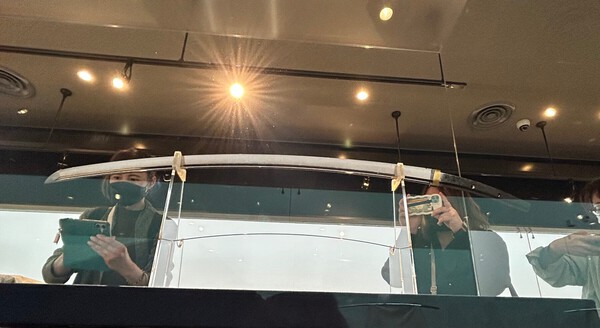 3 points
 -
Since Jūyō shinsa operates differently and is significantly more expensive than Hozon or Tokubetsu Hozon, it can sometimes feel somewhat unpredictable. If a session is particularly strong, with many exceptional blades submitted, the competition becomes very intense, and a blade may fail to pass if it does not stand out even among already outstanding works. So, it may not pass the first time, but could be resubmitted a second, third time... As a result, the process can be quite time/cost consuming for dealers. And as Robert pointed out, if the name and attribution stand out already, it can be enough, even without Jūyō papers or above...3 points
-
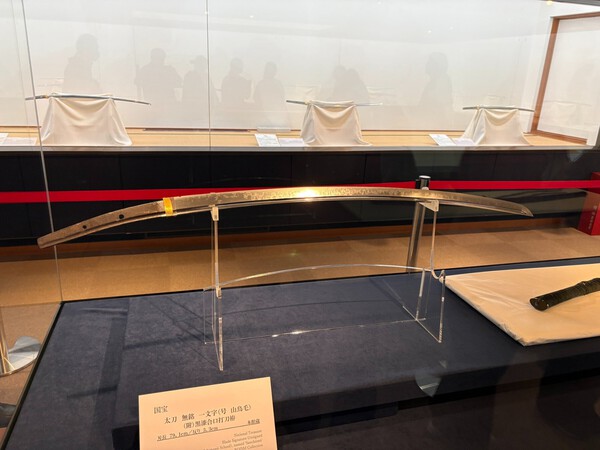
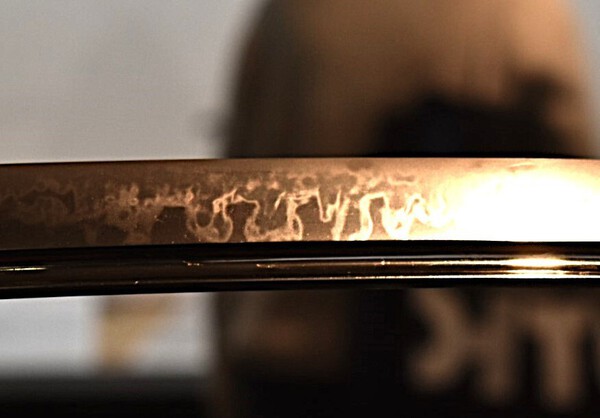
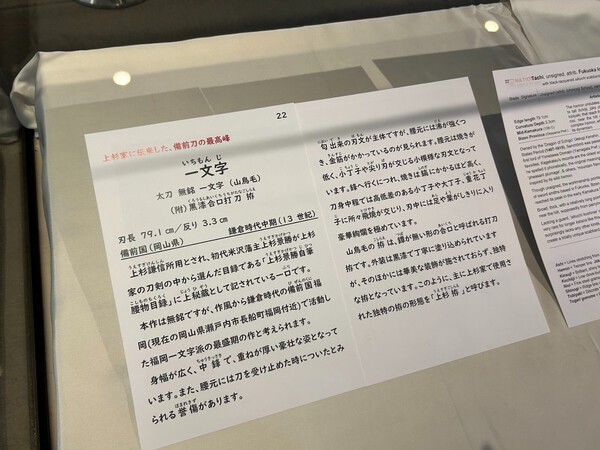
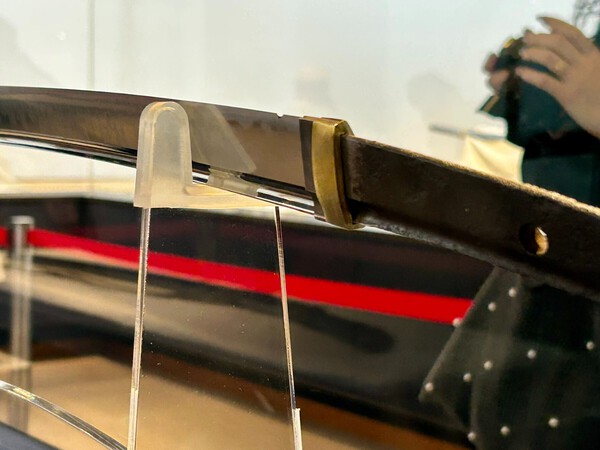
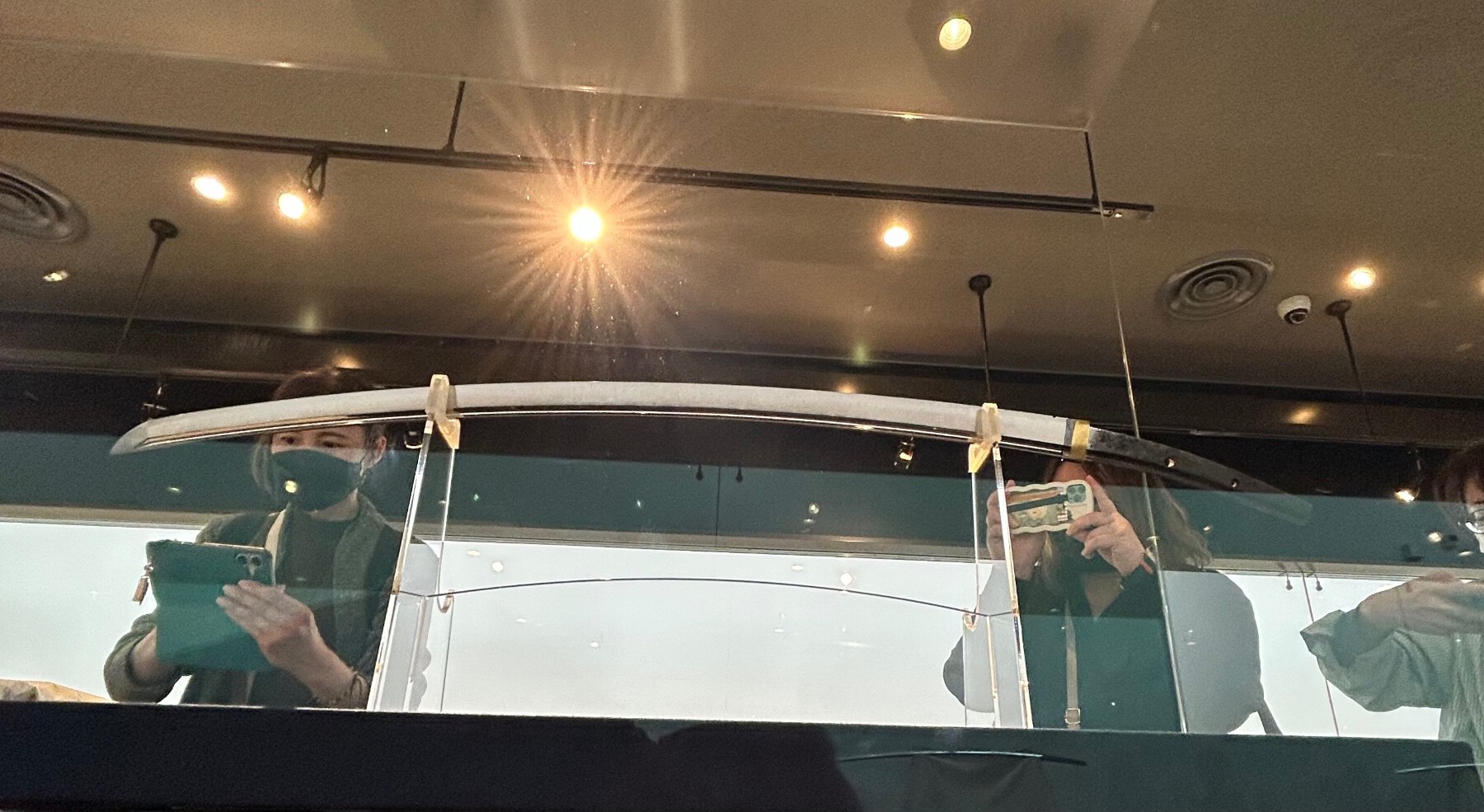
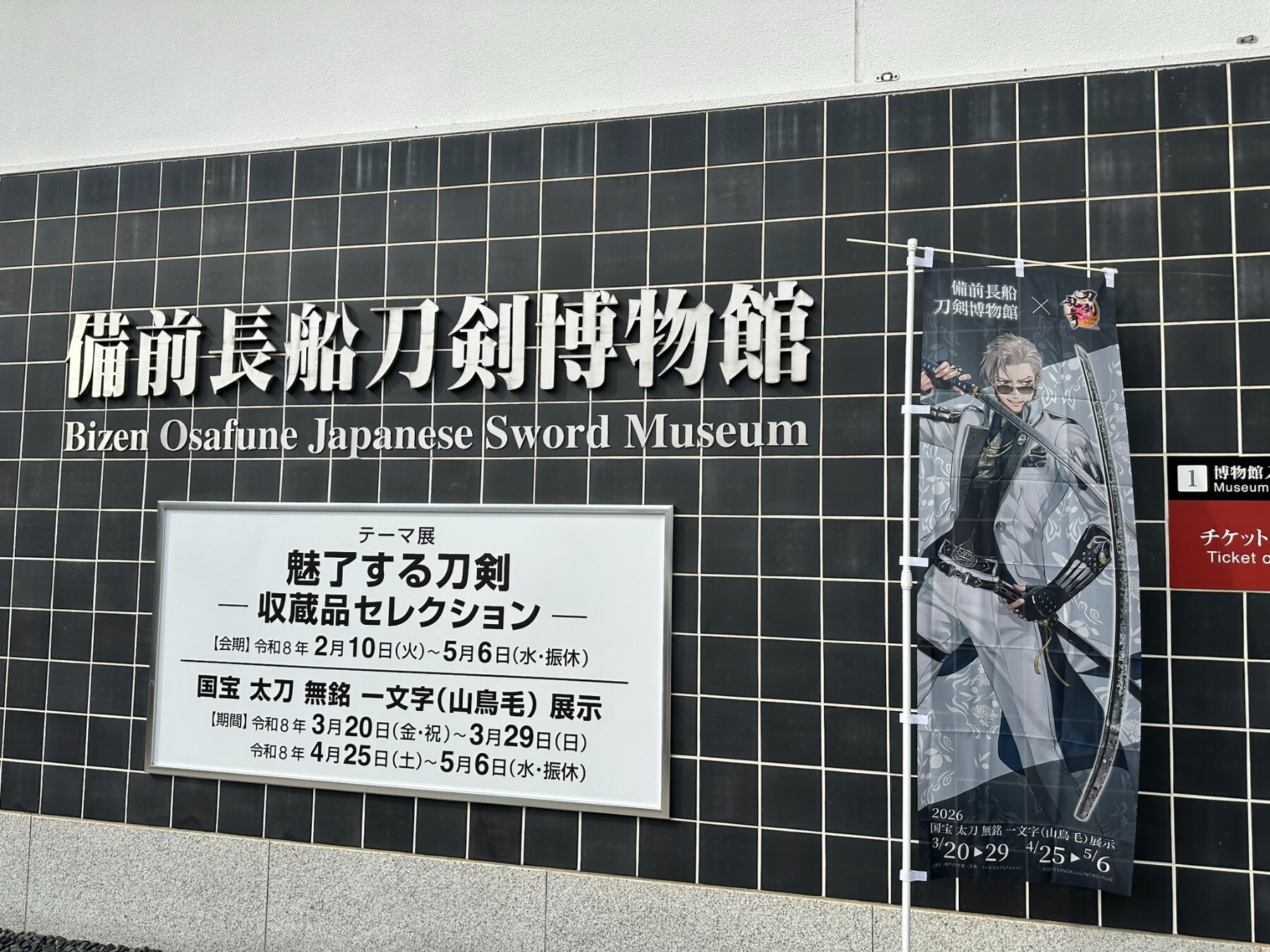
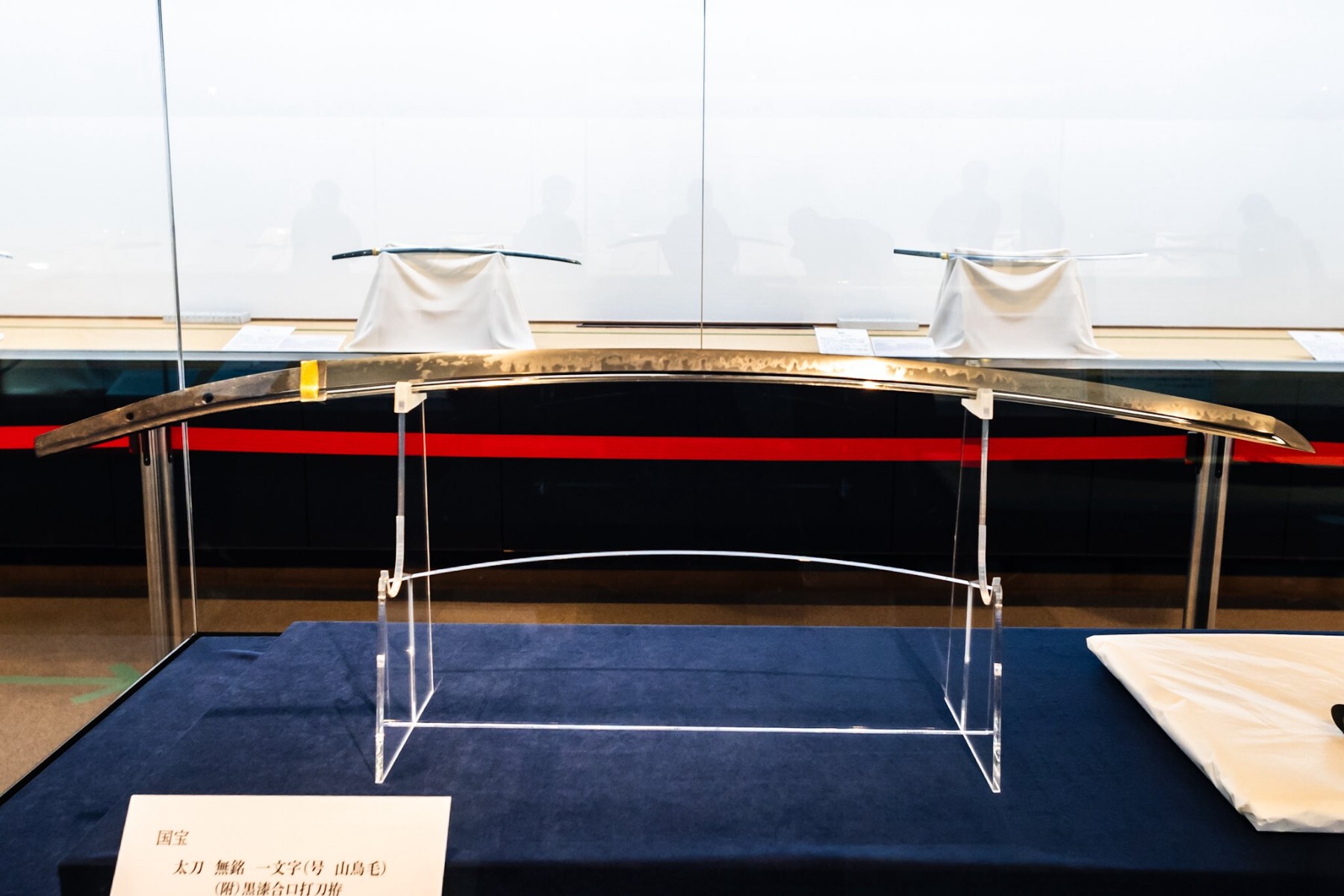
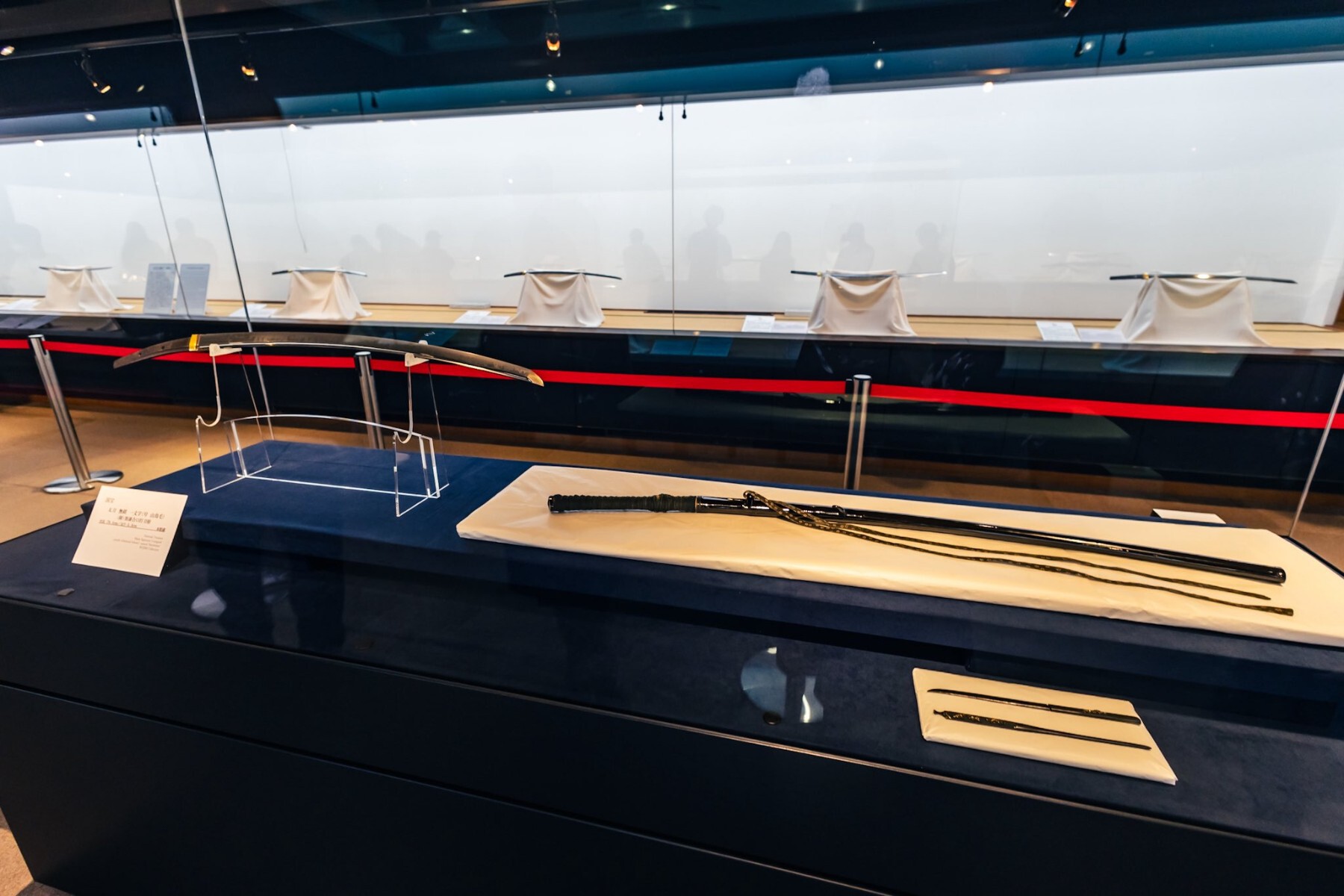
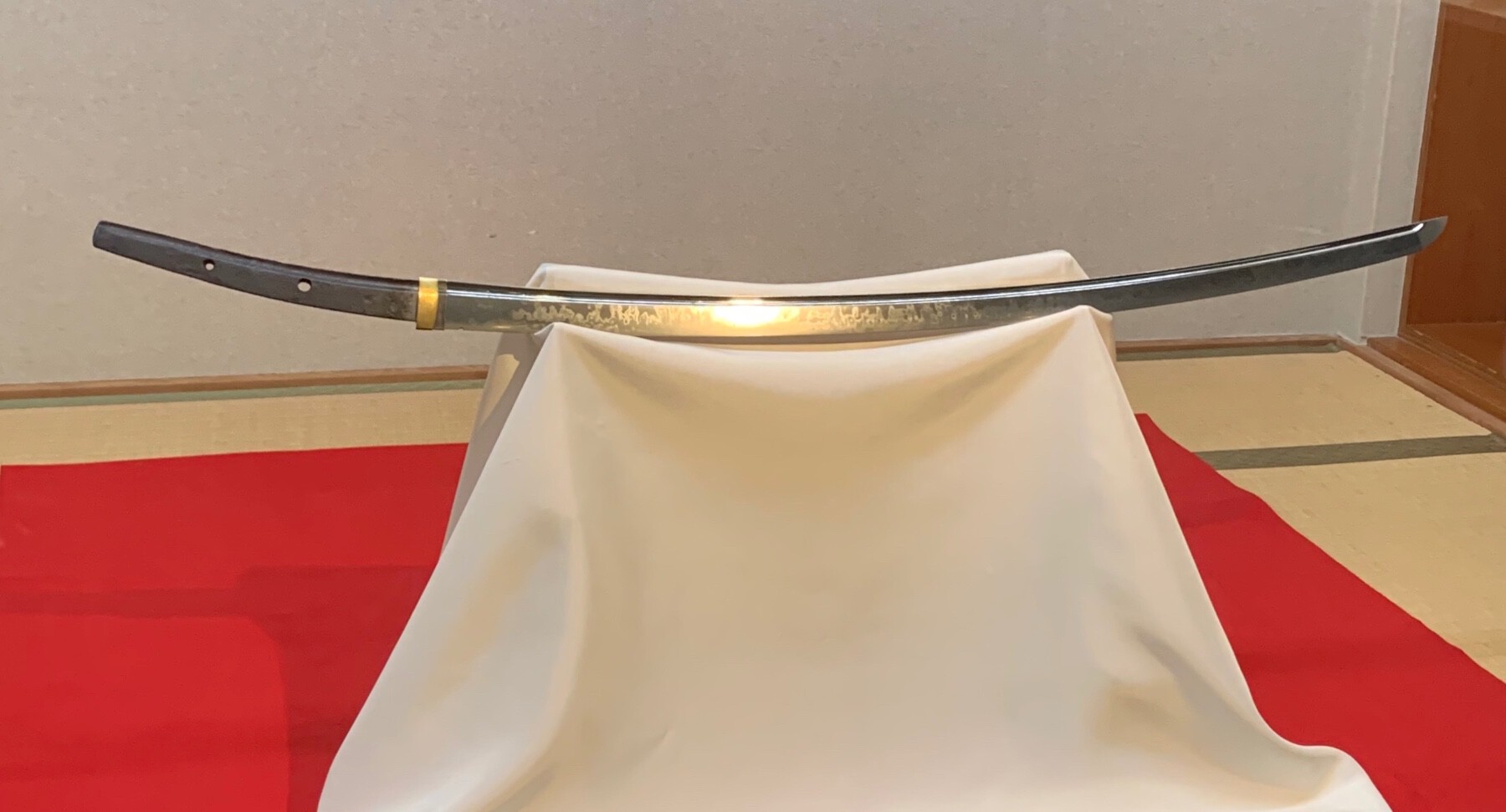
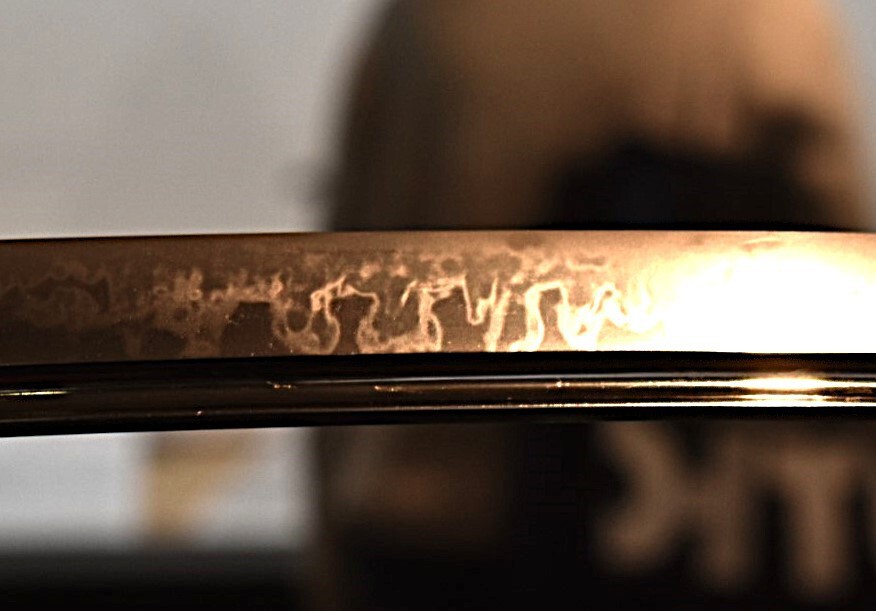
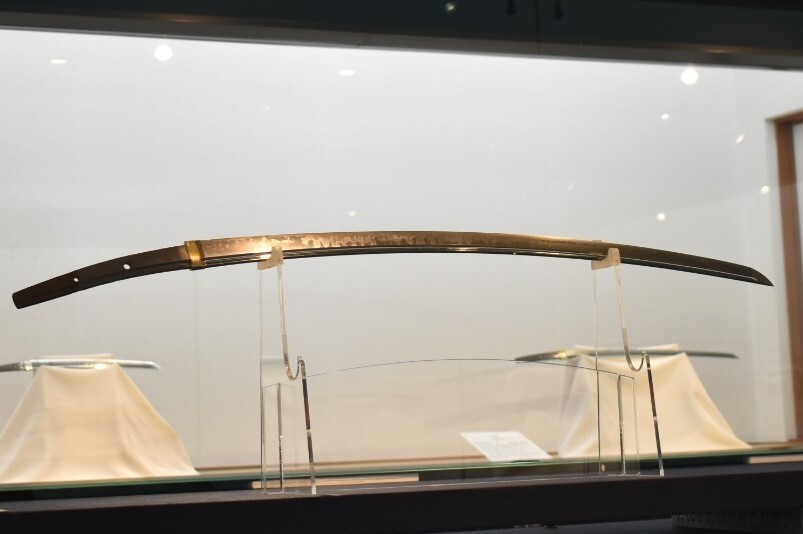
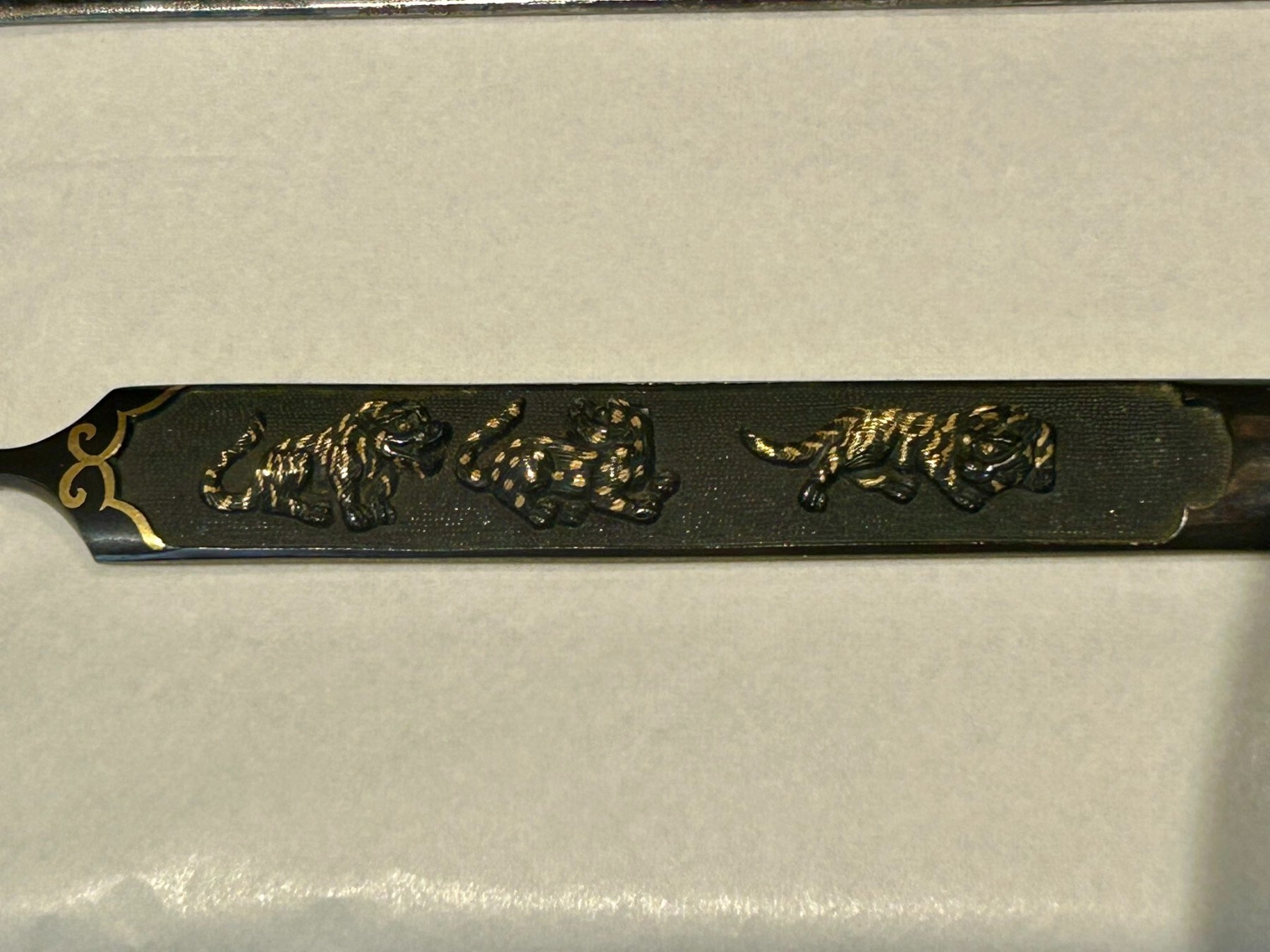
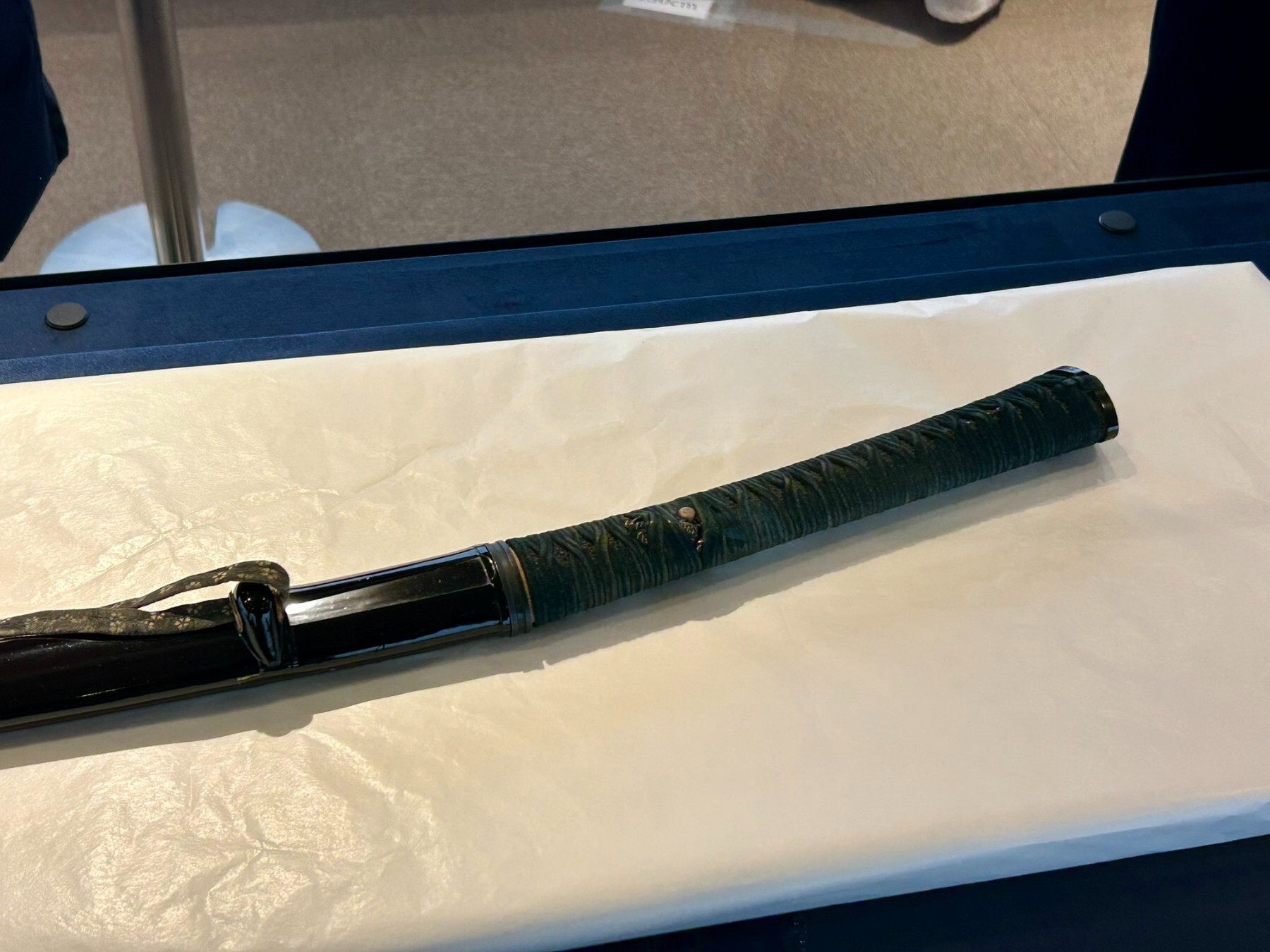
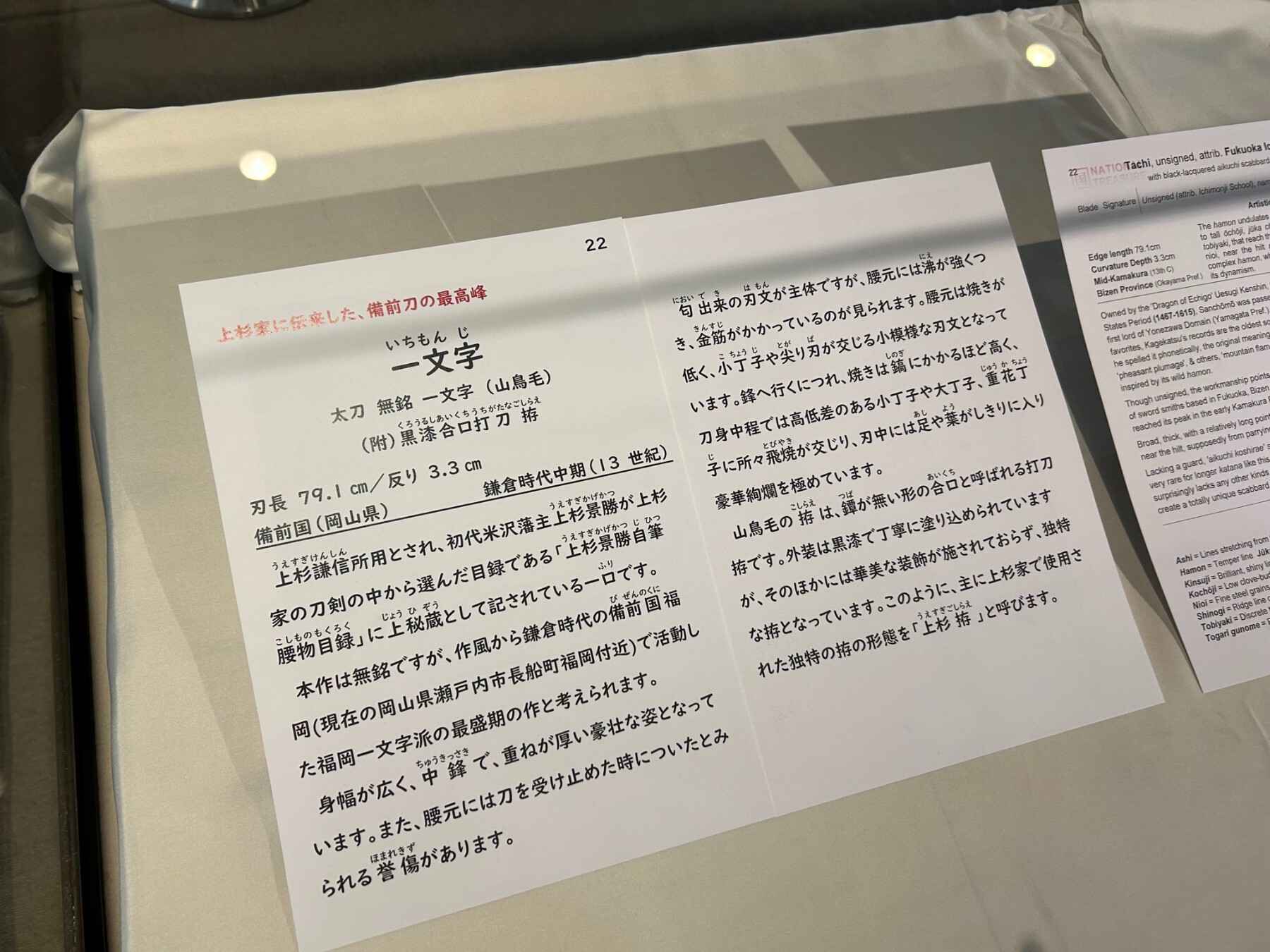
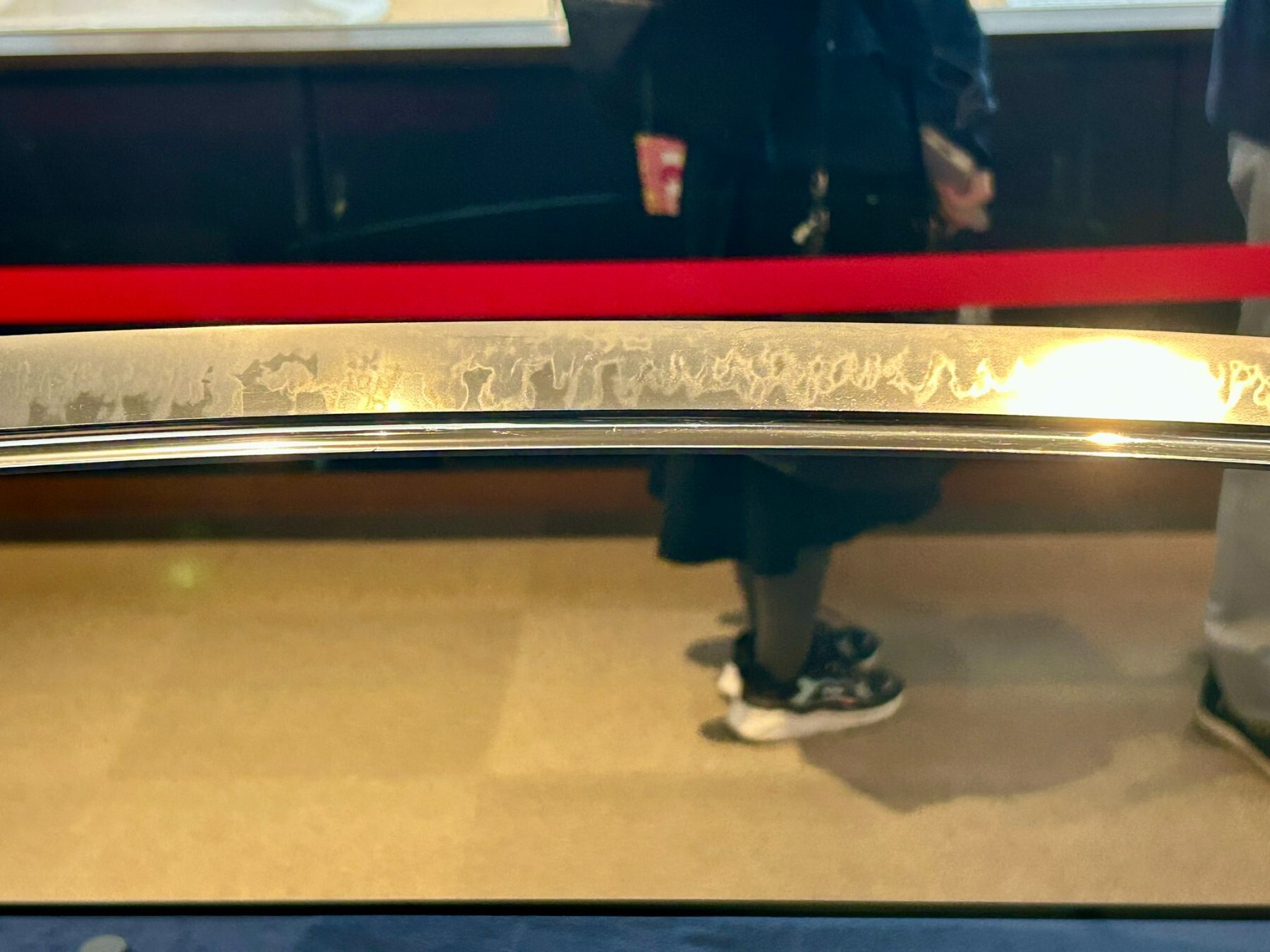
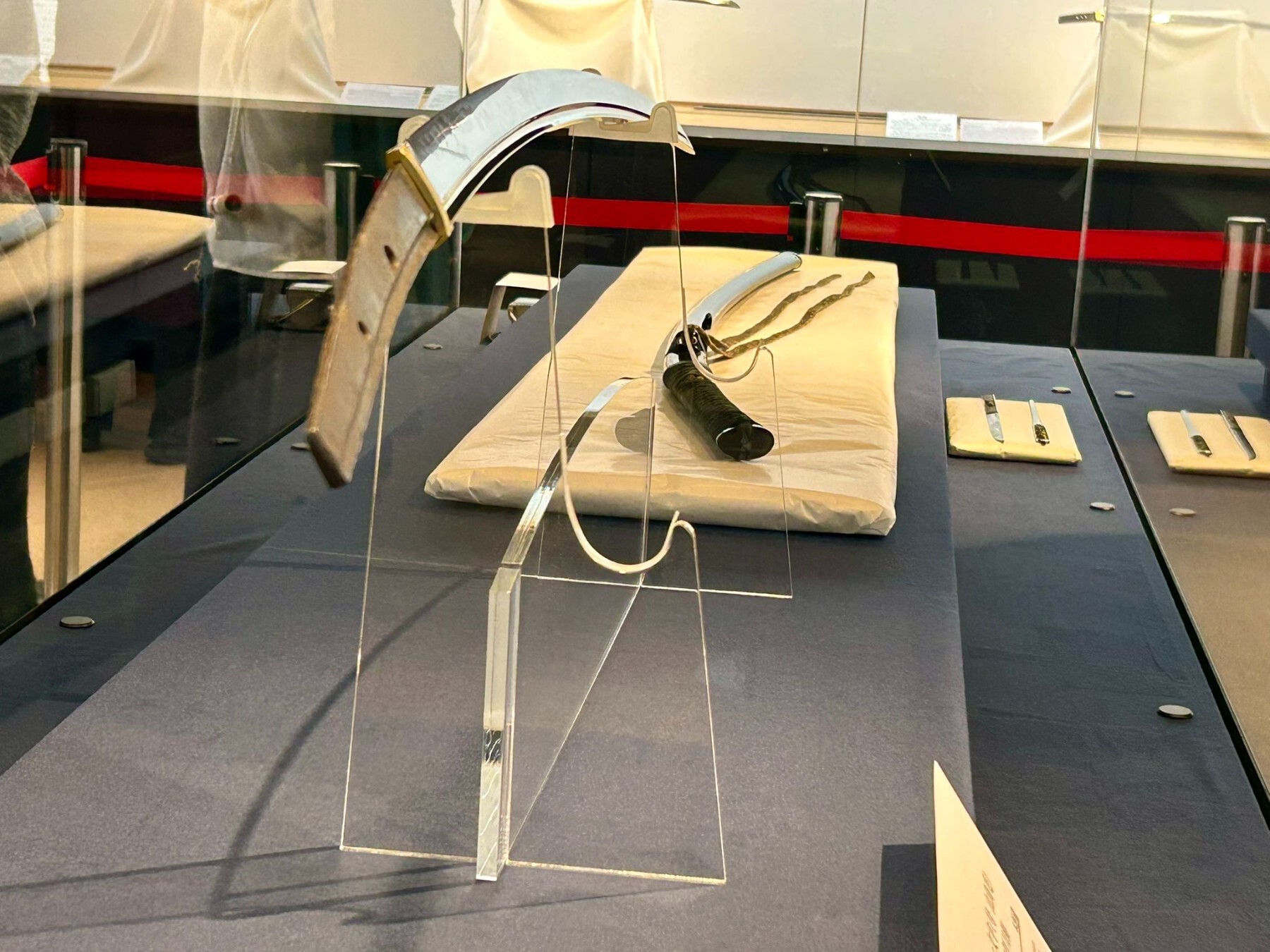
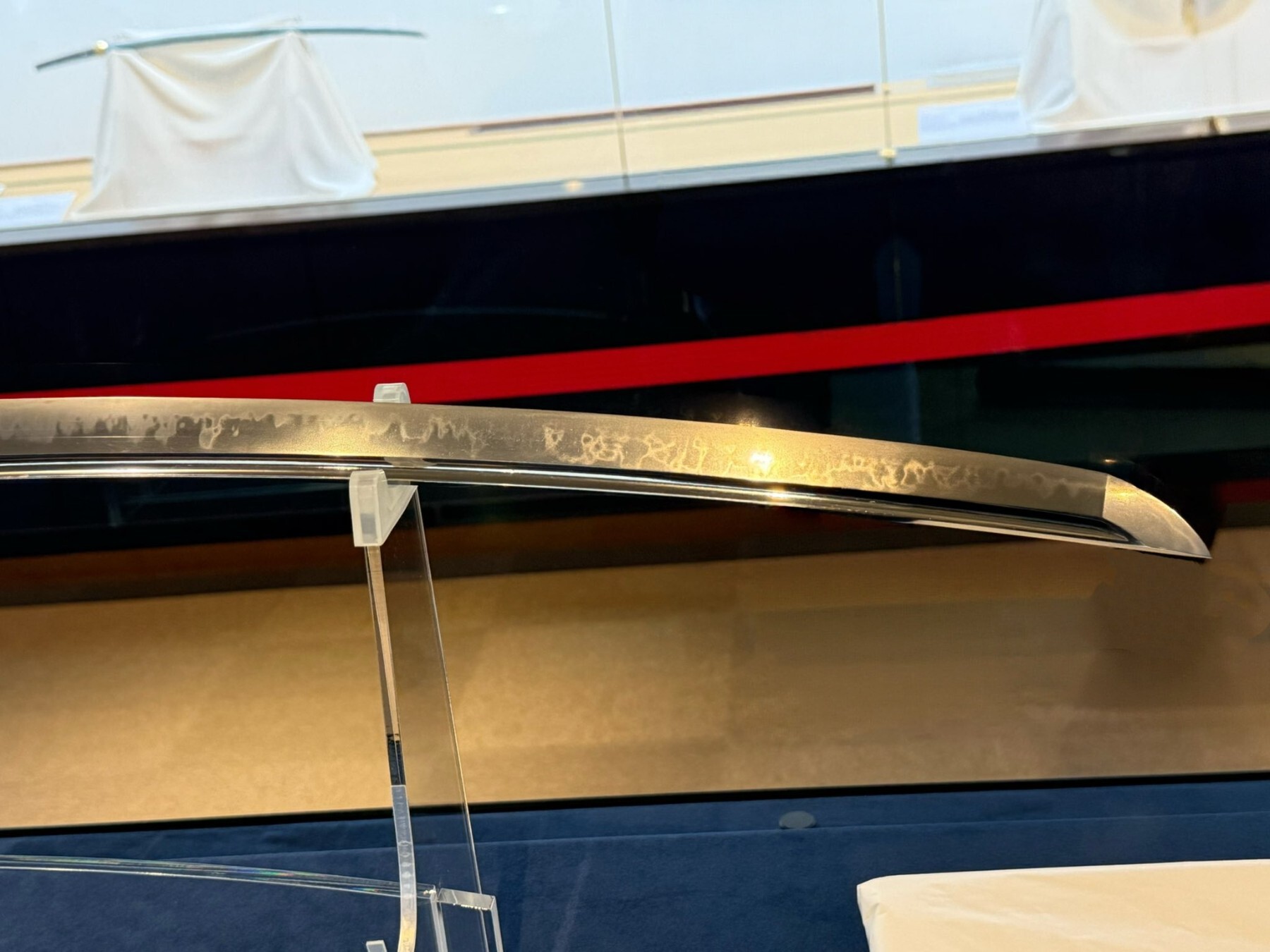
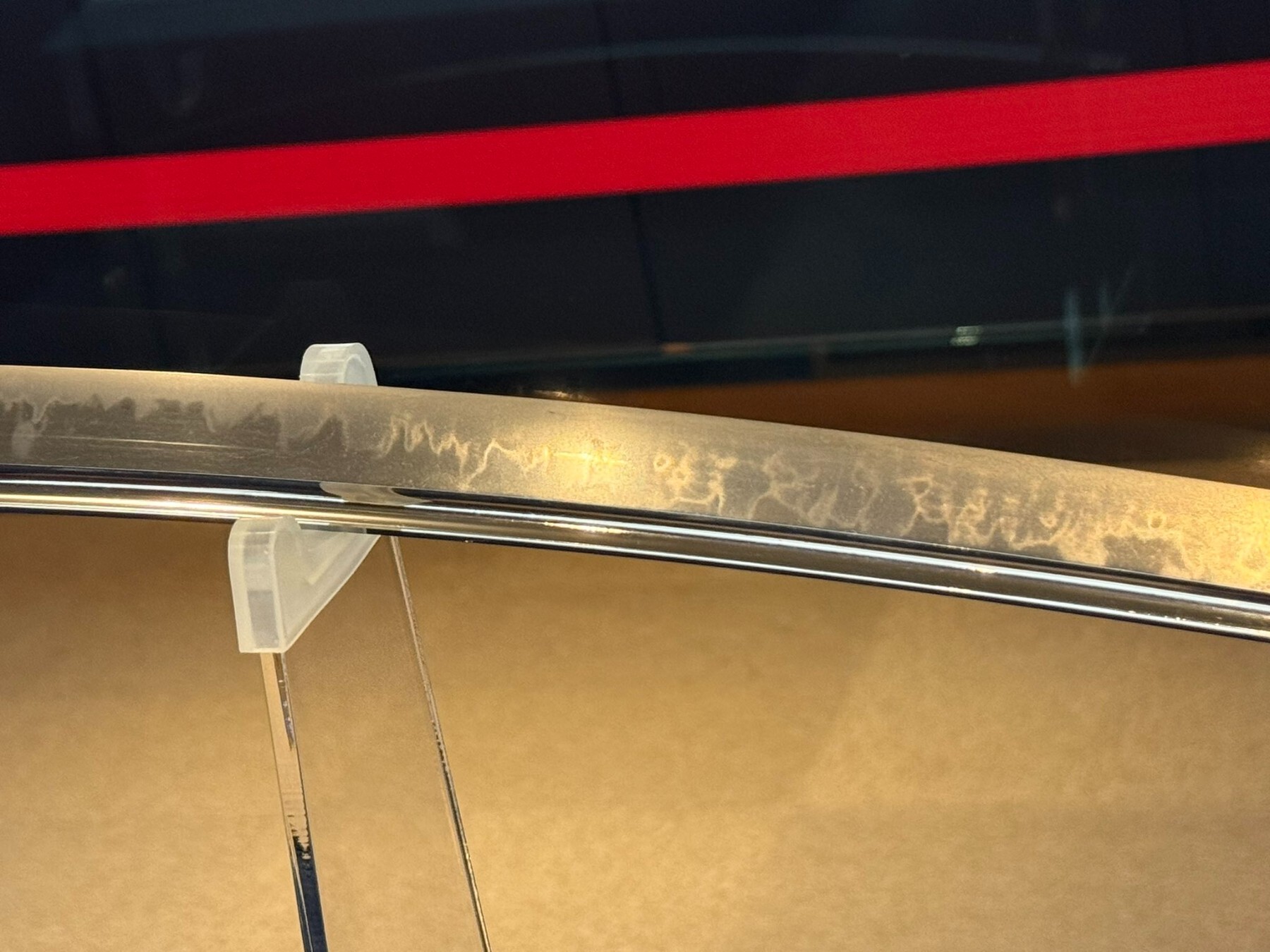
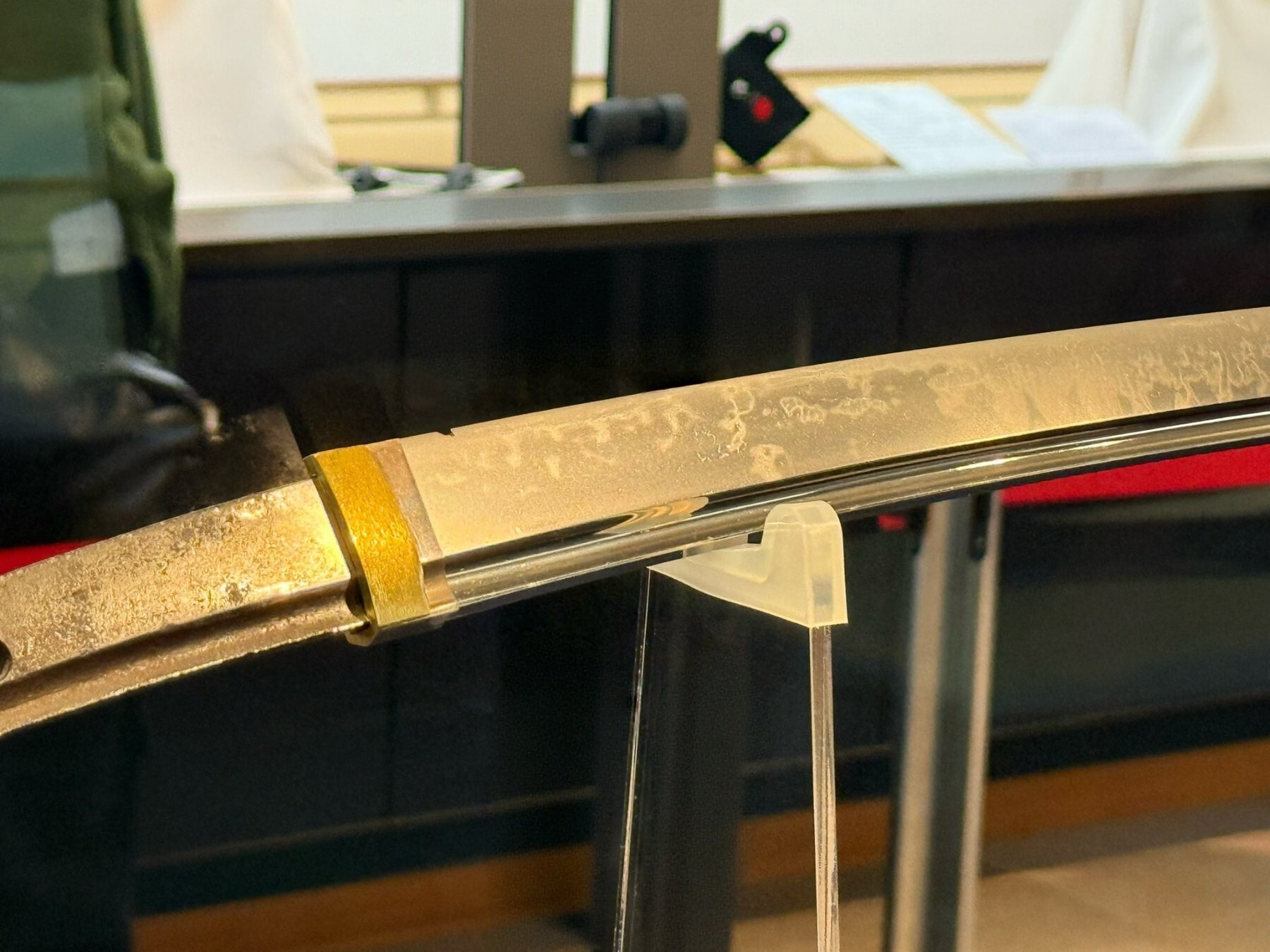
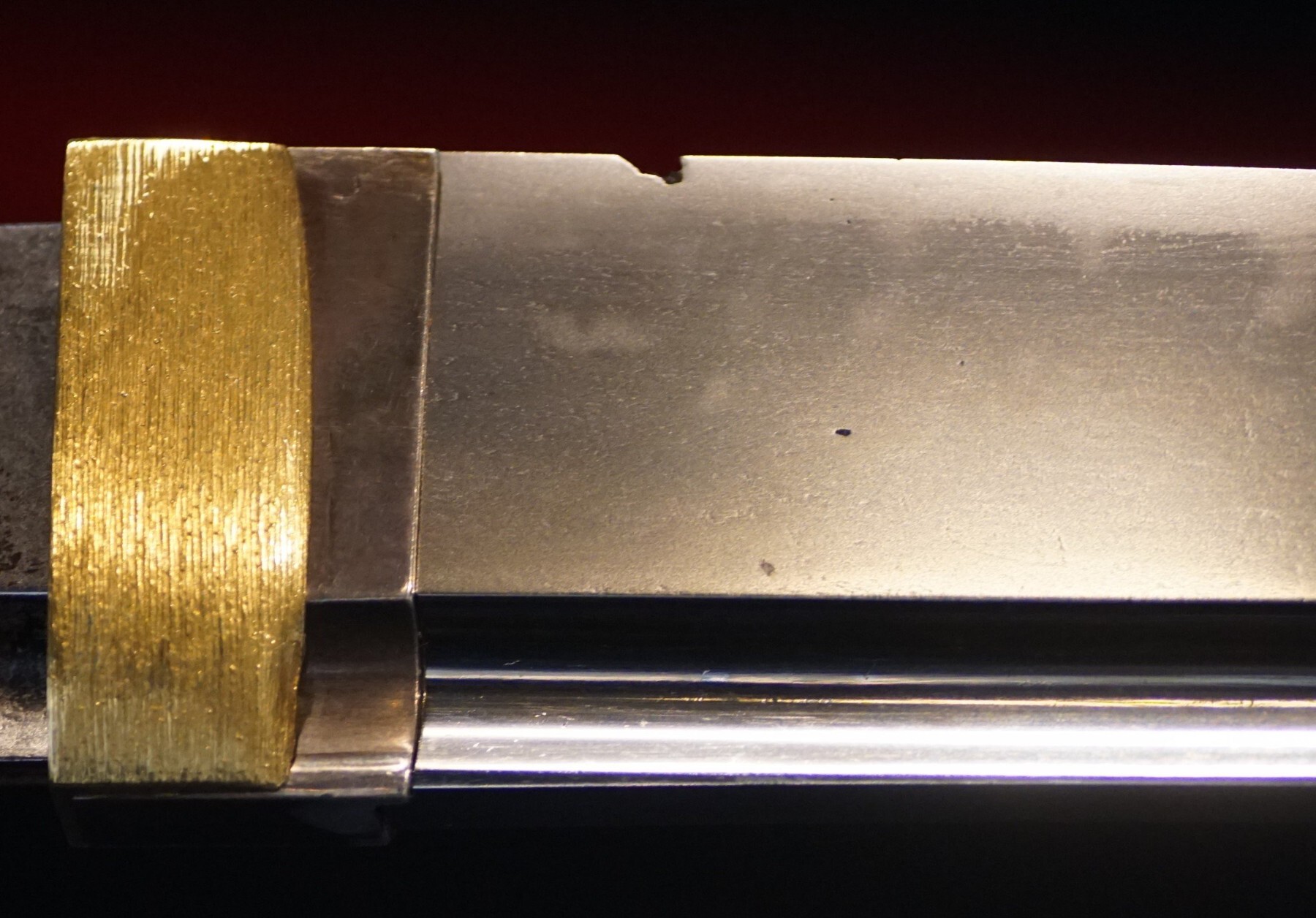
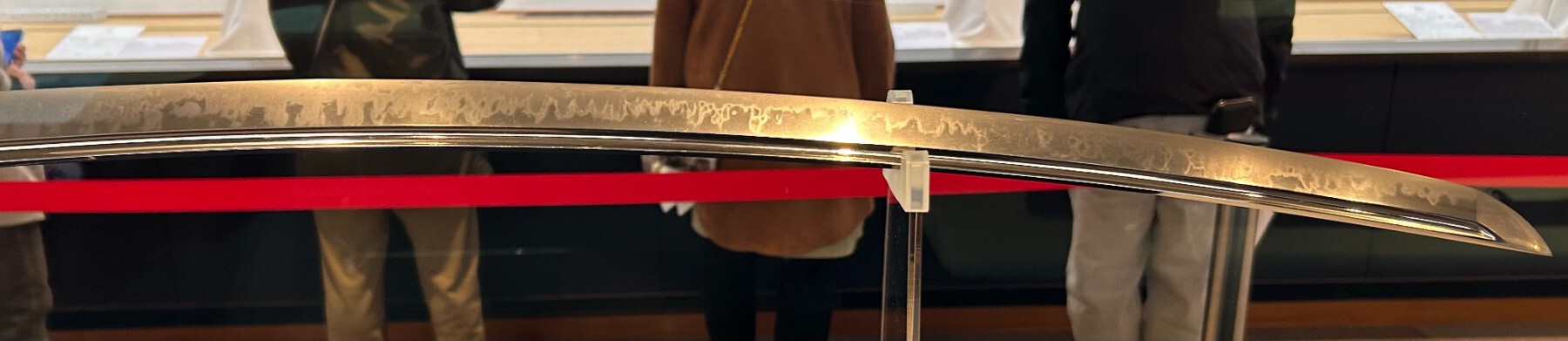
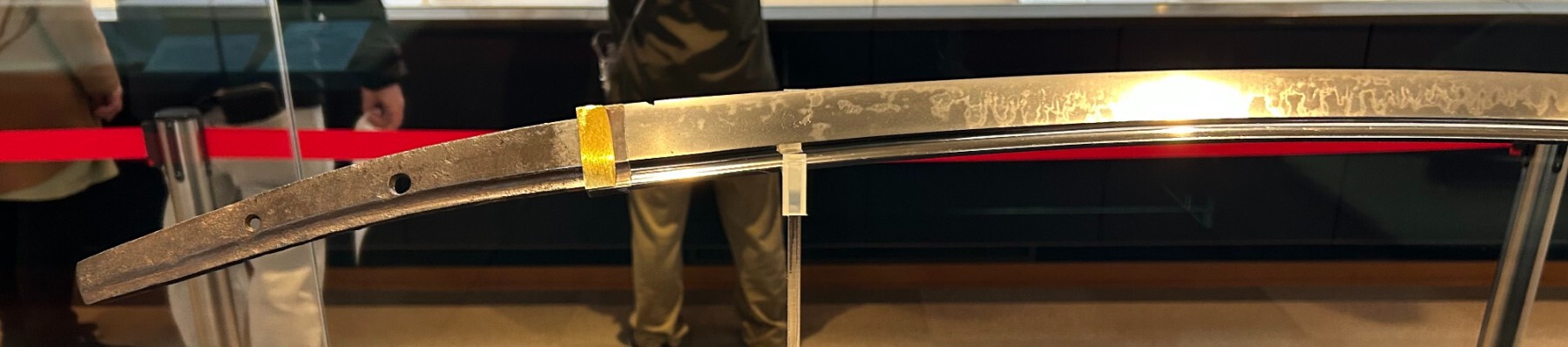
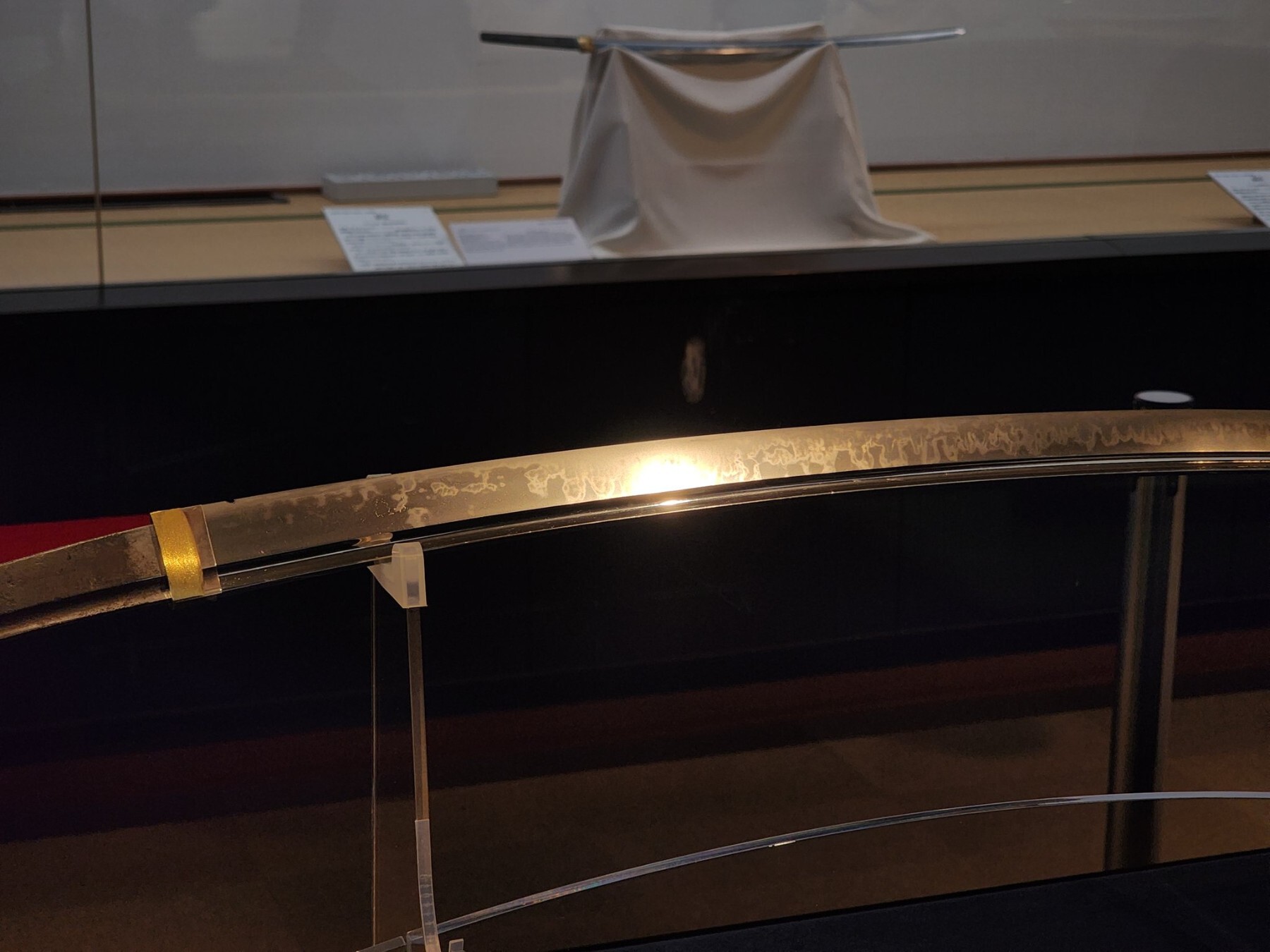
The Yamatorige is coming out of storage for 2 very short viewing periods in 2026. Both times it will be on display at the Bizen Osafune Sword Museum. Click here for more information. It went on display on Friday, 20th March and will be on display until the 29th March but will come back again at the end of April. They have set it up with a stand that allows you to view it from both sides - which I think is brillaint! Expect big crowds as they have linked up with Touken Ranbu to promote the event. Images from @yoimachi95, @gasmask0821 & @kentaro9614 on X. If you happen to go... please drop some photos here.
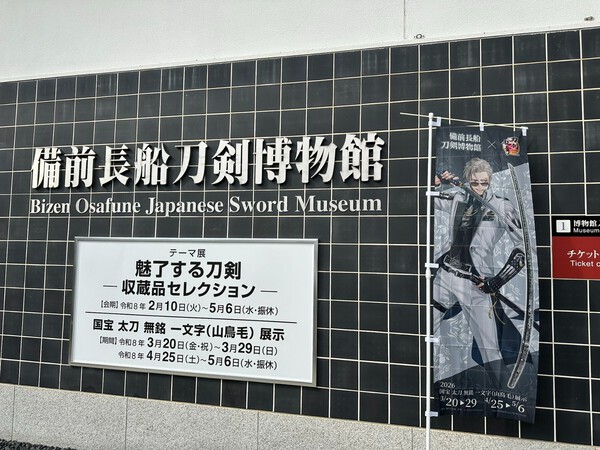
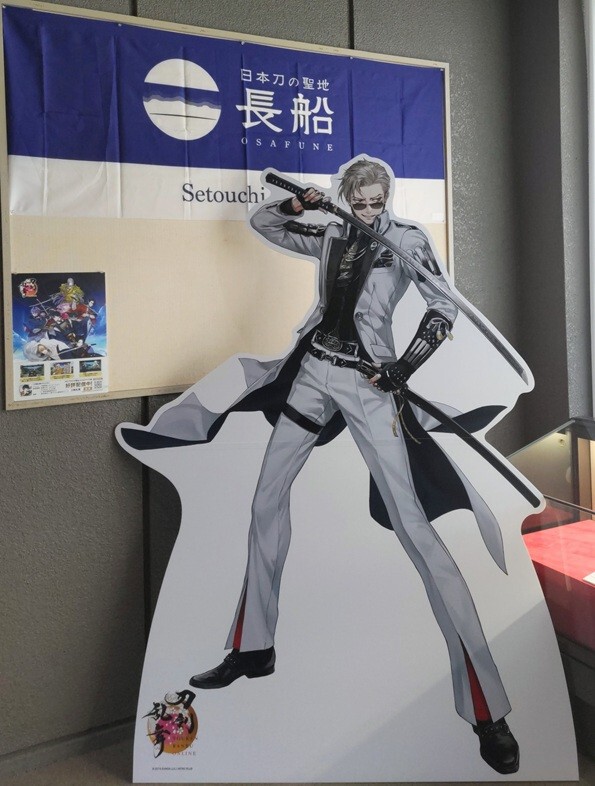

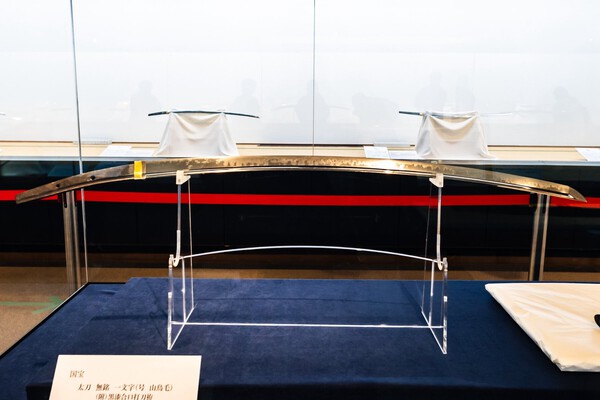
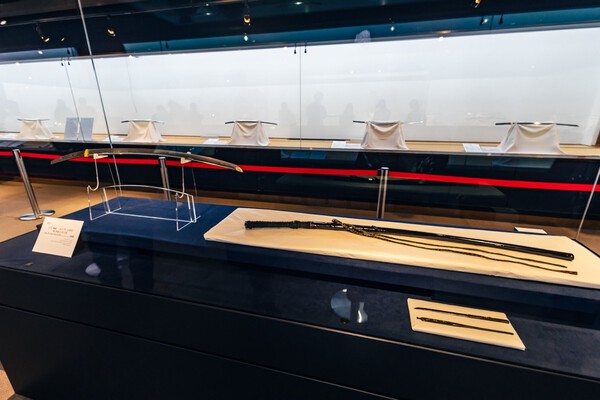 2 points
 -
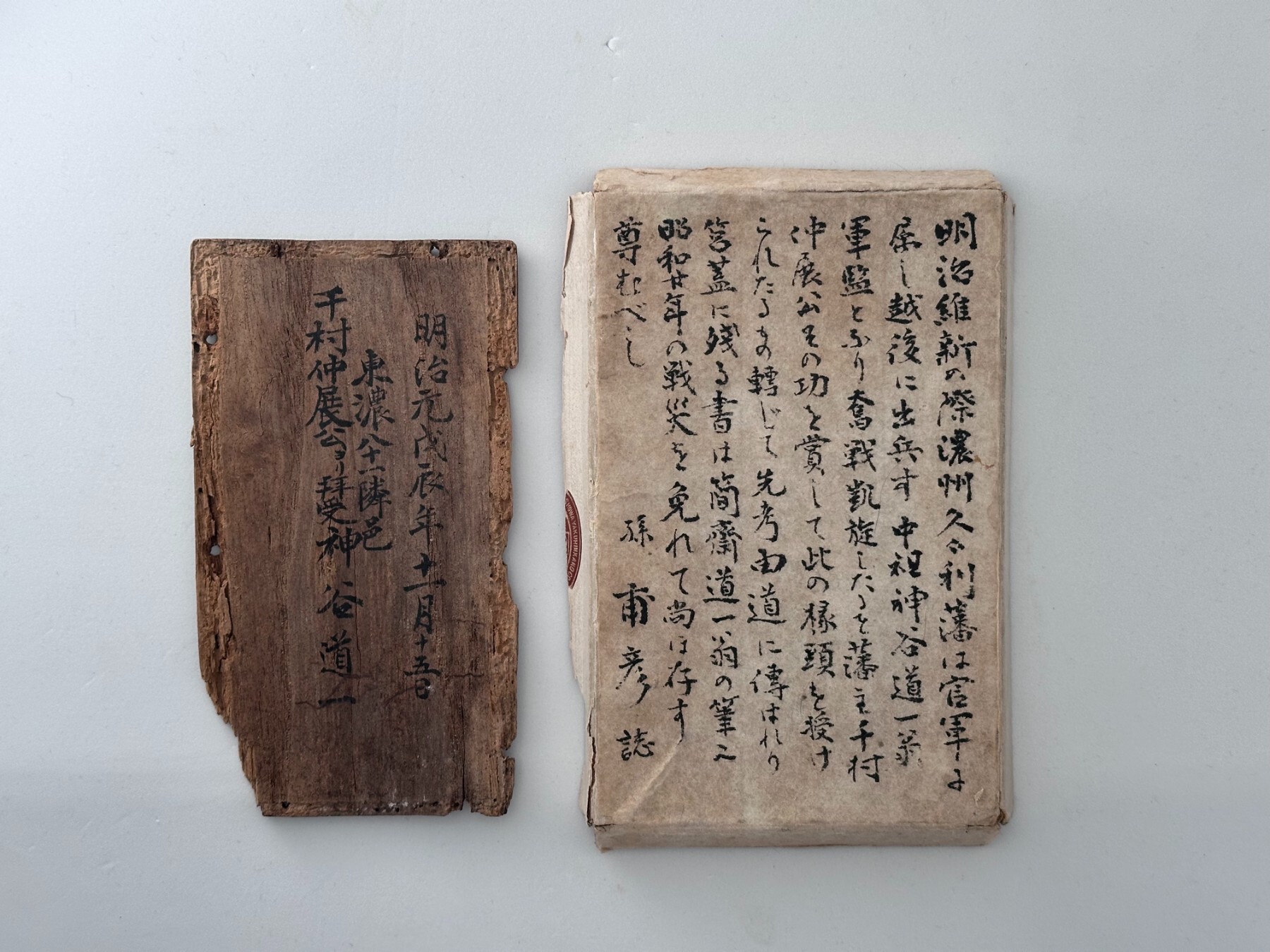
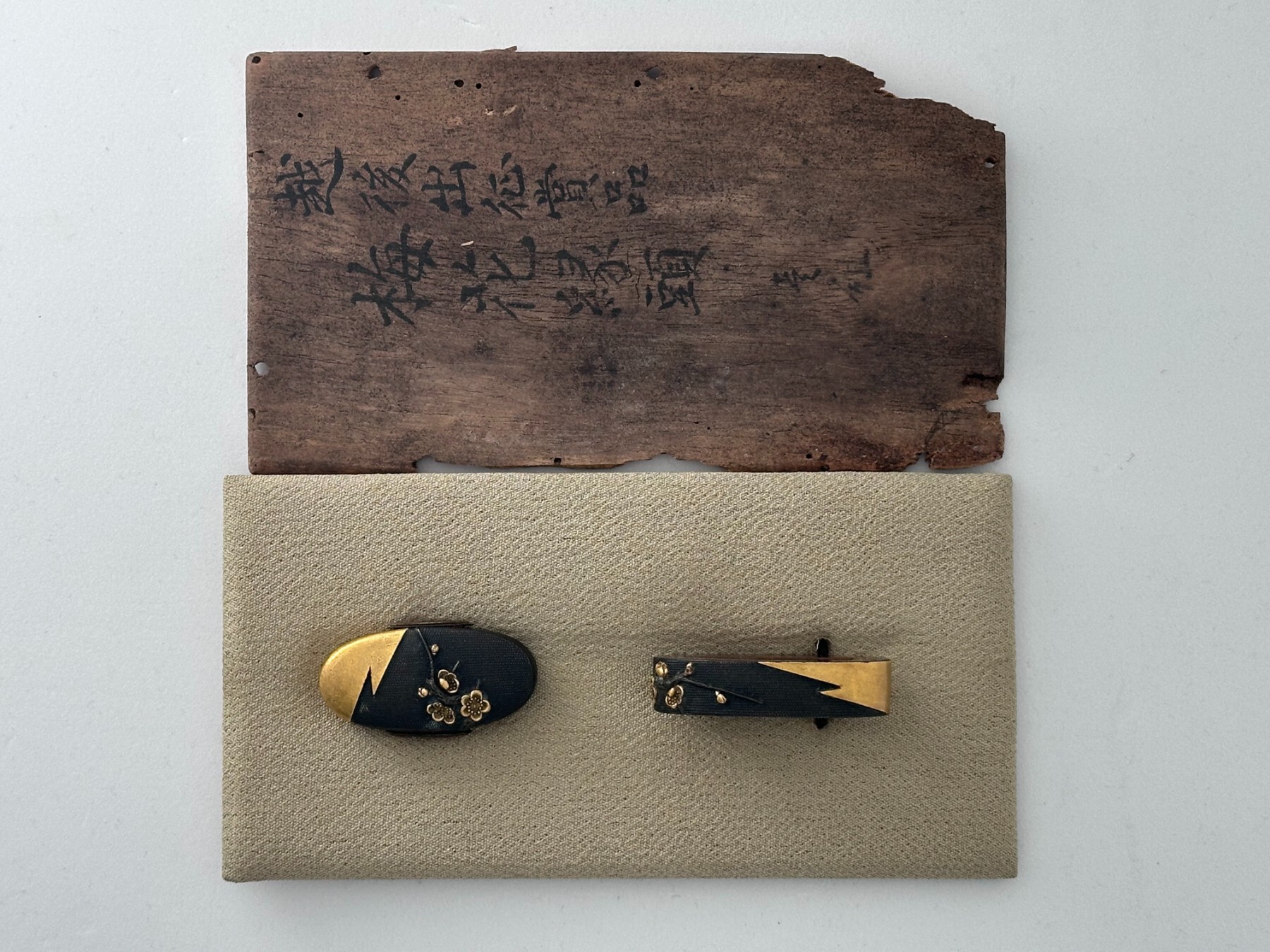
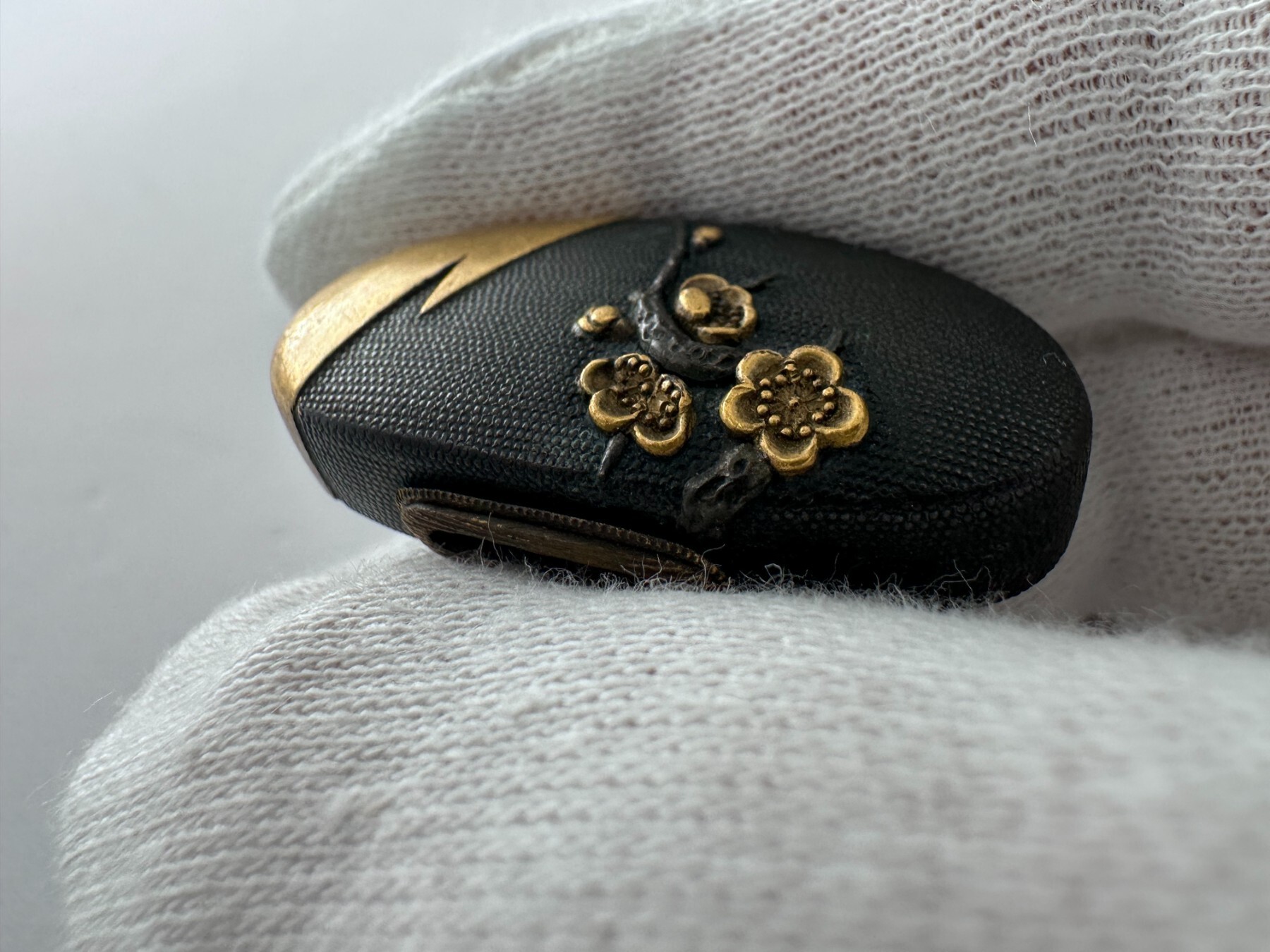
Hi guys, Here is something interesting to show you. A set of f/k awarded to Kamiya Dōichi, by Lord Chimura Nakashige(千村仲展) in 1868. Who was Kamiya Dōichi: Kamiya Dōichi(神谷道一) Known by the courtesy name Shikan and the art name Kansai. He was a Karō (Chief Retainer) of the Chimura family(Hatamoto), Kukuri Domain of Nōshū [Mino Province], during the Restoration. During the Hokueutsu War (part of the Boshin War), he was dispatched as the Commander of the Second Unit. After the Restoration, he became a Negi (senior priest) at the Minami-gu National Shrine. Subsequently, he entered service in Gifu Prefecture, where he was tasked with the editing of historical records. In 1879, he became the first District Governor of Kani, and later served as the District Governor for Ena, Ono, Mashita, and Yoshiki. He resigned from office in 1885 and authored works such as the "Sekigahara Senki" (Chronicle of the Battle of Sekigahara). Translations made by Gemini so I'm expecting some errors, but you'll get the idea. Award for the Echigo Military Campaign. Plum Blossom Fuchi-Kashira. One Set. Meiji 1, Year of the Earth Dragon [1868], November 15th. From the village of Kukuri in Tōnō [Eastern Mino Province]. Humbly received from Lord Chimura Nakashige. [Signed] Kamiya Dōichi. At the time of the Meiji Restoration, the Kukuri Domain of Nōshū [Mino Province] joined the Imperial Army and dispatched troops to Echigo. My ancestor, Kamiya Dōichi, served as a military inspector and fought bravely. Upon his victorious return, the Lord of the Domain, Chimura Nakashige, rewarded his distinguished service by granting him this. From there, it was passed down to my late father, Yoshimichi. The writing remaining on the lid of this case was brushed by the old master Kansai Dōichi. Having escaped the war damages of the 20th year of Showa (1945), it still exists today. It should be deeply revered. Recorded by his grandson, Yasuhiko. Enjoy!


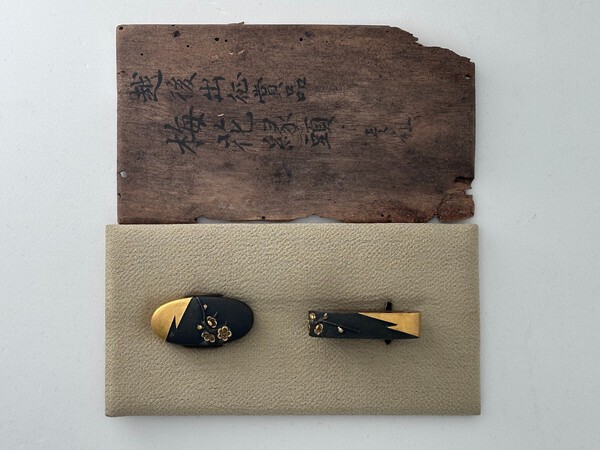
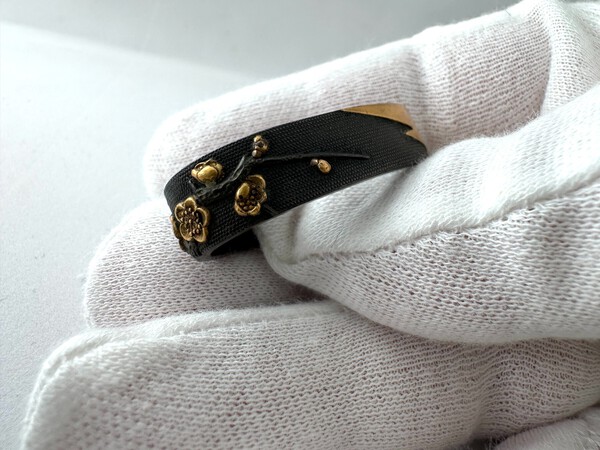
 2 points
 -
JH, the photo is slightly out of focus. If you want to post a better one, please use a dark background for better contrast. I also read KANE for the first KANJI, but the second is not clear. It could be NAGA or HIDE or something else. Please sign all posts with your first name so we can address you politely. It is a rule on NMB.2 points
-
Just came across one on this Wehrmacht-awards thread with similar fittings to Tom's @drb 1643. Don't think the blade is custom, but hard to tell from the photos. I'll ask the owner and update. Fuller calls this variation "scarce."


 2 points
 -
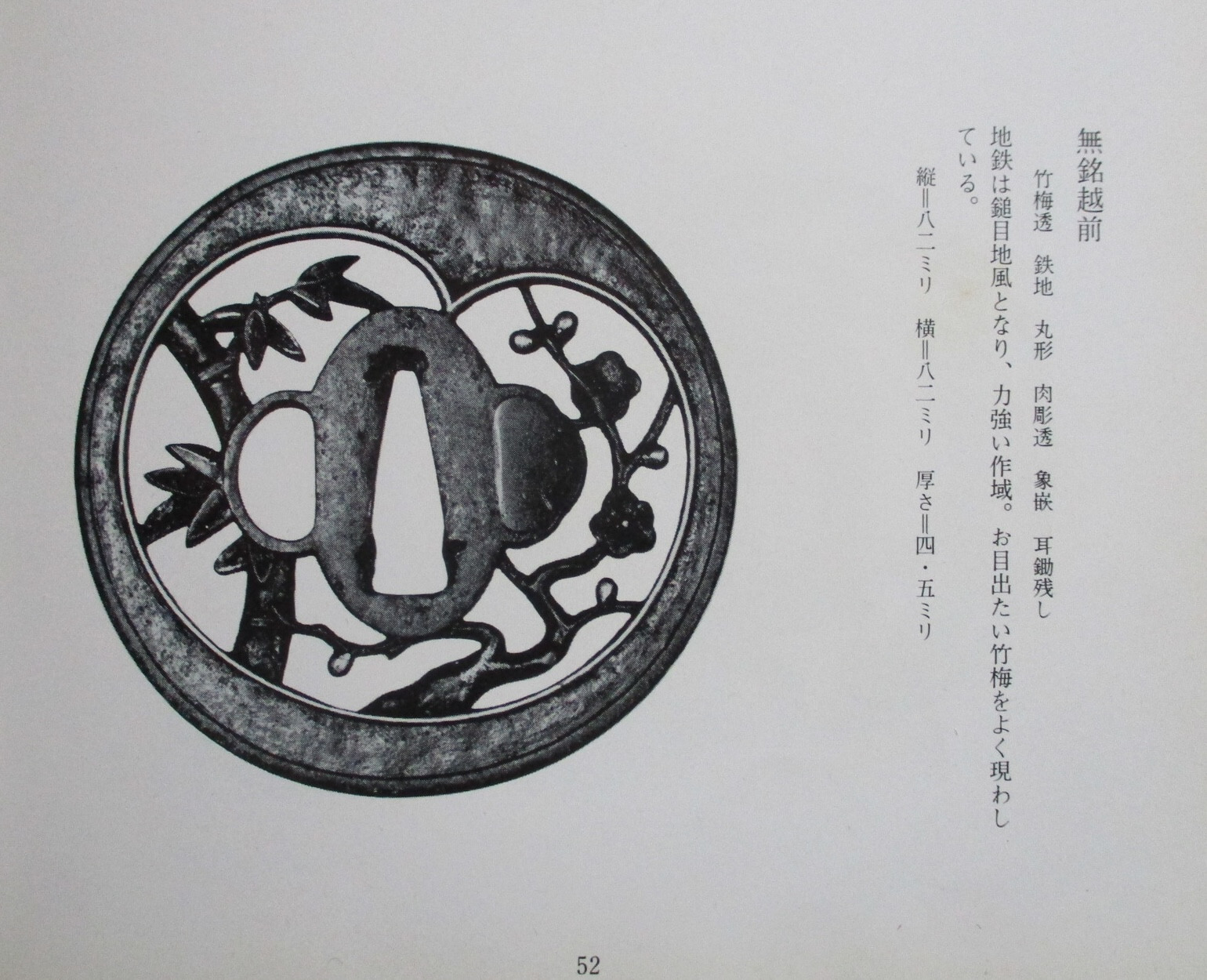
I just found this in the second volume of „Hyaku Tsuba“ by chance: Not the same, but a similar design. Only the front is depicted. The hitsu-ana, however, are thicker than on the piece in question. The text says „Mumei Echizen“. Maybe it helps.
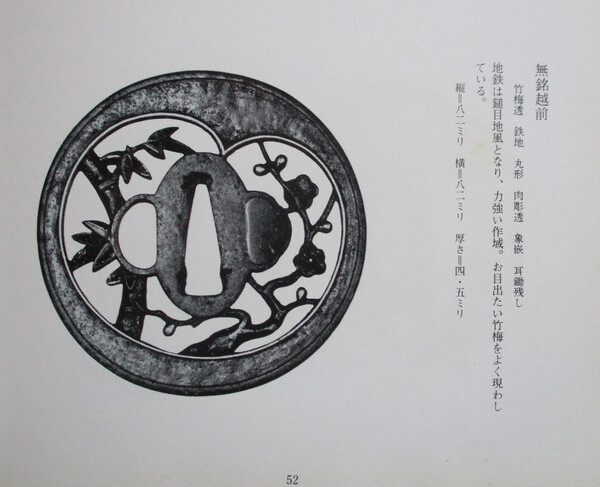 2 points
 -
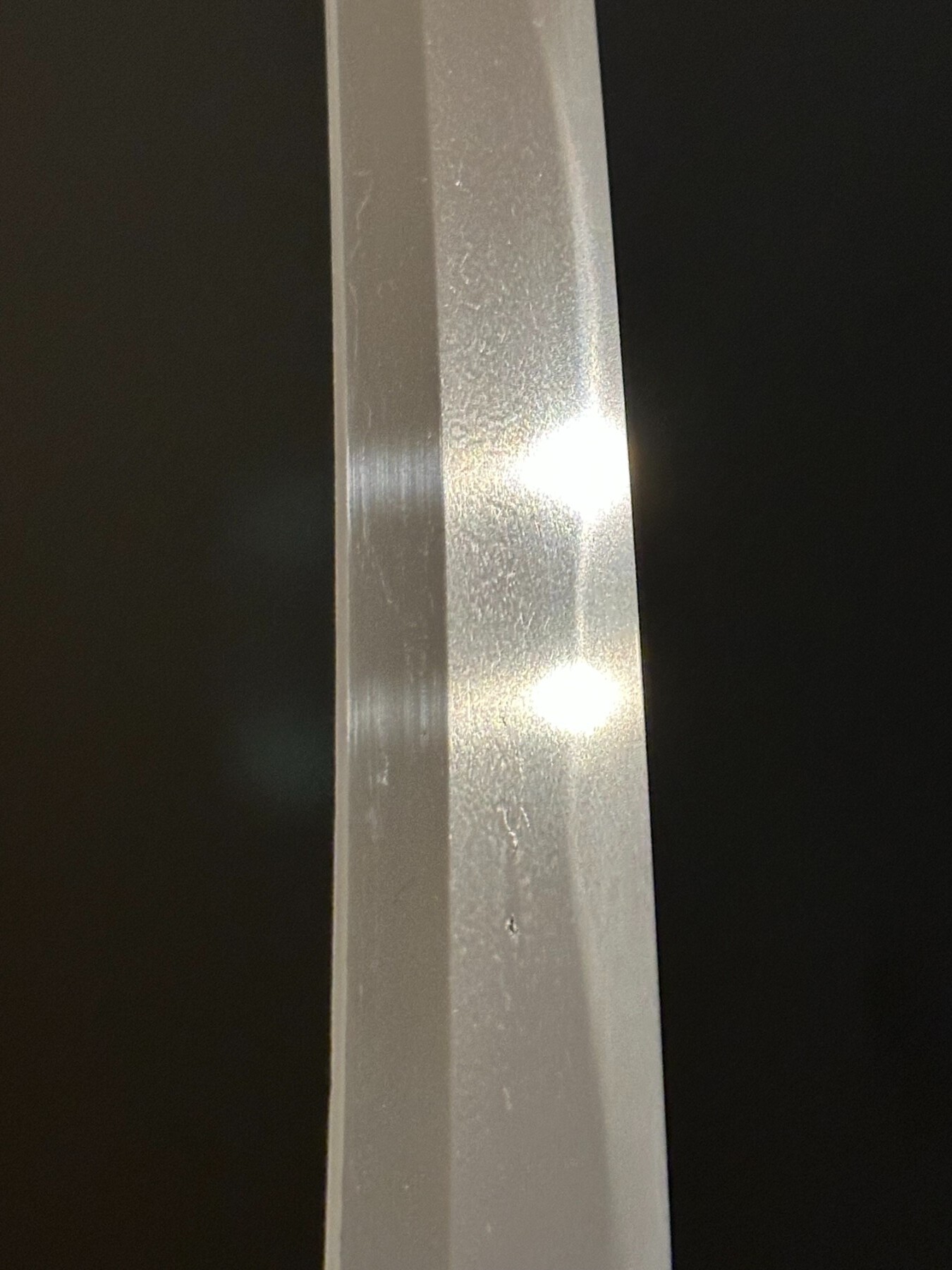
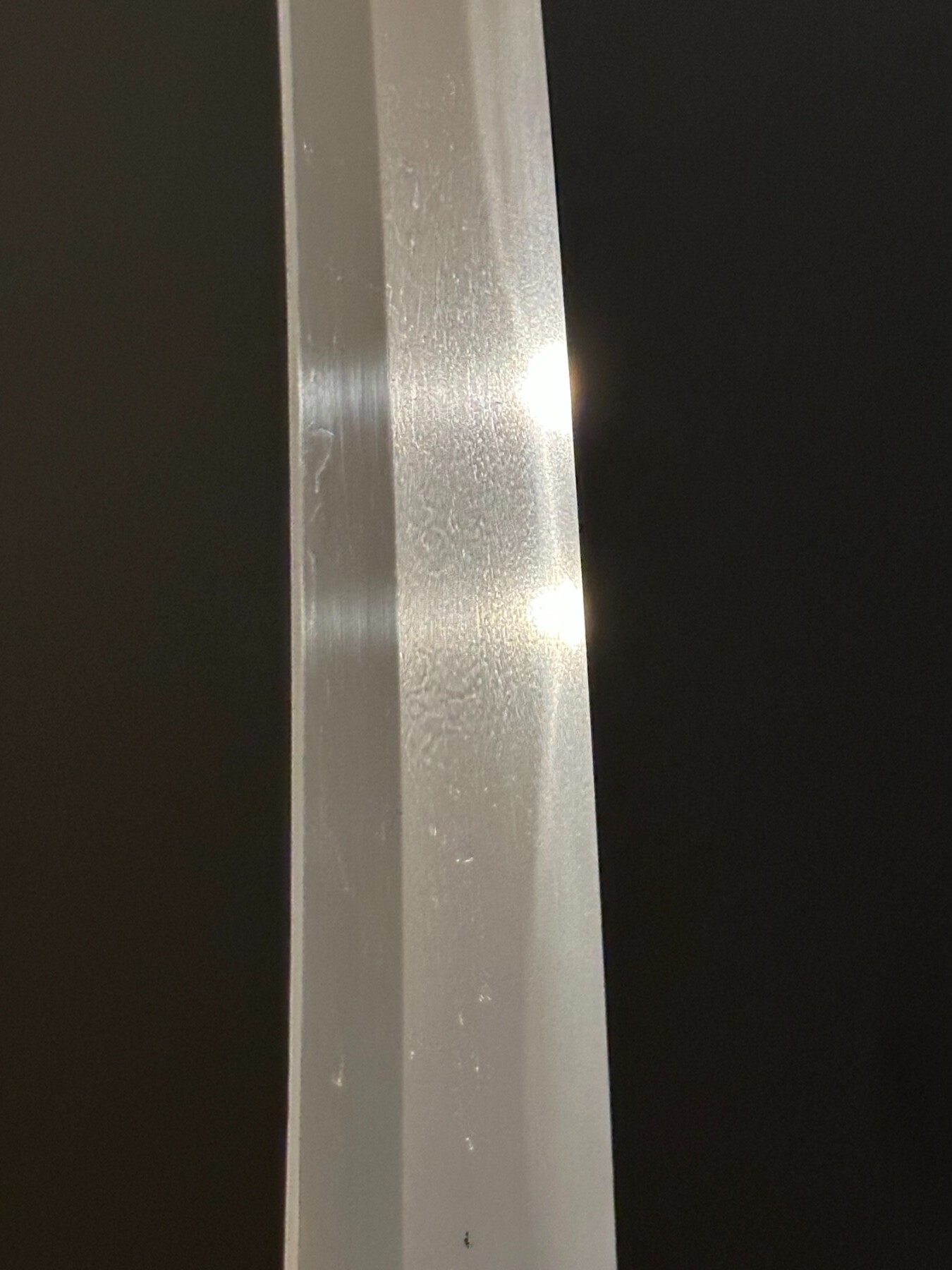
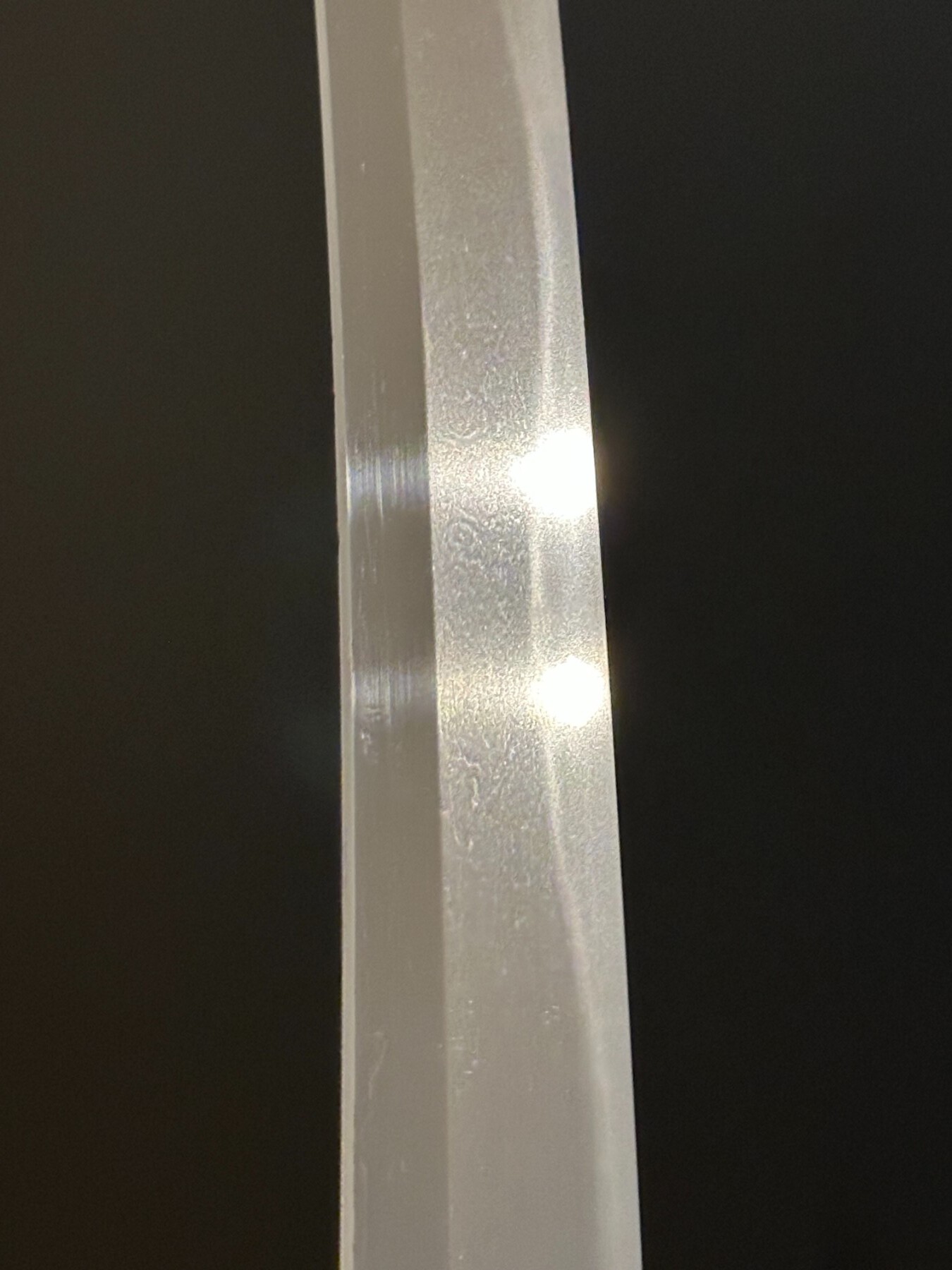
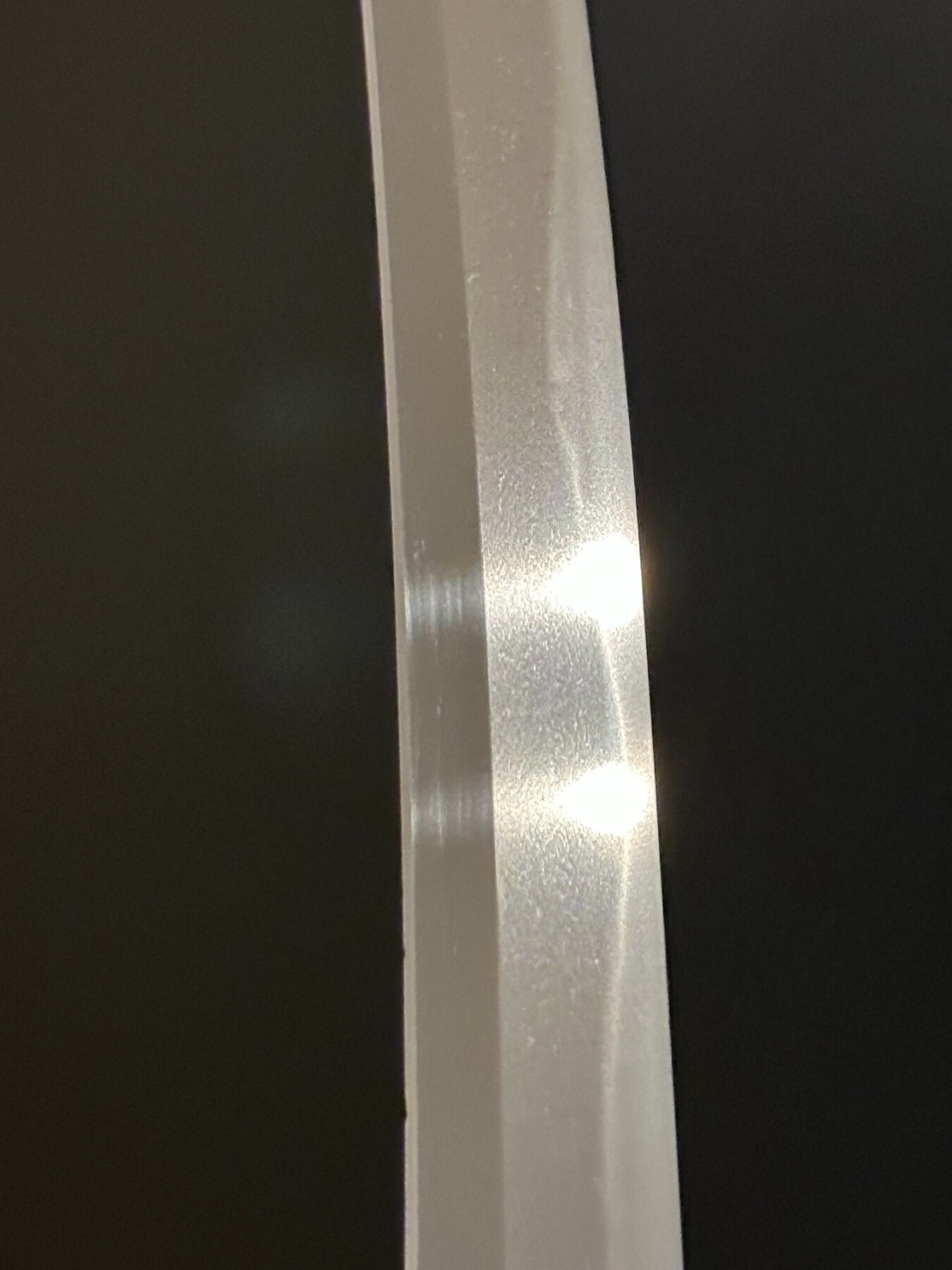
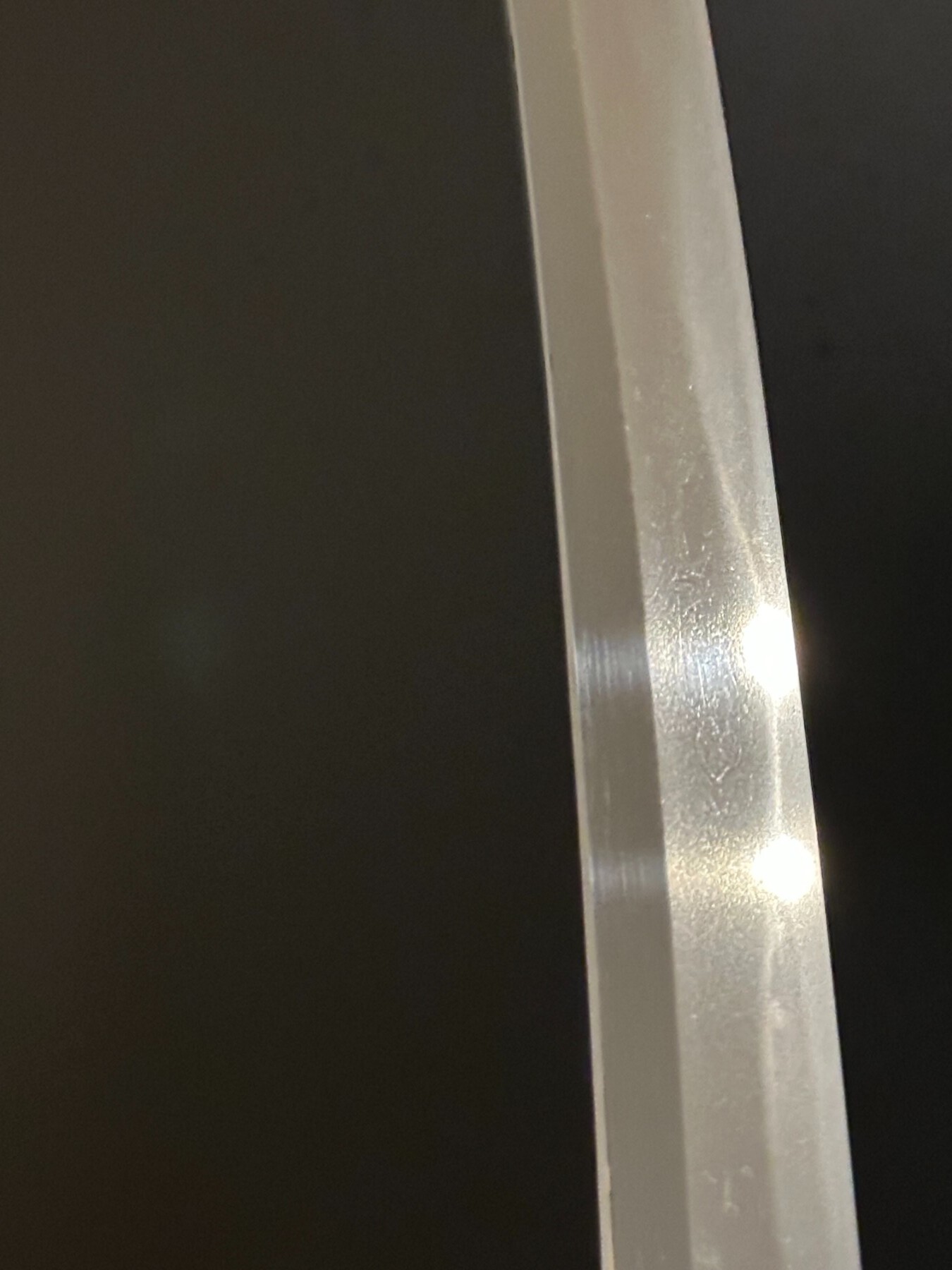
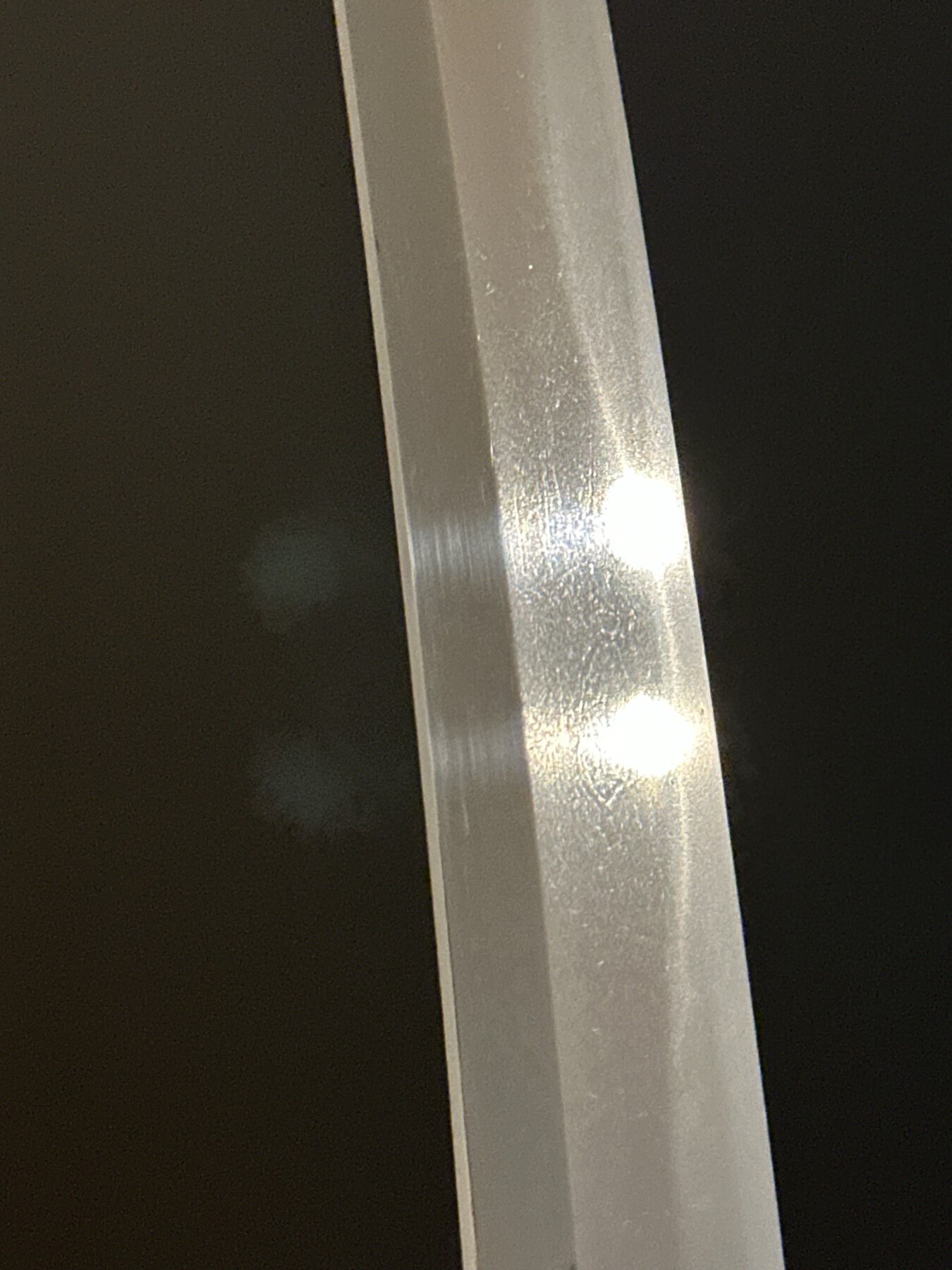
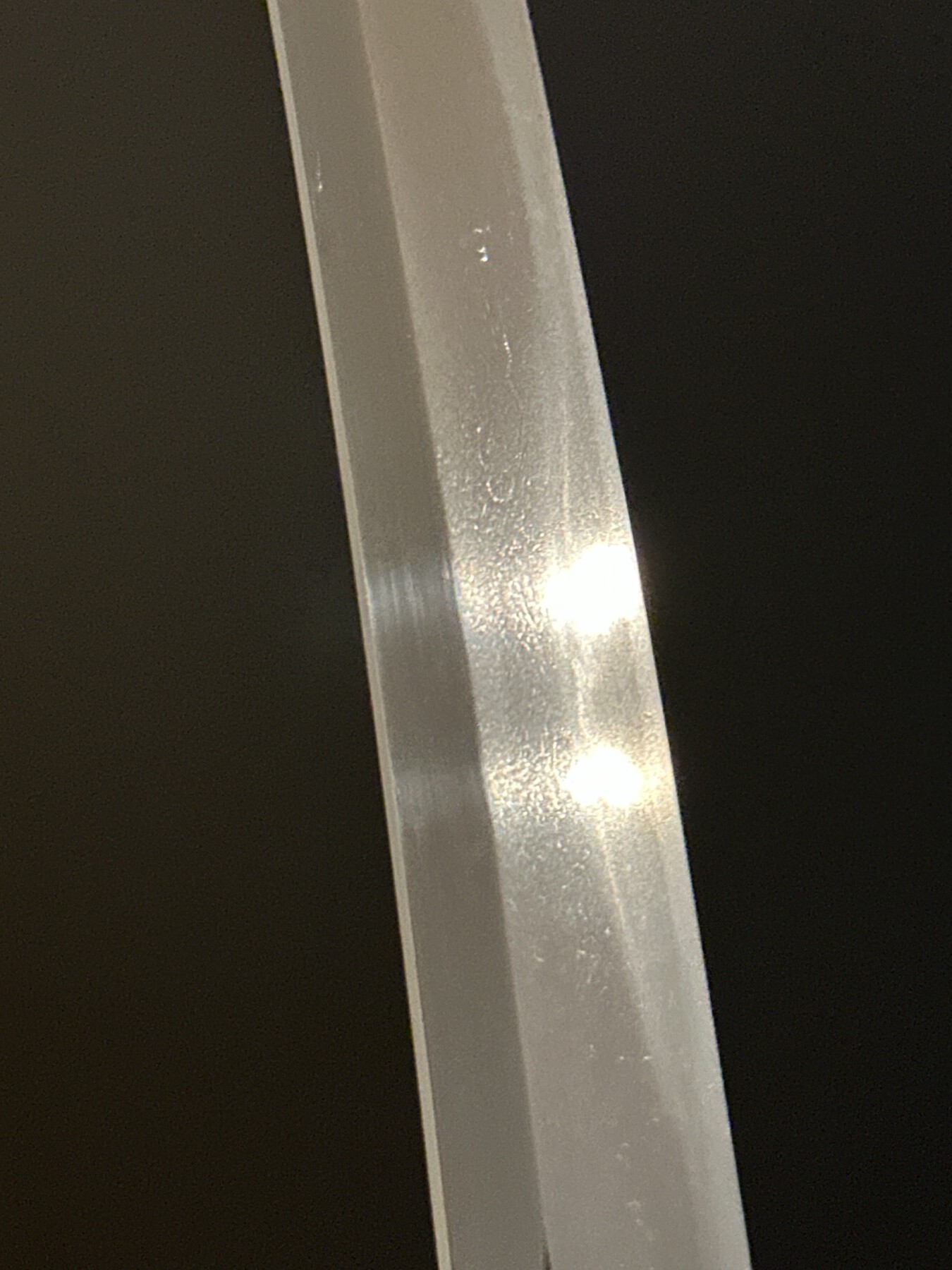
Looks like someone started a polish and then abandoned it. More than a window it seems. I wonder if they found a hagire or other fatal flaw?2 points
-
This the one Dale mentioned
 2 points
 -
One can only speculate about the meaning and purpose of honorary titles among Japanese swordsmiths. On the one hand, one must likely consider each individual case, and on the other, the broader social context. Fundamentally, it must be noted that a swordsmith primarily belongs to the artisan class. The significance of this status varies from the Muromachi period through the Momoyama period to the early, middle, and late Edo periods. The distinction between artisans and merchants was not yet clear-cut, especially in the early period, as artisans were generally organized into za, which, among other things, managed the procurement of raw materials, customer acquisition, and the distribution of finished products. Although the za system continued to exist in the Edo period, the occupational groups defined their activities more precisely. Thus, the swordsmith was officially ranked below a farmer in status, even though his natural proximity to the sword-wielding nobility meant that the swordsmith stood out from the group of artisans in terms of prestige. For swordsmiths of the Edo period who were fortunate enough to be employed by high-ranking patrons, it was certainly also a certain aspiration and norm—at least in theory—to stand on equal footing with the honorary titles of the samurai class. On the other hand, there were definitely prominent swordsmiths in high-ranking positions who did not hold or use honorary titles. There must be reasons for that as well. In any case, by Suketaka’s time, the traditional titles jo, suke, daijo, and kami were no longer necessarily the standard. It became customary to adorn oneself with creative and artistic, but also morally tinged studio and artist names, such as “Suishinshi,” “Chounsai,” etc.2 points
-
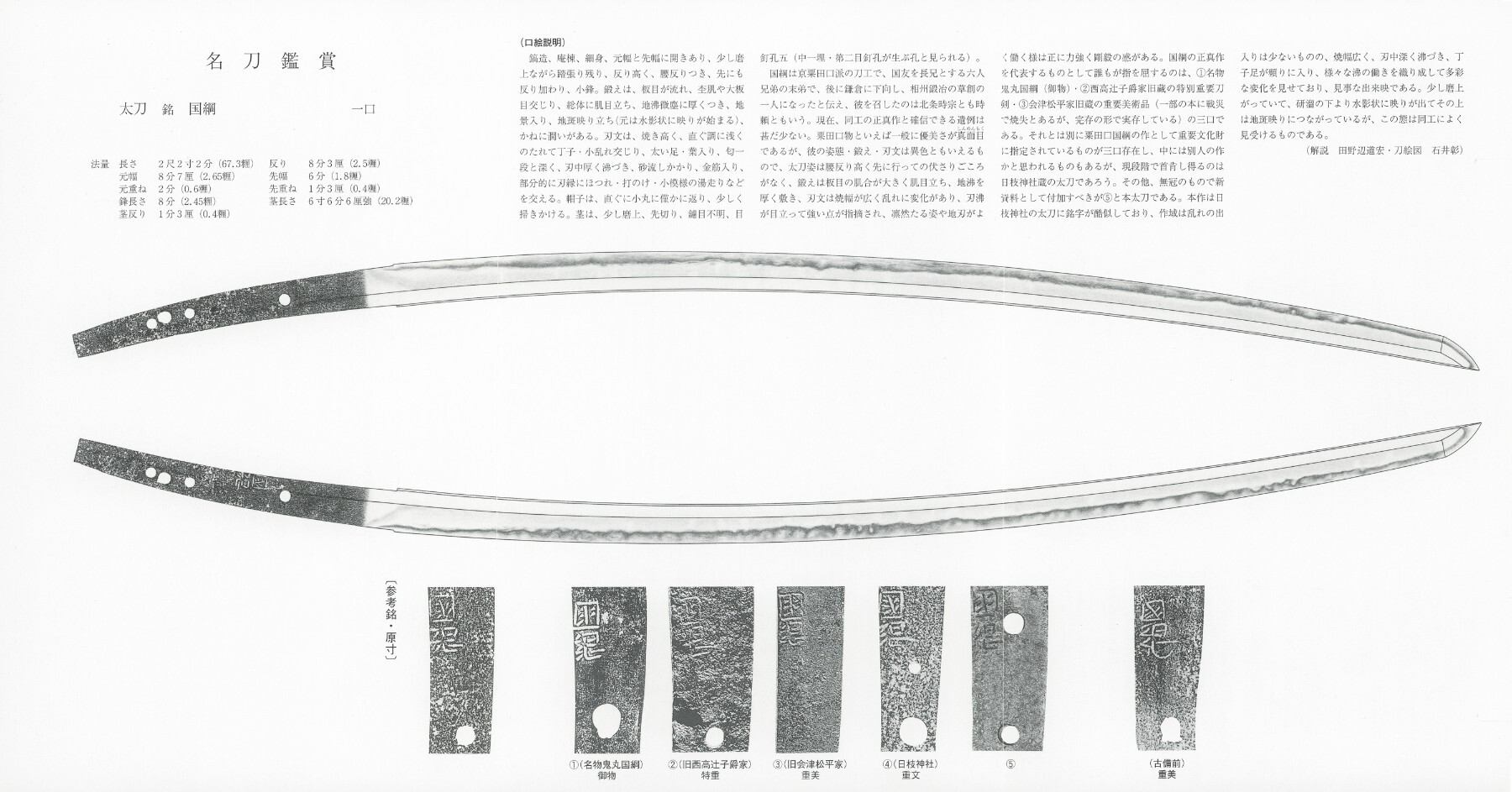
Dear Jeb. The particular shape of the nakago is designed to accomodate a specific type of tachi mount as per this thread. As to the blade you posted it is not nor does it claim to be an early blade so several possibilities exist apart from gimei. A customer might have comissioned it to mount in a similar tachi mount or as a copy of a well known blade, an utsushi mono. Or perhaps the smith was doing it to further his own skill. In summary neither the shape of the nakago nor the placement of the mei are exclusive features with regard to the period of manufacture. Hope that helps. All the best.2 points
-
Steve, Thank you for that link, very interesting and informative. I see now what you were saying about how many “variables” there are. I have saved that website to further explore at a later date. I really appreciate the help. I will pay it forward. Take care for now.2 points
-
I think currently the highest ranked Ozaki Suketaka swords are the 4(5 as one is daishō) that have passed NBTHK Jūyō evaluation. They are dated 1794, 1802, 1802, 1803. Shinshintō in general are outside my knowledge range but I think he was a good smith and produced good quality swords before and after receiving the title.2 points
-
Jared, by the less-than-ideal photos, we cannot come to a satisfying or even safe asessment of what that is exactly. I would not exclude that it might be an older traditionally made blade, but in making such a claim you take some responsibility. The experts here do all they can to help, but the possibilities are limited. And what you may not know yet: Even if it was a traditionally made sword with some 100 years of age, this would not necessarily mean that it could be restored at reasonable cost, considering our actual market. This may change in 100 or 200 years, but we don't know now. My personal view is to "save" every handmade blade if possible, because - as you said above - a lot of skillful work went into it. But there are individual limits in what is financially possible and reasonable for an owner. I own a few unpolished blades myself, and I like them, but I don't have the means to have them properly restored. It is not only the € 2.500.-- (minimum) for a KATANA, but you need a new HABAKI (€ 400.-- to 600.-- in normal execution - no solid gold or such!) plus SHIRA-SAYA ( don't know how much, but at least a few 100s). Plus papers plus shipping and handling..... So, as they say, the sky is the limit. What remains for us collectors is learning - and patience. We do not have and train that in the West, but it is necessary to move forward. Read as much as you can, look at pictures, learn Japanese, join a club, visit museums and exhibitions, and already in 40 or 50 years, you know a lot more!2 points
-
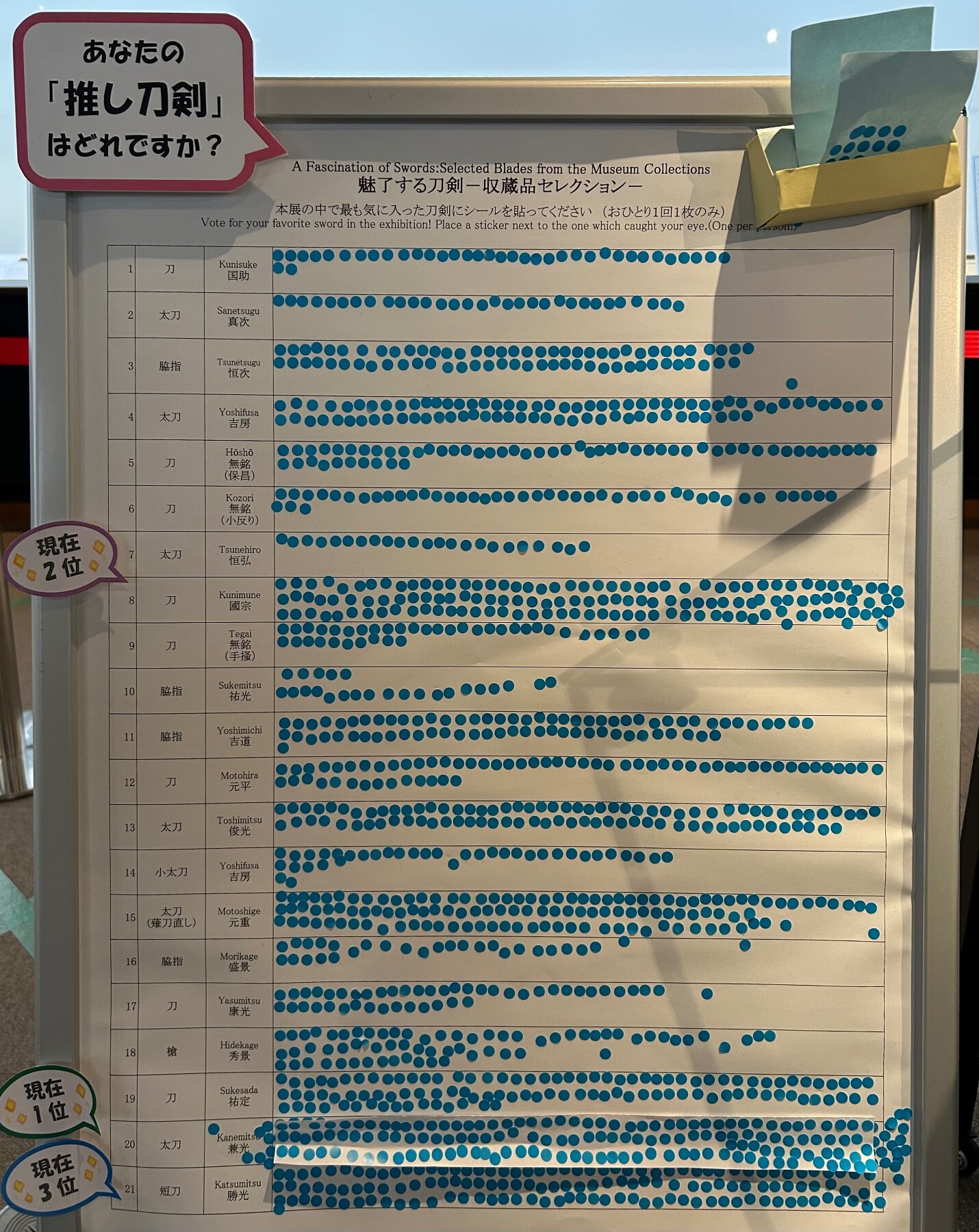
They ask you to place a sticker against which sword you liked best.
 2 points
 -
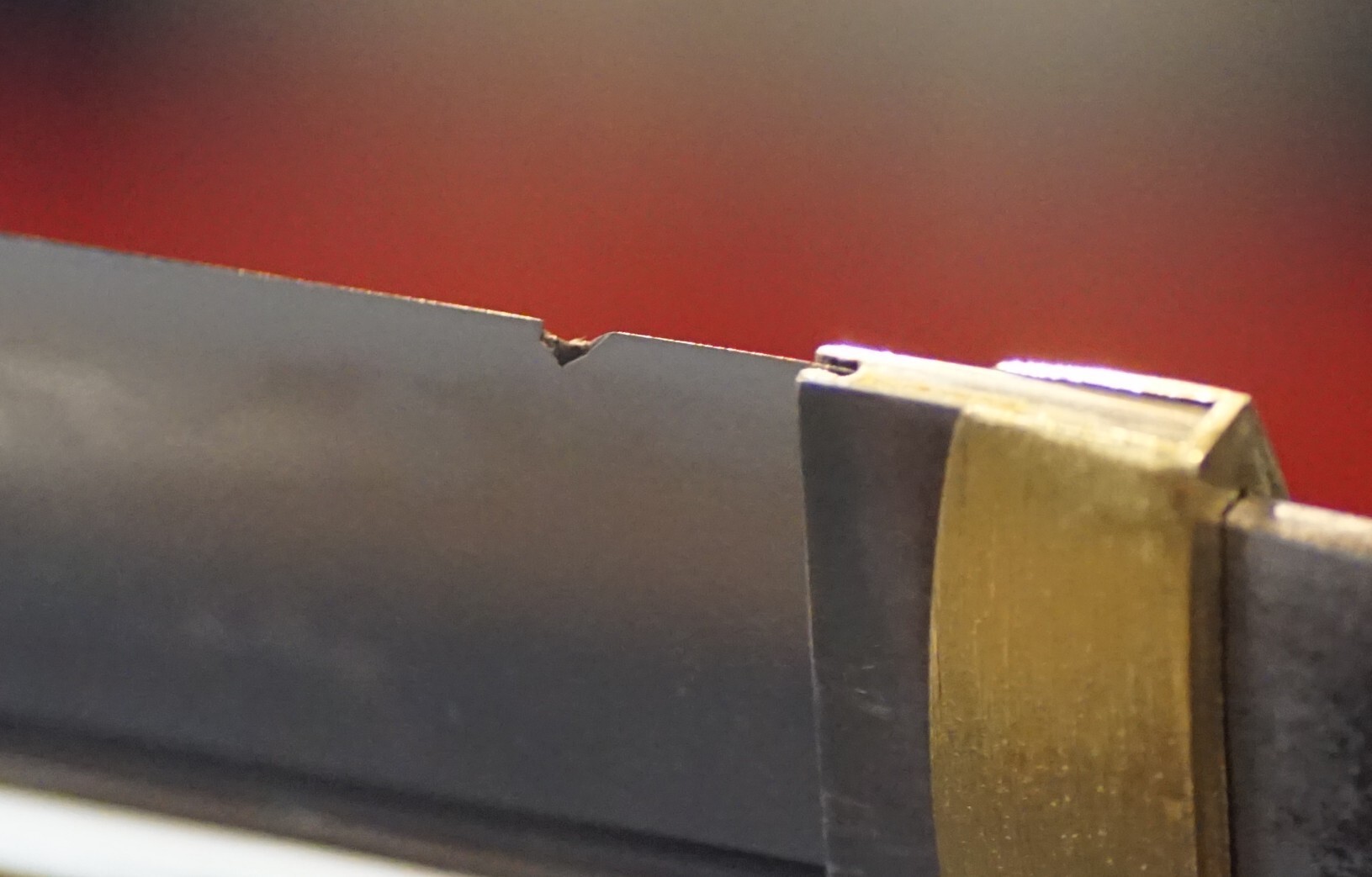
Here’s a pic or two I took about 7 years ago, before the owner sold it. The nick


 2 points
 -
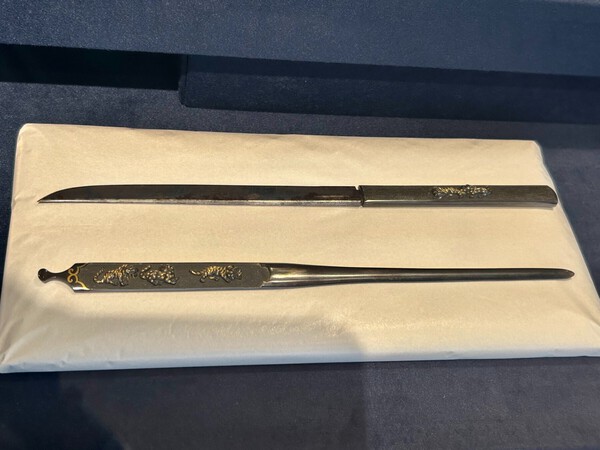
Lots and lots of photos of the Yamatorige starting to appear across the interwebs. Actually a lot of fun reading the comments and seeing the excitement in the people posting and responding to the pictures.




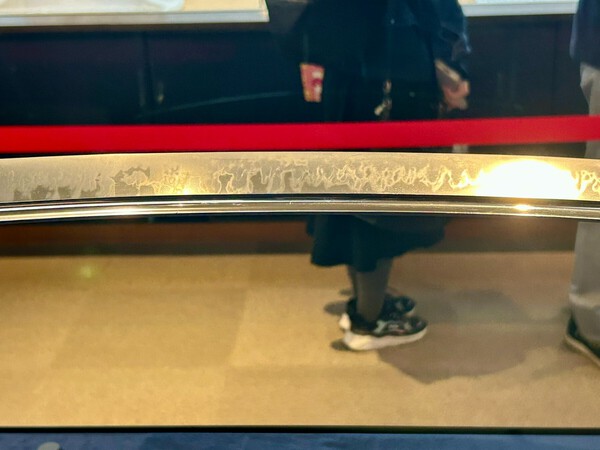

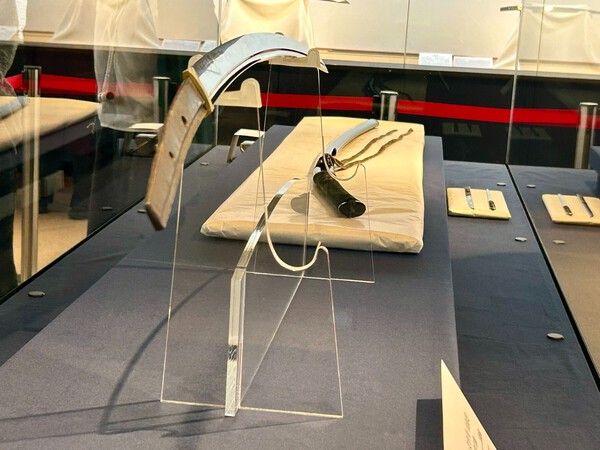
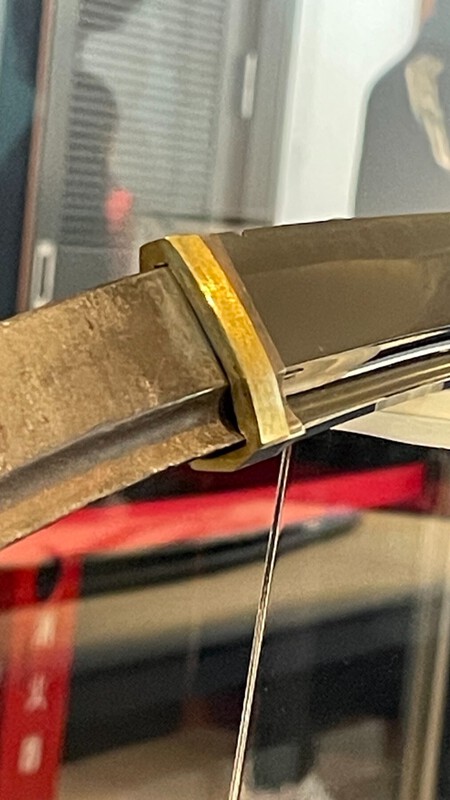
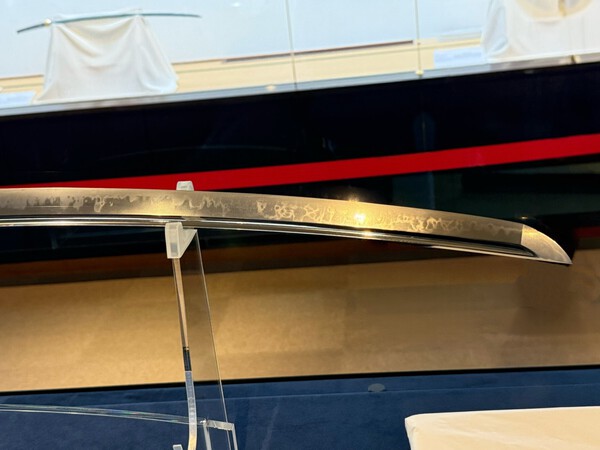

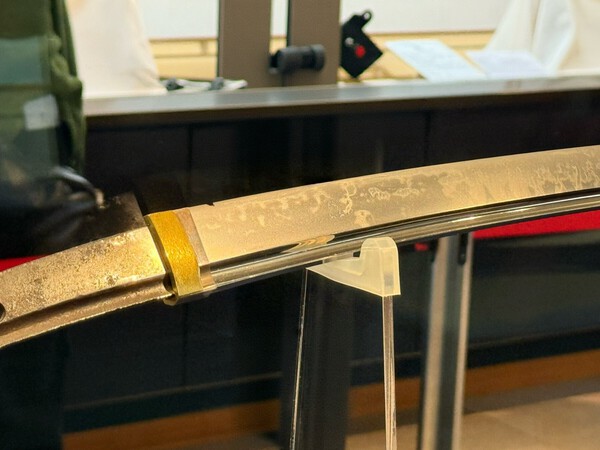
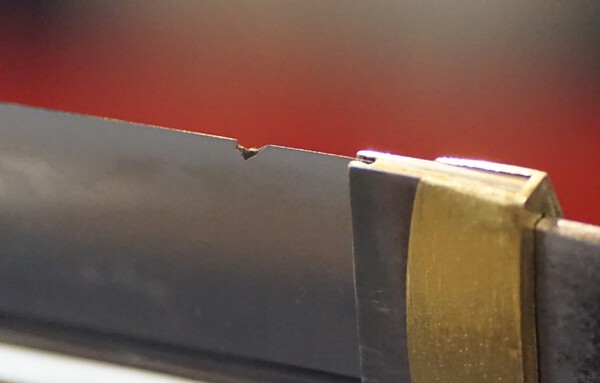
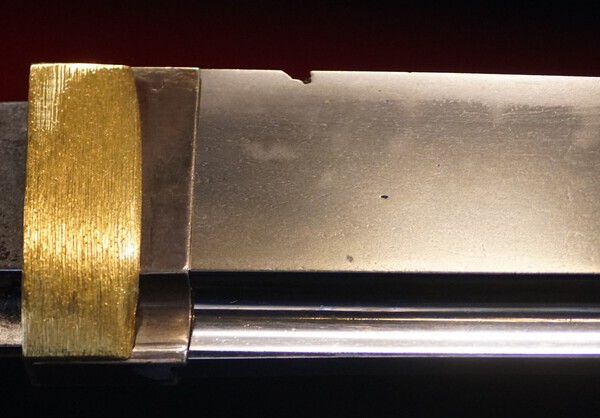
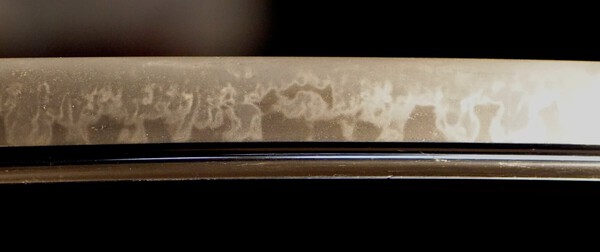

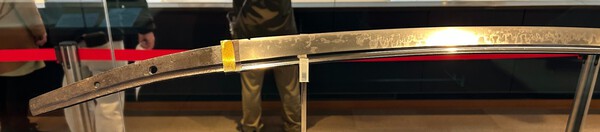
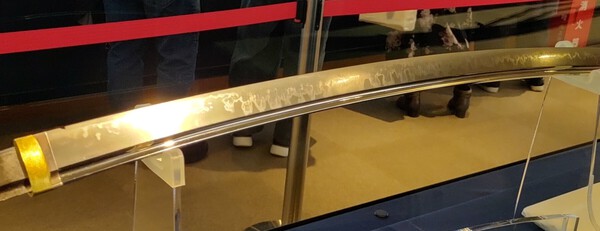
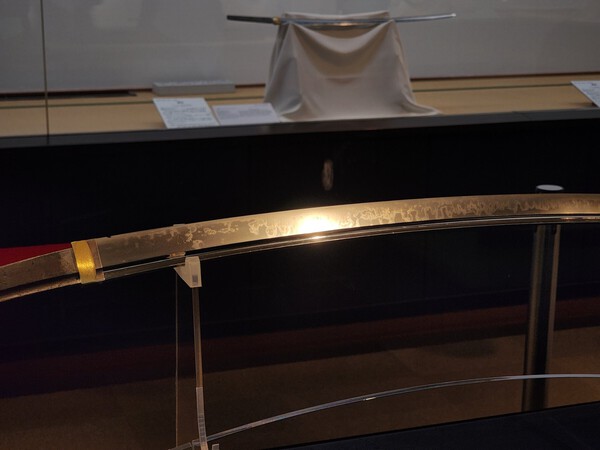 2 points
 -
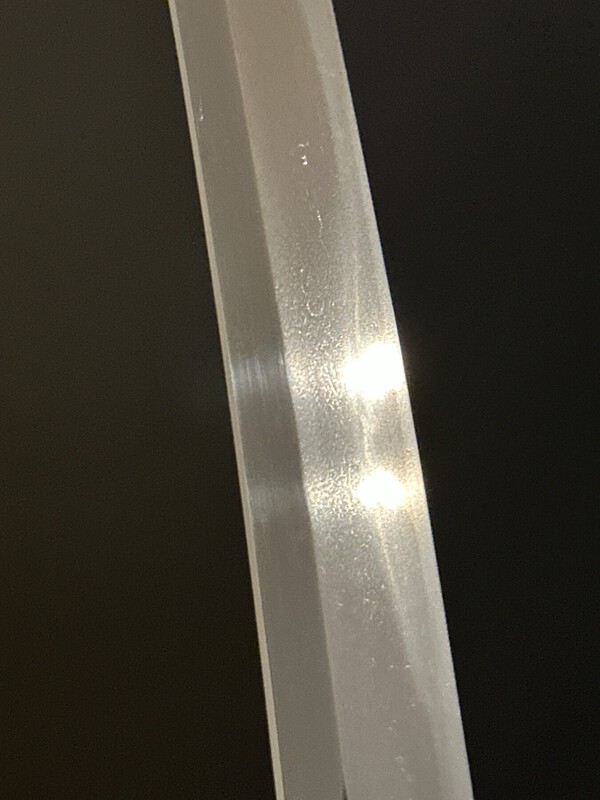
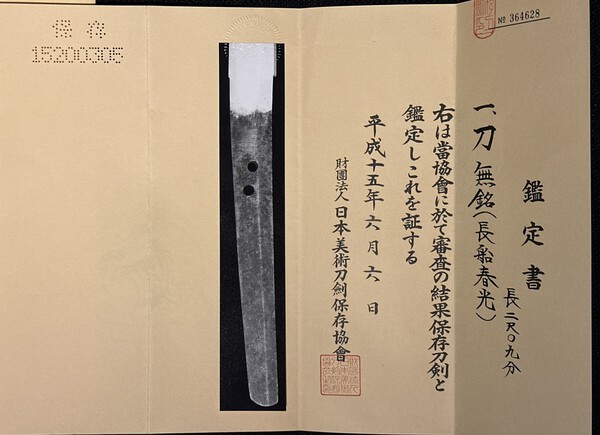
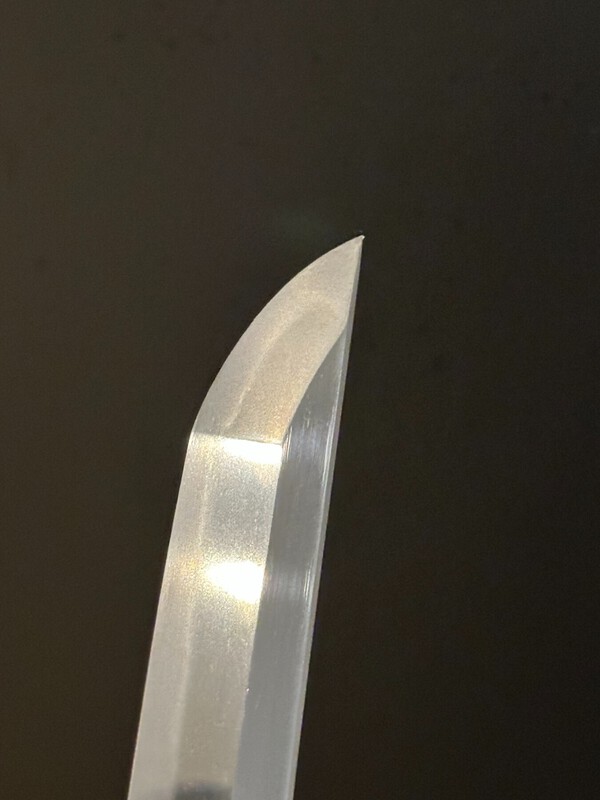
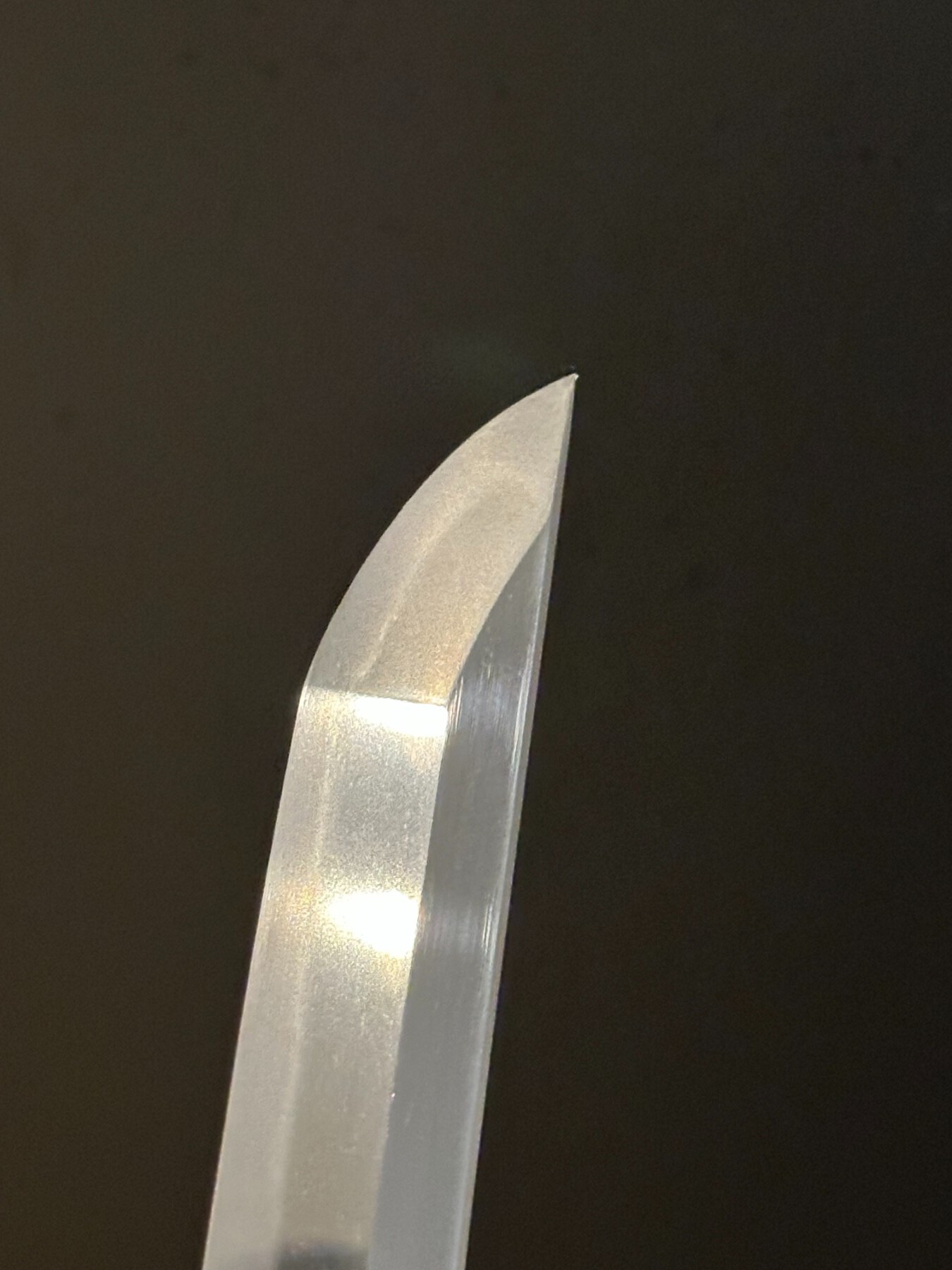
PRICE: €SOLD (EURO) Free shipping within the EU International shipping available (extra charge: €20–40) Express insured shipping (FedEx, UPS, DHL Express, etc.) Located in the Netherlands – Pickup available Payment Methods: Various payment methods are accepted, with bank transfer preferred. Please contact via PM to discuss payment options. Any questions are welcome. Feel free to contact me anytime. PS: There is no damage to the tip of the sword; this is a piece of dust still attached to the kissaki while taking pictures (which I did not notice when taking the images). There is also a Shirasaya, as can be seen in the first image.
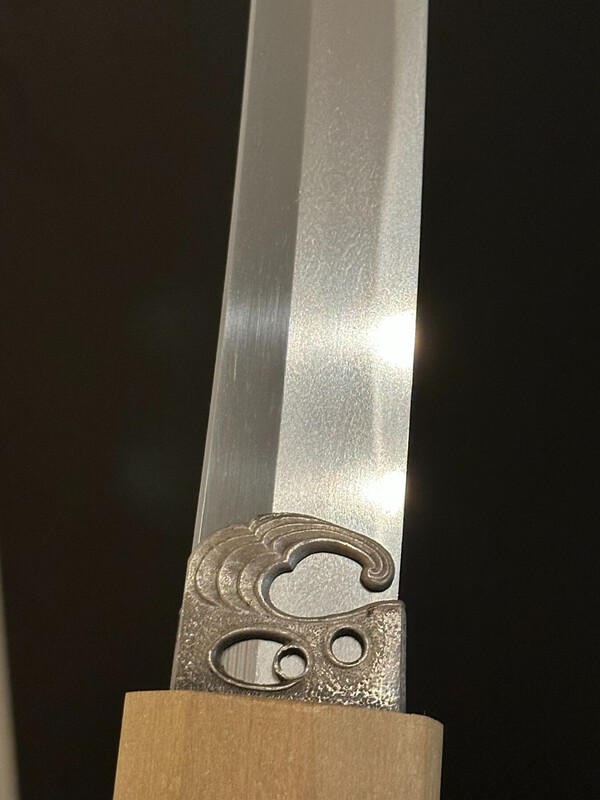
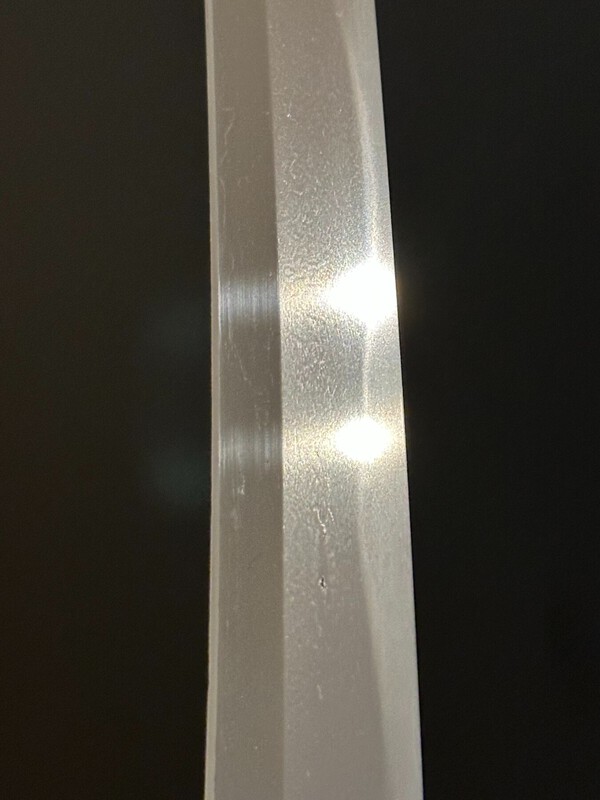
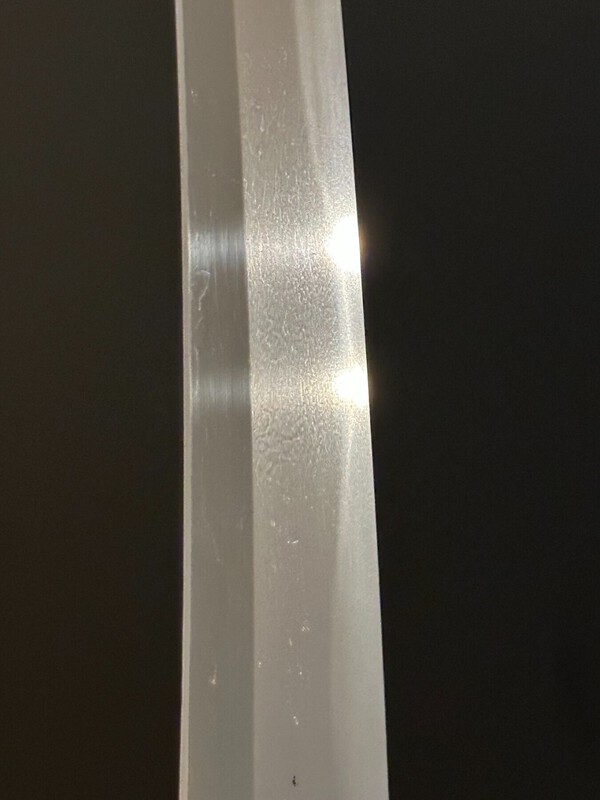


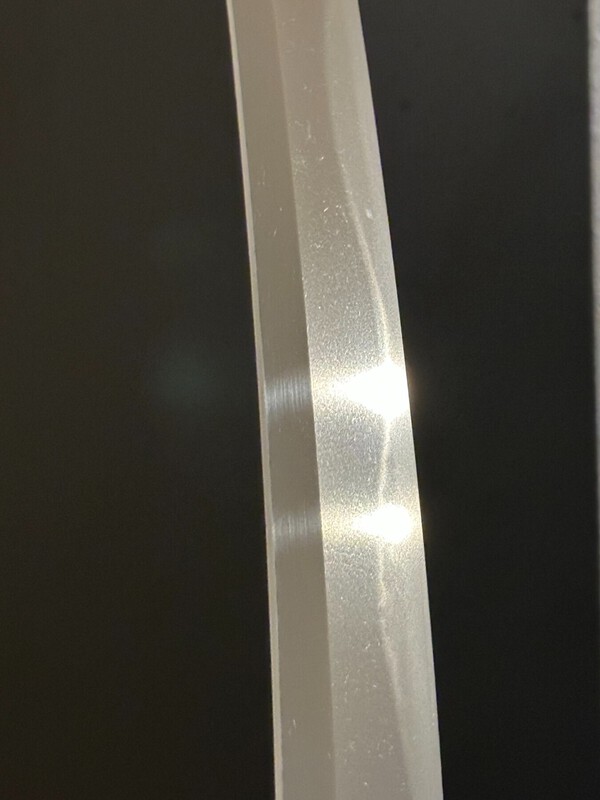




 2 points
 -
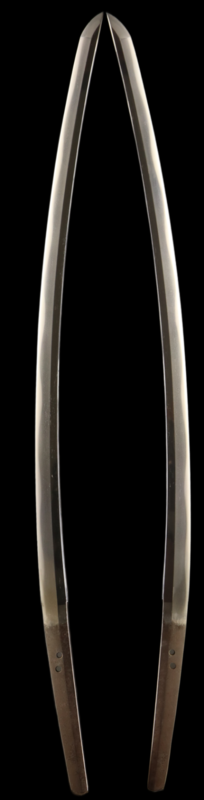
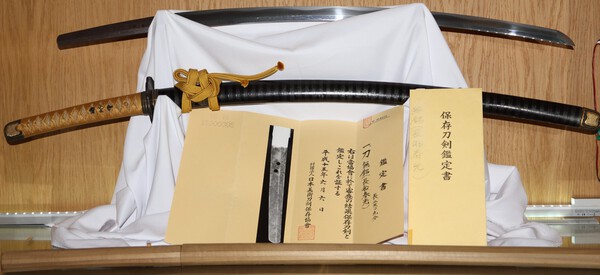
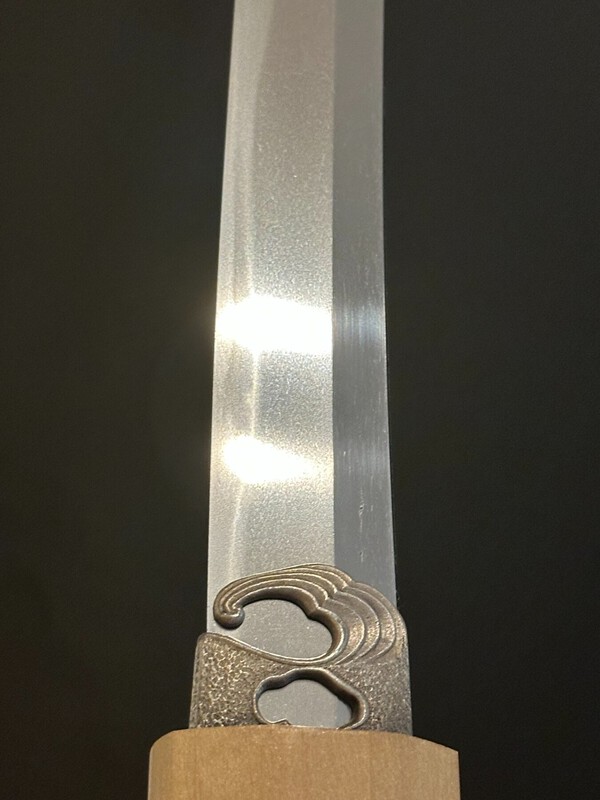
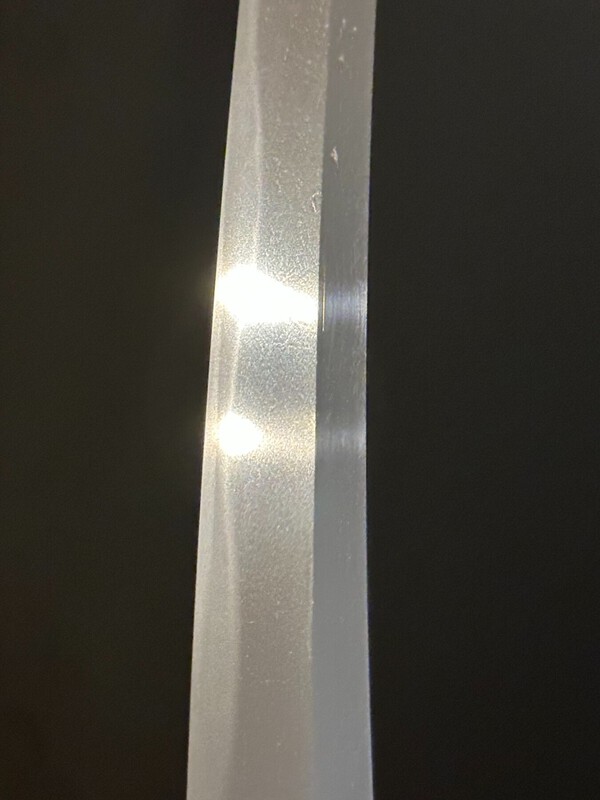
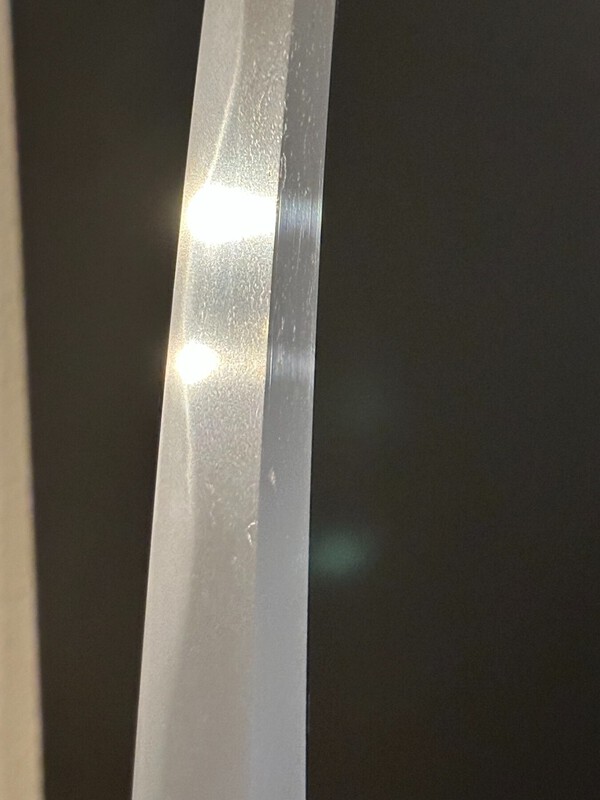
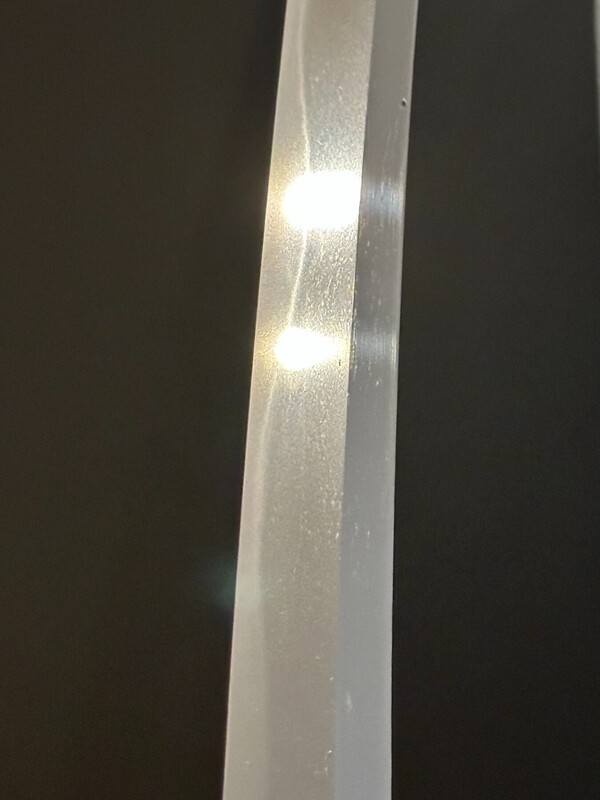
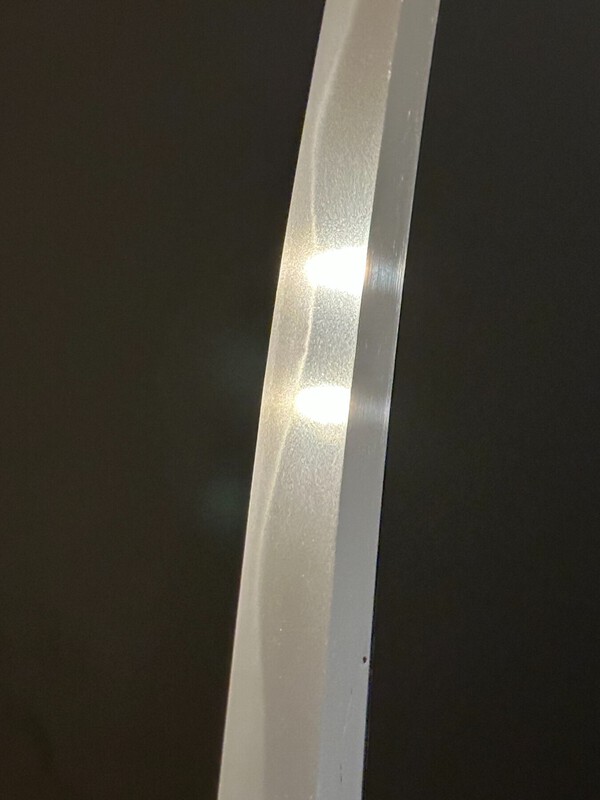
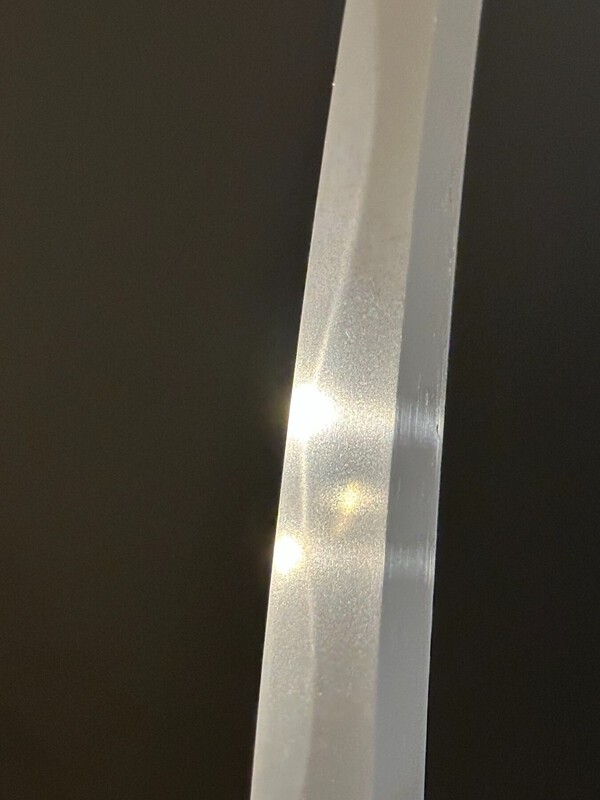
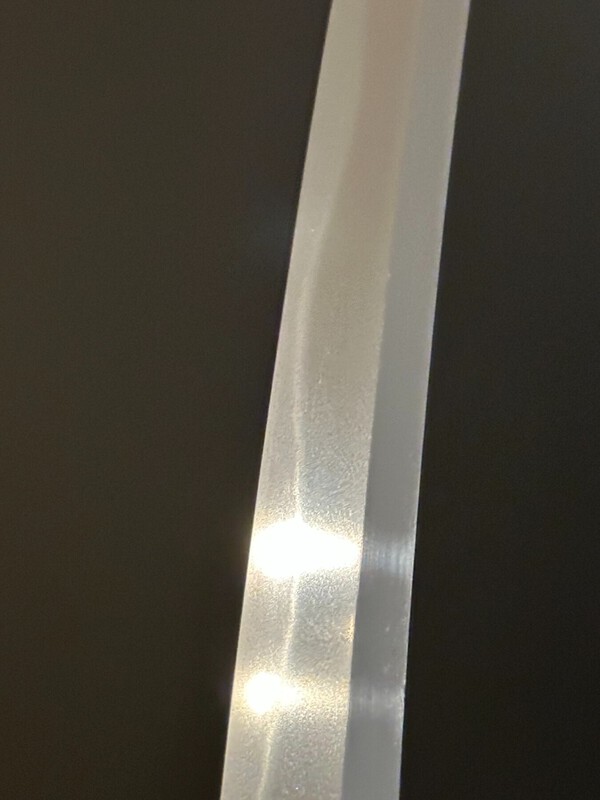
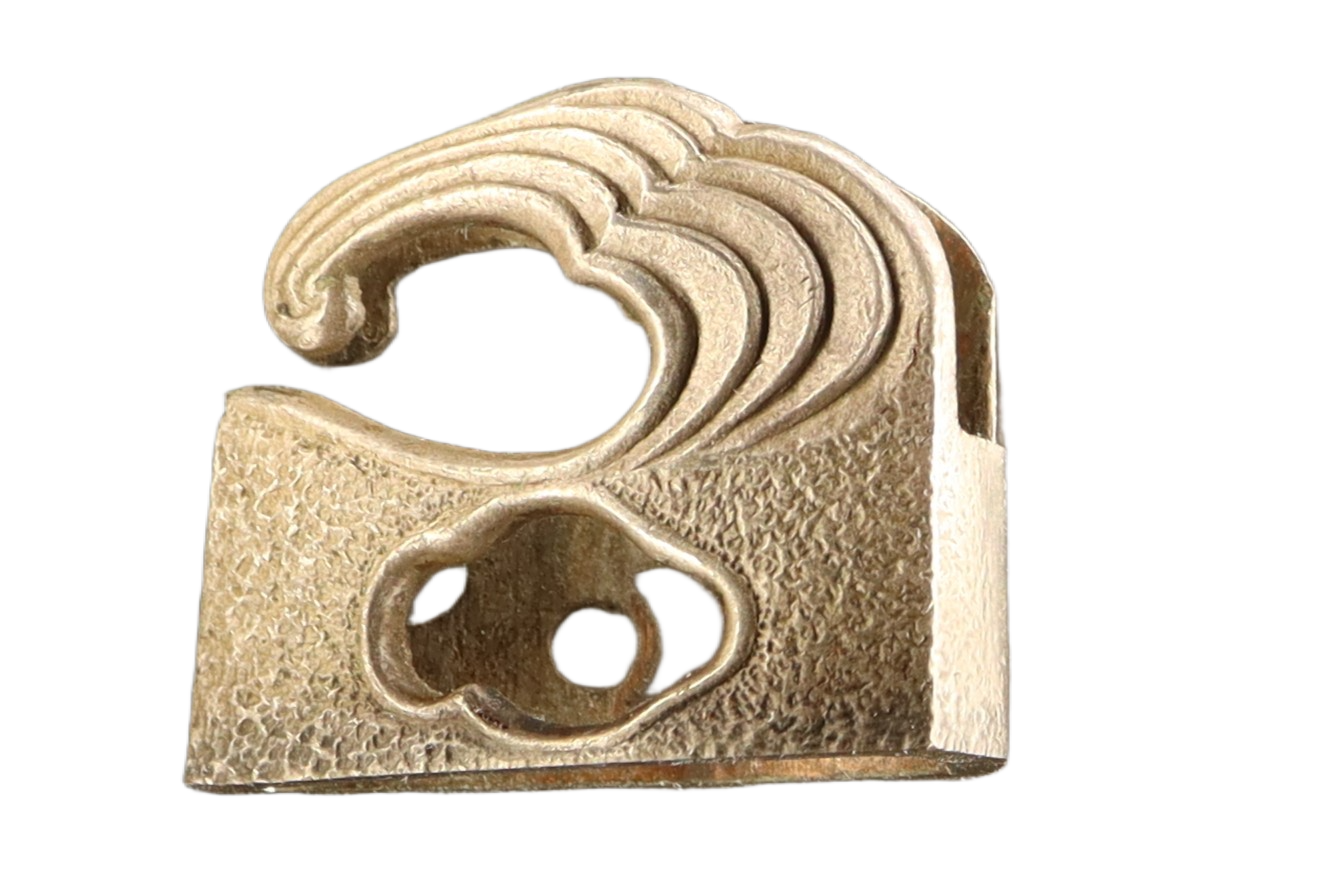
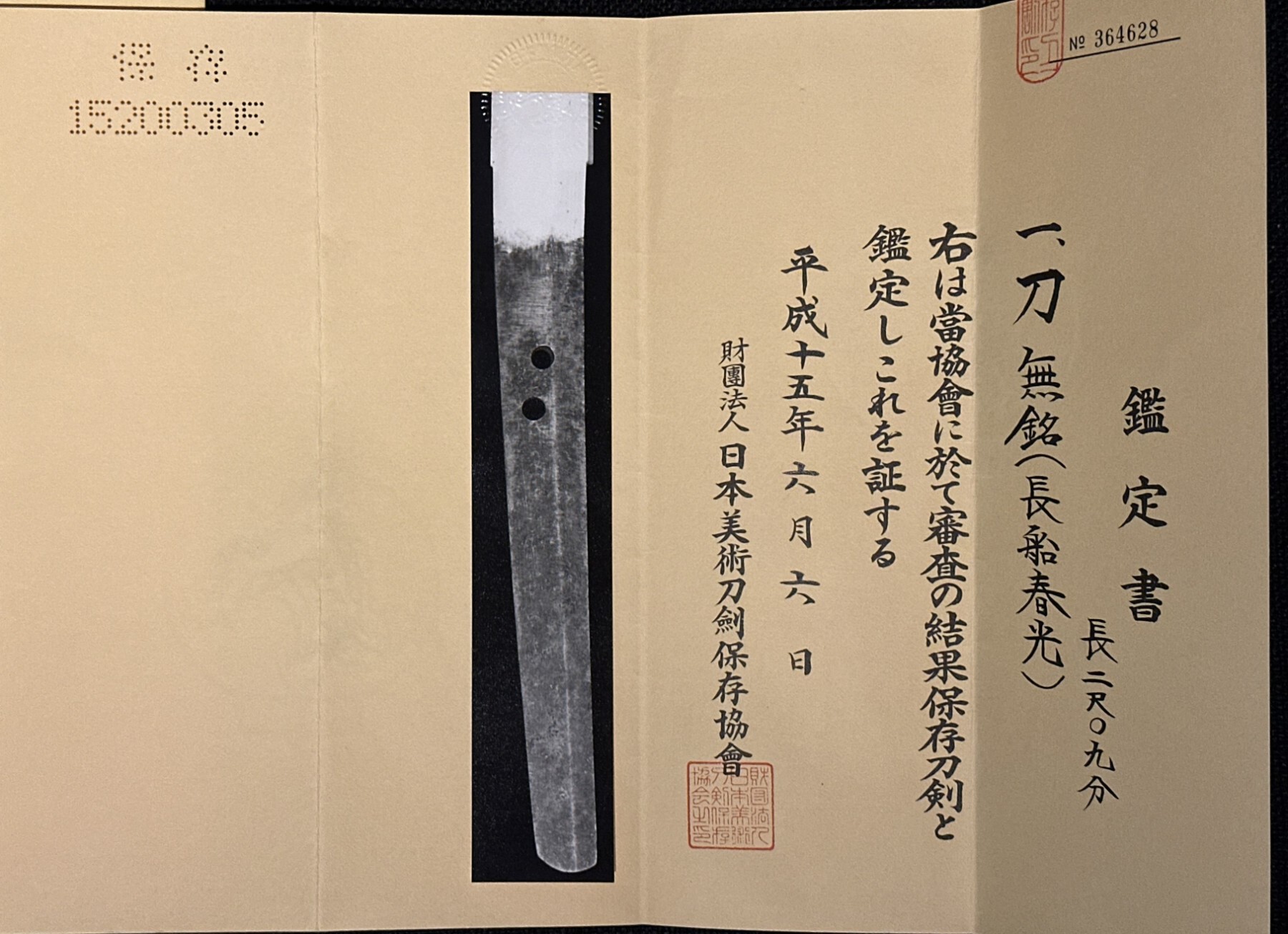
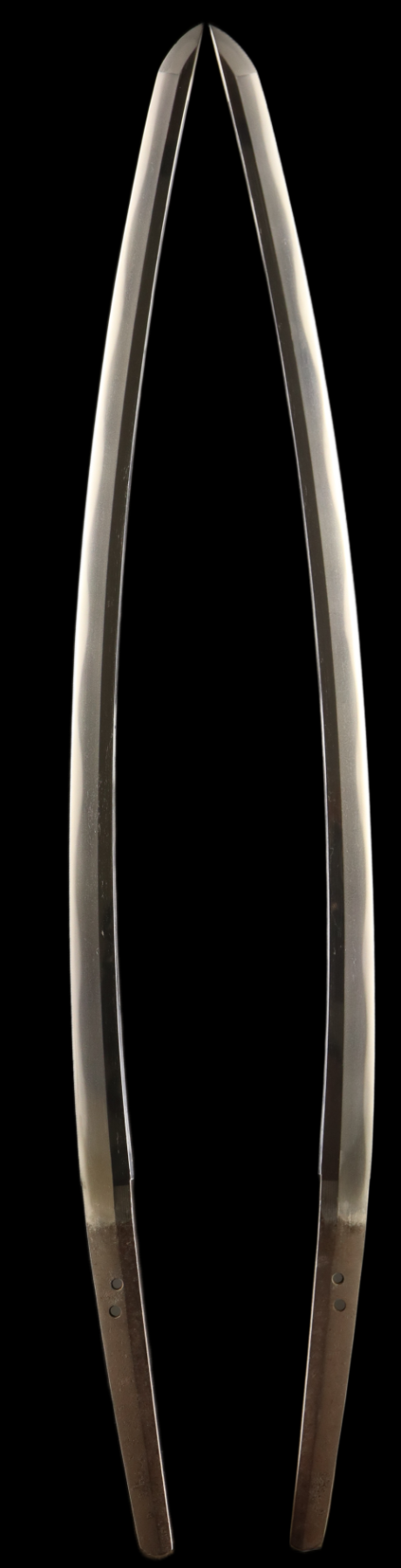
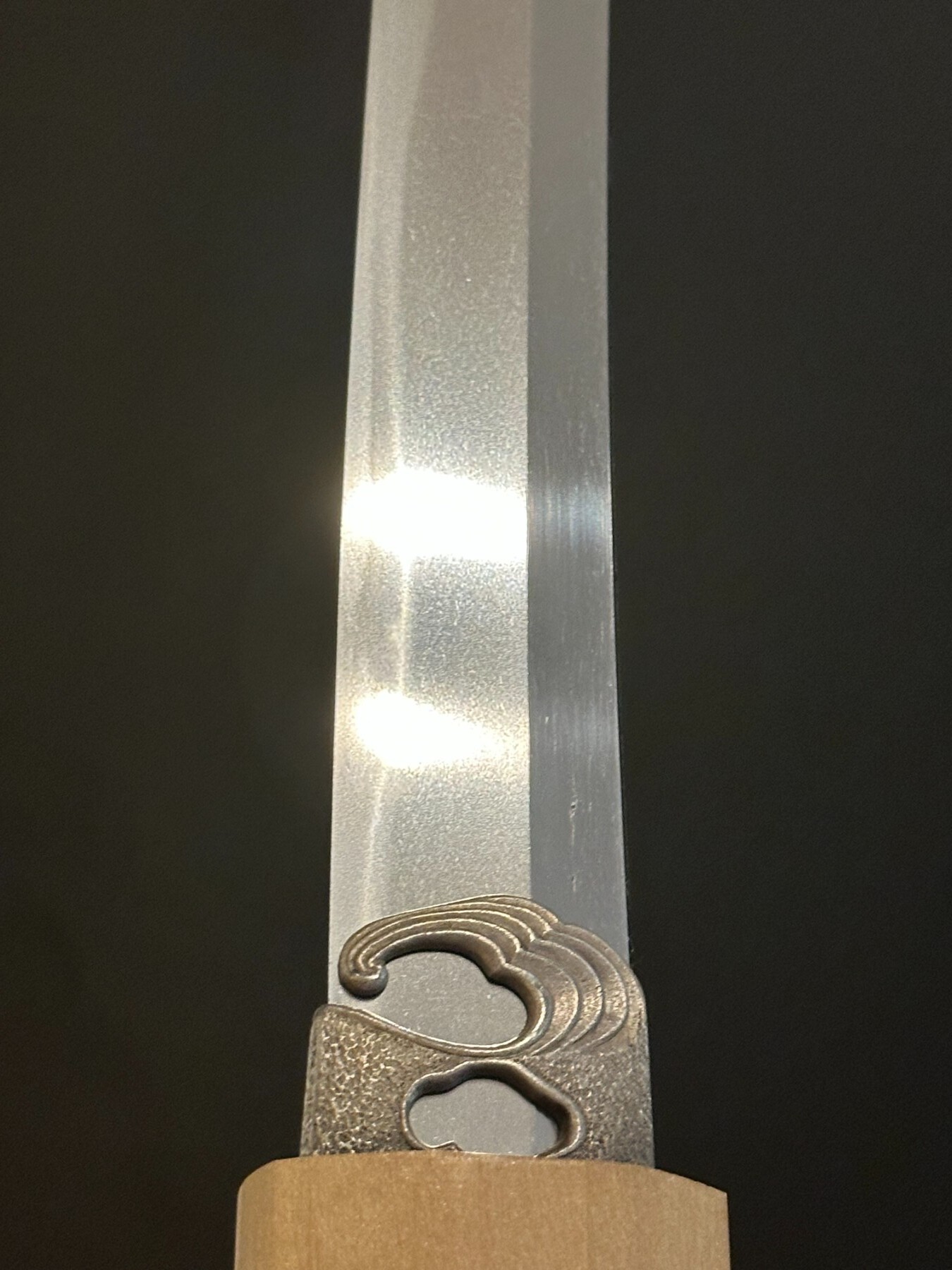
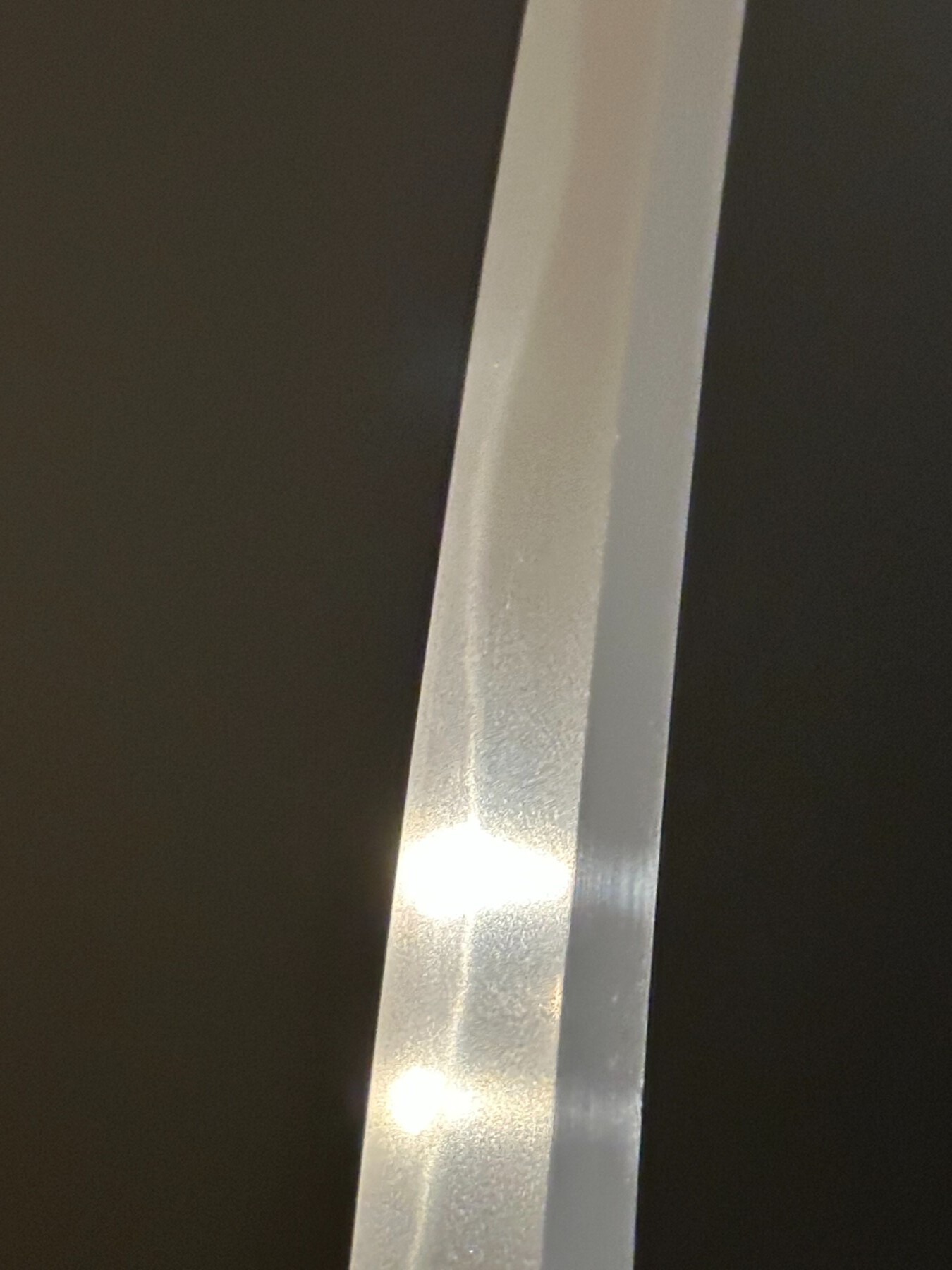
Mumei Osafune Harumitsu Katana Late Muromachi Period (Sue-Bizen) NBTHK Hozon Specifications: Nagasa: 63.4 cm (approx. 2 shaku 9 sun) Sori: 2.6 cm Motohaba: 2.86 cm Sakihaba: 1.96 cm Motokasane: 0.68 cm Sakikasane: 0.46 cm Mekugi-Ana: 2 Shinogi-zukuri, Iori-mune, Chū-kissaki Period: Late-Muromachi period around Eisho Jidai Blade Description: A stunning, unsigned katana attributed to Osafune Harumitsu, accompanied by an NBTHK Hozon certificate and mounted in koshirae. The jigane is a well-forged itame hada with mokume mixed in, of a nice appreciable level. There are areas where the hada is more dense, with mostly itame; there are some stunning parts where the sword shows nice mokume patterns, with thick ji-nie and active chikei. The hamon is a large notare-based pattern, with ko-nie and nioi forming a slightly subdued but well-controlled temper line (very similar to a wave). Within the hamon, there are ashi, ko-ashi, and yō visible. The bōshi is straight with a slight hakikake, which returns. The nakago is suriage. The blade is fitted with a silver habaki featuring a wave motif. The blade is in excellent condition; there are some slight imperfections visible on the images, including some damage to the mune (possibly Homare-kizu?). Koshirae: The blade is mounted in a late Edo period han-dachi koshirae. Total Length: 94.5 cm Tsuka Length: 24 cm Saya: Black ishime lacquer with black lacquered horn kojiri Fittings: Matching set with nanako-ji and gold edging Menuki: Shakudō with plant motif Tsuba: Iron mokkō-gata with carved decoration and gold inlay The koshirae overall is likely a Bakumatsu period piece; the tsuka has been re-wrapped, so it does not preserve the original tsuka-ito. The tsuba is considerably older than the koshirae (in my opinion).
 1 point
 -
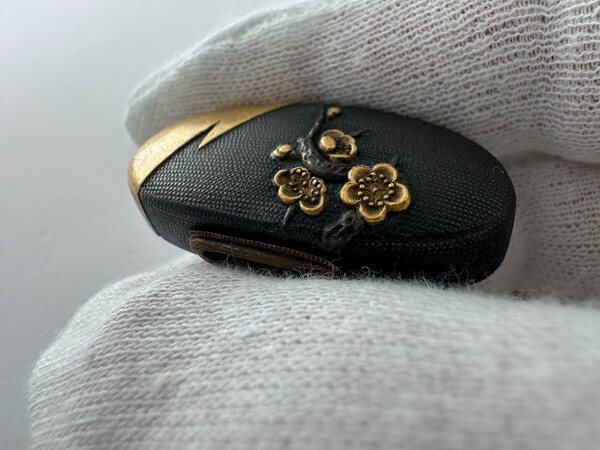
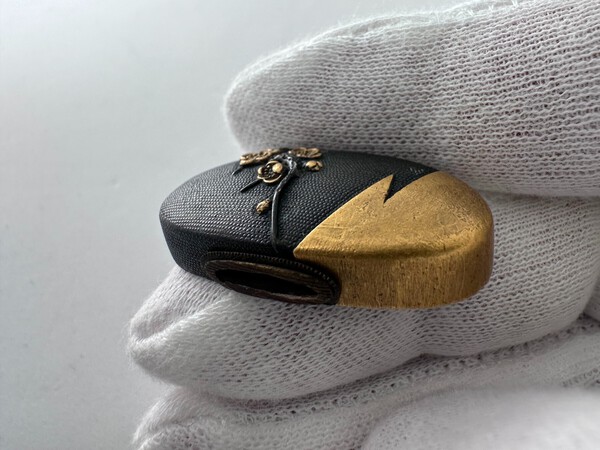
It's not signed, Viktor. Here you go:
 1 point
 -
Hello Luc. indeed. Interesting armor. Will try to found out more about this one. Many thanks for your feedback.1 point
-
Yes, 寒山誌(花押) Kanzan shirusu (it means "written/recorded by Kanzan" with his monogram at the bottom). I don't know if its authentic or not. There are a lot of fakes out there.1 point
-
Maybe 包守(Kanemori)?1 point
-
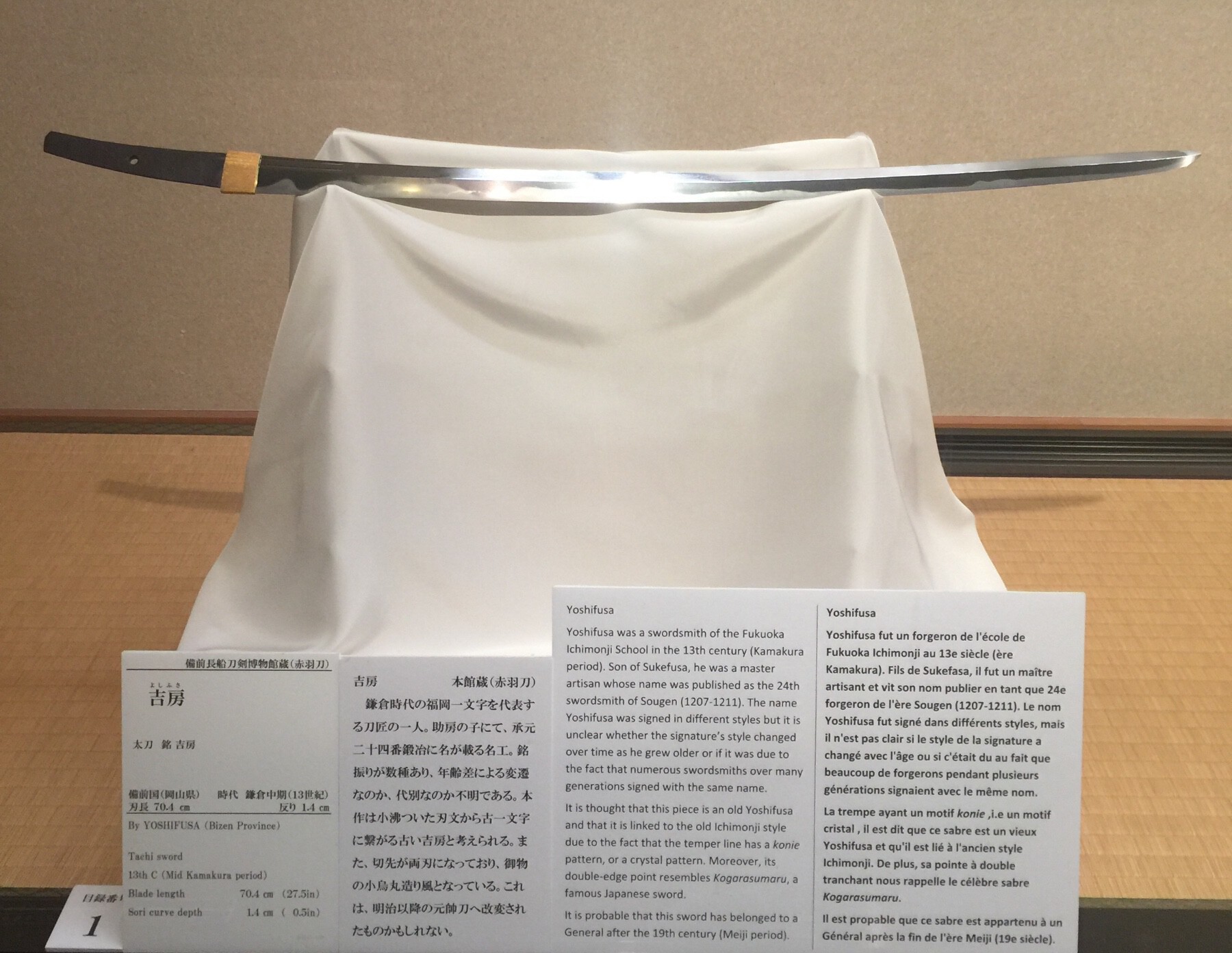
Thank you for the picture of kissaki-moroha Yoshifusa tachi Piers, that got me really puzzled last summer.1 point
-
@MauroP I'm with you on the attribution... it is one family's recounting of an item that was apparently passed down through multiple generations, so who knows what kind of embellishments were added onto the lore surrounding this piece as the years went by... like grandpa's fishing story where both the fish and the waves keep getting bigger ever time he retells the story But the claim does line up with that smith's plate texture, so maybe a grain of truth? I also agree that the first one is likely the oldest, and everyone so far seems to be picking up on it as well. The third one does appear to have a much smoother surface, and looks to be more black compared to the first two.1 point
-
I like a good mystery!1 point
-
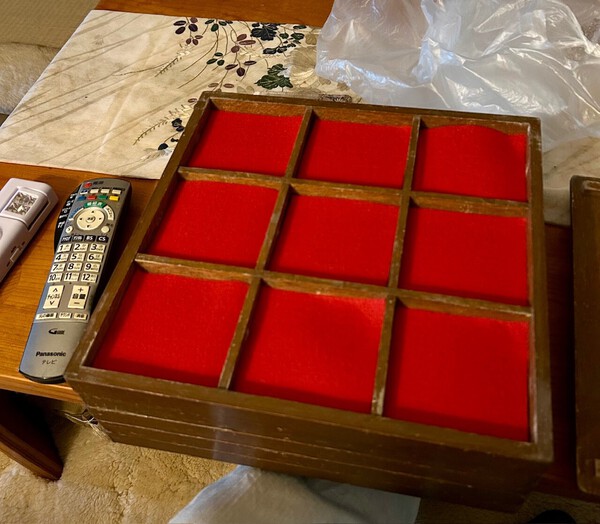
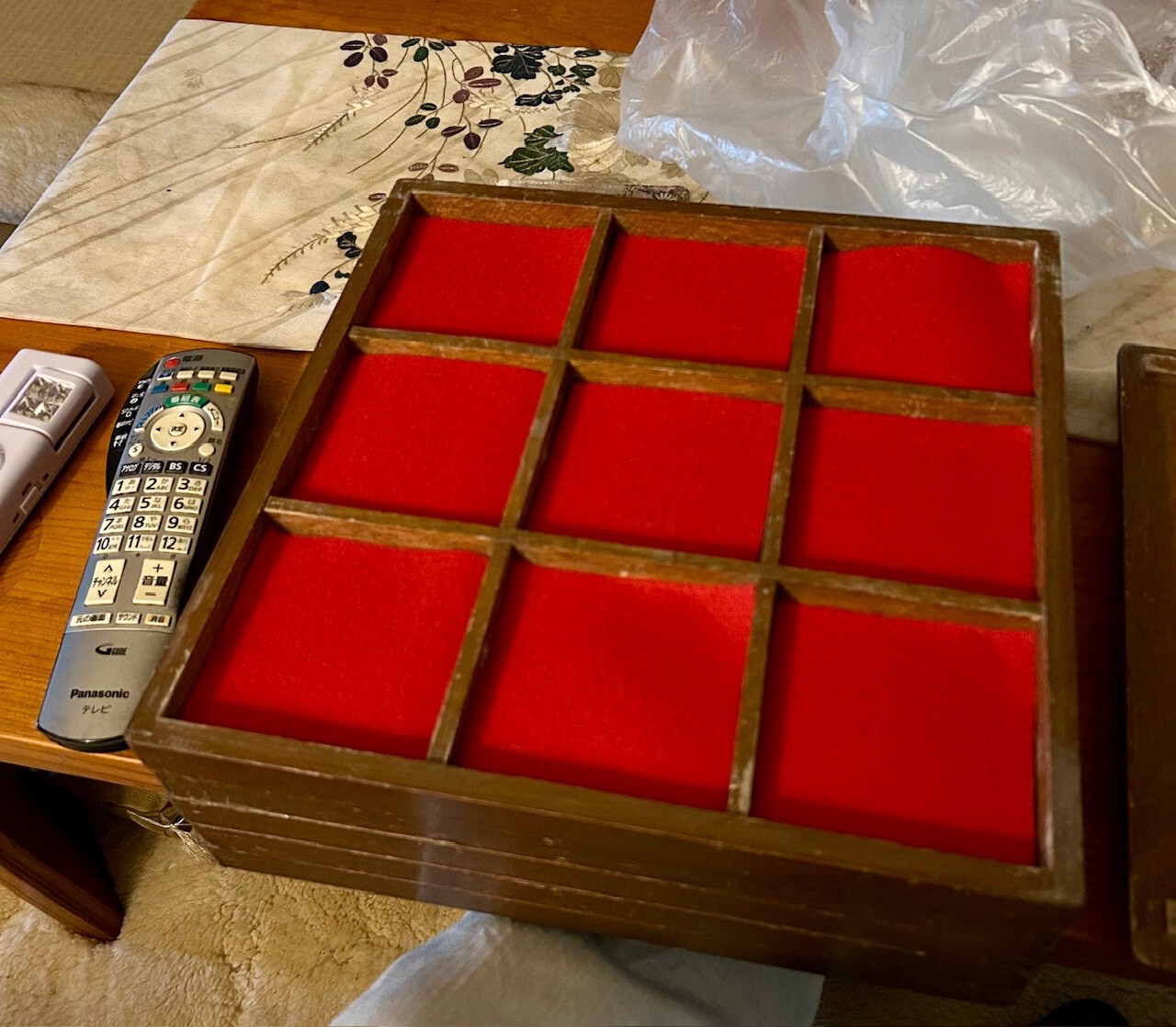
On Sunday a collector friend at a monthly outdoor event said he had something in his car for me so we walked over and he handed me a bag with something boxy inside. Today I finally got around to opening it. Five stacking trays for nine tsuba each, enough for 45 tsuba! Have just sent him a thank-you message.
 1 point
 -
Apologies for gravedigging an old topic, but am I correct in reading this as a signature by Kanzan Sato?
 1 point
 -
Hi Tim, the tsuba shown is neither mine nor from a book. It’s simply an entry in my database, sourced online from a link that is no longer active. The snippet comes from an NBTHK certificate attributing it to Shōami (so I’m not responsible for that attribution…) and reports it's made of iron.1 point
-
This is not a sales section. Make a new post there.1 point
-
ask Grey Doffin.1 point
-
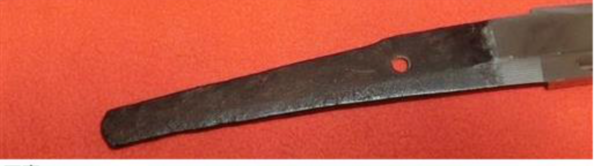
When you say pheasant-leg, are you referring to the one labeled kijimomo? John C.
 1 point
 -
Well not this one anyway! https://www.ebay.com.au/itm/188197194660 big money! $471 point
-
Marcin: I have both and now only use the more expensive civil swords and dirks version. They have much of the same info on military swords, however the more expensive book adds gunzoku and dirk information. So I guess it depends on what you are researching. But the if you are only going to buy one, I would buy the civil swords and dirks version for the extra info. John C.1 point
-
Just some informations... Token Bijutsu 588.pdf
 1 point
 -
To be honest I've never heard that smiths had to submit samples of their work to the bakufu or to the court in order to receive the title. I think they had to make a formal application, or have one made on their behalf by someone of status (the actual daimyo of the fief, for example). But I am not a deep scholar in this area. I have read Markus Sesko's article here, which I think you will find very interesting if you haven't already read it. It provided the basis of what I know. https://markussesko.com/2013/02/19/how-honorary-titles-were-conferred/ Whether this particular sword is one of his best examples or not; I think there are too many variables. The biggest one is condition. It could well have been one of his best examples, but you'd need a deeper inspection and you'd need to compare against his other known works to make that call. And I don't think one can even make a sweeping generalization about swords produced before/after receiving the title. For some smiths it may be true that their best work was toward the end of their productive life. For other smiths they may have become lazy, lost their vitality, lost access to good quality tamahagane, or some may have allowed their apprentices/students to produce under the smith's name, and so there may be some variance in quality. Other smiths may be "average" smiths, yet had the funds to acquire the title, so...too many variables to generalize.1 point
-
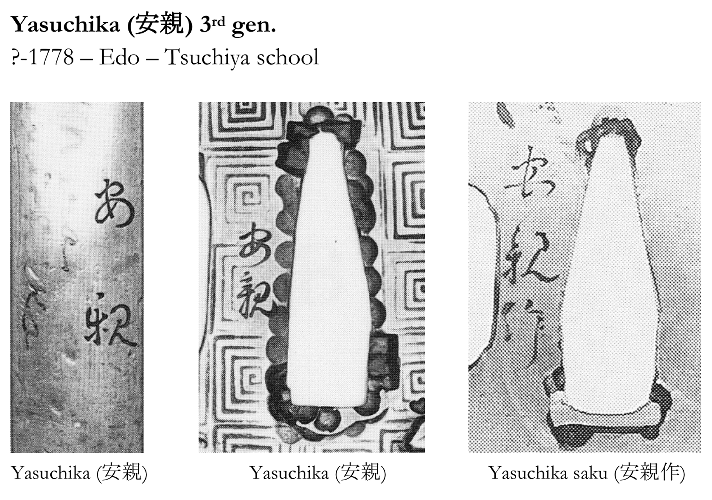
Uwe is correct. Yasuchika saku.1 point
-
More pictures, Gunther Heckmann kodogu 264 page. Gunther Heckmann tsuba 166 page. Serge Degore koto 320 page. Serge Degore shinto 288 page. Serge Degore shinshinto 240 page.
.thumb.jpg.cd6eb4aaf05e345a7d01b7cd5fc20583.jpg)
.thumb.jpg.dbd31d7ad86d129fb17f54475f9100b3.jpg)
.thumb.jpg.9eb3322f4cdb725ed7bdf6d95fac1b8a.jpg)
.thumb.jpg.da46713711347e6b15e1bd3290e716d7.jpg) 1 point
1 point -
Hi Tim - I went through my books - - all 98 - - and found another utsushi in Greville Cookes book - "The Birmingham Museum & Art Gallery - Tsuba collection V2" You might like to ask Kissaki for a better image. I don't suppose it was in that book where you first saw it? You might notice the bird has lost some of its tail in this example.
 1 point
 -
塩田 (Shioda) is a valid Japanese last name. https://myoji-yurai.net/searchResult.htm?myojiKanji=塩田1 point
-
Actually I particularly like Yoshifusa too. Today sadly I was with people and did not take many photos, *although I do have some Yoshifusa pics somewhere from earlier exhibitions there.
 1 point
 -
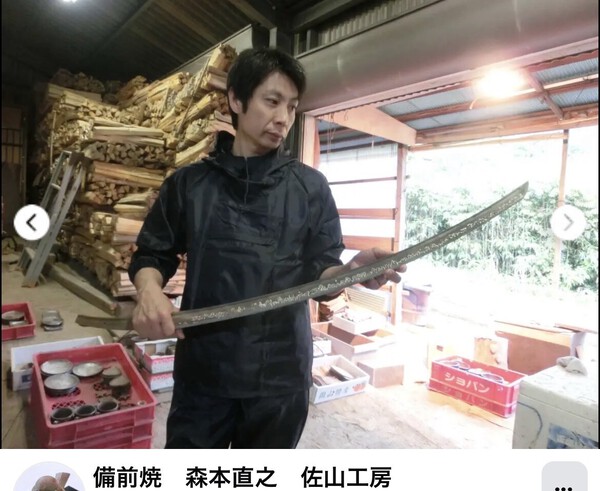
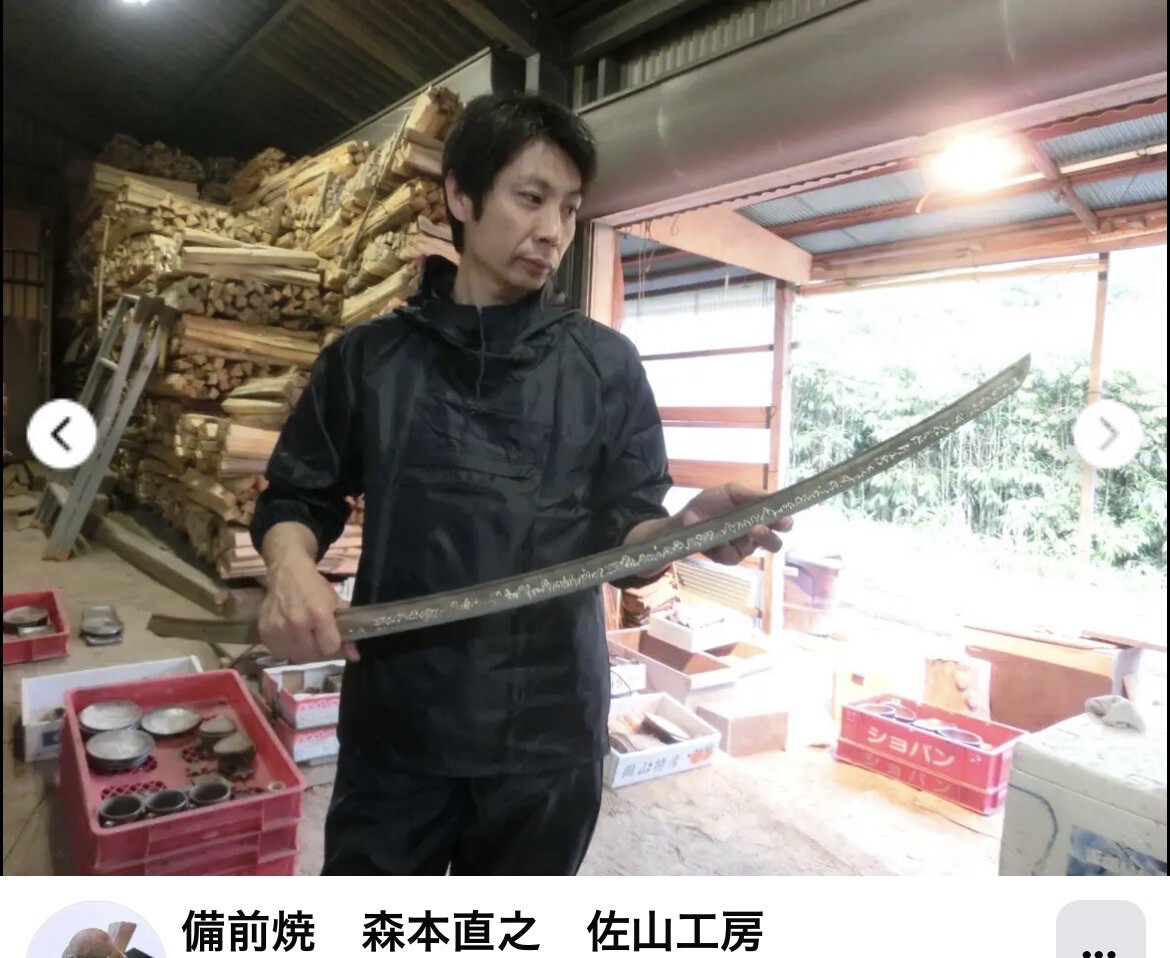
One of our NBTHK members is a Bizen potter and after much effort he eventually succeeded in making a full-sized version in fired clay. Another member creates detailed exact-scale copies in wood, down to the nick in the blade edge. These are not cheap but there is a waiting list for his work, the Sanchōmō and other famous blades. Even the Mei are faithfully chiselled in.
 1 point
 -
Most good sword curators practice safe sword practice that comes down to the theory that sword degrade and therefore swords should not be exposed to the elements for prolonged periods so as to protect it for future generations. This is pretty normal practice for sword presevation. The Yamatorige however is not a normal sword... It is a $3 million mega famous and possibly the most beautiful sword in Japan and as such there is heightened cautiousness not only for preservation but to also protect it. When a blade is that valuable unless you have some insane security which costs money (and is generally not common practice for most Japanese Museums) you cannot display the expensive stuff for too long as this additional security costs the museum significantly more to put and keep in place than normal displays and exhibitions. Hence short exhibitions where they can roll in the crowds and balance bang for buck without compromising security.1 point
-
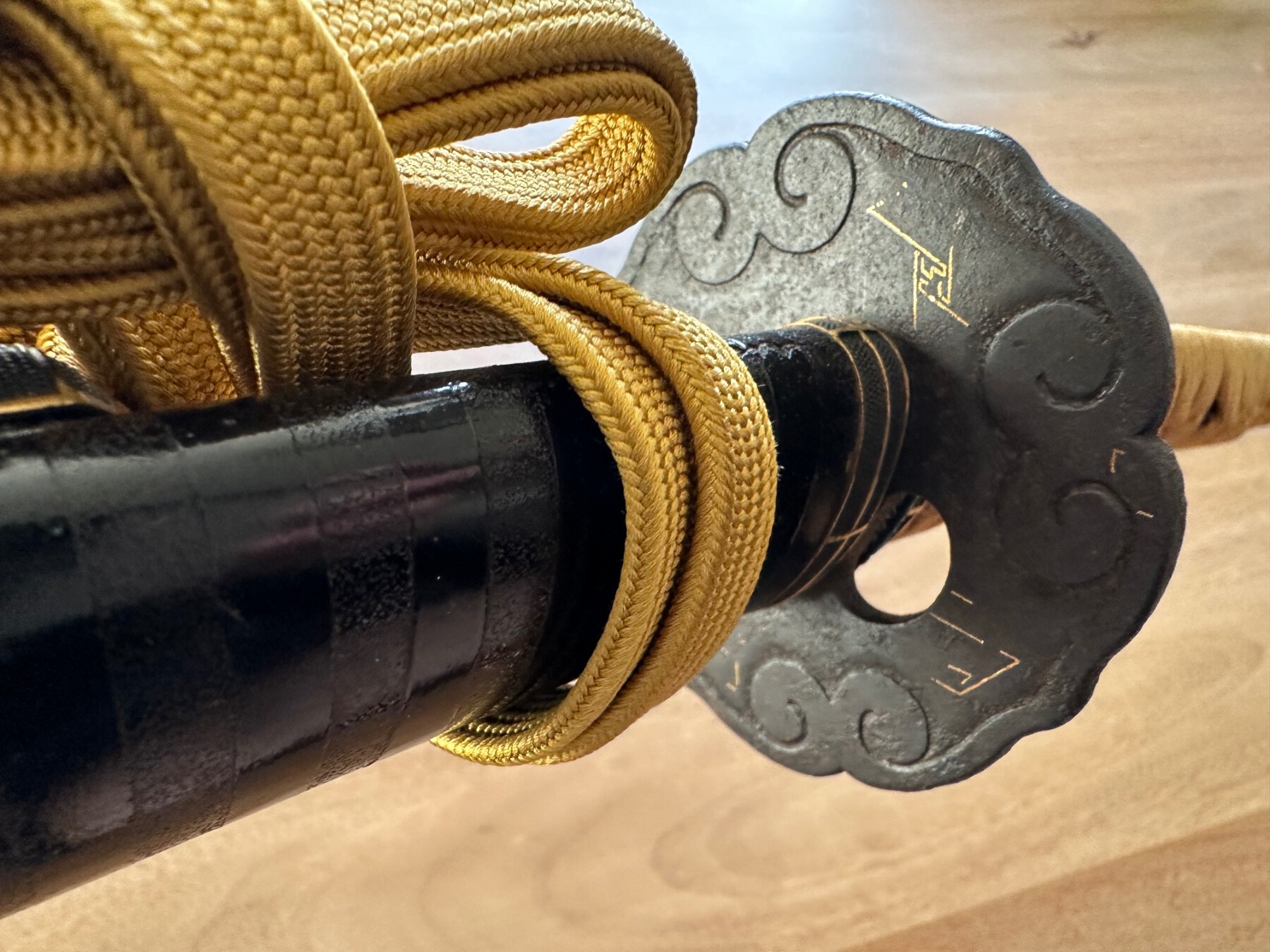
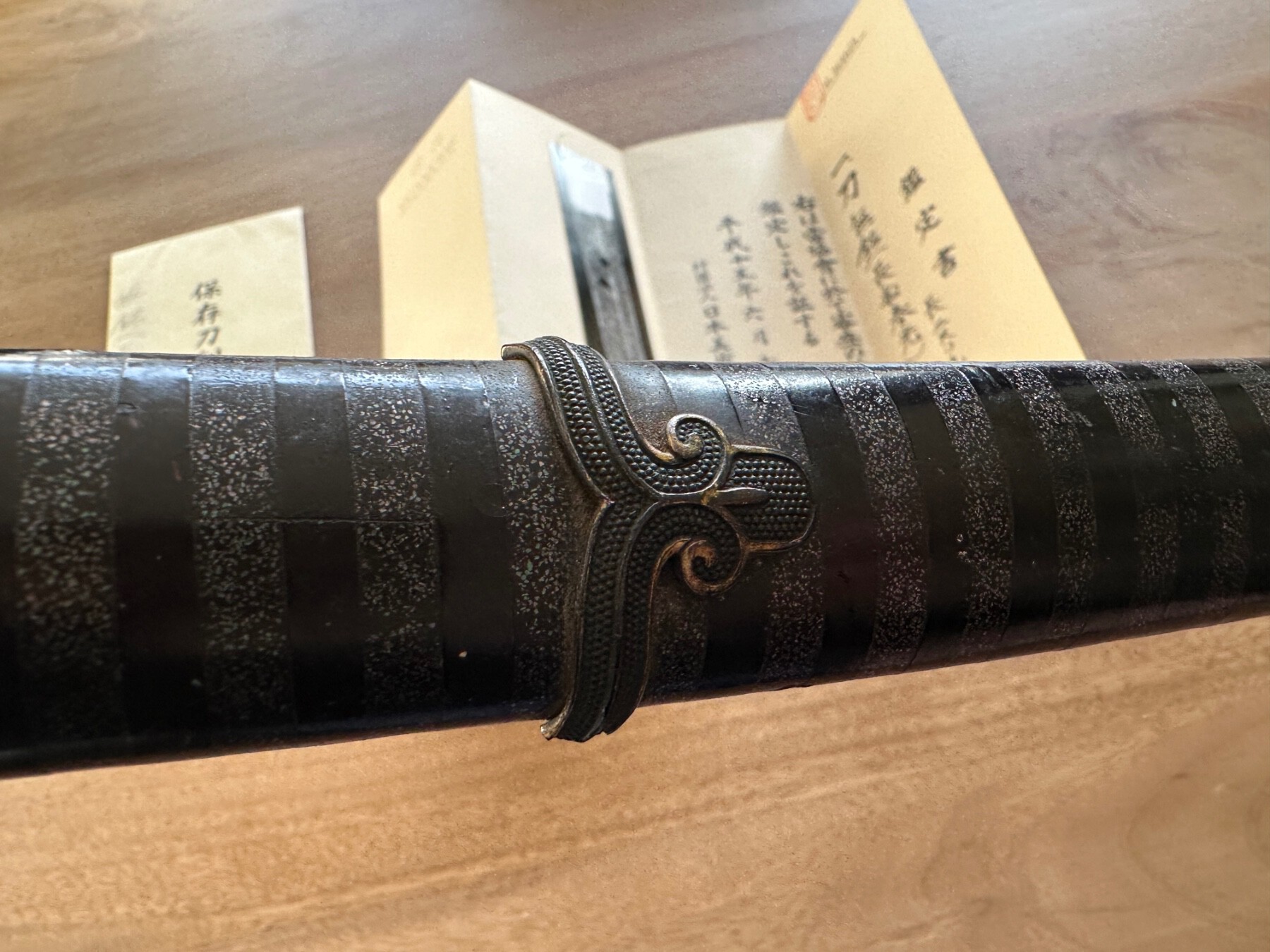
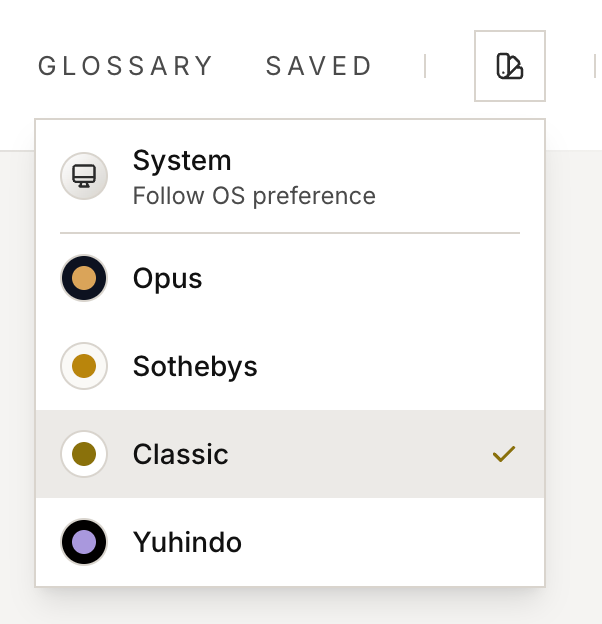
Hello, Great feedback. I added a special UI mode for accessibility. It's called "Classic" Click the right most icon: In the dropdown, select "Classic" And from there, it should be light mode with large fonts. I hope this helps. Currency conversion is already implemented, and takes the live FOREX from the Frankfurt exchange. In the filter panel, on desktop and mobile, select: Keep the feedback flowing, it helps tremendously. Enjoy everyone, Hoshi


 1 point









































.jpg.caa6ed3a96219fe3852822eb16fd4fea.jpg)
.jpg.dabaf660618bcec449d0d5f6ab2e3161.jpg)
.jpg.15e8590226e6c0aec7df91fb571b8e4f.jpg)
.jpg.6668cd91223fdbb8a9ae7f2625034fcd.jpg)




This leaderboard is set to Johannesburg/GMT+02:00