
Leaderboard



Popular Content
Showing content with the highest reputation on 01/15/2026 in all areas
-
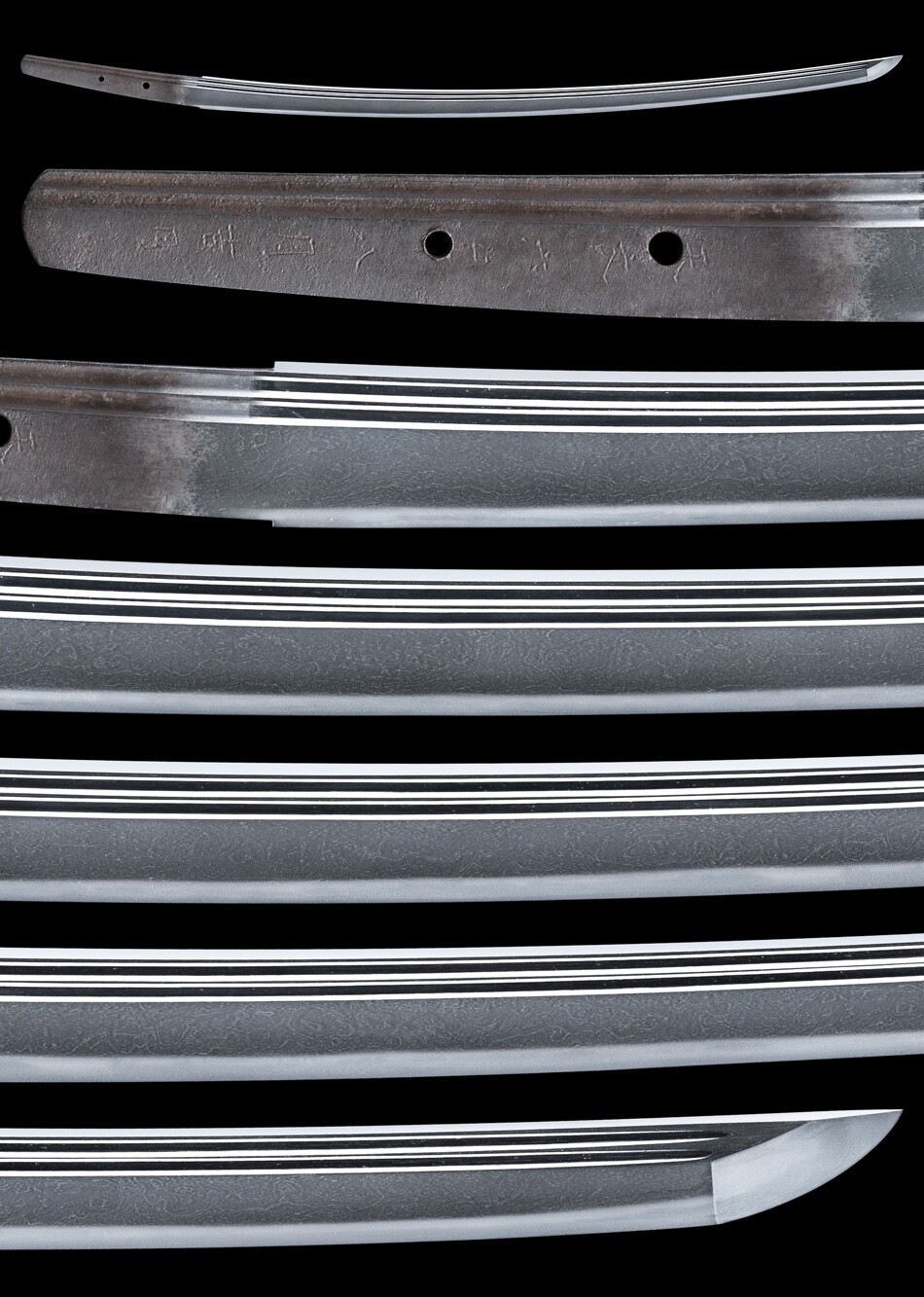
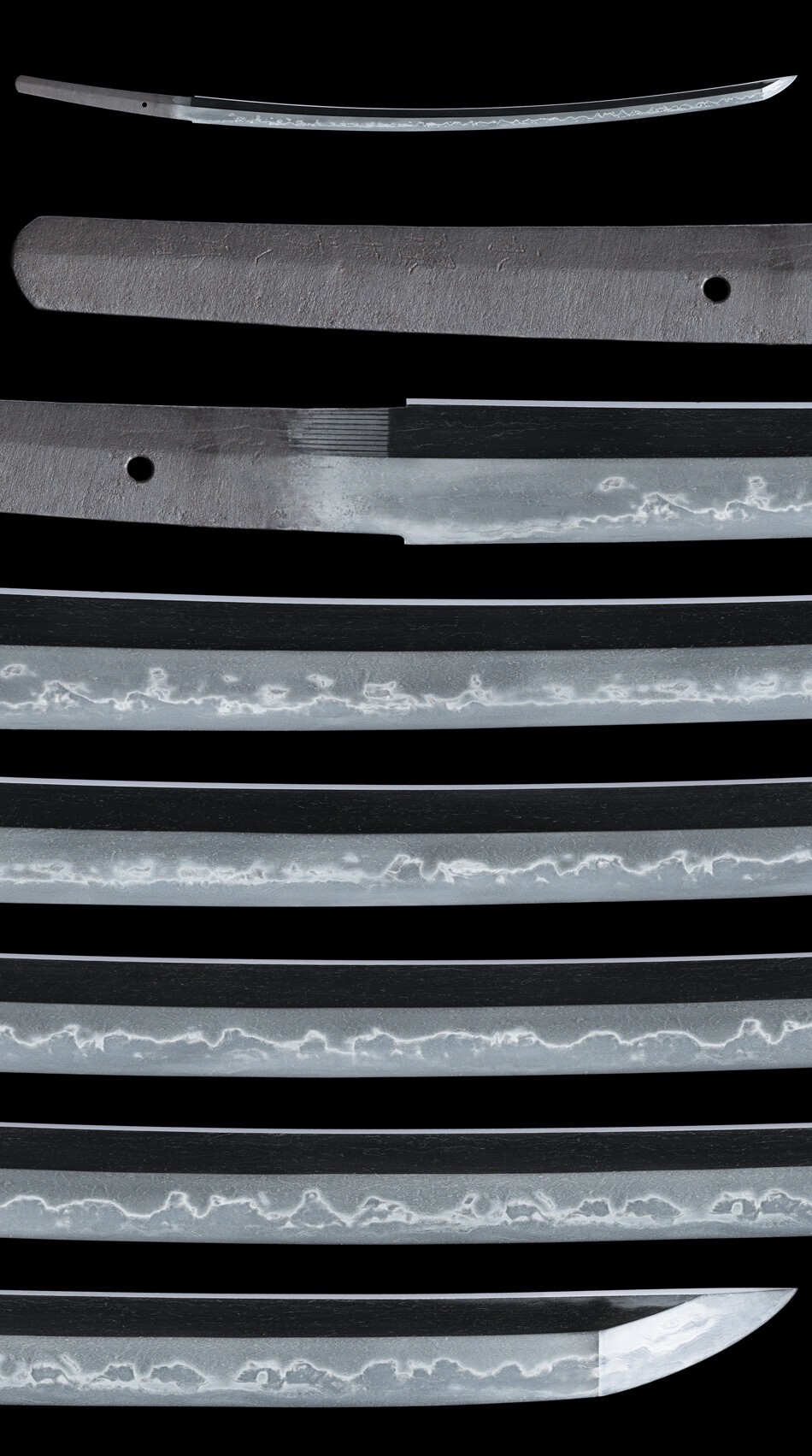
Hi everyone! I’m new to the forum and wanted to briefly introduce myself by sharing a recent acquisition - my first in this space. I’ve been studying nihontō for some time, with a particular focus on late Muromachi work that prioritizes functional integrity, honest construction, and historically grounded workmanship over overtly decorative tendencies. I’m not obsessed with excessively showy hamon, but I do value how all aspects of the blade appear and balance. You will understand what I mean when you really zoom in on the image of the blade. The katana I'd like to share is a signed and dated Bishū Osafune Sukesada katana, saku, forged in Tenshō 3 (1576) and certified NBTHK Hozon Tōken. It is a late Muromachi uchigatana-form blade and represents the Sue-Bizen tradition at a moment when Osafune production was operating under sustained wartime demand. This one is ranked Jō Saku. I was specifically looking for a blade that met several criteria including: A clearly documented Sengoku-era date. A form appropriate to infantry combat rather than earlier tachi conventions. Workmanship that remained firmly within classical Bizen-den practice rather than later Shintō reinterpretation. The blade measures 67.4 cm nagasa, with a wide motohaba, firm kasane, and moderate sori, proportions that read immediately as purposeful rather than exaggerated. The jihada is itame mixed with mokume, with visible utsuri that is consistent and legible under angled light, something I consider essential in pre-flood Bizen work of this period. The hamon is a gunome-midare in nie-deki, active but controlled, favoring durability and coherence over flamboyance. The bōshi enters the kissaki in a continuous midare-komi that holds together well at the point. The nakago is ubu, with two mekugi-ana reflecting long-term use and remounting rather than shortening, and carries the full inscription 備州長船祐定作, paired with a clear Tenshō 3, 8th month date. Both the mei and nengō were accepted without reservation by the NBTHK. I was particularly interested in a dated Bishū signature, as I regard dated Sue-Bizen work as occupying a materially different category from undated mass-output blades, both in intent and quality. Historically, the blade sits in a narrow window that I find especially compelling. August 1576 places its forging immediately after Ukita Naoie’s consolidation of Bizen and only weeks after the First Battle of Kizugawaguchi. This was not a transitional or speculative period, but a moment of active mobilization, when swords were commissioned with the expectation of use. The blade’s geometry, heat treatment, and overall character align with that context in a way that feels honest. – I’m an obsessive history geek if you can’t tell lol. The koshirae itself represents a coherent mid-Edo period remounting, with the tsuka, tsuba, and primary fittings conceived as a unified aesthetic program rather than an assemblage of unrelated parts. The handle fittings are signed by Maruyama Sōzan, an Edo-period metalworker, and display a consistent visual language across the fuchi, kashira, and menuki. The rabbit (hare) menuki are rendered in a restrained, naturalistic style with selective gilt highlights, emphasizing quiet alertness rather than overt martial aggression, a sensibility characteristic of refined Edo tastes. This motif is deliberately complemented by the iron sukashi tsuba, whose rotating tomoe-derived design expresses cyclical motion and natural force in abstract form. Together, the animal imagery of the tsuka and the dynamic, elemental symbolism of the tsuba form a balanced thematic whole, power expressed through harmony rather than excess. The matching materials, colors, gilt, patina, fit, and composition strongly indicate that these components were produced within the same artistic style and likely by the same hand or workshop, assembled intentionally as a complete Edo-period mounting rather than through later mixing. - All this was another big selling point, personally. This coherence underscores a later owner’s discernment, preserving the Sengoku-era blade within a thoughtful and unified Edo presentation. I’ll be adding an appropriate silk sageo, which is missing. Attached are some of the only photos I have so far, as it's currently pending the export permit. I’ll be absolutely stoked beyond belief when it arrives! The forum size limits are far too restrictive for high-resolution images, especially of the blade, so I'll link them from my OneDrive: 25445paper-1.jpg 25445-2.jpg 25445-4.jpg image 001.png image 002.png image 005.png image 006.png image 007.png image 008.png image 010.png image 011.png Anyway, it’s great to meet everyone and join the forum, and I look forward to learning and sharing! I'm not a collector per se, more of an admirer of the art, skill, and a history buff. I don't see myself buying another one as this ticks all my boxes already. I'm going to have it on display in my living room and I'm writing a full-color coffee table book on the sword to print. It will be an absolute honor and privilege being the caretaker for this nihontō and Japanese history. - Alex5 points
-
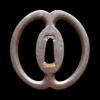
Thank you all very much for your help - This truly is a weird guard [I have shown it long ago] It has two "prongs?" that project out in front like european sword breakers - just weird, so right up my alley
 5 points
 -
@anguilla1980 As much as we like to romanticize the koshirae of a blade. You will find out yourself eventually that it is next to impossible to theorize when or how many times a blade has been remounted. It could have seen several dozens of remounting for all we know Furthermore, koshirae are put together and thrown on a blade by dealers to boost appeal ALL the time. AOI is esp good at this. And I am far from being considred knowledgable when it comes to fittings but at a glance, it looks like the ito and samegawa are relatively new. The ito in particular was not done by a skilled tsuka maker and this can be seen by the unevenness of the diamonds. We also dont know about the origin of the saya and personally , I would never recommend puting a blade into a dealer saya. A proper saya is always custom made to a specific blade and we dont know how or where it s contacting the blade. My Kiyomitsu came with a Koshirae and I would never in a million years attempt to mount it on the blade. https://eirakudo.shop/token/wakizashi/detail/3199165 points
-
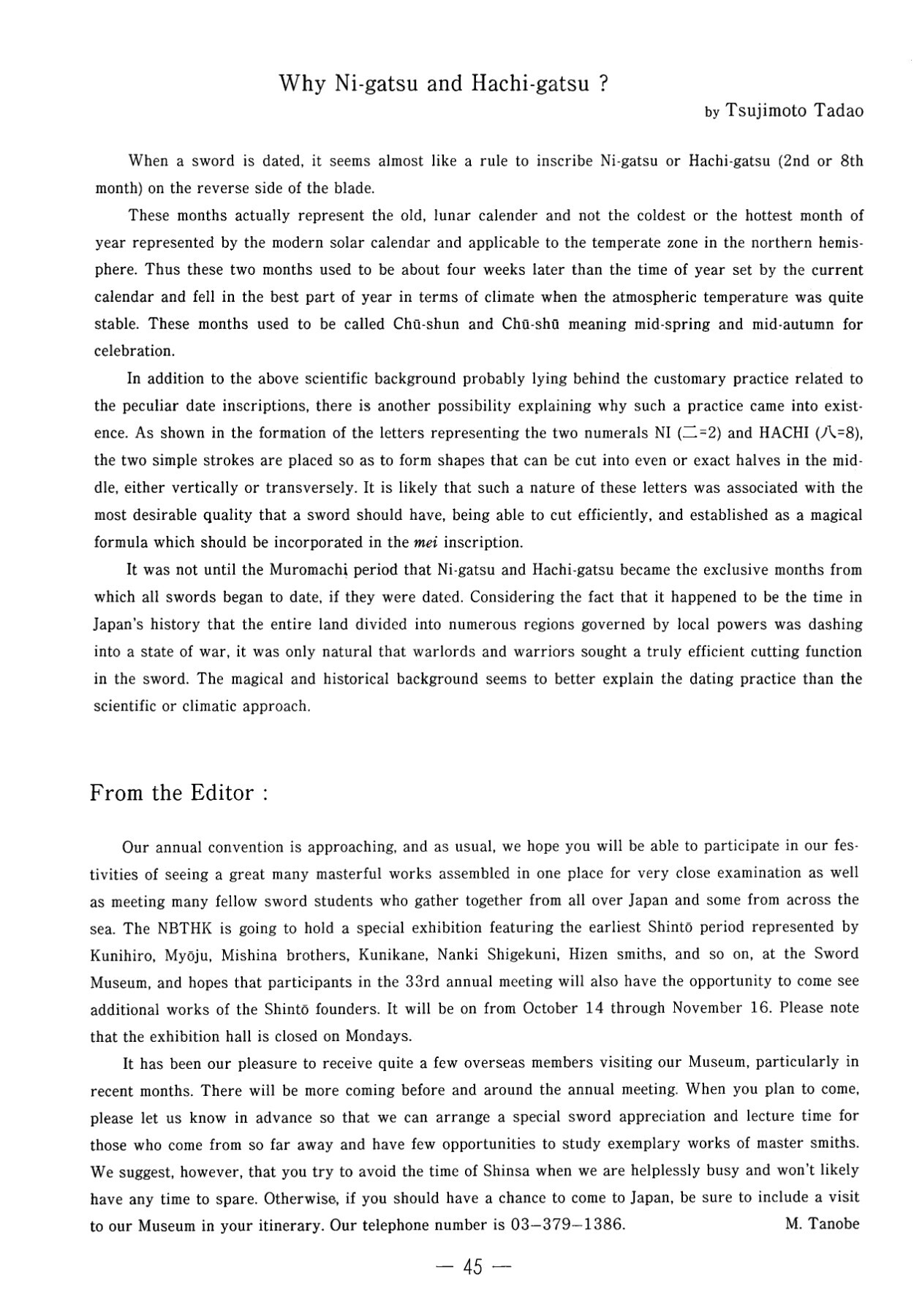
Many other good reads like this can be found. It seems to boil down to superstition, and the practical side of my brain agrees that especially during a time of ongoing war, swordsmiths probably didn't suspend production of blades from March through July because they weren't "lucky" months. The overall distribution of nengo on blades does show spikes in February and August and I'd suspect it was more to do with lucky numbers and superstition than when the blade was actually quenched. You'll rarely see a blade with the 4th month on the nengo written 四 because of its connection with the word for death. You will see 二二 instead in many cases.4 points
-
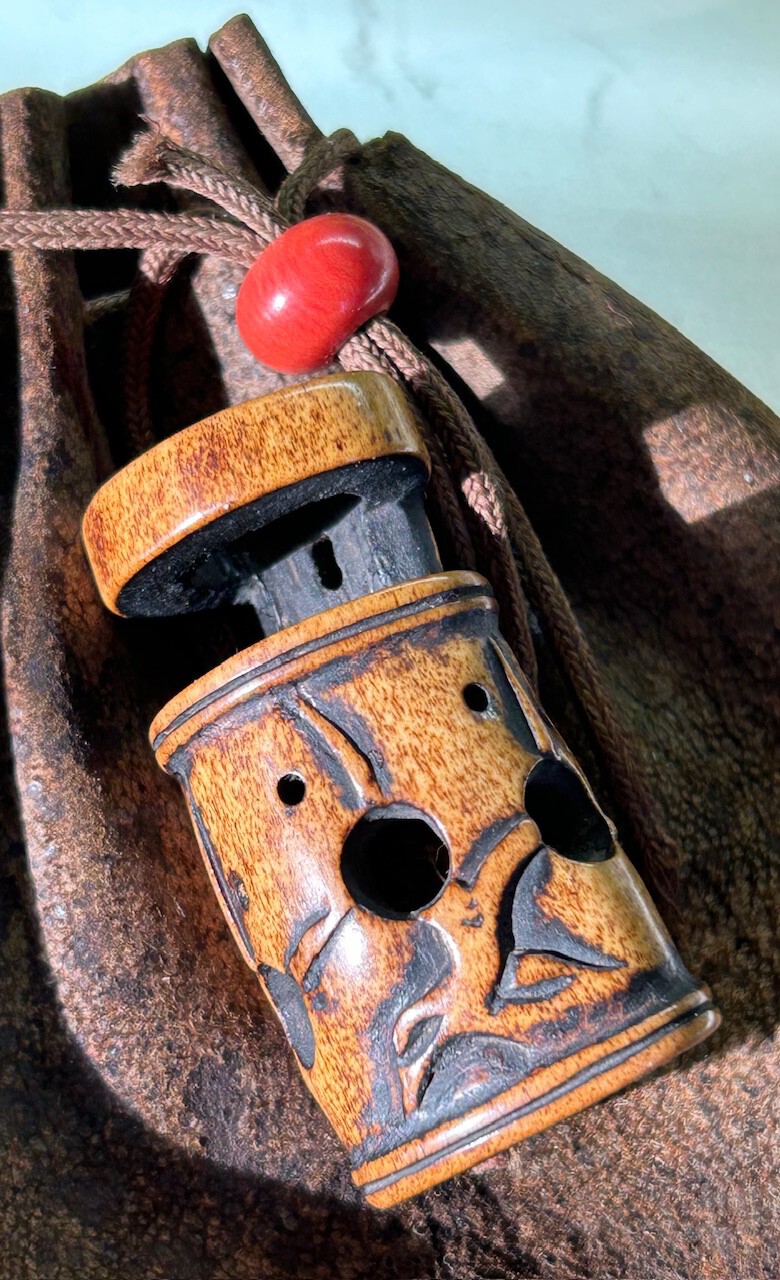
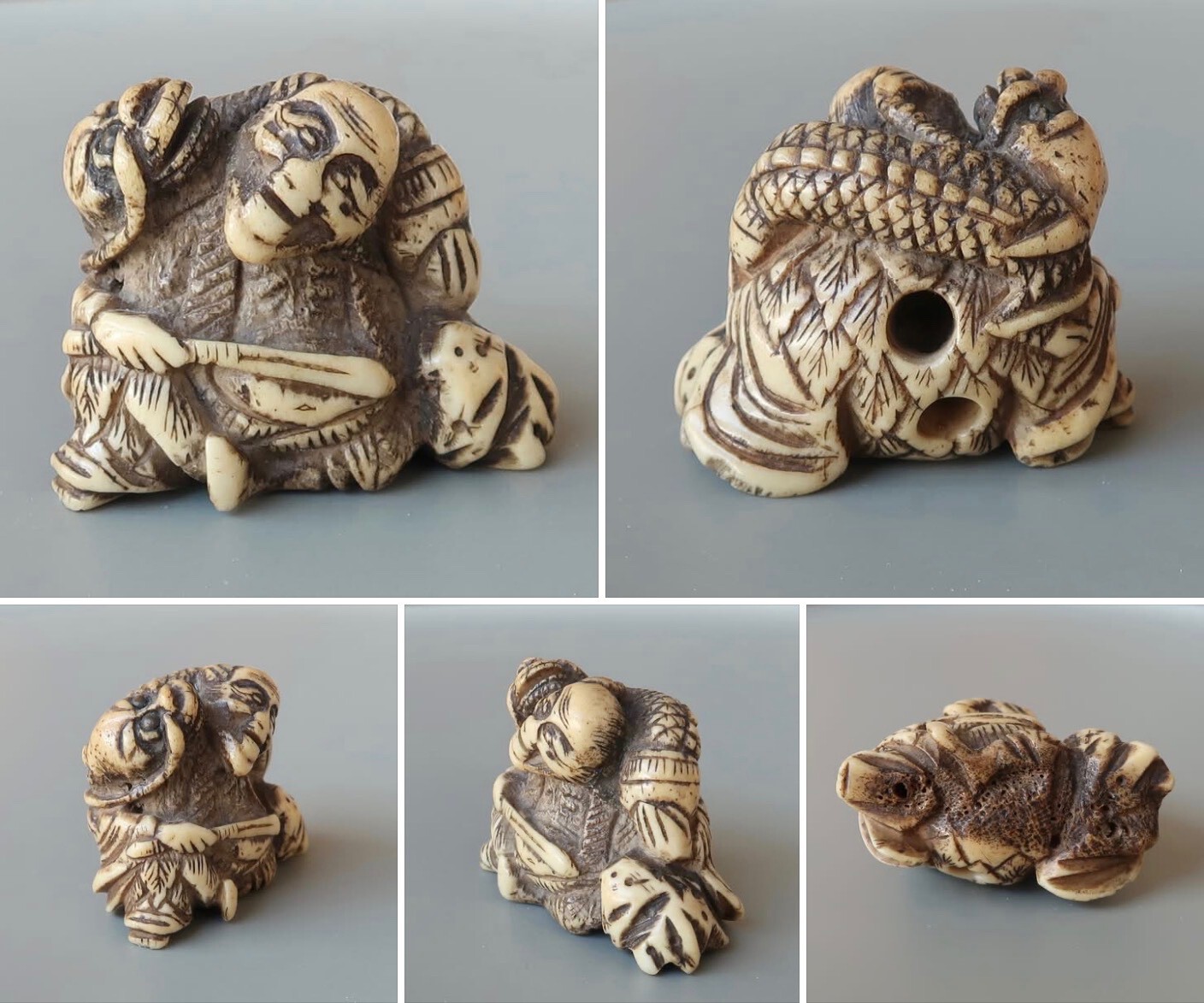
Today I found another example of a 'hanaire', still attached to a kinchaku purse. Thanks to this thread I recognized it as such (Jean!) and we can clearly see which himotoshi hole(s) was/were used for the himo cord. The other holes look decorative... except that on the back this one has a tiny slot as if to hang on a peg or a nail. Bamboo (stag antler) Hana-ire hanging wall vase container. Behind
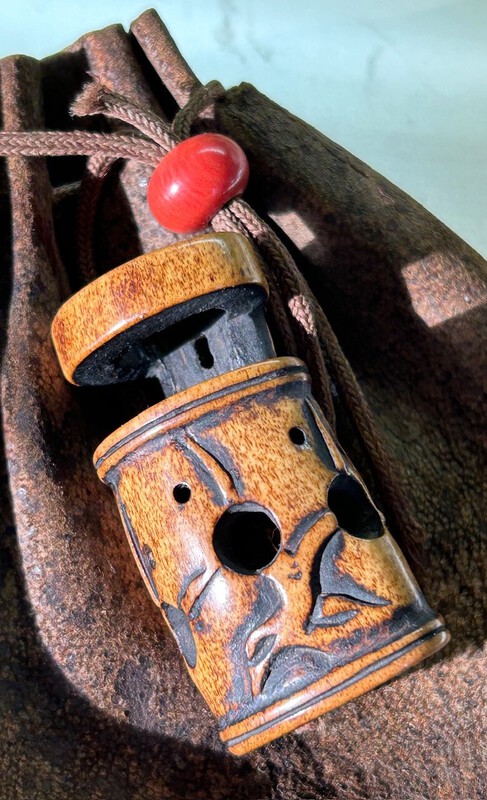
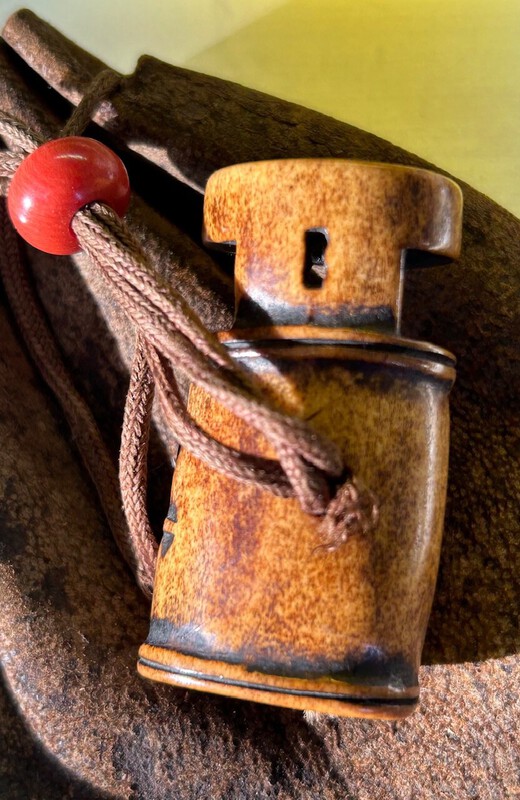 4 points
 -
Not only that but blades owned by more prosperous samurai often had multiple koshirae at the same time (e.g. one for ceremonial duties, one for casual use, one for battlefield use). Check out this Hokke sword that just sold on the forum: https://www.militaria.co.za/nmb/topic/53726-nbthk-tokubetsu-hozon-hokke-katana-w-2-koshirae/4 points
-
A good first blade indeed. Regardless of when it was made, koto Soshu in good condition is a very nice place to start. Putting in the effort of looking at blades in person has worked out quite well for you. I believe this is your sword: http://www.nihonto.us/SOSHU mASAHIRO KR.htm4 points
-
I made a purchase! I made a 3.5 hr drive and viewed multiple swords in hand at a member of this forum's home. I ended up purchasing a 26 inch Daito papered by the NTHK-NPO in 2019 to 7th generation Masahiro 1573-1590. But the blade has the potential to be much older. According to Soshu Den Museum records. Masahiro did not sign as such after 1553. When he took the name, Tsunahiro. The form, length, and grain patterns and activity do not really match later Soshu works, but earlier. The nijimei signature is, as well, non existent in Tensho Masahiro swords. It has a partially polished out Buddhist prayer horimono. A previous owner (whom sold this blade on this forum 5 years ago). Thought the horimono might have been engraved in late muromachi period. I am under the impression that the NTHK-NPO may have classified it as a 7th gen. Potentially due to having lack of reference for anything older. And chose a "safe" designation. I checked Soshu Museum's records. The mei, as well as the forging patterns they desrcribe. Do line this sword up better with 2nd generation Masahiro (1393-early 1400s). Or something made in the 1400s. I would think the Japanese NBTHK would have a far better reference collection to nail down the date better. But also, I not doubting the NTHK's expertise. Just curious why a Masahiro blade would get made in such an old style, with a Mei that hasn't been used for generations, in Tensho? Maybe special ordered that way? There are a few ware up front. Which would knock it down a peg or two. Some signs of use. And it has a few smudges that may polish out. But overall, I am very happy with it. Late 1500s or late 1300s. It's is a very nice work. And a great first blade *i may add some more photos if interested.


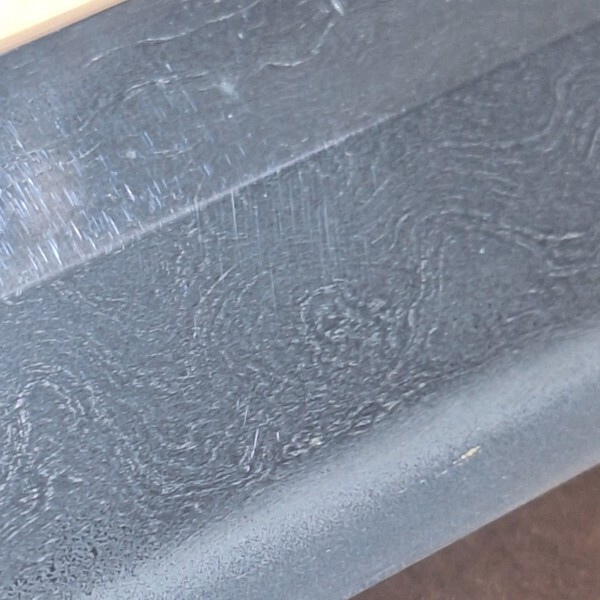
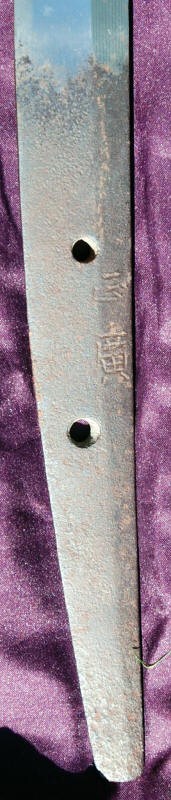
 4 points
 -
That Yosozaemon was absolutely insane. I have 2 nice ones I can show from Bizen, Sengoku era. 1. Gorozaemon no Jo Kiyomitsu 1537 2. Bishu Osafune Sukesada 1567


 4 points
 -
Congratulations on getting a nice sword. In the book Osafune Chōshi, history of Osafune smiths there is actual data on 1,040 dated Osafune swords from 1232 to 1595. While 2nd and 8th month have always had the auspicious aura, there is actually big shift when Ōei ended in 1428. After Ōei Osafune smiths pretty much dated only to to 2nd or 8th month. In the 4th bracket of the table that is late Muromachi period from 1504 to 1595, there are 323 dated swords. From all of those 174 swords (54%) are dated to 8th month and 140 swords (43,3%) are dated to 2nd month. So there are only 9 swords that are dated to other months. Now for comparison during Nanbokuchō period 1334 to 1393, 19,2% of swords were dated to 8th month and 15,6% were dated to 2nd month.3 points
-
Yes, a lot. Don't rely on google. Not sure why you posted those photos with the google translation, as they do not mention any generation. Hawleys lists an 8th generation c. 1577 (MAS 208). Your papers attribute this sword to Tensho (1573-1592).
 3 points
 -
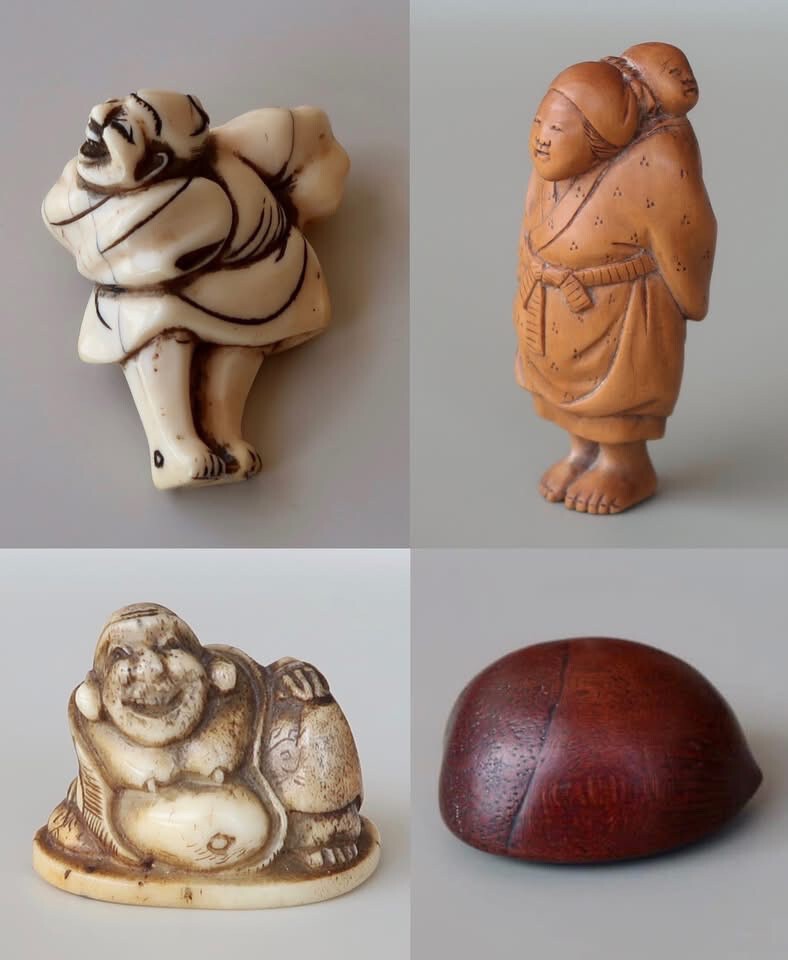
Budget netsuke is one of my favorite netsuke topics (mostly out of necessity... With some luck and patience you can buy genuine antique netsuke even for less than 200 euro, but you need to know what you are doing to distinguish them from the 99.9% of fakes you will find in that price range. These for example I paid around 100 euro each (two on eBay, one in a flea market and one in a local auction): This one was 70 euro in a flea market: This one I paid around 100 euro at auction but it has some obvious damage:
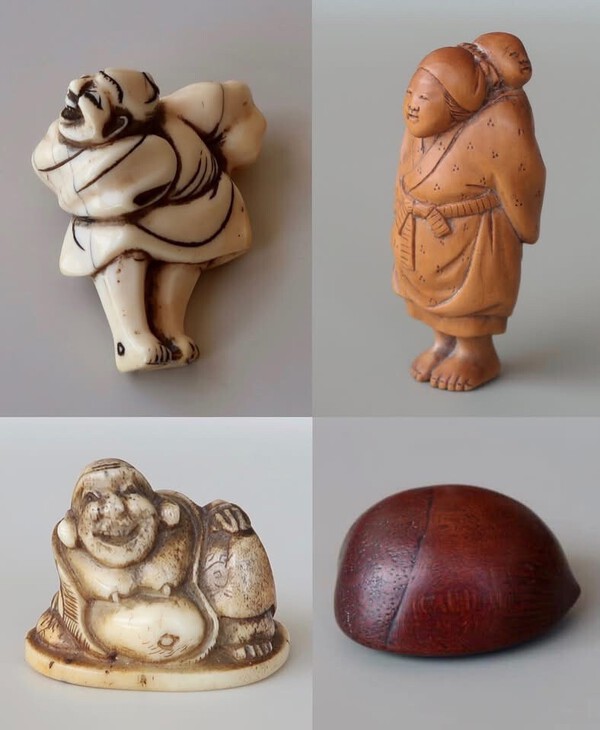

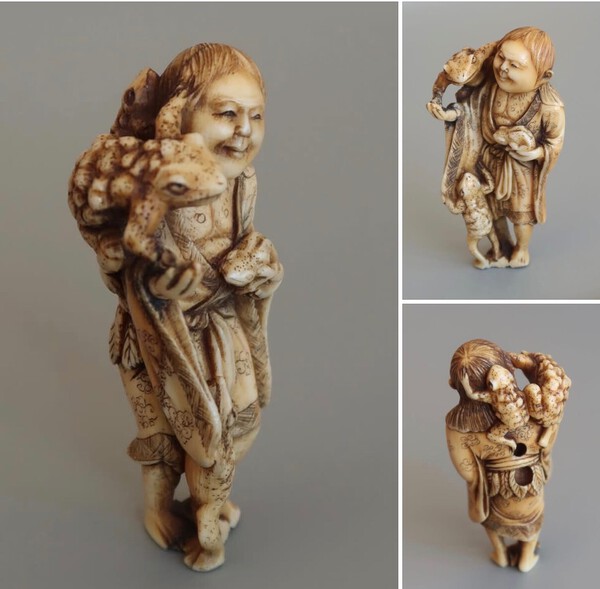 3 points
 -
If memory serves me right these were purposefully cut at that angle to allow a slight tension to avoid falling out. It would also allow easier removal as the handles sit further away from the Fuchi. You will find this detail on many good quality Koshirae with Kozuka.3 points
-
more soon......
 3 points
 -
Yes, there was a Koshosen Nagaharu Kinko around Bunkyū, who was Shuei of Kyoto Gosho.3 points
-
Just a heads up for anyone who's in Japan over the next few weeks that the New Juyo exhibition is running until the 1st of March in the Tokyo Sword Museum. 36 blades from the most recent Juyo shinsa and several koshirae and tosogu are on display. You can see the details as well as download an English list of exhibits here: https://www.touken.or.jp/museum/exhibition/exhibition.html And here is a link to @Jussi Ekholm's translation of the full results from the 71st Juyo Session: https://www.militaria.co.za/nmb/topic/54363-jūyō-71-results2 points
-
@Sukaira What an stunning work you have by Gorozaemon. The finest one I ve ever seen. 🙏🙏🙏🙏 I started out as a Kiyomitsu collector and have always prefered their calmer more subdued atmosphere compared to Sukesada. That sword is very unique that it has an original Futasuji-hi resulting in the mei being down the center. Im still contemplating on selling or holding on to my one Kiyomitsu blade since I ve shifted to collecting Kyushu schools. I know I wont come across another one like it if/when I sell it but seeing that Gorozaemon you posted def makes part of me want to dive back into sue bizen2 points
-
Congratulations on getting a very nice looking sword. I do like the horimono a lot, even though it is worn down. I do have huge respect for NBTHK and NTHK shinsa, however there are always limitations in play when they are processing hundreds of swords at fast pace in a shinsa session. I think most important thing is that they would see this as late Muromachi Sōshū Masahiro. Japanese way of giving extremely specific attributions is something I don't personally like all that much. They most likely cannot spend hours on researching a single normal sword so they shoot out a reasonable attribution they can agree on. Granted late Muromachi Sōshū is out of my comfort zone and I don't track them in my books, however I don't think I can easily find a reference sword by this smith from the huge amount of references I have at home, that is how rare this smith is. This is pretty obscure smith and very specific attribution, my guess would be that NBTHK would give out a lot more broad and general attribution. I think this entry from Nihontō Meikan is the only info I can dig up about this particular smith.
 2 points
 -
For various reasons, many owners of Juyo candidates will instead appoint their agent (often the dealer they bought it from) as the blade's owner while in Japan. Makes things easier if the contact person is there and speaks Japanese (plus the shinsa fees are lower if submitted by a local NBTHK member).2 points
-
Interesting to see that rasp tool just for doing that. I'll be sure to give the saya a really good look, especially on the inside to ensure it's clean. If it's not a great fit, that just gives me an excuse to have one commissioned in the Tensho-era style of the day for a typical rank and file samurai. Very plain, wrapped in cloth then laquered over, etc. but at least it would be a perfect fit for the blade and restore some historical accuracy to the koshirae in a modest sense until I could do the rest of the mounting the same.2 points
-
@anguilla1980 Adding koshirae to a blade by dealers isnt really malpractice nor is Aoi bad for doing this. It s simply part of the general nihonto market. It s not that difficult to find a saya that fits if you match the sori. But you dont know how well it s been maintained if at all. Even a custom shirasaya can damage the polish with foreign particle build up with poor maintanace When you spend enough time in the hobby looking at blades every chance you get, you ll sometime come across a blade you ve seen appear at a different dealer or being sold by an individual seller and the koshirae can sometimes be added, removed, or a different one all together. Now for the 2 mekugi ana. There is no way to know for sure but the 2nd one was most likely made simply to accomodate a different handle. Could have been a new handle , old handle we ll never know for sure but these things were done all the time. And someone with more specific knowledge could add to this but the ana was punched during koto times and at some point during the edo/shinto period , they were drilled. I cant quite tell but they both look punched on yours with the bottom one being original. So the 2nd one might have been made a long time ago as well. I ve looked at a lot of sue bizen blades and that top ana looks unusually high to be the original.2 points
-
Google Translate got it wrong, the original papers clearly state 8th gen (八代, hachi-dai). The 5th or 6th gen Masahiro (there are some disagreements; Nihonto Club says 5th gen https://nihontoclub.com/smiths/MAS205 while the Soshu-Den museum says 6th https://nihonto-museum.com/blog/soshu-tsunahiro) was the one who changed his name to Tsunahiro, however the Masahiro line continued for at least another 2 generations parallel to the newly established Tsunahiro line.2 points
-
Seems logical that the angle would also allow for more clearance of the hitsu to make sure there was no rubbing on the tsuba2 points
-
All very possible reasons. Does anyone by chance know of anything similar from Naotane to compare to? Maybe it was something he did on other specific blades also? Maybe at the request of the customer? @PNSSHOGUN good question, this one is actually Soshu style, so yeah that would probably rule out Ichimonji @Natichu sure - check below.
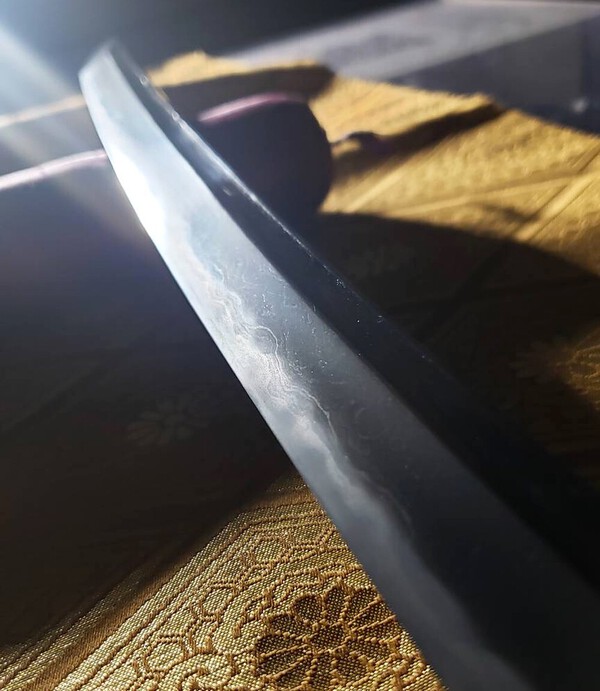

 2 points
 -
2 points
-
Spot on Lars and Piers - I managed with callipers to measure further down the barrel, and indeed it is 13mm! Thanks again for your valuable information.2 points
-
I don't know that much about koshirae as I focus on the blades. However to me in this case the sword blade is pretty uninspiring and the fittings are very high quality. I would dare to think that there would be extremely few daishō sets with full Miboku fittings, so I would think they are very precious. Yokoyama Sukesada blades in this case would not be that interesting considering the fittings. The interesting part to me is that it seems they were given to museum in 1936 so they were in the US before WWII. I am not sure who this Howard Mansfield was but he seems to have had a huge collection of extraordinary Japanese Fittings, including another daishō set this time full Konkan fittings, several Natsuo work etc. top tier artists. Just write his name into MET search and enjoy some spectacular sword fittings.2 points
-
On the right, I guess 幸照撰 – Koshosen?2 points
-
On the left is Chōshun (Nagaharu) 長春 作2 points
-
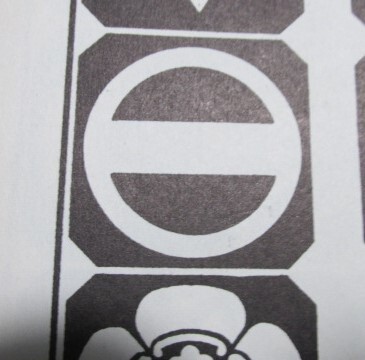
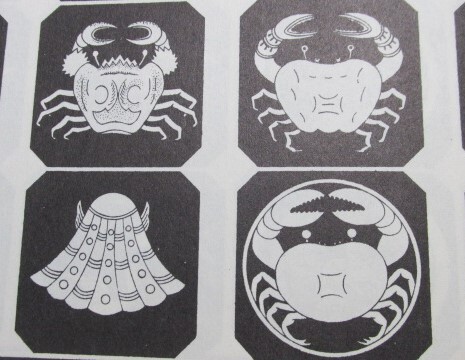
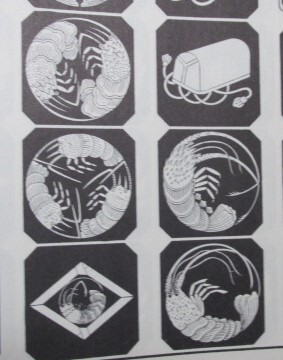
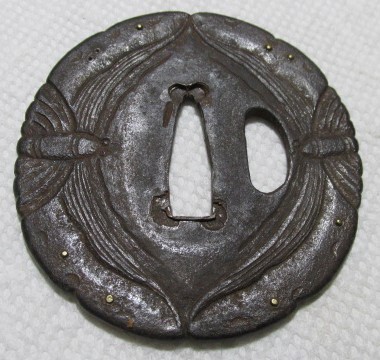
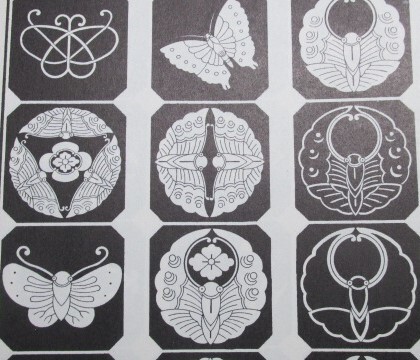
So, all- I am certain many of you know of this. But it is fairly new to me, so I thought I would post the information for other newer members. I purchased (rather recently) a book on kamon designs. I used it and referred to it on the “16 petal chrysanthemum tsuba” thread. The book is titled “Handbook of Designs and Motifs” introduction by P.K. Thomajan, Tudor Publishing Company, 1950. It shows nearly 7000 kamon! I found that many of the tsuba in my collection, which I thought just had a nice motif or shape, could be representations of family kamon! Personally, I find it quite amazing how many of my tsuba are shaped or have motifs that could represent a family kamon. I have included some pictures of my tsuba with the corresponding picture in the kamon book. I probably could have found more examples, but I got tired “flipping” through the pages of the book! The adventure continues! With respect, Dan




 1 point
 -
Howdy y'all! I just found this board and signed up recently. Name's Connor and I am based out of Calgary, Alberta, and I have always loved swords and history. A bit ago I started digging more into the history of Japanese swords and swordsmithing when I inherited a katana from my father, who inherited it from my grandfather. I would love to find out more about it, since a few people I trust have told me it is a gimei. I would love to find out more about it and see if I can get it properly restored and refitted one day! In the meantime, I do my best to keep it in tact and clean, and do the digging I can.1 point
-
Here you go.
 1 point
 -
I had a very positive experience purchasing this Nihonto from Jake. Communication was clear and professional throughout, the sword was exactly as described, and shipping and packaging were excellent and done with care. I would not hesitate to recommend Jake to fellow collectors looking to buy a Nihonto.1 point
-
I kinda interpreted the data that dates of swords at this specific period of war, were reflecting practical production and military commissioning cycles rather than symbolic or ritual dating. But it looks like I could be wrong, and they are more symbolic dates with the NBTHK respecting that date as real out of superstition and respect. Certainly, with swords before and after I expect that to be the case, so yeah, the truth may be stretched here as well. As a new guy, I really appreciate the info!1 point
-
Can anyone translate the mei? Many thanks in advance.
 1 point
 -
Generally, when buying from a somewhat reputable dealer such as Aoi, they will have at least gone to the trouble of making sure the saya fits the blade by using a long-handled rasp. However it's always worth tapping out the saya to shake loose any debris or shavings before attempting a fitting - even for a koshirae that was custom-made for the blade.
 1 point
 -
If you can't find one, it may be worth sending yours in for shinsa to the NBTHK. Being a rare example of a signature adds historical (and often financial) value to a sword, especially koto.1 point
-
Thanks Pietro! There are many ways and means of finding good netsuke at a reasonable price, but you do need to train your eye on good examples first in order to be able to spot the bargains. Then get out and about to fairs and auctions and discover the sweet spots and the places to avoid. I found one this very morning. Definitely if you don’t mind a little damage you can buy a very good Netsuke, even signed, and admire the carving work for a huge saving compared to a ‘perfect’ example. It will also educate you as to the hand of a particular master carver. Step by step one gets to Rome!1 point
-
1 point
-
Yes! That is it. The stains don't look as bad in person. Those photos were taken in a light that made them look as bad as possible. Hopefully they will polish out with proper uchiko. Which I will let someone else handle who is more experienced.1 point
-
bahaha I actually joined way back in 2013 because I was doing a bunch of research on them at the time. They're my dad's swords and we tried to get them looked at back then, but not a ton learned sadly. I just started thinking about them again recently, and someone mentioned getting the tsuba looked at because apparently there are collectors just of that, and its possible the furniture had been swapped out over the years. I appreciate the leads! I'll get to digging! thanks a lot!1 point
-
Excellent idea. These fakes are just a waste of your money? Well, assuming you are going to collect wooden netsuke then you can buy something “basic”, maybe something more “folk art” than “high art” for around $200-400 but beware, there are thousands, probably millions, of fake wooden pieces. The worldwide marketplace is overflowing with them. Just look on eBay! Keep training your eye until you can spot the fake immediately and be patient. Spend a lot of time looking at this link…… https://www.bonhams.com/search/?chronology=past&query=Netsuke1 point
-
Tough call from that one photograph but the tsuba is a surprise to me, I might have expected something in iron with nunome. Can we see it all please? All the best.1 point
-
The length of swords has always followed the evolution of combat techniques (tachi versus katana) and the regulations issued by the shoguns. The vast majority of tachi were suriage so that they could be used as katana. Indeed, given the price of these weapons, it was better to shorten them than to make new ones.1 point
-
Well as I was travelling in Japan this summer I realized I should share the current data I have, because if something happens to me all my long time work is lost. There have been some unexpected passings in the last few years and I have been gathering the data for this file for around 10 years now and it would be shame to lose it all. This is still a work in progress and there is even tiny bit of Finnish language mixed in there. This will never be finished and I will continue to work this hopefully for a long long time. As I managed to pass 15,000 swords in the file I thought it would be time to share it. I am strong supporter of openly sharing the knowledge, so feel free to use this for research, just would be nice to be credited if this is used in research. My original idea was to stop around c.1450, and I mostly did. However I wanted to include some Muromachi stuff I like and old ōdachi in general, and few years ago I started adding late Muromachi and early Edo Naginata to the list. So I think the number of pre 1450 swords might be closer to 14,000. Of course would be amazing to have all swords included but as a solo project just stopping around Early-mid Muromachi has proven to take majority of my sword hobby time. There are most likely some errors somewhere in there and I correct then always when I notice them. It is just due to human error as this is my solo project and 15,000 sword entries there are bound to be errors, and there are still many items that might have XX etc. that I need to do more research. I have included reference for each and every sword, so I do have all 15,000+ swords in my personal references. I have been using this my personal reference system for a long time so for me it is easy. I am always updating this when I have time but I think I have 1000+ written references at home as I have c.800 issues of Tōken Bijutsu. For a long time I have tried to find motivation to finish seeking all the City Bunkazai from city websites but so far I have only gone through 187 cities and I think there are 700+ in Japan. The reference system might be bit confusing but at the bottom I should have quite up to date list of the reference codes I use. Few years ago I started adding additional information and attachments. I should have started it from the beginning as I need to go through references multiple times now. It is still a work in progress but for example additional info I should have around 300 Meitō, I think there should be provenance (denrai) for 1300+ swords currently. Maybe c. 150 shrine dedications etc. For attachment example I should have info on close to 1,500 sayagaki. Just looked and I think I should have c. 400 Tanobe sensei sayagaki. Listed as authentication I should have around 2,500 Hozon & Tokubetsu Hozon papers for these swords. I know there should be 3,000+ but many Japanese dealers never post the NBTHK papers. If I know the location of the sword (museum, shrine etc.) I have written it in authentication field along with the designation of the sword if it has such. I had a huge dream of a website and I had an amazing vision in mind but unfortunately reality hit that I could never achieve that, and on top of that copyright issues would hit hard. As I said I have every item somewhat accessible to myself however I cannot really share them to public. I try to be up to date with current information where smiths belong etc. and try to switch them around. However it is difficult as new theories emerge from Japan. I just read recently that in one view Ōmiya Morikage is now considered to be Osafune smith instead of Ōmiya, and just few years ago I switched Yoshikage from Sōden-Bizen to Ōmiya, maybe I need to do more switching... so some smiths might be in wrong school, or there can be alternating theories. In my defence I have all the references where I can check but there can be conflicting information among the references. Unless the item is dated I have tried to give a decent time range for the smith as I dislike very narrow ranges for mumei items. Some references can narrow the dating of mumei sword to very narrow time frame and therefore I have written what they see the item being. As for me size and shape is the most important thing for me it was logical to arrange the items by length first and foremost. So if present the swords should go ōdachi - tachi - katana - naginata - naoshi - kodachi - wakizashi - tantō - ken/yari. Then for same length I have usually gone higher ranked first (at least that was my plan). Well that is a brief summary of the database file. I hope everyone will have a great summer Koto tietokanta PDF15000.pdf1 point
-
Here is a good example from Darcy's old website courtesy of the Wayback Machine: https://web.archive.org/web/20060908062818/http://www.nihonto.ca:80/kissaki/1 point
-
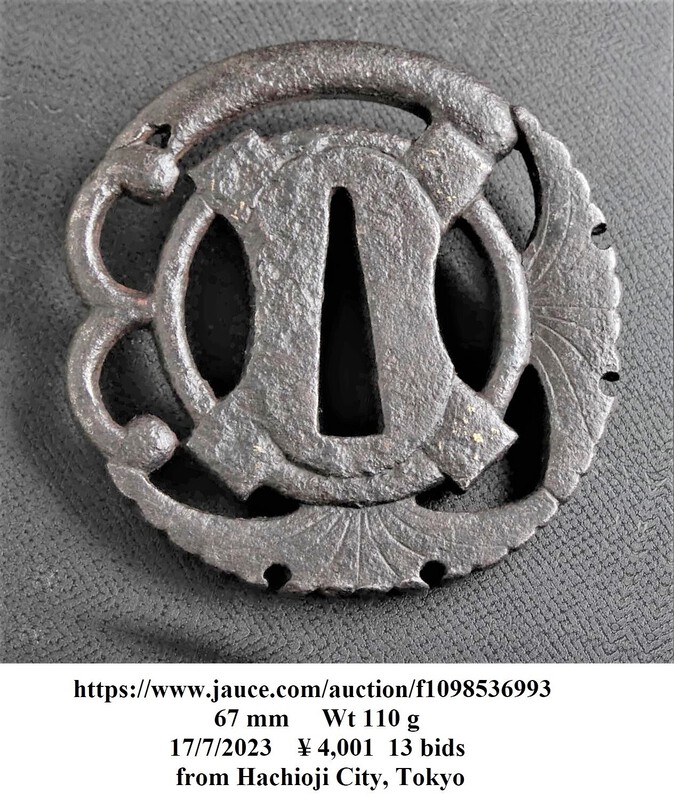
Not the best quality piece I have but I do love the Kawari-gata nature of it. https://en.m.wikiped...File:Gion_Mamori.svg Gion Amulet - 「祇園守」 The Gion Mamori is a special amulet sold at the Yasaka Shrine in Gion district in Kyoto. The origin of the Gion Mamori kamon is shrouded in mystery and is still debated: some think that it represents a cryptic map of the woods that used to surround the Yasaka shrine, while others say that it is in fact a hidden Christian cross. There is also a third interpretation linking the amulet to an obscure Gion-shoja temple in India, where the guardian deity Gozu was said to inhabit. Chinese characters for "Gozu" mean "cow" and "head", and therefore some say that the Gion Mamori mon represents the head of a cow. The Gion Mamori mon is a rather rare emblem with about 50 known variations.
 1 point
 -
Also five element theory ( Gogyou 五行 )1 point
-
In my records I count 6 mumei tsuba with Hikone attribution and just one reported as Sōten (and 7 more signed Sōten). So, if unsigned, the tsuba usually takes a paper with Hikone written in it.1 point




















This leaderboard is set to Johannesburg/GMT+02:00