GRC
-
Posts
761 -
Joined
-
Last visited
-
Days Won
14
Content Type
Profiles
Forums
Events
Store
Downloads
Gallery
Everything posted by GRC
-
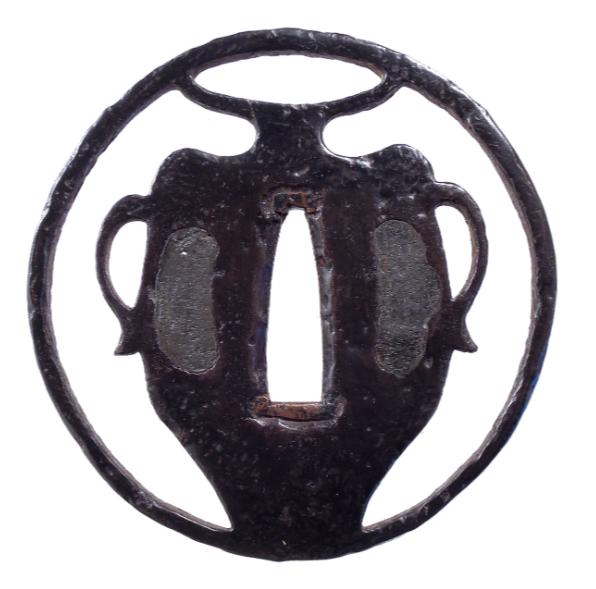
looks good to me Here's one with what looks like the same motif, which was described as "chatsubo". Chatsubo 茶壷 in Japanese is the name of the clay pots used to keep matcha tea leaves before they get ground
-
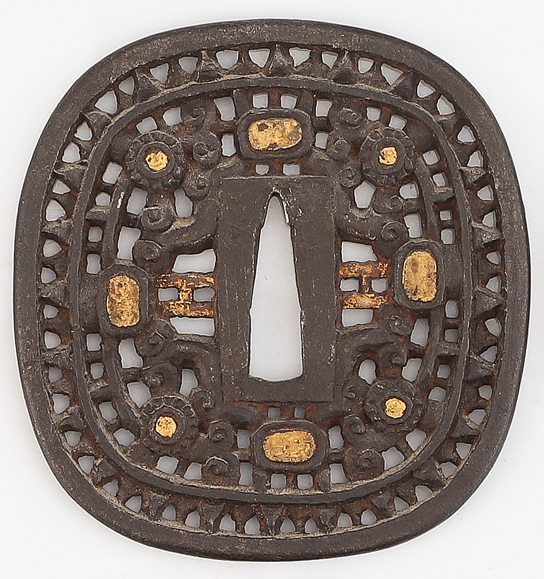
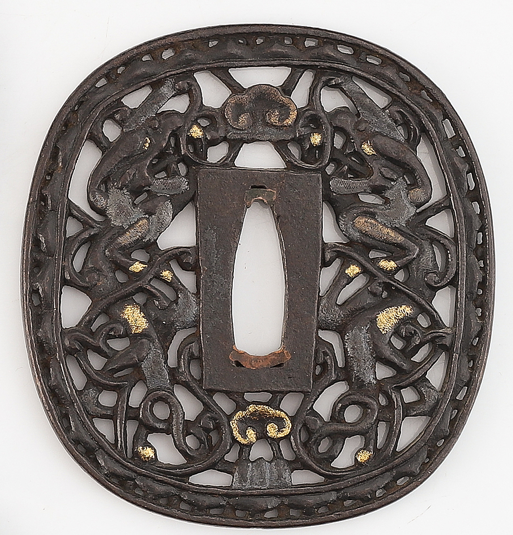
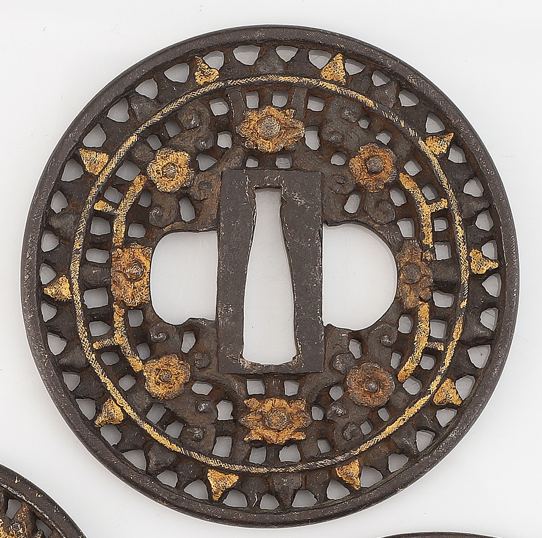
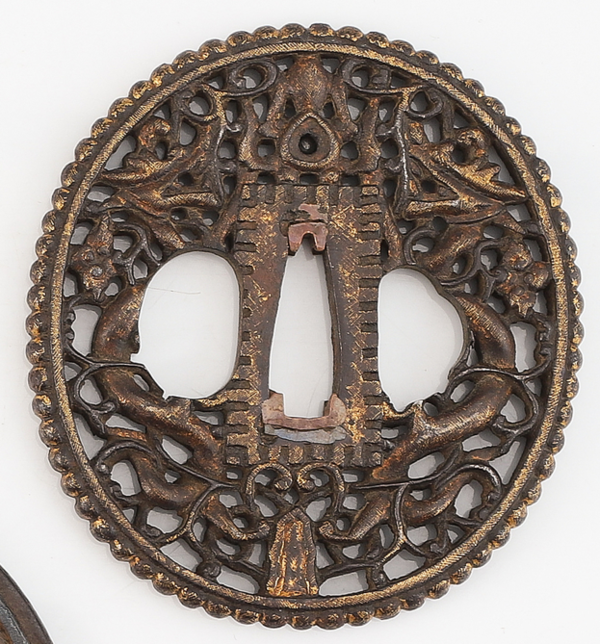
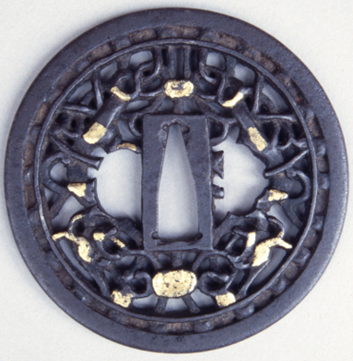
Can't comment on the first one... sorry. The second one with the egg shaped form is typical of an early Chinese guard (which I'm pretty sure are called "Hushu"), but has none of the typical "Nanban" aesthetic, so probably made in China and probably never exported to Japan. The third one you posted is definitely not Japanese made or modified to fit a Japanese blade. Likely made in China for a Chinese blade. Here are some more egg shapes made in China for Chinese blades (worn blade edge down like a tachi), with a more typical "nanban" aesthetic. Both were modified in Japan to have a hitsu-ana: Here's one that is unmodified and mounted on a Chinese Dao sword: Here are some unmodified Chinese guards (except maybe the nakago-ana): and these three Chinese guards had the design cut through later, to make 2 hitsu-ana to fit a Japanese koshirae:
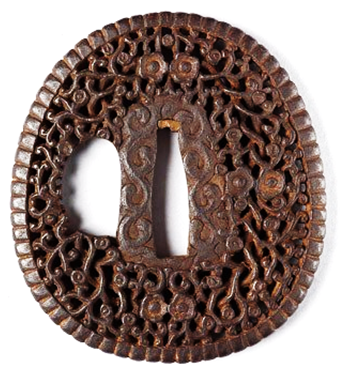
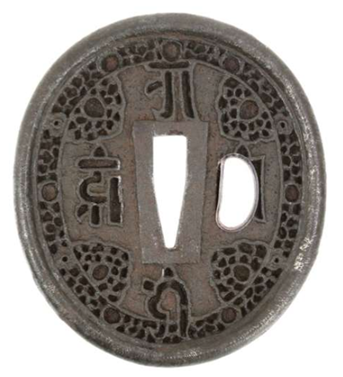
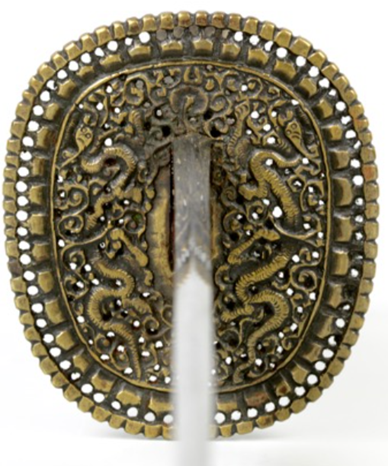
-
nice Colin spot on
-
This one is Hotei behind a large bag, with a radish on the back. Clearly not the same as what you posted David... but maybe a similar concept? Maybe they are both some sort of "blessing for a good harvest"?
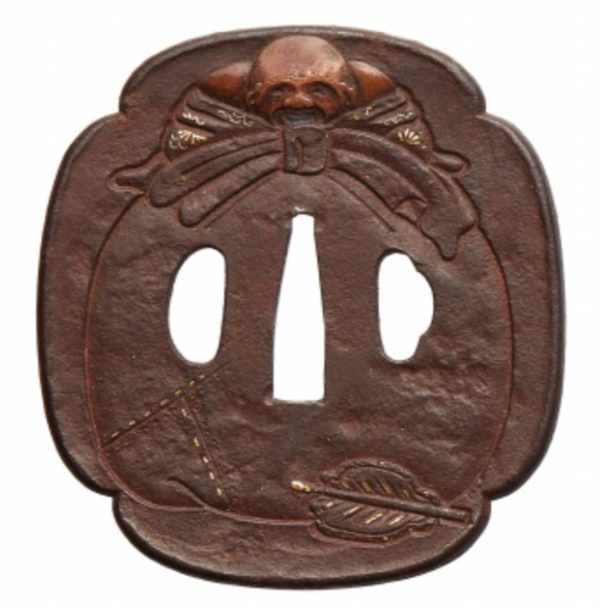
-
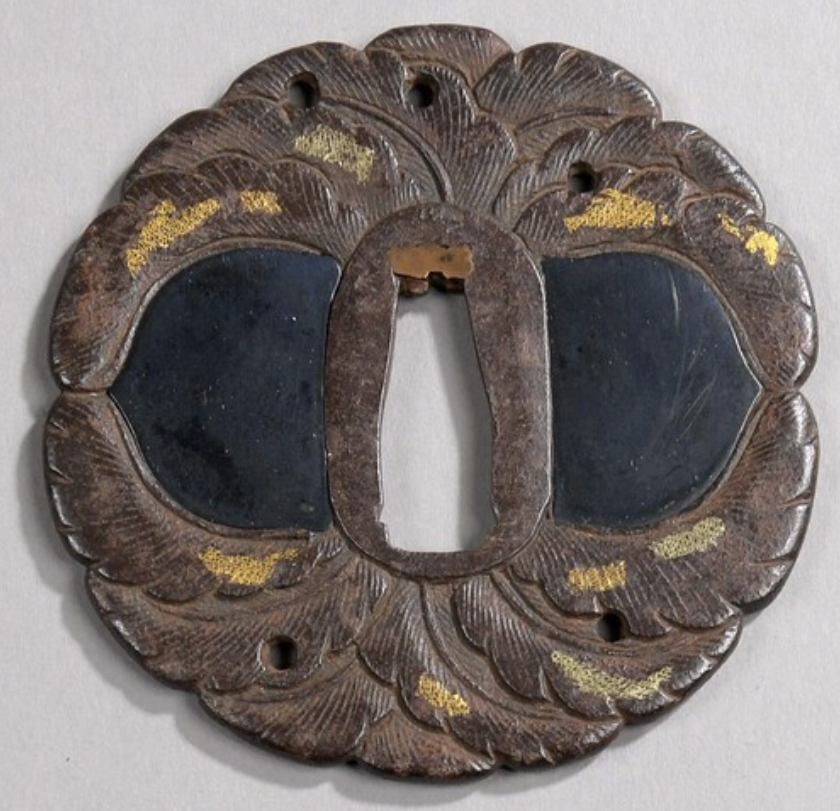
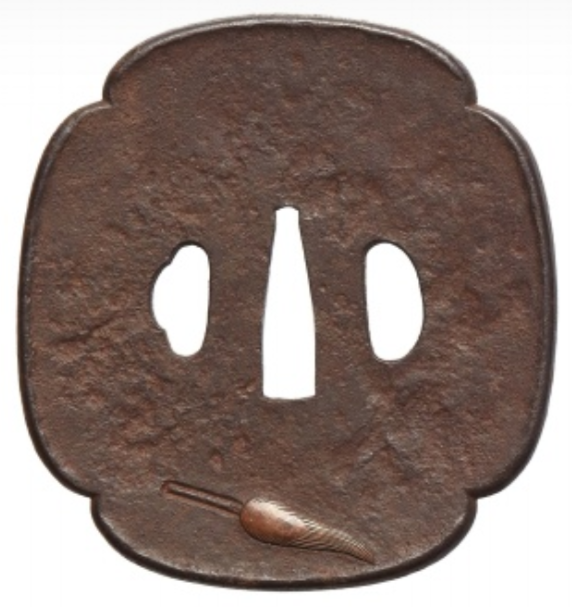
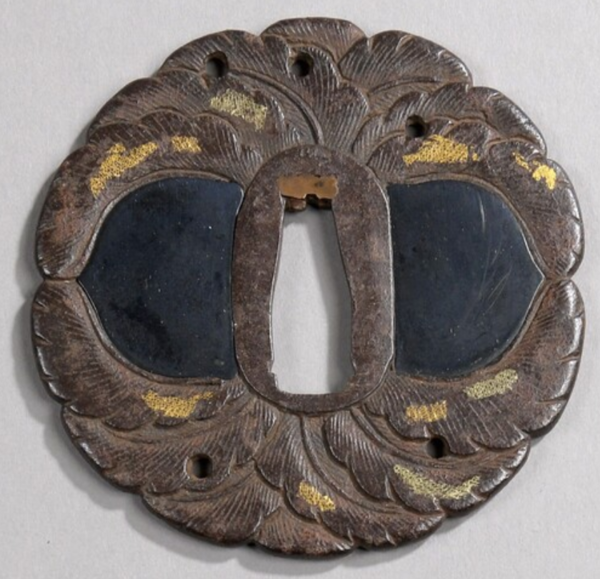
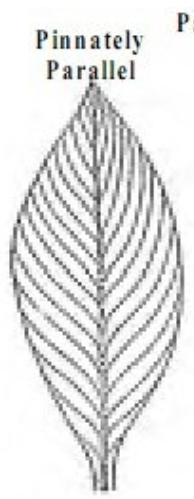
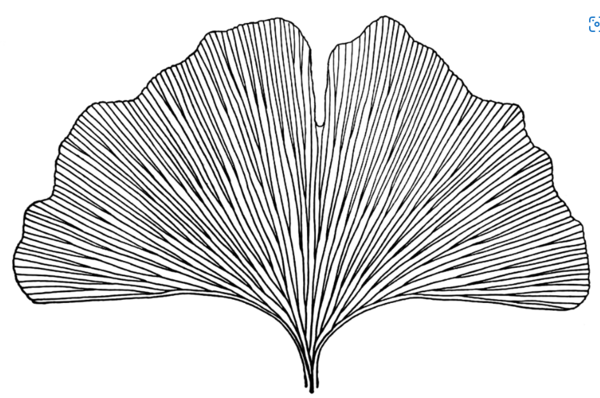
Bruno, that tsuba was originally described as "arching feathers" when sold by an auction house in France I happened to stumble across it by accident this morning while looking for something else. My vote is feathers as well, although the feathers are arranged in such a way as to give the same "look" as the ginko leaves in the tsuba that Dale posted. So maybe it's an intentional "double visual". Maybe someone was trying to combine their family's feather mon with a ginko leaf motif? Those leaf shapes Dale posted typically represent ginko leaves, which have diverging, almost parallel veins, that can branch in two along their paths. It's called a "dichotomizing vein pattern": But, they are typically done as simple diverging lines when done as inlays on tsuba (likely for simplicity). Whereas the tsuba Bruno posted has what is called a "pinnately parallel" pattern... which is found in leaves of many plant species, but also bird feathers

-
That's the first time I have seen the "overweight" version of the bird tsuba It would be pretty subtle once mounted on a sword and viewed from a "safe" distance by onlookers back in the day. Seems almost like an intentionally "hidden" motif.
-
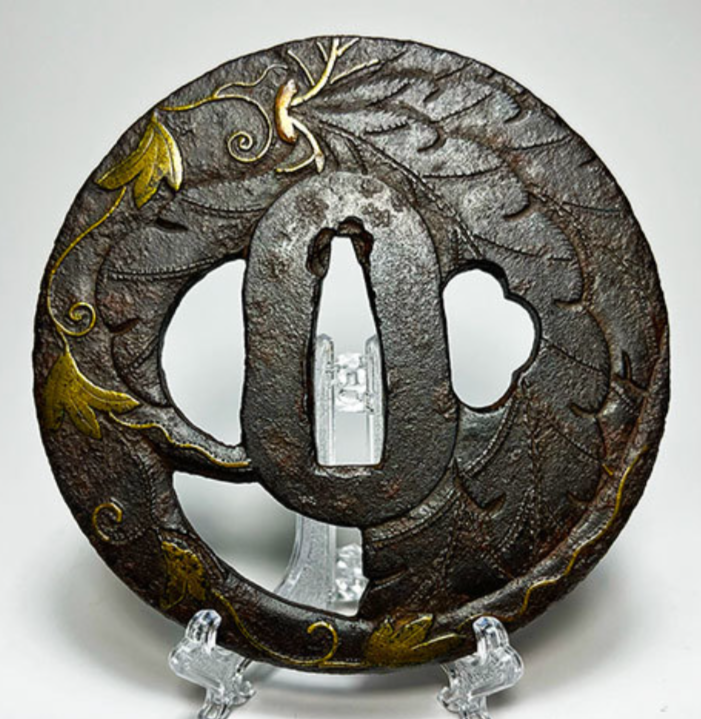
Wan-gata forms are rare for this particular style of Nanban tsuba carving and overlay. But I guess you could probably say the same for just about any wan-gata form... so I suppose that isn't saying much lol What is definitely unusual though, is having a distinct, raised seppa-dai on the concave side of the curved dish. Here are some other examples of "this style" of Nanban tsuba, but not in the wan-gata shape. The first one below has more sharply defined carving than the typical, but they all seem to favor more blocky/bubbly, almost "childlike" or "folk-art" types of design (not too sure how else to describe it).
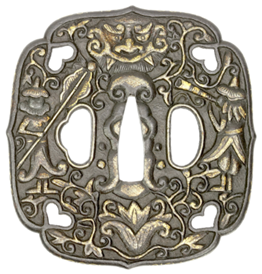
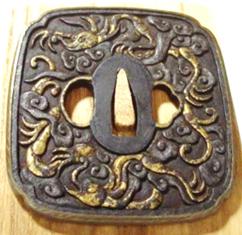
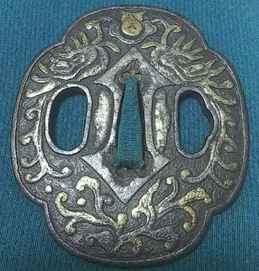
-
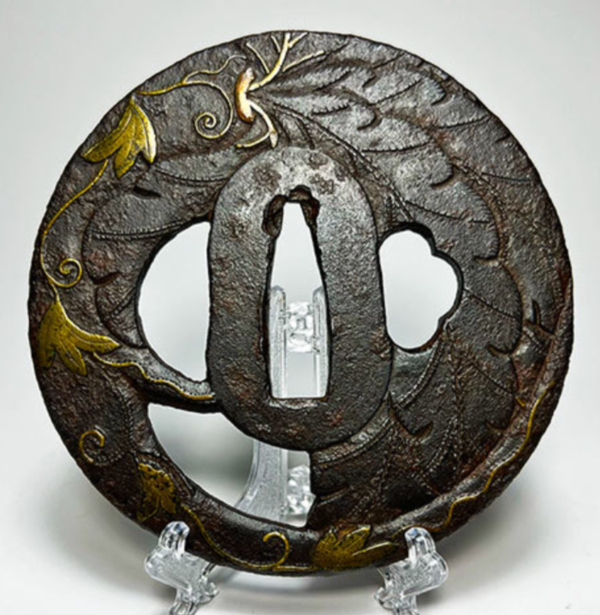
Congrats on the start of your new addiction The steel should clean up fairly well with some scraping with antler or ivory. It will even out the appearance of the steel surface once you get those tiny rust bubbles off the surface. Don't use any metal wire brushes of any kind or you'll scratch through the patina that that gives it an aged appearance. Also make sure not to scrape the gold overlay with anything or you'll take it right off.
-
I think you're probably right Dale. The hitsu-ana liners were most likely added later, and probably even the hitsu-ana themselves. It's really rare to have white-metal liners in the hitsu-ana of a Nanban tsuba. Although there does appear to be some silver nunome on the castle's outline... so it was a good choice by whoever added them in. And, as you pointed out, the large round seppa-dai is more of a continental East-Asian layout, rather than specifically Japanese. I love how the waves are simple repeated arcs on the left side, then get more random toward the upper right side. This is definitely a top-notch Nanban tsuba.
-
Outstanding detective work Dale!
-
Beautiful workmanship on that one Dale Spotted another nanban tsuba variation that has a castle and fish as well, with an unusually large and round seppa-dai for a nanban tsuba:
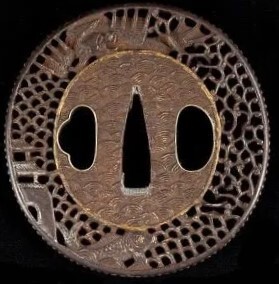
-
Soft metal casting:
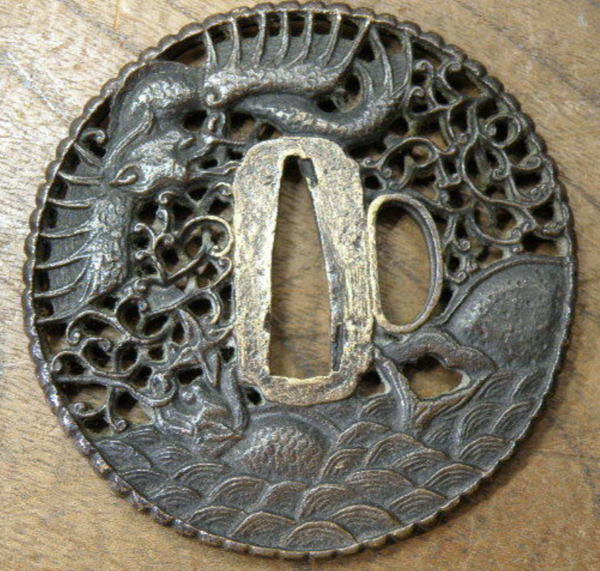
-
Another Nanban version in soft metal.

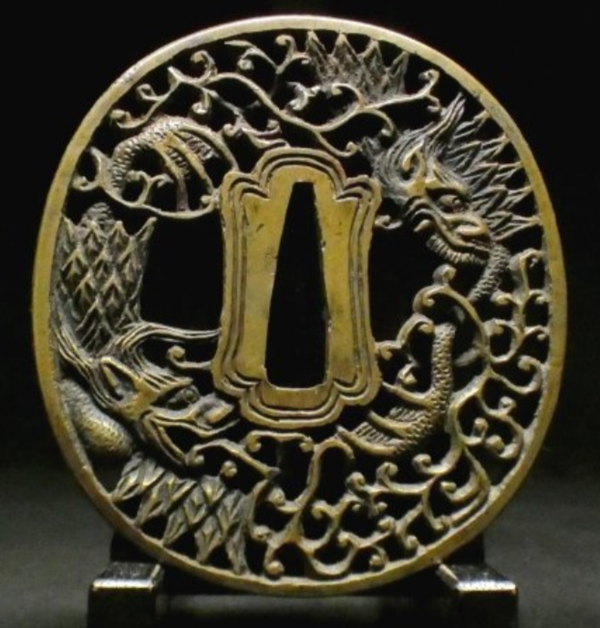
-
Dale, it's this version from page 1:
-
Looks like the exact same guard Dale posted, relisted three years later by an online dealer. Cleaned up beautifully, but a much higher price this time (10x ) I wonder how many times it changed hands from 2019 to 2022.
-
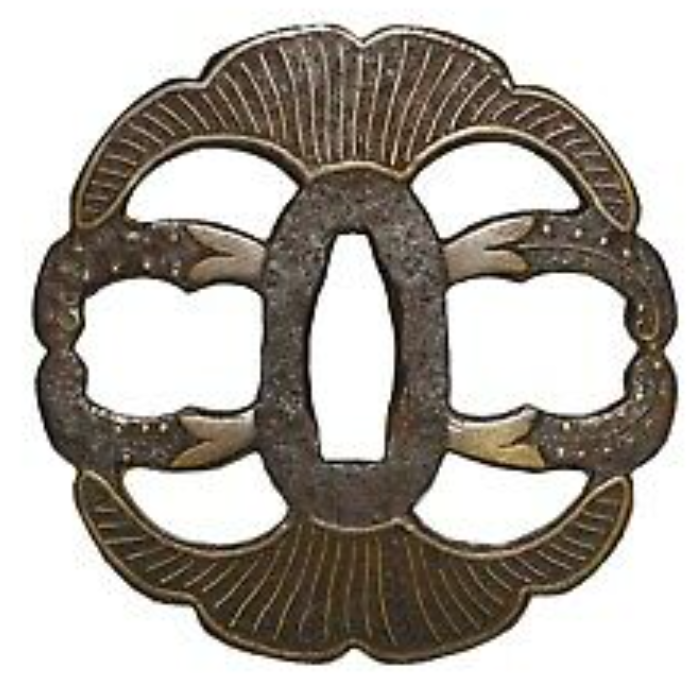
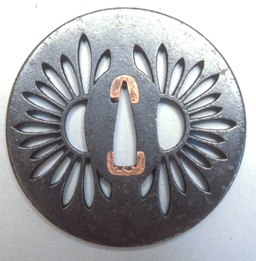
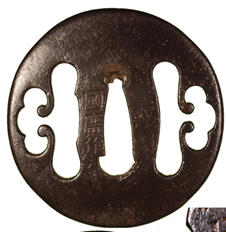
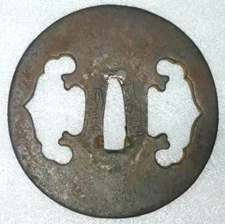
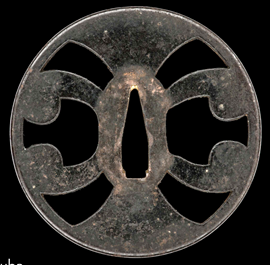
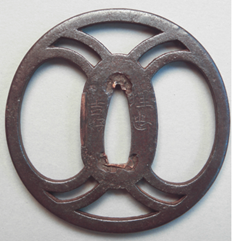
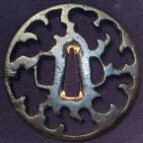
Piers, Dale is correct , yours is more likely Inshu Suruga, or possibly Bushu Ito. The distinct "kuchi-beni"-style sekigane is a dead giveaway, but other schools also adopted that sekigane style afterwards, like Bushu and Akao. Ineterestingly, here's two Suruga tsuba that put their spin on the boat rudder motif that we also see in Teimei works: The sukashi is too curvy and flower-like for Teimei. Teimei tends to do long smooth arcs or straight line geometrics, not undulating curves. Here are some Teimei examples with curves (and note, none of them have kuchi-beni sekigane): Here's one which I have in my Suruga files, but I can't be 100% certain on this one... Often though, the Suruga smiths like putting in really fine-line sukashi elements, like the super thin lines in the rudder tsuba above. So, another option is the Bushu Ito school which did these bold flower-like, large symmetrical sukashi: Kunihiro from Bushu Ito did a lot of work like your tsuba, and he used kuchi-beni sekigane: Here's another Bushu by Masamichi (at least that's what the description said): Sorry for taking this thread off track Jean. At least the boat rudder examples tie in a bit.. sort of Unfortunately, I can't help you out with the chronology of the different Teimei signatures. .






-
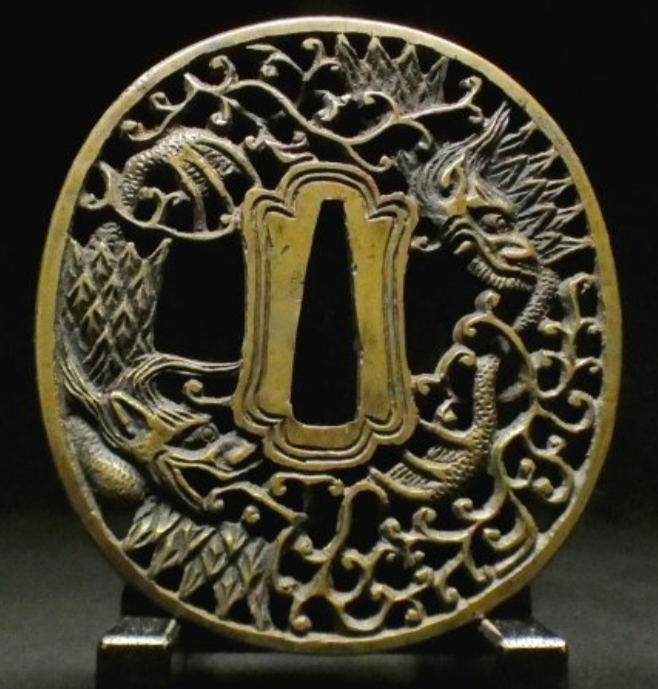
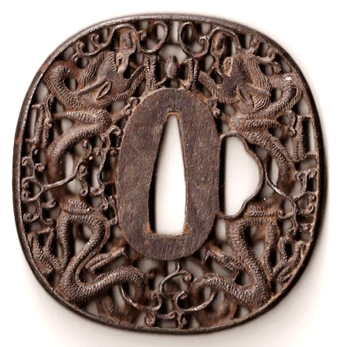
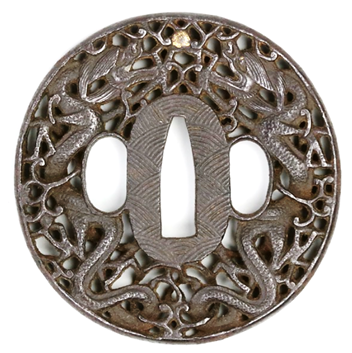
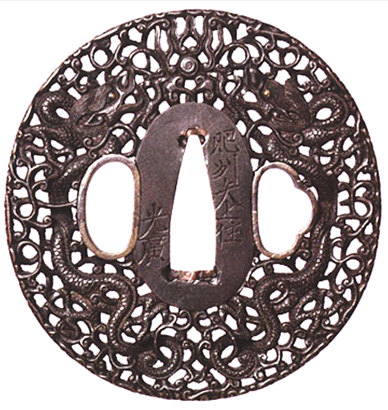
 Brian, that one is an outstanding example, and you got it for a "garage sale price" The carving details in the dragon heads are really well done, and unusual. There are many variations and styles of the Nanban-style double dragons that were made by tsubako throughout Japan (and earlier, from China... it's originally a Chinese motif). Looks like Yagami school work to me. They are the Japanese tsubako who made this particular style of Nanban dragon tsuba, that I like to call "the zig-zag tail" because of the more-angular undulations in the dragon tails in the bottom third of the tsuba. Yours is even signed (although I can't read what it says), which is a rare bonus Maybe post a close up and see if someone else can tread it. Here's some other, similar examples from the Yagami school: some with the rounded-square shape: and some round ones: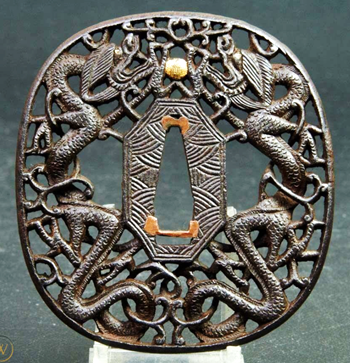
-
Thanks Pietro!
-
another one that has that more unusual version of a shiachi:

-
and another one of the same style, with slight variations, likely done by the same smith (same tagane-ato):
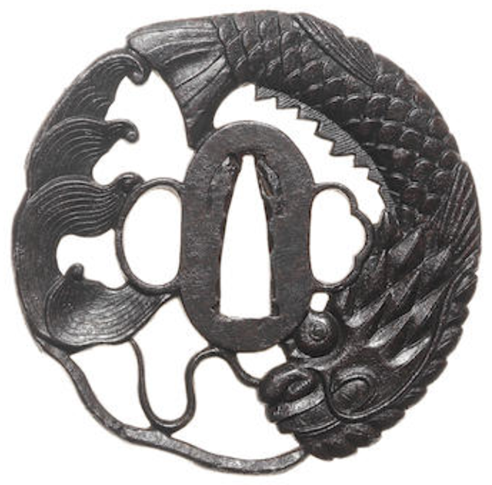
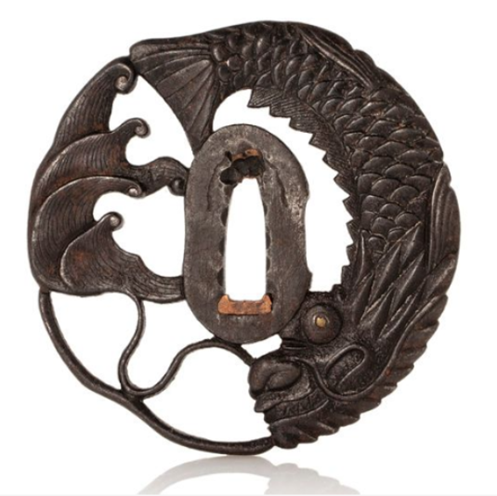
-
Here's another one (not cast), that has some similar stylings to the one Dale posted earlier. Same school, different smiths maybe?
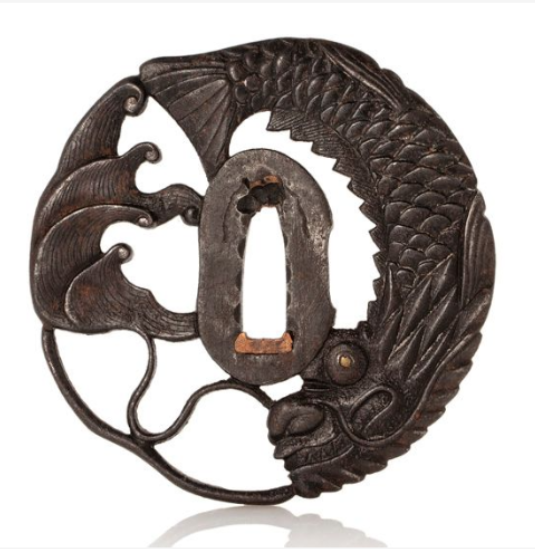
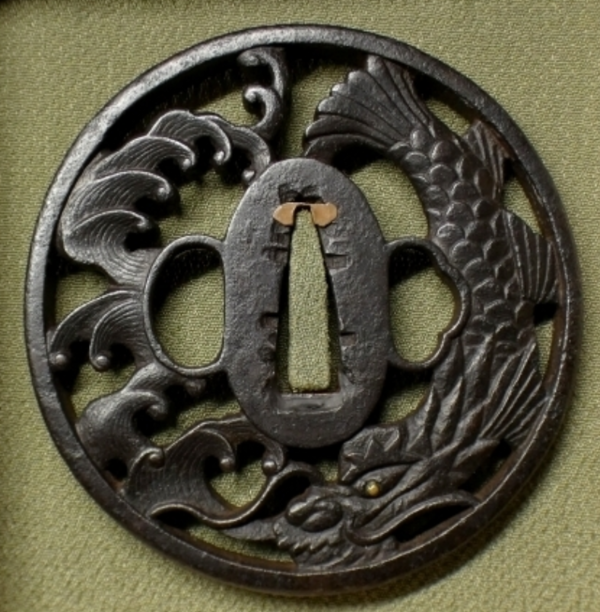
-
That’s a fun theme to collect Stephen. They look great interesting that the sukashi pattern is at the top of the nakago-ana on the 4th one.
-
Interesting Pdf Articles And Links
GRC replied to Brian's topic in General Nihonto Related Discussion
Thanks Brian, glad someone is enjoying them This one is a follow up to the NMB thread that was started about the meaning of a "beams" sukashi motif on a tsuba. As the thread grew, it seemed like a natural fit to expand it into just about any pattern that had "linear" motifs, so this article ended up including motifs with "Beams, Bars, Sticks and Rays". It's amazing how many ideas can be conveyed with just a few straight lines. -
Here's a larger sized one (almost 8.3cm diameter) on YahooJ if you're looking to build up a set