GRC
-
Posts
759 -
Joined
-
Last visited
-
Days Won
14
Content Type
Profiles
Forums
Events
Store
Downloads
Gallery
Everything posted by GRC
-
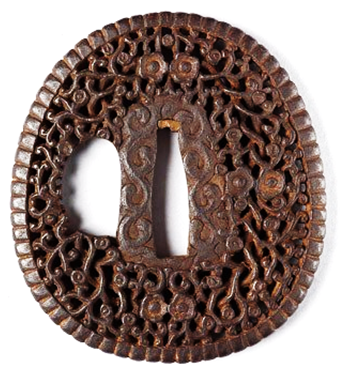
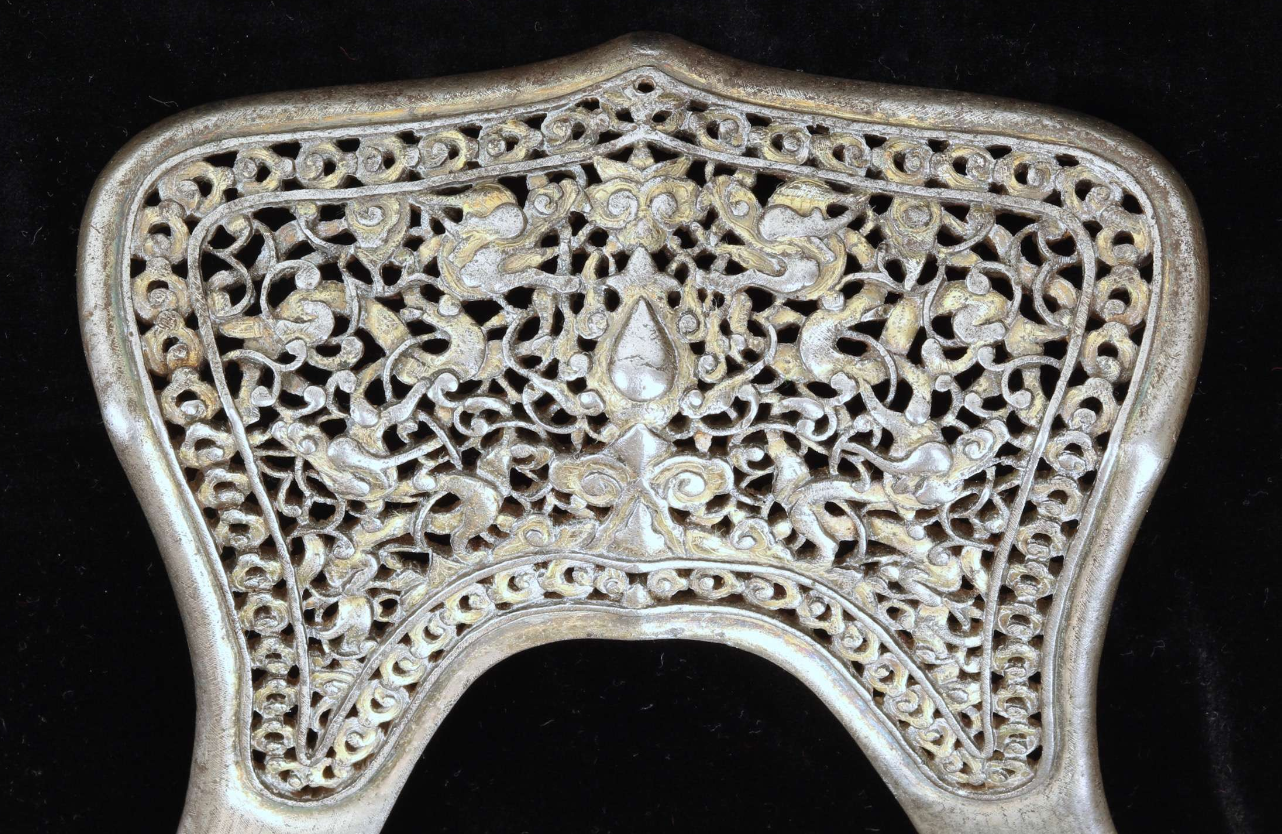
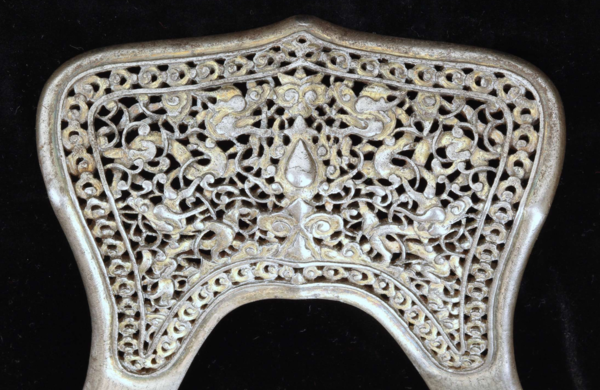
Oh and as Ian pointed out, there's definitely some influences from Tibet (and I'll add Vietnam as well) in some Nanban tsuba. "Nanban" is referencing a giant cross-cultural meeting point and sharing of ideas. There are a quite a few tsuba examples that get really difficult to pin down to a specific area of production because there are elements of multiple cultural motifs and techniques all wrapped up in the same tsuba. There's tons to sort through and lots to learn about. Here's a late Ming period (1500s-1600s), decorative horse saddle side plate: more info on it here: https://mandarinmansion.com/item/tibetan-style-pierced-saddle-plate
-
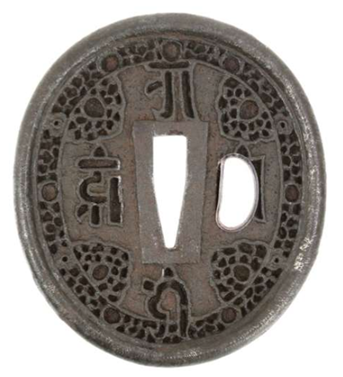
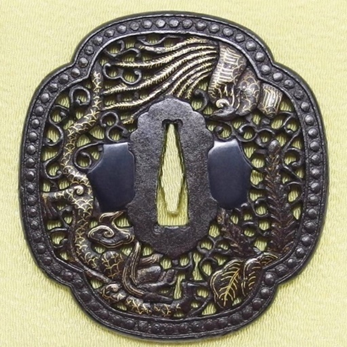
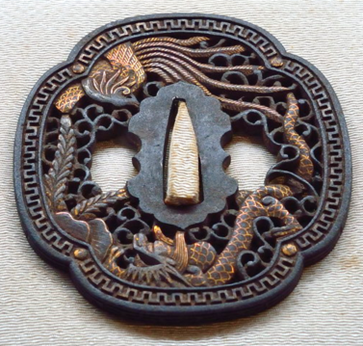
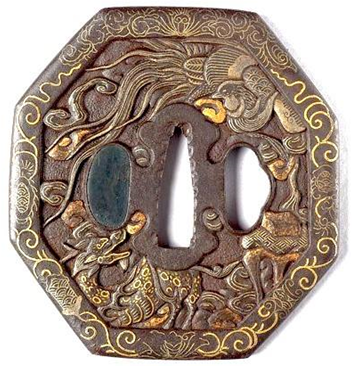
Ian here's a few examples of tsuba made by Chinese smiths living and working in Nagasaki (Edo period). I know of one "school" of these Chinese smiths, called "Kiyou-Toujin", and they had a very distinct style to them:
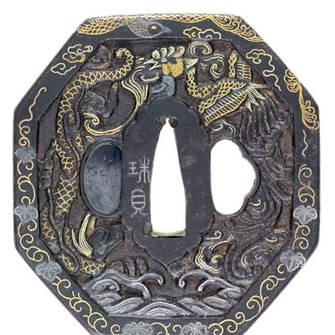
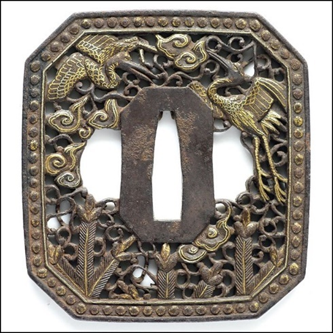
-
Thanks for sharing those images and info Kirill I looked up some info on Ming period Chinese swords (years 1368-1644), and found quite a variety of blade styles and guard styles. Lots of images and info here: https://greatmingmilitary.blogspot.com/2015/06/swords-and-sabres-of-ming-dynasty.html Interesting that there were several flat "wan-gata" type guards that have a raised, angled rim, rather than a full bowl shape. Like the one Kirill posted: And here's a nice article on the Japanese exported swords and Japanese-style swords made in China during that time period. https://mandarinmansion.com/item/chinese-woyaodao It's called the woyaodao (倭腰刀), literally: "Japanese styled waist-worn saber". Again, thanks to Kirill for the initial info
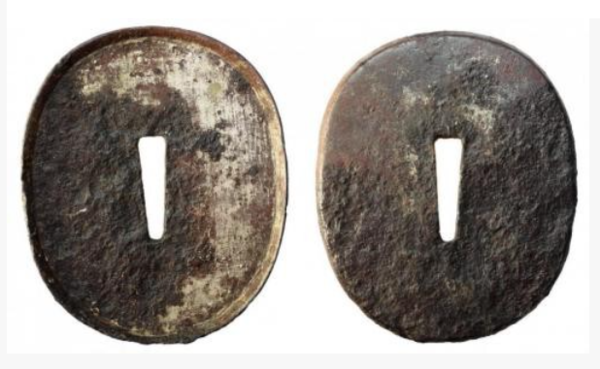
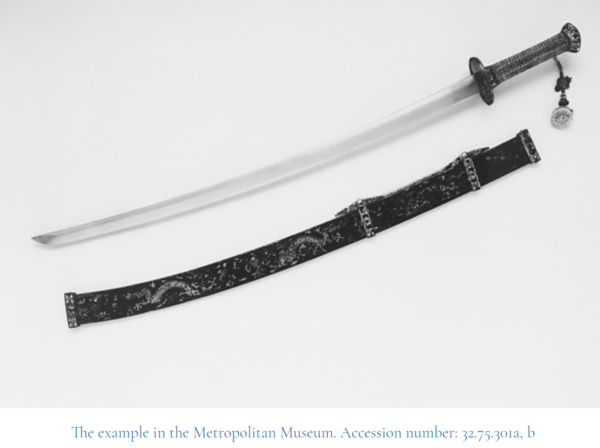
-
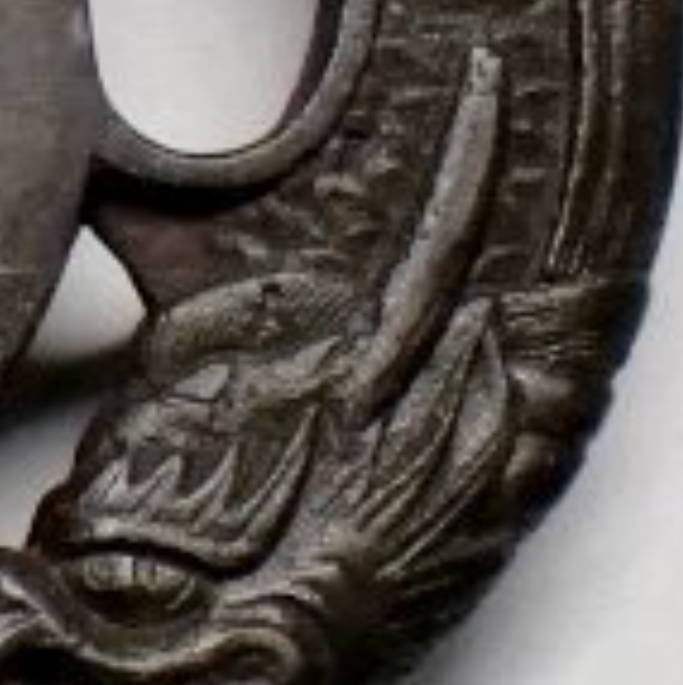
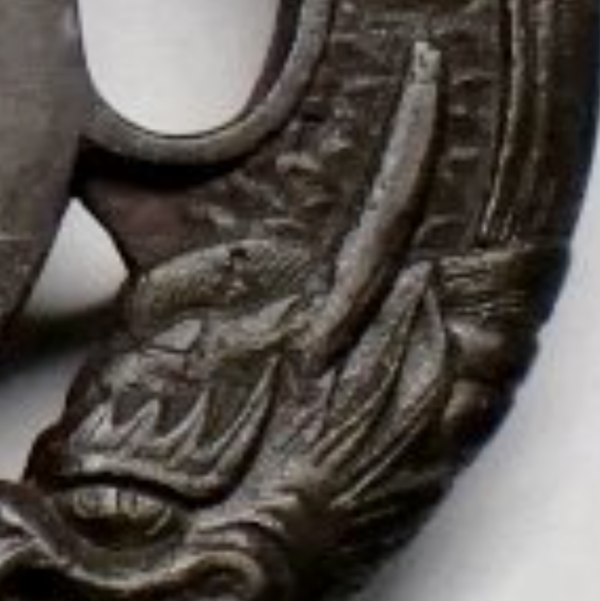
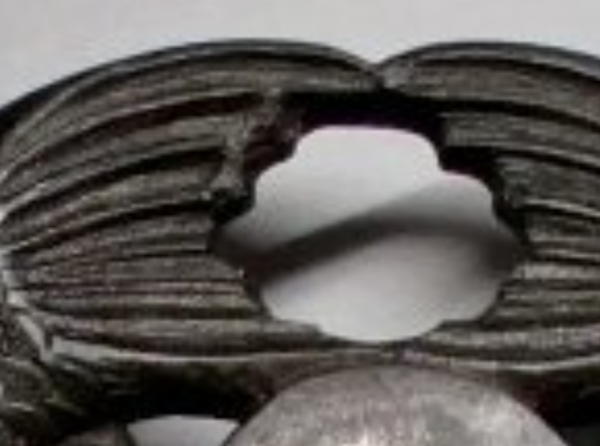
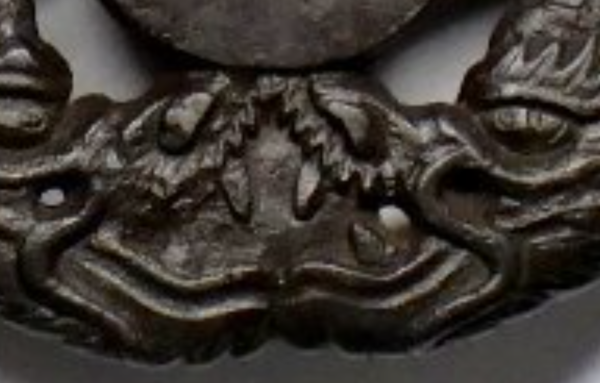
Dan: we would need some better images of yours to get a better sense. Roger: Me too... it's lots of fun doing this sort of hunting for clues and evidence I started looking at the signed one more closely, and there's definitely some suspect areas on the ura side... 1- Some weird streaked pitting on one of the dragon heads, and an incomplete dragon horn tip. 2- some incomplete tail fin spines on the left tail: 3- The left side of the pearl and both teeth of the left dragon also look flawed It would be pretty hard to explain all those if it was all done by hand from start to finish. Maybe the pearl and tooth could have been the result of a flake/chunk of material that broke away or some rust damage... but in the context of the other flawed areas, and having no signs of major rusting anywhere else, plus the near identicalness to the other "twin" tsuba... I'm leaning toward the idea that these are all examples of some type of casting flaw. So, I'm thinking this is a cast tsuba that was finished by hand to hit a higher standard of finish.
-
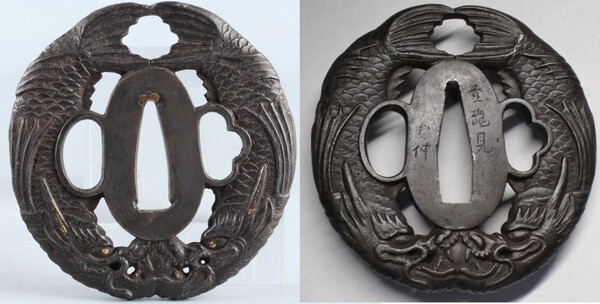
Yours is definitely different from the rest Dan. Here's the two Dale and I posted, but side by side now: The one key difference that I can spot is the treatment of the dorsal fins (above and below the hitsu-ana). The one on the left seems to have a few "voids" in the pattern. Maybe I need to reconsider my earlier "hand worked" statement... unless the one on the right was initially cast then worked by hand afterward to reach a higher standard of finish. Maybe that's why the one on the right got a signature?
-
Finally, a genuine one of these that isn't a mass produced casting! I was starting to wonder if an original hand-worked example ever existed at all. lol Strange that the top kanji of the mei seems like it was purposefully rubbed out though...
-
Dan, I think that's one single dragon wrapped around the face of the tsuba, and its body is disappearing and reappearing through clouds. The lower right part is the tip of the dragon's tail, with this kind of tail tip:
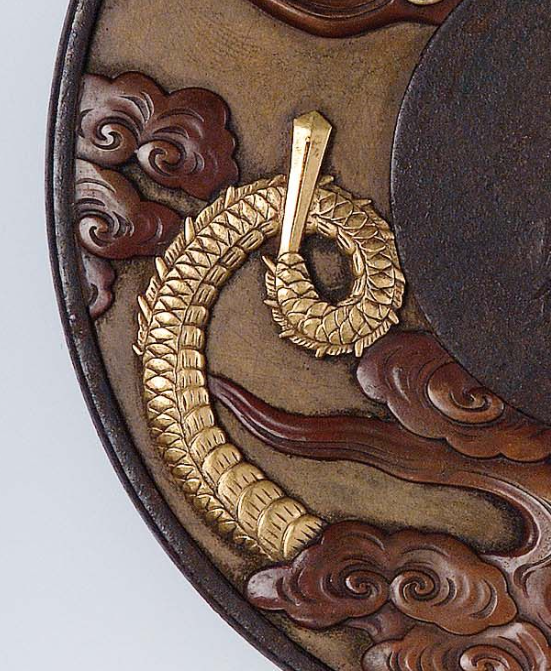
-
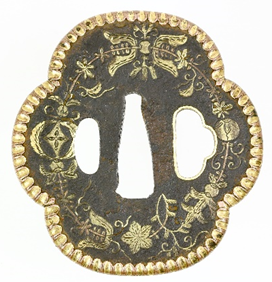
Hi Ian, I'm sure you're right that war trophies would have been taken from those two invasions of Korean. That sparked me to do some thinking and some digging about when this nanban influence all started and when the Japanese would have started making their own... Prior to the invasions of Korea, there was extensive trade with China and Korea throughout the Momoyama period which predates the invasions. https://www.metmuseum.org/toah/hd/momo/hd_momo.htm Extensive trade was established in the early 1400s: "A milestone for the subsequent cultural developments was that (Ashikaga) Yoshimitsu appointed himself as a tributary vassal of the second emperor of the Ming Dynasty in the eighth year of Ôei (応永, 1401). With this, three years later the official trade was able to be launched between Japan and Ming-China, which would last until the mid-16th century. " That quote is from Sesko: https://markussesko.com/2014/10/11/historic-overview-of-aesthetic-requirements-for-a-tsuba-part-i/ Here's an interesting (and relatively brief) scholarly article about international Japanese trade titled "Japan and the World 1450-1770 - Was Japan a closed country?": https://www.asianstudies.org/wp-content/uploads/Japan-and-the-world-1450-1770-was-Japan-a-closed-country.pdf According to that article, mainland art, religion and philosophy was still entering Japan and had major influences throughout the early Edo Tokugawa period. And just as a side note: Chinese painting had a massive influence on the Japanese aesthetic at the time of the momoyama period. For example, every Kaneie tsuba landscape scene was inspired by Chinese "sansui" (shan shui) landscape paintings. So the influences and thirst for Chinese aesthetics was already well established prior to the invasions into Korea. Also Korean sword guards on "Hwando (military swords) from the Joseon Dynasty (15th to 19th centuries)" -Met museum, looked more like these two: So, they were not of the most common nanban style, which in my observations, is more heavily influenced by Chinese aesthetics. Korea favored a large oval seppa-dai, not the narrow rectangular seppa-dai. They also frequently used a key pattern inlay around the mimi, and favored silver, rather than gold inlay. Here are two Edo period Korean guards which seem to have taken on a more typical Chinese "nanban style" influence. (note that for the 2nd one: the thick gold overlay on the mimi and the expanded kogai-hitsu-ana were done later in Japan): A side note observation: it's interesting that these two have a mimi with a "concavely dished" scallop pattern... which is very rare in nanban tsuba. The scallop-edged nanban mimi is usually made up of convex rounds. So in summary, from a historical standpoint, the trade-related nanban influence would pre-date the invasions of Korea, and could go as far back as the early to mid-1400s. Also, I didn't mention it earlier, but there was also a strong culture of "gifting" items (such as tsuba) during all these international trades. That's why the Dutch VOC company had commissioned the production of Asian export tsuba made in Sri Lanka. And the Europeans didn't arrive until 1543, so it was the Chinese who had the longer period of influence. As Ian pointed out, there would likely have been a surge in the influence of continental tsuba aesthetics after the invasions of Korea. And an increase in Japanese manufacture would naturally follow an increase in the demand from their patrons. I suspect the increased demand, in conjunction with a more tightly controlled flow of international trade during the Tokugawa period, would favor either the "beginning of" or "increase in" the Japanese production of nanban style tsuba. Anyone else have some thoughts on the timing of things, and who made what and when?
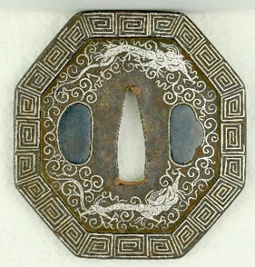
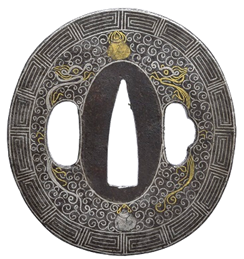
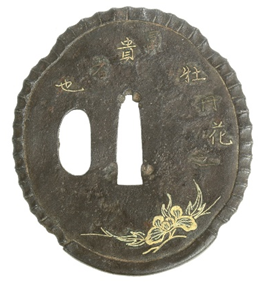
-
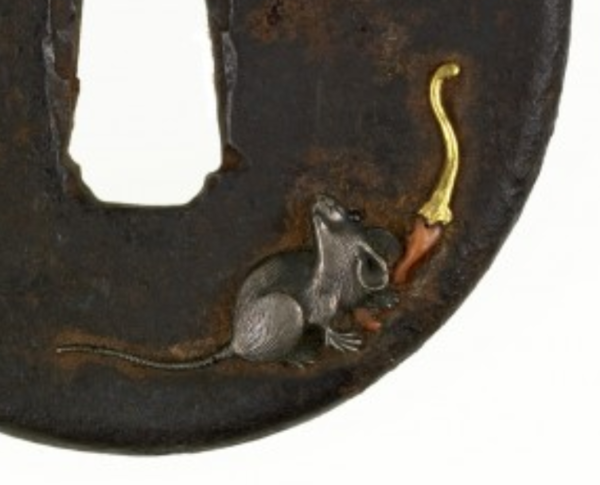
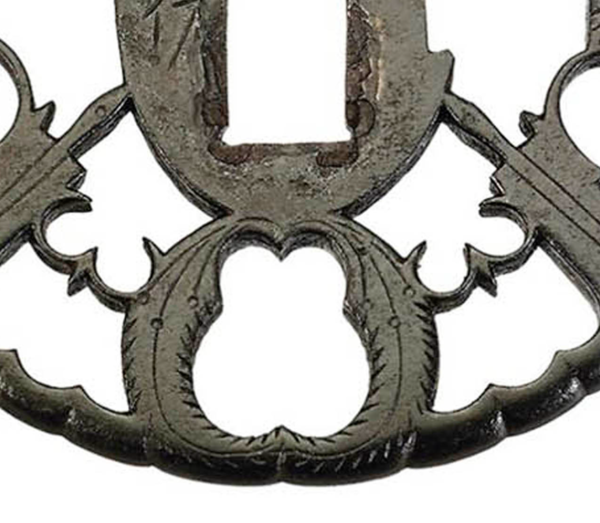
Colin, those two mimi certainly look similar, and I like the funky use of some sort of bean/fruit/ginger to outline the hitsu. Initially it kind of looked like hot peppers to me... but that's a really rare motif. I suspect It's more likely the ginger motif that is used extensively in Japanese tsuba: You can see some "undulations" in the outline of the shape on the right side of your tsuba, which would suggest ginger rather than a smooth bean or pepper: I have also heard about this link between the Sado island school and the grooved "twisted rope" mimi, but it seems there are quite a few different schools/makers who also made the twisted rope mimi. I have yet to see a signed Sado (Sashu ju) tsuba with this style of mimi (but admittedly, I also haven't been looking too hard for one either). Does anyone out there have a signed example they can post a pic of?
-
a real statement piece!
-
At least, I'm assuming that was what you meant by "Sendai kinko"...
-
Hey Didier, I recently stumbled across this school's work as well. Beautiful stuff Here's what I managed to pull together... Kusakari School (草刈) Sendai in Mutsu Province Chōsaburō (長三郎), 1st gen., was considered to be the founder of the Kusakari school, but was not a initially a kinkō artist. (The smith/s) became kinko smiths after the influence of Masamura Shichi´emon (正村七右衛門) a local silversmith from Sendai. This was from a translation of info somewhere online... the second sentence just started with "Became" so I don't know who was specifically trained by that silversmith. Here's some pics: They also did a lot of fans:
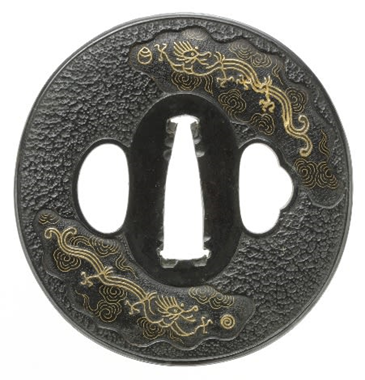
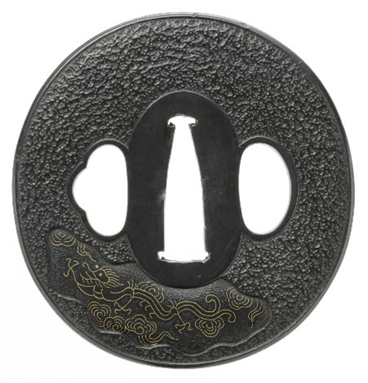
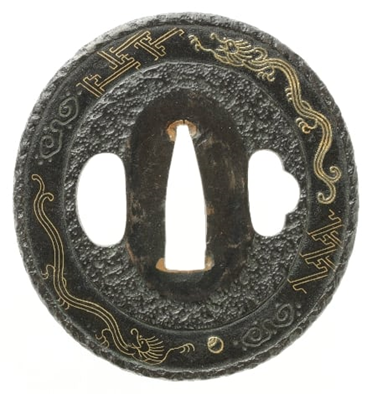
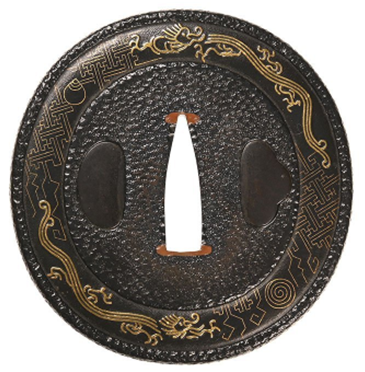
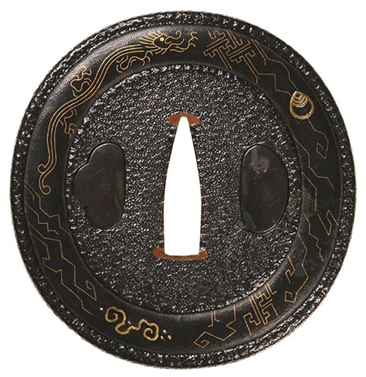
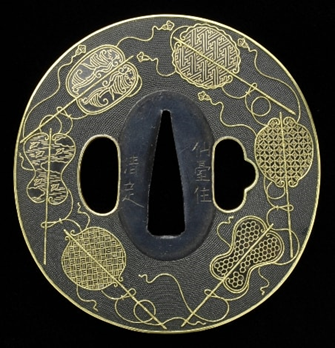
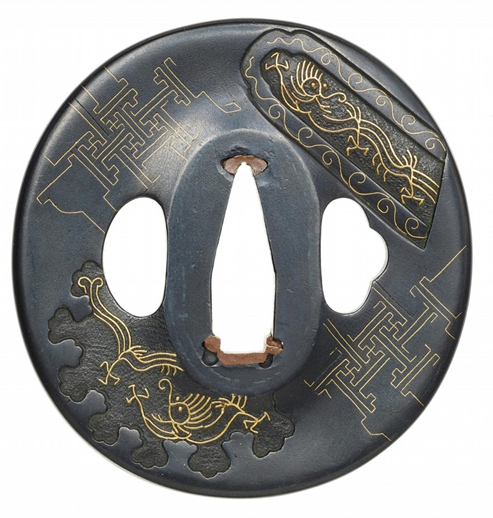
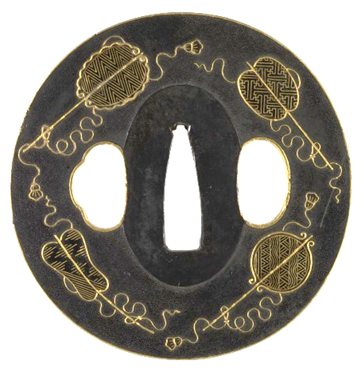
-
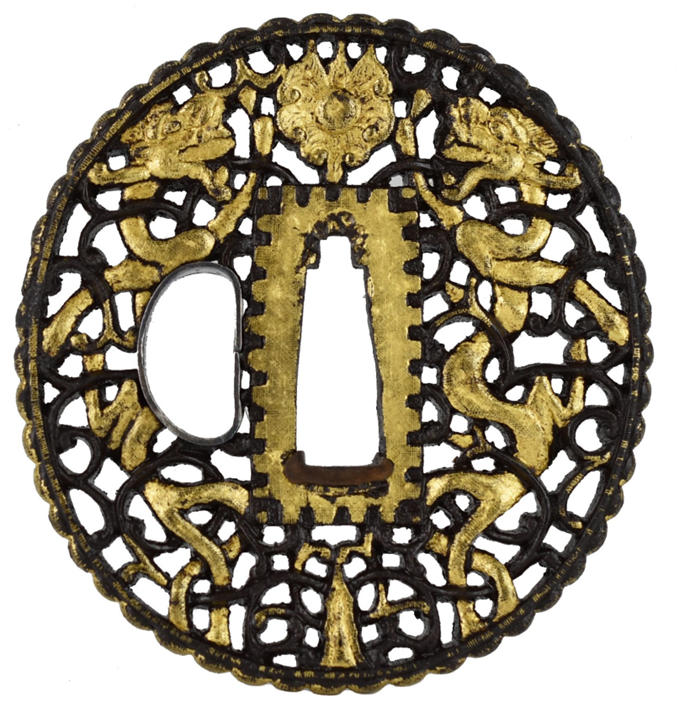
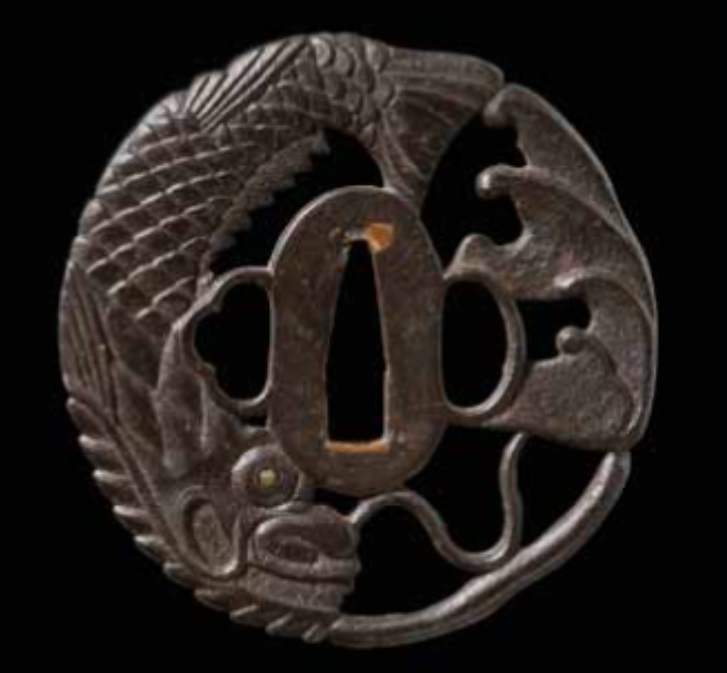
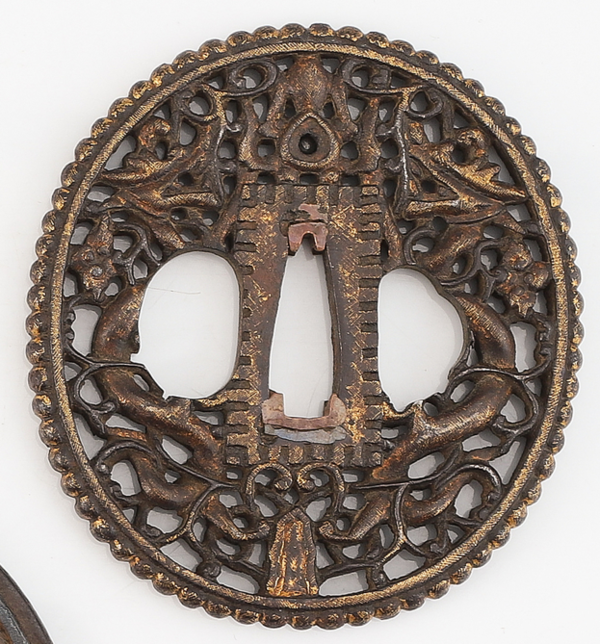
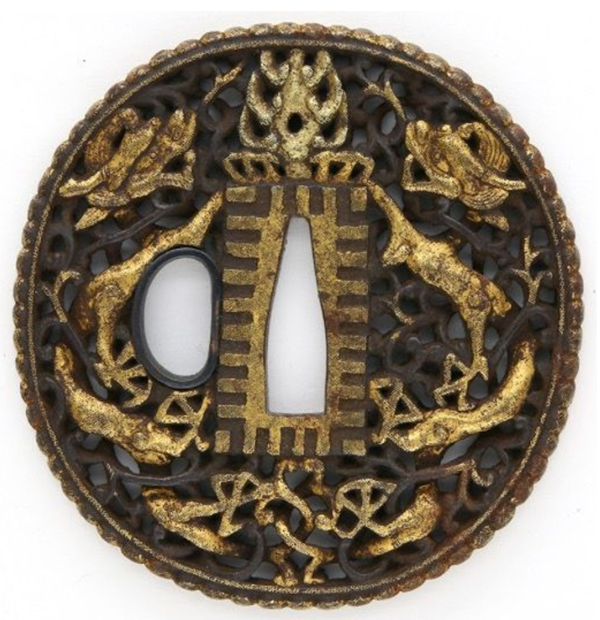
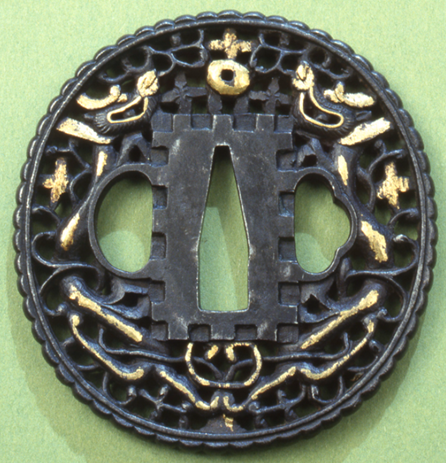
Piers, your #3 looks like the myth/legend of the carp that swim through the "dragon gate" which then transforms them into dragons. typical fish at right, gate at bottom, fish becoming more dragon like at left, full dragon at the top. Cool motif And your fourth one is nice example of that Japanese version of the castellated / crenellated seppa-dai tsuba. I like how sharp the contrast is from the focused use of the gold nunome.
-
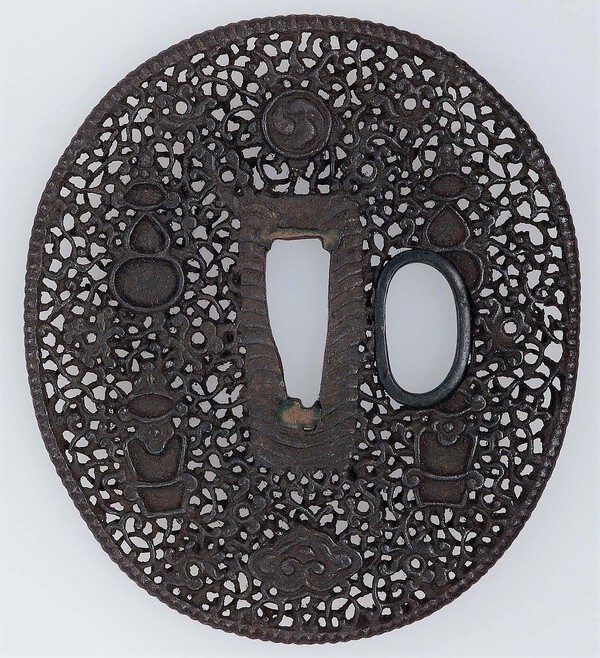
Piers, your number 2 guard looks like a Japanese made tsuba that is paying tribute/homage to the earlier Chinese guards that had gemstones inlayed into them. I haven't seen another like it Here are some Chinese examples that have the stones missing: The Chinese ones always have some type of scrolling karakusa pattern, and never have carved dragons like yours does. and one with:
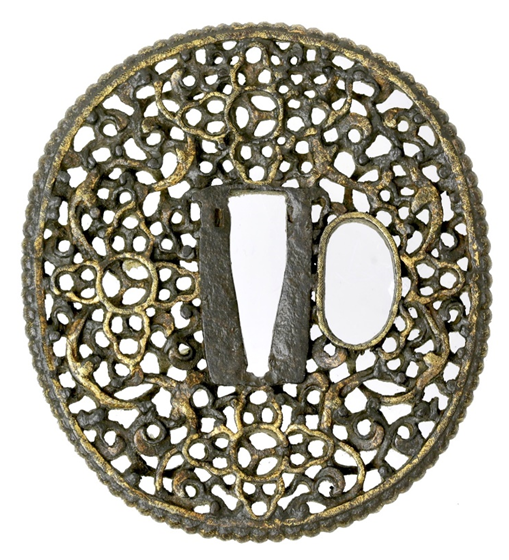
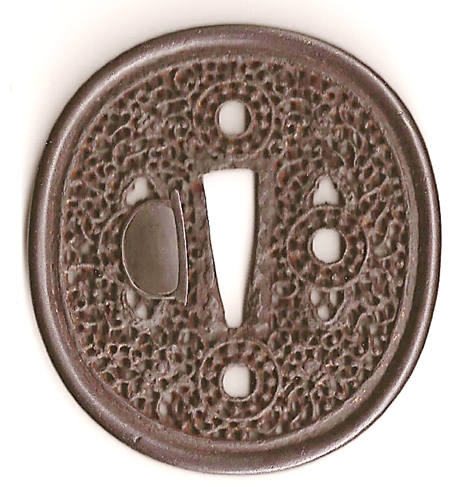

-
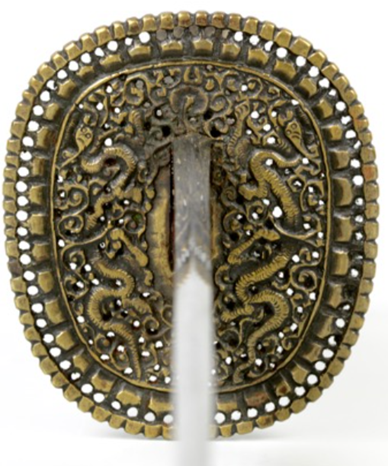
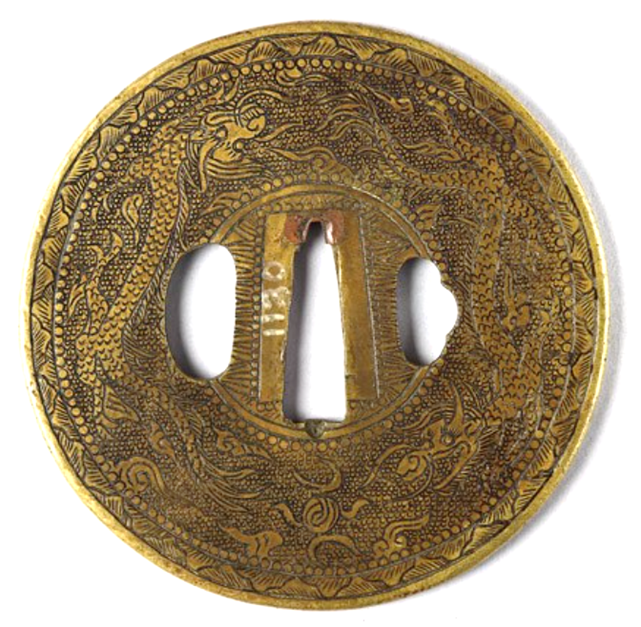
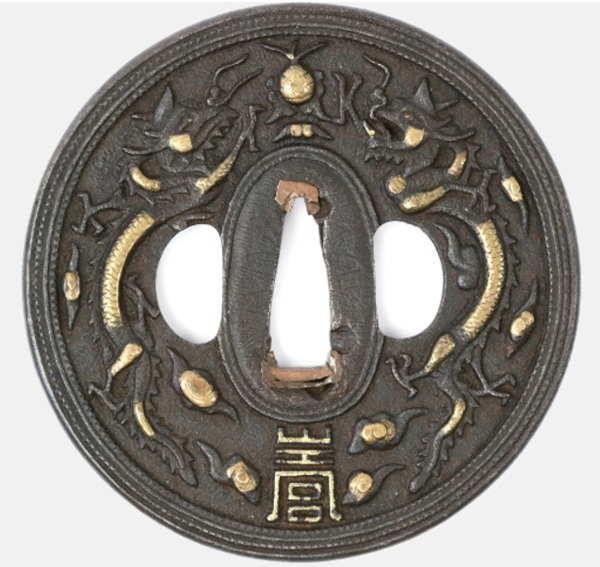
Piers, thanks for sharing The first one you posted has some really distinct (unusual?) features that are strikingly similar to this tsuba with a solid plate. 1-the dragon head 2-the dragon tail 3-the multi-ridged outline along the rounded mimi 4-the flat oval seppa-dai that has a purposeful outline just inside its outer edge I don't have any other examples with that specific dragon head... Interestingly enough, the solid one was attributed as being a "DUTCH EXPORT GUARD made in GALLE SRI LANKA" (for the VOC), by James McElhinney
-
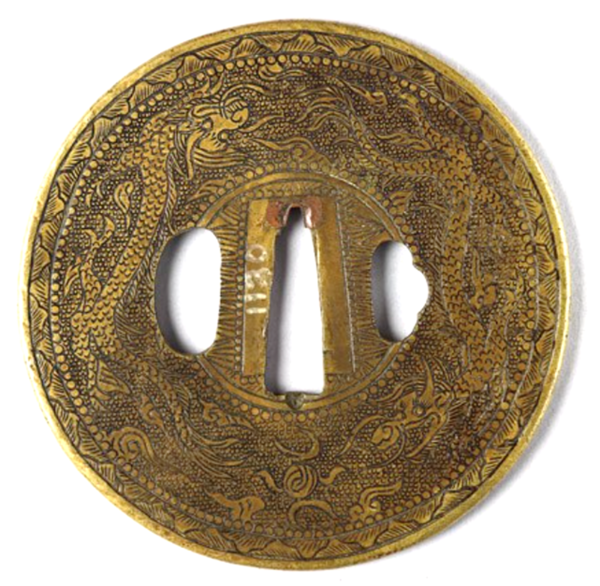
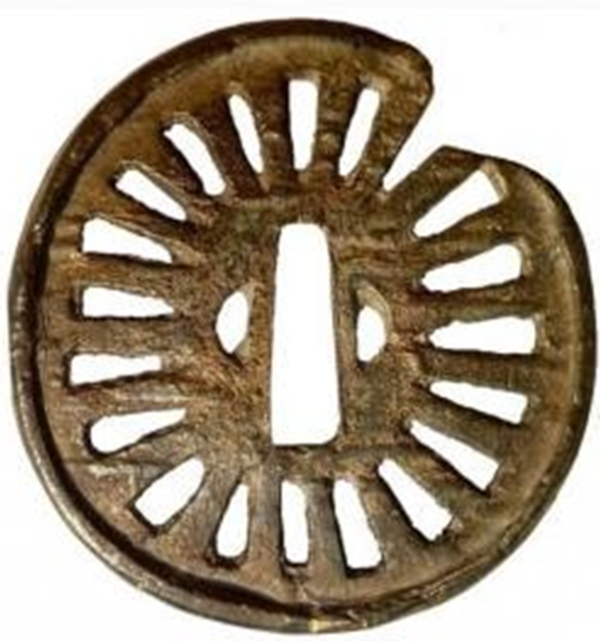
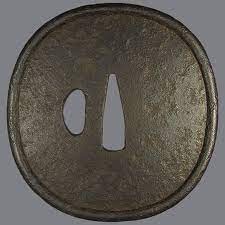
Kiril, I have never seen anything quite like the one you posted, so i'm not too sure what to make of it. It also looks like something that was dug up from an ancient burial mound somewhere... Guess number 1: It originated in Continental Asia because of the rectangular nakago-ana and slightly egg shaped profile, and it was never intended for use in Japan. and now for something completely different... It does appear to have been made in the Japanese "katchushi style", with the raised, rounded rim. That guruma (wheel) sukashi motif was also very popular in the Momoyama period of Japan. So guess number 2: Maybe it was originally a Japanese made katchushi style tsuba with a plain plate and no hitsu-ana, then exported to continental Asia, where it was roughly chiseled into a guruma sukashi pattern, and the nakago-ana cut into a large tapered rectangle, and two tiny unuseable "hitsu-ana" were added in to give the plain katchushi tsuba a slightly more "contemporary" and updated Japanese look. Just running with the idea, but I could be completely off base on this one... I've got several image examples of Japanese katchushi style and tosho style tsuba that were presumably exported, then modified in continental Asia. But, they are usually modified with extensive nunome overlays, so this would be the first one I've seen with added sukashi elements. The sukashi does look pretty roughly done, so more likely to have been done by an amateur after the tsuba was originally produced. In terms of where in Asia: I'm leaning more specifically towards a Vietnam because of the wide rectangular, tapered nagako-ana, but with a fairly large rounded seppa-dai area surrounding it. Here's an example of a carved soft metal one with these 2 distinct attributes: Anyone else want to weigh in on this one?
-
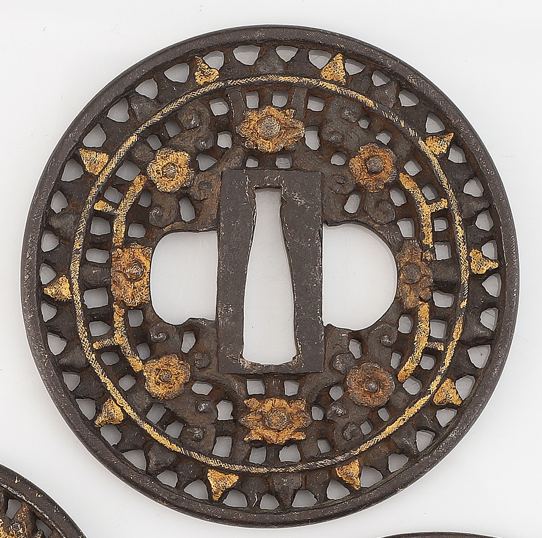
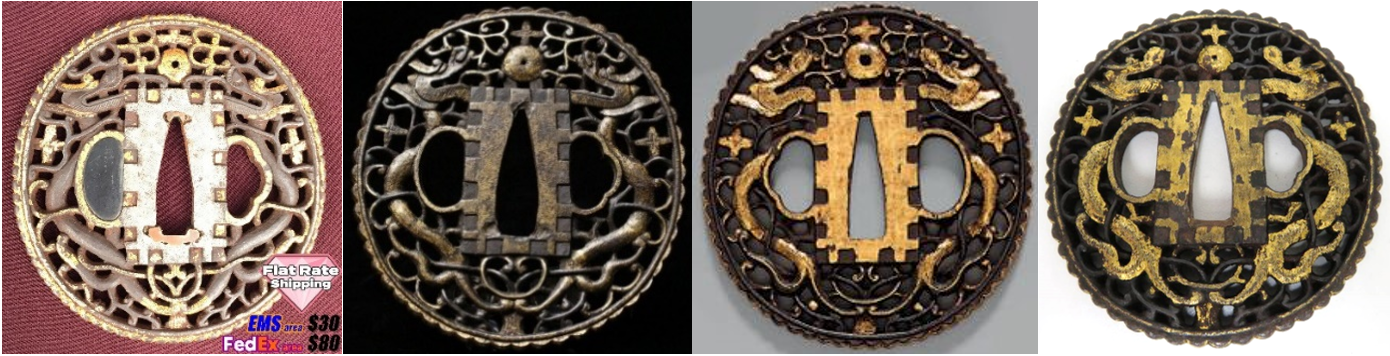
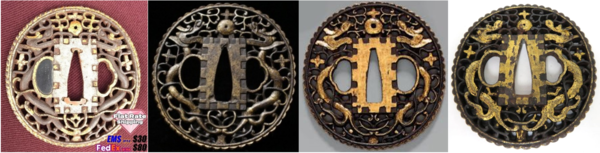
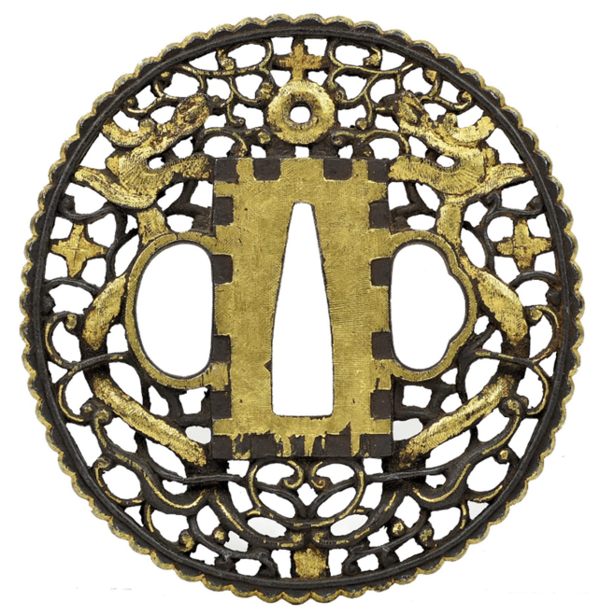
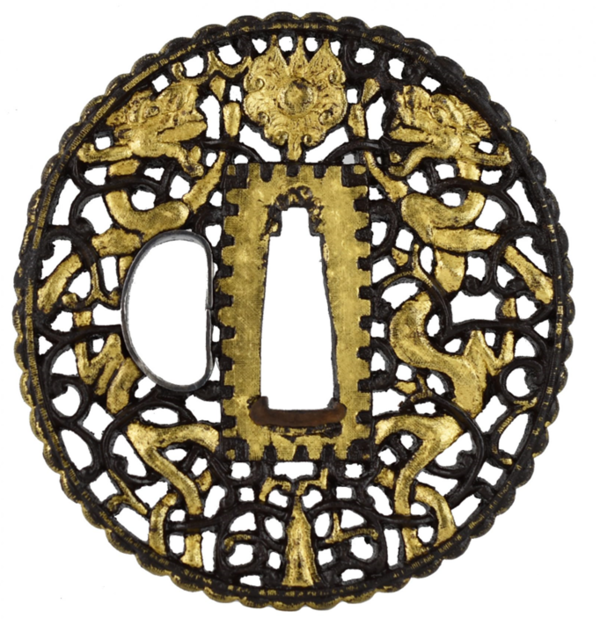
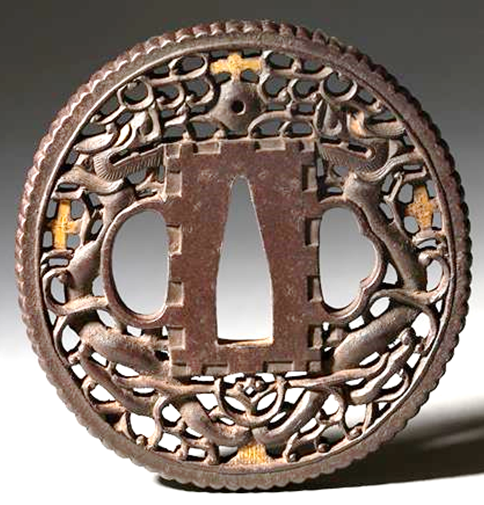
Roger, I think you and Piers are 100% correct. Every one of the this style of of double dragon with the castellated seppa-dai (with the wider, more square rather than slotted indents) has the cross instead of the typical pearl. I actually had to look up "castellated", so thanks for the new word here's just a few of the Japanese ones of this type: The longer, more slotted indents only show up on the Chinese ones, which don't have the crosses, and have a lot more variation in their dragon head shapes.
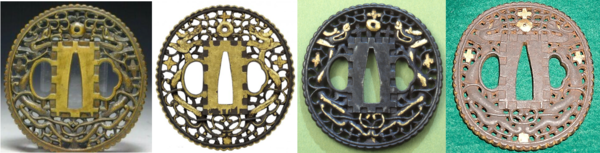
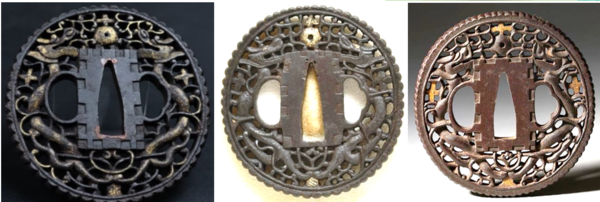
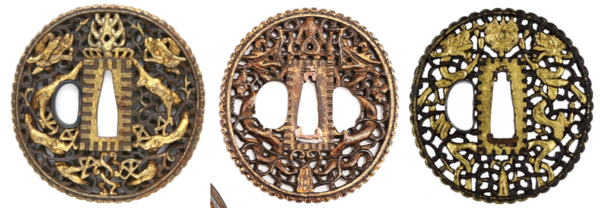
-
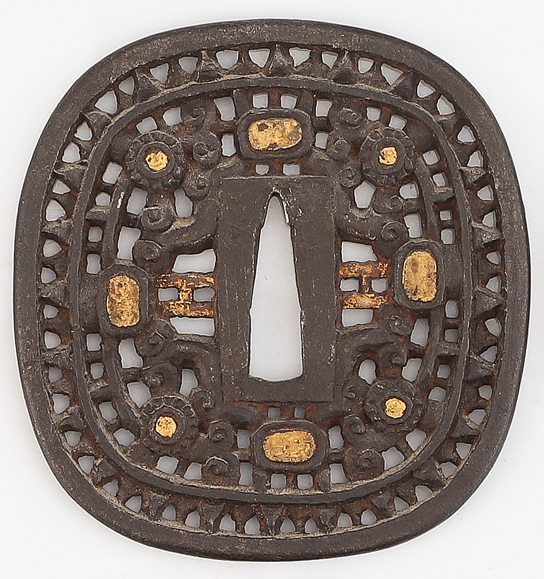
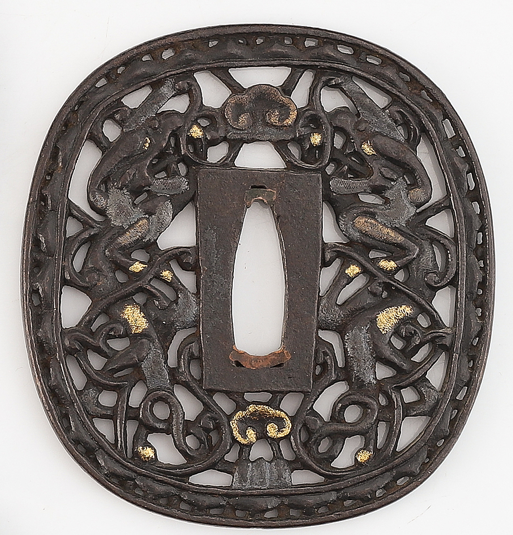
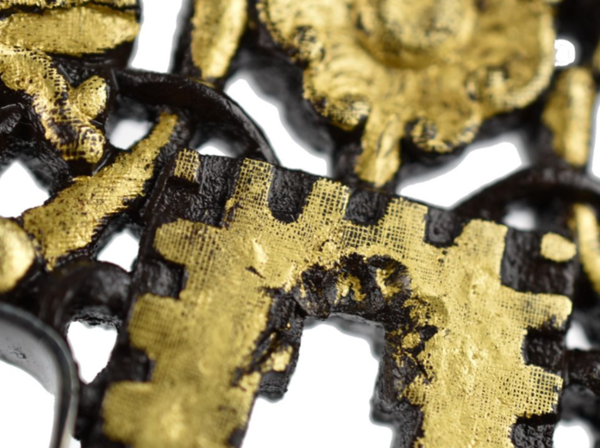
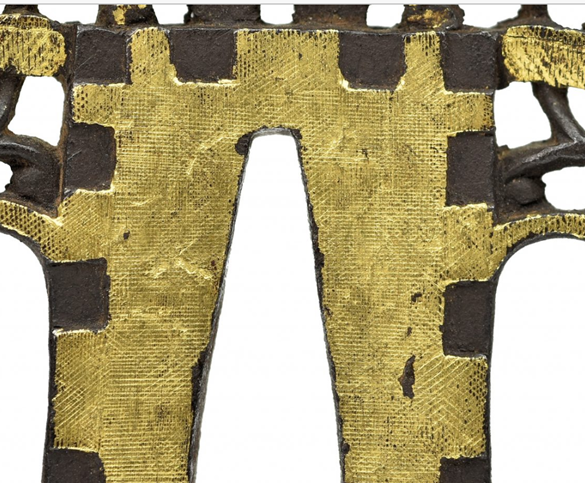
I came across two great examples of Chinese vs Japanese versions of that same double dragon themed tsuba I posted above. The images were also detailed enough to catch a glimpse of the 2-directional Chinese nunome vs 3-directional Japanese nunome. The 2-way pattern is definitely Chinese. However, I don't know if the Chinese smiths ever adopted the three-way pattern outside of the Chinese smiths who ended up living and working in Japan. So I can't say with certainty that the presence of the three way pattern is an absolutely certain sign that the tsuba was made in Japan, although it'll still be a very "safe" assumption. As with most tsuba, there gets to be this grey area of crossover in style and technique amongst different smiths in the same and/or different areas, and even in different time periods. Often those "mysteries" are part of the fun... but sometimes they can be a frustrating nightmare, and you just have to accept that you might never be able to find a clear answer The result is that you'll always find examples that become a "toss-up" in terms of classifying and you just have to throw yours hands up Chinese (again, note the cutout hitsu-ana and the added hitsu-ana ring): Japanese (original hitsu-ana):
-
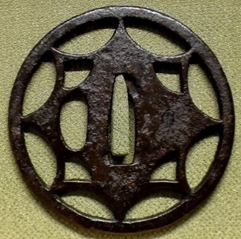
Unusual seppa-dai and hitsu-ana arrangement, making an 8-point web-shape... maybe a nod to the 8 Buddhist principles? 8 points like these tsuba:
-
I had one more example on file... I've got roughly 1500 Nanban tsuba images I've been building up and trying to sort/classify: OK, I know that's a little obsessive...
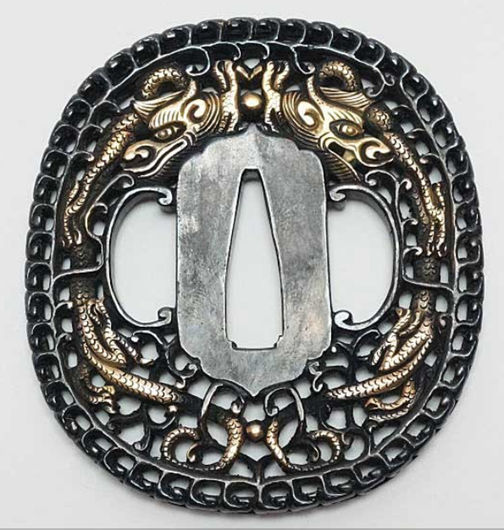
-
I have one other on file like Geraint's, but it's signed by a Japanese smith (Yamada Gensho), living in Nagasaki ("Kiyou"). Both are almost certainly work from the same school in Nagasaki. Here's one of my Japanese-made Nanban, with very finely, vertically chiseled tendrils (rather than rounded). It's also made of non-magnetic soft-metal that has a slight greenish-khaki-grey colour. It's the only tsuba I have that is even remotely close to this color. I suspect it's some form of shibuishi maybe?
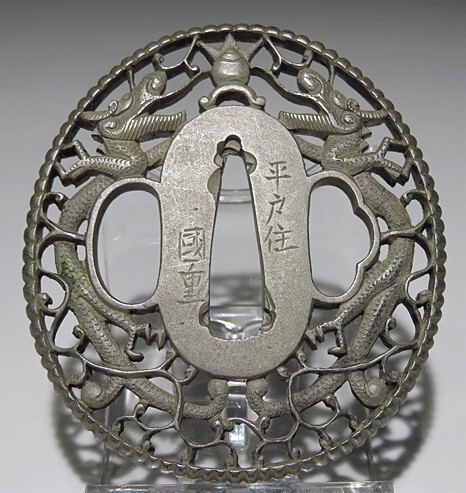
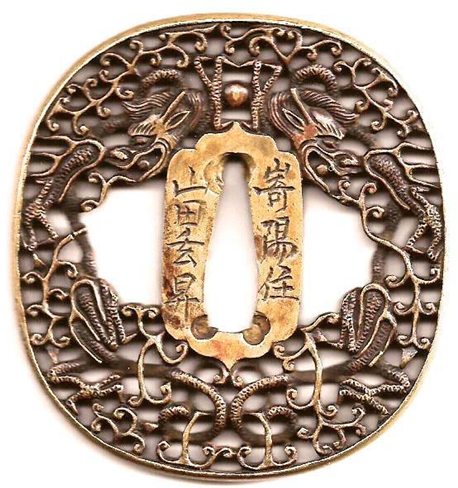
-
Found a third example of this type:
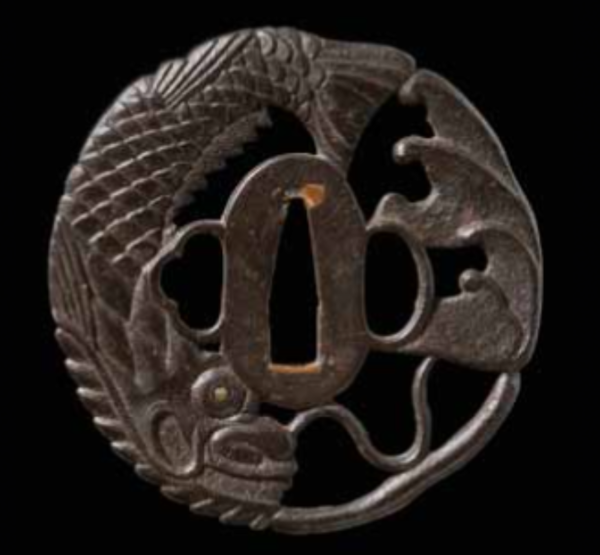
-
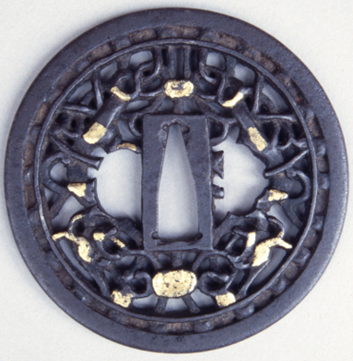
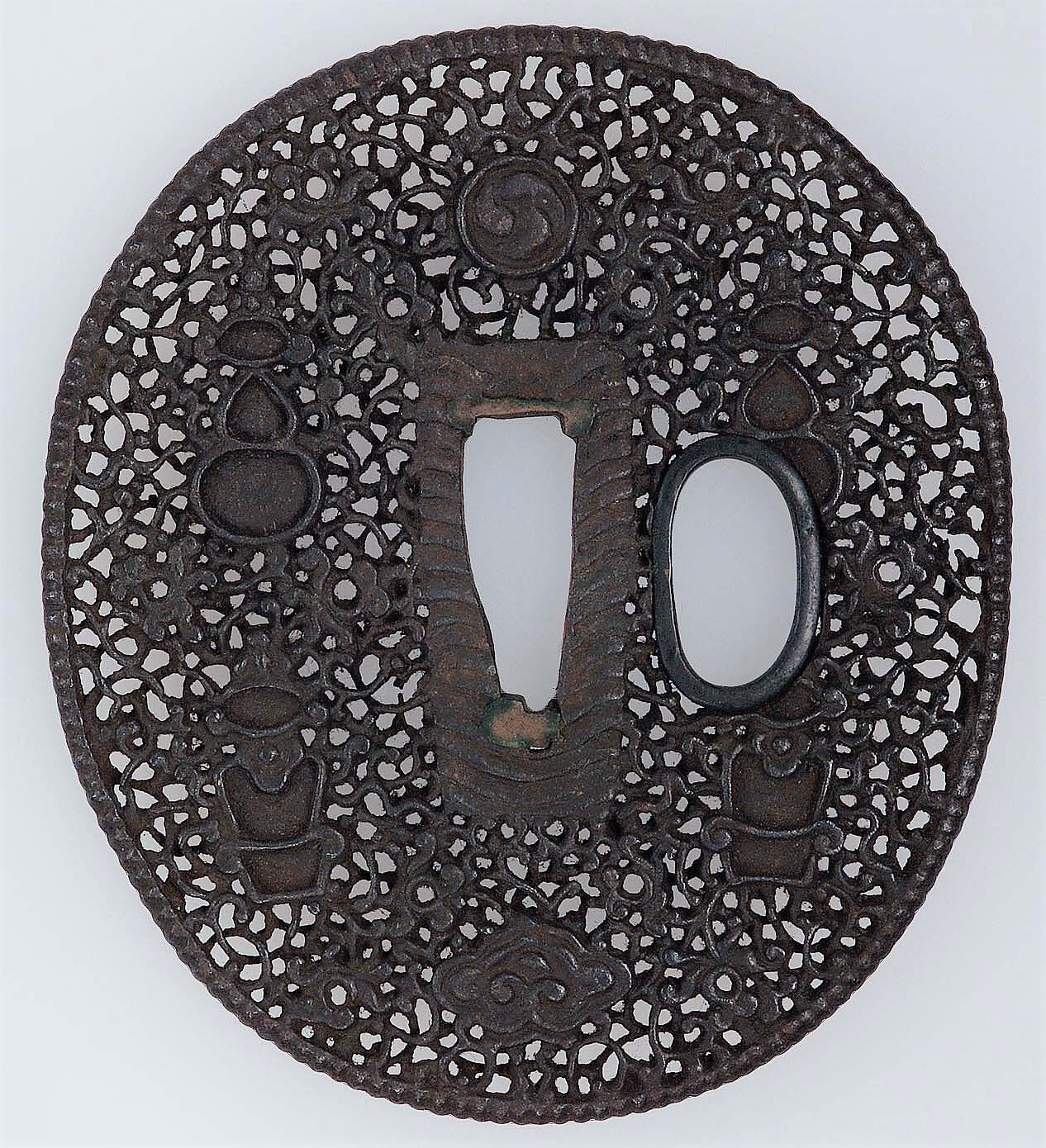
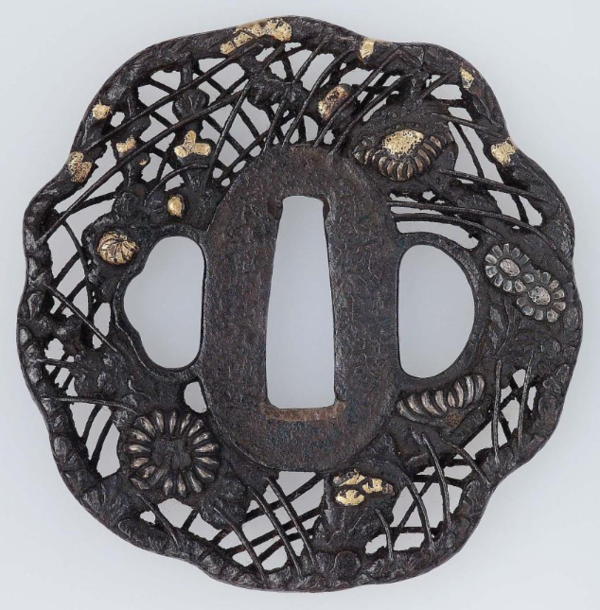
Hi Peter, Here's what I recall from the searching I've been doing on these for a while now. The dates will range from the Momoyama period (when there were many global influences on Japanese art and culture), all the way till the end of the Edo period. After the unification of Japan, marking the beginning of the Edo period, Japanese borders were mostly closed for trade (except two ships per year from the Dutch East India Company and an unknown number of ships from the East Asian continent - or at least "unknown" to me). During this extended period of Edo period isolationism, I presume it would have been a necessary shift towards making most of these guards in Japan. The Nagasaki nanban school in Japan had Chinese smiths living in Nagasaki, producing nanban tsuba for the Japanese market. The height of popularity of nanban guards in Japan was during the mid to late Edo period. btw your third one with the very fine "tendrils" that arc over each other like branches in a bird's nest, reminds me of this style of nanban work, which is not very common at all. (This one is from the MFA museum in Boston) (ttps://collections.mfa.org/objects/15216/tsuba-with-design-of-chrysanthemums-and-daisies?ctx=dde6abbf-785c-46bf-8962-3eaefa1b711c&idx=1) Interestingly, this one is signed by a Chinese maker (very rare to see that), but unlike the one you posted, this one was made with the intent for sale in Japan because of the shape of the seppa-dai and the purposeful hitsu-ana. It is also dated by the smith himself, to the late 1600s-early 1700s: 康煕未歳長楽交造 南京寓長楽交造 Koki hitsuji-sai Cho Rakko tsukuru Nankingu Cho Rakko tsukuru [Made by Cho Rakko (Zhang Lejiao) in the goat year of the Kangxi period (=1667, 1679, 1691, 1703, 1715); Nanjing resident Cho Rakko] Here's two examples of a Chinese guard theme that was later produced in Japan in large numbers: Later Japanese versions: Here's another egg shape Chinese one, intended to be worn blade edge down, and it has an added shakudo-outlined hitsu-ana (also in the MFA):
-
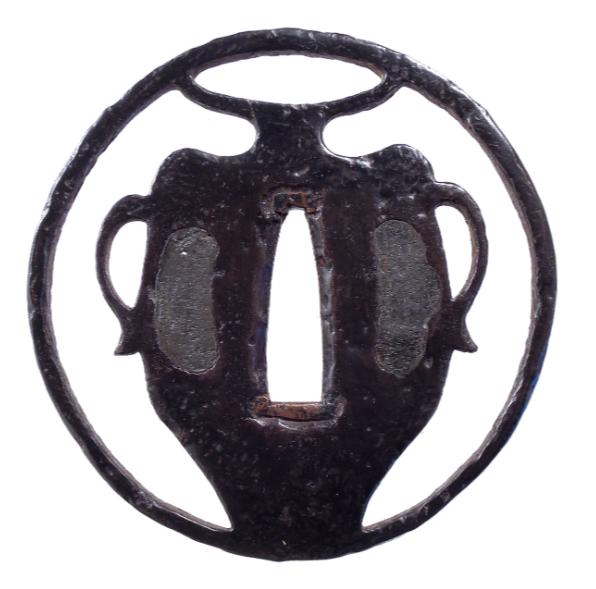
looks good to me Here's one with what looks like the same motif, which was described as "chatsubo". Chatsubo 茶壷 in Japanese is the name of the clay pots used to keep matcha tea leaves before they get ground
-
Can't comment on the first one... sorry. The second one with the egg shaped form is typical of an early Chinese guard (which I'm pretty sure are called "Hushu"), but has none of the typical "Nanban" aesthetic, so probably made in China and probably never exported to Japan. The third one you posted is definitely not Japanese made or modified to fit a Japanese blade. Likely made in China for a Chinese blade. Here are some more egg shapes made in China for Chinese blades (worn blade edge down like a tachi), with a more typical "nanban" aesthetic. Both were modified in Japan to have a hitsu-ana: Here's one that is unmodified and mounted on a Chinese Dao sword: Here are some unmodified Chinese guards (except maybe the nakago-ana): and these three Chinese guards had the design cut through later, to make 2 hitsu-ana to fit a Japanese koshirae: