GRC
-
Posts
756 -
Joined
-
Last visited
-
Days Won
14
Content Type
Profiles
Forums
Events
Store
Downloads
Gallery
Everything posted by GRC
-
A family member keeps telling me I should use a tsuba as a decorative key plate for the front door... I think I'll pass on that option, but it would probably look pretty awesome
-
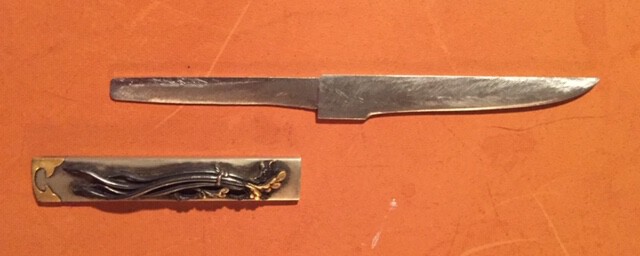
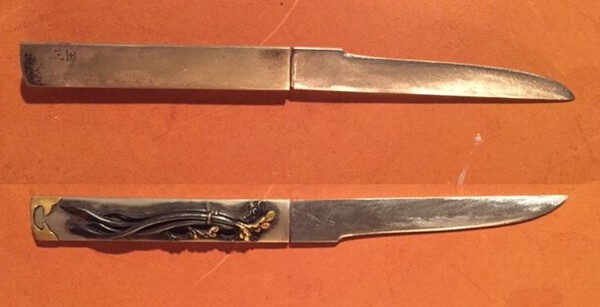
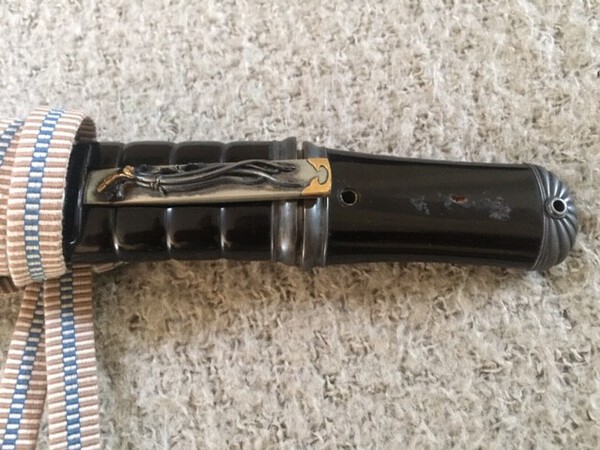
OK I ended up making a metal kogatana for the small kozuka. Now it's able to fit back into the koshirae again. I didn't have a piece of bamboo (thought I had some left over) and just gave it a go with steel. I managed to get it to stay in securely with just a friction fit so I'm pretty happy with that... no glue needed! This is just the rough finish... still need to refine the surface and the edge. Now that i'm looking at it in the photos, does anyone think I should thin the width of the blade some more to make it a little more stilleto-shaped? I'm also redoing the wood tsunagi to correct some of the issues from the first attempt The proportions are much better the second time round ... will post when it's done.


-
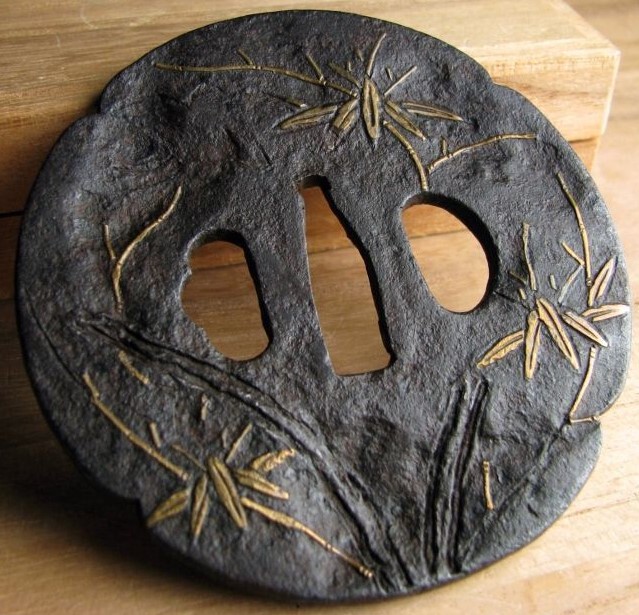
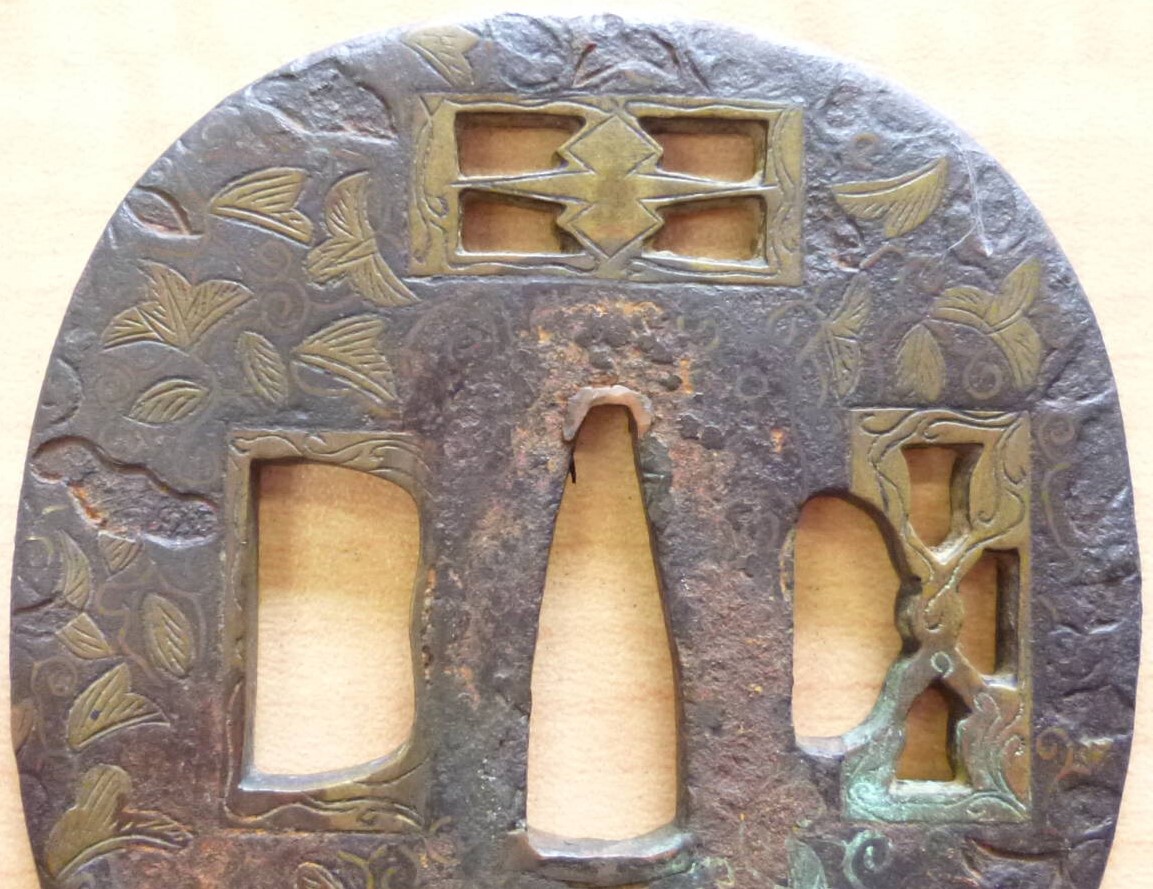
And #60 on page 9 has similarities to some Echizen ju Kinai pics I have, although none of my examples have the depression in the middle like yours does. But otherwise, thick, smooth plate with deeply incised or stamped floral and plant leaf motifs with some gold inlays for "show".
-
This is long past due, but I'm new here so have been slowly pouring through this fantastic thread. I'm really enjoying the diversity of your collection Bob, thanks for sharing it. #35 on page 6 is most likely Umetada. Although someone already suggested that, here's some evidence to back it up: This is a quote from Haynes & Long referring to the different branches of the Umetada school: "BANSHU (Harima) branch school: Working here are Muneyoshi, Shigeyoshi, Yoshihisa, Yoshitsugu, and Yoshitada. Some are related to the Kyoto artists of the same name." I have a few examples of Umetada Shigeyoshi tsuba in my images if you're interested.
-
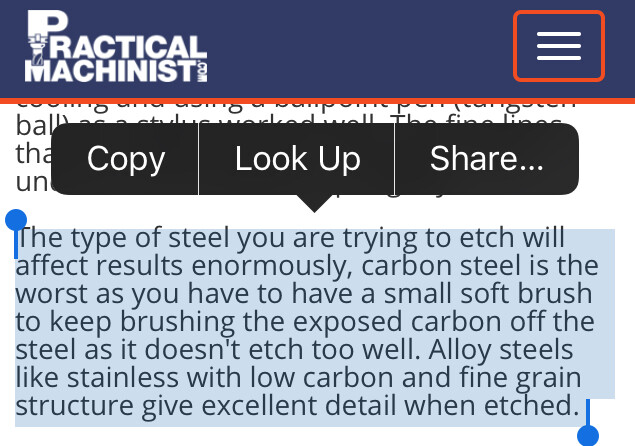
Regarding etching, I tried searching a bunch of different ways to find more information about which metals will etch more easily. I found a few things that I could make inferences from but nothing "scholarly" that was crystal clear and answered the question directly. I decided to ask a metal etching company called Qualitetch that offers multiple etching methods for just about any steel or alloy. Here's the response I got: "Many thanks for your enquiry. Mild steel will etch more readily than it’s high carbon counterpart." Then I also found this from a machinist message board with a thread about etching steels (see attached image): If anyone has any other info on this, please feel free to share.

-
yup, that's the one I have only been at this tsuba collecting obsession for about two months now after a series of chance events that led me to meet a sword collector. He had a bunch of tsuba as well and that opened up this whole new world of amazing metalwork to me. ever since then I've been gathering up as many images and information as I can. Yahoo Japan is my go-to because of the thousands of tsuba they have up on offer each week. I also keep images of the ones with stuff missing so I can gain some insight into how different schools did their inlays. So this techniques thread by Grev grabbed my attention right away. I'm going to start dabbling in inlaying soon so I can add little accent touches (like dewdrops and leaf veining) in my blacksmithing projects.
-
Jean, thanks for that correction about which metal would would get eaten away faster by acid etching. I haven't tried it yet so I actually made the assumption the softer low carbon steel would get etched faster. I'm going to look into that for sure and try to get more info on it. Always more to learn... but that's what keeps it interesting
-
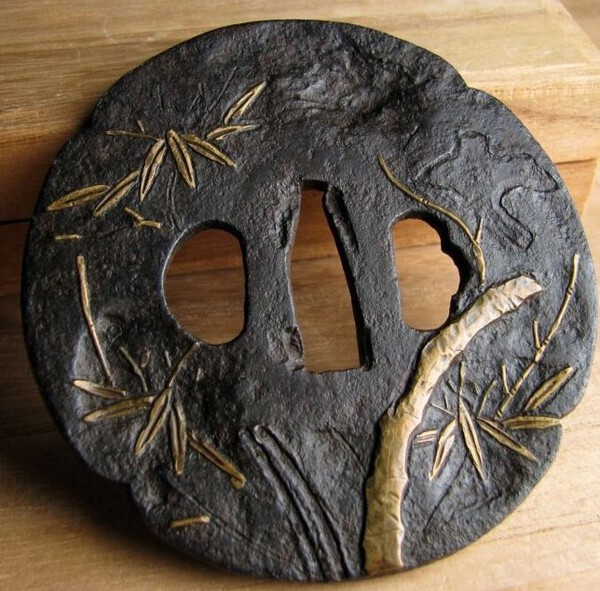
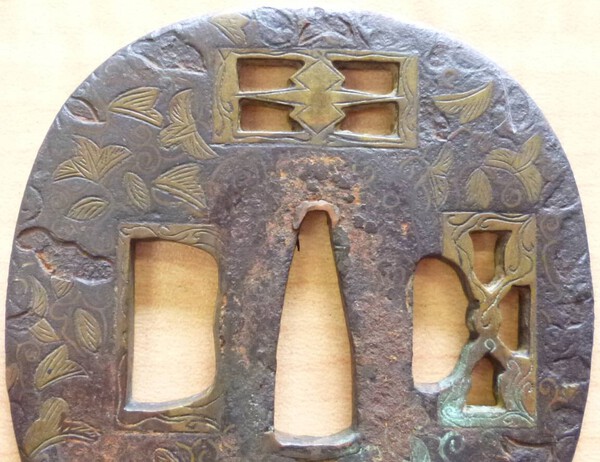
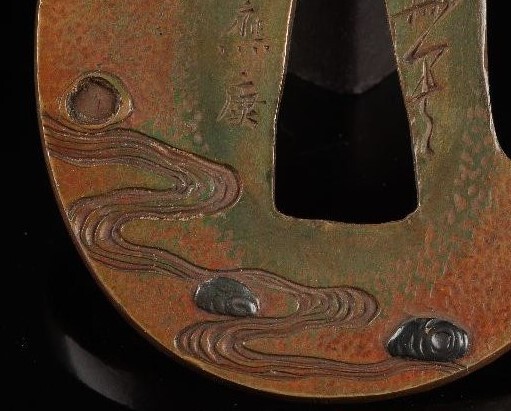
Just adding some pics of lost inlays from one nara and two heianjo (maybe one kaga?) tsuba. The nara smith made a deep pocket and a larger shallow pocket for the inlay of a stone by a stream. The heianjo smiths all seemed to opt for shallow pockets for inlays. Maybe that's why the heianjo tsuba seldom have all their inlays still intact?

-
Actually, I didn't have access to those prior to today. I just finished translating the Polish one and saved it. Thanks Mauro!
-
I would think workmanship first... especially because there was so much "borrowing"/copying of designs between schools. I also know that many sword makers used surrogates to sign their pieces... maybe it was too much of a "waste of time" to chisel their name onto their own work so they often had someone else do it. There's no reason to think that this wasn't also true for tsuba makers... especially when they needed to produce them in quantity? Regardless, 81 is a really nice piece.
-
Thanks!
-
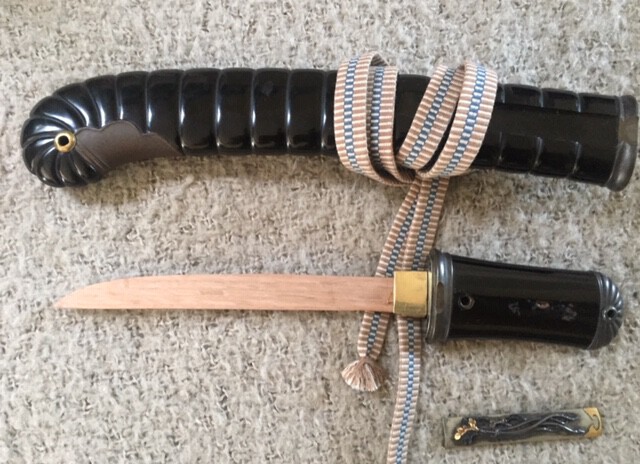
Thanks Jean. The improper fit was due to my faulty first attempt at making a tsunagi. While making the tsunagi, I assumed the shape would follow the same curve as the saya, but boy was I wrong. Turns out the opening is almost completely straight inside the saya. Before I figured out the curved vs straight issue, I thinned the tsunagi out so much that I had to use some tiny shims to keep the habaki from sliding forward. In adding the shims, it shifted the habaki downward, which kicked the tsuka out of alignment. I'll correct all these issues on my second go at making a tsunagi. hopefully... And yes that is the original wari-kogai that goes with the set. Tiny little things though... must have definitely been for use as "hair picks" rather than "chopsticks" because I can't imagine anyone using these as actual chopsticks. And have no fear, I will do my due diligence before applying any kind of cleaners, solvents or glues before applying them to this koshirae. I certainly don't want to damage it in any way.
-
Thanks for the link Dale. It ended up being significantly cheaper to buy from amazon.com than by going through amazon.ca... for any Canadians out there who are interested.
-
Is Efu a province or a family name? I've seen a few "Efu" tsuba online and was wondering what/who it was.
-
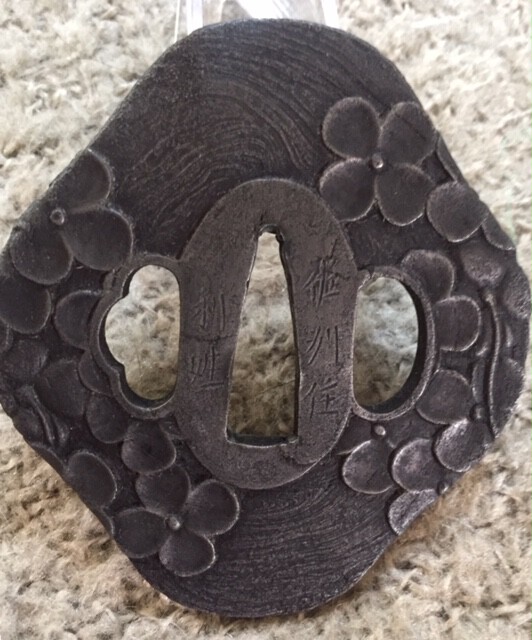
Another one of my favorites: This one was done with the "jelly roll" technique, but the smith made it extra thick so he could carve 3D cherry blossoms that sit above the etched base. You can see the swirled "grain" of the mokume runs through the cherry blossoms, so this is all one piece, with no inlays. I'm guessing the smith must have covered the blossoms with some sort clay or wax before etching in acid so that the blossoms stayed smooth while the plate below got etched to reveal the swirl.

-
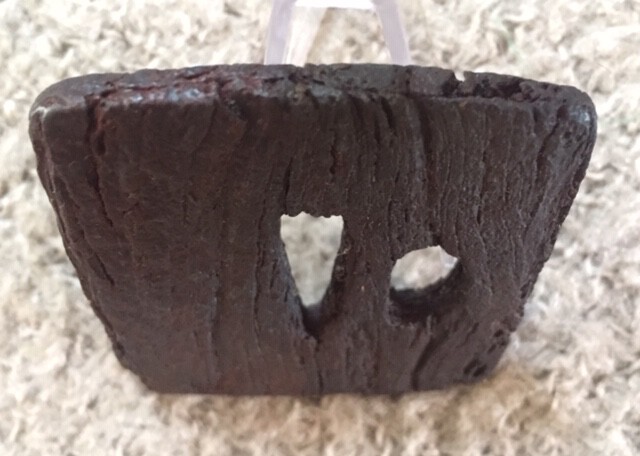
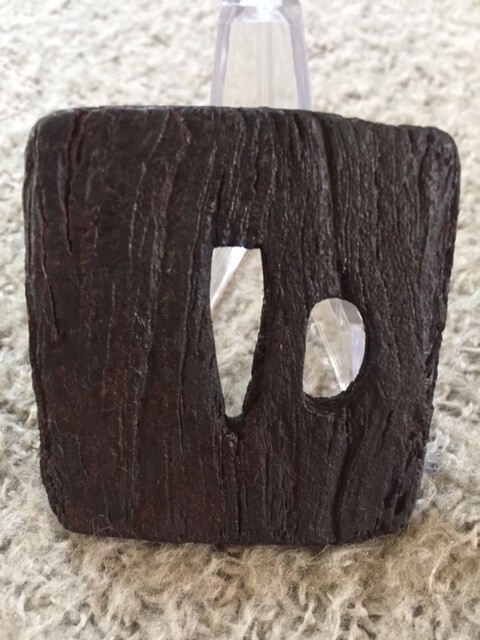
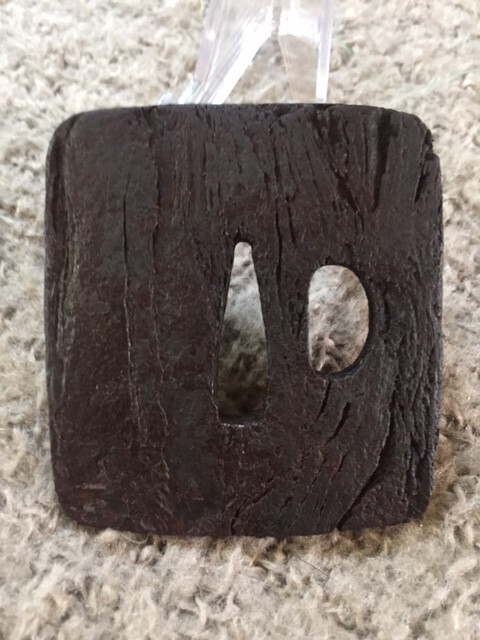
This wood grain tsuba is one of my favorites. Looks to me like the smith layered the different metals like stacked sheets (rather than a swirl like yours) and probably purposefully left the edges a little lose, ie not hammered enough to have the layers set completely, in order to get this "extra flaky" look on the edges. I'm guessing the front and back surfaces were chiseled to add more of a "wood grain" look, then the whole thing would have been etched in acid.

-
Grev, watch the first of Ford Hallam's utsuri videos to see how the inlay is done, then finished to appear as though the inlay has always been part of the base plate. As for the mokume (swirl), it's like Geraint said: folding metals of different types into a swirl like a jelly-roll, then etching it. The softer steel will get eaten away faster than the harder steel to leave the visible highs and lows of the swirl.
-
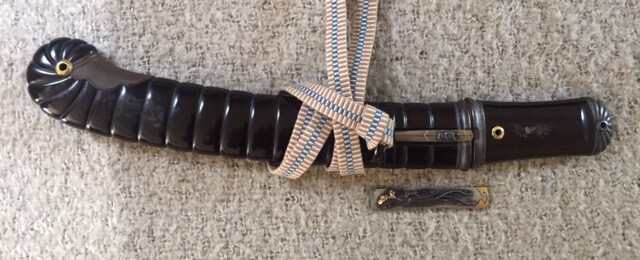
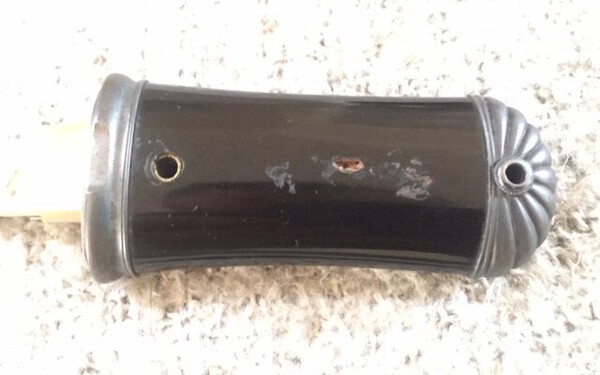
thanks for the input everyone. It's much appreciated Geraint, nice work! I'll look into the pine resin. And it's a great suggestion to use bamboo for the kozuka tsunagi. Here's some pics.





-
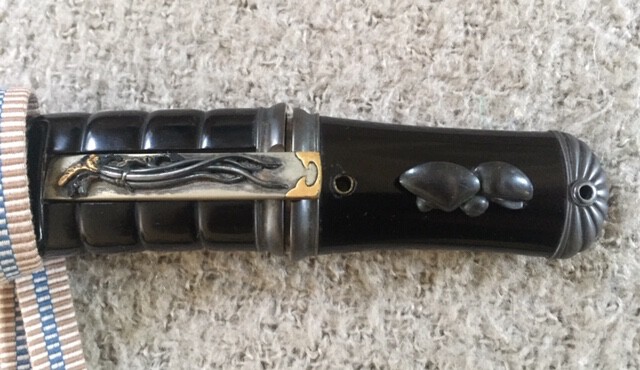
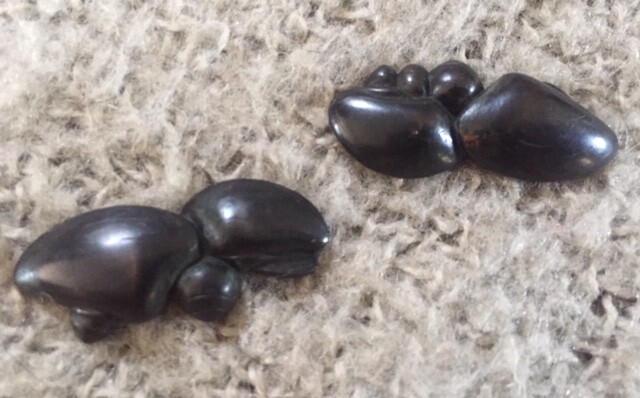
Ok this is my first post on the forum. I recently acquired a black lacquer ebi-style tanto koshirae with silver fittings that I'd like to "bring back to life", and restore to some degree without doing any damage. Here's the issues: 1- It's missing the menuki. So all it has is the original, antique glue residue and the the post holes. I took my time to get a set of menuki that would compliment it well (well, that's according to personal taste of course...which is always subjective): I decided on clusters of shakudo clamshells because they'll blend in with the shape and color of the koshirae and make a nice palm swell for the otherwise small sized tanto tsuka. Question 1: what's the best way to remove this old glue residue from glossy smooth black lacquer? Question 2: what's the best way (or original way) to glue the new menuki onto the tsuka? Question 3: should I file down the menuki post diameter to fit the existing menuki post holes in the tsuka, or try to increase the size of the holes in the tsuka instead? I'm leaing towards filing the posts a bit... make less changes to the koshirae itself? 2- The wood blade was long gone and had already been replaced by some shoddy scrap of wood just to hold it all together. Luckily the original habaki was kept with the set . I spent a few hours making a new one today. It really sucks trying to figure out the shape of the blade. The first try was a passible success but I'll probably do it all again to make a better one, now that I've learned some of the more specific details and nuances to this koshirae. 3- The tiny kozuka doesn't have a blade. I'm going to make a replacement blade by modifying some old kitchen paring knife. I'll reshape it and file it by hand to give it that "authentic look", but I just want to be able to have it sit where it belongs in this koshirae. So similar to the menuki question: how do I glue the new blade into the kozuka? I don't want to use some sort of permanent glue like an epoxy, but would rather use something that will hold it in there, but might be dissolved easily in the future if needed. Any suggestions? Has anyone tried making and using their own rice glue for something like this? Any advice would be much appreciated. Thanks!