BANGBANGSAN
-
Posts
1,605 -
Joined
-
Last visited
-
Days Won
9
Content Type
Profiles
Forums
Events
Store
Downloads
Gallery
Everything posted by BANGBANGSAN
-
 Sam Thank you for your work!
 -
1892 Type 25 survey assistance needed
BANGBANGSAN replied to John C's topic in Military Swords of Japan
Type 25
-
庚午秋 畫於 静修齋 Painted in the autumn 1930 at Studio of Quiet Cultivation 林肇基 Lin Zhao Ji(Painter) Lin Zhaoji Former Deputy Director, Cultural and Educational Affairs Office of the Military Control Commission of PRC. Lin Zhaoji was a native of Gutian County. He was born in 1899 (the 25th year of the Guangxu reign of the Qing dynasty) in Shanyang Village, Gutian. After the establishment of the Military Control Commission in June 1949, he served as Deputy Director of its Cultural and Educational Affairs Office. He passed away from illness in Beijing in 1962 at the age of 63.
-
1892 Type 25 survey assistance needed
BANGBANGSAN replied to John C's topic in Military Swords of Japan
Variant of “検” or “𢮦”: Based on its structure (扌 + 㑒), this character is often treated in dictionaries as a variant of “檢” (simplified to “検” in modern Japanese) or “撿” (rare in Japanese, more common in Chinese). Some large databases, such as Kanji Jitenon, list it as a glyph variant of “撿”. It definitely should be 検/檢 for inspected. -
1892 Type 25 survey assistance needed
BANGBANGSAN replied to John C's topic in Military Swords of Japan
Yes,It means inspected. -
1892 Type 25 survey assistance needed
BANGBANGSAN replied to John C's topic in Military Swords of Japan
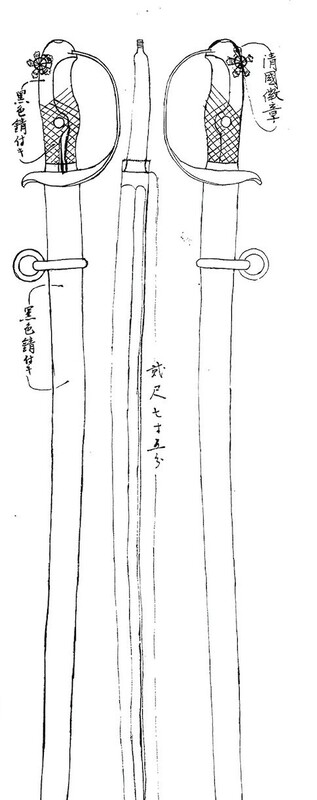
These swords were not made in Manchuria. If any connection to China must be made, it is that in 1906 the Suya shop exported 900 swords to China(清國Qing Empire) The attached drawing indicates that they are similar to the Type 25/32.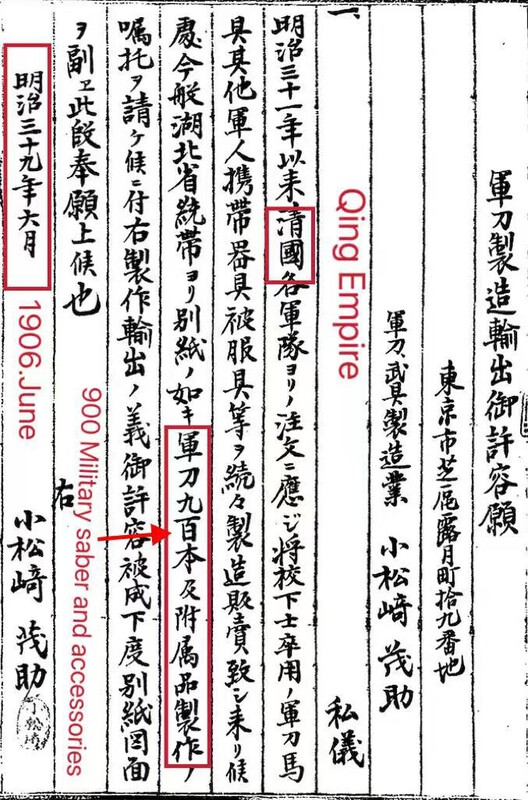
-
1892 Type 25 survey assistance needed
BANGBANGSAN replied to John C's topic in Military Swords of Japan
It’s 撿, but it should be 檢 — stamped the wrong character, like this one

-
It’s a 偽軍刀 (a sword for the puppet army) that was made in China during World War II.
-
正真甲伏鍛 中根行宗 作 Nakane Yukimune
.thumb.jpg.46458fcd5e010633a3b221bd5fae0e54.jpg)
-
Attention Mantetsu Owners: A Survey
BANGBANGSAN replied to Bruce Pennington's topic in Military Swords of Japan
Here you go


-
Unusual Meiji era gunto mounts...pieced together?
BANGBANGSAN replied to Gerry's topic in Military Swords of Japan
It was made by 月山貞一 SADAKAZU (貞一), Genji (元治, 1864-1865), Settsu – “Gassan Unryūshi Sadakazu” (月山雲龍子貞一), “Naniwa ni oite Kinpō-jōhen Gassan Sadakazu kore o tsukuru” (於浪花金宝城辺月山貞一造之), “Gassan Sadakazu” (月山貞一), “Gassan Hayato Minamoto Sadakazu tsukuru”(月山隼人源貞一造), “Naniwa-jū Gassan Unryūshi Minamoto Sadakazu” (浪華住月山雲龍子源貞一), “Naniwa-jū Gassan Yagorō Sadakazu seitan hori-dōsaku” (浪華住月山弥五 郎貞一精鍛彫同作, “carefully forged and carvings engraved by Gassan Yagorō Sadakazu from Naniwa”), “Dainippon Gassan Sadakazu horimono-dōsaku” (大日本月山貞一彫物同作), real name Gassan Yagorō (月山弥五郎), he was born in the second month of Tenpō seven (天保, 1836) in the village of Sugoshi (須越) in Ōmi´s Inugami district (犬上), he was adopted by Gassan Sadayoshi (貞吉) at the age of seven and was appointed teishitsu-gigei´in (帝室技芸員) in Meiji 39 (明治, 1906), this rank was about the predecessor of the modern ningen-kokuhō and Sadakazu was besides of Miyamoto Kanenori (宮本包則) the only swordsmith who held this important rank, his gō were Kōkensai (光顕斎), Unryūshi (雲龍子), and Suiyūshi (水勇子), he died on July 11th 1918 at the age of 84, we know dated blades from the third year of Kaei (嘉永, 1850) – he was 15 years old at that time – until his year of death in 1918, that means he was about 70 years active as a swordsmith, he mastered all traditions and is considered together with Honjō Yoshitane (本荘義胤) and Kurihara Nobuhide (栗原信秀) as the greatest horimono artists of the bakumatsu and early gendaitō era, he also played an important role in the transmission of the craft of sword forging to the later gendaitō smiths, so some count Suishinshi Masahide as founder, and Gassan Sadakazu als last great master of the shinshintō, his blades have a rather long nagasa, a shallow sori, a wide mihaba, and a chū or an ō-kissaki, that means altogether a magnificent shape, but also some sugata in the style of the early Muromachi period are known, blades made during the Keiō era (慶応, 1865-1868) are especially large, he made many copies of kotō works and worked after the ban on wearing swords also for the military where more narrow and shorter blades were in demand, he forged the ayasugu-hada of the Gassan school, a masame of the Yamato tradition, or also a mokume, ko-mokume, or itame, the hamon is a beautiful chōji-midare in nioi-deki with a narrow yakihaba and long ashi in the style of the Ōei-Bizen school (応永備前), a ko-chōji-midare in ko-nie-deki, a chū-suguha-hotsure in the style of the Yamashiro tradition, or a gunome-midare with thick nie and nioi and plentiful hataraki in the style of the Sōshū tradition, the bōshi is maru, midare-komi or yakitsume, various horimono are known, for example dragons, dragon and a plum tree, ken-maki-ryū, waterfall, Fudō-Myōō, bonji and many more, all done very elaborate and skilful, some remind of horimono of Ikkanshi Tadatsuna (一竿子忠綱), his tangs are long and carefully finished, they have a kurijiri and sujikaiyasurime with keshō, during the Keiō and Meiji eras he signed with a characteristical koku´in, in Taishō five (1916) he forged a tachi on the occasion of the enthronement of emperor Yoshihito (嘉仁, 1879-1926), jōjō-saku。 -
This one appears to be a Type 32 with a replaced Kyu Gunto hilt.
-
It should be "社“mark for civilian factory
-
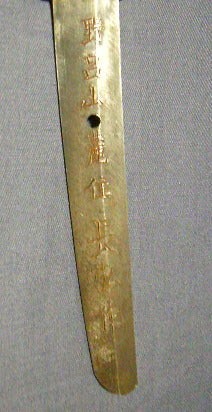
Bruce I found that this gunto was made in the final month of the war 昭和弐拾年八月 (August 1945). The swordsmith was 長弘 Nagamitsu, 野呂山麓住 Noro-san roku jū( resident of the foothills of Mount Noro).It has convas cover.


-
Chinese Cannon - Pictures Added
BANGBANGSAN replied to Kiipu's topic in Tanegashima / Teppo / Hinawajū
Due to the great age of the engraving, many of the characters are no longer very clear. I can only make out some of the Kanji, and even those may not be entirely accurate. 勝字八 萬曆癸未八月日 1583年8月 勝字小(藤)?五(斤/近)士 匠山守 (藤)?五錢 丸五 About 石火矢 Ishibiya According to 武用辨略 Buyō Benryaku, in 1551 (or 1576 according to 豐薩軍記 Hōsa Gunki), 南蠻人 Nanban foreigners presented ishibiya to the 大友家 Ōtomo clan, and 大友宗麟 Ōtomo Sōrin named them 國崩 Kunikuzushi. Regarding this event, 武用辨略 Buyō Benryaku gives the following account: In 天文Tenbun 20 (1551), a Portuguese ship anchored in Bungo fired ceremonial salutes toward a church. The tremendous explosions could be heard at Funai Castle. Alarmed, Sōrin and his retainers went to investigate. Thus, eight years after small firearms had been introduced in天文Tenbun 12, cannon arrived in the 大友 Ōtomo domain. Overjoyed, 宗麟 Sōrinnamed them 國崩 Kunikuzushi. Because these guns fired stone projectiles, they were also called 石火矢 Ishibiya, a term that continued to be used into the Edo period. In Sengoku-period records, the term ishibiya is almost always used. For example, descriptions of the ironclad ships built by 織田信長 Oda Nobunaga mention 石火矢三挺 “three ishibiya.” Judging from surviving materials concerning 國崩 Kunikuzushi, the石火矢 Ishibiya introduced by the 大友家 Ōtomo clan were in fact a type of frankish gun, also called 仏狼機砲 futsurōki-hō in Japanese. This has already been explained in detail in my article “Ancient Japanese Long-Range Weapons” and will not be repeated here. As for the 石火矢 Ishibiya imported by the 織田家 Oda clan, historical sources do not clearly record their country of origin. However, during the 安土桃山時期 Azuchi–Momoyama period, Portugal was Japan’s principal trading partner, and 織田信長 Oda Nobunaga himself maintained close relations with Portuguese missionaries such as Luís Fróis. It is therefore likely that most of these weapons were imported from Portugal.
-
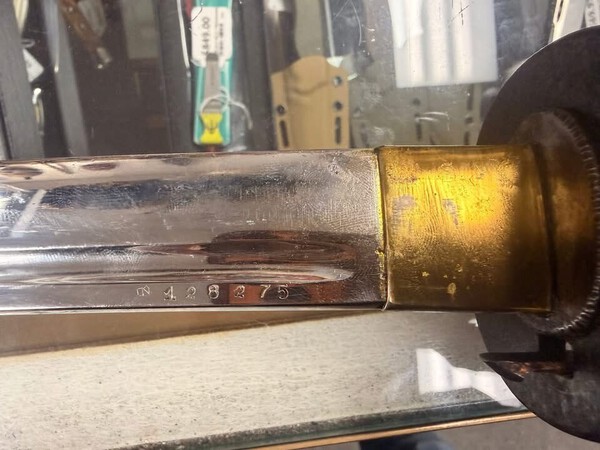
This is a legit Nagoya 95, but the blade has been chrome-plated, and the handle screw is missing. Interestingly, the 名 inspection stamp is stamped sideways.
-
1892 Type 25 survey assistance needed
BANGBANGSAN replied to John C's topic in Military Swords of Japan
I don’t have a photo of this “prototype,” but judging from the blade’s straight form, it appears to be a pointed-tip Western-style sword blade. It may possibly be some kind of experimental Type 25. Please refer to and compare it with the differences in blade shape shown in the Type 25 cavalry saber regulation drawing dated March 19, 1892, provided by Nick.
-
清松 製 Kiyomatsu Made
-
It is 昭和庚辰春 1940 Spring. This Mantetsu was made in the year of the Dragon.
-
Can someone tell me what type this is please?
BANGBANGSAN replied to Joshcamsoup's topic in Military Swords of Japan
LB142 straight guard Type 30 bayonet with bright blade,豐田自動織機(Toyoda Automatic Loom Works)made, under Nagoya arsenal‘s (名古屋陸軍造兵廠)supervision .Ser# on the bottom of the pommel should start with Hiragana ろに,which means 100th Series. -
John This is Zoheito not Murata-to
-
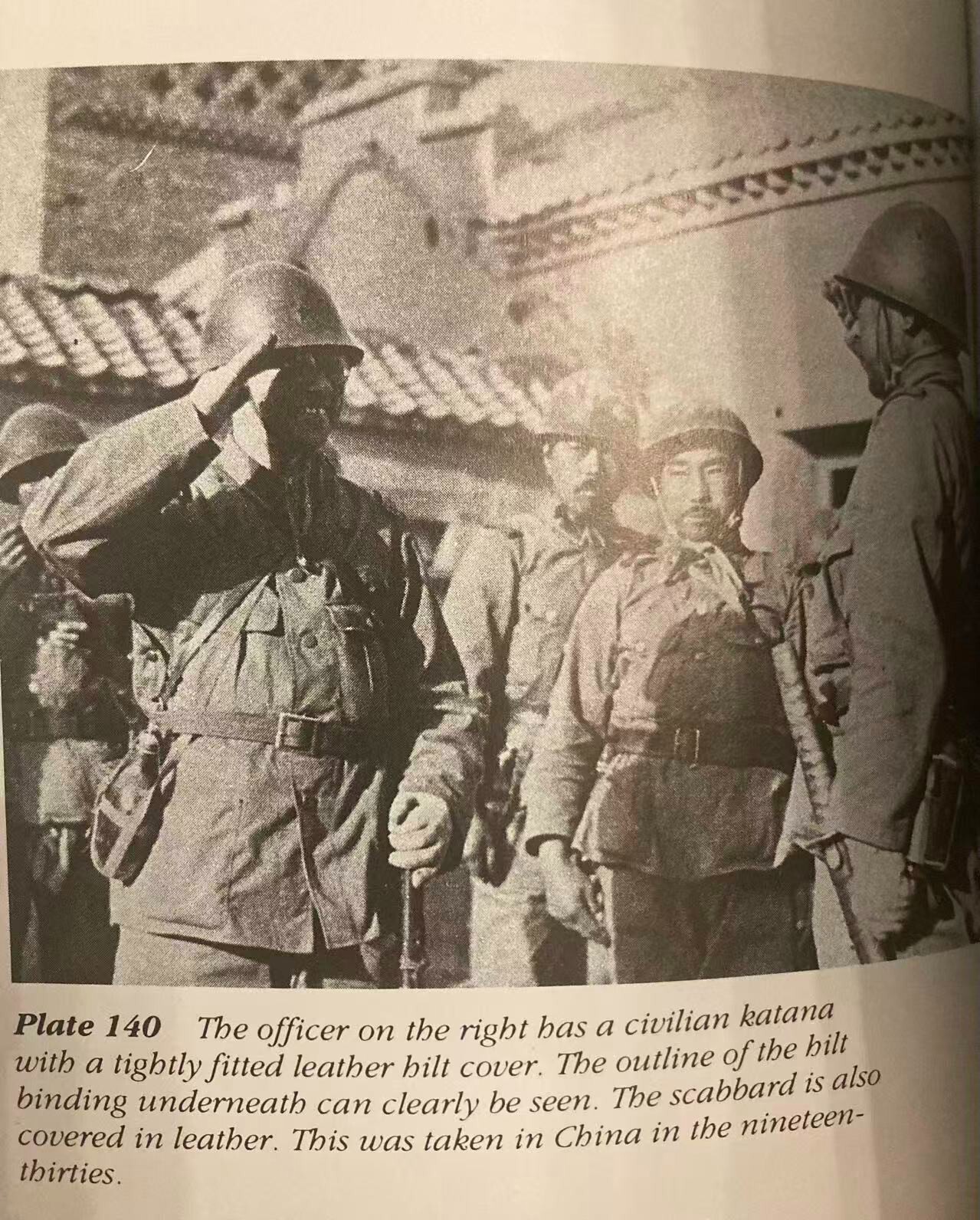
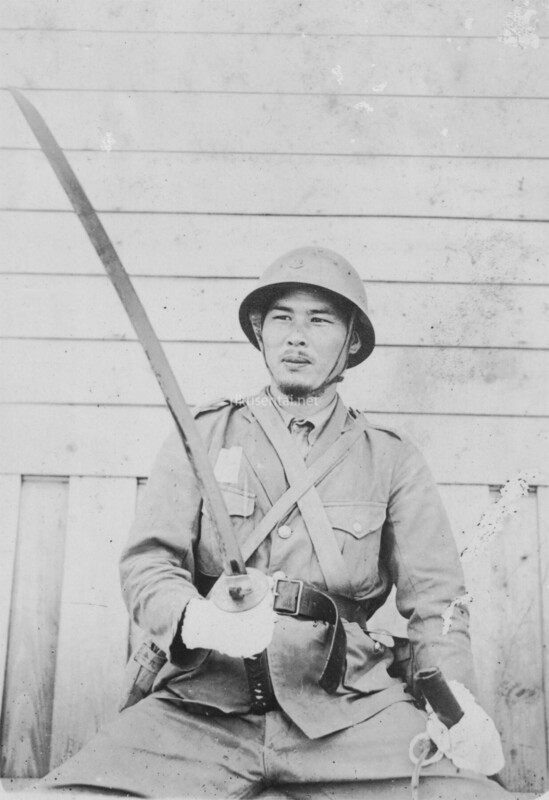
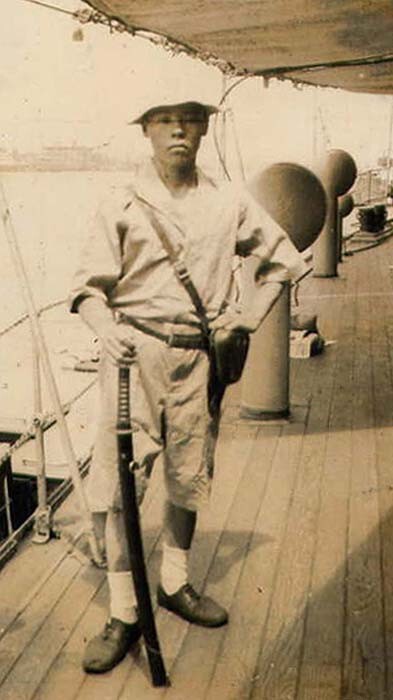
NLF officer did not necessarily always carry Type 97s; some also carried personal katanas in simplified (略装) or civilian mounts. Some had one hanger, while others had two。


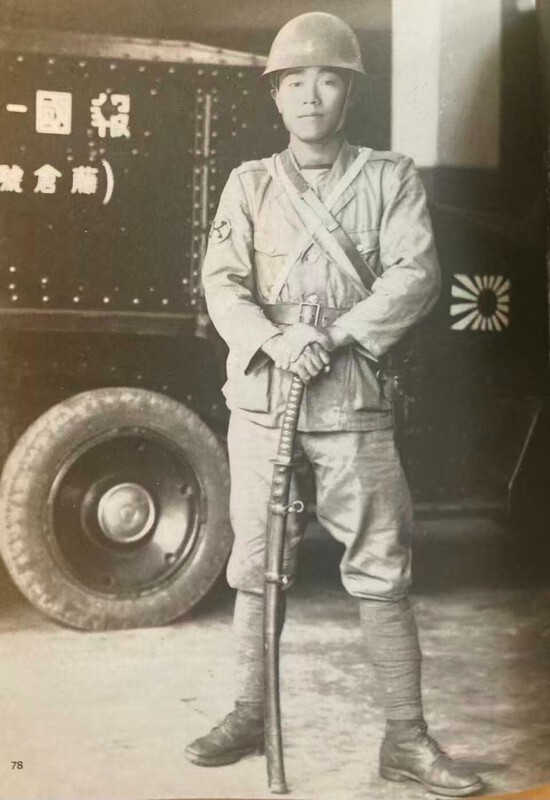
-
Bruce The sword in the photo doesn’t look like a Type 95. The scabbard has no suspension ring like T95, and the handle is clearly longer than Type 95. It’s likely a privately owned sword brought to war — a military-carried personal katana, in a civilian mount like this one.
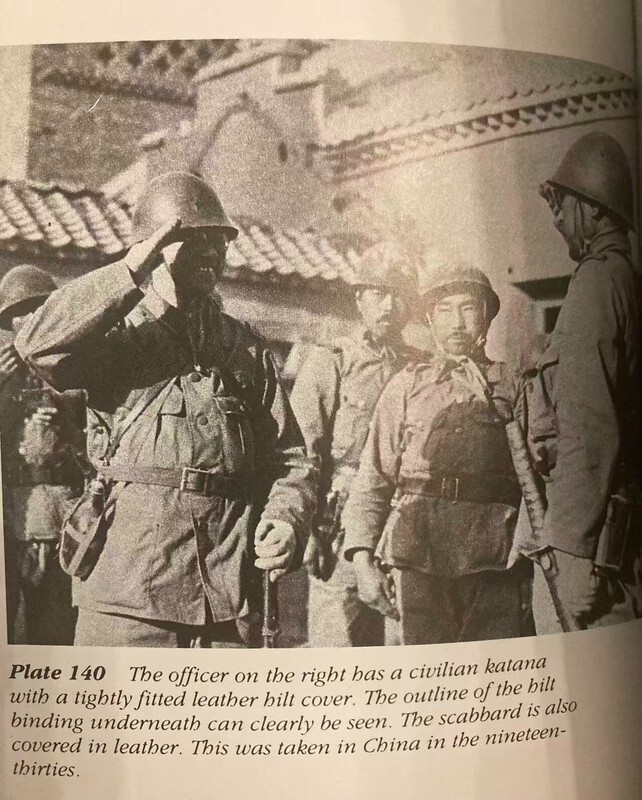
-
This fitting was made by 尚兵館軍裝株式會社 Shōheikan Military Uniform Co., Ltd. The company specialized in cloth-wrapped and lacquered wooden scabbard fittings for military swords, and applied for (and obtained) a patent number for this design. P.S.: Swords forged by 23rd generation Kanefusa Fujiwara 二十三代藤原兼房, were sold exclusively through this company.

-
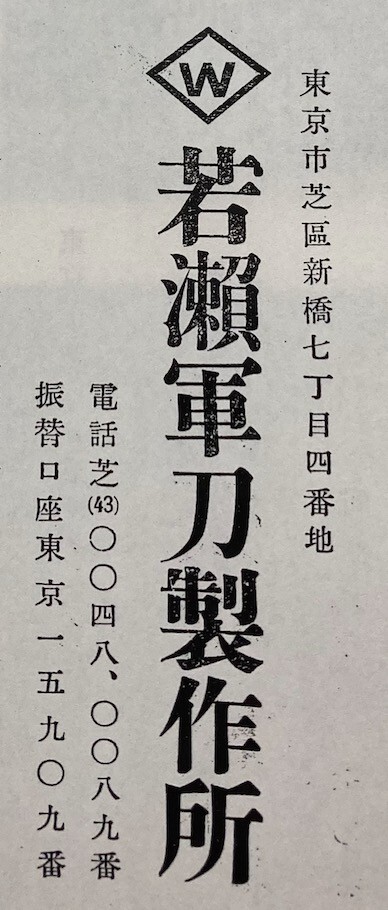
This is from Tokyo Wakasei Gunto Seisaku Jo 東京若瀨軍刀製作所
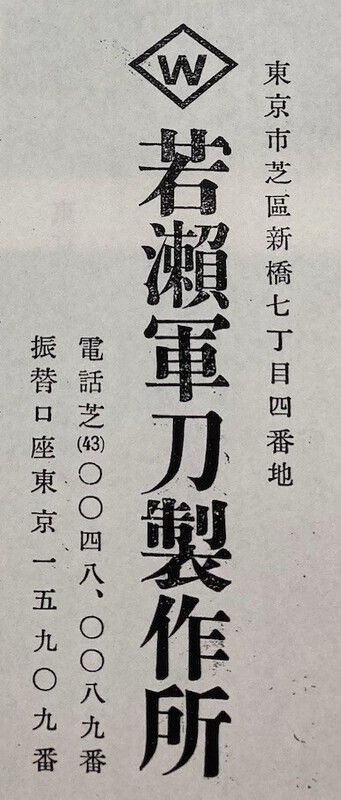






.jpg.135c935e4a39b3c081c052e1292f4ad9.jpg)