
Leaderboard


Popular Content
Showing content with the highest reputation on 06/22/2026 in all areas
-
I'm happy to announce that my Yagyu utsushi tsuba ranked Nyusen 4th in this year's NBTHK contest. Despite being ranked lower than last year it's still a positive result.


 10 points
 -
Since the Shinsa panel will only judge the blade in front of them and not consider any external commentary or factor in any historical nuance without precedent I am resigned to the strong possibility it will come back Horyu. Even though its clear daimei/daisaku blades were being generated in the atelier as early as 1306. If it gets Horyu again, then Plan B is to put it through NTHK who operate a different set of standards when evaluating a blade and call it a day. I didn't start this project to squeeze monetary value out of the sword. For me its all about preserving history and giving the blade the best possible chance for future generations. Dogma changes and evolves over time, Shinsa panels come and go and new discoveries eg the dated Chogi blade, reset the history books. The sword is more important than any one organization and its draconian appraisal methods. Its survived 718 years, ubu and intact, I want it to survive another 718 years, with or without a piece of paper. The blade will be judged on its own merits as a late period Shintogo Kunimitsu and the unofficial comments of Tanobe and Saito sensei carry enough weight for me as its current custodian.5 points
-
Hi Piers, description matches the tsuba perfectly. And yes I know people like to have a picture to go with the description But I didn't want to bias the translation. As per the outside lid - it's a ko-Shoami
 5 points
 -
Thank you, it took me many years of experiments and studying good quality tsuba to figure out how to reproduce tekkotsu on my works,which is now one of my trademarks together with texture and patina, so I'd rather keep it for myself for the moment, probably in the future (when I'm famous enough 😂) I'll post an article about what is tekkotsu and how they appear according to my experience. I'm only 4th Nyusen you should wonder how the First prizes look like 😄 I will go to Japan at both the study session and the ceremony, so if you guys like I'll post the awarded works here4 points
-
I've not only been tracking these swords, but i've been buying and selling them myself so I can take photographs and measurements. Generally speaking for the "common variations", I try to buy them for $750-$1000 and I try to sell them for around $1000-$1200. After fees, taxes, and shipping, I do not make a profit doing this. I mostly just break even; in support of my document in the downloads section. My problem is, I tend to hold onto the rarer ones, and they're beginning to pile up . Anyway, I just thought people might like to know what I'm seeing for prices in the buying/selling side for the common variant Type 95 swords. -Sam PS: This is just my personal experience in the USA in 2026 - and I am just a collector not a dealer. By common variations I primarily mean: Variation#3 (aluminum hilt, symmetrical ito, brass tsuba.) Variation#4 (aluminum hilt, symmetrical ito, steel tsuba.)4 points
-
It is extremely complicated in my eyes. I am happy to focus my interest on items that are not seen that interesting by NBTHK. My sword appreciation is different from high level appreciation. I had the privilege to see the 29th Tokubetsu Jūyō exhibition. All of the swords were amazing swords. However I know if I would have seen all of the submitted swords I would probably switched several items from personal appreciation reasons 😁😁 yet they are the experts on the panel and they most likely chose the right items. I think I've been NBTHK member for 15+ years now. I have never been a fan of the multiple tier papering process, yet I understand some of the reasons behind it. And of course given the currently absurdly large submission numbers for shinsa they cannot give too much time for every single sword. Some smiths/attributions are starting to have very large Jūyō numbers. And for me personally I find myself often wondering if yet another mumei XX sword should have passed Jūyō and not a signed Muromachi or Edo sword by YY for a fresh change.4 points
-
Some more pictures


 4 points
 -
I always find messages hidden inside sayagaki or setsumei to mark the blade as amazing or evil which only those who can't read between the lines would buy a bit too arcane topic. Good blade is a good blade, interesting blade is an interesting blade. If it was submitted five times, passed around, I am sure competing dealers will make a great story why "IT IS NOT REALLY JUYO LEVEL", but they are able to tell this story about any blade. Or vice versa, with absolute certainty declare that sequence of words in sayagaki does not say what it says, but attributes it to another, unwritten name, five notches higher. I never liked these whispers which echo in every collecting field. 100 years from now there will be so many Juyos most of it will not matter.4 points
-
A few other things to consider: Without any prominent experts on the Juyo panel, a modern Juyo certification may be seen as less prestigious than e.g. a Tanobe-sensei sayagaki Reduced number of swords passing does not necessarily mean that standards have gotten higher; in fact I have spoken with more than one person who feels that the last couple of sessions' worth of Juyo blades have been a decidedly mixed bag, with some swords among them that, and I quote, "should not even have gotten TH, let alone Juyo." I personally do not share that opinion but admittedly I do not collect at as high a level as they do, and thus my standards are probably lower Reading some of the recent Juyo and TokuJu setsumei, one can definitely sense a shift in certain long-held assumptions/assertions. For example, the decision to finally certify a Chogi tanto with a date 10 years older than the previous oldest acknowledged work, and noting in the setsumei for a TJ Shizu blade that the blade is attributed to the Shizu group, of which Kaneuji was the foremost, whereas previously an attribution of Shizu meant Kaneuji himself, with a slight plus or minus of confidence From my understanding there has definitely been an attempt to broaden the gap between Hozon and Tokubetsu Hozon of late. The number of older blades being approved, and the tightening guidelines for qualifying for TH, may also be related to the fact that we are now approaching a period in which works by some of the early gendai smiths are posthumous candidates for TH, and someday even Juyo The increasing availability of documentation on a given blade's history — the Wayback Machine, forum and Reddit threads, as well as the tireless work of big data gatherers and analysts — now means that it's easier than ever to determine whether a blade a) has been submitted multiple times for Juyo, b) has been passed around from seller to seller, and/or c) does not quite measure up to other Juyo specimens from that school or maker, meaning blades that are good enough to be considered Juyo candidates but not good enough to actually pass Juyo are now likely to be submitted less often (as an aside: I wonder what the record is for "number of Juyo attempts by a single blade")4 points
-
The previously discussed sort of Yagyu mimi:
 3 points
 -
Here's also a video in sunlight that shows the patina and the engraving better https://drive.google.com/file/d/1IZBWxKms-XeEPxmkI7JKiWbH4DQ0gMWp/view?usp=drivesdk3 points
-
Dear Koichi and Piers, thank you for your support. I now clearly understand that my project was far beyond my capabilities. Each additional difficulty, however, has forced me to reflect on the complexity and cultural value of these hakogaki, and on how unfortunate it is that they are so undervalued as art objects in their own right. While this compilation may prove less useful than I had hoped for the transcription/translation of these calligraphies, I nevertheless hope it will contribute to the preservation of Satō-sensei hakogaki and help prevent the associated tsuba from being randomly distributed among other kiribako. I have a few more requests for help, and I'm about to release the final draft (I promise, regardless of what condition it's in...).3 points
-
H I've added some extra pictures of the 3 digital earlier nco...then end of the scabbard is very different to the other 2 which are in there 2000's


 3 points
 -
I agree - the blade is what it is, and no amount of papers, sayagaki or dealer verbiage will change that. But a significant portion of the market out there does care, and until that changes, stuff like this will have an effect on which blades get submitted and which blades get bought.3 points
-
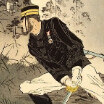
Thought this was interesting. The Japanese delegation that went to the US in 1860 to celebrate the 1858 Harris treaty. Taken by Mathew Brady. What struck me was the size of the the circled sword. Looks like a two-handed tachi? Or just long katana? The sword on the far right isn't small either. John C.
 3 points
 -
Dear All. John's memory does serve, a thread here that discusses these, All the best.3 points
-
If memory serves me correctly, large swords were popular in that period among certain sword schools.3 points
-
There was a recent period where items could be submitted in tandem for Hozon & Tokubetsu Hozon, which made it appear that they were handing out TH papers like candy. They have since reverted this, and I wonder if the stricter Juyo & TBJ sessions are a product of an attempt to restore the status of these attributions. There has been many discussion and opinions on certain Juyo sessions being "weak" (i.e. large numbers of swords passing, with some being questionable), given the absolute faith the market has in the NBTHK it would make sense they stamp out any perceptions that the value has been watered down. Who knows, maybe in thirty years all of these NBTHK papers will be obsolete and 'worthless' like the previous papers.....3 points
-
You might be looking at the style the wrong way around - French Art Nouveau took its inspiration from contact with the Japanese. French Art Nouveau was profoundly influenced by Japanese art and design. This cross-cultural exchange—often referred to as Japonisme—sparked a revolution in European visual culture following the opening of Japanese trade in the mid-19th century. Art Nouveau artists broke away from rigid European traditions of perfect symmetry, favoring dynamic, off-center framing and diagonals inspired by Japanese masters. So I guess why it looks Art Nouveau is because the Japanese invented it! Perhaps the style should be called "Art Nihon"?3 points
-
Type 95 swords with leather scabbard covers are out there; but they are uncommon. I’m not particularly good with the tassels/leather/belts/“extras”; that’s almost a whole field of study in itself. I have primarily focused on the swords physical characteristics. That said, any time leather or fabric looks good as new, is reason to be suspicious and raise some red flags. I go to a lot of gun shows and militaria shows here in the US, and some of the older gentlemen will actually smell fabric or leather to see if it smells “rightly old”. I always thought that was funny, but maybe there’s something to it. Not that thats an option here. But buyer beware. -Sam3 points
-
Well then you can’t be faulted for having to look internationally. Have you seen the dedicated thread on Type 95s, which includes a link to a great downloadable reference on the topic? Might help you get a foundational idea of what period correct originals look like. In my opinion, I would steer clear of that auction house if possible. Whether intentional or not, they’ve been known to misidentify items and sell fakes along with genuine pieces in the same auction with no distinction between the two (There was a fake NCO in the auction linked above (Lot 25)). I’ve also seen previews of their items when they set up at the big US military shows and haven’t been impressed with their Japanese swords.3 points
-
Hello, I am enjoying these discussions lately on high-quality blades, happy to chime in. I am in the process of building an empirical kantei trait library. What this means is that I am extracting the traits of a given artist not from the books as has been done so far in history, but from synthesis of the entire corpus of a smith's published works by the NBTHK and the Bunkasho. This reveals new data that the books, which are focused almost exclusively on the archetypes, miss. Note that this is an early stage project, and there can (and will be) mistakes. The count for Go ichimai boshi I have is 8, with ko-maru, hakikkake and midare-komi as being about just as common. https://nihontowatch.com/artists/go-yoshihiro-YOS1434 The most discriminating factor for an attribution to Go is the clarity of the work: the unrivaled luminous ha and clear jihada. It is, in a sense, an attribution based on grade of Soshu-den brightness. Ichimai boshi will certainly strongly pull it further to Go, but it is not a requisite as we see in the data. I would not read too deeply into the attributions to Go, in the sense that "This specific historical person made it" - and while it is certainly the best bet, if one had to bet on a specific person at all - it is best considered to be a qualitative judgement on a certain group of traits that tend to co-occur and set the work apart from the other Soshu Joko. A sharp turning and extended kaeri would move the attribution to Sa (also known for his remarkable brightness), a more stormy character with larger-dimensioned angular chickei to Masamune, a lower degree of brightness combined with more extreme activity in the ha to the finer and rarer ko-itame style of Norishige, and a calmer overall feeling to Sadamune. Such is the nature of attribution on mumei blades when the signed corpus is almost absent. However, I would be cautious with blades attributed to Go, as he was a frequent target of emulation during later periods (such as Nanki Shigekuni). For this reason, I would consider carefully blades that are not accompanied with a strong historical backing such as a Ko-Origami, or a record of gift-giving. I will say that in the blades attributed to Go that I have had the chance to handle or acquire, there has been so much variation in the execution of the jihada in particular, that I find it difficult to discern a single hand. It is important to understand that this acknowledgement of uncertainty does nothing to diminish the artistic appeal of the blades in practice. Clarity ("saeru") is one of the cardinal hallmark traits of high artistry in Nihonto, and blades attributed to Go exemplify this very characteristics. One must just accept the uncertainty, and appreciate the object for its intrinsic qualities. Best, Hoshi
 3 points
 -
Since Juyo Shinsa 69 and TokuJu Shinsa 28, it appears things have changed dramatically at the NBTHK, with the result that getting higher classifications for swords & parts are now extremely hard with numbers falling off a cliff for both Juyo and TokuJu classifications. Some people say it is a good thing. The best swords & parts should be revered and as such deserve the rating. It should not just be because it has a nice polish. Others think it is now excessively hard and that they need more moderation. Others still think that new Juyo and TokuJu discoveries are waining, meaning there are less great swords still out there to be found. And finally, others think that this is was a regime change that resulted in this new approach meaning, another regime change could lead to a shift again. What is going on at the NBTHK and why are we seeing such a drop in Juyo and TokuJu numbers? Can anyone enlighten the community? Thank you.2 points
-
I'd pay more than that at auction, including the hammer, the premium, shipping, and customs/VAT here in Ireland. I understand the urge to hold on to the rare ones. I'd make a terrible antiques dealer for this reason.2 points
-
As do we all, each of us having parts of the giant jigsaw puzzle but never all of it…2 points
-
I think it would be great if the NBTHK would incorporate a system closer to the NTHK, or at least augment their current system with it. The point system lets you have a fairly transparent view and it leaves no room for questions of where a sword stands, at least in the moment of judging by that particular group of people. Would be nice to know if a blade is barely passing TokuHu by points or if it's already right below Juyo, etc. I have the NTHK catalogues of excellent swords and it is obviously much easier to follow than the opaque reasoning of NBTHK.2 points
-
Thank you guys 🙂 Still not there yet, but getting closer 😄2 points
-
Wow, Manuel, now I'm far less sure I could tell an old Yagyū from a modern utsushi...2 points
-
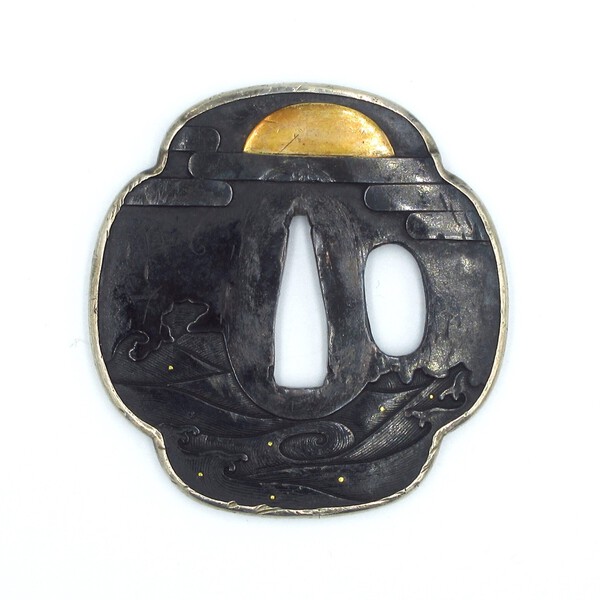
Japan's unique art has influenced European art for hundreds of years. Even when closed, some small amount was flowing out through the Dutch. Likewise, some was flowing in. Japanese designs influenced by European designs are called "Nanban" for "southern barbarian." Nanban Tsuba exist in large numbers, but the word (almost always I believe) with fittings means "influence" and not to actual importation whereas with armor Nanban armor is actually European armor imported, stylized, and used in battle. Also, European cloth was the most valuable cloth in Japan. Learning this was a fascinating moment, because as a child I read most of James Clavell's Shogun. (I ran out of steam in somewhere in the 700s by page count.) In this work, Clavell was said to be "Honest but inauthentic" in that his ideas of Japan at this time were 'correct by the standards of the studies of the period he was writing in, as they were based on often incorrect ideas held in academia, but were indeed held at the highest levels in academia. (So when he was wrong, it was because the research when he was writing was wrong.) One of these wrong ideas is how Blackthorne has a large volume of European cloth as trade goods, but the Japanese despise it and want only silk (and make quite a commotion about how awful they think it is....) while in reality European wool cloth was highly valued for strength, heat retention, and colors available. It was the most expensive cloth in Japan. These are Hideyoshi's personal private time bedroom slippers. They are made from European wool. It was called "rasha." Hideyoshi was a real piece of work, but in his old age he was subject to being cold, and being the most powerful man at the time was able to afford bedclothes and slippers and such made from European wool. These slippers are thought to be private (partly) because they aren't decorated enough to be used in important meetings. They also made battle surcoats for wearing over armor (the long sleeveless jackets) out of it. Because it was strong enough and also as a bit of a wealth flex, and as a way to add a layer to your look. As to influence outside Japan, Rembrandt the famous painter is known to have collected Samurai swords and he died in 1669. (This comes up a great deal when educating people who still think that Samurai swords were 'better in every way, instead of just very solid and extremely beautiful blades. It comes up because no one in European military affairs felt the need to change their swords out for Japanese ones as a functional issue but valued them tremendously as art objects.) But, I am rambling about the older period artistic influences.... On the topic of late artistic transmission.... post-Perry, the Japanese are reported to have used printed art (ukiyo-e) AS PACKING MATERIAL ON EXPORTED GOODS! Imagine you are a 'well to do' European, and you send off for a Japanese vase or screen, or some bit of lacquerware to show off to your friends how worldly you are... and it arrives a year later, packed in 'wadded up newspaper,' except it isn't newspaper. You glance at the paper, unroll it... and find THIS? This is the kind of thing that inspired Mikado by Gilbert and Sullivan. In truth, it seems like Japan has a massive world-wide cultural takeover of the world about every 30 years. When I was a kid Ninja Turtles, Robotech, and so on were massive. As to art going the other way, this absolutely happened but it can be harder to identify. Japanese people were of course fascinated by the outside world, and the time Japan was closed just increased this. One of the last people to travel was Tenjiku Tekobei, and he became famous for his writings on his travels. https://en.wikipedia.org/wiki/Tenjiku_Tokubei I have a picture of him on my wall as a wizard riding a giant frog. (The last great traveler before Japan closed became so fascinating to the nation for his writings about the outside he became a wizard in Kabuki playwriters started using him as a wizard.) As such, when it opened again an influences started flooding in, they absolutely influenced art.... but it's a bit harder for we who are outside to track directly... and also because of the abolition of the samurai class as a power play by the Emperor, there was less need for sword fittings which are the focus of this forum. I recently ordered an antique tsuba which I think must have had a European influence because the bottom is classic Japanese but the top is more of a semi-modern graphic design using bars with semicircles as ends to create a classical Japanese design (the sun over clouds) in a very new and different use of line. These bars stand out to me as a 'influenced design' but it might turn out not to be. It's entirely possible this is an old Japanese style I simply haven't encountered elsewhere.


 2 points
 -
This one found by @Marcin:


 2 points
 -
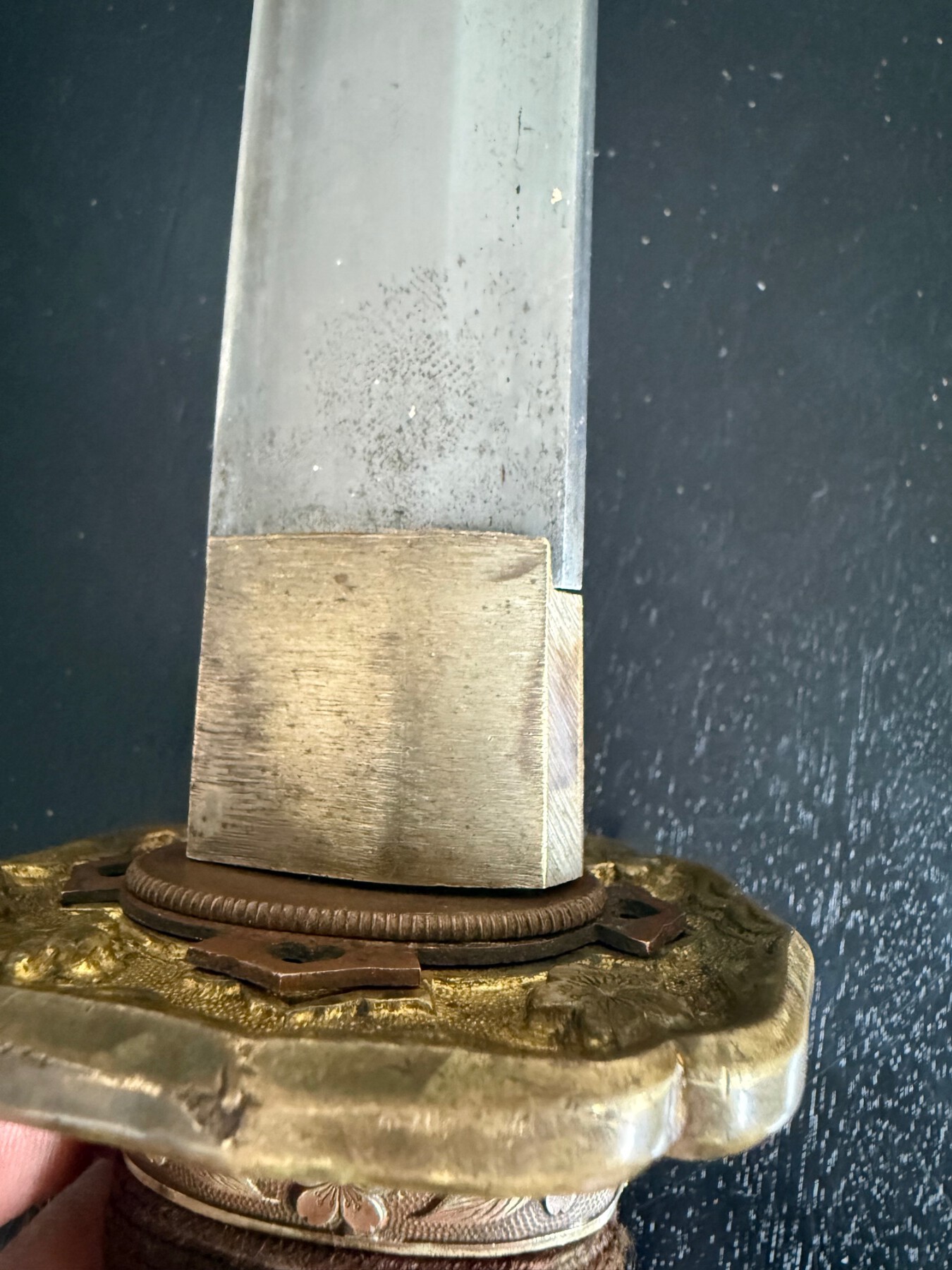
Not all gunto fittings were marked or stamped, as far as I know. But anyway, this only came with the blade, tsuba, habaki, and saya. I added the seppa from a lot of seppa I bought years ago. There is no chuso. I also added the tsuka core from a different lot of parts I once purchased. It’s my belief that’s this sword was a hodgepodge of mixed up parts when I found it, and it remains that way. The tsuba could be a repro; I’ve seen several late war Tsuba look this way. Ohmura’s website is really awesome, but it’s not entirely comprehensive. There’s no way any of these parts are originally matching. The saya and blade are genuine, everything else is “put together”. Jokes aside @John C, you would give this blade better justice than I can, with your proximity to craftsmen and collectors, or if you were to make shirasaya. If you’re truly interested, I’d make you a good deal without profit in mind. Feel free to message me if interested. -Sam2 points
-
Hi Francesco, it was an interesting lecture. Actually learned a lot. Some examples of bizen blades for discussion after the lecture.
 2 points
 -
Thank you all for the wonderful event reports 👍2 points
-
Hi Joe, I just learned something new!2 points
-
@ROKUJURO Thank you! I'm much more used to the Japanese style (Nihon-shiki) Rōmaji where し is si (incidentally, the same as how one types out し using a full-size keyboard), but I see now the Hepburn version, where し is Shi, became the standard adopted by the Japanese government since December 22nd, 2025, Good to know! Edits: Wait, nope, I was wrong, and I was just vibe-typing Rōmaji apparently, because し as Si "feel right", but my ち are all Chi and my つ are all Tsu...... Anyway, Hepburn from now on!2 points
-
Unfortunately, I couldn't attend this year, but on Sunday, our Italian friend - Simone di Franco - and member of our INTK association gave a conference on Bizen. I hope you found it interesting! Do you have any photos or videos?2 points
-
Hi! Could it be 竪格子 Tate Koushi (vertical lattice) at the beginning? Edited: I incorrectly typed Take instead of Tate : ( And at the end I think there is one more character after 素心, it reads 素心鑑, appraised by Sosin, then followed by two seals. The rest looks very good!2 points
-
In for a penny, in for a pound. I am liking Blueduck’s unusual find. Here is another tsuba for reference.
 2 points
 -
Perhaps it is a better bet to just stick with the known dealers Adrian, at least until you have a sound knowledge of what to look for. Yes, you will pay that bit extra perhaps, but no hassle, no fuss, no extras ( which are themselves costly!, buyers premium, plus tax etc.), and shipping from auction houses can be a nightmare too, and extremely expensive! I did buy a bayonet at an auction house in the UK a couple of years back, the cost of shipping was almost the same as the item, over £100! A friend kindly collected it for me, and sent it here, cost £12.50! I almost never buy at auction now, I much prefer to go to a dealer. Also, with a known dealer you have a guarantee of authenticity and money back, unless an item is sold as a replica or is a doubtful piece, but then they will be priced accordingly anyway. As for sending items, yes that too can be a nightmare, though many dealers ship all over the world with no problems. Some dealers though will not post to an address within the EEC, some wont send it out of the EEC, some wont even send it within the Uk. I sometimes have problems getting items sent here (Norway), until I mention that we are not in the EEC, that sometimes helps. I tried to buy a book on Amazon Canada the other day, they do not ship to Norway! My response from the dealer when asked why, was met with 'we don't know'. Jeeez, its a refernce book, not a machine gun. They then said could I 'buy it from Amazon UK or Germany', yes, but at four or five times the price. I thought about asking someone on the forum if it could be sent there and then forwarded, but decided if the shop do not want the business, then thet can keep it anyway. I used to buy quite a few bayonets from a dealer in Ireland, but he unfortunately gave up, partly due to ill health, and mainly due to problems he had posting post Brexit, it just became a nightmare for him and not worth the hassle.2 points
-
Reliable in terms of providing accurate descriptions and selling genuine items? None come to mind. I think most auction houses have a pretty rudimentary understanding of Japanese swords, so fakes or genuine pieces that have been meddled with can easily slip through the cracks.2 points
-
I'm sorry, I mean like this: So I can see the curvature of the end, and how flat the drag is.
 2 points
 -
The signature reads: 濃州関住高井貞継鍛之 = forged by Takai Sadatsugu, resident of Seki in Nōshū Here's the smith's entry in Markus Sesko's Swordsmith's of Japan:2 points
-
Thanks Tom. Let’s talk soon. It’s not perfect… far from it. Pretty ugly, and fairly "frankestein" if I say so myself - but maybe it's good that it's clearly pieced together until someone professional can address its issues. I'll attach my note of "pieced together from orphaned parts, 2026" also. A few too big seppa + a slightly too big tsuka core + an almost just right habaki = something reminiscent of a type 98 . The ito is just wrapped around the core for now; no samegawa or menuki. It all “fits”, with only a little rattle. At least this way I can handle it with a little more familiarity and the habaki sets nicely into the saya. Thanks guys! I’m off to my books to try to locate this smith now. All the best, -Sam


 2 points
 -
Could not find him either. Looks like we have here an unrecorded smith, Yasuchika (保隣), and his art name, Ichi'enshi (一簷子).2 points
-
I agree that it’s likely the habaki that does not fit. Amazingly… I have quite a few orphaned parts, and a tsuka core. I could probably make this sword “complete” fairly easily. I just don’t like the idea that, if I were to pass away unexpectedly, people might think this “pieced together sword” would be wartime. And we all know how frustrating that can be. I’ll likely slap it together, and maybe put a little tag on it that says “assembled with found orphaned parts in 2026” or something. For now, I’m just enjoying it and looking into the smith. -Sam2 points
-
I imagine the difference is probably just semantics. Any utilitarian object made the best it can be by a craftsman can turn into art when the craftsman elevates the object to be aesthetically pleasing, which is of course, subjective. So craftsman can become artists. But can artists, those who make objects that are solely aesthetically pleasing, become craftsmen? And the Beat goes on... —the Whispers— John C.2 points
-
I would view it as swordsmiths are craftsmen… some of whom are able to elevate their craft to the level of art.2 points
-
The 1306 tanto would be a great sword to compare but I have yet to find high quality images. These are the images of the polished tanto. Not the optimum lighting or resolution but hopfully you can see the fine chikei that is so noticeable in the other examples. And is that nie-utsuri?


 2 points
 -
Ah good, thanks Robert. The earlier photo played tricks on my eyes. It seemed flat on the end, like a drag. But with these, I see the true shape. Very nice collection!1 point
-
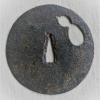
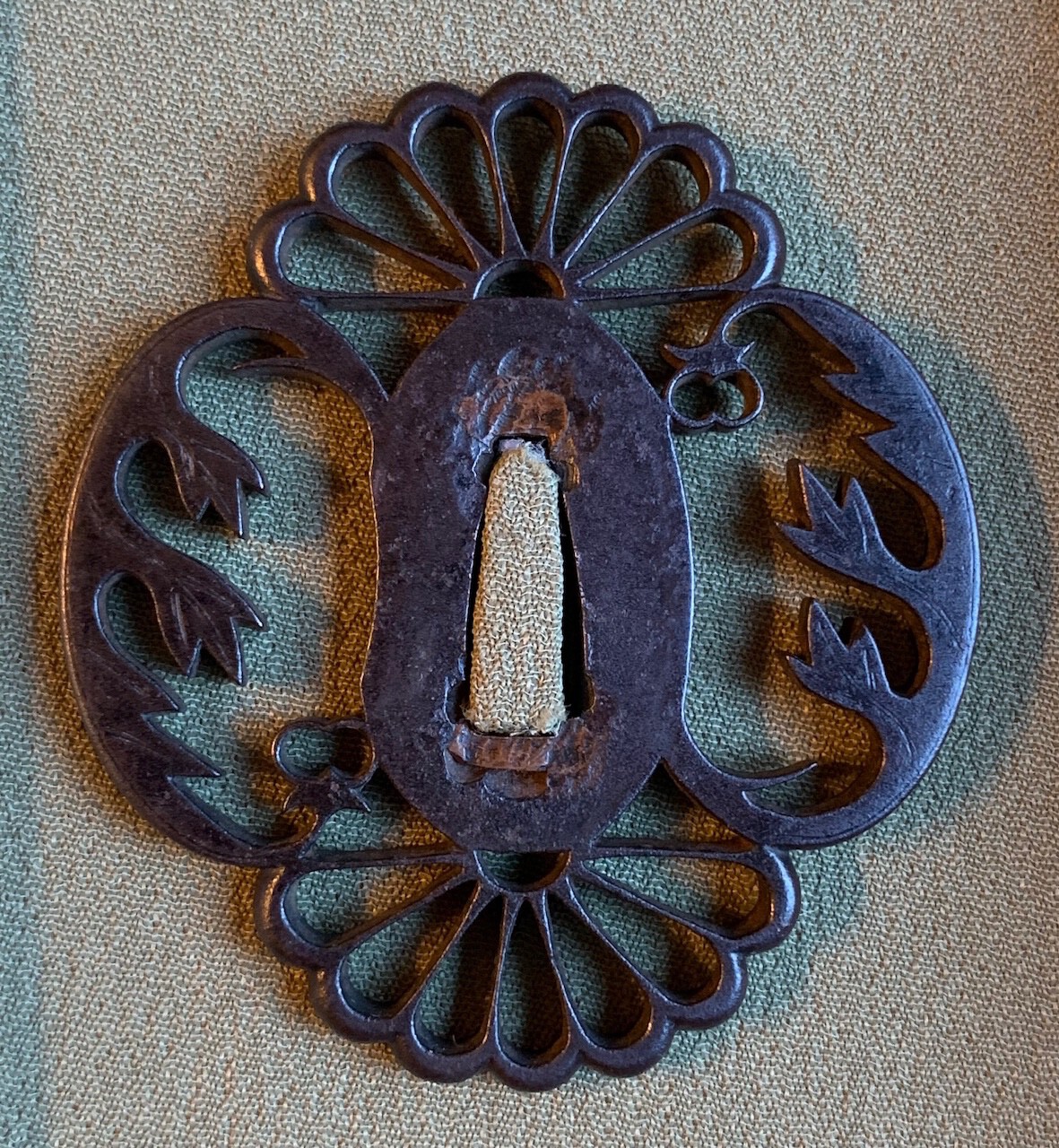
Hi Adam! Wow, what an interesting and beautiful tsuba! My opinion is that it looks genuine and it seems to be thicker in the middle then on the rim. The motif is placed inside a sea cucumber type of tsuba design. Looks to have been mounted on a tang at least once. That is all I can tell you, other members will probably give you much more detail about the tsuba.1 point












.thumb.png.54593db2789c8a1dcb235543b184ce39.png)







This leaderboard is set to Johannesburg/GMT+02:00