
Leaderboard


Popular Content
Showing content with the highest reputation on 01/07/2026 in all areas
-
Here are some bit lesser known and smaller groups that could maybe added, although some might be too insignificant, and some of these might already featured under some other classification. For me it is bit difficult to draw lines, and lineages can vary. File was view only for me. School - Province Daruma - Yamashiro Heianjō - Yamashiro Kanabō - Yamato Shiga-Seki - Owari Inuyama - Owari Odawara-Sōshū - Sagami Fuyuhiro - Wakasa Asago-Taima - Echizen Yamamura - Echigo Iruka - Kii Kaifu - Awa Tosa Yoshimitsu - Tosa Wake - Bizen Ishidō - Ōmi (later spread) Zenjō - Mino San'ami - Mino Mizuta - Bitchū Tatsubō - Bingo Kai-Mihara - Bingo Goami - Bingo Dōtanuki - Higo5 points
-
Another video about Johan:5 points
-
It is a great pleasure to meet you all here. I am an independent amateur netsuke collector from China. Inspired by the insightful contributions from the members of this community, I would like to share some observations regarding the netsuke market in China. Due to complex historical and cultural factors, there are virtually no large-scale forums or dedicated platforms for netsuke collectors in China, leading to a significant lack of information sharing. However, because of our linguistic and cultural affinities with Japan, the Chinese market sees a large volume of netsuke "re-imported" from Japan. Unfortunately, about 95% of these are fakes. The notorious "Shozan" and "Gyokuseki" signatures frequently discussed here are, in fact, ubiquitous on the Chinese secondhand market. Setting those aside, there are occasionally hidden gems to be found. (It should be noted that China maintains very strict regulations on ivory; therefore, I personally only collect boxwood netsuke). I have acquired a few representative pieces that I would like to share with you. The first is a Japanese Hyottoko mask netsuke, and the second is an Okame mask netsuke. While the craftsmanship of these two pieces may not be considered exquisite, they both possess a distinct patina that suggests a clear sense of history. The Hyottoko mask is signed "Suizan" (水山). I am quite unfamiliar with this name and am certain it does not belong to a famous master. The other piece is unsigned. Regarding their age, I personally date them between 1850 and 1920. While this period may not be the most "ideal" for some collectors, it is quite acceptable given their acquisition price. Regarding the mass-produced forgeries, I have learned that they largely originate from provinces in Southern China. There are specialized sellers in our secondhand markets dealing specifically in these items, priced anywhere from a few dollars to tens of dollars. Many people fall victim to these scams, and it is a great pity that we lack a platform like this one to help collectors identify and correct such errors. Thank you once again for your sharing. Greetings from China.

 4 points
 -
Hello Blue, is that your name? We do ask members to use at least a first name so we can address one another politely. We're old school like that As Rohan mentioned above, there’s unfortunately very little we can determine from the photos. For more info, you’ll need to share clear images of the tang (nakago) and the blade removed from all of its fittings. That said, based on what is visible, you appear to have a World War II era Type 98 Shin-guntō. Notable features include a scabbard with a leather combat cover, what looks to be a surrender tag (the white cloth with writing), and a company-grade blue/brown officer’s tassel. At first glance, everything appears consistent with genuine WWII-period components. Seeing the tang is critical. Swords mounted in WWII fittings like yours can house: 1. An arsenal-made blade. 2. A traditionally made wartime blade. 3. A traditionally made older antique blade (often referred to as a “family blade”). 4. Or something else entirely . The blade and the mounts are two separate components of a WW2 Japanese sword, and the tang will reveal a great deal about the blade part. Best of luck, -Sam3 points
-
Fittings possibly Satsuma Rebellion?3 points
-
Can't say I've ever sold anything on Yahoo Auctions but as a buyer I agree 100%, it can be very annoying. I recently thought I had won a nice tsuba with hozon papers but it was relisted at the last second for more than double what would have been my winning bid price... Not all sellers do it but when it happens to you on an item you really want, it can be very frustrating indeed.3 points
-
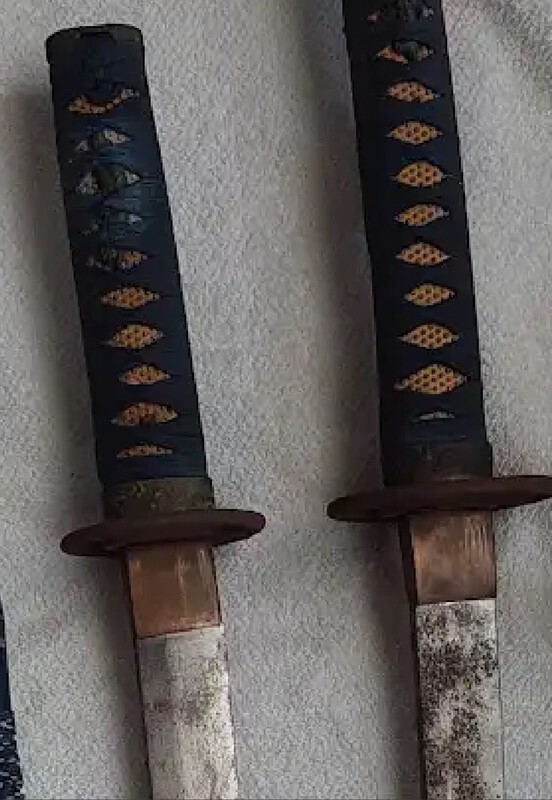
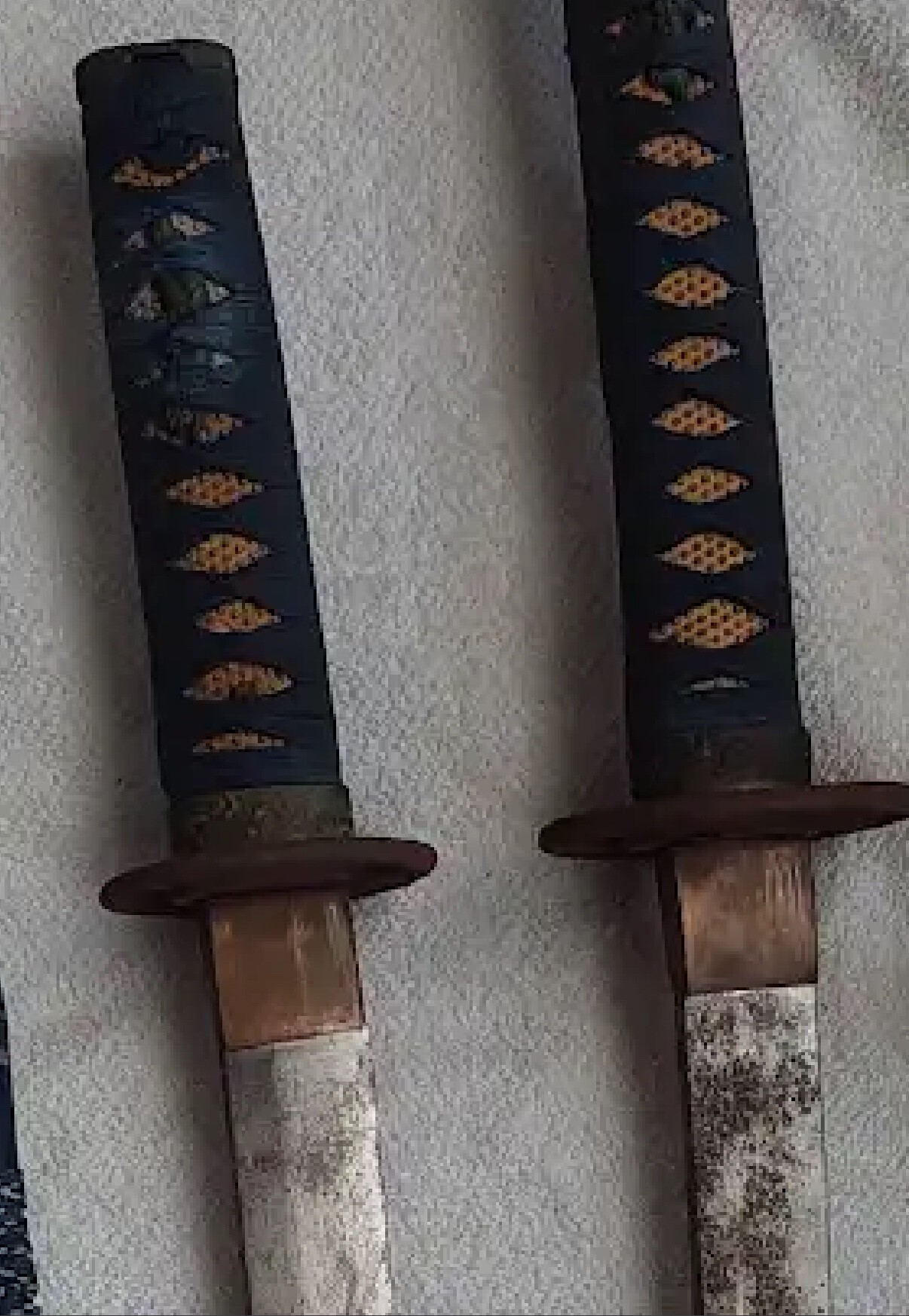
Hate to be the bearer of bad news, but I also believe both swords are not Japanese. But still, they hold memories of your father and his friend with a shared interest in martial arts. So that’s something to cherish. Sincerely, -Sam
 3 points
 -
Having gotten a preview, I can say that @nulldevice’s project is going to be a great resource—especially for visual learners. Adding/correcting the data will be very worthwhile.3 points
-
I would definitely give that repeated oilings, to try to reduce oxygen access, and convert any active red rust to black iron oxide, as a first step.2 points
-
A pleasure Darcy! Welcome to the forum. I totally understand your reluctance to dismantle it. I myself, owned an old katana for nearly 20 years before I had the courage to take it apart; due to my reverence for history and my grandfather who gave it to me; also inexperience with Japanese swords. You are not alone in that hesitation! But like Rohan said, it's totally safe, and normal to take it apart. My advice would be to take some good photos beforehand, so you can be sure to re-assemble it correctly. (sometimes people mix-up the seppa (washers around the guard). Be very careful, and understand it might be a little "stuck" after being mounted that way for ~80 years. Just go slow, and be careful. Kind of a long video, but worth watching before you try: (Skip to the 6:30 mark, for disassembly of a sword in fittings)2 points
-
Jens, Kaz, over at this Warrelics thread got a full translation of the chart: 平時携帯兵器表 - Google Sheets.pdf2 points
-
Sounds like a great project! I’ve been putting together something similar for my own learning, mainly to have contextual info at hand instead of constantly digging through books or online sources. One thing I’ve been working on is plotting the approximate locations of different schools on a map of Japan. Paired with an abstract overlay of the Gokishichidō, it’s been a helpful way for me to visualize how knowledge and traditions may have moved around over time. Dates and locations are very much a work in progress on my end, and it’s definitely not meant to be a perfect resource, just something for personal study. I’m no expert, but I’d be happy to cross-reference what I have with your data and flag any discrepancies I notice. And if it’s useful at any point, I’m also glad to help out or compare notes as your project comes together.2 points
-
Agreed, the Shinsa is unique in the world as a government sanctioned event that authenticates an entire asset class and accessories. To have experts that have to complete decades of study to recognise the artist is just incredible - I am unaware of any other area like it - be it art, science or any other activity. That there are some many smiths and traditions it is incredible how much knowledge you need to have to become a recognised expert and even then when you speak to a master authenticator with 40 years experience they will still say they are learning. It is remarkable. Almost super human. The closest we have to this in the west is the individual authentication boards or committees for an artist. But even then these groups focus on one or maybe a few artists not an entire asset class. As we move forward I would love to see some of the western art influence this extraordinary eastern art. Things like having a catalogue raisonné for the big named smiths would be a massive move that would greatly improve this art form and have many advantages (aside from the fact that you will finally be able to see all the recognised works of the smith in one collective work - which in itself would be wonderful.) I hope this will happen sooner rather than later. But for now like you I am completely and utterly engrossed. There is no art form like Nihonto.2 points
-
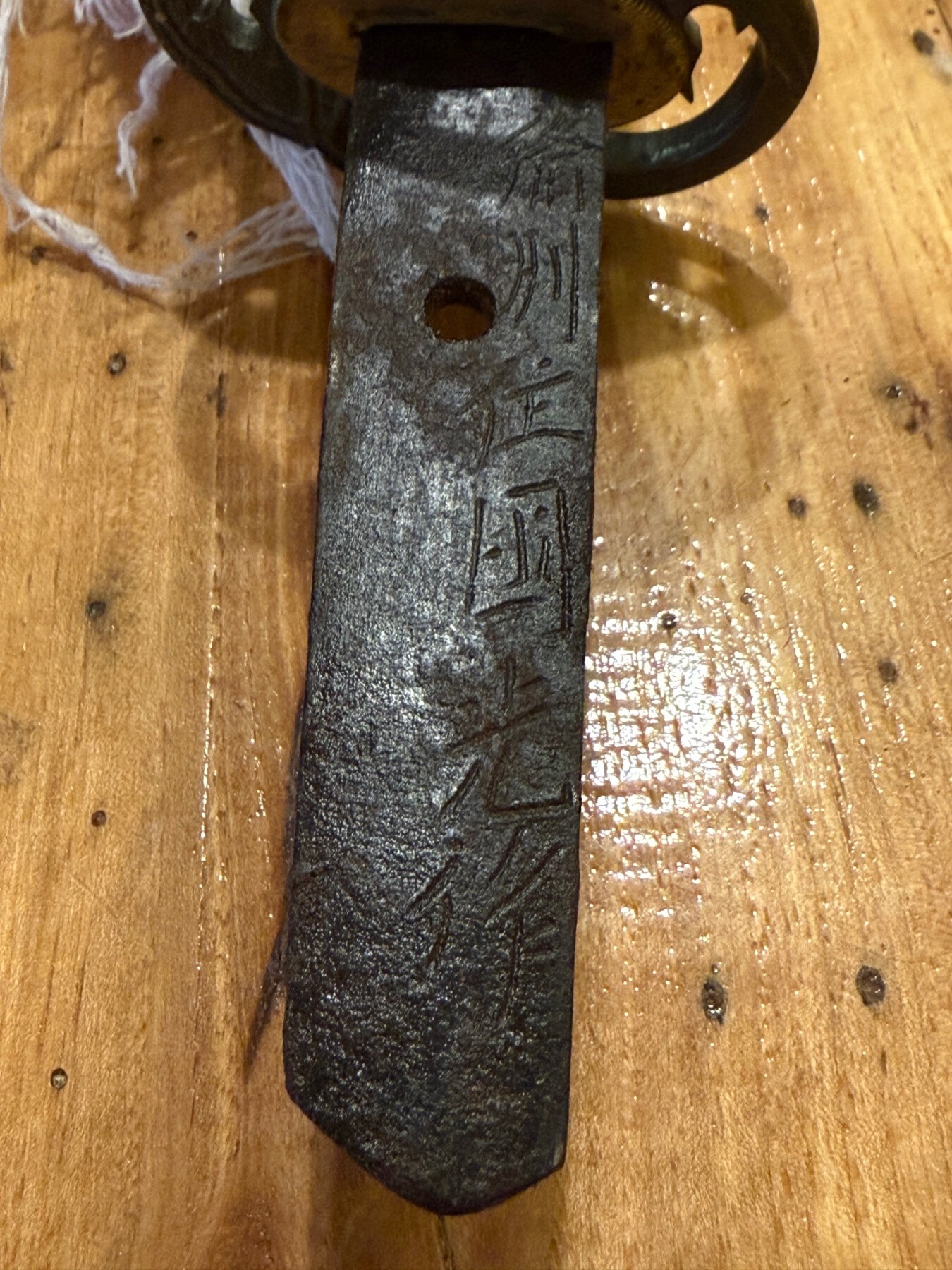
The mei looks Sukekane to me. 備前國助包 - Bizen no kuni Sukekane2 points
-
Hi everyone, I wanted to share a reflection after completing my first full year in this incredible field. Over the years, I have been an avid collector of many things, ranging from precisely catalogued historical multiples and rare editions (such as coins and books) to the more subjective realm of fine art and contemporary pieces. I was used to the world of almanacs and the subjective opinions of art critics. But after one year of being entangled in the world of Nihonto, I’ve realized this is something else entirely. What fascinates me most, and what has truly trapped me in this hobby, is the unique intersection of high art and the rigorous Japanese legal framework. Unlike any other field of art, we are dealing with a mandatory government registration system that defines a sword’s existence as a legal art object. But the real magic happens when this legal status meets the expert judgment of the Shinsa. In the world of fine art, you often chase a signature. Here, we look for a soul. When a group of experts gazes into the jihada and hamon, they aren't just checking a box; they are identifying the hand of a master who lived centuries ago. They are giving an anonymous piece of steel its name and its history back. This strict, tiered hierarchy, from Hozon to the Juyo and Tokubetsu Juyo levels, feels to me more than just a ranking, it is a path of merit that honors the spirit of the smith. To hold an object that has been scrutinized by such a body, and to find it recorded in a work like the Juyo Token Nado Zufu, creates a level of gravitas I have never encountered in any other hobby. It transforms a beautiful blade into a verified vessel of both history and spirit. Even after a year of navigating the challenges of the market, encountering gimei, fake documentation, and the complexities of mumei attributions, my respect for this system has only grown. It’s not just about owning art; it’s about the certainty that comes when art, law, and a thousand years of tradition meet to protect the soul of the Japanese sword. I’m curious if others here, especially those coming from a background in fine art, had a similar realization? That the unique Japanese system of judging and registration is actually what sets this apart from every other form of collecting?1 point
-
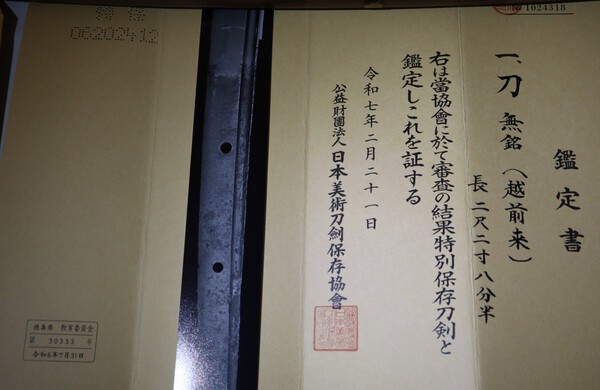
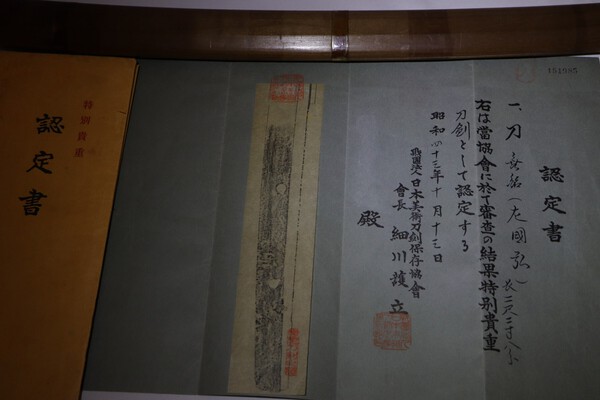
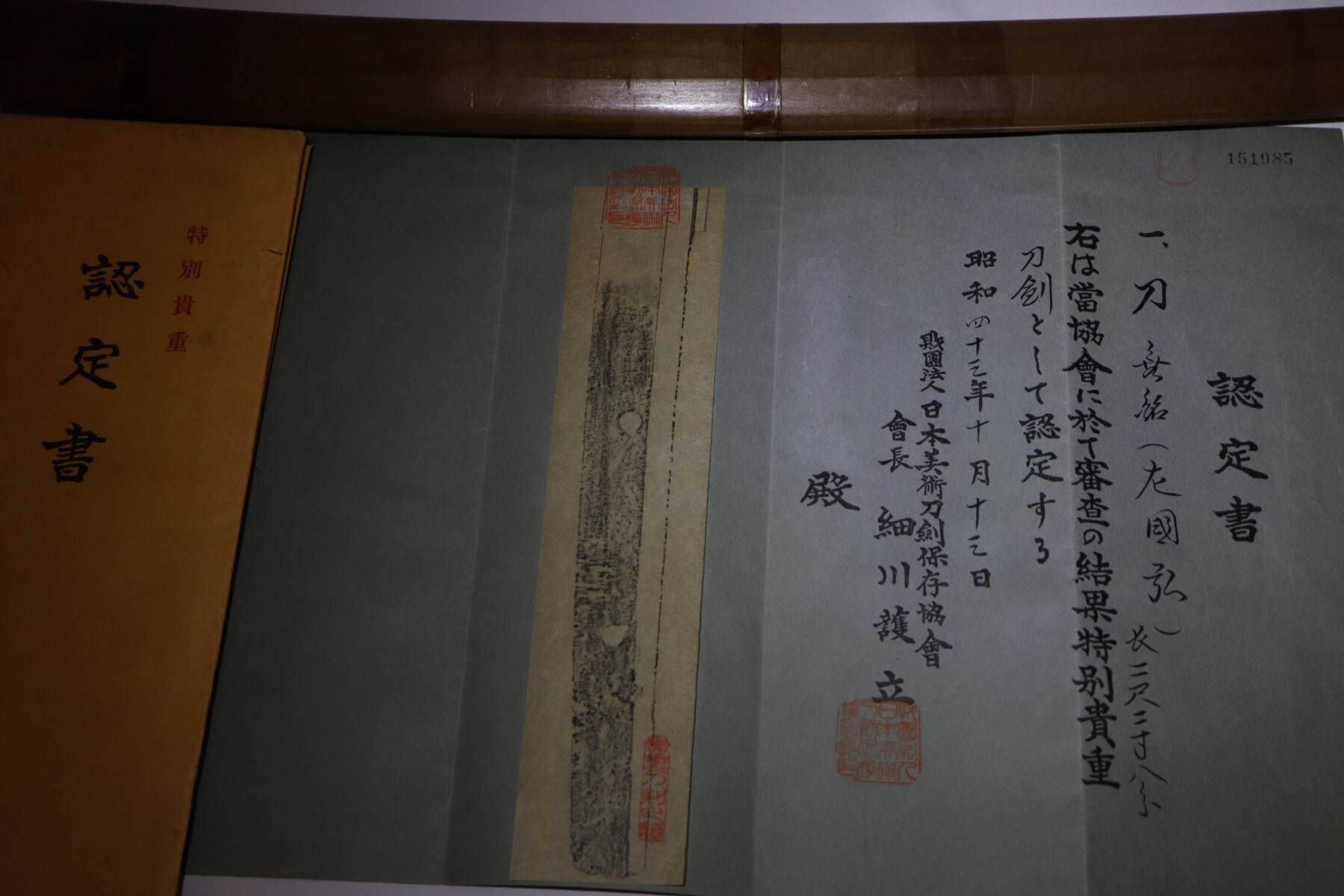
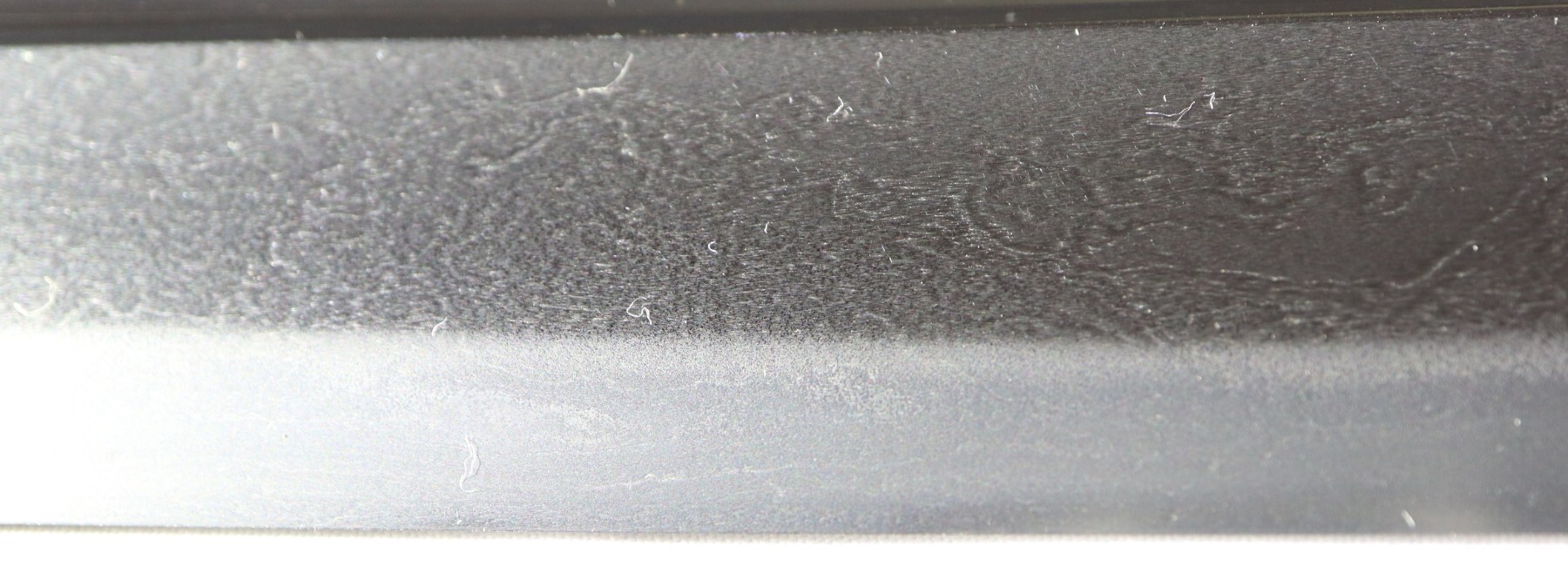
I am hereby offering this Echizen Rai katana. Specifications: Blade Length (Nagasa): 69.2 cm Curvature (Sori): 2.1 cm Mekugi-ana: 2 Nakago: Ō-suriage, mumei Dimensions: Motohaba: ~31.3 mm Motokasane: ~6.8 mm Sakihaba: ~24.3 mm Sakikasane: ~5.3 mm Bare Blade Weight: approx. 737.6 g Type: Shinogi-zukuri Blade Description: A stunning Nanbokucho period katana attributed to the Echizen Rai (越前来) school with recent NBTHK Tokubetsu Hozon papers, and previously attributed to Sa Kunihiro (左国弘) by Tokubetsu Kichō papers. Both attributions place this sword solidly in the Nanbokucho period. Although this sword clearly is not the work of Sa Kunihiro, the old paper was still preserved. I find it interesting to see how older NBTHK papers can differ from new papers. The blade exhibits classic Nanbokucho characteristics, including a wide Motohaba and longer kissaki. The jigane tight itame in certain areas, which can be well observed in some of my images. There is also Mokume, and overall Jigane that reflects previous older Rai works. There are sections where the hada stands out more prominently. Ji-nie is present throughout, giving the steel surface a rich, textured appearance. The hamon is a suguha-notare temper with activity visible, a lot of nie can be observed. See my Hamon images for a proper idea of the hataraki. The bōshi is Omaru, and is still very visible. The nakago is ō-suriage, typical for early Nanbokuchō swords, with two mekugi-ana. The sword is fitted with a habaki and comes in shirasaya (with reinforcing tape applied). Condition Some scratches can be observed, with one longer scratch visible on the images; all flaws have been photographed and are visible on the images. The scratches are shallow and do not distract from the blade itself. There are no significant ware of imperfections on the blade. It is a very clean Nanbokucho Echizen Rai blade that is ready to be appreciated. Image disclaimer The overview images of the entire blade had their background removed. Please do not use these images as a reference for the condition of the blade, as they have been altered. All other images are unaltered. Sometimes my camera can be seen in the reflection of the blade in the bohi. These are not imperfections. Price: €3700 Free shipping inside EU Shipping outside EU available for a small additional cost (€20–40) Shipped with UPS Express, fully insured to full value Located in the Netherlands – pickup possible Please feel free to message me if you have any questions.





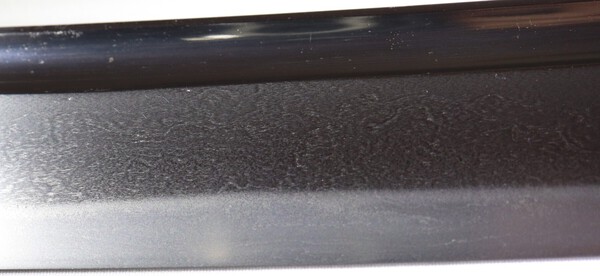


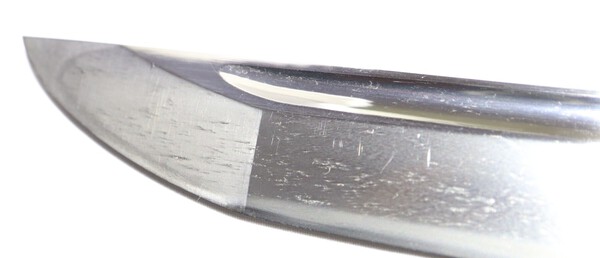
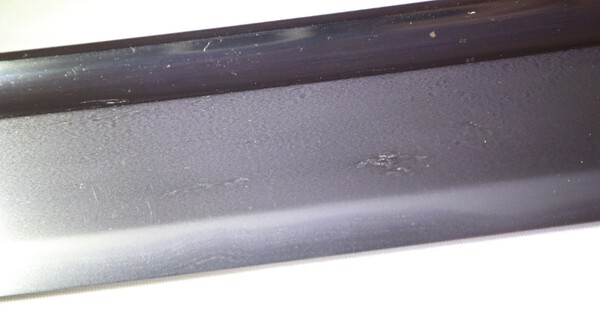
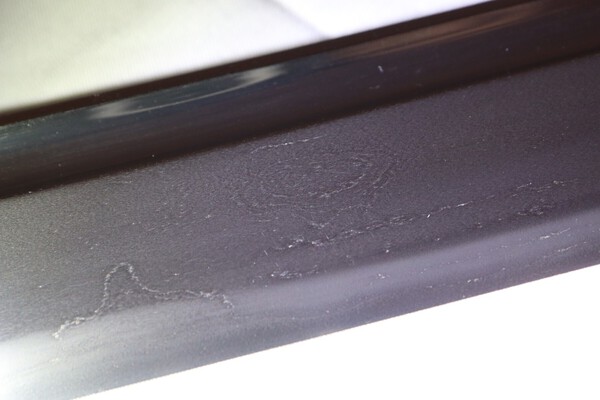


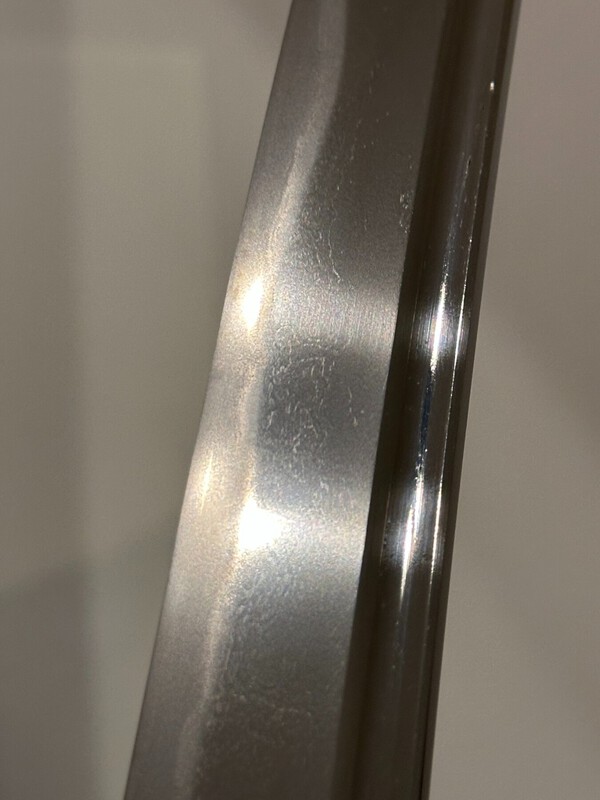
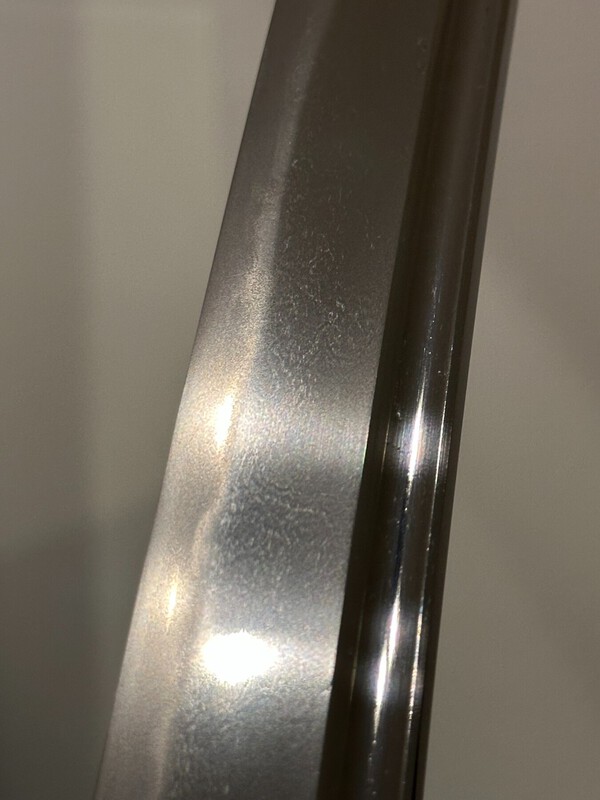
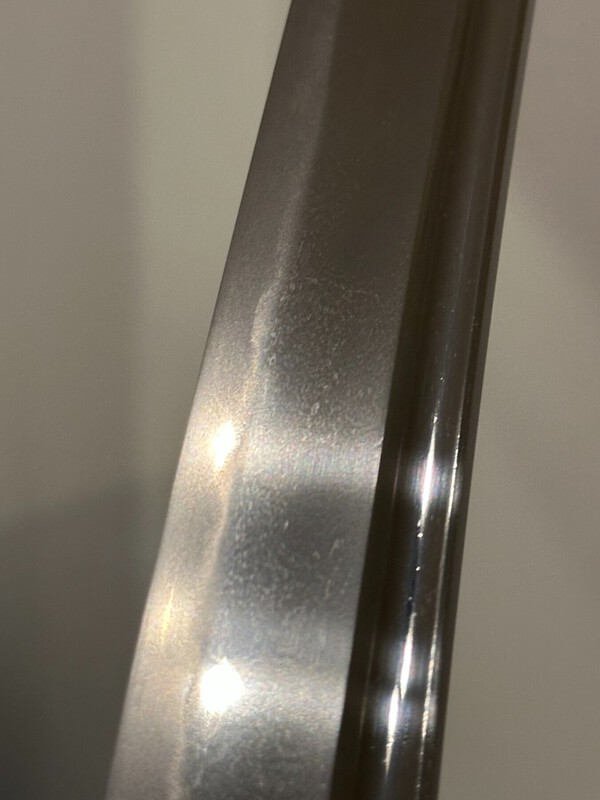


 1 point
 -
I'm working on compiling a list of the main koto swordsmithing schools, the province(s) they worked in, and the years they spanned for a project I hope to share with the NMB shortly which I think many will enjoy! I have a public Google Doc link which I'll share below that anybody can access and I've added a number of schools and probably have a lot of mistakes that I've made along the way. This is where I hope that NMB members can help out in helping me curate this list and refine it. I've probably missed a number of key smiths, dates, schools, etc. and I'm hoping that some collective reasoning can help me past the finish line. https://docs.google.com/spreadsheets/d/1NiQi34M8brY-21pM2N3z1emOqvEutC65F4godYsvJM0/edit?gid=0#gid=0 Many thanks in advance and I hope what I've got cooking up will be of use to many once I'm finished up! I've also added a page for Shinto schools but I haven't started on anything as I don't really know how they should be classified outside of the Gokaden (maybe just province?) but if you want to add them, feel free! The data will be used.1 point
-
Purchased a wonderful Fukuro Yari from Raymond Yan (highly recommend - also photo credit of most of the photos here, since he does a way better job than I), which included Koshirae. (side note, the shaft has a name applied to it, and is such a neat example of a probably period-appropriate mounting and name of possible owner affixed to the shaft, “Hirao” 平尾) The Mei shows a signature of: 於南紀 Oite Nanki 重国造之 Shigekuni Kore-wo-Tsukuru Based on the blade construction, it seems to match quite closely with Shigekuni’s other works in my amateur observations, though admittedly I cannot find any Yari examples of him, only Wakizashi (mostly suriage) and Katana. Do you think this is the same Nanki Shigekuni (https://nihonto.com/nanki-shigekuni-南紀重国/) that was retained by Tokugawa Ieyasu and later Yorinobu; a later generation or student of his; or possibly a gimei? Whatever the reality, I love this piece so much, and can’t wait to receive the Koshirae (the shaft had to be sent separately because it was quite long, ha) Thank you very much If more pictures are needed, please let me know! PS: The blade unfortunately has some old tarnish - am I ok to apply Tsubaki oil as I do my other Nihontō to those areas as well? Or should I treat the tarnished areas of the blade differently? Thank you!
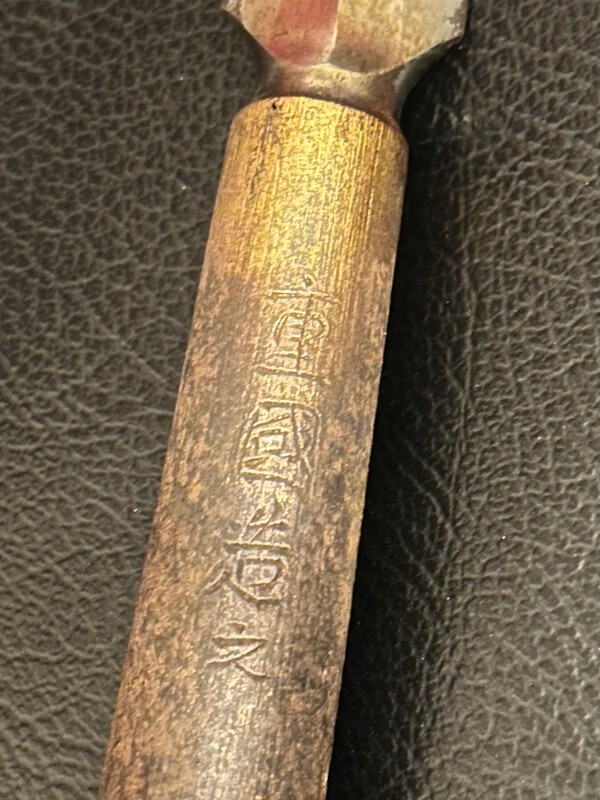
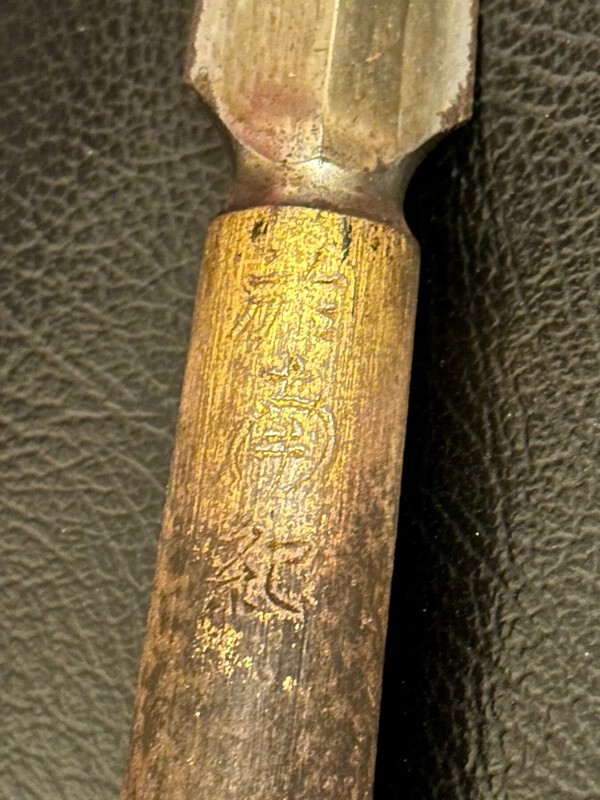
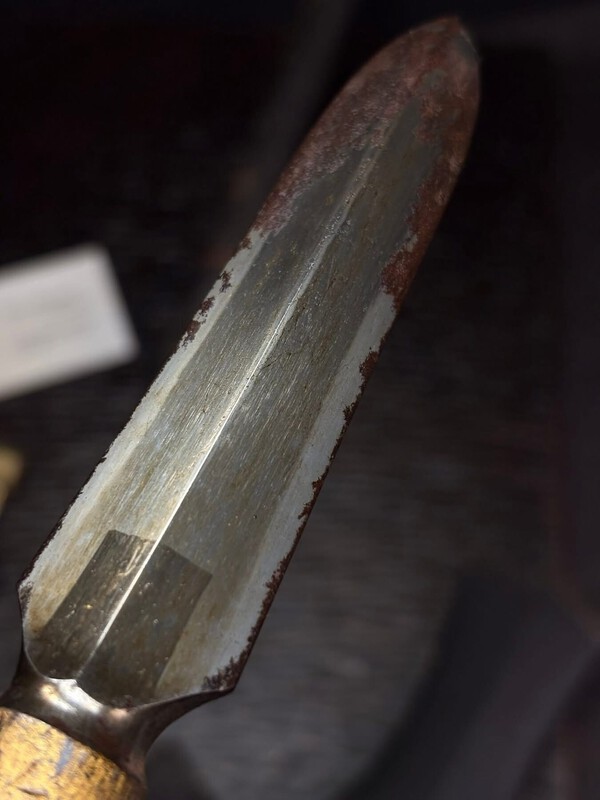
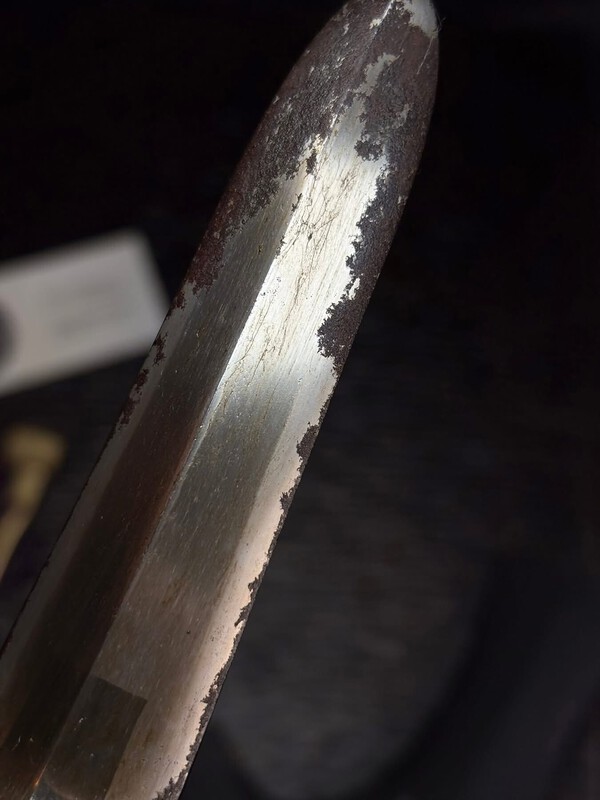
 1 point
 -
Hi Jean, Thank you for your response! Maybe patination was the wrong word, what I meant was that the nakago is dark not including the newer red rust from it's unfortunate past storage. Hada is very difficult to see even in person but I haven't had a sunny day here yet and I only received it yet. Hopefully the weather will be kind to me tomorrow. As far as value goes that does not matter to me, I buy the swords that I like and endevour to eventually restore every single one for preservations sake alone1 point
-
I don't see any Osaka on there. It looks like its possibly his seal #8 below, particularly the part in the red circle. The seal was in use c.1602-1607 (according to the site at the link below, from which I've snipped the photo of the seals). Many fakes in the world of Japanese antiques, so always best to keep your guard up. https://raisoku.com/5863
 1 point
 -
Hello Sam! Thank you for your answer! To be completely honest, those wouldn't be "bad news" at all. As you said, these do have much more of a sentimental value to me and my family than monetary or status. What matter to us IS their memory and their symbolism, not if they came from Japan, China or Italy. So don't worry about any potential frustrations the truth could cause, this won't be a problem! I am just very curious about the subject and getting knowledge on what these actually are. So, if you wouldn't mind, I would really apreciate to hear more about the reasons to your beliefs that these aren't Japanese and what would you guess those swords are!1 point
-
Hi Sam, I would agree with you there. Although unsigned, the blade to me doesn't give off any inclinations of being shortened, but there is some age there with the patination imo, and it has been polished possibly more than once with how much hamachi there isn't. I'd put my money on 1750 ish but don't know enough for any more info then that. Would love to hear opinions on school and smith from the many more knowledgeable people on this site!1 point
-
Perhaps the blade is older than the Satsuma Rebellion. My non-expert collectors guess; I would say no earlier than shinto period. The hamon, sugata, and nakago, give me a strong shinto to shinshinto impression. Other opinions may vary... Take mine with a grain of salt. -Sam1 point
-
@John C, you are absolutely right. It is slightly off-round so diemater varies from 14mm to 14.5mm1 point
-
Hello Sam. My name is Darcy. thanks for the information you gave me. is it disrespectful to remove the handle? My grand father took it from a Japanese fighter when the war ended in one of the pacific islands.1 point
-
Thanks, Jace! That is the mark of Echizen’ya Tazaki Shōten, one of the makers of these swords. Also, one of the few we actually know the name of. Most are unknowns.1 point
-
Ha, certainly, I’ll use rust instead! Regarding the care, I absolutely know a Togishi is the way to go for *removing* the rust - I just want to make sure I’m caring for the blade properly until/if I’m able to get it evaluated. My other Nihontō does not have active or inactive rust, so this is the first time I’m responsible for something that has it1 point
-
Maybe an agent such as Kelly Schmidt could help?1 point
-
Hello Uwe, Thank you for your remark, I understand your point. I have reproduced the photos as they appear in the catalogue for the collection, which is currently in progress. Due to the difficulty of obtaining images with minimal reflection, I took pictures from different angles, resulting in some optical distortion. Below are undistorted views of the boshi and the overall view of the blade. The overall view images on the left was photographed, while the two on the right were scanned. However, a certain distortion is evident here too. The white mark on the Boshi (left image) is a loose thread that was overlooked before the photograph. The Boshi photo at the bottom right is again taken from a side angle, distorted, but showing more details.
 1 point
 -
Thanks! This is the feedback I’m looking for! Also the document is open so anybody can add or remove rows and edit things as needed so if you see anything out of place, you are more than welcome to correct it.1 point
-
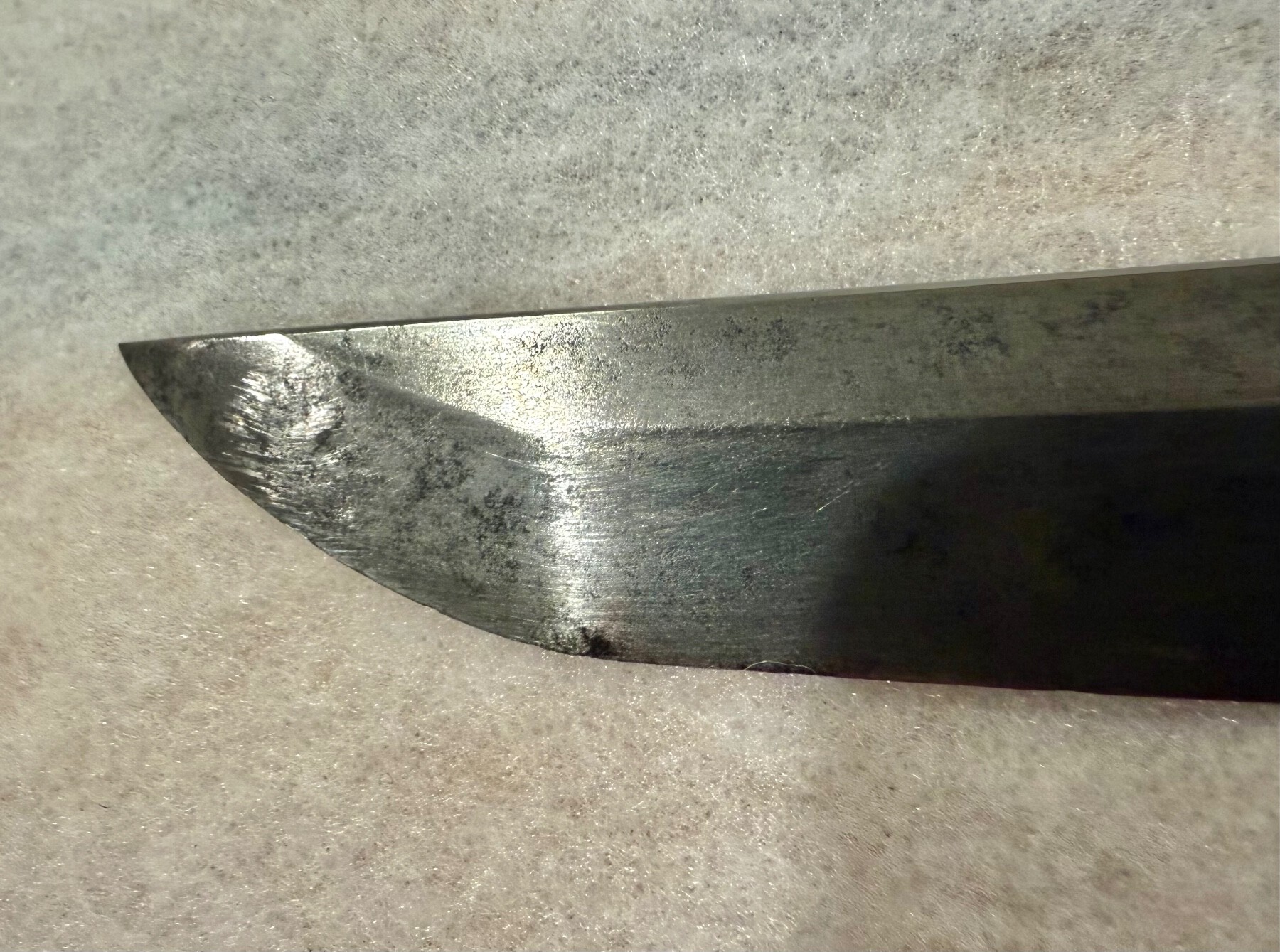
My father brought this sword from Japan after WW2. I am interested in getting it restored and am trying to get a better understanding of the level of restoration that would be appropriate.
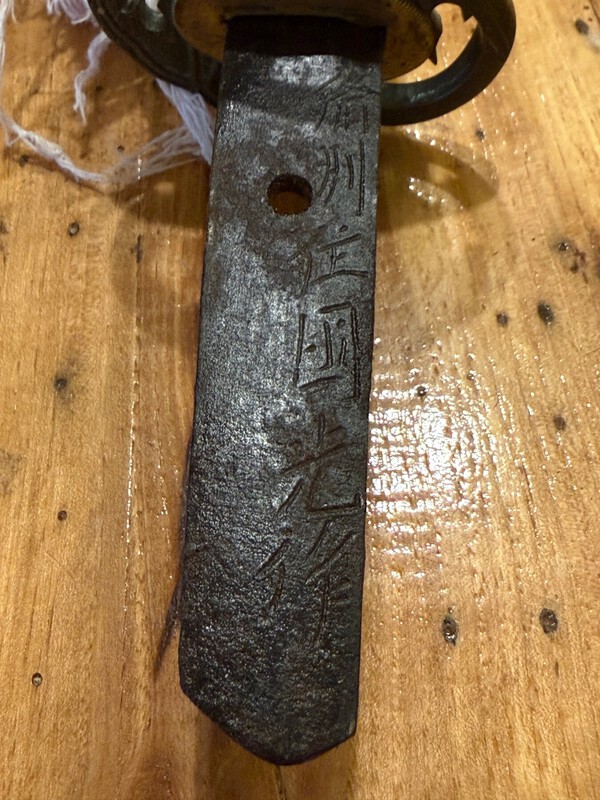

 1 point
 -
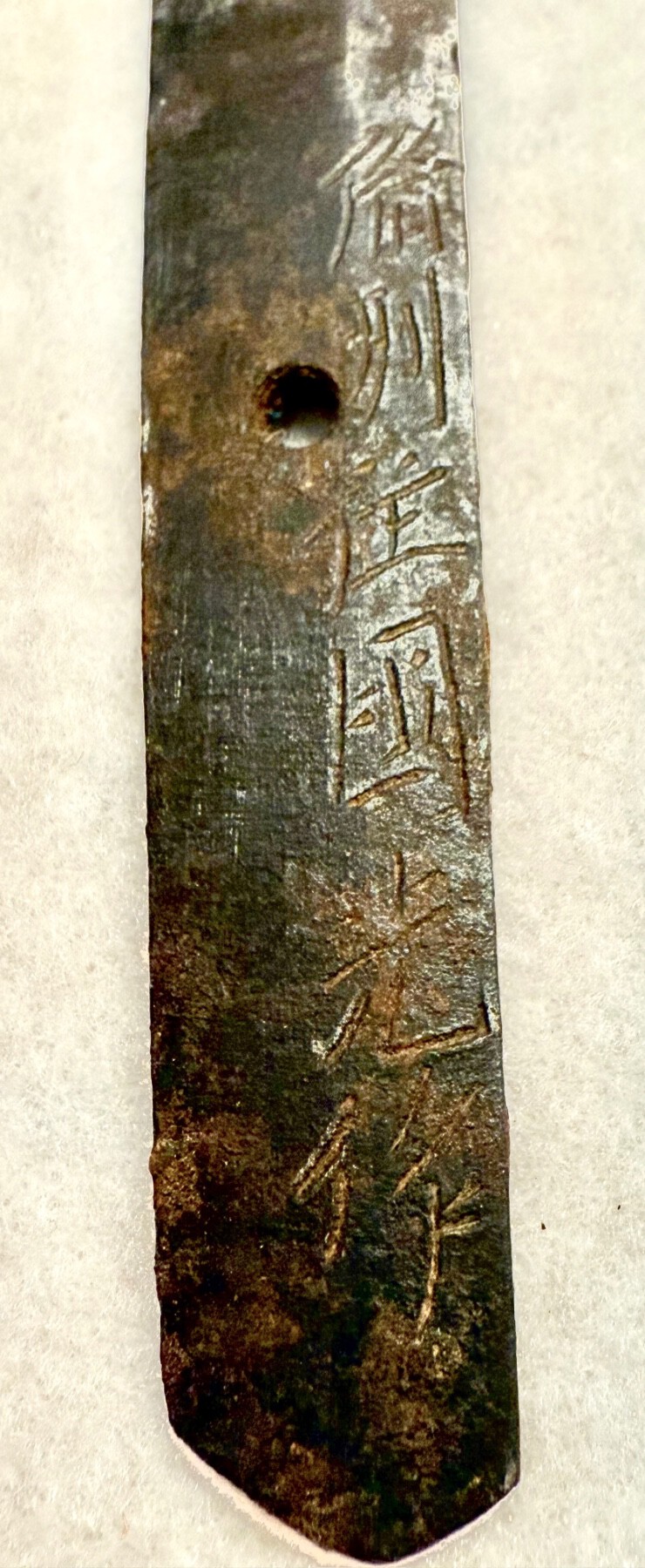
The mei appears to be: 備州住國光作 - Bishu ju Kunimitsu saku (made by the smith Kunimitsu in Bizen province).1 point
-
Yes, it's one of the few remaining examples of what folks in IT diplomatically refer to as "the Geocities era of web design." It's a historical artifact in itself.1 point
-
That is one of the references I’ve used as well as my books to create what I’ve gotten so far. It’s a great resource and I probably should give it another cycle through and add some schools I’ve no doubt missed.1 point
-
祐包 The one at the end of Edo and into the beginning of Meiji had a different kanji for Suke.1 point
-
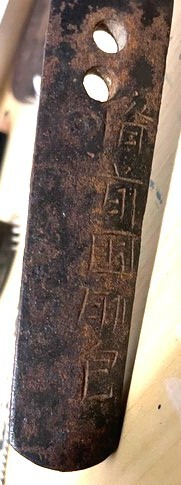
Jace, as per Moriyama san above probably is: 備前國助包 - Bizen no Kuni Sukekane Bizen is current Okayama. There were around 8 plus smiths of that name from around 1200 to late 1800's. Close up pic of sword hilt (nakago) without handle (tsuka) would be helpful
 1 point
 -
Just some very few infos about Kozori: 1
 1 point
 -
Don't like the "pointy" end to the nakago on the one...this is usually a sign of a fake. But we would need more pics of the tang and blade to tell for sure. Left one appears genuine and old, but we do need far better pics.1 point
-
Many Asian countries have zero weapon ownership tolerance and therefore have goveenment certified “experts" providing expertise and assigning status such as indigenous art, cultural property, cultural treasure etc.. Juyo and TJ are natural analogues of government rankings, which are also common in Asia. To the point that S ranked item has to have at least that many hotels next to museum housing it etc etc. Japanese system is probably not the most formal in the region by many metrics.1 point
-
Hard to tell from the photos, but at a glance, these appear to be Japanese made swords. Paired together as a 'daisho'. The longer one appears to be possibly WWII-made, just by the length and the shape of the nakago but it could also be older than that. I would say that you should take some more photos. Do NOT clean or attempt to 'improve' the blades without first reading the care information on this page: https://www.militaria.co.za/nmb/faq/1 point
-
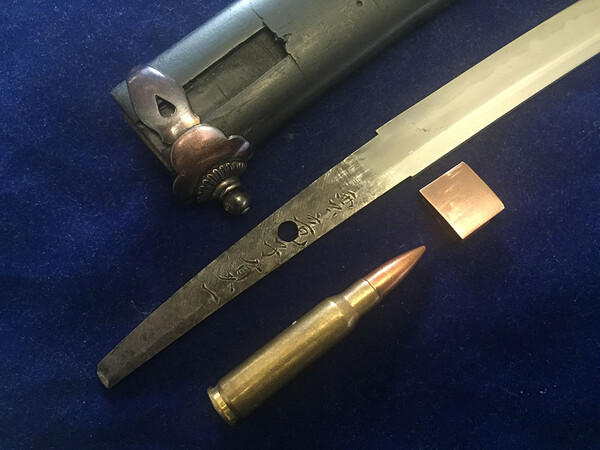
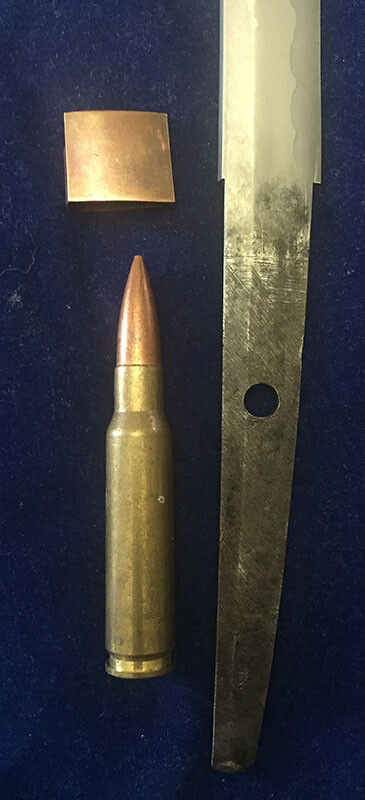
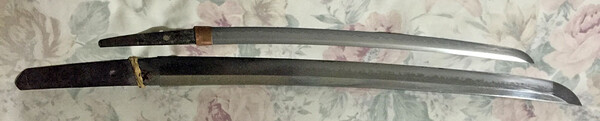
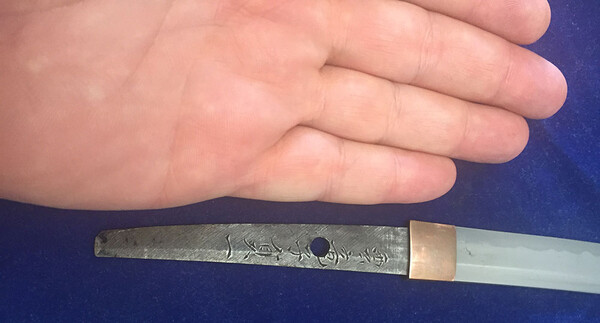
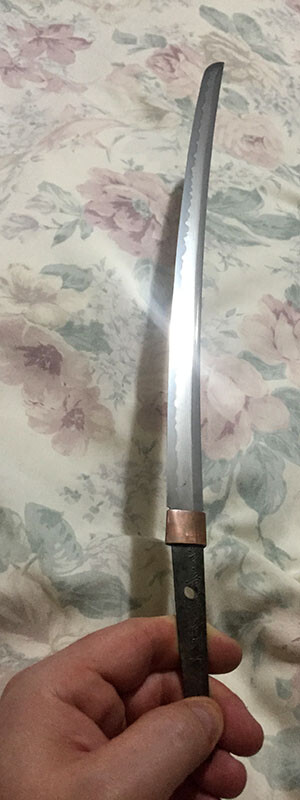
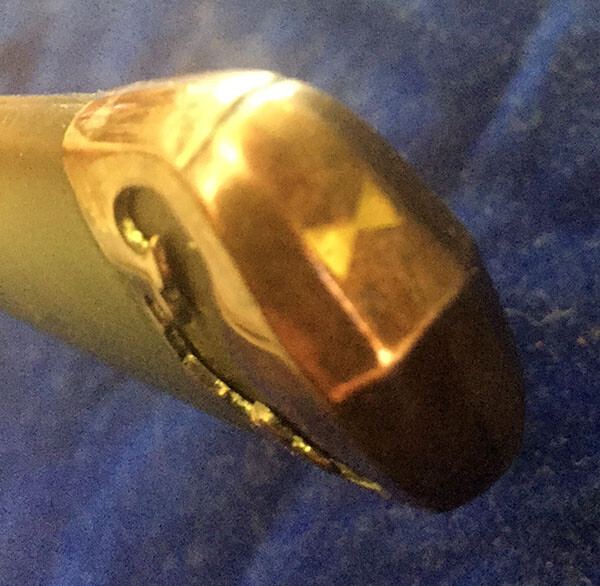
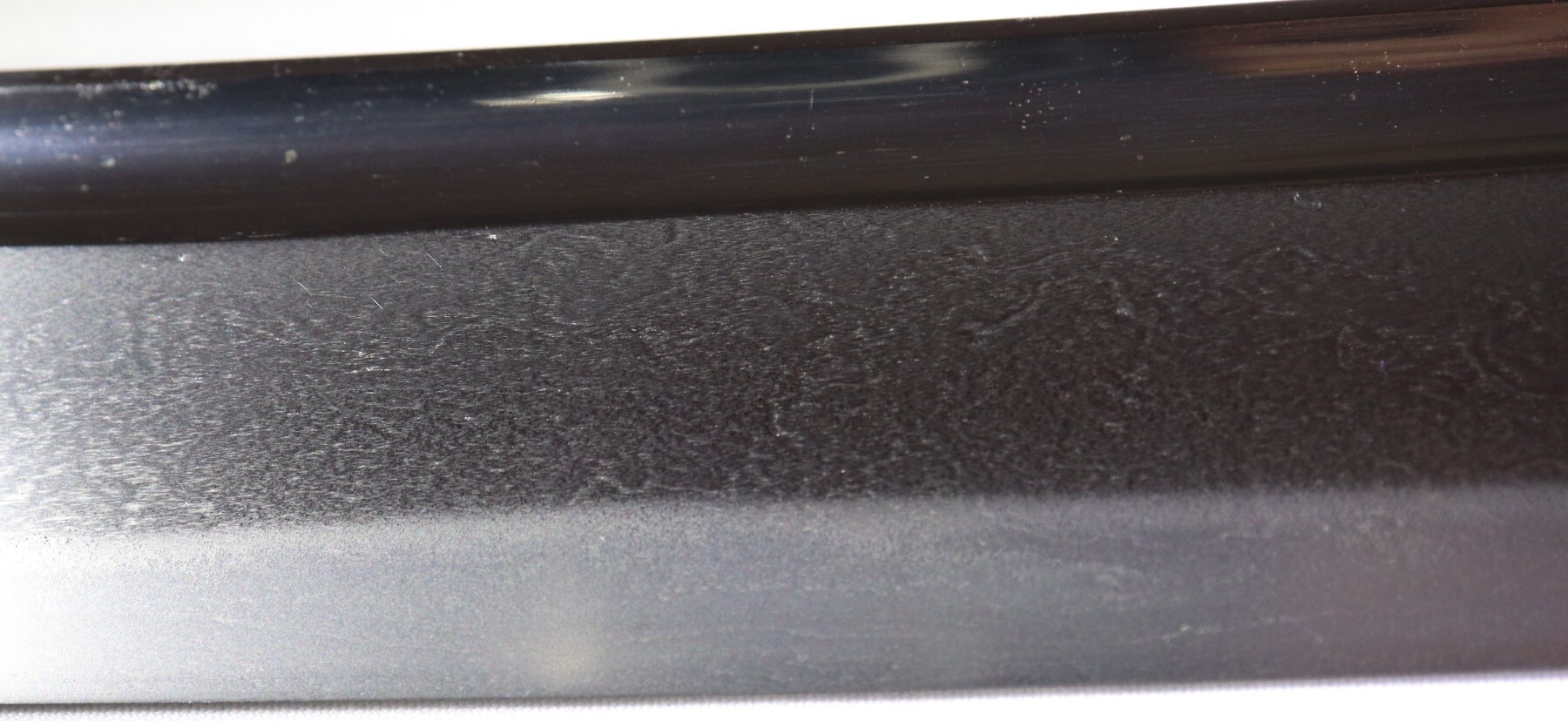
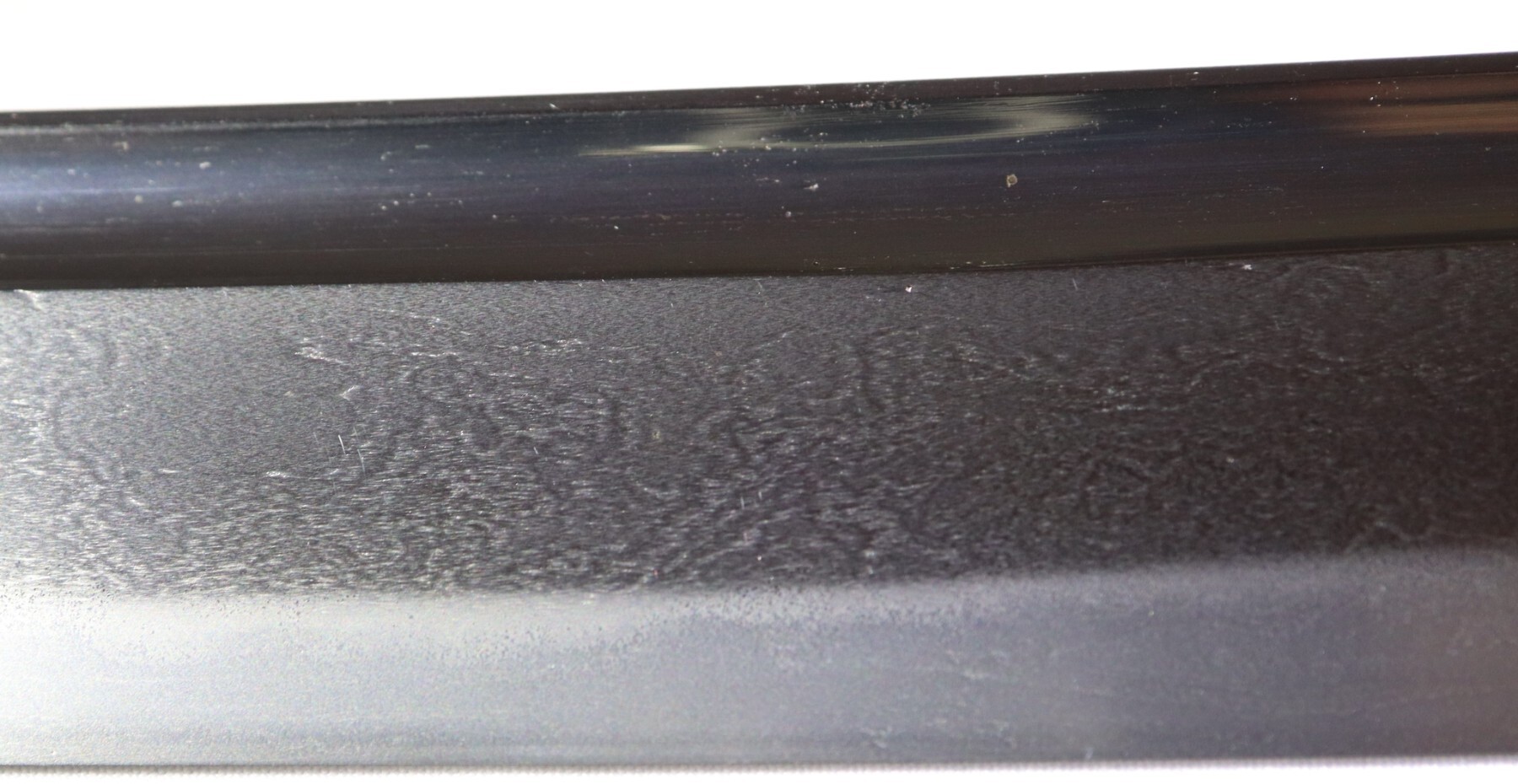
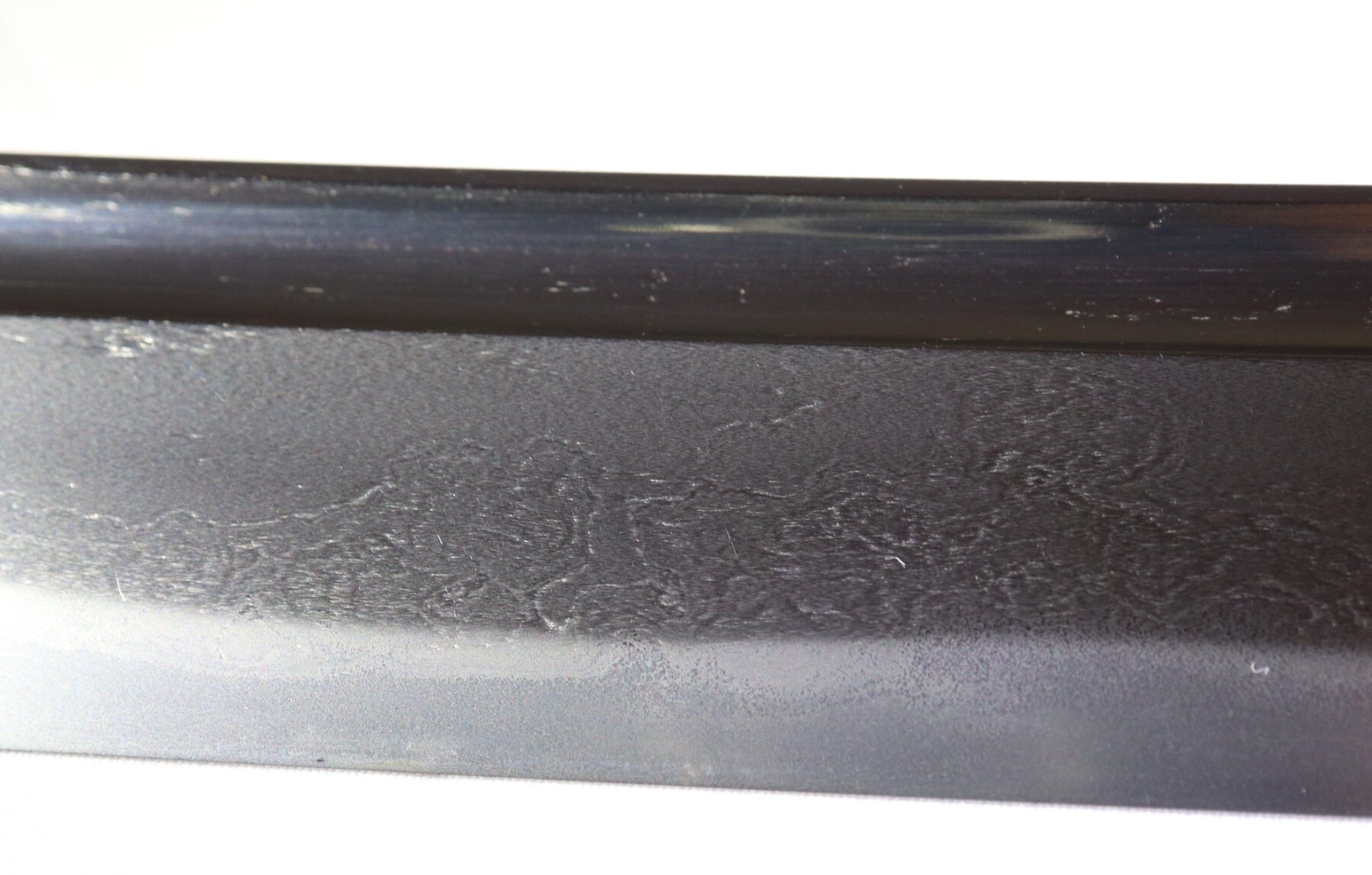
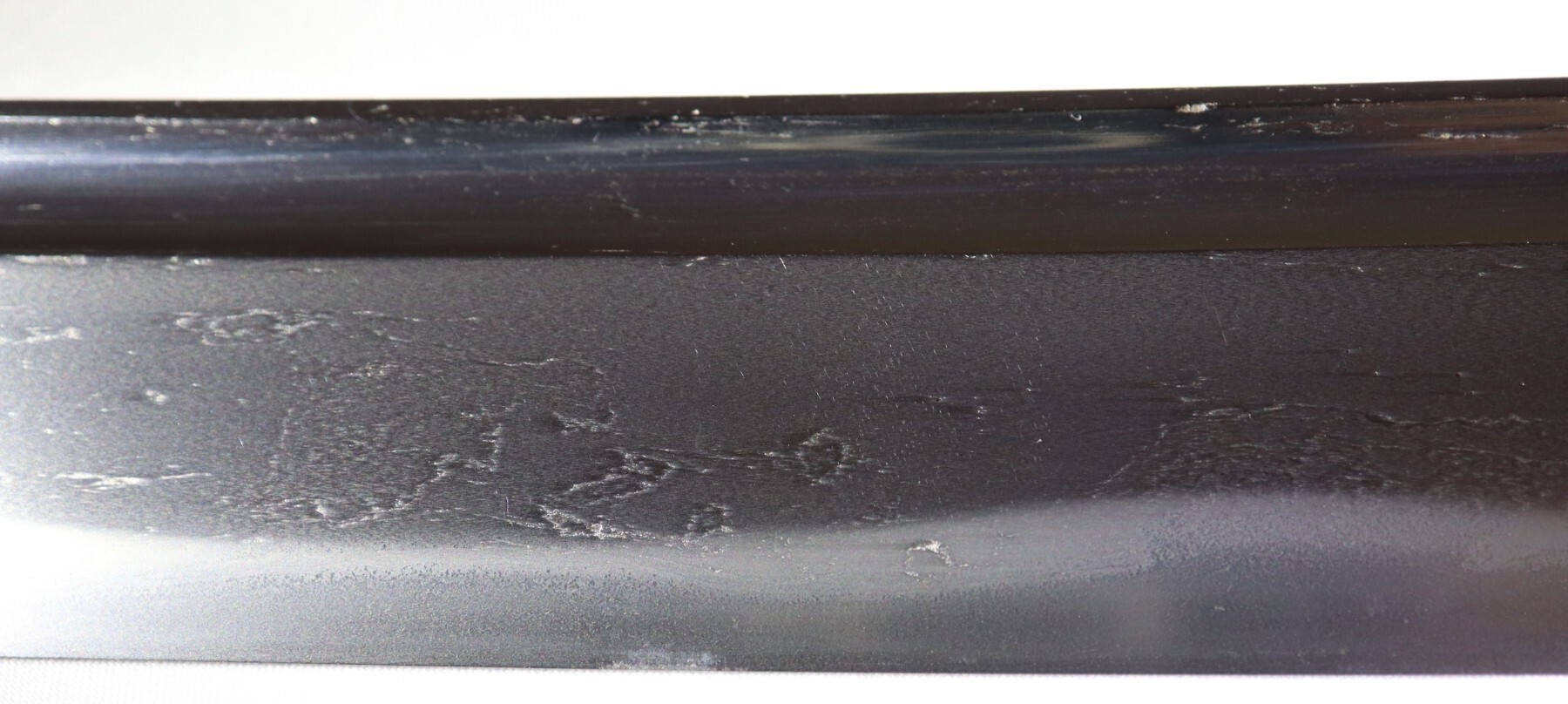
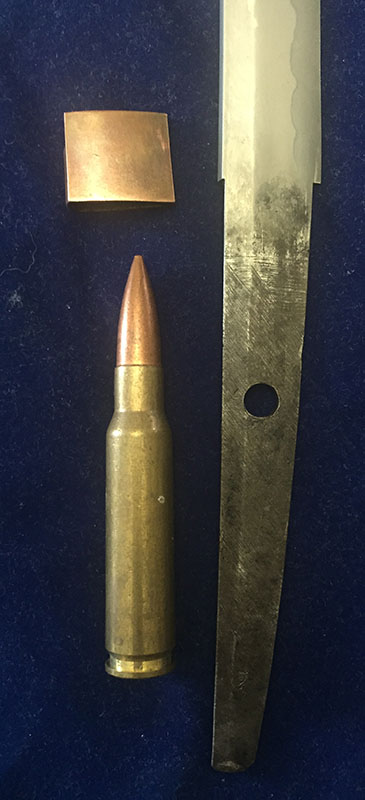
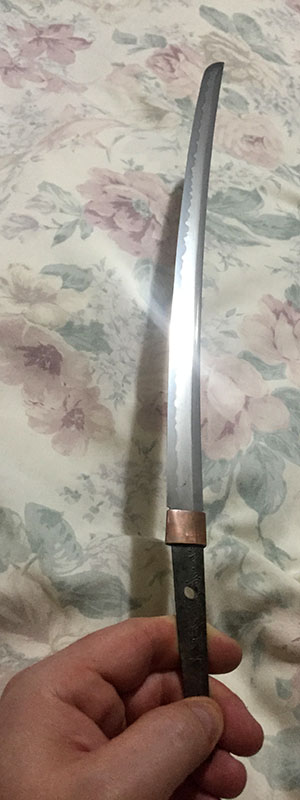
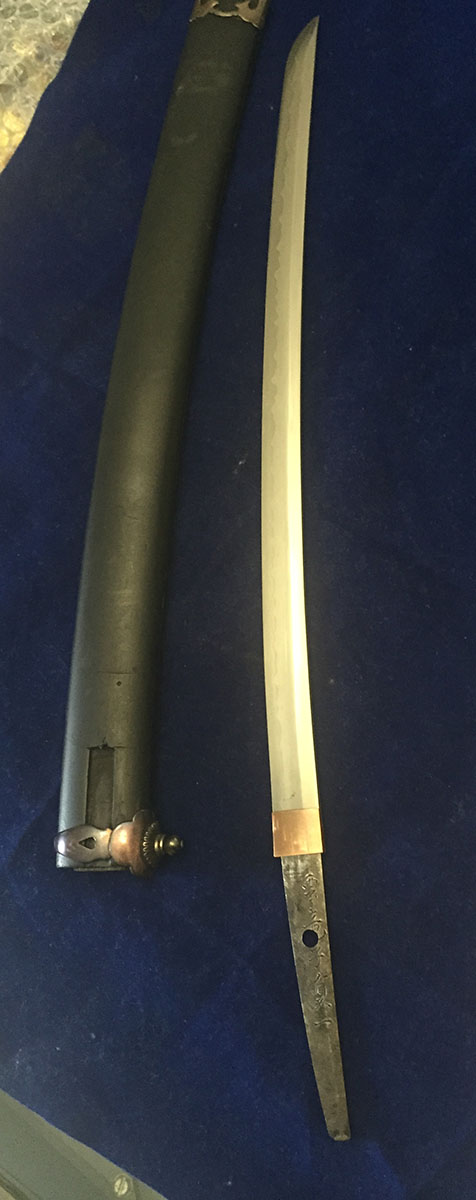
Quite a few threads on these, with varying opinions. Some say Boy's Day. Others say that those swords were not really for the festrival, and they are actually made for the birth of a child. Then others say that they are child's swords made for young Samurai. And some say they are made for Bunraku plays...where some of the puppets are high end, and very well made. Some of the swords are crude, most in fact. But it appears as though higher end miniatures do exist, and I recently came across one that is now mine after some negotiation. This one was saved from destruction many years ago by a knifemaker here. It appears as though the blade had been powder coated black when he got it, and he stripped the coating and etched the hamon, but luckily he was clever enough not to hit it with any power tools, or ruin the lines, and the etching hasn't caused any damage..very lucky. The sword is restorable. I was amazed when I got it. The pics made it look like a small wakizashi. But it is perfectly to scale, and tiny. Really cute. Every detail is perfectly done. Because of the acid etch, I can't really tell if the hamon is nie or nioi, but under magnification I think I see some nie. And I won't know if it has hada until I can get it to a polisher. But I hold some hope that it does. It appears to be signed Sadakazu. Of course that is seriously wishful thinking. But the signature is less than half normal size, the yasurime are perfectly done, and I do have a 5% hope it was made for some wealthy family. It only has a saya, but the level of technique there is also impressive. Taking off the single hanger and the ishizuki, the saya was able to come apart, revealing an outer and inner layer of wood, with touches like horizontal striations inside the top of the saya where the (TINY) habaki sits. I also later saw some symbols on the fittings, that are repeated numerous times in gold and silver...2 triangles facing each other. Not sure if that is a mon or what, but they indicate higher class to me. This is a tiny sword. Nagasa is only 343mm, and at the machi it is only 8mm across (mihaba) and 4mm thick (kasane) So there you have it. The pics look like they are distorted by perspective etc, but that's actually how big it is . I don't have giant hands Think I want to get this one restored and see how it is made, and put it into shirasaya. Not sure I'll find fittings for it...not with those dimensions, and don't want to get them modern made. I wonder how it was mounted before? The single ashi might have had a second one...but won't move lower down currently. I assumed it would have been mounted tachi style, but it's signed katana mei. Lot of effort in this one, and I am really enjoying it. So..comments on this style of sword in general? (.308 cartridge for scale, since it was handy at the time Also pictured next to an average out of polish wakizashi with regular proportions)
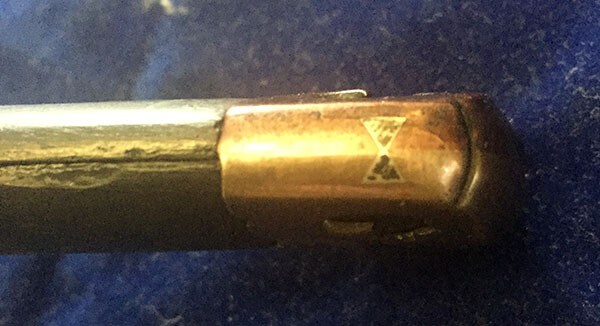
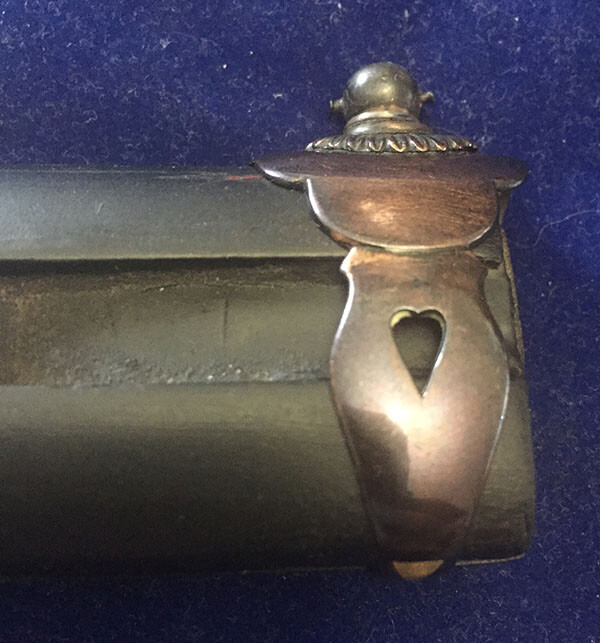
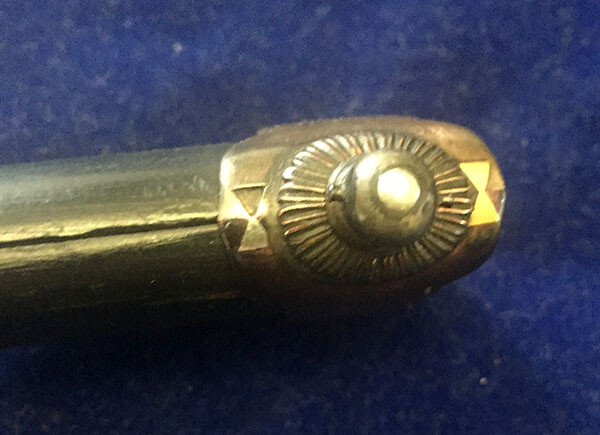
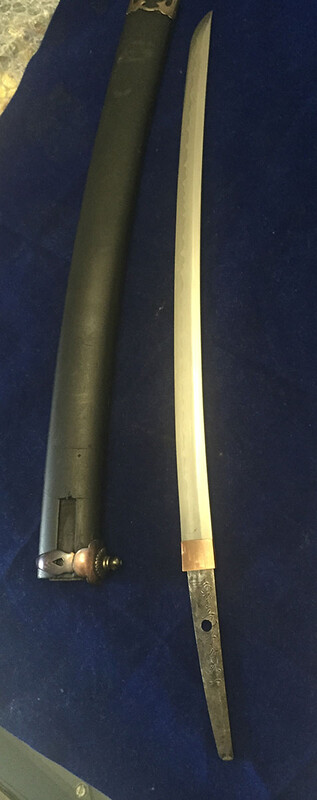
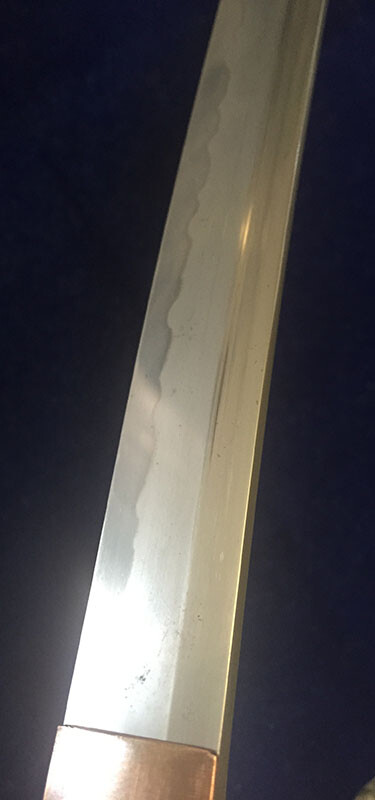
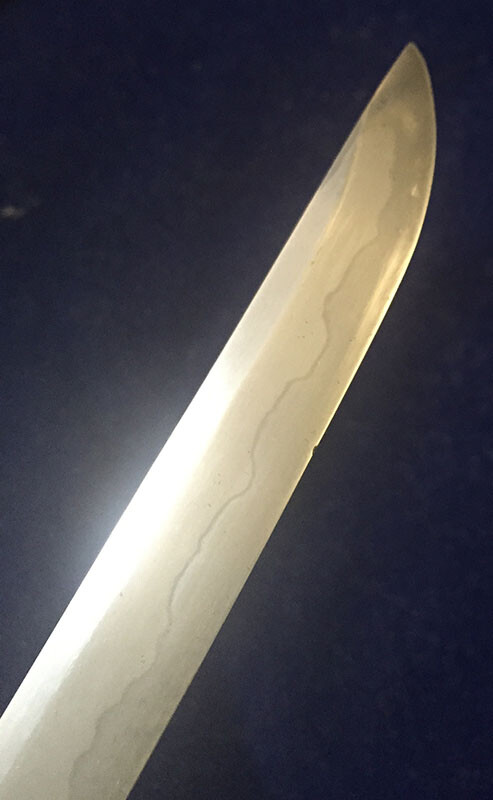
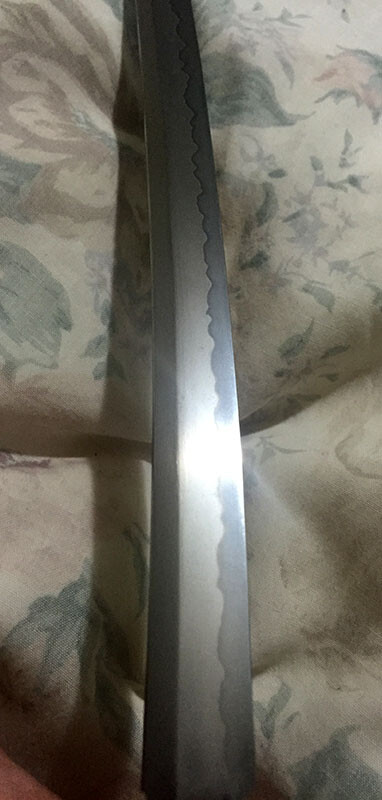 1 point
 -
From the same site and off this particular topic...but interesting anyways. https://japan-forward.com/how-japanese-sword-making-changed-a-british-mans-life/ @Bugyotsuji Did you know there was a Brit working in the Osafune museum?1 point
-
It states that this young man is "the first non-Japanese swordsmith". That was Keith Nobuhira Austin. Keith Nobuhira Austin | NCJSC1 point
-
My impression from admittedly shallow experience is that shinaé manifest across, not along, the blade.1 point
-
Jens, Here is Akira-san's answer to your original questions. Also note, the Google translation incorrectly stated "officers working in government offices...". It said NCOs, which now is perfectly understandable. "However, the gist of it is that sergeant majors in artillery units other than those in Heavy Field Artillery Regiments 7 & 8, Antiaircraft Artillery and Heavy Artillery units carried the Type 32 Otsu sword and the Type 14 pistol, whereas those in the Heavy Field Artillery Regiments 7 & 8 and Antiaircraft Artillery wore the Type 30 Bayonet and the Type 14 pistol while Sergeant Majors in Heavy Artillery Units only wore the Type 32 Otsu Sword. I believe the reason sergeant majors in Heavy Field Artillery Regiments 7 & 8 and Antiaircraft Artillery wore the bayonet instead of the sword was probably because these units were motorized units which used tractors to pull their artillery pieces. Sergeants and below in artillery units except mounted artillery just carried the Type 30 bayonet while NCOs in Mounted Artillery regiments carried the Type 14 pistol in addition to the bayonet. Sergeant Majors in all other units except Transportation, Military Police and Motor Transport School carried just the Type 32 Otsu sword, while the excluded units carried in addition to the sword, also the Type 14 pistol. Sergeants and below in Transportation units also carried the Type 32 Otsu sword in addition to the Type 38 Carbine. Note has to be taken that in transportation units there used to also be uniformed coolies designated Transportation Special Duty Soldiers who were only issued the bayonet. Interestingly, of the pioneer branch units, sergeants and below in sapper units carried the Type 38 rifle and Type 30 bayonet while Railroad Units and Communication Troops which also belonged to the Pioneer Troops carried the type 30 Carbine. As for military policemen, all ranks (the lowest rank in the Military Police was superior private, who, unlike enlisted men in other branches except musicians, held the position of a government employee) carried the Type 32 Otsu Sword. In addition, it is stated in the notes that those military policemen stationed in Korea, Taiwan and Kwangtung be also issued the Type 38 carbine in addition to the Type 32 Otsu Sword and Type 14 pistol. I think the portion Bruce-san refers to in his post is Note 2 on the chart's margin which states that NCOs attached to 官衙 government offices, headquarters, materiel depots, etc. were to carry the Type 32 sword. The higher echelons in the army such as the Army Ministry, Army General Staff and the various administrative offices in the army were categorized as government offices. I forgot to mention in my previous post but on note 7 of the chart it is stated that the equipment of students 生徒 in the military academy is to be the same as enlisted men in the infantry, i.e., Type 30 bayonet and Type 38 rifle. Students in the first 2 years of the Military Academy prior to service in units were referred to as “students”, 生徒 whereas once they returned after having served for 6 months in units were referred to as “candidates”, 候補生. This tradition continued after the first 2 years was spun off as the Army Officer Preliminary School, 陸軍予科士官学校 dispelling the theory that the sword with the mei 予士63 in this thread was issued to students in the Army Officers Preliminary School: Mei: "Cadet 63"?"1 point
-
That's a fascinating bit of information! We have Type 95 gunto made by that company. Now we know who founded it.1 point
-
I am starting a series of videos on my channel where I talk about the process of translating Japanese sword inscriptions and the tools available to facilitate this process. https://www.instagram.com/reel/CnYKv6oLNiQ/?igshid=OGQ2MjdiOTE=1 point
-
@gun addict's thread Gimei Minatogawa generated some discussion, the outcome of which was the reminder that the best way to spot a counterfeit is to study the original. With that in mind, I like to begin collecting, here, all the Minatogawa gunto, pictorially, we can find. It would probably be useful to begin with a brief summary of what we know about the operation and the smiths involved. There is already a few good facts on the thread Minatogawa Shrine Swords, posted by @Ed. Dawson quotes Herman Wallinga in stating that there could have been no more than 3,900 of these made during the war. On Ed's thread, @David Flynn and @vajo list the following 6 smiths (which aligns with Dawson's claim that there were 6 smiths): Masatada; Masataka; Masaaki; Masanao, Masakiyo, and Michimasa For those of us who don't have extensive reference material, maybe someone could give a brief executive summary about the operation, smiths, and/or gunto. @IJASWORDS - want to volunteer? After that, let's start posting those photos! (there is a really good one on Ed's thread that I will transfer over after we get the education established).1 point


.thumb.png.4c5df79fec171b2dc4a23af38e280a4d.png)


































This leaderboard is set to Johannesburg/GMT+02:00