Matsunoki
-
Posts
3,764 -
Joined
-
Last visited
-
Days Won
70
Content Type
Profiles
Forums
Events
Store
Downloads
Gallery
Everything posted by Matsunoki
-
…..but as Mark said above….. it’s best to leave the blade in the shirasaya and the tsunagi in the koshirae…..that’s the way it’s safest and it’s the way it’s meant to be.
-
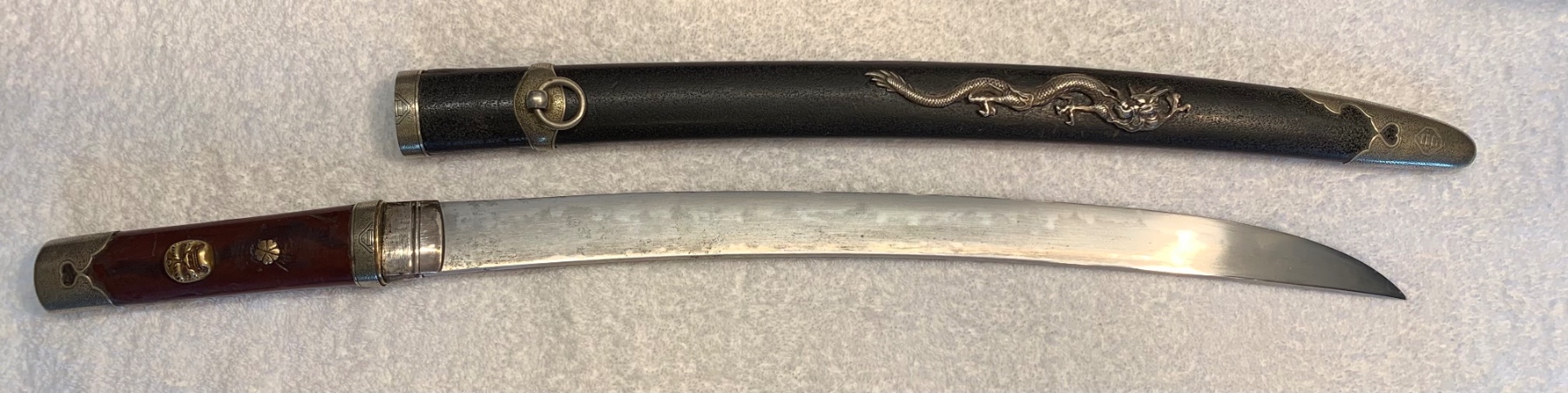
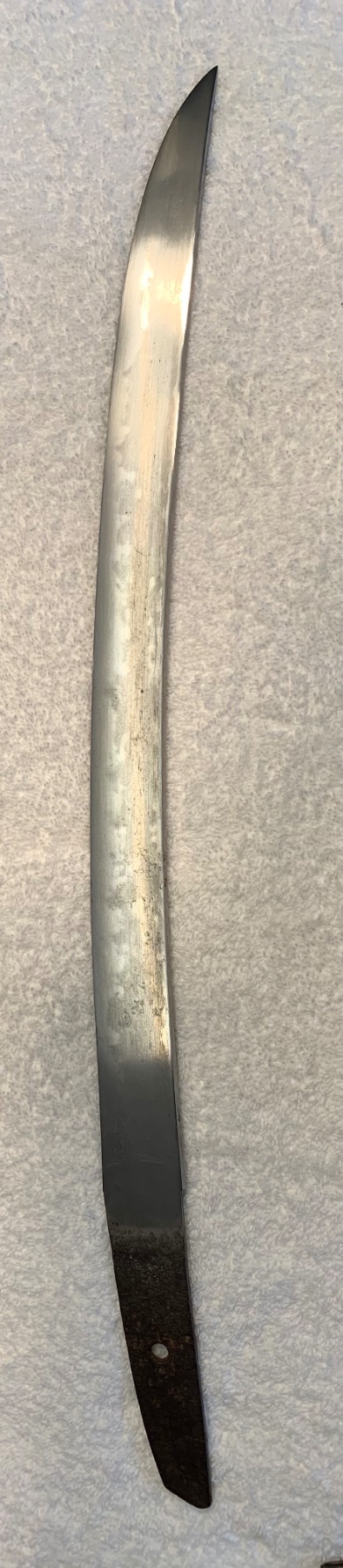
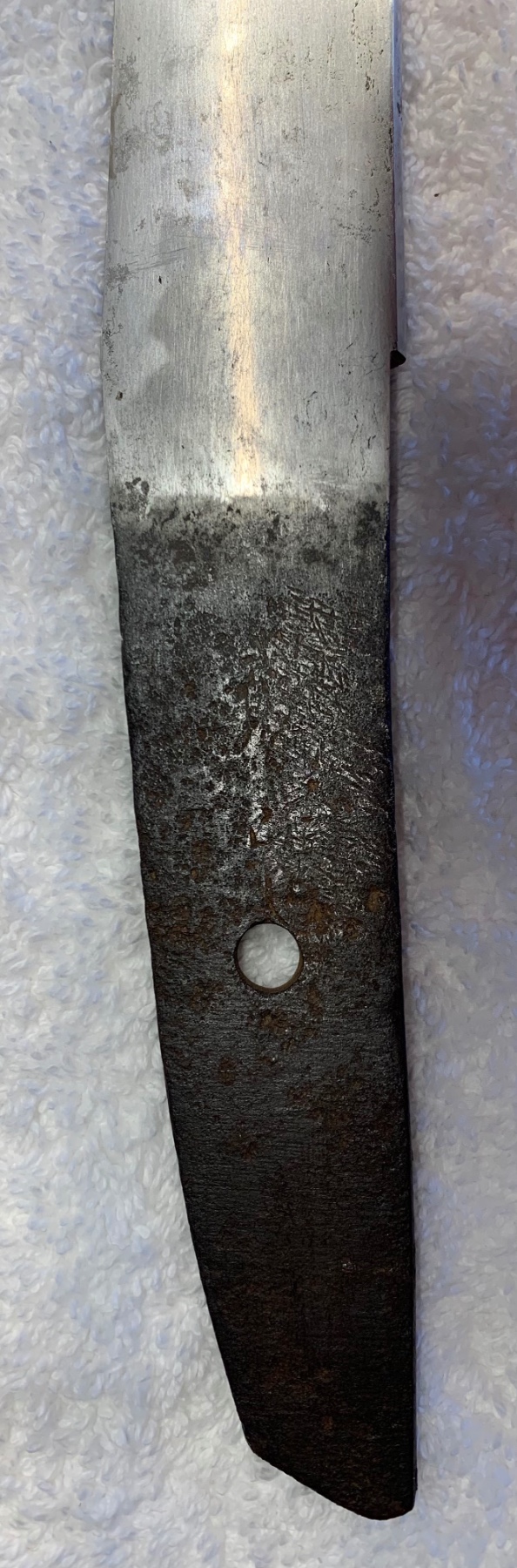
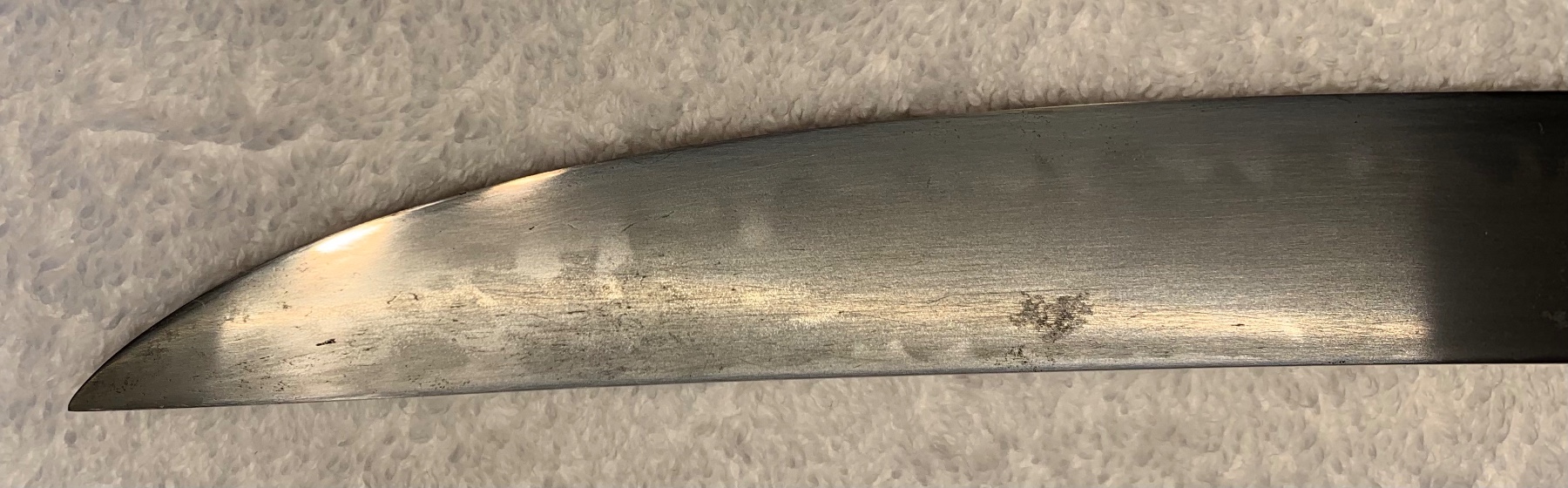
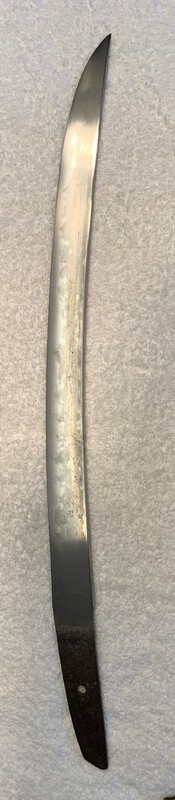
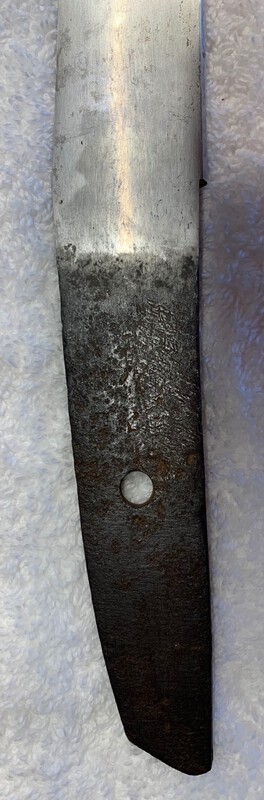
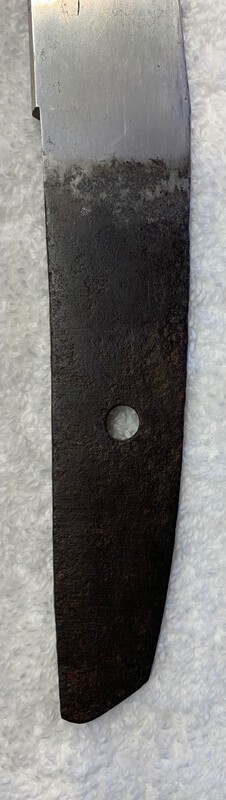
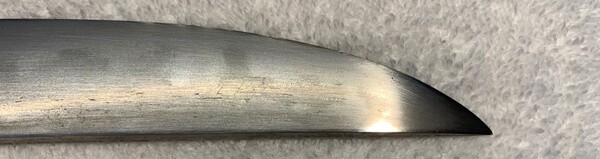
Hello from the UK I am showing this sword hoping for some help figuring out what it might be. All opinions welcome. I should at least venture an opinion….Muromachi Mino den but maybe Soshu?? It is truly a very wild blade but quite reduced from many polishes (no hamachi, greatly reduced kasane and motohaba). There is full length nie mune yaki, the mune is Mitsumune, the nie based hamon is not quite hitatsura (in my opinion) but there are tobiyaki and copious ji-nie clouds away from the hamon everywhere. Hada is not visible in this condition….typical “as found condition” for the UK….sorry! Nakago is ubu but it has obviously had a Mei removed…odds on it was Masamune! The koshirae is silver mounted with Inaba? Kamon (but at right angles to usual?) If you tap the images you should get higher resolution. Nagasa 42cm Motohaba 3.1cm remains Many thanks. All the best. Colin



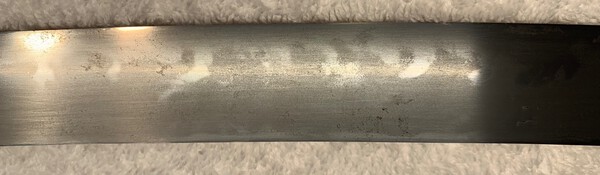

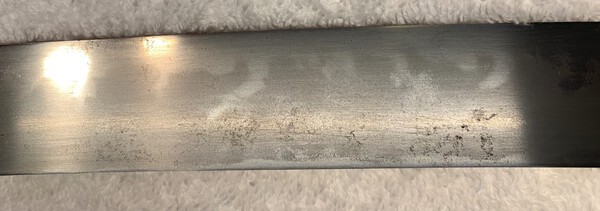


-
You could also use the blade of a plane as a scraper on the tsunagi if the plane itself is too unwieldy…..or buy a custom scraper…..but as above….don’t sand it. Go with the grain, not against it. Cutting the tip won’t help if the “jam” is at the habaki end….it will just spoil the aesthetics of the tsunagi. To my eyes it is the depth of the tsunagi blade that looks a bit bigger and the kissaki looks different. Gentle approach….little at a time. You can sometimes “feel” where the jam occurs and even hear it….seriously!
-
The best Itomaki No Tachi koshirae that I’ve ever seen. Goodness knows what the blade was. Thanks for showing it. Is there a story behind it? Where is it now? (Don’t all kitchens have these things in them?🙂)
-
Gaikotsu Katana? Help, info needed
Matsunoki replied to Bridges's topic in General Nihonto Related Discussion
Hi Noah Bit more info on this thread- -
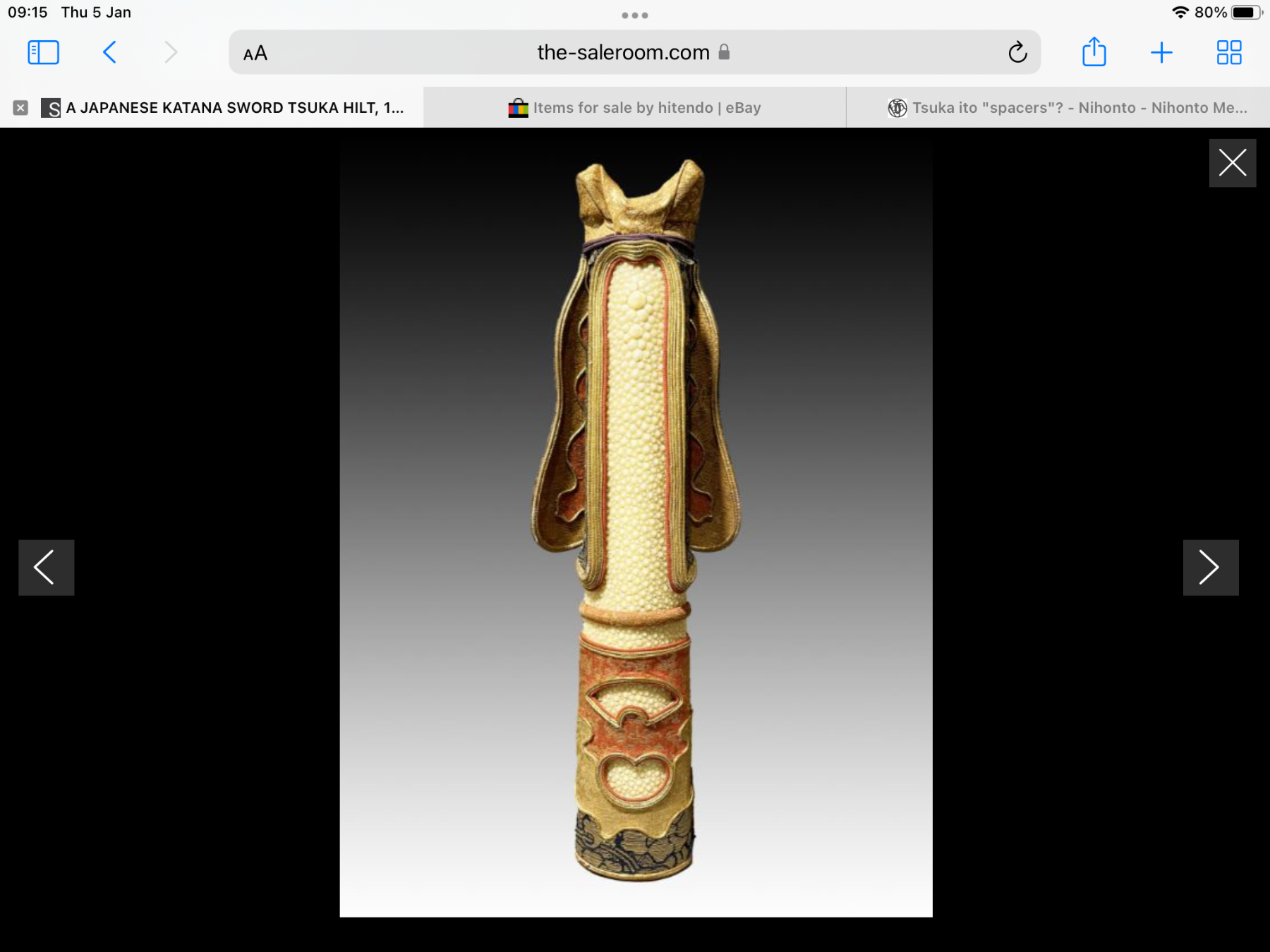
Although impressive at first glance, this is a Meiji period piece made for sale to the Gaijin present in Japan who obviously did not have the expertise at that time to differentiate between “tourist piece” and serious metalwork. The details on the saya and tsuka are usually pressed from a brass type alloy and soldered on and then subsequently very cleverly patinated to resemble true mixed metal inlays. The saya and tsuka are often given a thin wash of gilt or silver plate. The finished article can look very flashy if in good condition but the patination and gilding is usually so thin it wears off easily. The overall quality can be judged by looking at the horimono of a dragon. They are “in the same camp” as the pressed shiremono kozuka. They represent an interesting period when Westerners were keen to buy “anything” and the artisans of the time were keen to satisfy that demand as economically as possible. Blades are sometimes forged but often just a piece of unhardened steel with a hadori hamon polished on for effect. Sometimes a better quality blade is used which often has a serious fault somewhere.
-
Hi Bjorn I posted this actual Tachi on the Forum a while ago…..how did you miss it🙂🙂🙂🙂?? Included some images showing that type worn and some research done by others. It’s all in this link- Best wishes. Colin
-
Thanks for the unnecessary sad face Franco but I’m not going mad. I think the OP has edited his original post to change “iron” to “copper alloy”See his reply……
-
The Connoisseur's Book of Japanese Swords
Matsunoki replied to DTM72's topic in General Nihonto Related Discussion
Dan, many thanks indeed. All the best. Colin -
Can you show us an image of the blade and the tsunagi aligned next to one another? Do they look the same…..same dimensions?
-
If the kozuka is made from iron (and many were) the magnet will stick. If not, it will not. I suggested you try the magnet as you thought it was made from iron and it’s an easy way to tell. Kozuka are also made from many varying alloys….shakudo (usually glossy black in colour often with nanako plates), shibuichi (colour varies hugely from pale grey to dark olive green), sentoku (a brassy colour), silver, even gold in rare cases…….and other alloys that the experts on metallurgy on this forum can tell you about. Just put “kozuka” into the search facility on this forum and have a look around.
-
I agree, the placement is different but the presence of far more “metalwork” may have influenced that. I have an Itomaki No Tachi kirimon Tachi with similar “out of alignment” placement and it also has the far more complex metalwork on the saya (but not quite the same quality!)….top one in this quick image. Bottom line, as with nearly all things Nihonto, we will never be certain……it’s all a matter of opinion
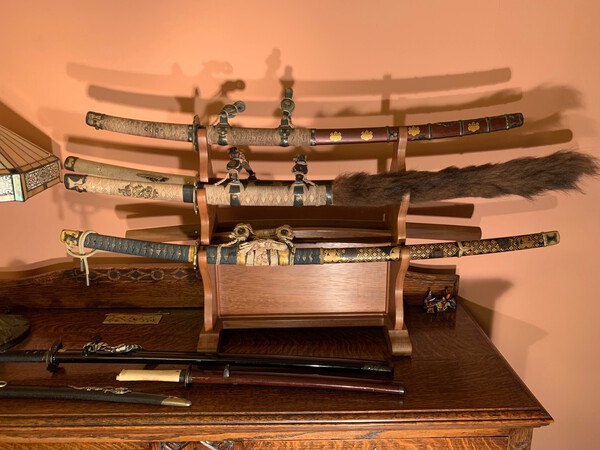
- 24 replies
-
- 10
-

-

-
Hi Okan Firstly….I’m not looking to pick a fight……there are too many going on on this Forum already!!🙂 However I cannot agree. The mon on this saya are superbly done in what looks like two colour gold lacquer (quite unusual for kirimon) with a bit of an eccentric touch by slightly increased curving of the flower shoots. Also the leaves have delicate detailing. The placement may look a odd but is dictated by the complex style of the metalwork ……far more complex than on the more standard koshirae you post. On the one you post we can’t really see the individual quality of the mon. My money is on “totally original”. Best wishes. Colin
-
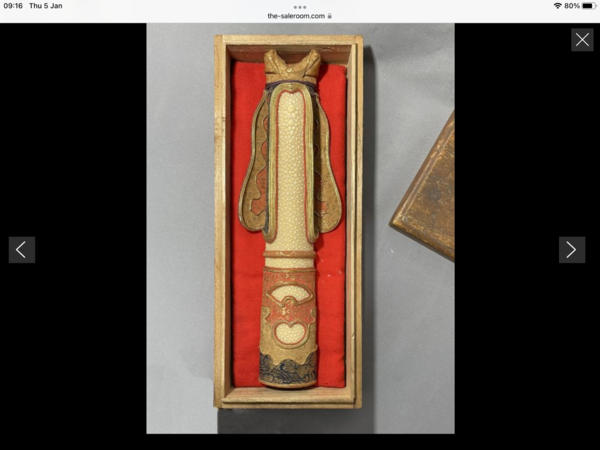
These images give us a good idea of just how “valued” good same was. This example was exquisitely mounted for presentation, not for actual use. Very very rare to find one of these.

-
Sword by Ikkansai Yoshihiro
Matsunoki replied to Swords's topic in General Nihonto Related Discussion
Steve…..I am (I think) a bit of an exception in that I am quite comfortable owning swords that are not in the finest polish! So no, I’m not getting it polished. There are a few reasons for this. I’m not keen on sending swords overseas…delays…losses…thefts…border force incompetence etc etc. I prefer to avoid those stresses! I value complete untouched pieces ie with original koshirae where possible…..as if the last Samurai owner had just handed it over. Also sadly we have the severe shortage of UK polishers. I am on the waiting list for one that has been highly recommended….and that’s what I’m doing…waiting. All in know about the smith is in the link. You guys in the USA are so lucky to have access to craftsmen that you do! Best.Colin. -
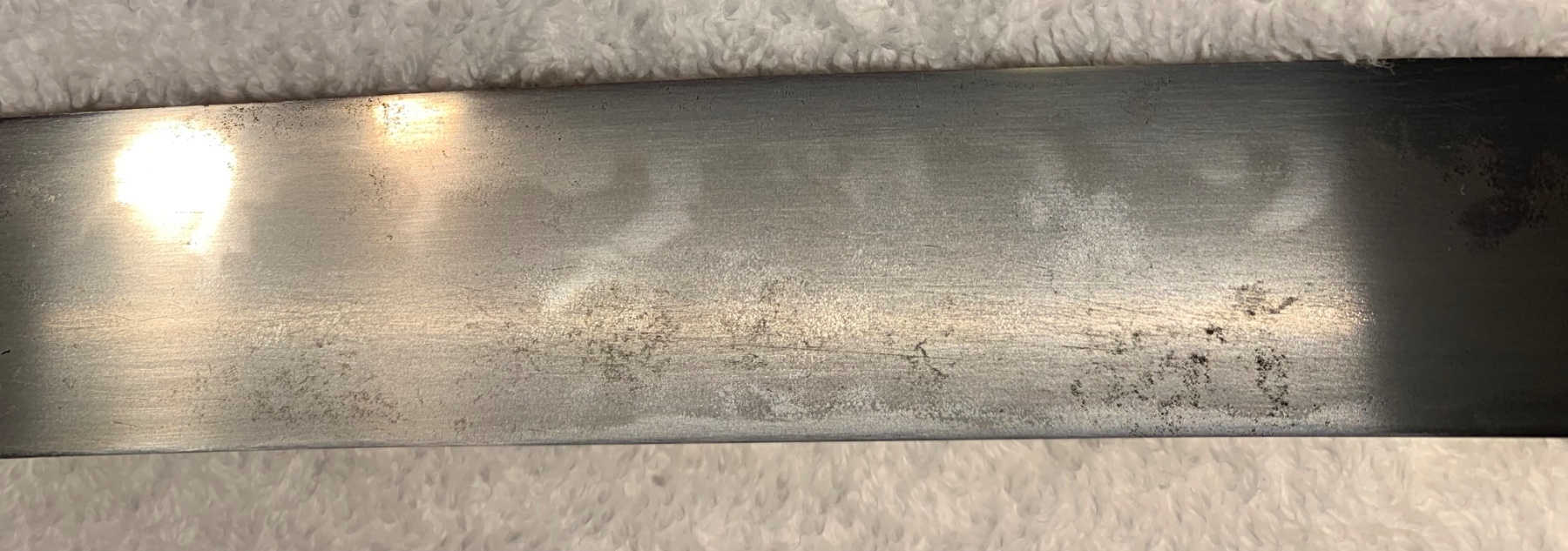
Anyone else think maybe acid?….especially on hamon?
-
Hi Piers oops….I thought they were but upon very close inspection they might be “normal” dragons twined around/through a tree!!! Must remember to put my specs on first!


-
My small contribution to this topic-

-
Sword by Ikkansai Yoshihiro
Matsunoki replied to Swords's topic in General Nihonto Related Discussion
Steve…..you’d never get tired of looking at this! Only out of interest…if it is by Yoshihiro….I’ve got a Tanto by his pupil Kunihide that was discussed on this forum. Not trying to hijack your topic but there is some relevant info within my post…..and some very similar characteristics. -
Sorry to say……I think you have another cheap pressing rather than a traditional kozuka. The blade however looks OK ie genuine.
-
Antonis hello again. Have you tried a magnet on this kozuka? From the images it does not look like a typical iron example. Test it without the blade in (assuming the blade slides out easily)
-
Forgot…Nagasa 20cm
-
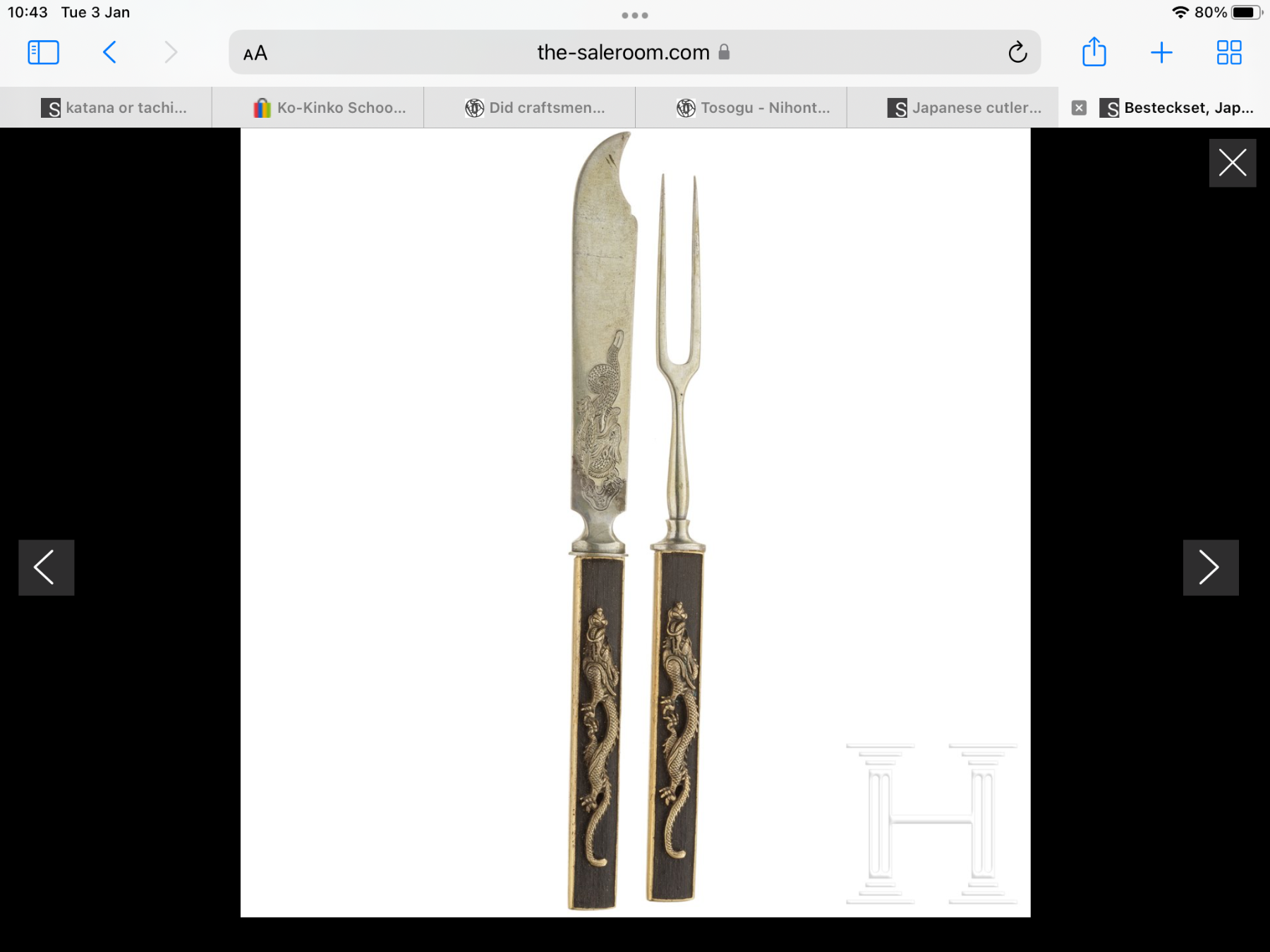
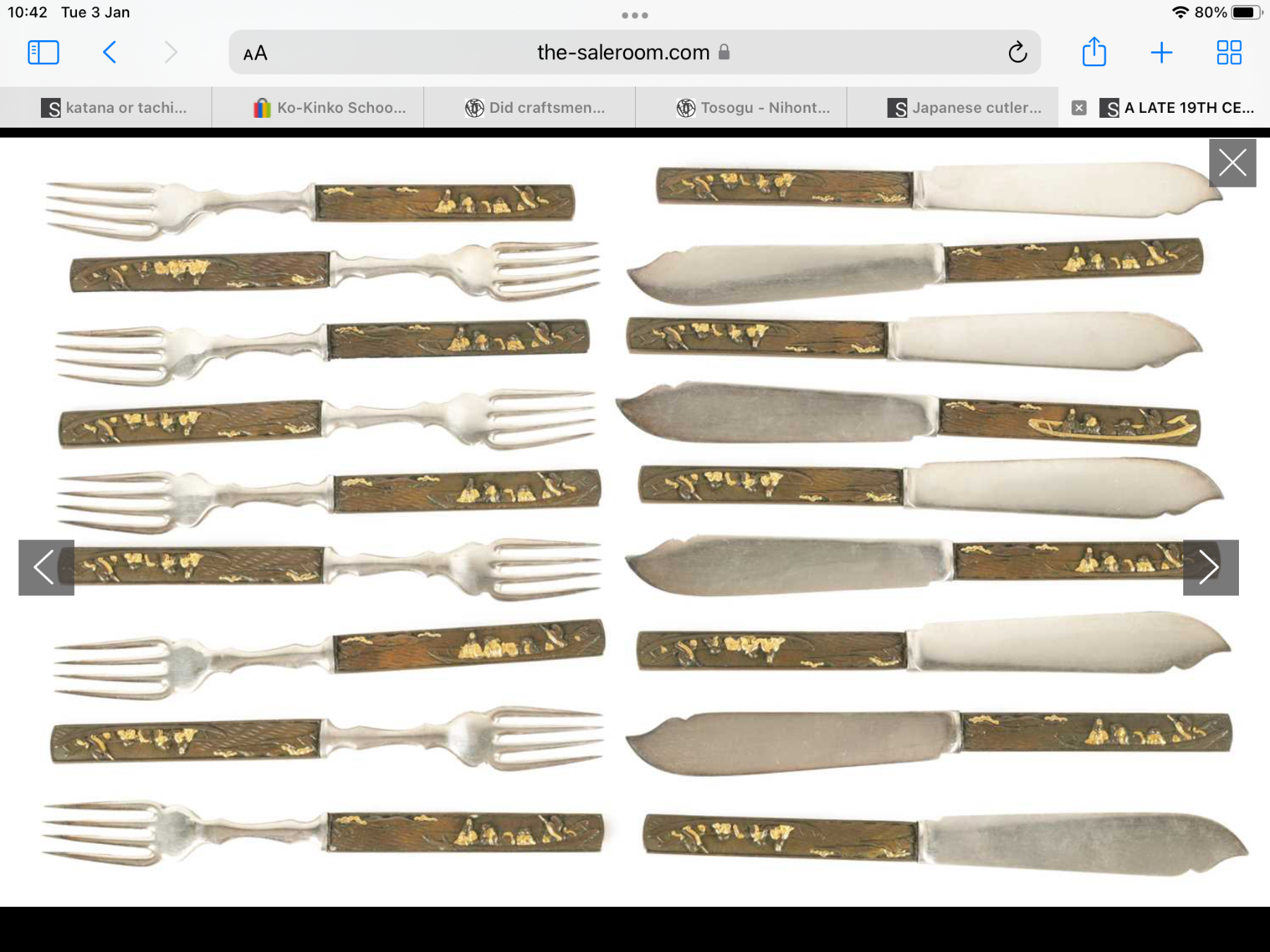
Antonis Here are a couple of examples of the “fake” pressed kozuka that I refer to. I am sorry to say I believe yours is one such piece….but I do understand your question….you simply wish to learn and I wish you all the best.

-
Hello from the UK. Putting this one on the Forum mostly for interest but also for opinions on possible age/school. It’s a nice untouched piece and what I find most attractive is the beautiful saya lacquer. That would have taken a lot of complex work. It’s ubu mumei but I feel the nakago has been a bit reworked maybe to fit the more delicate tsuka (with its nice Shachihoko menuki). Simple horn mounts. Koshirae probably Bakumatsu period for a lady or merchant? My non-expert opinion is late Koto perhaps mino. Please feel free….!! Many thanks for looking, all the best and happy new year. Colin


-
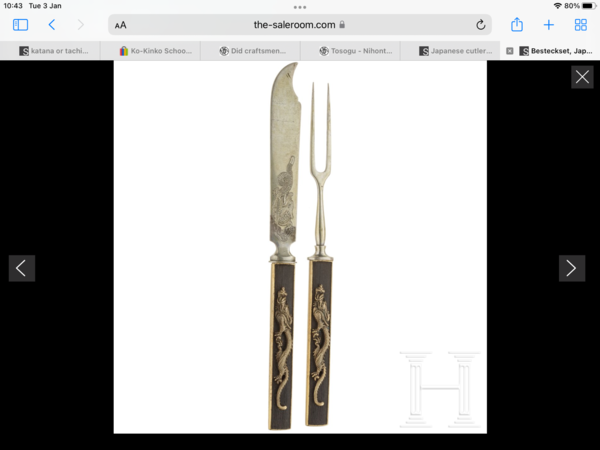
Many “kozuka” were made cheaply and non traditionally in the Meiji period for sale to foreigners. They are often found as handles on cutlery sets intended for Western consumption. It is very common to find exactly the same design used more than once within the same boxed set of knives, forks etc. The method of production is to use a solid substantial back plate with the front plate simply being a pressing stamped from a thinner sheet of various metals. The design can be convincingly mulitpatinated and gilded to give the impression of a traditionally made item. I believe they are called “shiremono”….but I may have spelt it wrongly. Of course as multiples are pressed from the same mould they are exactly the same. The “kozuka” in question here does look like such a pressing and a quick glance suggests it is exactly the same as the one for sale looking at the background pattern especially. Just an opinion …….but hook your fingernail into the blade aperture and see if the front edge of the top plate has a lip on it where it has been rolled over to give the appearance of a thicker plate of metal.