Matsunoki
-
Posts
3,806 -
Joined
-
Last visited
-
Days Won
70
Content Type
Profiles
Forums
Events
Store
Downloads
Gallery
Everything posted by Matsunoki
-
Wakizashi displayed at Fort Siloso Singapore
Matsunoki replied to Xander Chia's topic in General Nihonto Related Discussion
The koshirae on this one is assembled from sections of bone, not ivory. -
Hello Steve, Many thanks for again taking the time and trouble to help me Firstly, I apologise unreservedly if I have offended anyone by using the term swastika. I was aware that it is an ancient Buddhist symbol……just didn’t know what it was called in relation to Mon. As for calling an Aoi mon a Kiku mon, we’ll put that down to age!! Sometimes my fingers type what my brain isn’t saying. How embarrassing. The sugata looks a little like a Heian style to me ….or am I off target? Slender, light, elegant, ko-kissaki, quenched only in nioi?? All opinions welcome. All the best. Colin
-
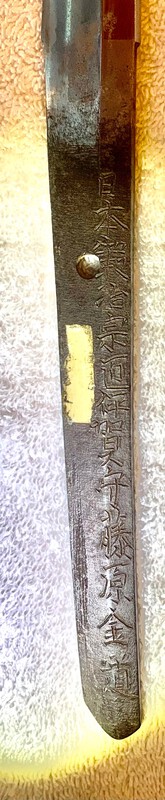
Please can I ask for your help in both verifying whether I’ve got the Mei correct and if it looks genuine? I’m guessing a late generation …maybe 9th…but I have no reference books (that I can read) that are helpful except good old Hawley! The blade is deliberately forged very slim and elegant with probably the original polish (now degraded). The hada where visible looks a densely forged itame perhaps with some wandering masame. The suguha hamon is in nioi with a bright crisp nioi guchi. Komaru suguha boshi. There are no nie visible anywhere. The shinogi is slightly high. Nihon Kaji Sosho Iga no Kami Fujiwara Kinmichi. Dated Tenbo 2 Feb.(1831) Some images have been manipulated to highlight detail. The nakago has a consistent even dark patina. Koshirae look Bakumatsu period with very rich gilding and a super saya with Kiku and swastika mon. Nagasa 70cm Motohaba 2.55cm Sakihaba 1.7cm Motokasane 6mm Sakikasane 4.3mm


-
These sad events really make me despair about the human species. It is both upsetting and infuriating. Trouble is, over here (uk), even when caught (which is bloody rare) the criminal will get a smack on the wrist and told not to do it again after his lawyer pleads all sorts of mitigating circumstances that always seem to be more far important than the effect on the victim. Good luck.
-
The silver nunome work on the hilt and the phoenix pommel maybe suggest Indian? Similar to Bidri work?
-
Excellent idea Brian. We are not without problems in the UK as well. Several other similar resources exist in the art world and are much used by auctioneers and dealers…and sometimes by law enforcement….sometimes with good results. Just one passing thought….the word “Nihonto” means a lot to us but probably not much to anyone outside our community . Would “stolenjapaneseswords” bring greater awareness? All the best.Colin.
-
Dave, As Brian says, impossible to say anything meaningful about the blade with these images. Where you buy a sword and who you buy it from can give you reassurance or it can set off many alarms. Apparently this came from a “big collector guy” but the story he has given you contains a lot of misleading uncertainties. To my eyes based on these images the fittings and tsuka Ito etc look brand new. According to the info on this smith that you have found he was born in 1944 and didn’t get his licence until 1989 so what the seller told you is rubbish. He could not have made it before 1940-45….and it certainly doesn’t look that old. The story doesn’t really stack up……but that doesn’t necessarily mean it’s “bad” . It could (hopefully) be a shinsakuto (modern sword) by this smith. Has it got a date on the other side of the nakago? Can you give this forum clear images of the detail in the kissaki, the hamon and the hada?…..then you will learn much more. All the best. Colin
-
Just spotted these on eBay. Thought someone might like to see them.


-
Just saw this one on eBay. Not perfect but better than a plain one? https://www.ebay.com/itm/403968426152?hash=item5e0e6500a8:g:m~gAAOSwQJ9jXyDl
-
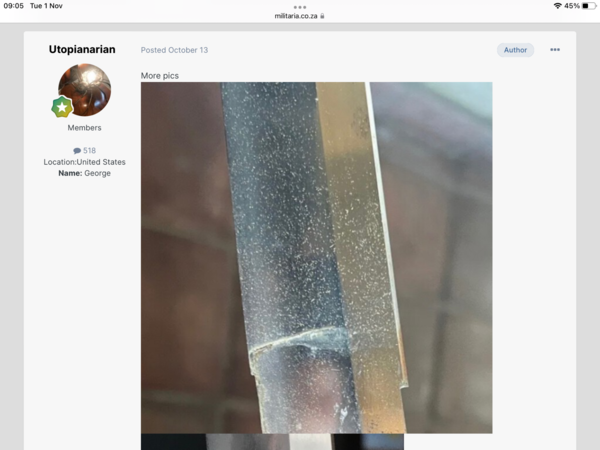
Please correct me if I’m wrong but the shinogi-ji is usually burnished with a steel burnishing rod (as opposed to stones) ie a uniform smooth mirror finish and nie are not usually visible in that part of the blade? Powder rust leaves minute surface pits, almost microscopic, which, if not removed by polishing, can create an illusion. However you have the blade in hand and an eye is far better than an image!
-
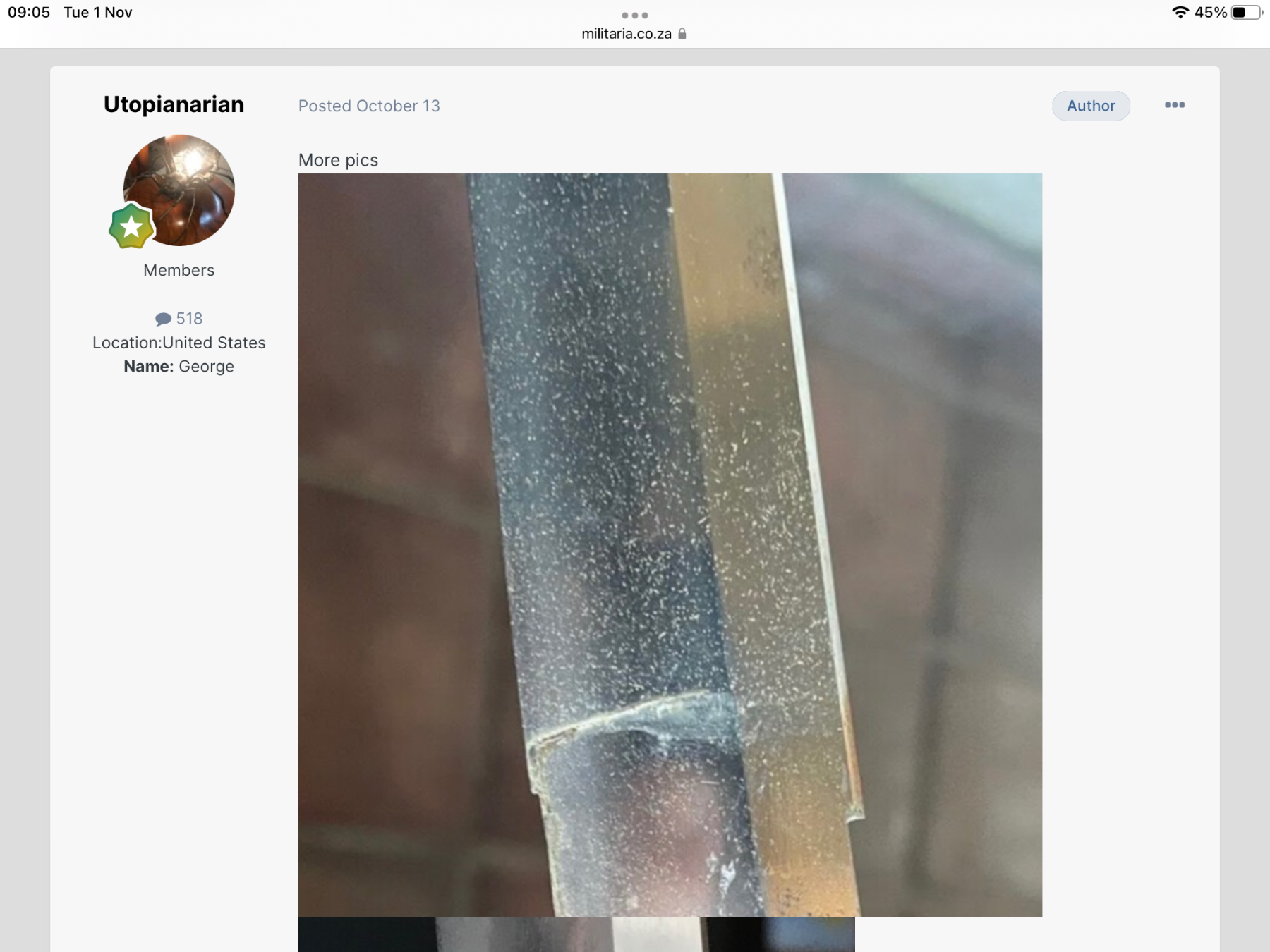
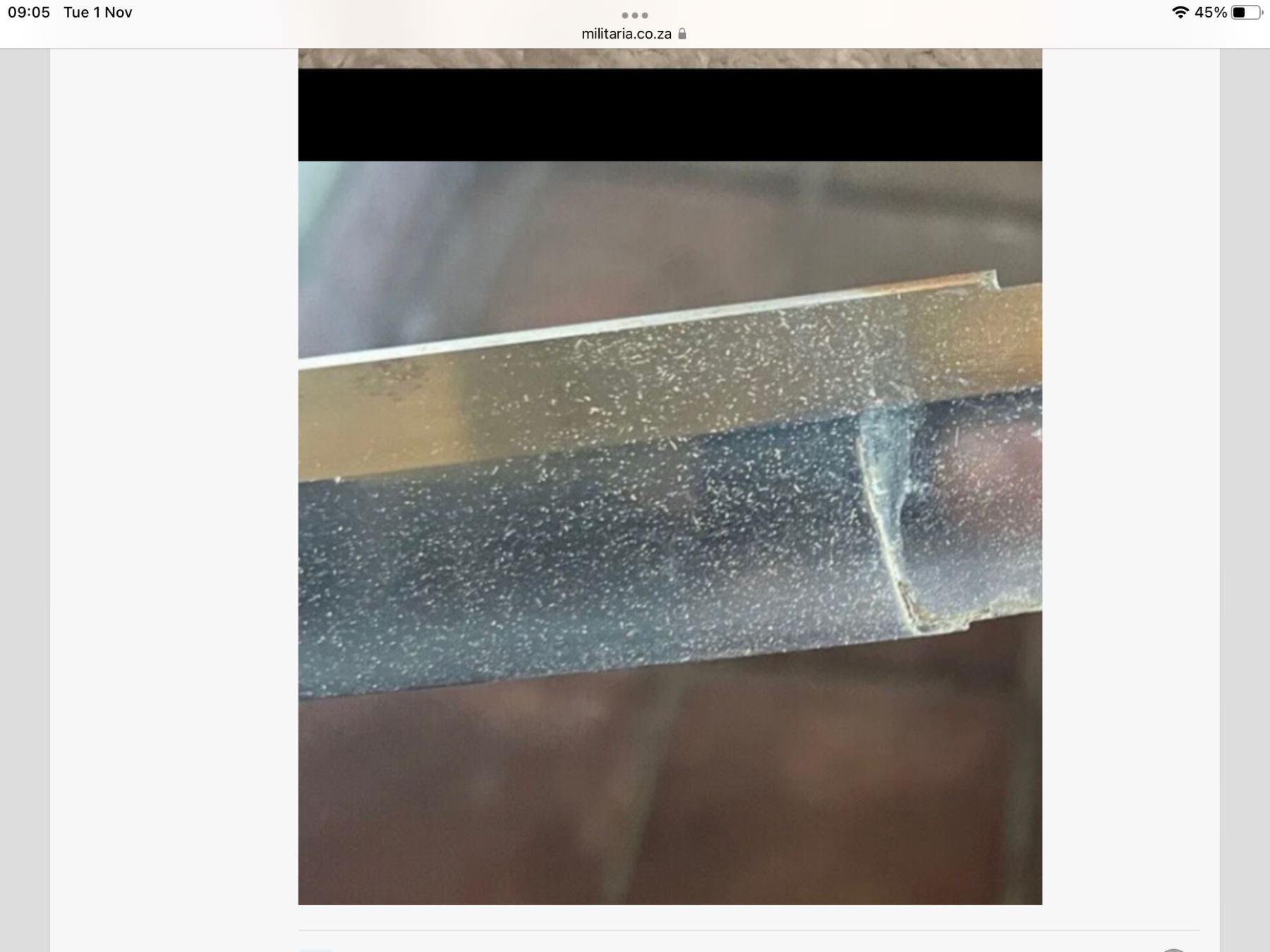
George, Hello, Can I just ask…….are you saying the “effect” that we can see in these two images, ie the “whiteish dots” all over the blade are nie? I have a blade with very similar characteristics and they are in fact the remains of very very fine surface powder rust that show up like this at a certain lighting angle.

-
At 7pm today (31.10.22)in the UK on NHK World TV (Sky channel 507) there is a documentary about making Tamahagane. Might be of interest! Just noticed it. Tell your mates. All the best.Colin
-
Try posting in the “wanted forum”. Be clear what you are looking for, what your budget is etc……you never know.
-
Just watched it Ford. Very informative. I’m now off to take a few tsuba off a few swords and get the mag.visors out!….see what I can see. The video increased my iron tsuba knowledge exponentially every few minutes. I’ll have a rummage around in YouTube as well….see if I can finally find my way around it. All the best. Thanks again. Colin
-
These images tell you nothing whatsoever about the blade quality and the description is crafted in such as way as to leave many escape routes for what are probably “nasties” not visible in these images. As for “awesome hamon”…..it’s impossible to see the hamon with any clarity. You can see a Hadori polish that can conceal all sorts of problems including gaps in the hamon. As for “overall good condition” ….except of course for scars, scratches, rust, stain!!!!….. total BS. Steve, there are many extremely helpful people on this forum, some with massive knowledge (I’m not one of them) and I’m sure their advice would be to buy some books, study and train your own eye based on your own knowledge. Look at swords for sale by reputable dealers on this forum. Look at the excellent photos that accompany them and the accurate descriptions. Gaining real knowledge is a slow process but the most important thing for any newcomer is to able to spot misdescription and crap before spending money…..or, if that isn’t for you ……be prepared to learn the same lesson the hard way. None of this is said with any malice…..I wish you good luck.
-
This style of handachi mounting…….reminds me of many a decent daisho. I wonder if this was 50% of a daisho especially as you mention the seller had already sold one sword. Argh!!! Nightmare! The tsuka wrapping is a better quality than many….called Jabara wrap…..multi stranded and more expensive to do. Fuchi that would be a close match do crop up, nanako with dragons is common. You could also consider buying a similar fuchi kashira set but only use the fuchi (and sell the kashira)…..such things happen although many would frown upon splitting a set. It’d be worth it. Eg no. 6 in this link on this forum
-
In the UK It varies a lot from auctioneer to auctioneer. Probably the same the world over including the EU. You must always check their “conditions for buyers” or “shipping info”. Some provide excellent in-house shipping services, others are less helpful. However even if they say they don’t it’s worth phoning them just to check especially if it’s a small item easily posted. If you require overseas shipping it gets far more complicated with customs forms and rules etc and more often you will need to use a professional shipper . The auctioneer will (or should) provide you with contact details for local shippers….and then you deal direct with them. They will collect, pack and send the item. Always check the insurance situation as well. Very often you can pay for enhanced cover but good luck trying to make a claim!!!! From personal experience you can expect anything from total chaos and incompetence to truly excellent service. Good luck! All the best. Colin
-
Just had a quick look at the results of that sale. I’d say it was an unmitigated disaster for Bonhmas. Vast swathes of “unsolds” especially in armour/Kabuto but also in the sword section. A few really good items made really good money but that’s about it. Some nice fittings went fairly cheaply. The perils of estimates that are too optimistic in these difficult times? Whats everyone’s opinion?
-
That’s a cryIng shame. The fittings we can see are worth far more than what you paid for it anyway….as already said ….lovely quality shakudo nanako. I’d try really hard to find a (nearly) matching fuchi. They do crop up. You are kidding aren’t you?? That isn’t spider rust or powder rust….it’s full blown heavy corrosion and to create that much iron oxide a heck of a lot of iron is used.
-
I withdraw - hopefully with some honour still intact. Jacques…don’t bother to reply.
-
You got the time of my post wrong. What on earth have I said in that post that makes me a liar?? Do you know what it means to call someone a liar?? Please read the first sentence in that post…..I am simply saying what I think I can see in the images. In any event as you now say that this sword is not a showato I believe you are actually agreeing with much of what I said. And Are you going to explain the crazy conflicting statements I quoted you on?…..or is there no explanation.
-
So Jacques, now I’m a liar? That I take serious offence to. I did not post anything anywhere at 7.08pm on Saturday according to my activity. Just in case I’m going nuts please quote me what I said that is a lie…and the previous ones that you refer to.
-
Jacques, please take the time to read what I actually say. The quotations of yours that I referred to were not in this sword thread but I can see how I misled you. I was not clear. I apologise but instead they were on the sword in the link below. Based purely on my poor images you first insisted that the nakago was suriage. Then that it was 20thC. Then that it was ubu. Never once commenting on the actual blade despite me asking you several times. You then decided to continue to argue against very experienced people who had actually had the sword in hand and argue against the overwhelming opinion of highly respected members on here. You then decided to send me 2 insulting PMs. I will not quote you from them. You can see why some of us struggle to accept what you say as consistent? As for my words, I cannot see any that are unspeakable…..please feel free to point them out to me. As for how machi okuri is actually done, there are many ways to achieve it. Some doubtless legitimate and traditional, some hasty in the days of war and some that are butchery. Anything from a trained smith in his forge to a chap in his shed with a sanding disk on his drill. I’m sure you are expert in the traditional “correct way”…..I am not….but again I say it isn’t rocket science to remove small quantities of metal from a blade with suitable files.
-
Hi Doug, welcome to the debate! I also noticed this. In one image the hamon/nioiguchi clearly looks to finish bang on the hamachi which I think would suggest saiba IF we are looking at machiokuri? Any apparent continuation into the nakago could be a polishing creation or perhaps a shadow of the previous hamon. Anyone else see it? All the best Colin