Matsunoki
-
Posts
3,930 -
Joined
-
Last visited
-
Days Won
71
Content Type
Profiles
Forums
Events
Store
Downloads
Gallery
Everything posted by Matsunoki
-
Hello from the UK. Please can anyone tell me what these kanji on Tanto menuki say? The whole sword is posted on the Nihonto forum as “Soshu Kamakura/Nanbokucho Tanto?”Many thanks for your help. All the best. Colin.


-
Meant to say if you tap the image you will get a much better look at the nie etc.
-
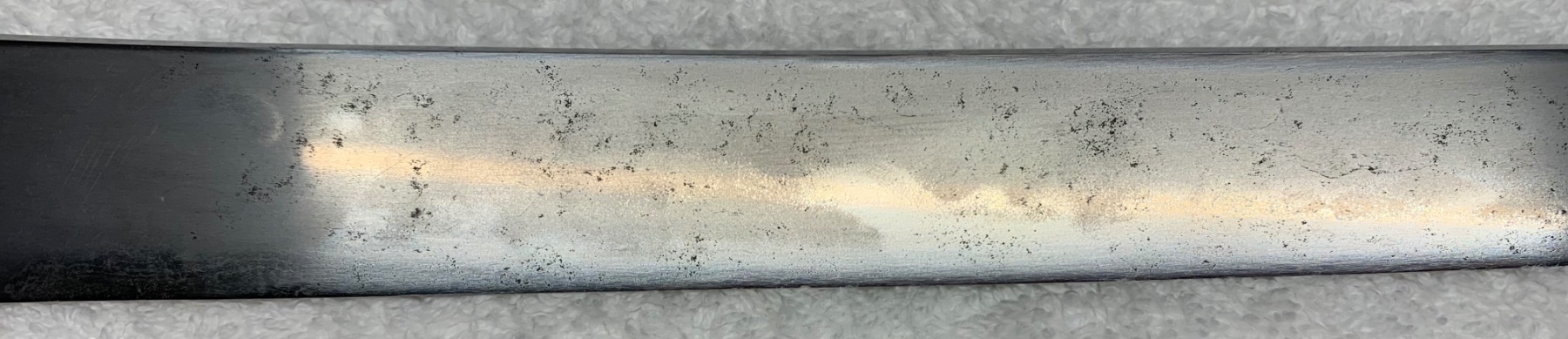
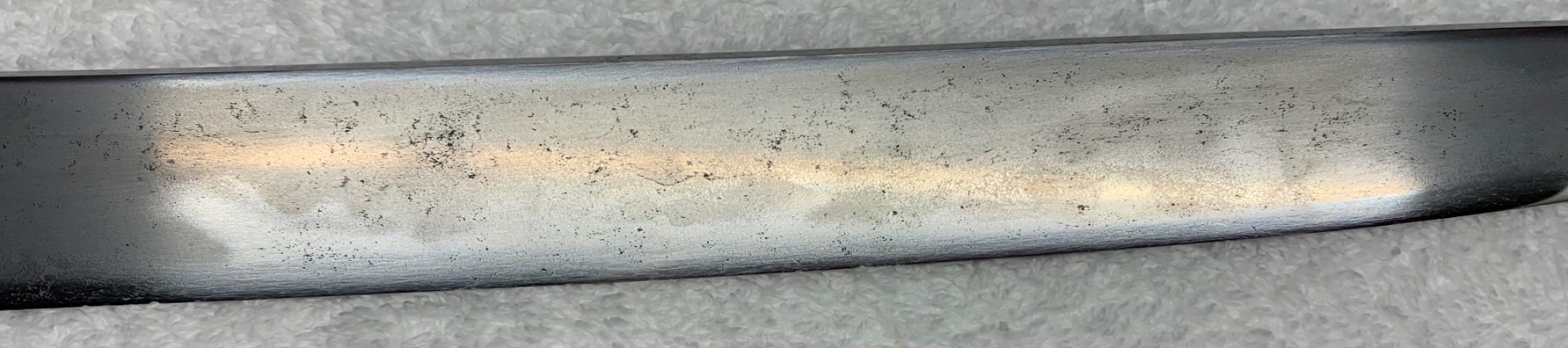
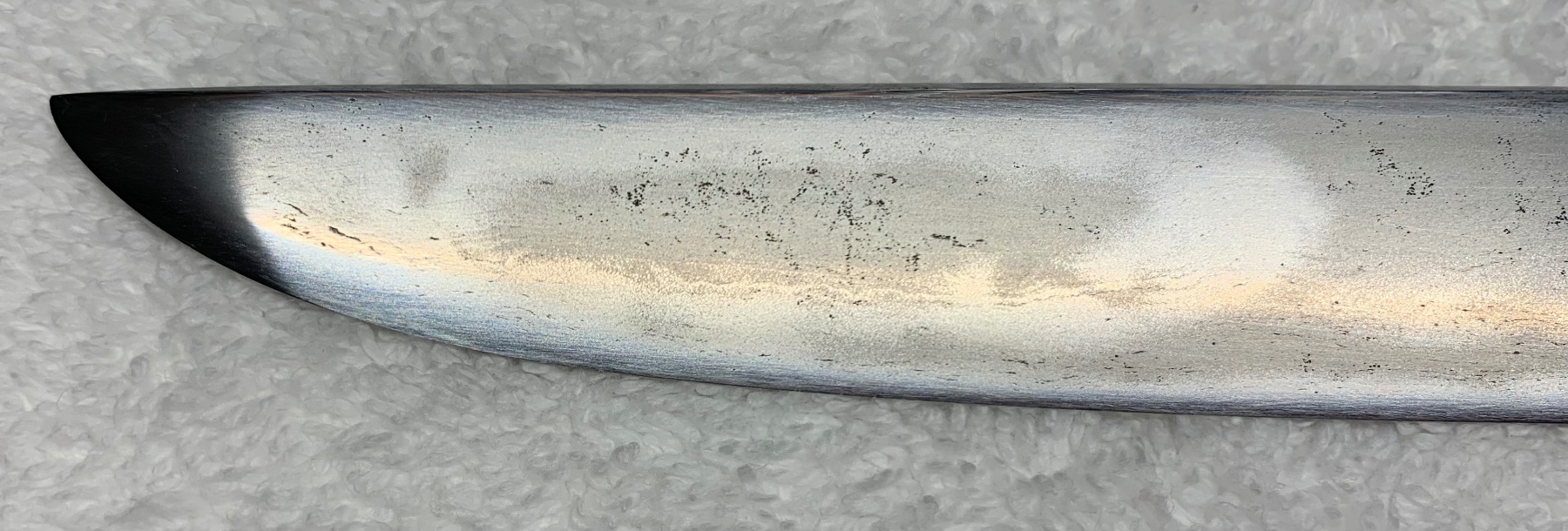
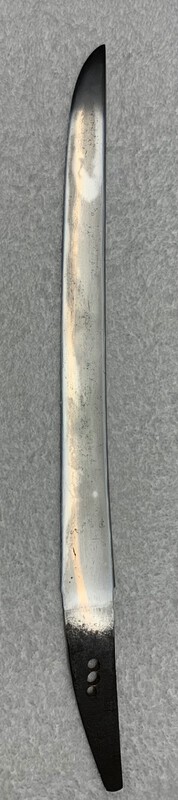
Hello from the Uk. Please may I ask for opinions on this old Tanto? If you prefer to pm me rather than reply publicly that’s fine. This old Tanto is in very rough condition and is a shadow of its former self. At some point it has been very rusty but even in its current state the visible activity is fairly spectacular. Sticking my head above the parapet…..I believe it could be Soshu, late Kamakura or Nanbokucho. My reasoning is based on the overall sugata, the tanago-bara nakago (ubu but machiokuri by about 2cm), the wild almost hitatsura hamon (now very degraded especially on one side due to many many polishes), prolific nie and ji nie over most of the blade (some resemble solar flares), remnants of old sunagashi, the mune is a worn mitsumune and hamon narrowing towards the machi. Where the hamon appears to narrow to a suguha in the monouchi there is ghosting of a past much wider nie based hamon. No hada is visible in this condition. Thanking you for looking…..please forgive its current condition…..yes I’ve oiled it! Nagasa 28cm (originally about 30cm) Current motohaba 2.7 cm but greatly reduced by polishing Nakago kasane 6.3mm Motokasane 4.6mm ie very “tired”



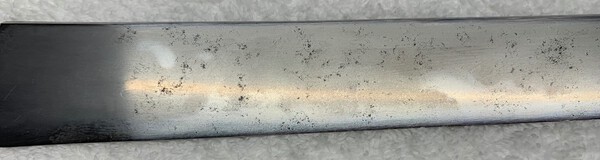
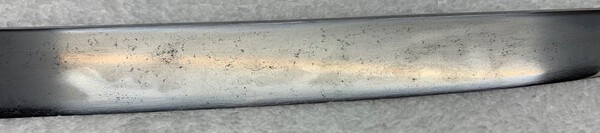


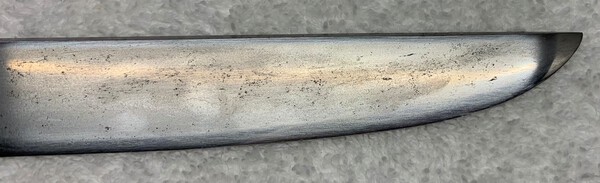

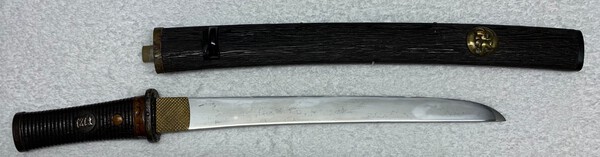


-
Hi Uwe I wonder if someone is trying to create a Ninja sword? It looks a mix of real bits and pieces with some home-made “improvements”? ….just a thought. All the best.Colin.
-
Brian is right. Czernys have excellent things which attract very seriously rich buyers which means nothing goes cheaply. Quite the opposite. Then you add on the buyers commission plus tax which can easily add another 30% and you end up wondering why you just did that…….I’ve wondered many times! Easy to get carried away. Safest way is to buy direct from a known and trusted contact….friend, dealer, collector etc where you might be able to inspect the sword before buying and often have a period where you can change your mind and return it. Good luck whatever you decide to do.
-
How about these?……Ishido school.


-
Not sure……could just be a Hadori effect and the hi look a bit wobbly especially towards the “kissaki” and they terminate at different points in the nakago. Hmmmm……
-
Please help with complex Mei in an unusual place.
Matsunoki replied to Matsunoki's topic in Translation Assistance
Hello again Steve. Thank you so much. I now own the blade as an example of something a bit eccentric…..even more so given the crazy Mei! Difficult to understand what the significance is. Very grateful. All the best. Colin -
Please help with complex Mei in an unusual place.
Matsunoki posted a topic in Translation Assistance
Hello from the UK Can I please ask for help with the Mei on this unusual wakizashi? I will post the blade in full in the Nihonto Forum. The blade has an unusual sugata……hirazukuri on one side and Kiri ha on the other. The nakago is ubu. The Mei is cut into the actual blade rather than the nakago. The sword has masses of activity visible under a very heavy layer of either old grease or varnish! I have managed to get “Bizen Osafune Yokoyama Sukekane” but I’m lost on the preceeding inscription. Absolutely anything that you can tell me would be very gratefully received. Why signed on the blade?? Many thanks in advance. Best wishes.Colin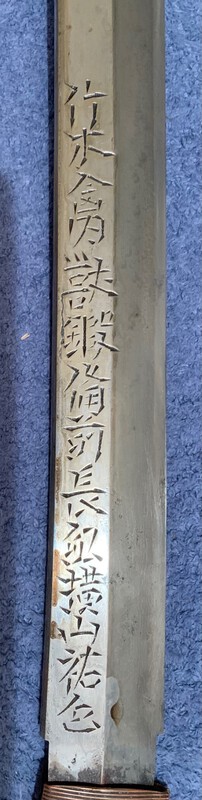
-
Stefan, if this sword was in the UK I would buy it from you. It’s a good solid shinsakuto plus I really enjoy Sumo so that would be a bonus. The trouble is we are having some problems with shipping and also with our own border force/customs people which is making some of us very cautious about importing swords. It is very annoying and I do sympathise with you. Plus of course we have +20% to pay on top now that we are out of the EU. It is very frustrating. I wish you better luck.
-
Hi Ken Brian is right….it’s total crap. Likely plastic, perhaps bone but not even the Chinese would waste ivory on something like this!
-
I’ll stick my head above the parapet! don’t think a Mei has been removed (if signed wouldn’t it have been on the other side anyway?) looks classic late muromachi period wakizashi…..Mino or Bizen? nice shape nakago, overall sugata is in my opinion attractive shame about the poorer quality hi…….but that could be caused by bad polish All the best. Colin
-
Hi again George, (I’m Colin…..you are George!!!🙂) I think sashikomi vs hadori(Keisho) is a very well debated topic with differing opinions! Personally I will never understand Hadori. It obscures some of the most vital features of a blade. I believe (have been told) that a hadori finish is a bit easier than sashikomi and a bit quicker but more difficult. If we are buying a sword from images and the polish is Hadori we are gambling…..unless you know and trust the seller. I have seen Hadori used to cover a hagire to such an extent that even under close scrutiny it was difficult to spot. Give me sashikomi every time no matter what the hamon/hataraki is. Just my opinion. All the best. Colin.
-
Hi George its only my opinion, but sashikomi polish is so beautiful when done well. You can see everything without twisting, turning, squinting and hoping!! Hadori is great if you like the dramatic contrasting effect of light/dark or if you want to make sure it’s tricky to actually see anything at all!. Hadori is also useful if you want to hide problems……..
-
Blimey……this thread takes me back a bit! I knew Chris and Roberta quite well and likewise visited them and bought several swords together with other Japanese works of art. We would also meet at motorway service stations on the M25. Once bought a whole collection of cloisonne from him and three wonderful large Miyao bronze samurai which I believe he bought in South America. He just seemed to disappear from the scene. Someone told me they had gone into the property market but I never heard from them again. I used to love his lists. Really miss that old fashioned way of dealing…….the days when you could buy nice things sensibly…..before the internet made it possible to find everything everywhere! That must be 40 odd years ago? Great times. All the best. Colin.
-
I am inclined to think that he is a Mongol Archer. His clothes are not recognisably European. See the tsuba in this link. https://www.zacke.at/auction/lot/303-nobuchika-a-fine-and-rare-silver-mito-school-tsuba-depicting-a-mongolian-archer-with-dog/?lot=16858
-
Shinsa decisions….justification?
Matsunoki replied to Matsunoki's topic in General Nihonto Related Discussion
This “discussion” is heading in exactly the same direction as when I formed my first collection aeons ago…..and it will continue in that vein until no-one is interested anymore I guess! The old topics….. mei vs mumei, papers vs none, Koto vs Shinto, ubu vs suriage, koshirae vs shirasaya, gimei vs genuine (not that anyone really knows), long swords vs short swords, opinion vs opinion vs opinion etc etc Of course it is interesting and very challenging to build knowledge and expertise as long as it doesn’t spoil the pleasure we derive from these magnificent weapons. Way back, a very famous Japanese polisher that I was honoured to have visit me several times told me, almost in the exact words from the book quoted above - unless you stand next to the smith as he forges it you can never be sure…..it’s just opinions. That really clarified for me what I wanted to collect based on two simple questions “do I like it?” and “is it a good sword” Yes or no. Anything that you can learn about it after that (often with very kind and generous help from others) is the icing in the cake that led me to many friendships. I try to collect “good” swords in koshirae that exist largely in the condition that the last Samurai owner left it in. Not as easy as it used to be! Now we can debate what is “a good sword”🙂🙂 Just my 2p worth All the best. Colin -
Hello Bob…from the somewhat gloomy UK Just my opinion…..but I think it’s a buyers market right now and likely to become moreso. With all the “issues” going on in the world I think most people will become more cautious with their cash. This has been reflected in some recent high profile auctions where a lot of “over-estimated” stuff failed to sell. On the “for sale” section of this forum we often see nice items that go through several price reductions before they sell….or maybe they don’t even sell. That’s not a criticism of the sellers, but it is an indication of current demand vs supply dynamics. There will be exceptions though……anything “sleepy” in an auction will get chased by everyone hoping for a bargain and thus end up expensive especially with the damned auctioneers commission added on. Another exception is when something seriously good comes along at a sensible price(whatever that is). The very best things usually sell well and hold their value better than “ordinary” items. There will always be some seriously wealthy buyers for top quality. ”Run of the mill” is likely to face price/value reduction maybe for a few years. But we don’t buy these wonderful things for investment do we?…unless we are crazy! Be really interested to see what others say, especially any dealers opinions. All the best Colin
-
Just thought I’d post this link to an auction with some beautiful tsuba in. There are several others besides this one. https://www.the-saleroom.com/en-gb/auction-catalogues/zacke-wien/catalogue-id-galeri10073/lot-e21df883-8425-4ed8-859f-af41010a9d56
- 1 reply
-
- 2
-

-

-
Shinsa decisions….justification?
Matsunoki replied to Matsunoki's topic in General Nihonto Related Discussion
Evening Michael…many thanks. I think I have an exaggerated sense of justice and fair play! This has been very enlightening to say the least. There is a lot I would like to say but I won’t…..I might get chucked out of the Forum! I just cannot see any reason nor any fairness in rejecting a sword that justifies a particular “ranking” just because there are better swords in that Shinsa session…….especially if it might pass in the next one. The sword hasn’t changed has it? Anyway, as you say, that’s how it is. I will never submit any sword to an overseas Shinsa- I’d like it back before I die! The issues with international shipping will only get worse, so for me it’s just an interesting discussion subject…..and I’m sure it’s all been said before. If ever you are in these Eastern wastelands you would be most welcome. All the best.Colin -
Shinsa decisions….justification?
Matsunoki replied to Matsunoki's topic in General Nihonto Related Discussion
Ray, thanks for that link. Interesting but also shocking. If that’s how it works then it reduces the process to a “pot luck” lottery that depends on what your sword is “up against” rather than how good your sword is “in its own rights”. Seems nuts that a sword that deserves Juyo doesn’t get it…..but “it might if you keep trying”..and keep waiting a few more years….and keep paying. To me, it’s plain crazy….and very difficult to logically justify. Just my uneducated opinion! All the best. Colin -
I see from the thread “Japanese sword from Court” that a wonderful and rare blade has failed at Juyo. My question is simple……why don’t the Shinsa Panel tell us (or rather the owner) why it failed? Those submitting a blade pay for the privilege, wait for however long it takes but then simply get a “no”. Surely the owner is entitled to expect more than that from these professionals? Why so secretive? Apologies if this has been covered elsewhere at sometime. All the best. Colin
-
I usually go to sales etc in disguise. Look for the old man in a dirty mac using a walking stick and wearing a red rose in buttonhole who keeps talking to himself. Please say hello if you dare😳😳 …….agree, it’s no fun on our roads and even less fun when you discover you aren’t the only one there, or on the phone, or on the internet, or using a proxy, or has left a book bid…… ……and even less fun when, after buying it, someone says “you did see the hagire didn’t you?” ……see you at Holts soon?🙂🙂🙂 Happy days. All the best. Colin
-
Hi again Lee. I’m in the UK also….and it isn’t quite as easy here as it is in the USA! They have more dealers, more collectors, more restorers and a hell of a lot more swords! Trouble is, it is becoming more problematical buying swords abroad and then trying to get them into the UK. We are having more than our fair share of issues with Customs/Borderforce. There are also problems shipping swords abroad if you want papers or restoration (polishing etc). All in all it’s getting more and more difficult to ship anything anywhere. Sad but true. The Token Society can give you advise on these topics. The advise given above by Brian is rock solid but as you say, dealers are few and far between here. It would be worth you going to just about any arms fair (Birmingham, London etc) but they aren’t what they used to be either. Another potential pitfall is buying swords from images. An image can conceal all sorts of problems. A strong Hadori polish makes it virtually impossible to see the true hamon……you really can’t see what you are buying. So, where else can you see swords? Well, you have already found a few in scattered auctions. You really don’t have much choice but to travel to handle the swords in person before the sale. I’ve done round trips of 300+ miles to look at something. Sometimes it has saved me from a horrible mistake and sometimes the item is very nice…..but then you have to try to buy it! Good luck there. Forget totally all auction estimates including the London rooms. (Bonhams have swords in their Japanese sales normally). You will quickly realise that everyone else has also found your treasure thus it becomes a matter of who wants it the most and who has the fattest wallet. It can be maddening! So, view auctions in person if possible, go to arms fairs, contact dealers (Liverpool Militaria, JCMilitaria etc), try and establish a network of contacts but above all be patient and study. Learn what different “flaws” look like so you can spot them etc…..get the basics right and build from there. It takes time. Something will turn up. Enjoy the thrill of the chase! Happy hunting. Colin
-
Thanks John. Great shame it has to come to this on a forum like this one. I can understand it on Facebook et al but on here we are supposedly likeminded enthusiasts intent on helping each other and enjoying our chosen subjects. Brian, Please can you you tell me…does the ignore feature actually stop someone’s replies from appearing on a post in totality or does it mean that it’s just me that cannot see them…..but everyone else can? Atb. Colin