Matsunoki
-
Posts
3,930 -
Joined
-
Last visited
-
Days Won
71
Content Type
Profiles
Forums
Events
Store
Downloads
Gallery
Everything posted by Matsunoki
-
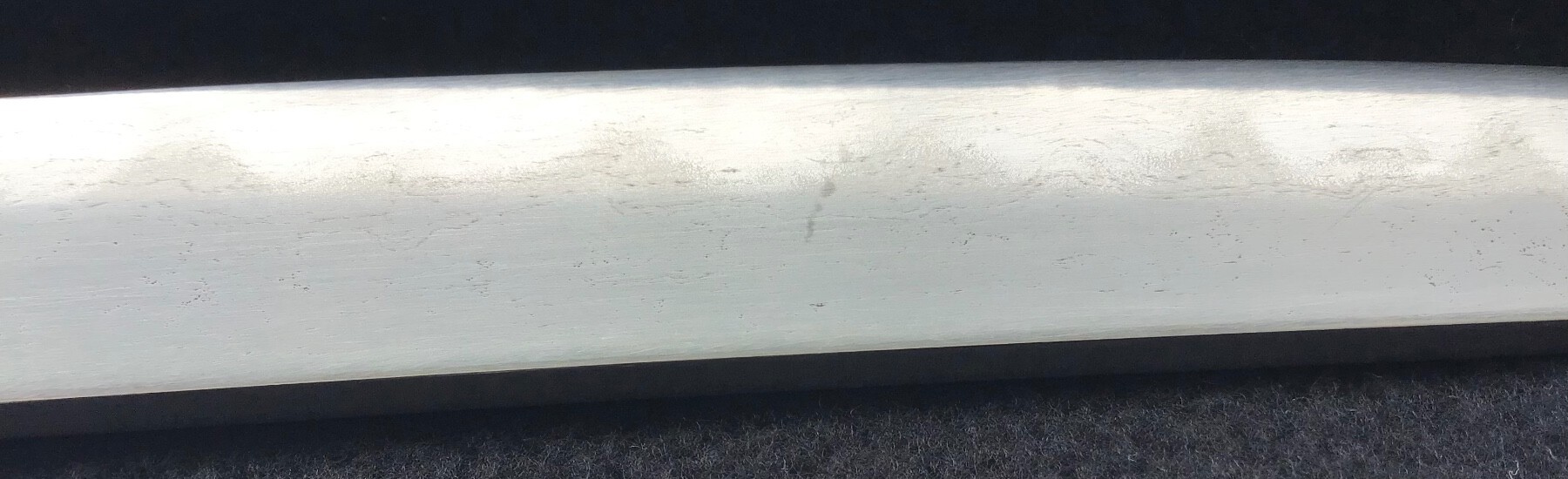
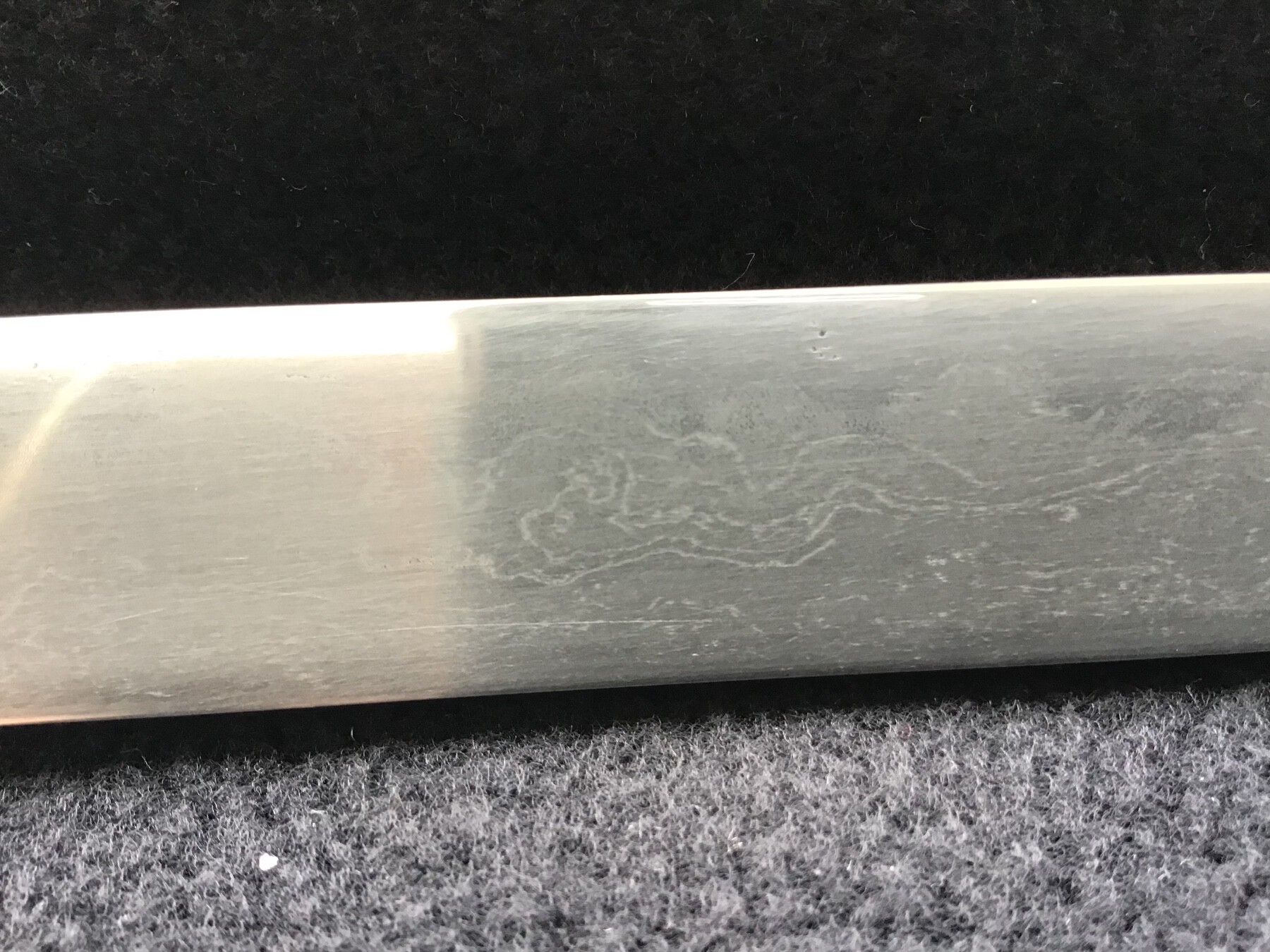
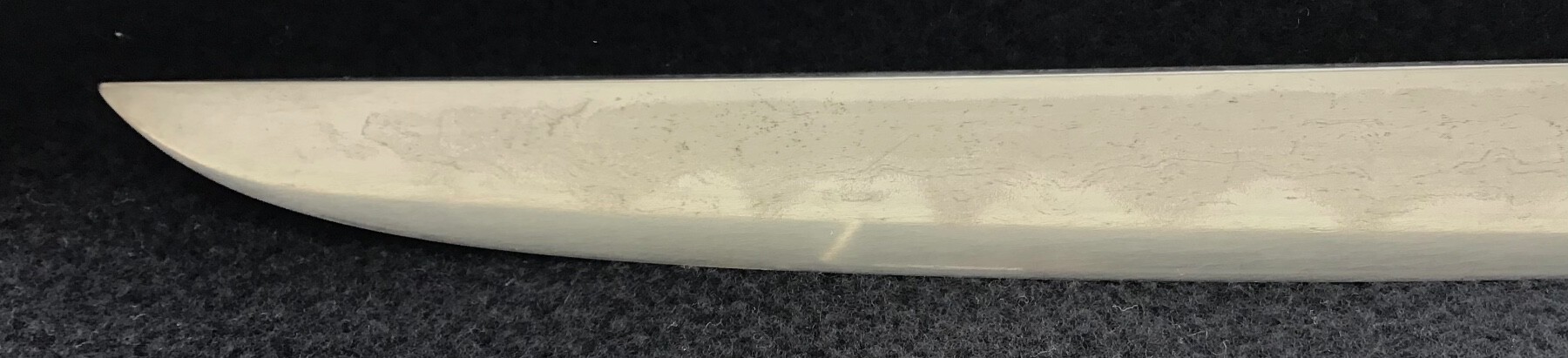
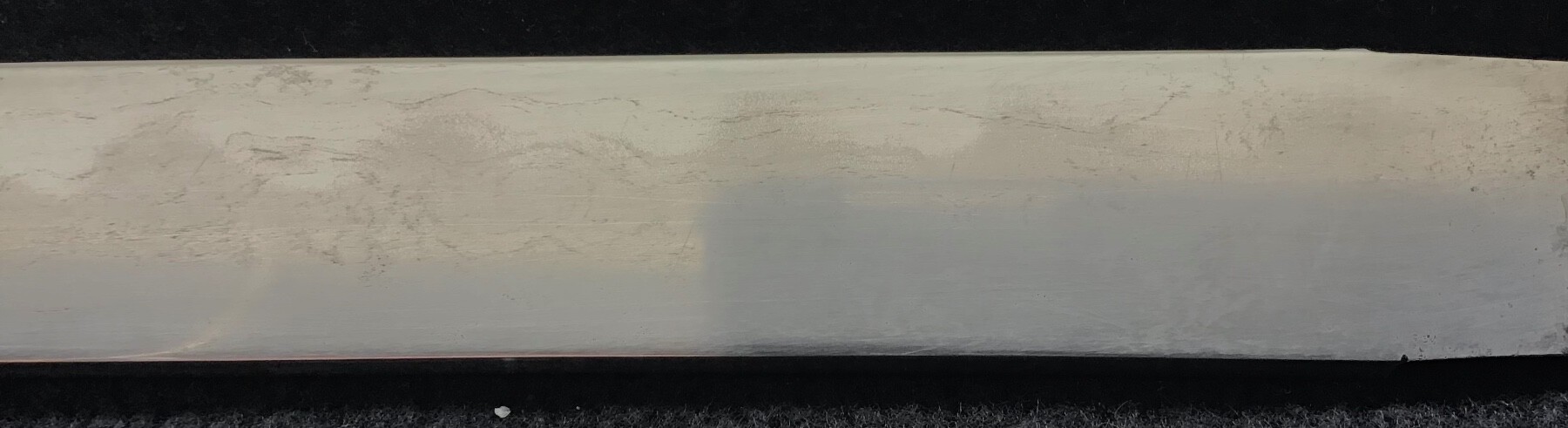
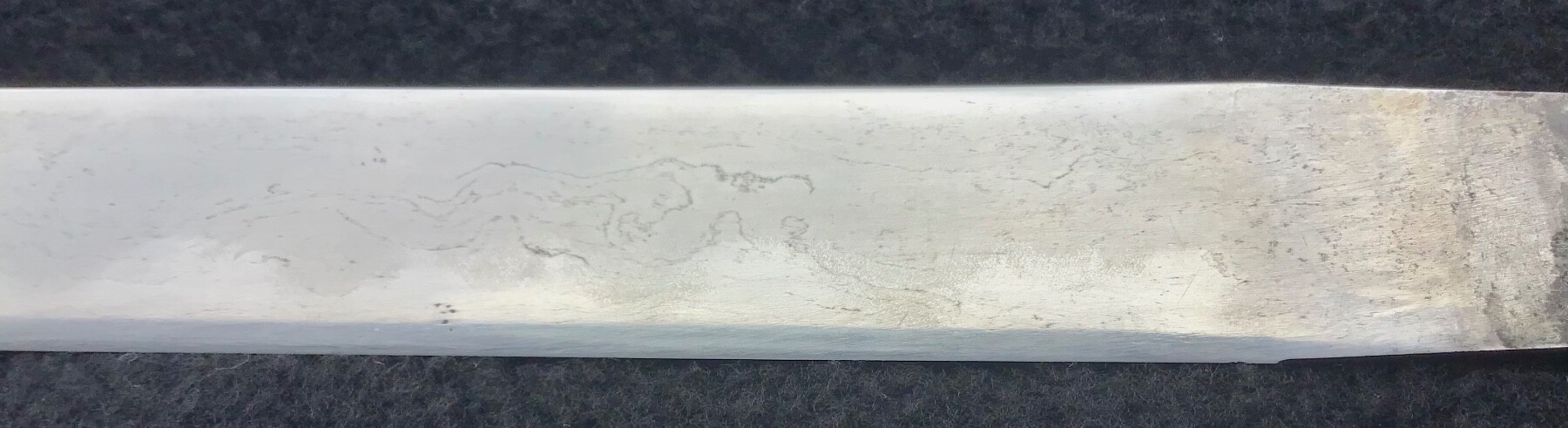
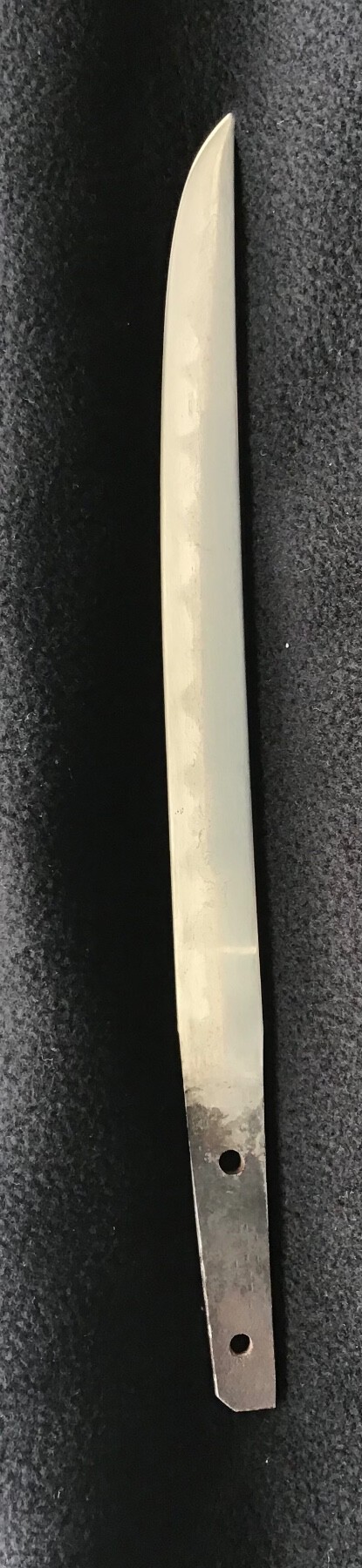
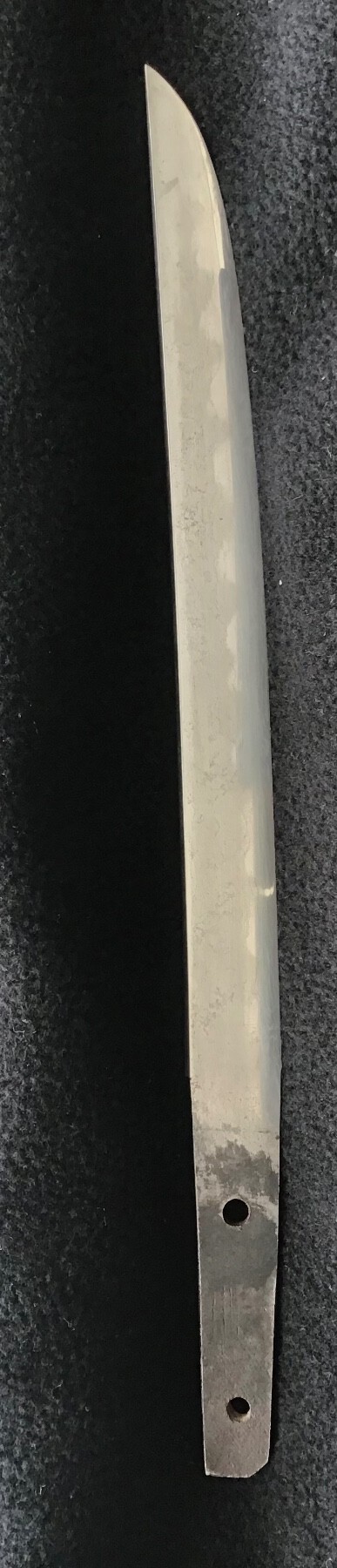
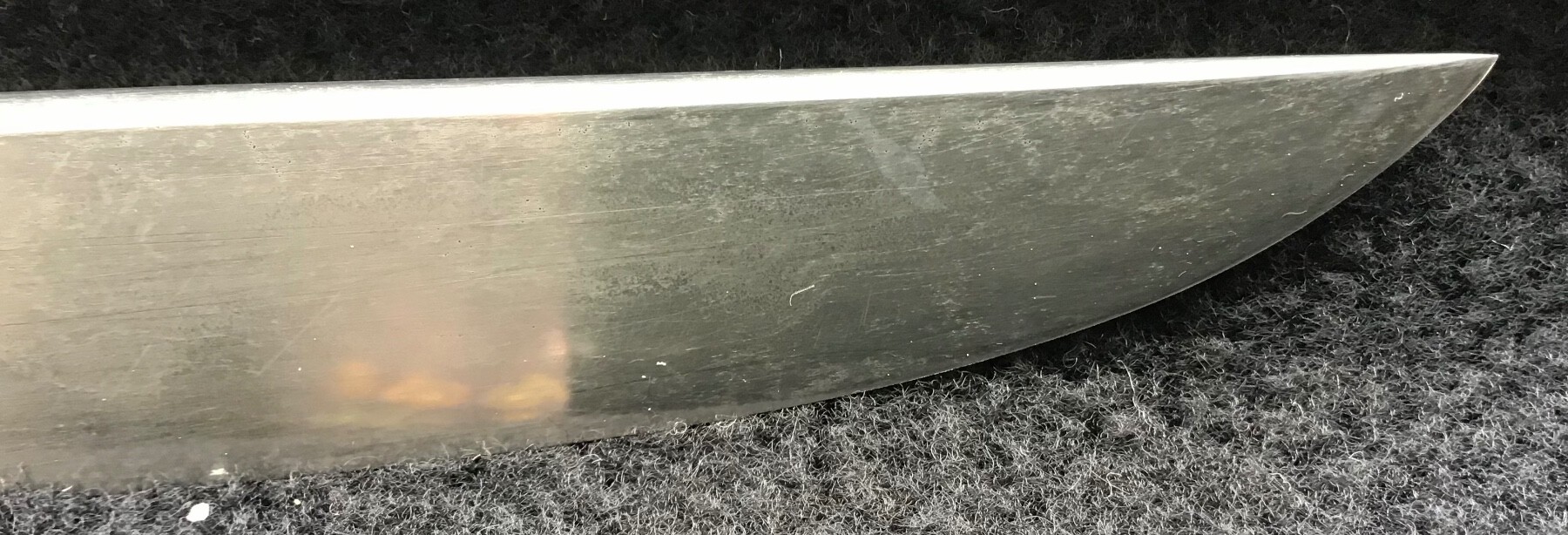
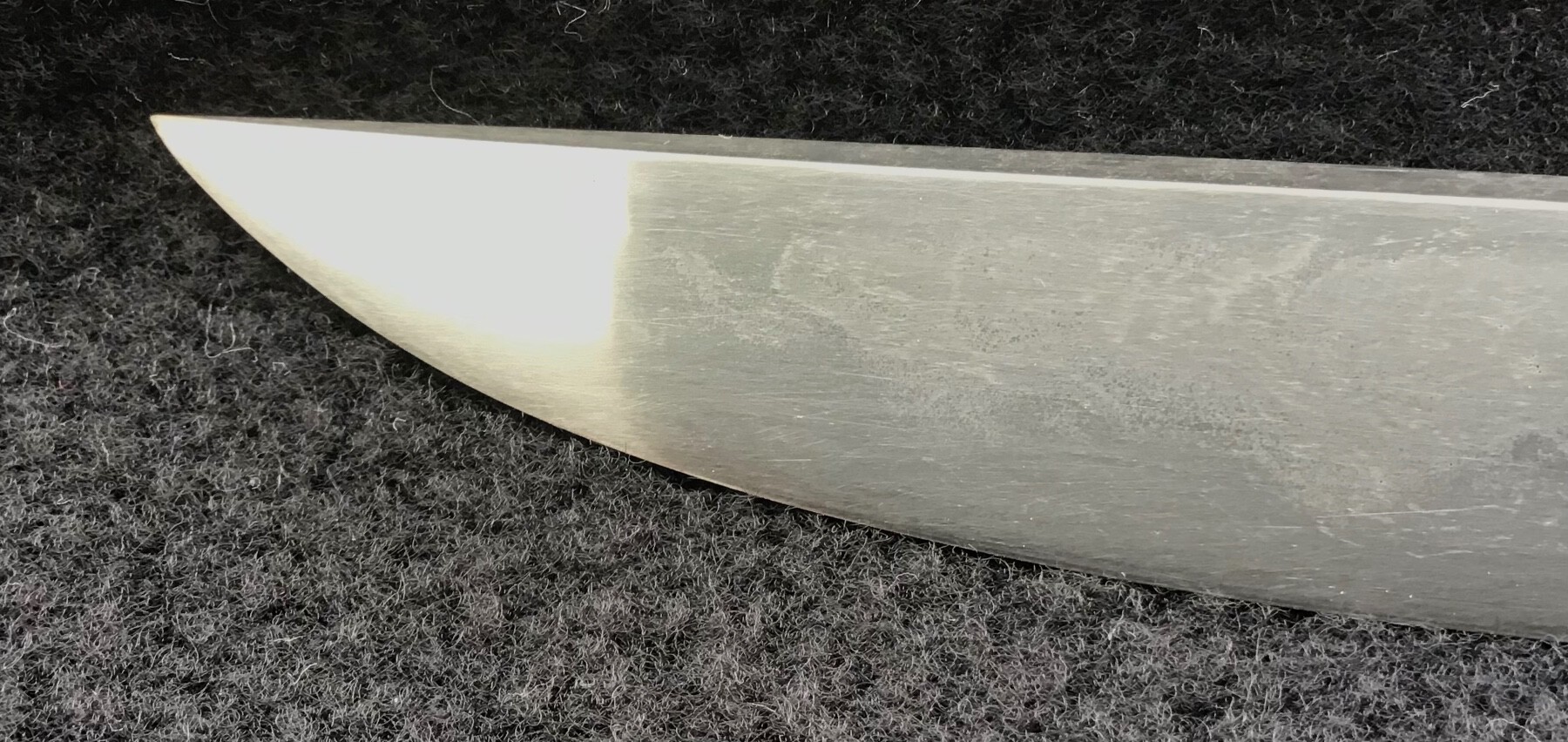
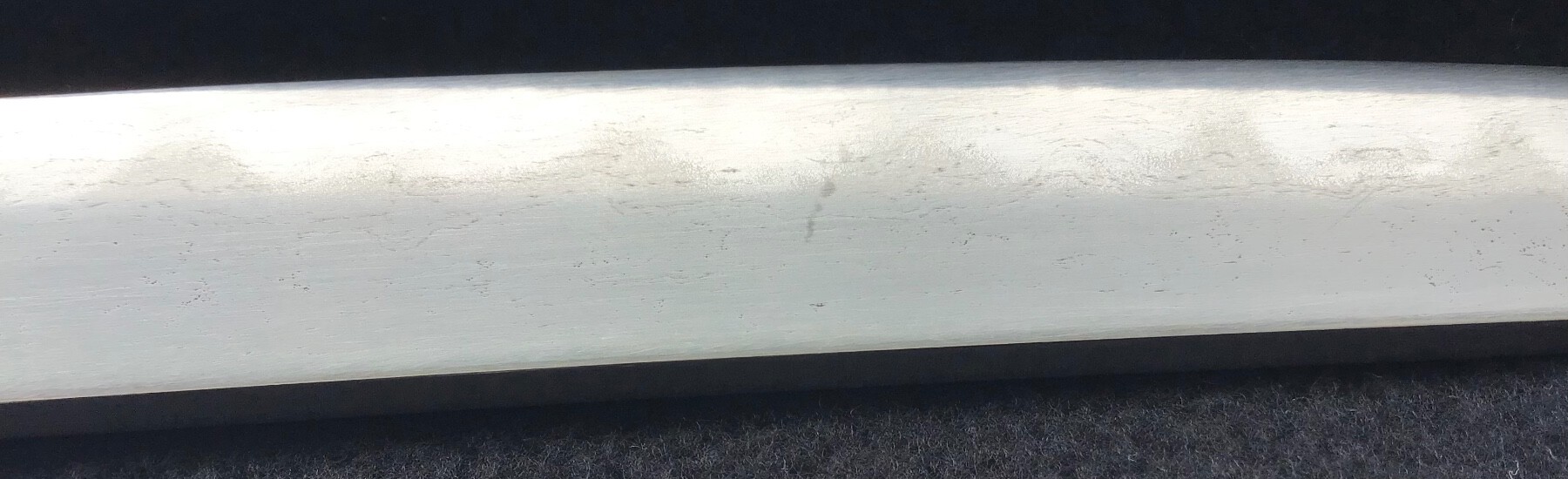
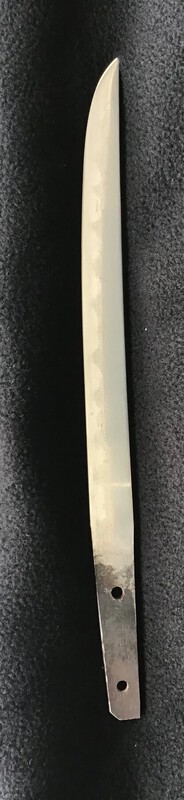
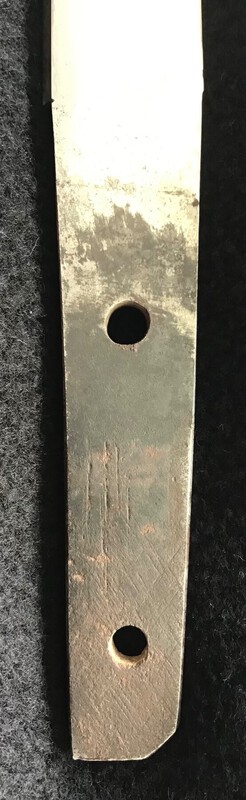
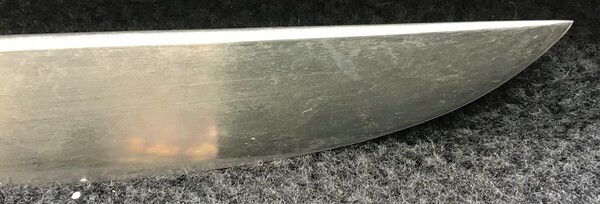
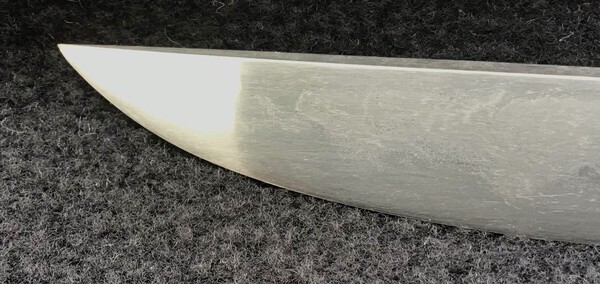
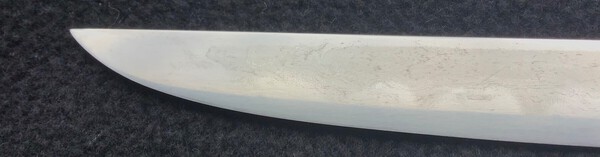
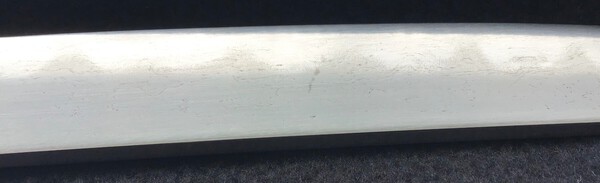
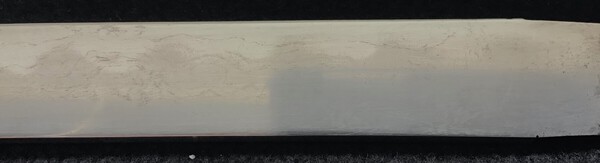
Hello again from the UK. Please can I ask for your help on this one? It’s another typical UK piece that has “had a life”. A few running repairs eg to tsuka Ito etc but it’s quite a pretty little thing with its shakudo Omori style mounts and crane lacquered saya. As usual, not in polish but at least mostly visible. My feeling is Koto…..brutal suriage, hamachi lost through many polishes. Still elegant with fairly coarse o-hada, masses of ko nie and ji nie, full length suguha muneyaki also nie laden. Not much (visible) activity actually within the hamon which is still very healthy and nowhere near dropping off. The ji is very dark in colour.The images have been photoshopped to try and show the details. Nagasa 22.5 cm (overall 31.5 cm) motohaba 2.2 cm motokasane 5.36mm (very slim) nakago kasane 6.16mm at widest


-
Don’t know……is that a faint hamon I see just above the habaki in 4th image? Section of an old gunto repurposed/ tarted up?
-
Sword Collecting in China?
Matsunoki replied to Peter Bleed's topic in General Nihonto Related Discussion
Hello Bruce. How do we look at our member map? Thanks. Colin -
Hello Dale. Thanks again for all the detective work……very interesting……but still we can’t be sure can we🙂🙂? Of the 4 you have sent links to, the third one (shakudo Nanako with rats and scroll) is probably close enough to work but it’s in Japan and I’m not buying in Japan right now. There is no EMS from Japan to UK, only sea freight…..and I’m not keen on wondering if/when something might arrive. You mentioned one that you had…..any chance of seeing it - if available? PM me if you prefer. all the best. Colin.
-
It does rather resemble (vaguely!) the style of Japanese wrapping called Jabara string wrap often found on quite nice items. I think that’s what it’s called. Quite complicated to do.
-
Thanks again Jean ……And that is both the “pain and the ecstasy” of swords and tsuba……most often, we can never be really sure can we? If nothing else it teaches me to accept uncertainty …..which is good ……because usually I really like certainty! I feel “possibly” or “probably” are appropriate here. Anyway, nice as it is, the tsuba does not really suit the sword so I am now looking for something that “goes”…..preferably mixed metal with mice. Needle in a haystack? Will probably sell this one in due course. ………..great fun though. All the best. Colin
-
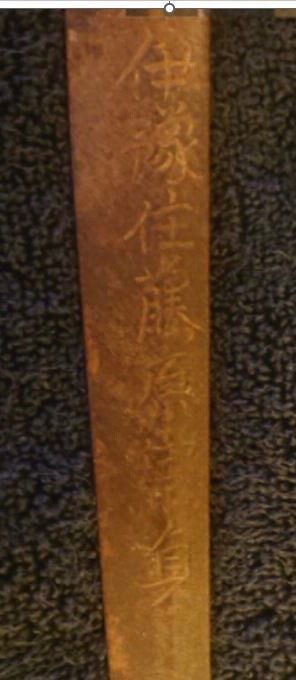
Hello Dale grateful thanks for your time and very helpful comments. With my very modest tsuba knowledge I would tend to agree that it was made this way, I can see no signs of reworking although of course the artisan would have been more than capable of concealing them. It just feels “right”. I acquired it mounted on a very nice large and heavy wakizashi. The rest of the koshirae is lovely quality and not recently “mucked around with” so I’m guessing it’s been on that sword for a while. As far as I know the sword has been in a European collection for some time. I will post the whole sword on the forum in due course once I’ve translated the Mei (or more likely asked for help in so doing!) All the best. Colin.
-
The word “splendid” is not a precise scientific term as far as I know. It therefore does not have a precise scientific meaning. It therefore follows that it is a matter of personal taste and opinion which in the world of Nihonto is really pretty common. To ask for an “explanation” is unscientific and is like asking “what is a splendid meal?” Opinions will thankfully vary.
-
Glen, Jean that was quick! I had seen the thread regarding “modified tsuba” but didn’t occur to me that this might be one. Makes perfect sense. Any ideas re age/ school? very kind of you, many thanks Colin
-
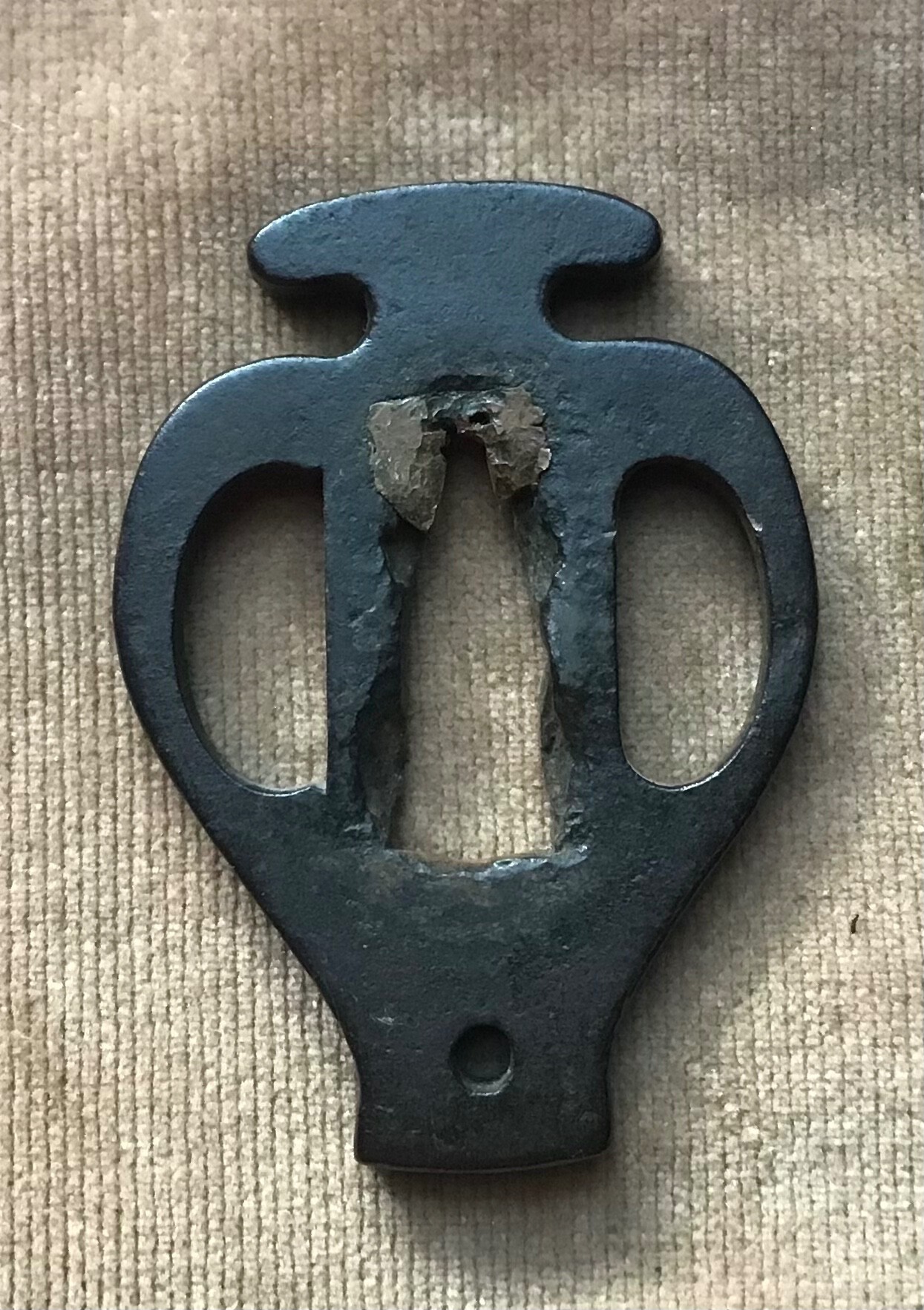
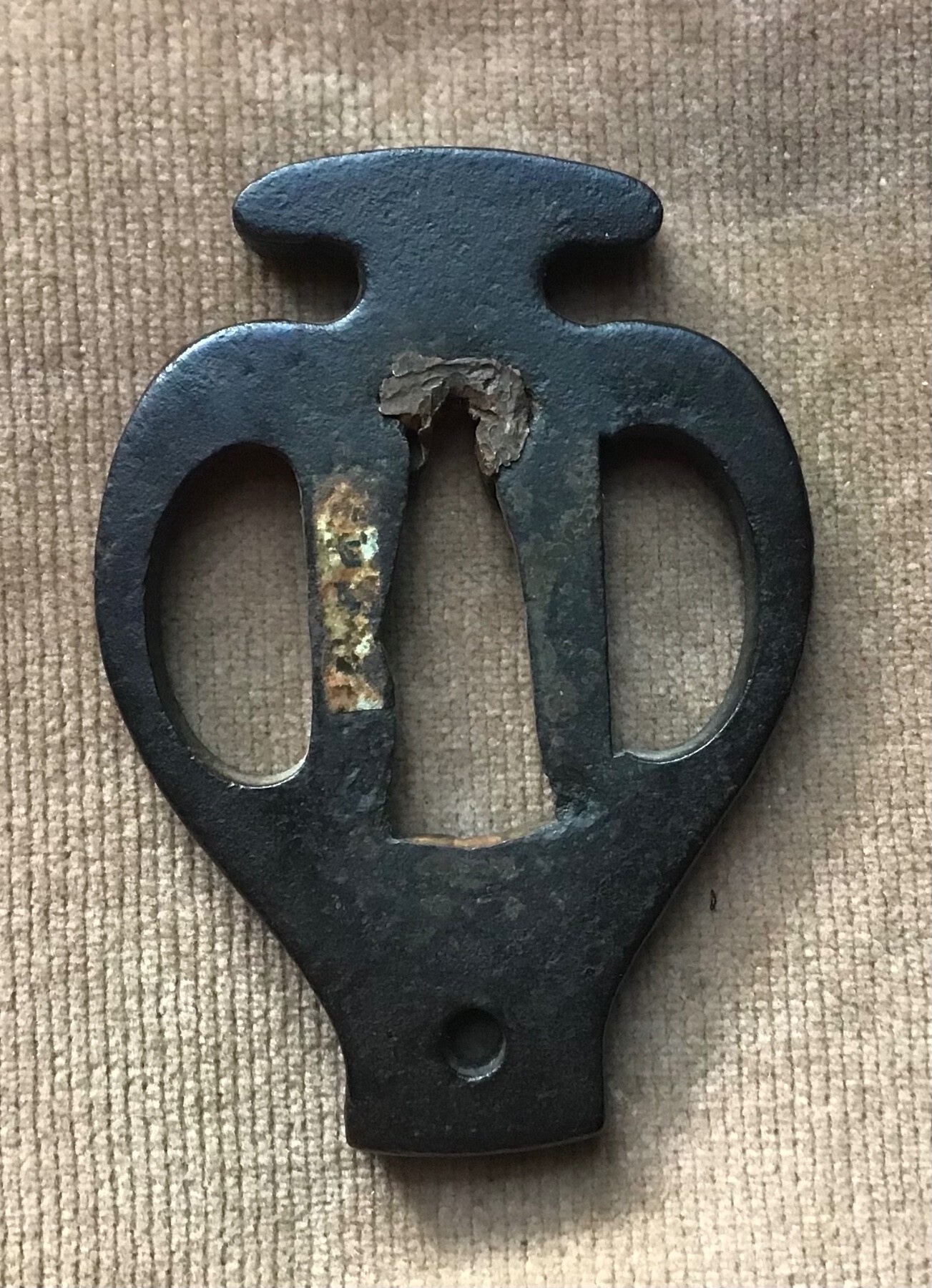
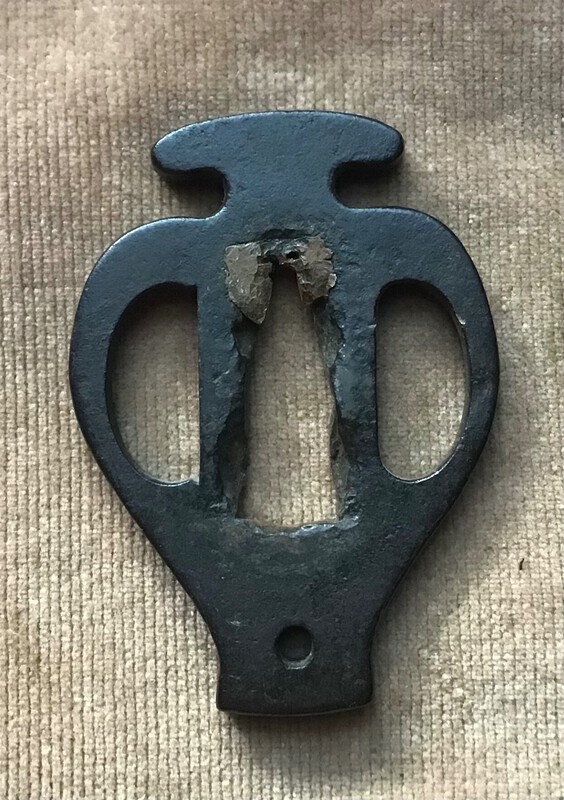
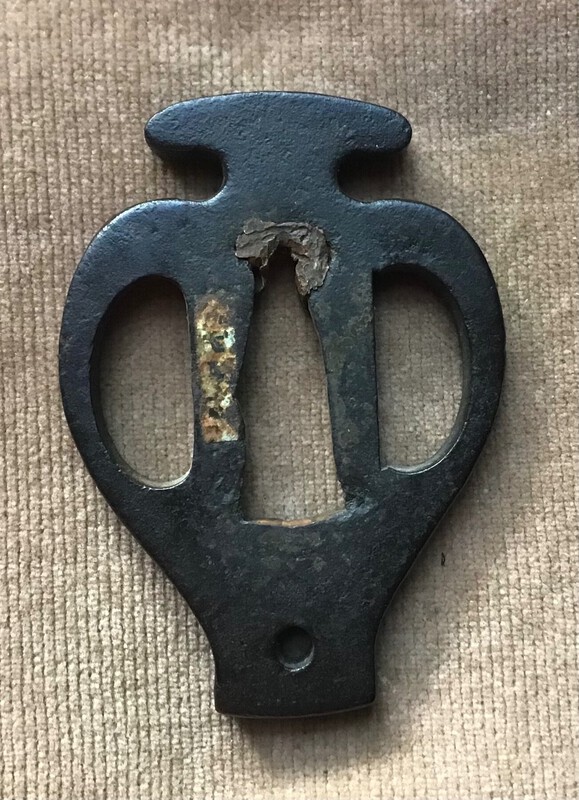
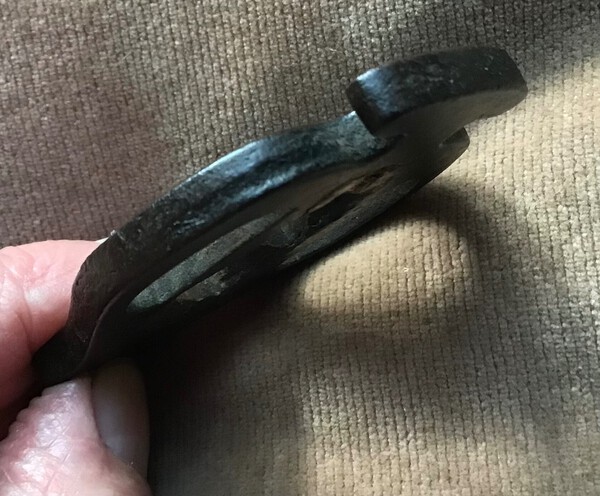
Hello from the UK Can I please ask for your help in identifying this iron tsuba? I’ve never seen similar before. The patina is very dark and looks genuine and it appears to have quite some age. I am wondering if it is a storage/sake jar? Although quite small It is mounted on a very good large wakizashi with lovely koshirae. It has the remains of an old collection ?? label adjacent to nakago ana. Anything you can tell me will be gratefully received. Many thanks. Colin H 6.9cm w 4.8cm Thickness 0.5cm
-
Somewhere (can’t find it now) I’ve seen a photo of hundreds of swords being run over by a tank. Thankfully Cadwell had an open mind and a lot of compassion or it could have been so much worse.
-
This statement is itself the opinion of someone without knowing. Who knows if Darcy attended shinsa……but why try to insult someone who has contributed constructively to this forum and who, very sadly has passed away and is not here to defend himself! That is not respectful and should have no place on this forum.
-
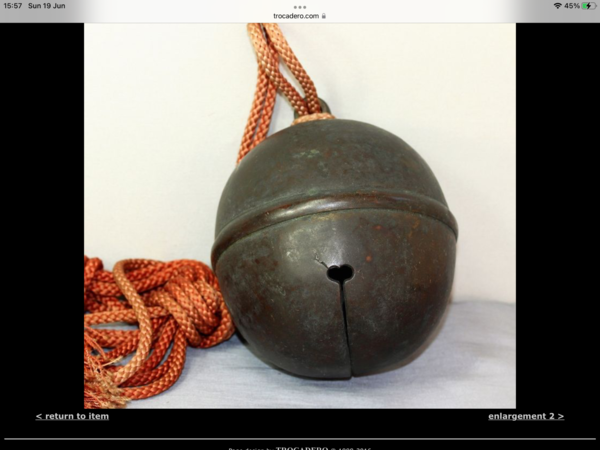
This isn’t Hotei. It’s a Shinto priest cleaning a large temple bell. See the image I posted above.
-
The image is of a priest cleaning a large shrine bell.
-
Looks far to thick/heavy to be a kozuka blade. Much more likely a modified Indian Peshkabz or Kard……or maybe just locally blacksmith made.
-
I’m sure Ford (hi again Ford…long time!) will tell us more but from my experiences in Japanese Meiji metalwork (and as I’m sure you all already know) the Japanese were masters of creating alloys where even the smallest variation in their compositions can create a vast range of different colour nuances when put through the same patination processes. Given that Meiji metalworkers inherited most of their skills and knowledge from sword fitting makers it is reasonable to assume the “soft metal” tsuba etc makers utilised nearly the same variety of alloys. I guess the only way to be sure is to have it analysed by one of those “magic scanner guns” that can accurately measure the metallic element composition. The tsuba under debate could be an alloy that I have often seen called Sentoku. The surface looks as if it may have been created using an etching technique and it may have lost its original patina which causes further confusion! Just my thoughts.
-
https://www.bonhams.com/auctions/26734/lot/661/

-
………but the “jagging” along the edges of whatever they are is very typical of how feathers are depicted! They are also a totally different shape to those in Dale’s post. Hmmmmm……
-
My money is on “fluffy” feathers. On some of them you can see the “vein” that runs centrally through a feather. Can’t think of a flower that shape/form. Could argue leaves but again the radiating “feathering” is not leaflike.
-
David, from the images I would say that all 3 swords are prewar. Just how old it’s impossible to tell without the images requested above. The suspension rings looks as if they were a “cheap” type that could used to mount older samurai period saya for WW2 wartime use. They were also used on actual WW2 saya. The original kurigata is simply removed and the suspension mounts slid up the saya, sometimes glued in place. It’s a quick way to remount the sword. However the original saya sadly sustains damage in the process….chipped and worn lacquer etc etc The one with two rings was possibly mounted for a naval officer but the saya on that one looks WW2. Just my opinions….others know far more than me! I’m sure I’ll be corrected!
-
Does this make more sense?
-
Dumb question maybe…….but is this definitely iron?? In the images it looks like it could be copper with a lovely patination..
-
Thanks Paul. PM sent.