Matsunoki
-
Posts
3,831 -
Joined
-
Last visited
-
Days Won
71
Content Type
Profiles
Forums
Events
Store
Downloads
Gallery
Everything posted by Matsunoki
-
Sorry Piers!! As Thomas says…it’s much clearer in the link I put in. Genuinely appreciate your kind help, thank you Apologies for any eye strain All the best Colin
-
Hello again Lee Quite a few swords regularly crop up in various UK auctions. Very often they are crap or worse still Chinese fakes so you need to very very careful. Don’t take what the auctioneer says as being correct….build your knowledge first. Having said that a good way to find out about all such items is to use the search facility in www.the-saleroom.com. This is an online platform used by most auctioneers to enable online bidding etc. Hundreds of catalogues are always online and you can search them all in a few seconds. Don’t just put “Japanese sword”, instead use the specific sword words ie katana, Tachi, wakizashi etc. You can also set up your account to save everything you’ve looked at and thus see what pieces made etc. You’ll have to play with it a bit to figure out how it works but you will see lots of swords. You don’t have to actually bid to use the system. Also keep an eye on Bonhams Japanese sales and Thomas deal Mar in London. Also Holts auctioneers often have swords. Don’t be afraid to ask the auctioneers for more info on things like condition, provenance etc and if they are uncooperative then walk away. Trouble is ….everyone else will find them as well so don’t expect bargains and don’t forget the damned auctioneers commission. The safest and most enjoyable way to buy is from people/collectors that you know and trust where you can handle the sword and “have a deal”…..build your network! And don’t be suckered by trusting images/photos. They will never show you the true sword. A polishing technique called Hadori can sometimes hide a multitude of “issues”, and it’s usually impossible to see the true hamon in images where that style of polish is used? ……and don’t be afraid to ask this Forum for advice before buying.….. Happy hunting. Colin.
-
Thank you Thomas. Very kind of you. All the best. Colin
-
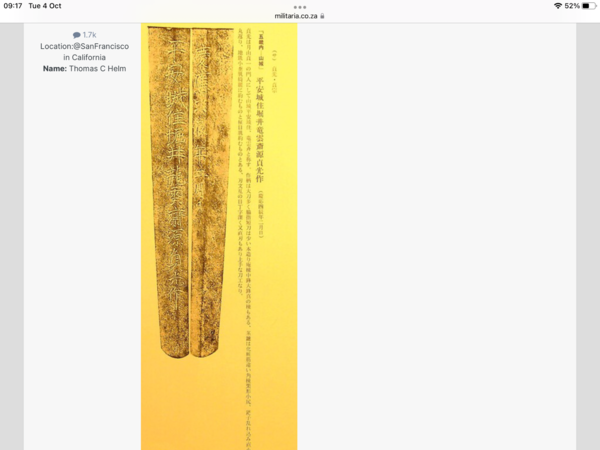
Hello again from the UK I have the sword in this link posted on the Nihonto Forum Apparently there is little known of this Bakumatsu period smith allegedly a pupil of Gassan Sadakazu TORU2020 has kindly sent me an image of this page from a Japanese book. Sadly and with apologies I am unable to read it and wonder if anyone can pick out anything that tells us more about the smith? Obviously I am not asking for a full translation…..just anything that gives us an insight into him. Any help gratefully received! It’s a lovely sword….shame to not be able to “flesh it out a bit” All the best and many thanks. Colin
-
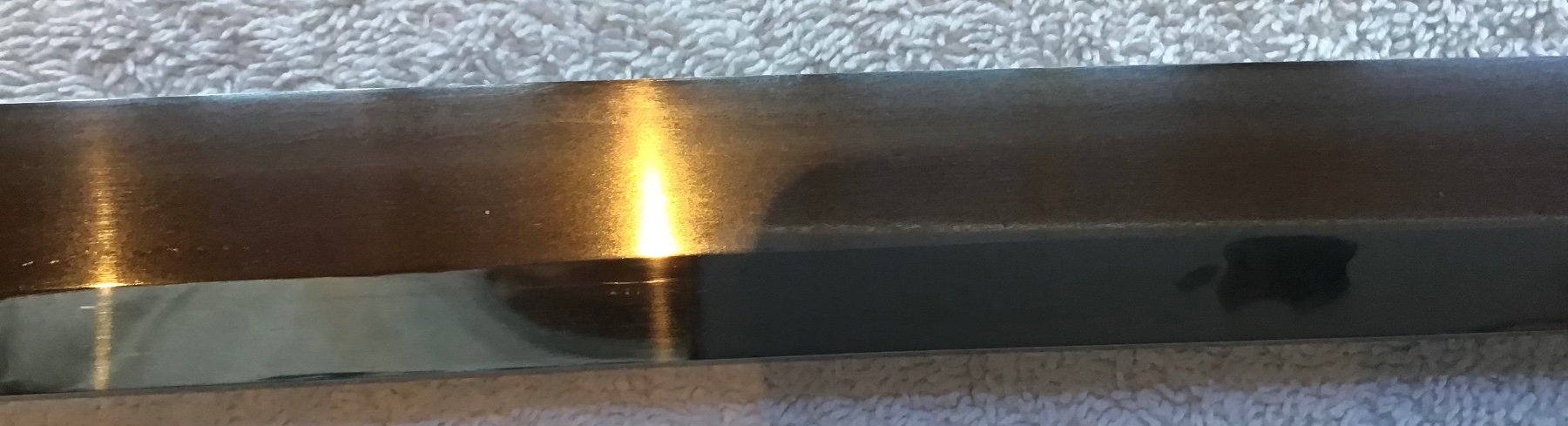
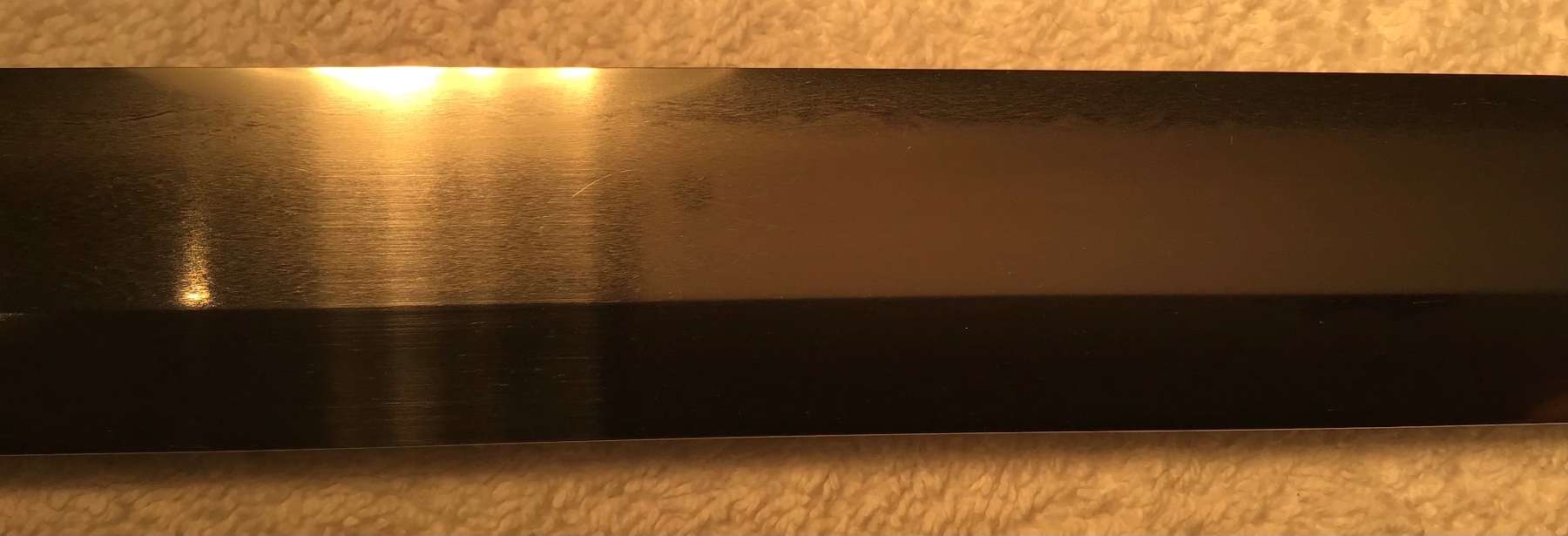
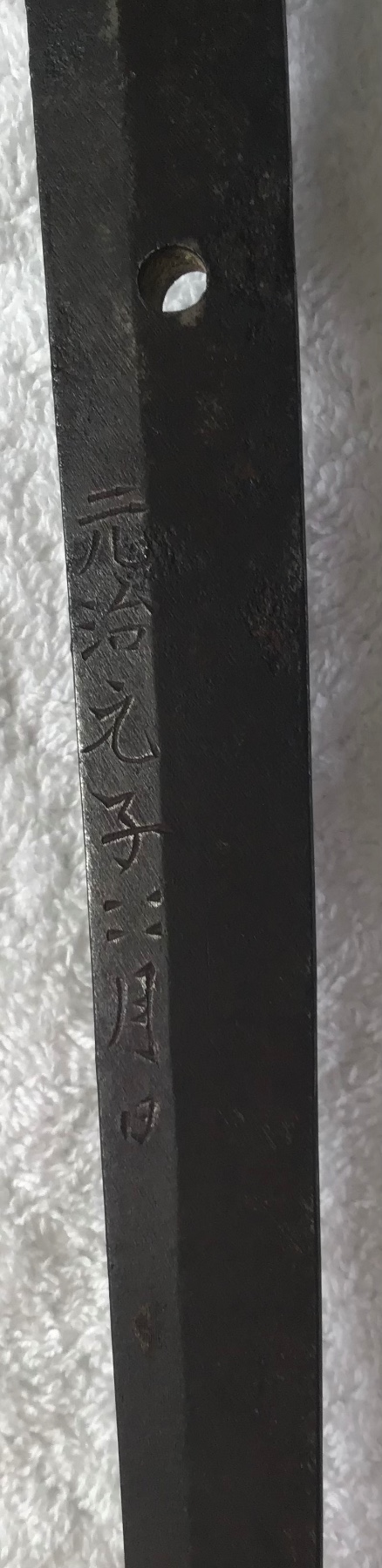
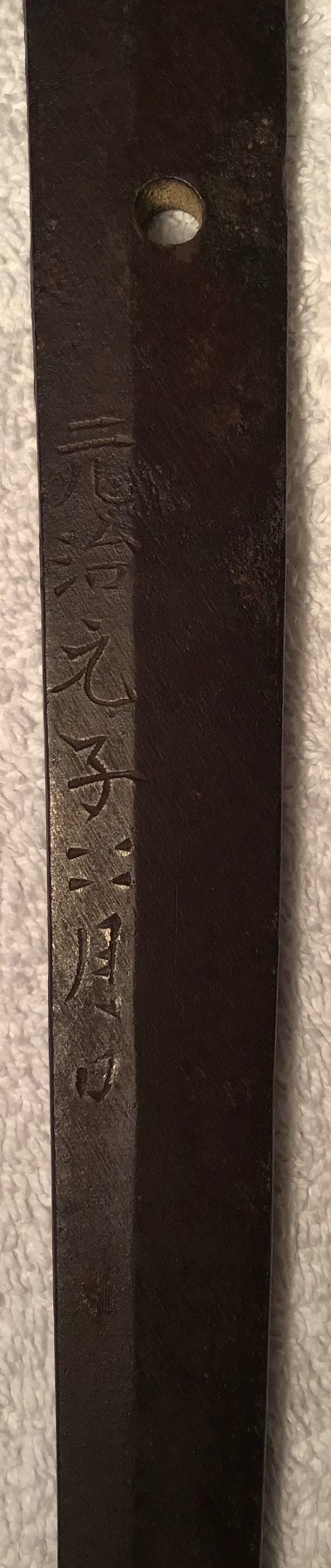
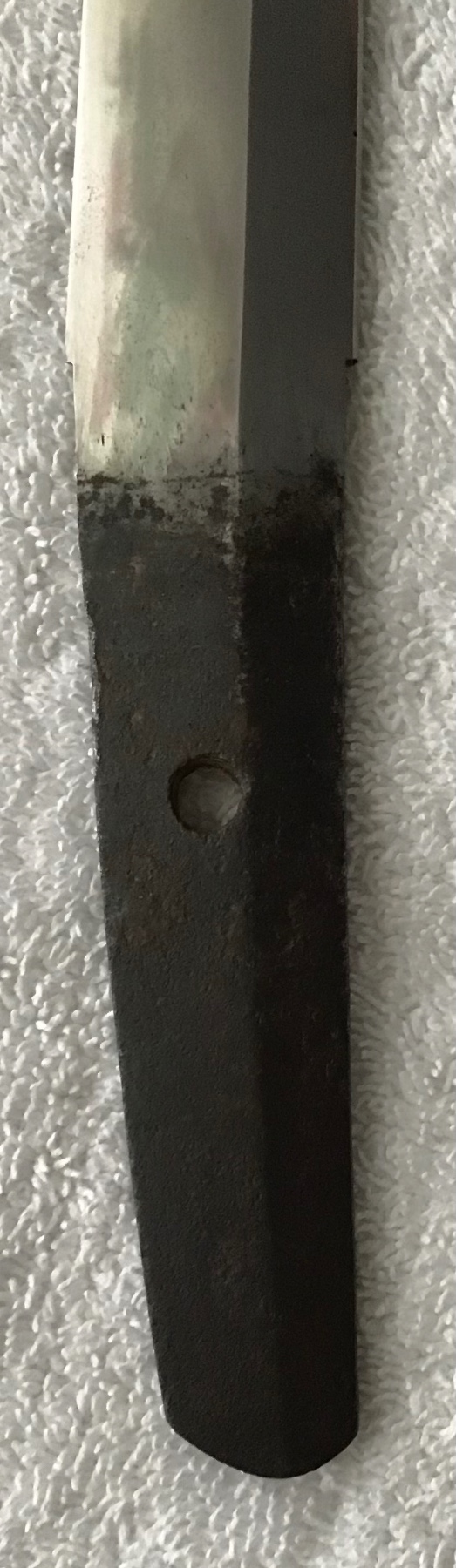
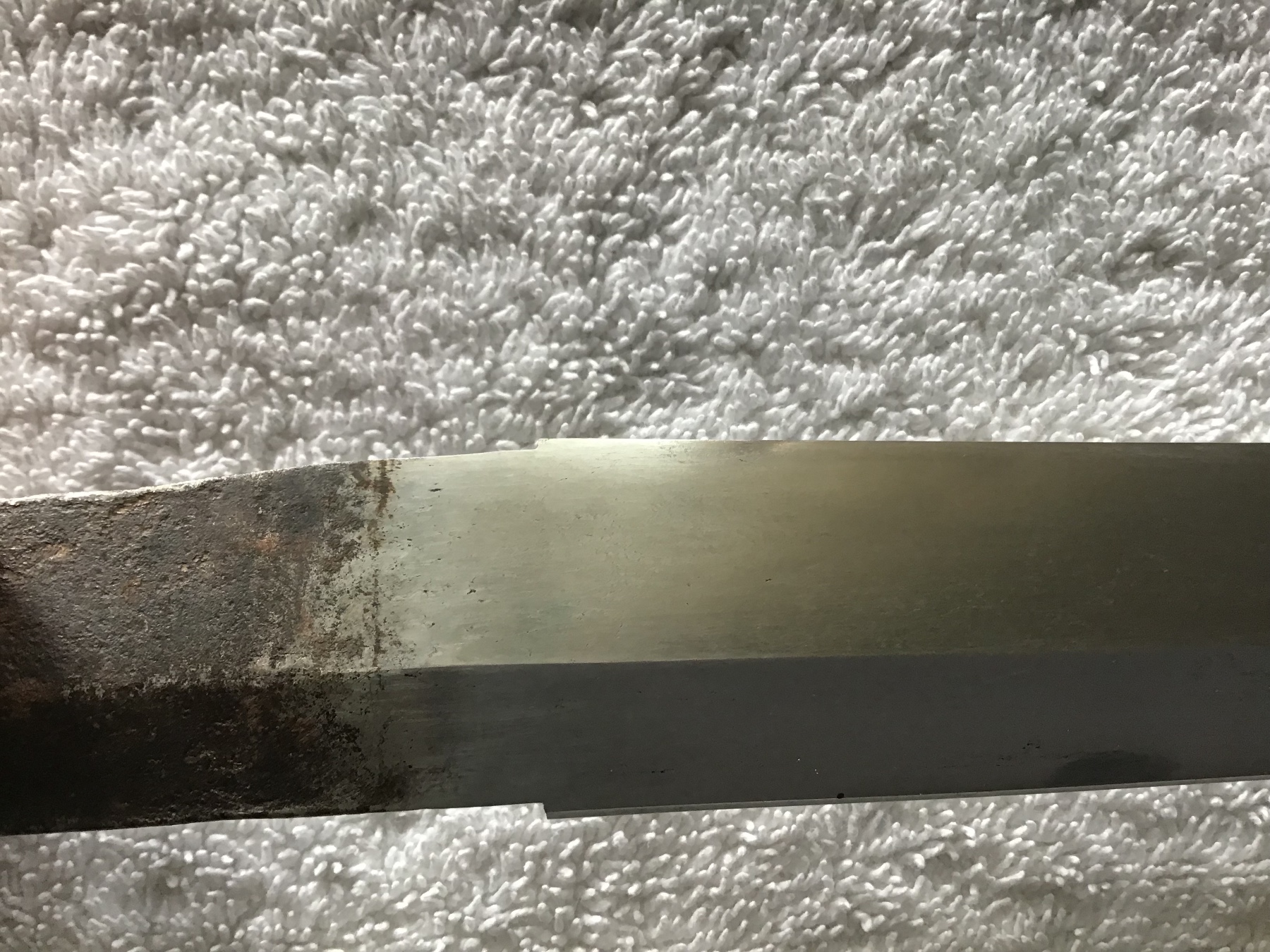
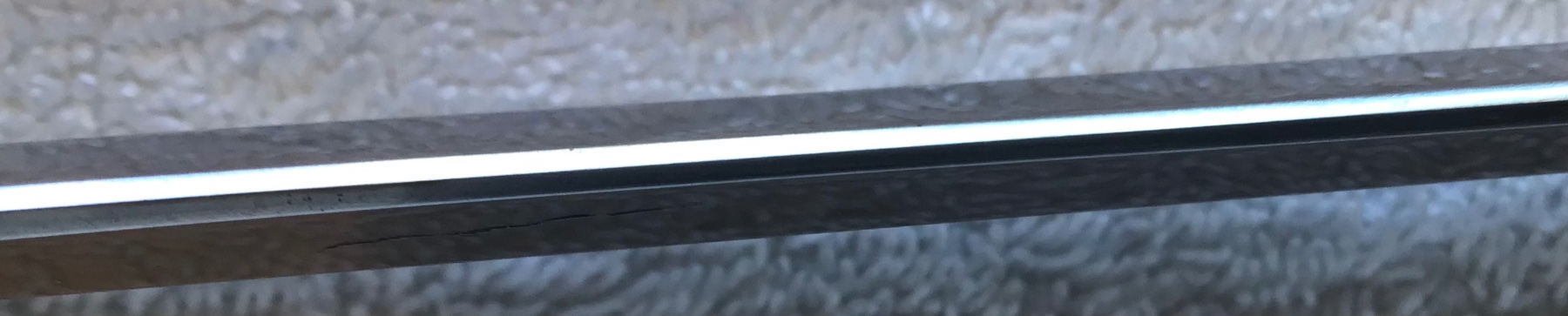
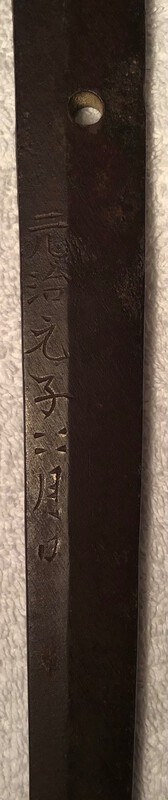
I believe this large katana to be an example of what is sometimes called a Kinnoto sword allegedly carried by Imperial loyalists in the Bakumatsu period. Often characterised by exaggerated nakago length and a sugata rather lacking in sori. The Mei reads (I think…please correct me) Heianjo ju Horii Ryuunsai Minamoto Sadamitsu Tsukuru Kore Dated Genji 1st year a day in April (1864) (thanks to help from Manuel COD on this forum with the date) All I can find out about this smith is what my old Hawley tells me….(SAD505)….Student of Gassan Sadkazu. PLEASE CAN ANYONE ADD ANYTHING ELSE? Nagasa 79.3cm (overall 106.2cm) The forging is flawless and very heavy Hada is a very tight and dense itame…..quite difficult to discern even in hand Hamon is chu suguha with very light/subtle midare. There is clear suguha utsuri visible along large sections Boshi is suguha komaru with short kaeri The koshirae is very utilitarian….the tsuka has been borrowed from another sword and is barely long enough to accommodate the nakago, the saya is a roiro lacquer and the tsuba is large in iron with a very stylised design of Kirimon….possibly interesting…I’ll post it on Tosugu for comment. Iron F/k with basket weave design. All comments/help gratefully received. Many thanks. Colin


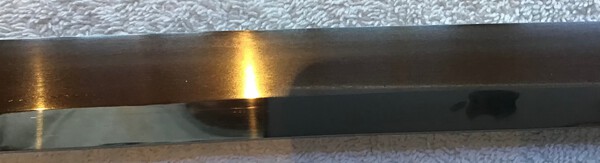


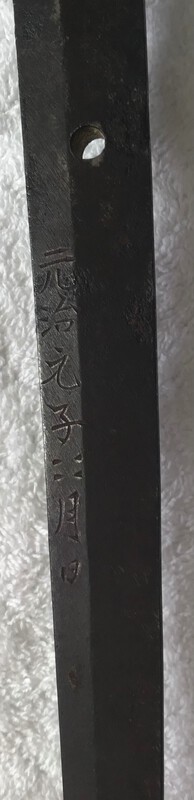
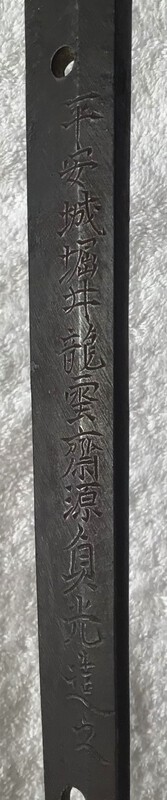
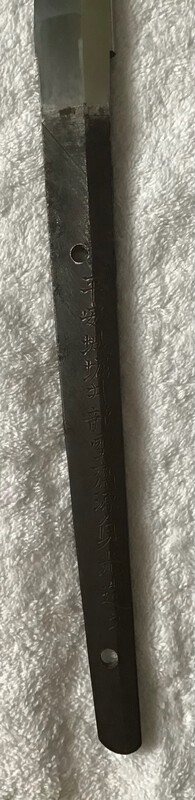

-
Hi Tony Be very interested to see what Ford says but imo it is the same tsuba as in the book, it is nowhere near good enough to be Natsuo from a workmanship and artistic perspective and thus the book is wrong. That’s not unusual……many museum collections/ref.books contain many mislabelled and misattributed pieces. I await Fords ruling….gulp. 🙂
-
I should have added that real swords or daggers were not permitted in the tea ceremony so these “Bokuto” took their place. Also, for flower arranging versions search for Ikebana knife. That will head you in the right direction. Both are a separate collecting field in their own right and some can be spectacular quality. Some also look exactly like the real thing….but they are rare. happy hunting best. Colin
-
Have a look at this link - on this forum. You could search for Bokuto or Chato.
-
I agree the carving of the fur is very well done….and the bear does look like he is hooking a salmon out of the river. I don’t think it’s got much age though so perhaps even a post war souvenir item?…..but ultimately the only thing that matters is that you like it …..that’s the best reason to buy anything. Enjoy it!
-
Evening Alex. This may be a dumb thing to say but, could it be that in the lower of the two Tadakuni we are looking at a nakago that has had a minor machi-okuri (maybe to remove a chipped ha machi - an inch or so) but has remained ubu and using the original mekugi ana? The yasurimei stop way short of the machi in comparison to the one above and somehow as a result the mekugi looks too far down the nakago. That would account for the apparent hamon continuation. Does that make any sense at all? To my mind there are several things that can confuse us (well, maybe just me!) re where hamon ends….machi okuri, Hadori polish, requenching , photography techniques etc. I sometimes wonder if we can believe what we think we can see. Best. Colin
-
Hi Evan The wood looks very much like boxwood……but I’m not entirely sure it’s Japanese…..although as you say it could be folk art/amateur work. Usually the bears fur would be carved “all over” and things like the underside of the feet would be fully carved as well.
-
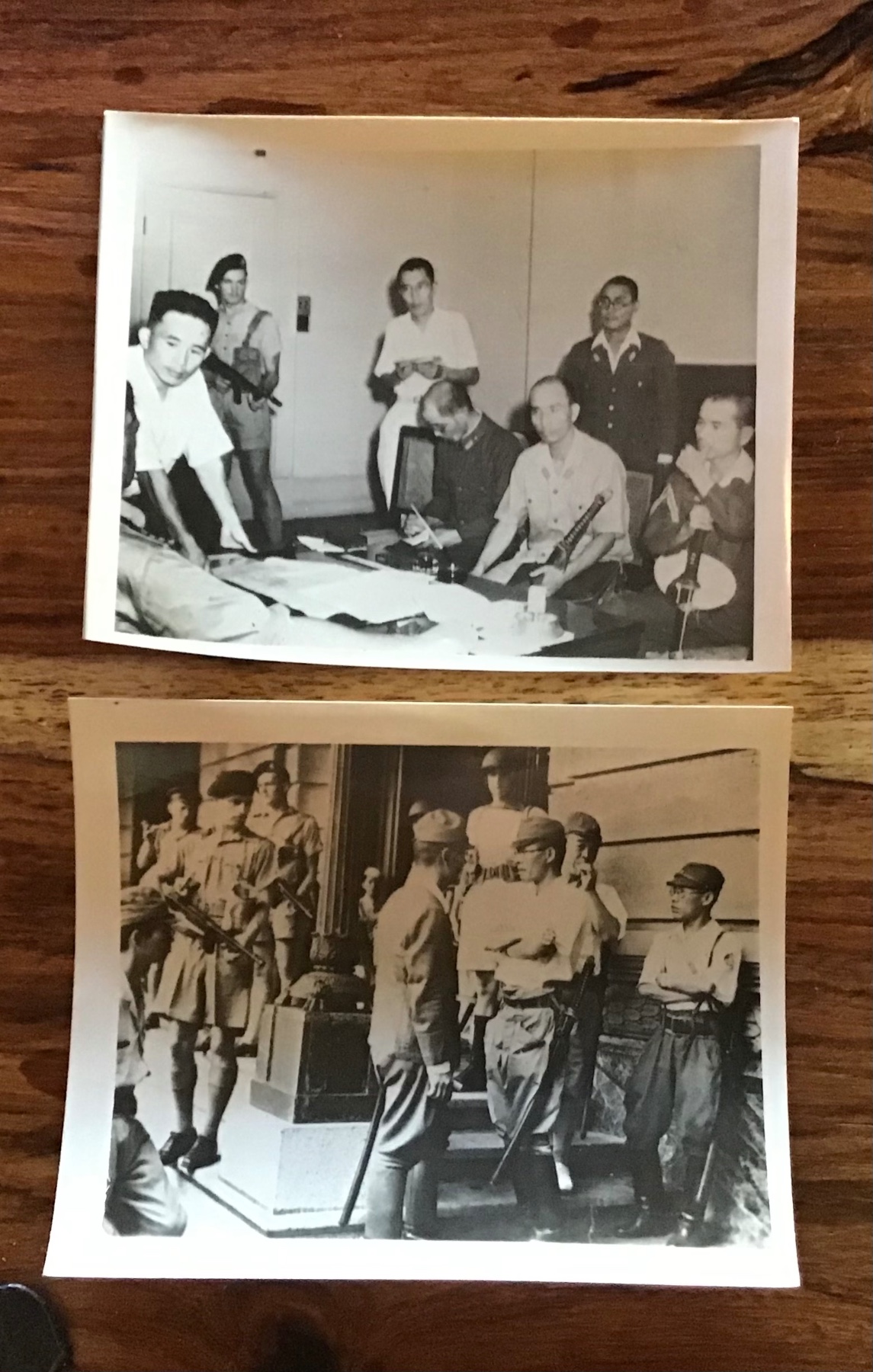
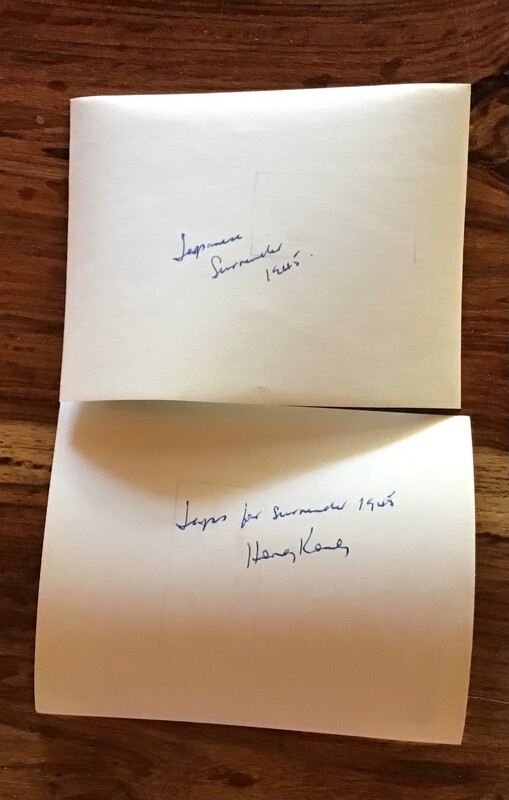
I’ve just found these two old original photos amongst some stuff. If they are of interest to anyone let me know and I’ll try to get better images. All the best. Colin.

-
Hi Lee. Welcome. I’m a fellow uk resident and also belong to a “well known uk organisation”. This forum really is superb. There are many experienced and knowledgeable members who, in my experience, are happy to help and guide us. Don’t be afraid to jump in. Enjoy. Best. Colin
-
I’ve been on the forum a lot in last two weeks. The dehydration that came with my food poisoning caused gout in both feet so I’ve been chairbound nursing some ******** sore big toes and using the forum as diversion therapy. Thus had to watch the booze intake but a bottle of Shiraz and a large glass is now heading my way. As for buying…..I have that chronic disease anyway but that only hurts the wallet not the feet🙂 Cheers Alex, have a blurred evening.
-
Thanks Alex, that is very kind of you. Interesting…..very similar shape…maybe mine has a bit more sori towards the kissaki. The big differences are that mine has a much higher shinogi and a far narrower mune. What that tells me I’m not sure🙂 . Shame we can’t see the true hamon in the sword….reminds me how much I detest Hadori polish. Mine is in far worse polish but at least you can see what the basic hamon is (in hand). I would not have seen this sword….I don’t follow any Japanese websites. Maybe I should!
-
Evening Alex I’d love to get all my swords polished…..but how? Don’t want to send swords all around the world and encounter the problems that seem to proliferate nowadays. (I’ve had my share of problems with carriers, border force et al) Only one (as far as I know) respected polisher in the UK and I’m on his 2 yr waiting list with 2 swords. I can live with swords in poorer polish as long as I like them as a “complete unmolested package”. I would always prefer a slightly tired polish in original koshirae than the same blade in shirasaya. To be honest, there is less to worry about if it’s a little bit rough ….I’ve got an Ishido school Katana and some nice Gendai/Shinsakuto in mint polish and shirasaya and they make me nervous as hell🙂 On this sword I’ve changed my mind several times….naginata vs Wak……you can argue it both ways……and we may never be certain…. ….but I’ve at last learned to be comfortable with uncertainty!🙂….especially as I am still recovering from nearly dying in hospital with severe food poisoning! That makes you think a bit. PS - keep away from Chopstix chicken noodles!!!!!! Best. Colin
-
Afternoon Alex. You make it sound so easy!!!!! I will freely admit to being thoroughly confused most of the time when attempting any form of “kantei”. I’ve been away from swords for over 30 years and what I learned first time round has been long forgotten…..and was probably wrong anyway as the level of knowledge in the uk back then was very shaky….no internet…just Hawley, Yumoto, Ogasawara and Robinson plus a few books in Japanese. We did have the Token (of which I am a member) but attending meetings in London were (and still are) difficult living where I do plus it was a bit “exclusive” back then. Sadly the condition of this sword and the absence of a Mei makes it rather daunting for me. My best shot was late Muromachi Mino den. I see from the replies that I have been lucky enough to receive that people with far far greater expertise than me have some conflicting opinions and that at least reassures me that I’m not a totally lost cause! I’m also hampered by a dodgy short term memory especially for names which would include smiths, periods, schools and even the gokaden! That’s not an excuse, sadly it’s a fact. And so, accepting my limitations, I will continue to try and buy swords (not just blades) that I like (irrespective of who may or may not have made them) ………enjoy them, preserve them …….and come begging to this amazing forum and the generous people like you for help when I hit the brick wall! That is my way of collecting……and it’s the most fun I’ve had for a long time! Thank you again for your assistance and time. all the best. Colin.
-
Thank you Manuel. All the best. Colin
-
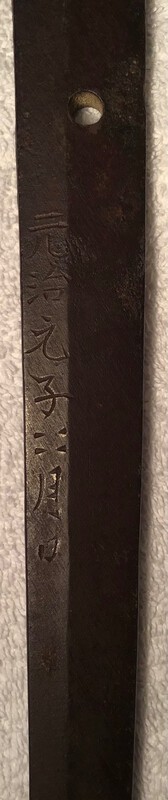
This date is from a large “Kinnoto” style katana that I will post in full in the next day or so on the “Nihonto” forum. However can you help me with the date please?…..embarrassed to say I’m struggling. I’ve got Genji, month and day but what are the other kanji? Is the one with four strokes forming a square another way of saying 4? very grateful for all the help I get on this Forum. many thanks. Colin
-
Hi Jean, the sword does have an intact boshi with kaeri….you can just about see it in the image of the kissaki area. However (and I’m probably wrong) I thought some of the early nagamaki/naginata were actually made in this sugata rather than the more “normal” naginata form? Hi Thomas. Thanks for the tip but I use my old iPad (don’t have any other cameras) and it doesn’t have a flash! ….getting a bit left behind by tech sadly. Hi Kirill, thanks for your thoughts. I’m leaning towards Waki as well……but still can’t quite reconcile the strength that the hamon disappears into the nakago with. It doesn’t look machiokuri so we can’t blame that. Greatly appreciate your help.
-
Hi Alex. Thanks for looking. Nagasa 38cm but it’s a lot heavier/meatier than most “normal” shinogi zukuri wakizashi of the same length. I’ve tried everything to get better images…….but what you see is the best I can do sadly. Bizarrely the images of hada and hamon are a bit better than what you see with naked eye!! All the best. Colin
-
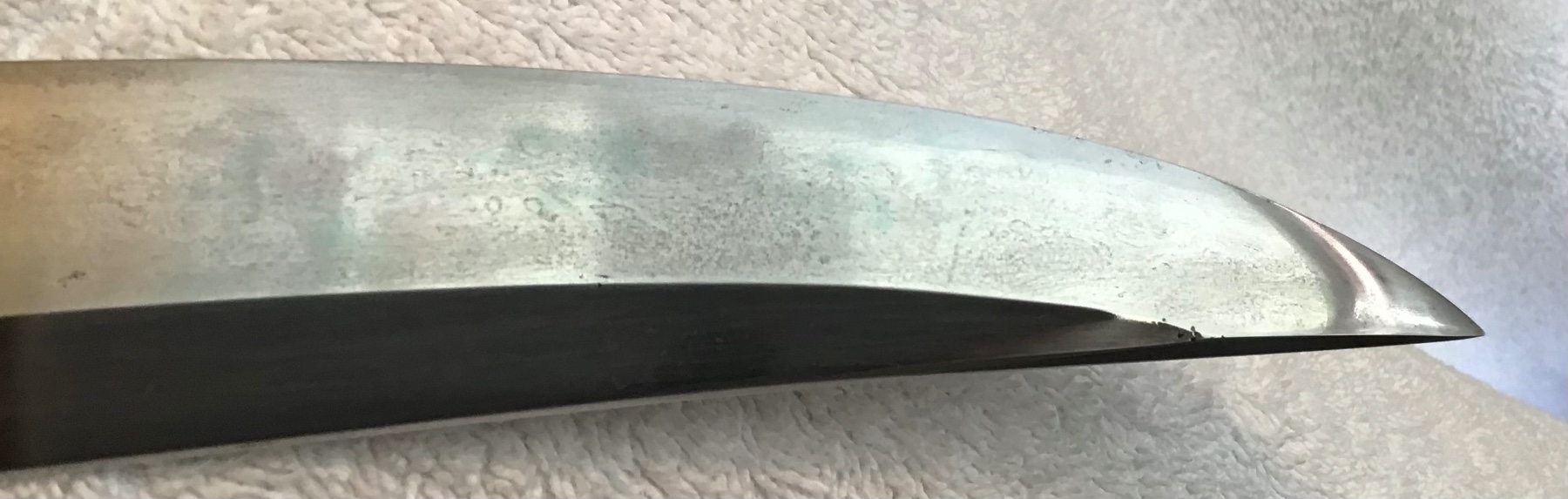
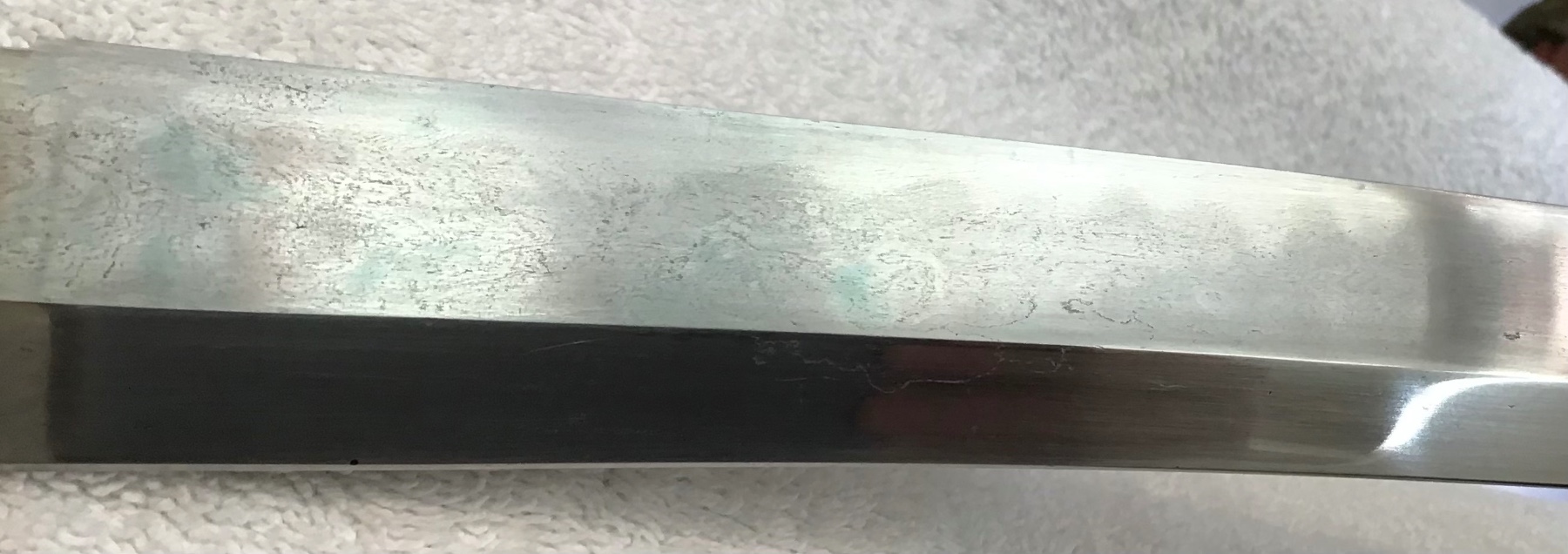
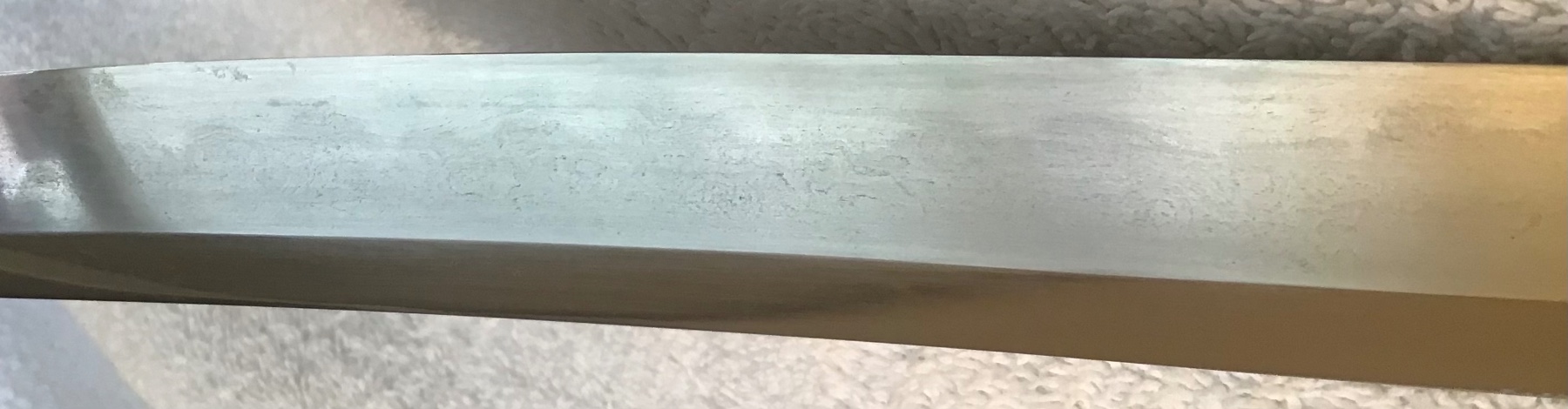
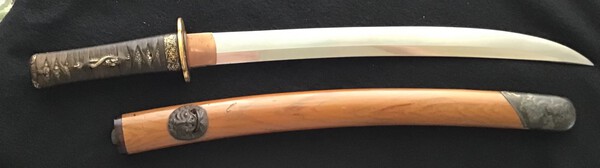
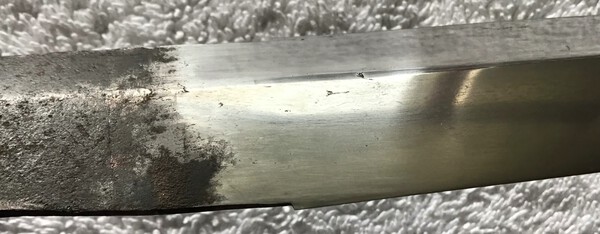
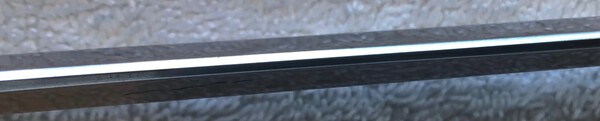
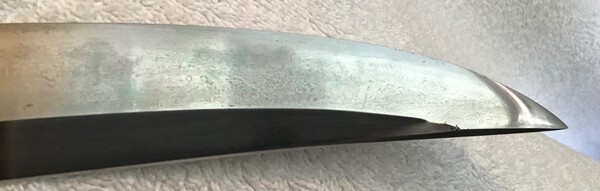
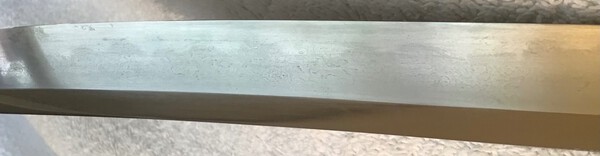
ALL OPINIONS SOUGHT! Many thanks in advance I was attracted to this wakizashi by the nice overall and untouched iron koshirae and from images I thought I was buying an ubu mumei shobu zukuri wakizashi. However looking more closely I believe it could possibly (or not!) be a suriage koto nagamaki on account of the hamon clearly and strongly disappearing off down the nakago …..and the overall sugata. I have tried to image the salient features but the polish is old and worn - The nakago has a deep black patina and is considerably thicker than the blade so if suriage it was done some time ago Hamon runs into nakago with no variation…..hataraki not visible…..worn polish Very high shinogi and very narrow mune Dark steel with a rough dirty look and irregular gunome hamon Coarse hada a mixture of mokume and itame. Some mokume burls grouped in 3s Happy to make an idiot of myself…..maybe Mino den late Muromachi? What do you think? All the best Colin








-
Hi Jesse i think monkeys have always been significant in Japanese folklore. In very early times they were regarded as messengers of the Gods and I think the Tokugawa Shogunate (Ieyasu?) designated them as a deity but I can’t remember what for. Then they became popular as “street entertainers” with their human trainer but conversely at other times were viewed as representing the “shifty” or unpleasant side of humans! In the UK we have a saying “crafty as a van load of monkeys”……maybe there is something similar in Japan? Whatever…..the design allows the craftsman to admirably show off his carving skills.
-
Can we tell by looking at the hitsu-ana? The kozuka is usually located on the back of the saya with the kogai facing outwards? ….or have I got that round my neck? Thus on the two above the omote would be the “birds” as the ana for the kozuka is usually wider……I think🙂
-
Have a look at this website and search for “tsuba”. There are several very flashy mixed metal pieces….. most of which I owned a while ago! He is an excellent dealer. Also has some very impressive Ken which are more art than sword. https://steveslyjapaneseart.com/