Ray Singer
-
Posts
5,376 -
Joined
-
Last visited
-
Days Won
147
Content Type
Profiles
Forums
Events
Store
Downloads
Gallery
Everything posted by Ray Singer
-
I will communicate that as well. Thank you... Best regards Ray
-
Hi Jean, I tried to walk him through this approach but it was not successful and he is concerned about injury or damage to the sword. Perhaps an in person visit, if one can be arranged, would be best for him at this stage. Kind regards, Ray
-
Are there any members in Connecticut who could help a friend of mine with an issue with his sword? One of his shirasaya has become stuck, undoubtedly due to changes in humidity (low humidity and the wood has contracted tightly around the habaki). He is a relatively new collector and I was hopeful someone here might help him extract the sword so he can keep it loosely closed until the weather changes or until he can have a sayashi adjust the saya (I have recommended John Tirado). If anyone might be able to help, please send me an email at raymondsinger@gmail.com. Many thanks, Ray
-
Hi Michael, I would say that Ko-Uda can also meet that description. The work of shodai Uda Kunifusa has a hamon like this, in a generally suguha tone. I will share some reference examples. I would also say that this type of hamon (only the hamon) reminds me somewhat of Yamato Shizu. Similar to the oshigata attached, the hamon has deep nie, but not depth to the ha like you would expect to see in Norishige. Best regards, Ray

-
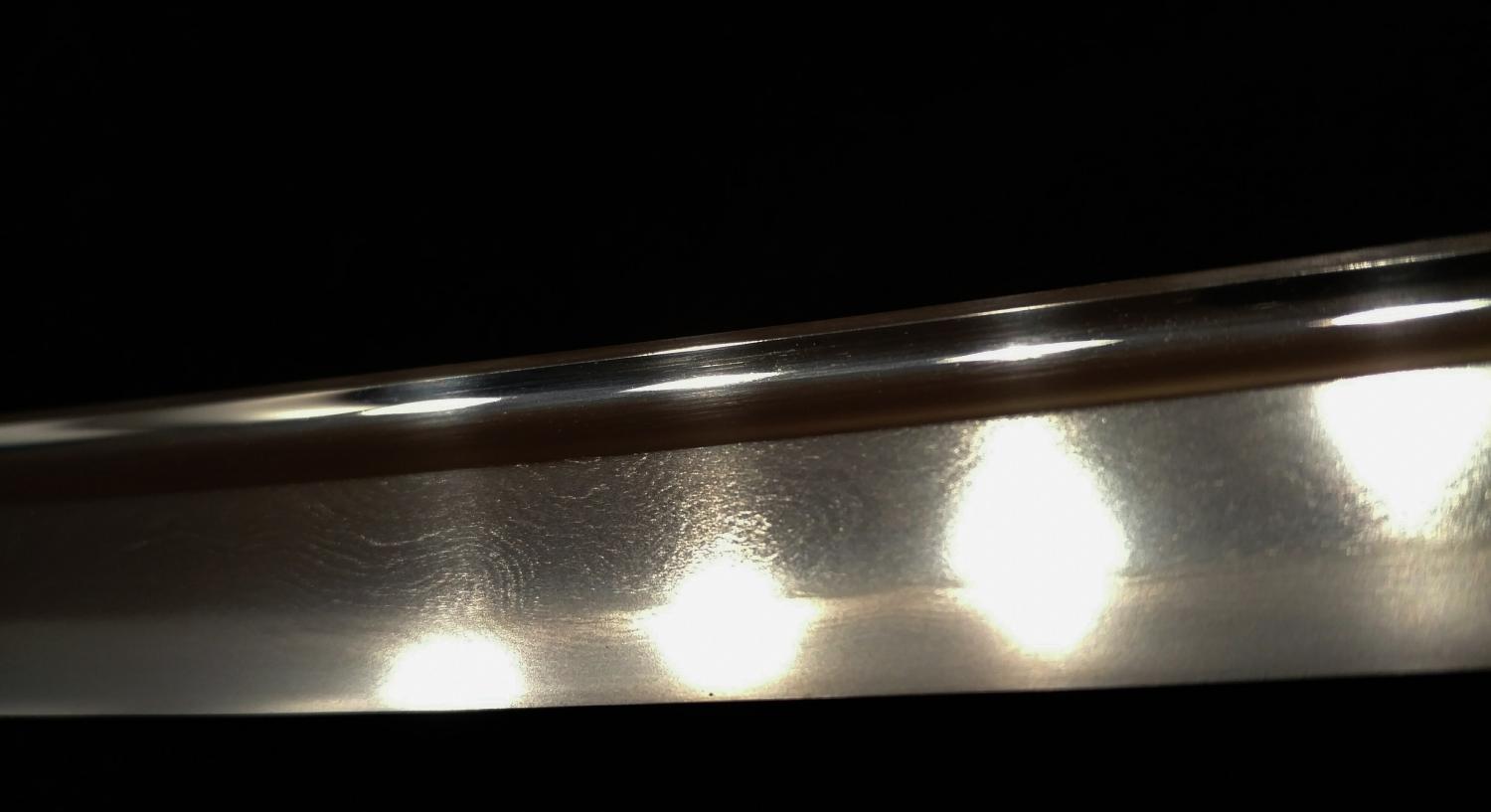
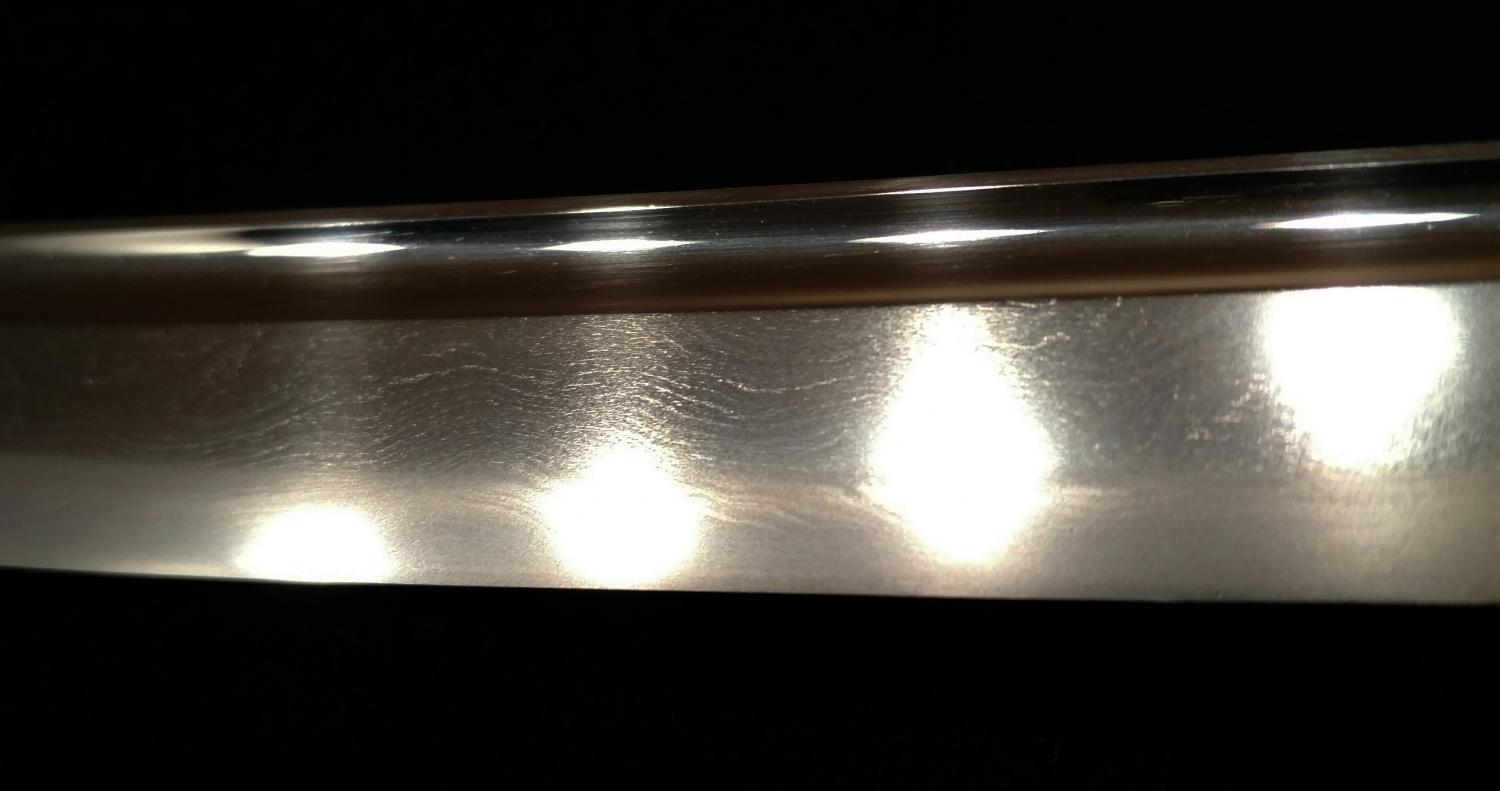
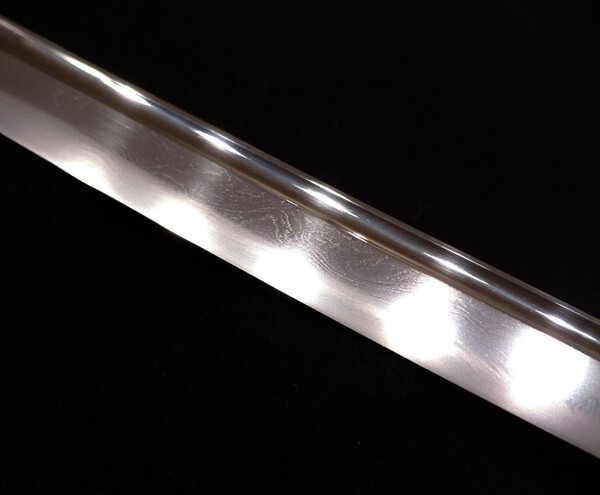
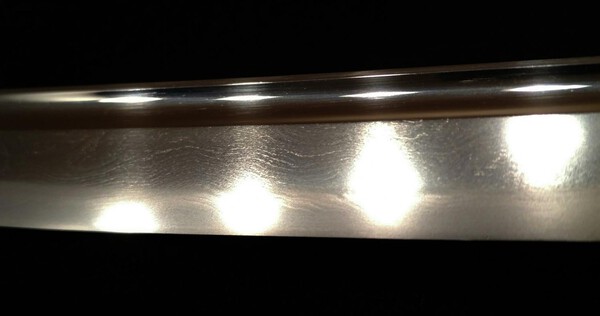
That's more due to my very poor, mobile phone photography. The habuchi is very bright (not at all shimiru), but is also distinct and does not have the vague transition zone seen in Norishige's Ko-Hoki style work. Here is shot which shows the bands of chikei flowing through the ji.

-
Thank you Franco, I agree that some similarities are evidence. There is a calmness of workmanship though, but the influence definitely seems to be there. This was not polished by Moses.
-
Jim Kurrasch used to say that the best test of how clear the jigane is, and its colour, is to view it alongside a small mirror. The mirror being equivalent to perfectly clear steel, as a mirror contributes basically no colour of its own.
-
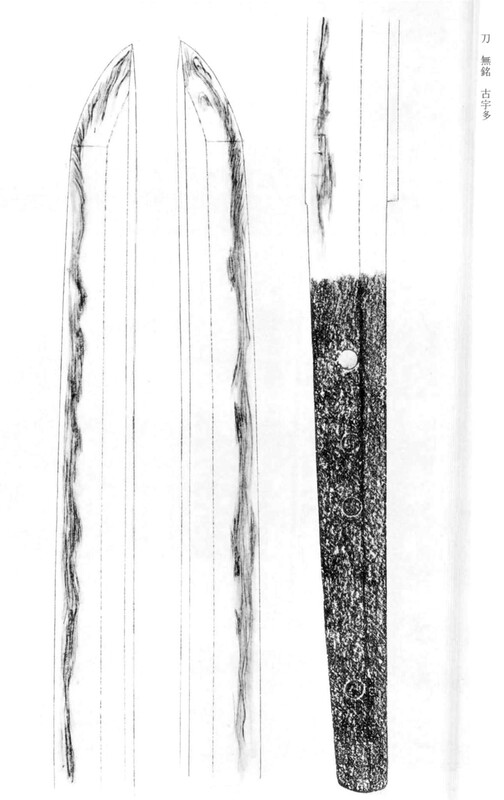
Thanks for the kind words. I will say that it is hard to discern a darkish jigane in this sword, which is first thing one should look for in a hokkoku-mono. The jigane is filled with ji-nie though, and that may be making the color of steel difficult to evaluate. Here is an oshigata from the Zufu which has similarity to this sword and gives an idea of how the hamon appears.
-
I thought this sword would be of interest and would enjoy hearing others thoughts on it. The sword is one I found in essentially zero polish at the 2014 Tampa show. At the time, the majority of the blade was covered in black rust, except for a clear area under and just above the habaki (maybe 3cm total). From what I could, see there was a feeling of ayasugi, not a very regular one that would point to Gassan, and I made a guess of Ko-Naminohira. I was at the show with a friend and asked him if he wanted the first shot, which he jumped on. After polish, there was a feeling like Norishige in places, not a textbook matsukawa-hada but a workstyle that showed some relationship. My guess at that point was something between Tametsugu and a very high quality Ko-Uda. The sword received a kanteisho at the 2016 Tampa shinsa to Nambokucho jidai - Uda Kunifusa, who is considered to be a student of Norishige and falls into the Etchu middle period along with Tametsugu. That said, the sword has not gone to the NBTHK yet or been in Tanobe-sensei's hands, so I wanted to open up for the groups thoughts. I will take better photos if possible this week, but I think the attached gives a good idea of the work in this sword. Best regards, Ray





- 20 replies
-
- 11
-

-
BTW, from the kanteisho length is 2 shaku 2 sun = 26.25" = 66.6cm.
-
Looks genuine to me, but not of great quality. Off the cuff impression of wakimono work like Uda or Hoju.
-
Yes, the third great Ko-Mihara to come up in recent weeks. This is an excellent buy. Good luck with your sale Grant!
-
Very sorry to hear this, a great loss for our community. My condolences...
-
Did anyone here purchase the Dohi Shinryo at auction on Aoi? I did not research the mei, but at a glance it seemed good and sold at a very reasonable price. Hopefully, like the potentially authentic shodai Tadayoshi and nidai Sendai Kunikane which sold in the same price range, one of our members got a good deal on a nice sword. https://www.aoijapan.com/wakizashi-dohi-shinryonot-guarantee Best regards, Ray
-
Short answer is that many bidders are treasure hunters hoping to buy a diamond in the rough, but more often they will have greatly overpaid after the cost of restoration, shinsa, etc. There certainly are treasures to be found on the auction sites if you know what you look for and have a bit of luck, but those are in the minority. For the most part, papered and restored swords are the way to go.
-
To my eyes, looks like Yoshihiro as well.
-
http://web.archive.org/web/20030411153425/http://www.togishi.com/Den%20article.htm
-
 Then you are using the wrong microfibre cloth. https://www.amazon.com/Microdear-Microfiber-Deluxe-Cleaning-Cloth/dp/B0002E3WGI
 -
That is the very point. They remove oils without scratching delicate surfaces.
-
I would likewise recommend against experimenting with chemical rust inhibitors on an old and valuable sword. Choji oil will come off fully in one wipe with a $10 microfibre cloth off Amazon.com. - Ray
-
Just a note that this is a sword I encountered about 15 years ago. It was owned by a friend/local collector and I gave serious consideration to buying it (at a much higher price than is being asked here). A very beautiful, healthy sword. Good luck with your sale Rohan... Best regards, Ray
-
A Most Interesting Wakizashi Listed On Nihonto.us
Ray Singer replied to nagamaki - Franco's topic in Nihonto
Gone. -
Nagamaki Naoshi?
Ray Singer replied to DaViebaPutkataMamina's topic in General Nihonto Related Discussion
What I am seeing is a fairly coarse jitetsu with openings and, as Ron mentioned, a turnback. It is difficult to evaluate in the photos you have taken, but looks like it may have saki-zori as well. My impression is Sue-koto. Not a Nambokucho-period naginatanaoshi. -
Wakizashi Cutting Test
Ray Singer replied to Prewar70's topic in Auctions and Online Sales or Sellers
Refer to the June 3, 2015 post. https://www.facebook.com/groups/collectingjapaneseswords/search/?query=gore -
A few suggestions for polishing agents: Bob Benson, Paul Martin and Mike Yamasaki.