Jussi Ekholm
-
Posts
2,394 -
Joined
-
Last visited
-
Days Won
46
Content Type
Profiles
Forums
Events
Store
Downloads
Gallery
Everything posted by Jussi Ekholm
-

Earliest dates of extended kissaki
Jussi Ekholm replied to bigjohnshea's topic in General Nihonto Related Discussion
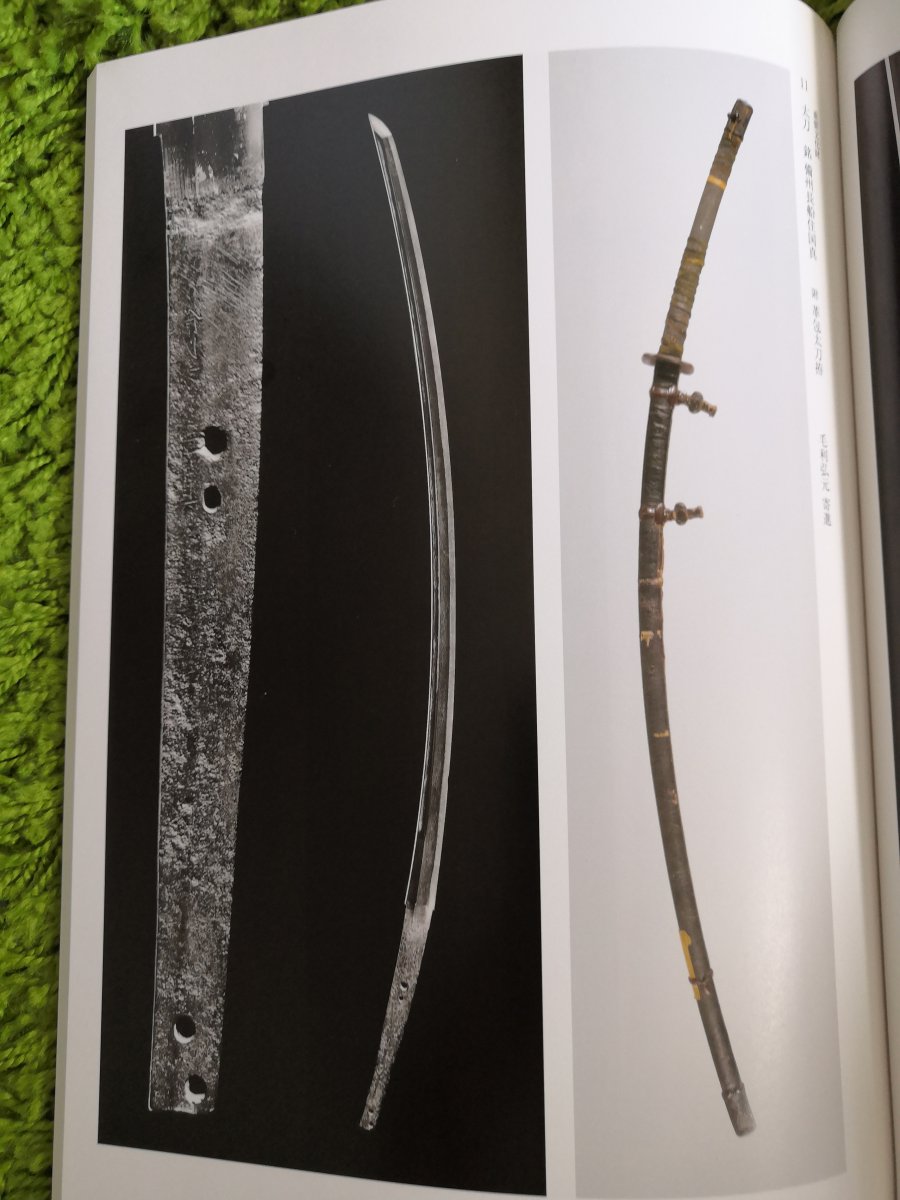
I do have few examples of dated ōdachi from Kamakura period but unfortunately I lack pictures of their kissaki, so I cannot comment on those. I believe this ōdachi by Bizen smith Kunizane that is preserved in Itsukushima-jinja might be among the earliest remaining. Unfortunately I lack many measurements of the sword but long kissaki can be seen in the picture. The sword is designated Jūyō Bunkazai and it is 106,6 cm in blade length with 5,9 cm curvature. Koshirae is 181,5 cm. The sword is most likely from late Kamakura period.
-
What book is this and is it copyrighted?
Jussi Ekholm replied to Brian's topic in Translation Assistance
I believe the title would be 在外日本古美術品保存修復協力事業 - The Cooperative Program for the Conservation of Japanese Art Objects Overseas And this is 工芸品/絵画 Crafts / Paintings? There is some info about the project in here: https://www.jcic-heritage.jp/project/asia_japan_zaigaibijutsu_201412/ -
NEW SOFTWARE and UPDATES
Jussi Ekholm replied to Brian's topic in Forum Technical Details and Maintenance
http://www.nihontomessageboard.com/links.html Or you can alternatively go to (Under banner) Pages - Links -
I am not sure what is the correct reading of very rare term 長刀, I have it listed as synonym for naginata in one big glossary book, and Markus has it related to naginata too. Here is probably the only NBTHK paper where I have seen that writing used for an item and Aoi listed it as Nagagatana. I would think like Geraint and Adam above that these blades are just pushed into old poles.
-
Number 16 is actually Chinese made production sword, Cold Steel O-Tanto. The reason why the tang is "overpolished" is due to it being made c. within the last 10 years and Cold Steel using a stamping method as they put a serial number of the item on the tang. The stamp has been filed off on this...
-
I might have been bit unclear in my reply. 1st: Tadamitsu - 備前国住長船忠光 / 永正元年八月吉日 2nd: Tsuguhide - 萬歳源継秀造之 / 八月吉日 Tsuguhide worked in the late 1700's to early 1800's. Musashi province, lineage of Tsuguhira smiths.
-
Check the date on the first one with these 元 , 八 , 吉, as it is from 1500's but not quite 1512.
-
Like Bruce wrote above it is bit later than beginning for the first one. I believe the mei on the second reads - 萬歳源継秀造之 so you would be looking for references for Tsuguhide.
-
Thanks for the info on the original tsuba Yazama. After seeing that cast copy on the display sword, I wouldn't have thought it was from original by Natsuo. Would be great to compare the original and copies side by side.
-
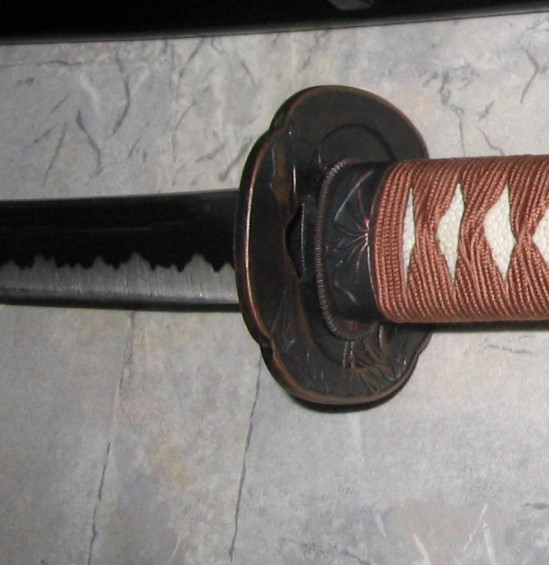
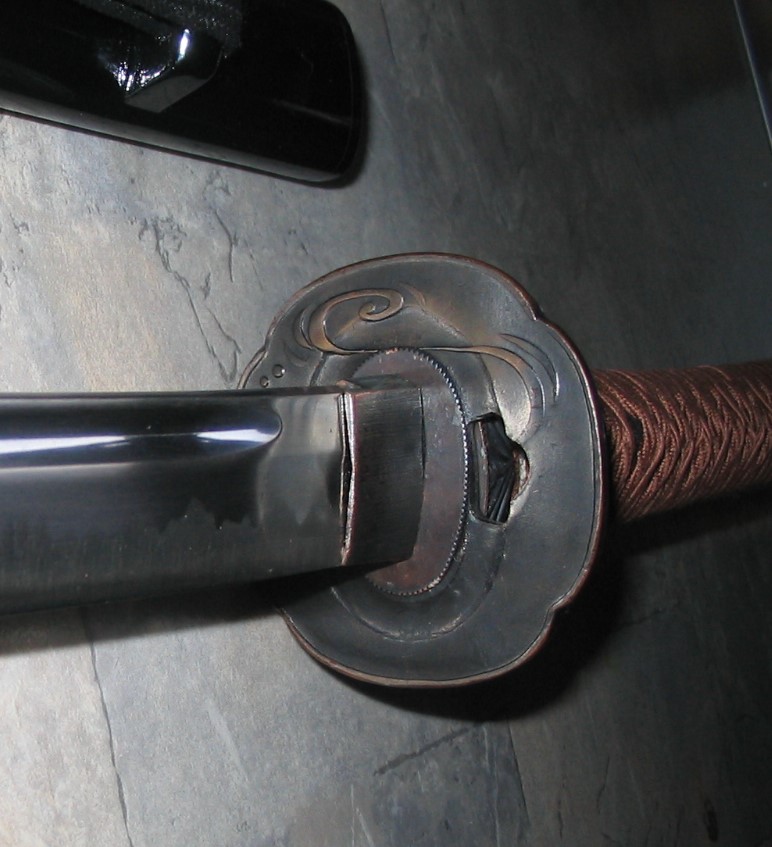
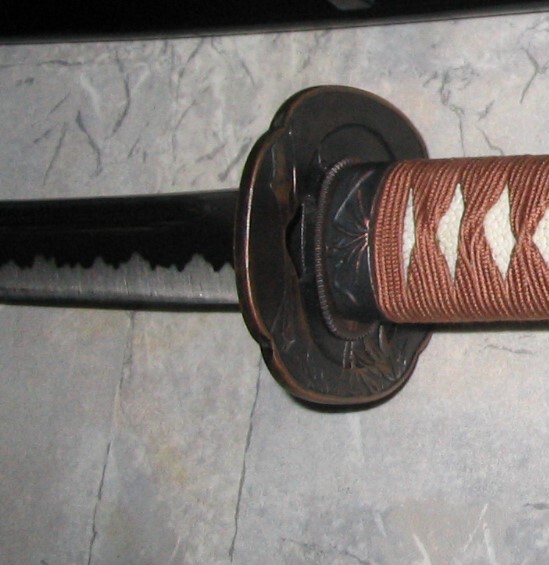
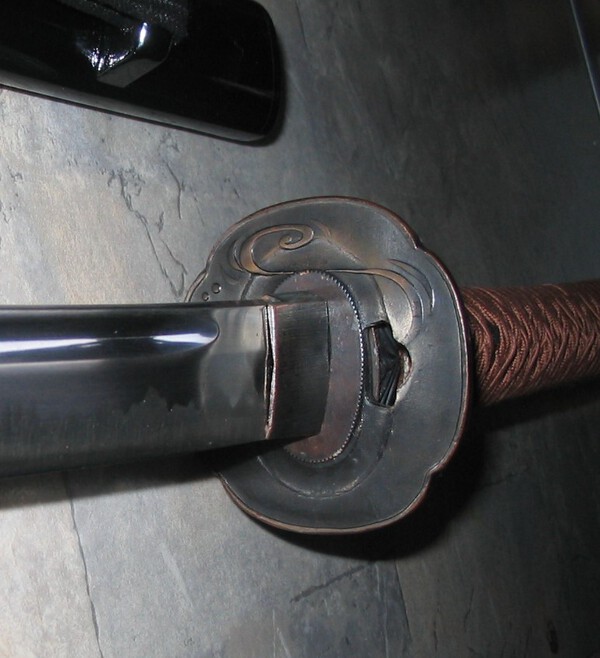
Thanks for posting this Yasaka, it is very informative. I used to own a cheap Japanese mogito (zinc-aluminium display sword) about 10 years ago that had the same tsuba as you have there in your last link. Unfortunately I have only bad pics of it remaining. Hopefully it can be seen in these images. Very cheap item.
-
I agree Robert it is definately one of the best collections in the world. There are few amazing collections/museums in Japan that are similar in quality (absolute top) to this and I believe are private. I have gone through the Kokuhō, JūBu & JūBi and it is amazing to see where some items are located. Agency for Cultral Affairs holds a database that has all Kokuhō and Jūyō Bunkazai. As Bijutsuhin is outdated designation I don't think there are any databases for those and I have seen that since the Bijutsuhin books c.1985 some items have been relocated, which is no surprise that they might change ownership as years go by but they are harder to track down. It was very apparent with Bunkazai designated items as the book I have on them is from 1977 and the database has what I believe to be up to date info, as many were relocated during that time period.
-
Could the end of signature on the blade be 有功 - Arikoto, unfortunately I cannot find an example of his mei on tang as all the ones I've found are poem inscriptions on a blade.
-
Well due to unfortunate situation worldwide I was not able to go to Japan this year, so I'll have to go next year and visit Nagoya during my trip. Here is a small rundown of the top quality blades in collection 1 Kokuhō 10 Jūyō Bunkazai 41 Jūyō Bijutsuhin 53 Tokubetsu Jūyō Pretty stunning selection, and there are lots and lots of other items too.
-
As it seems you have purchased it Yura, how confident you are with the signature?
-
"Weed Whacker" Katana Translation help?
Jussi Ekholm replied to JeffreyM's topic in Translation Assistance
I believe signature is 濃州関前川助房作 Smith is WWII period smith Maekawa Sukefusa. -
I think it is gimei.
-
I think the paper attributes the sword as Meibutsu 月影村正 (Tsukikage? Muramasa). Unfortunately I haven't got a full list of Meibutsu at my hands. However given where it is sold at the moment I would approach with great caution, as there would be lot better venues in Japan to sell a genuine Muramasa Meibutsu. I do not have knowledge about Fukunaga Suiken origami so I cannot comment on the legitimaty of the papers.
-
In Hozon paper added in brackets (武蔵 - 享保頃) Musashi - Kyōhō goro (c.1716 - 1736). Unfortunately I don't have knowledge about this type of carving, so I don't know if there is specific meaning behind it.
-
I would also suggest the possibility of Chikushi-Nobukuni lineage. I have been recording works of Yamashiro Nobukuni lineage and (not counting gakumei) I have 40 signed tachi and just 2 signed katana. This is one of the two and as can be seen in paper NBTHK attributes it to middle Muromachi: https://web.archive.org/web/20160704171300/http:/www.seiyudo.com/xxta-040315.htm I haven't recorded works of Chikushi Nobukuni as the lineage is bit later than my own interests but I was able to find a signed katana with horimono in quick online search: https://www.e-sword.jp/katana/2010-1065.htm Like others have said before, it seems to be very interesting item. Luckily you have quite nice resources also fairly near you. I would suggest contacting NY Tōken Kai: http://www.ny-tokenkai.org/
-
a nice O-Nagamaki
Jussi Ekholm replied to Carlo Giuseppe Tacchini's topic in General Nihonto Related Discussion
I think the assistant needing to help the drawing could be kinda a myth that is just circulating. It might have been a custom that a assistant would bring the weapon to the warrior who would then draw it before the battle. At least as non-native English speaker I easily get the idea when reading that assistant is needed in drawing that the warrior could not get the blade out of scabbard without help, creating a stupid mental image. Big naginata, nagamaki, ōdachi, yari etc.I would say you most certainly had these weapons out in the open before going into the battle. Not sure about historical correctness but personally I have the same 3 shaku (90,9 cm) length for ōdachi and ōnaginata in classification. -
Nefarious Nihonto, Bogus Blades, And The Quest for Bad Papers
Jussi Ekholm replied to jt nesbitt's topic in Nihonto
Here are few thoughts on this particular sword that I have. I do think originally it might have been an early Muromachi period tachi. As the sword sits now at 70,3 cm and like Steve said earlier I do think it has bee slightly shortened by some cm. The older hole in the tang appears to be the original one and as I imagine the original length the hole is still quite far away from the beginning of the blade and that was more common in tachi style mounting. The condition of the sword is unfortunate as it is in rough condition. The attributions on low class mumei blades should not be taken as 100% direct. Given the rough condition and the this sword isn't a remarkable object of art the attributions can be to just some lower tier makers, like in this case Ietsugu from Kaga. For example the shinsa team might be seeing something that points towards Hokkoku-mono, then as the condition is what it is a much more specific attribution could be extremely difficult. So most likely it would be lower class sword from Kaga, Etchū, Echizen etc. I believe It is just the fact that NBTHK does not want too vague in their attributions and they sometimes go to very specific attributions. I would be perfectly fine for just like Hokkoku-mono (Muromachi period) attribution on a sword like this. When you compare attributing low class and high class swords you'll notice how much better the condition is in high class swords and you can identify them more clearer. I see that you mention failing JT but I do not think this as a fail, it is just what bit over 1000$'s put into a long antique Japanese sword will get you (actually I think many of the c.1000$ long swords are worse than this one you got). In general the higher quality you want the more money you will need to invest. 10,000$'s will get you a good sword and 100,000$'s will get you an amazing one. -
You are correct on the date of this edition 昭和39年. I checked and I believe first one might have been in 1962 + found out pretty much an edition every few years up to 1977. I think these have suffered bit of a same fate as encyclopedias here in western world. While they were amazing resources at that particular time there are just more useful resources currently available. Of course for most in the west these are tricky to use too as they are completely in Japanese and you have to have an idea on how to read/search these.
-
I believe many sources have nagare-masame as a trait for Enju as Francesco mentioned above. It is one of the difficult things as I think it can fluctuate, just a portion of hada flowing into masame can be described as nagare-masame. It is often said to be a trait often seen in Kyūshū swords (although of course it can be seen elsewhere too).
-
I have good memories of the staff, it was the first Japanese sword shop I visited. They did not judge me even though I was way out of place as a teenager in baggy pants. Top class business in general
-
Artur I remember seeing you work first time maybe few years ago and I was impressed back then, and you keep improving your craft to even higher level.