Jussi Ekholm
-
Posts
2,386 -
Joined
-
Last visited
-
Days Won
46
Content Type
Profiles
Forums
Events
Store
Downloads
Gallery
Everything posted by Jussi Ekholm
-
Jacques wrote my thoughts and Markus expanded on it with excellent post. As a person who is totally focused on shape and size of the swords, it is unfortunate that it is very rarely that experts share their thoughts on what they believe the original length of a shortened sword to be. They are rather focused on pinpointing the smith who made the item. For me that would be secondary stuff. I would much rather hear/read their thoughts on what kind of polearm (size,shape, etc) they thought naoshi X was originally. Or for ō-suriage katana it would be most interesting to read if they think it was 80,90,100 cm sword originally. I feel specialized definitions like kodachi, ōdachi etc. are bit difficult, as there should be some flexibility. There are some 60 to 65 cm swords that can be kodachi or tachi, and to be honest is there really any difference? They would just be short long swords. Similarly as I have focused my research on ōdachi, and by classification the defining line is 3 shaku, however there are swords around 88-89 cm length that I would basically say are ōdachi even though they fall tiny bit short of the actual classification. Similarily there are (extremely rare) katana that are 100-110 cm long that I classify as ōdachi as they are so far beyond average katana size. For the late Muromachi swords, technically there would be very little difference if the sword had 59 cm vs. 61 cm blade but by modern classification one would be wakizashi and other katana.
-
 Thank you Sam, that does seem like an item with a wonderful story.
 -
This is a personal take but I don't think den in front of item is too relevant, after all it is for mumei attributions and well they are attributions to begin with. I feel the item itself should be more important than some lines of text in description. The mumei Tametsugu discussed here is most likely very nice sword as it has passed the coveted Jūyō shinsa, congratulations Dustin for getting it. However I do admit I do not understand the sword at all. If I would see that sword without previous knowledge on anything about it I would maybe guess late Muromachi to Momoyama katana for it from pictures, I think I would not be able to figure out it is ō-suriage from these pictures alone. I think it is crucial to see swords in person for proper analysis, even though I admit with my skills it would still be extremely difficult to do identifications for mumei items. It feels crazy that I might not even be able to judge if the sword has been greatly shortened. I tried to do photoshopping for 20 minutes to bring my visualization to reality but couldn't make a proper one so I scrapped it... However I was measuring from the Jūyō book by ruler in old school style as my backup plan As NBTHK identifies this is an ō-suriage tachi and there is no hole below the 2 on the tang, then only logical explanation is that the original hole was removed by shortening. By my visualization if that indeed is the case then this would have been at minimum around 82 cm tachi in original form. I tried to do a nice photoshop side by side with current and presumed original blade in full size to get the idea. NBTHK expert in hand judgement is of course far superior to my personal opinion. For some reason there does not seem to be any long tachi by Tametsugu surviving to this date (just as note I do not believe the smith X only made ōdachi theory, as I do not think they were even that common in the period, and it surely cannot be true for every famed Nanbokuchō smith as there are ōdachi by almost unknown smiths remaining to this day). So far I have only found 2 signed tachi by Tametsugu, both would seem ubu and they are 72,4 cm and 68,2 cm. For comparison I have so far found 86 mumei katana with Tametsugu attribution (length range 75,5 cm to 61,8 cm), out of those 26 are with den prefix. Advances in AI have been so massive, I admit they far surpass my abilities to dig up information, and I think I am pretty good at it. It takes a person very long time to do what AI can achieve very fast. There are some mistakes it can make but it can also provide some information that might not be found by a single person. The difficult thing is that Japanese swords are extremely similar in shape and size throughout ages. Yes there are slight variations but in general I would say Japanese sword has changed quite little through history. It might be a generalization but the vast majority of sword fall within the common range. Identifying by just size and shape alone by AI or by a person can be very challenging. As that is my main identifying method I sometimes hit difficulties like that above. I just lack the skill to identify minor features, and I think AI could excel in this field beyond basic human ability if pictures/videos of very high quality were given to it.
-
Big thanks to reports and pictures, seemed like an awesome event again. @Scogg Do you have more information on that ōdachi?
-
Thank you for adding great information as usual Brett
-
By quick look it would seem to resemble Nihonto Watch bit too much to my liking. While color themes etc. design features might not be unique, selecting very similar options to a similar site for extremely small focus group would not be the direction I would go for.
-
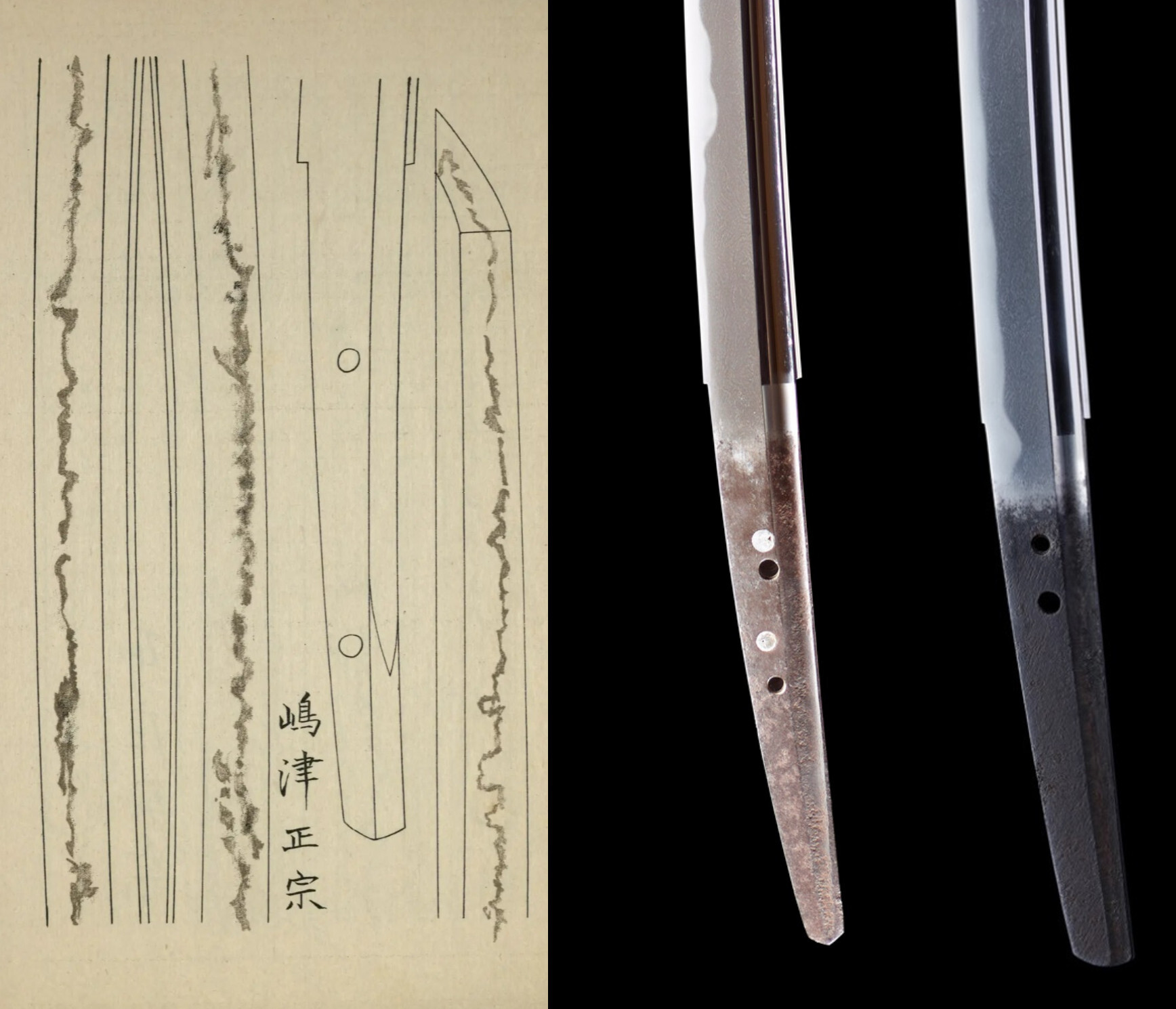
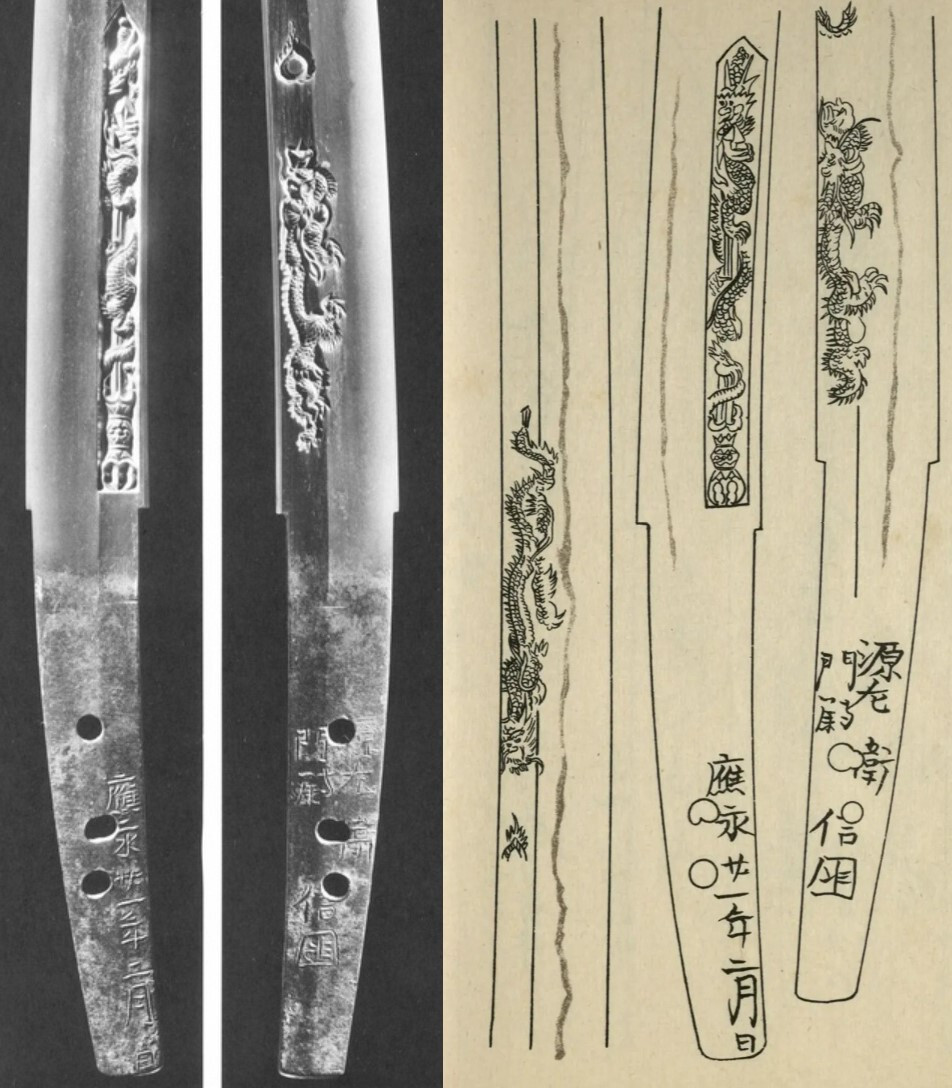
Well as there was some discussion about Tsuguhira oshigata in another thread, I got sidetracked from other sword stuff I was planning to do and browsed through the book. If I understood correctly swordsmith Tsuguhira (継平) got to see swords from the Imperial Collection and Shōgun Collection in 1717, and the book in National Diet Library is the 1928 compiled edition. The book can be accessed through NDL, and can be viewed and also downloaded through this link: https://dl.ndl.go.jp/pid/1190999 Also I got help from here in identifying some named swords (however I skipped few as I couldn't verify the info with my resources at this moment): https://meitou.info/継平押形 There are 243 swords recorded in this book, and I crossreferenced all of them to my own data. Unfortunately I was able to find only 26 swords that are matches for current items in my data. And for some items there are minor things like extra ana added on after 1717. There are also some named swords that are not matching to another named sword of the same name I have in data. However many named swords are matching exactly to named swords in the data, so it is bit complicated. There could have been several swords having the same name. There are few potential matches but as info on them is so limited I didn't match them as I am not certain. Is this really anything useful, well maybe not really but there are some quite interesting items in there. Most interesting to me personally would be the Kanemitsu naginata, unfortunately this is the only record I have seen it so far. The items are mostly by top smiths, there should be for example 25 Masamune and 38 Awataguchi blades in there. Tsuguhira Oshigata.docx
-
Is there another Shimazu Masamune?
Jussi Ekholm replied to MassiveMoonHeh's topic in General Nihonto Related Discussion
I am lucky I don't care for Masamune I have seen the one at Nagoya but not the KNM sword. I made a complilation of the images Tsuguhira Oshigata - KNM - Nagoya And while these old oshigata books might not be 100% accurate here is an example of Nobukuni from the same oshigata book that is currently at Tokugawa Art Museum.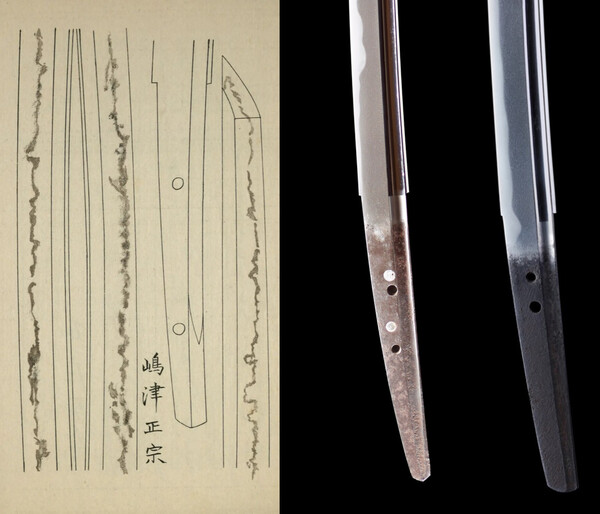

-
Amazing article
-
tachi Can someone tell me if this is fake. Thanks
Jussi Ekholm replied to deldoe's topic in General Nihonto Related Discussion
This is just based on the one low quality overall picture but I do think if the sword is a bit shortened tachi as it would look like, then the 3rd hole would be the original one. To me it would seem like the upper 2 ones would be used when it has been used as a katana. Please post more high resolution pictures of the sword, and like was said above people with knowledge in Australia would be best option for real life verification. -
Huge thanks for the pictures
-
Congratulations, as a big fan of Hōju school I am happy someone has gotten a sword from the north. Would it be possible to see the certificate for my research purposes as I have not seen this sword before? Just my personal feeling based after seeing the few pictures only I might think it is bit later sword (still very old sword though).
-
The Kiyomaro exhibition one is from Jūyō 25. Here is the item attached, it is easy to match it as there are the dots around the year. The kiritsuke mei is for the 1854 dated one in Jūyō 25. Unfortunately my early Index version contained some errors as I manually typed in all the items, so there were few accidents where I typed kiritsuke mei for wrong item. Now that I have done Index up to Jūyō 71, I have corrected almost all the errors over the years but I still find an error or two in the data every year. There should be at Jūyō level 3 katana and 1 wakizashi by Kiyomaro that are dated to this year, 4 items in total. Unfortunately I only track items pre Ōnin war, so I don't have conclusive data on Kiyomaro. I believe the 3rd picture on your post with many signatures Joe is the signature of Jūyō 35 wakizashi.

-
Unfortunately I only have the first NTHK book, I've been intending to get 2 & 3 at some point and I think there might be 4th one too. I do only track the old swords but so far I have matched NTHK Yushu for 1 Jūyō Bijutsuhin, 3 Tokubetsu Jūyō, 7 Jūyō and 4 Tokubetsu Hozon.
-
That is wonderful news. I think you can be fairly confident it is a Nanbokuchō blade as both organizations have given judgement for this period even though slightly different directions.
-
Not in Facebook but yes to support Paul for 1 or 2 books. I would be curious how this will be different from other National Treasure books? Will the difference be just the English language?
-
Big money swords in UK Auction……
Jussi Ekholm replied to Matsunoki's topic in Auctions and Online Sales or Sellers
Lot 1 - Ayanokōji https://web.archive.org/web/20250807093456/https://www.seiyudo.com/ka-070325.htm Lot4 - Kagemitsu https://web.archive.org/web/20240531042531/https://www.aoijapan.com/katanamumei-attributed-to-osafune-kagemitsu-nbthk-tokubetsu-hozon-token/ https://web.archive.org/web/20251008162340/https://www.seiyudo.com/ka-091325.htm -
It is the one from Tokubetsu Jūyō 3. I've seen it at the museum and I think I should have it in 5 different references. In my opinion it seems to me to be very unique in design.
-
My 2 absolutely favorite places for swords are Futarasan-jinja and Ōyamazumi-jinja. They do house the most amazing collections of ōdachi and naginata and because of my personal research focus I place them far above anything else. Photography related stuff, the 2 books I own of Futarasan-jinja swords do have great closeup pictures of the items, while the Ōyamazumi-jinja swords book has the more typical Japanese sword book style pictures.
-
I know my collecting and appreciation is crazy niche focused. This Yosōzaemon Sukesada naginata was probably my favorite item alongside tha absolutely superb Ō-Kanehira tachi at Tokyo National Museum this summer (including the Maeda exhibition). To me none of the 3 Masamune or 2 Gō on display came anywhere close to this naginata. Well I have to admit the Kotegiri Masamune is very nice sword. I do genuinely think that for most people this particular item does not probably evoke any strong feelings at all. However I am extremely happy TNM always has a naginata on display on 2nd floor. On my visits over the years I have seen many incredible naginata they have in their collection.


-
Those who know me probably guessed this would be coming. I am not one to have huge appreciation for fine swirls/twirls or other miniscule details in workmanship. I would actually want to see some of the swords from shrines. It wouldn't really matter to me who the smith is, rather I would like to have the items photographed that I have not yet found so far in any publication. Especially the ōdachi and naginata would be the most important pieces for me. Still various shrines have all kinds of amazing items, so many awesome tachi for example are in the various shrine collections. I believe photography is always forbidden at the shrines and as I have collected the shrine books around Japan, the images in many of them are unfortunately not that good. Of course there are some very nice books that have very detailed pictures, and I am really happy they have been published. The top smiths are always featured in every publication... I find myself often enjoying the relatively unknown smiths and there are many times I have been liking some of the works quite a bit and the items have seemed to be good quality in my eyes.
-
This is very interesting subject. As a disclaimer I must note that appreciating the fine details in workmanship is not my thing. I do agree with GP's view that the rankings are depending on many factors. One interesting thing can also be found in another thread by @MassiveMoonHeh where he pointed us that there has been quite long time since any item achieved Jūyō Bunkazai status, however NBTHK keeps awarding new TJ every 2 years. Also if the item is Jūyō Bunkazai it needs to follow certain rule set meant for items of this designation, while Tokubetsu Jūyō have no such requirements. This is just my personal opinion after visiting several places in Japan, and I feel that some places and families got higher rankings perhaps more easily than others. Of course that is related to the provenance of the item. Often the Bunkazai items are preserved in current condition and many of them are not in pristine polish, if you compare them to Tokubetsu Jūyō which are often in pristine polish. Also as described earlier for TJ items tend to be of very finely made, as the artistic quality of these blades is often very high. However for me personally just artistic quality alone is not what I want to study. I love the rustic items at the shrines that are not that commonly known, things surviving in nearly original shape and size, regardless of their quality. Now after I got back from Japan this morning I typed in all the swords I saw this summer to my data and being curious I wanted to see numbers and it seems so far I have seen 26 Kokuhō and 138 Jūyō Bunkazai swords. In my personal opinion there is a huge range among these swords. Just because something is a Jūyō Bunkazai as a designation the sword itself might not be comparable quality in my eyes to for example similarish Tokubetsu Jūyō sword. However if you would slap in the fact that it was dedicated to the shrine by Tokugawa XX in 17XX in koshirae, and it has been preserved ever since, now wouldn't that make it quite important item for example compared to perhaps slightly better quality item by same smith but with no known background? Also there are absolutely amazing items in Japan completely outside of these ranking systems.
-
Congratulations Andrew
-
The Little Known Lives of Koto Swordsmiths
Jussi Ekholm replied to Mushin's topic in General Nihonto Related Discussion
Thank you for the wonderful historical info package Bobby. There was so much going on in the area during Muromachi period. I think it is possible that I could very well mixing up ruler patronage shifts from one lineage to another etc. There was so much going on in the area historically. It was great riding with Piers as he explained the geographical shifts in the area while we drove past certain areas. Would be awesome some day spend a long time just walking around the various historical areas of Bizen swordsmithing. -
Congratulations Manuel