Jussi Ekholm
-
Posts
2,330 -
Joined
-
Last visited
-
Days Won
45
Content Type
Profiles
Forums
Events
Store
Downloads
Gallery
Everything posted by Jussi Ekholm
-
 I am not a tsuba guy but there are some in there that feel interesting to me. I just feel the pictures and info are very limited and by those I would hesitate buying even a single tsuba let alone 114. :D At the current price it would be roughly 25,000 yen per tsuba. Can't say if that would be a good deal or not.
 -
Looked at the previous thread too, looks like very nice sword with regular sanbonsugi. That rust on the mune is unfortunate as apart from that it seems to be quite well preserved.
-
Well I was having bit boring time in a fever, and I won an auction in Japan for a book about swords of the collection of Kurokawa Institute, as they have some amazing items. So an idea came to me that what if I look on some of the most impressive museum collections in Japan and gather that info in a thread. As I have already collected this data actually scooping it together was pretty fast and fun. Here are some absolute top museum collections in Japan, in no particular order. I will mostly list the number of Kokuhō (National Treasure) Jūyō Bunkazai (Important Cultural Property) and Jūyō Bijutsuhin (Important Art Object) swords in the collection. Many of these museums feature amazing items that do not have official designations, and also many have multiple NBTHK designated items. Tōkyō National Museum - https://www.tnm.jp/ Of course it does not need introductions, collection features 19 Kokuhō, 56 JūBu and 6 JūBi. Kyōto National Museum - https://www.kyohaku.go.jp/eng/index.html Similar to above not too much info needed, collection features 3 Kokuhō, 25 JūBu and 2 JūBi. NBTHK - https://www.touken.or.jp/museum/about/collection.html The Japanese Sword Museum houses an amazing collection of items. NBTHK is well known for their appraisal papers. The museum collection includes 3 Kokuhō, 13 JūBu and 13 JūBi, and also several Tokubetsu Jūyō swords. Tokugawa Art Museum - https://www.tokugawa-art-museum.jp/en/about/treasures/sword/ Museum houses over 10,000 artifacts that have been collected by Owari Tokugawa Family. Collection includes 7 Kokuhō, 19 JūBu and 21 JūBi. Sano Art Museum - https://www.sanobi.or.jp/bijutsukan/collection/japanese_sword.html Established by Sano Ryūichi in 1966. I think many know their famous exhibitions and amazing books published on them. Collection includes 2 Kokuhō, 8 JūBu and 36 JūBi also several Tokubetsu Jūyō in collection. Seikado Bunko Art Museum - http://www.seikado.or.jp/en/ Seikado Bunko Library and Art Museum houses Iwasaki family (founder of Mitsubishi group) collection, founder started collecting in 1892. There are 1 Kokuhō, 8 JūBu and 23 JūBi swords in the collection. Eisei Bunko Museum - https://www.eiseibunko.com/index.html Houses the collection of Hosokawa family, public museum was opened in 1973. Collection features 4 Kokuhō, 1 JūBu and 1 JūBi. Kurokawa Insitute of Ancient Cultures - http://www.kurokawa-institute.or.jp/ Research institute established by Kurokawa Family. Collection features 2 Kokuhō, 9 JūBu and 30 JūBi swords. Tōken World - https://www.touken-world.jp/ This newly established museum in Nagoya has acquired stunning collection of items in fairly short time span. Museum was opened in 2020. The collection has 1 Kokuhō, 10 JūBu, 41 JūBi and 58 Tokubetsu Jūyō swords. Japan Sword Museum Technology Research Foundation - http://www.nihontou.or.jp/collection.html This foundation was established in 2015. The collection includes 2 Kokuhō, 20 JūBu, 11 JūBi and 11 Tokubetsu Jūyō swords. Of course there are lots of other amazing museums in Japan that feature excellent swords and related items. And I did not include any shrines and temples in this list (some of them have spectacular items), as I might do a followup list on some of those. The current location of Kokuhō and Jūyō Bunkazai items can be tracked in here: https://kunishitei.bunka.go.jp/bsys/index as I believe their ownership is required to be informed. For Bijutsuhin items tracking down them is lot more trickier but for them I used the historical info that was on the 80's book series that featured every Bijutsuhin sword, as well as more modern info acquired from several Japanese books and magazines. Of course for the bottom 2 new collections it was easy as they list the items they have. They have acquired lot of Bijutsuhin from previously owned privately and other museums. I would also think that after some older owners have passed away some Jūyō Bijutsuhin swords (and Tokujū etc.) would have been donated to Tokyo & Kyoto National Museums, as well as NBTHK and other museums as well. I hope this might be interesting to at least some people. :D
- 5 replies
-
- 16
-

-

-

-
I am not an armor guy but I believe in the brackets after the description of the armor it says (大和高田 吉川家伝来) Yamato Takada, Kikkawa family denrai. So it would have been owned historically by Kikkawa family. Here is link to wikipedia entry for Kikkawa clan: https://en.wikipedia.org/wiki/Kikkawa_clan I think the description of your armor would be - 紺糸胸取五枚胴具足 I believe the exhibition was - つわものの美 大和の甲冑武具展 - Exhibtion of Yamato Armor
-
Significant Nihonto find
Jussi Ekholm replied to Brian's topic in General Nihonto Related Discussion
Just got my magazine in mail, wonderful feature article -
Tokubetsu Kincho Nintei-sho papers
Jussi Ekholm replied to kissakai's topic in General Nihonto Related Discussion
I know some people might have very negative view on the old papers while others will have quite positive. I'd be somewhere in the middle grounds, I feel they are a one valid opinion given to the item. As far as "Jūyō" quality goes, I'd wager most very high quality items with old papers residing in Japan would have been already converted to the new NBTHK system. That is just following what I feel as common sense. Of course there could be that 1 in 1000 item that still comes out every now and then. Outside of Japan I would have bit more relaxed view on items however note that it might be incredibly difficult to tell when the item has left Japan. On sending tsuba and other fittings to modern NBTHK shinsa in Japan, note that current fee for Hozon is 17,000 yen (c.130€), and you'll need to add all the other expenses related to submission for that. I am not too well versed in tsuba market as I don't own single one nor look to buy one at the moment, however if I would be planning for an international submission of tsuba for shinsa, I would save it for good quality ones even at the basic Hozon level. If I would own a tsuba with green papers and it would be an ok one, I think I might not feel the need to send it for modern shinsa. Granted if I would be living in Japan I feel I might want multiple opinions from different organizations and people for my items, for learning and fun. I am just not a fan of sending expensive items internationally, and in modern day the costs are quite high (well tsuba can be shipped in smaller packages compared to swords ). -
History on two Japanese Swords I own
Jussi Ekholm replied to Jay mertz's topic in Translation Assistance
Could you perhaps get a bit clearer picture of the signature? I would think it could be late Muromachi period sword from Mino province with the smith being Kane X (signature 兼X作). Unfortunately I cannot clearly identify the middle character from the picture. I have few potential guesses for the character but as I am not totally sure I would rather wait for a clearer image first. -
I can't find the actual source right now but I am fairly positive Markus Sesko has written a bit about historical prices of some fittings, if my memory is not playing tricks on me (I know Markus has done so on swords). Some fittings such as Gotō school sets etc. were way above your average samurai back in the day. I know some Gotō family origami have valuations that they gave to the pieces.
-
Awesome job Glen. As tsuba and other fittings are not my forte, if you guys find any errors you can message me and I will correct it for the next update. I was trying to look into the Nanban tsuba that is being discussed, unfortunately I can't get the text typed in today and trying to figure it out. It has been attributed to Momoyama period by NBTHK. The size of it is 7,4 cm X 7,3 cm.
-
I think for me the most important thing about collecting is passion. I don't really care about the "level" of the collection but it is easy to see passion of the collector. You don't really need big ticket items as long as you are happy for what you have. I've been watching some trading card collecting videos from Youtube lately and you can easily see how much passion some of the collectors have and can be hyped for example on 50$ card even if they are owning 5000$ cards etc. I know investing has creeped into many forms of collecting and I just feel pure collecting is a joy to see. I used to collect ice hockey cards when I was a kid, however I've understood that I can not enter trading card collecting anymore as I feel I do not have the needed passion for it nor the sports the cards are based on. Likewise in Japanese swords I know I will only seek to research, focus and even possibly occasionally collect those items that I have the passion for. As far as stories go, I would rather hear from the person collecting than the items he/she has collected. It is very fascinating to hear whya person has made the decisisions he has in collecting, while looking at the items alone you could perhaps not understand the reasoning behind them.
-
Looks like a very nice item Dominik.
-
Advice on a potential purchase
Jussi Ekholm replied to John F's topic in General Nihonto Related Discussion
That is how it is commonly how change in signature side is thought to have evolved that when swords were starting to be worn through the belt in opposite direction from before. However it would have been just as easy to mount blade in various ways regardless on how it was signed. As well as there were forms of suspension and ways of tying katana to be slung from waist like a tachi. I think most dealers in Japan know what premium NBTHK papers bring to table compared to others in financial sense. I personally like NTHK papers and it is nice that they provide more info in their paper than NTHK so you can follow their logic more easily. However on big name items I would definately go to NBTHK. While I am not too focused on financial side of the hobby, I see the financial upside just so much larger with NBTHK compared to other organizations. However I must say there is of course potential in NTHK papered items, and they can often be acquired for lower cost. Although I couldn't afford a certain partially signed tachi that had NTHK papers with Japanese dealer some years ago, I am still kicking myself a bit over it as it went on to get NBTHK papers to different smith of the same school and price doubled... I know you hear often buy the sword not the papers etc. but authentication brings certain amount of confidence to the field. Regardless of the organization authenticating they do carry value in market point of view. Having few different opinions on an item is in my opinion better than one even if they would be different. Personally I am wondering how Japanese dealer would not send a quality item to NBTHK (as I feel it greatly adds marketability to the item) but people have different views on things. And like on my example above there was that tachi with NTHK papers up for sale at Japanese dealer site for several years, so I guess I wasn't the only one standing idle. Smith like Tomomitsu is a great attribution and the blade most likely shows something good in the opinion of shinsa team. -
Two nice iron tsuba (Umetada and "Nobuie")
Jussi Ekholm replied to Katsujinken's topic in For Sale or Trade
I think it is indeed Umetada but using these kanji - 梅忠 See few references here: (unfortunately couldn't find NBTHK paper for mumei using this kanji fast) https://www.kandatoukodo.com/tousougu/tsuba42.html https://tokka.biz/fittings/TS720.html -
Advice on a potential purchase
Jussi Ekholm replied to John F's topic in General Nihonto Related Discussion
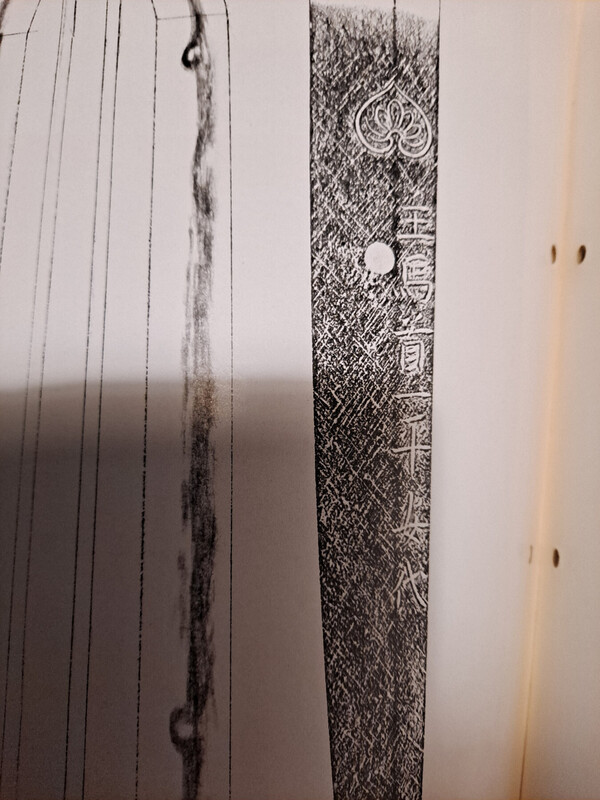
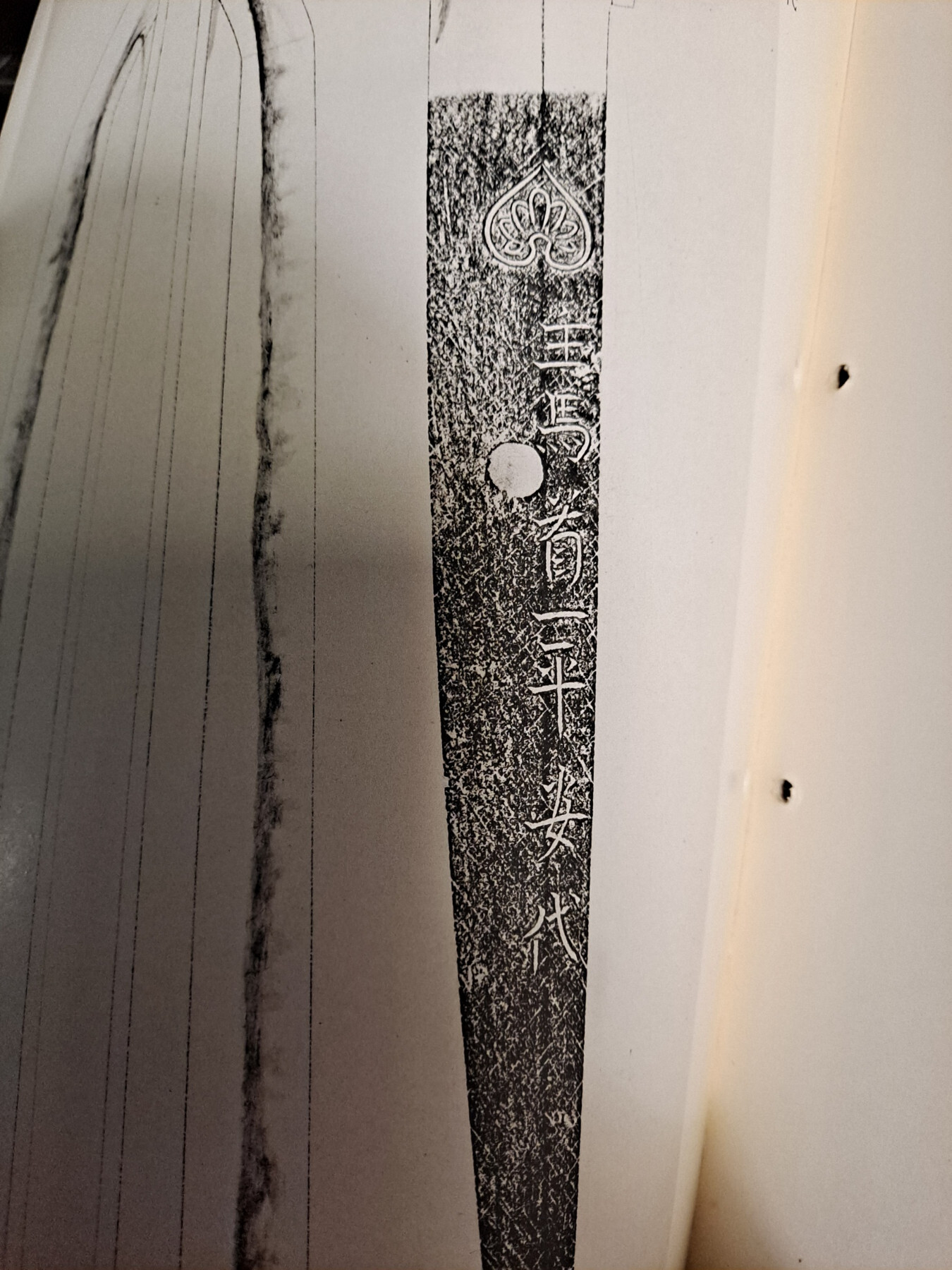
Thank you for the pictures John, that makes it lot clearer. I think it makes things interesting. I know that you should focus on the details on the sword rather than doing speculative stuff but I'll give some reasoning here. As the sword seems to have been signed on sashi omote side (way katana are generally signed) and the signature has been folded over. Based on the 15 signed ōdachi & tachi I have on record for Tomomitsu, he signed his swords on haki-omote side (way tachi are normally signed). I attach here an example of orikaeshi-mei by Tomomitsu and you can see the signature is folded on the opposite side as on the sword we are discussing. Signing tachi on sashi-omote side was never really a big thing in Bizen and signature on this side started to appear more during the early Muromachi period. And as the signature seems to have been thought important enough to fold over I would think it could have been made by a good smith. NTHK going for Tomomitsu is a small headscratcher for me personally as due to this type of orikaeshi-mei I would look more in towards early Muromachi if thinking of Bizen. Of course that could be totally ignored in evaluation but I think it is important factor. Unfortunately I can't say too much about details on the blade from the pictures (and I am not skilled enough in detail stuff anyway). However based on the shape & size, orikaeshi-mei and horimono I think it is an interesting item.
-
I am not a koshirae guy but I think that style is called kawa-tsutsumi (covered in leather). To my eye that tachi koshirae in overall might be the most collectible thing out of the lot.
-
To The more experienced members ....
Jussi Ekholm replied to Paz's topic in General Nihonto Related Discussion
There are many good vendors in the UK too. I think UK guys can give good recommendations and info but mostly in private messages as publically discussing stuff like this can be bit problematic. In my personal opinion I do not think Lanes Armoury is geared towards "hardcore" Japanese sword collectors but more towards militaria guys want to get a Japanese sword. I do not mean bad with that comment even though I agree that it can be taken very negatively. -
To The more experienced members ....
Jussi Ekholm replied to Paz's topic in General Nihonto Related Discussion
I know I commented to you on another forum but in general I'd be stunned if they sell the items in the ballpark of their asking prices (which I am sure they do as they have been running business for a long time). I am not a business savvy person and my hats off to them as they seem to show they can pull it off. -
Advice on a potential purchase
Jussi Ekholm replied to John F's topic in General Nihonto Related Discussion
Welcome to the forum John! I agree what others have said about sending to NBTHK, if sending items to shinsa in Japan would be easier for me, I would try to get several attributions to the 2 mumei swords in my collection. In my opinion that is an interesting sword, what kind of measurements it has? I am having hard time figuring out if it has orikaeshi-mei (folded over signature) or gaku-mei (inserted signature), as it is so corroded I can't see anything (I know Ray is like a detective in figuring these out). Do you happen to have a picture of the end of the tang? -
Yes it is most likely from Bizen province if the signature is good (and I would not personally doubt it too much). There were lots and lots of Sukesada smiths working in the late Muromachi period and if the signature does not have "personal name" it will be very difficult to identify unless the work is spectacular from which experts can agree on which Sukesada most likely made the particular item.
-
Material removal during skillful polishing
Jussi Ekholm replied to Haon's topic in General Nihonto Related Discussion
Finally found the topic as I remembered it was quite recent. Mark S. documented the changes that came with polishing by Woody. 0,1 cm in length and 5 grams in weight. I think one good indicator of how much the sword has changed from original in thickness is the difference between nakagokasane and motokasane. Here is an image of an old tachi from Nanbokuchō period I used to have. Nakagokasane was 8 mm, motokasane was 5,6 mm and motoshinogikasane 6,8 mm. While the picture is not optimal I think it shows the wear quite well.
-
Help with Nengo for Hidekage Wakizashi
Jussi Ekholm replied to tbonesullivan's topic in Translation Assistance
Here is a verified example by this smith dated to same year 1450, from Jūyō 34 session. Now what is interesting that in this he is signing with the form 寳徳 that is alternative way of signing the era (it was featured in Japaneseswordindex). Historically both styles were used however I am not sure if the smith would sign the year in different form in his career? Unfortunately I only have this one Hōtoku era signature from Hidekage in my records. https://www.aoijapan.net/tachi-bishu-osafune-hidekage-34th-nbthk-juyo-paper/ -
You can also ditch going towards Sudo Kunitsugu route even though was suggested for researching in original sales ad as he wrote Kuni is very peculiar and original way.
-
Help with Nengo for Hidekage Wakizashi
Jussi Ekholm replied to tbonesullivan's topic in Translation Assistance
I think you are very close, to me it seems like Hōtoku (宝徳) 2 - 1450. -
I think the problem comes with the number of submissions & passes for lower tier items. NBTHK actually releases the numbers and I did dig them up in 2020 for this thread: In 2019 for Hozon & Tokubetsu Hozon items there were 10,500+ passes In 2018 for Hozon & Tokubetsu Hozon items there were 10,300+ passes Compared to 2019 Jūyō - 138 items 2018 Jūyō - 168 items Just the amount of time required to take good pictures of that amount of blades / items is a lot. Then add in all the processing to digital form and adding info etc. I do know NBTHK does has their own registry of all the items passed from which they can verify the authenticity of the papers (never done that myself but I believe it is possible). Also the English translations of certain parts of Tōken Bijutsu are accessible for free to everyone in their website from early 2012 up to this day, while lacking pictures featured in the magazine I still think one can find useful info in there: https://www.touken.or.jp/english/TokenBijutsuTranslation/backnumber.html
-
Here are 3 Jūyō swords for reference mei. Unfortunately I don't know the smith well enough to say anything for certain.