Bruce Pennington
-
Posts
14,576 -
Joined
-
Last visited
-
Days Won
175
Content Type
Profiles
Forums
Events
Store
Downloads
Gallery
Everything posted by Bruce Pennington
-
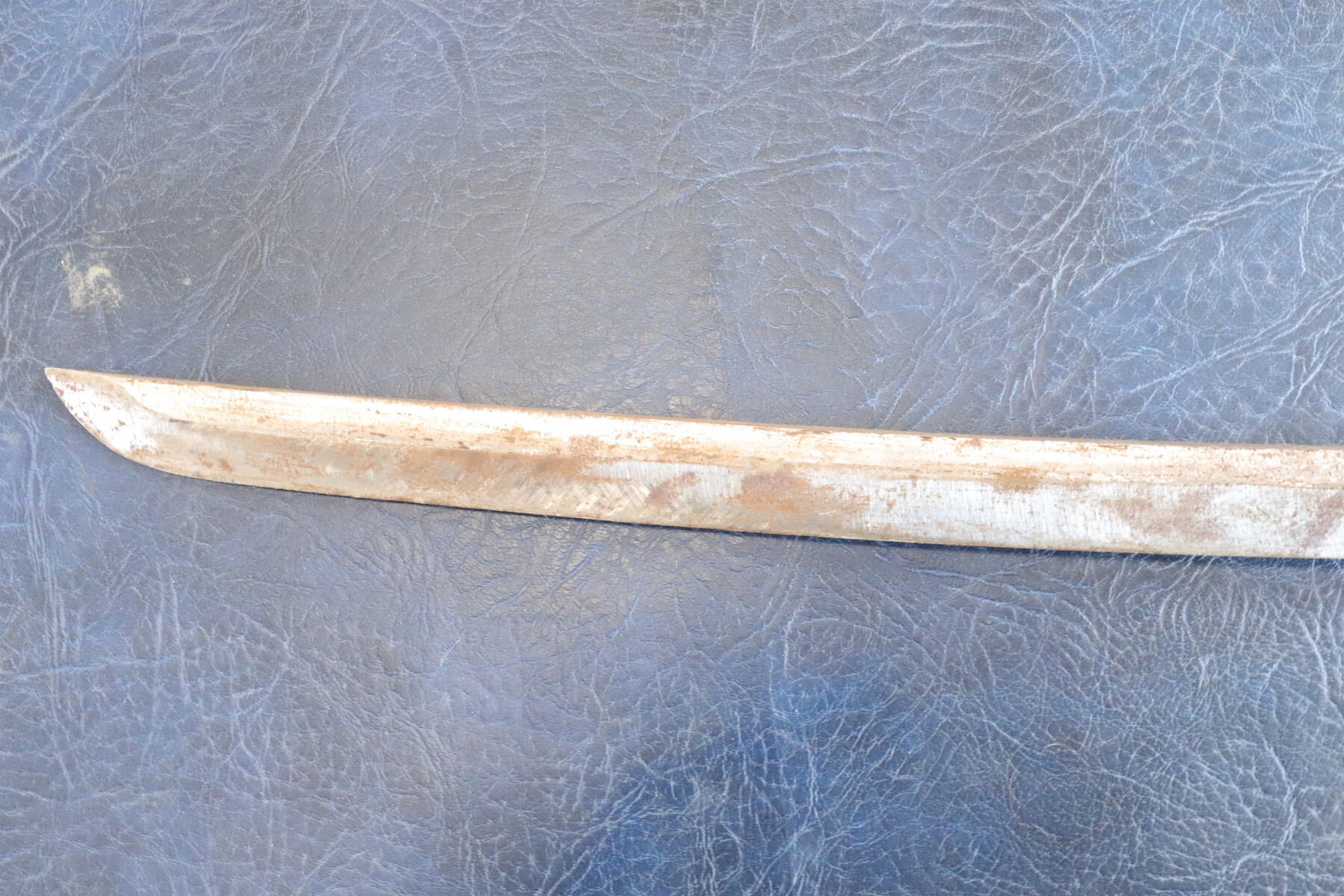
I think that is what is causing your concern. I have seen several like this, where an owner didn't realize that his "cleaning" efforts were removing original patina and coloration (I made this mistake early on, but realized the damage quickly before I went too far).
-

Sakura Chuso release button
Bruce Pennington replied to PNSSHOGUN's topic in Military Swords of Japan
Any guesses as to the coating on that saya? -
Even the Kokura stamp seems to have been a re-stamp. Unique piece.
-
It’s legit
-
Arsenal Mark on RJT sword Fittings
Bruce Pennington replied to george trotter's topic in Military Swords of Japan
The Navy blades SEEM to follow the same pattern as the Army numbered blades. The problem is that ALL of the observed Navy blades with numbers are undated. I've arranged them in numerical order, but this may be a fiction. Without dates it is impossible to be conclusive about the matter. Chart with discussion attached. Numbered Blades - Navy.docx -
SHOW US YOUR GUNTO HORIMONO
Bruce Pennington replied to IJASWORDS's topic in Military Swords of Japan
Michael, Could I get a full shot of that habaki for the Habaki thread? -
Arsenal Mark on RJT sword Fittings
Bruce Pennington replied to george trotter's topic in Military Swords of Japan
Update on the FYI post above I've added the kanji for each smith name and corrected one I had listed as "Katsumara". The smith was really "Masakatsu", Katsumara was his first name. I still don't have a warm-fuzzy feeling about the "Kiyokuni" vs "Kamikuni" name, so I've listed both names, with the appropriate kanji. Numbered blades by Smith.docx -
Need Help with a Katakana
Bruce Pennington replied to Bruce Pennington's topic in Translation Assistance
Just an update on this. After chart the dated blades with number, by smith, it is evident that blades made in 1945 used plain numbers without katakana. The 'katakana + number' blades are found in 1943-1944. I realize there are overlaps on such systems, so this still could be "イ512" not "1512" but since it's so hard to tell, I'm going to leave it classified as "1512" inline with other 1945 numbered blades. If another '45 blade shows up with a katakana, I'll revise it. -
Here's mine (Ha! sorry I couldn't resist!!! Just joking around)

-
Truly gorgeous Chris!
-
Star Stamp (Rjt) But Called Shinkoku?
Bruce Pennington replied to a topic in General Nihonto Related Discussion
Stephen, can you tell us what reference you used for this? I'm trying to pin down the English version of this smith - Kiyokuni vs Kamikuni - and cannot find a reference where either is listed. -
And yet, the plot thickens:
-
I am truly 'nobody' in this topic, but in trying to decide what English version of this name to use in my files, I took a look a Marcus Sesko's list. He doesn't show any, not one, smith name using "神" as Kiyo. But he does have 3 smiths on his list under "Kami" with that kanji: KAMI (神) KAMIAKI (神見) → SHINKEN (神見) KAMITSUGU (神次) → SHINJI (神次) KAMIYOSHI (神吉), this name is found in the meikan records with as “province and active period unknown” For now, unless someone has a good argument otherwise, I think I'll list him as "Kamikuni". And I am certainly open to discussion on it!
-
Mumei WW2 era? lots of photos
Bruce Pennington replied to Robbin's topic in Military Swords of Japan
Nice gunto Lanegan! The fat seppa and silver over-lay habaki are signs of a custom upgrade for a Type 98. The owner spent a little more money on this than standard. Thanks for sharing! -
Arsenal Mark on RJT sword Fittings
Bruce Pennington replied to george trotter's topic in Military Swords of Japan
A "for what it's worth" post. I took a brief look at my DATED blades with number stamps. It looks like the progression of Army numbering went as follows: [I have no dated blades with numbers prior to 1941; Ok, the zoheito are numbered, but I think these are in a different tracking category] 1941-1942: Plain numbers Overlapping Feb 1942-Mar 1944: Matsu + number Overlapping July 1943-1944: Katakana + number 1945: Plain numbers I have loads of Non-dated blades with numbers, but I am comfortable assuming they would fit into this flow. These are categorized by the smith. The numbering does flow properly per each smith, but isn't in order by date. In other words, when the blades are charted by date, the numbers aren't in any sort of order. But when the smiths are separated out, the numbers flow in order by each smith. So, I think the Army was tracking blades made by each smith. Reason for this - unknown. Speculations - a way to account for paying each smith for work done? I haven't analyzed the Navy blades yet, and will update when completed. Here's the chart I have worked up so far: Numbered blades by Smith.docx -
Agreed! Nice find! @Volker62 - Very elegant! Is it yours? Unique combo of gold and silver colors.
-
Ha! Maybe you should explain that you’re married!!!
-
I can see why you'd say that! My thoughts are rough sea waves with the whirlpool at top.
-
@Stegel or @Shamsy can narrow the year down, but my guess (which is always close, but never right!) is about 1941. Completely legit, with the "Gifu" contractor stamp (which is possibly the Seki Shoten Co).
-
Looking for advice on authenticating this sword
Bruce Pennington replied to twoscoops's topic in Military Swords of Japan
Thomas, I finally had some time to look this over. I'm not entirely sure what you have here. The majority of it seems to be a quality, upgraded kaigunto - sharkskin same', fat gold seppa, lacquered rayskin saya. Yet the fuchi is Army (green arrow) and the koiguchi (blue arrow) is Navy. Plus, the tassel is army. The inner black seppa (closest to the tsuba) on both sides don't fit well. This kaigunto has either been re-fitted by a collector (common with some gunto that come to the collectors in bad shape, or missing parts) or it was a late-war job using available parts. There has been much discussion over the decades of the Navy forces that fought on land along side Army and the swords they carried. It is certainly possible this one was one of those. The fuchi fits so well, and the scabbard latch goes through all the seppa and tsuba, that I want to say this was made this way. It's an odd character, for sure! Pricing these days is all over the place, but I wouldn't sell it under $2,000. Before COVID, they were selling for $2,400.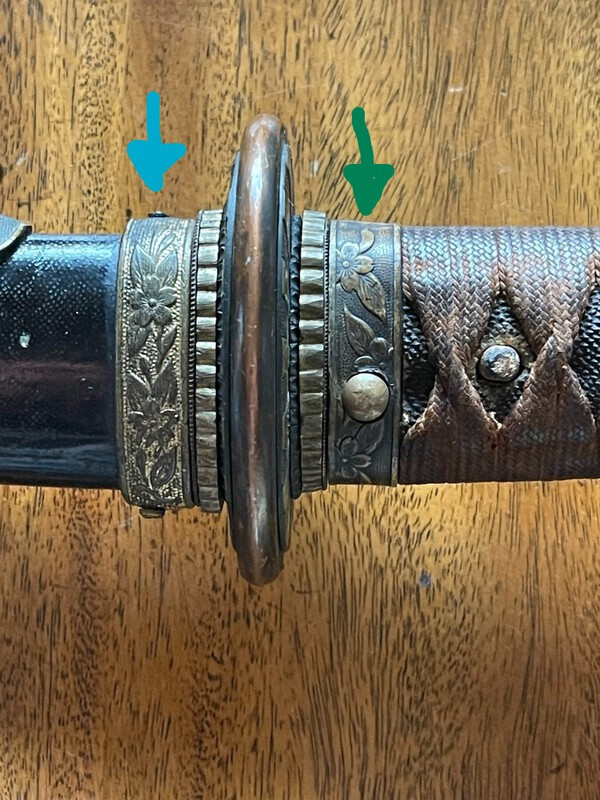
-
Great one @Itomagoi, Peter! I wonder if the whirlpool is depicting the Naruto whirlpool or something of legend? https://en.japantravel.com/tokushima/the-great-naruto-whirlpools/15302#browser
-
Pics added for the future: This one is a bit unique with only the center circle of the menugi in flower form.
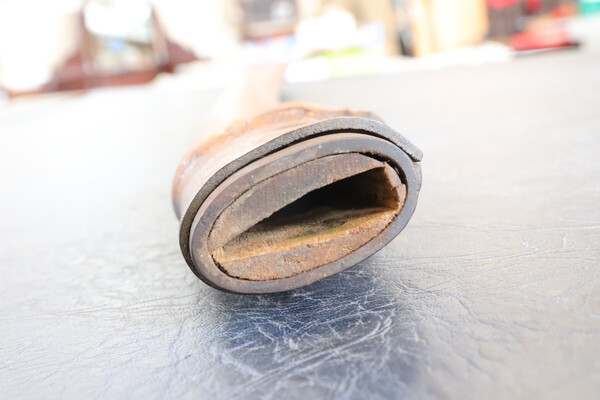
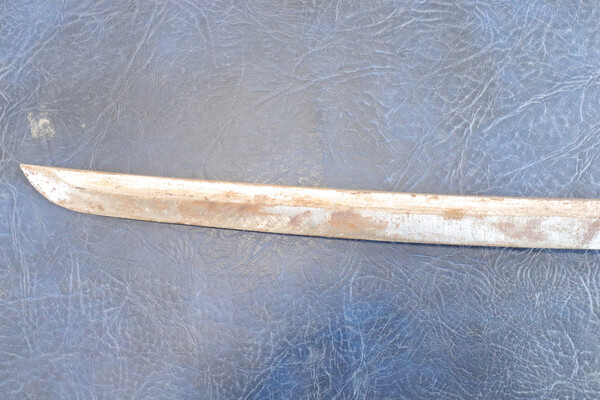
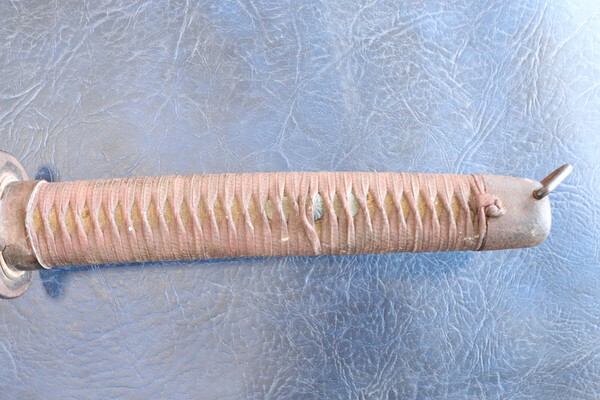
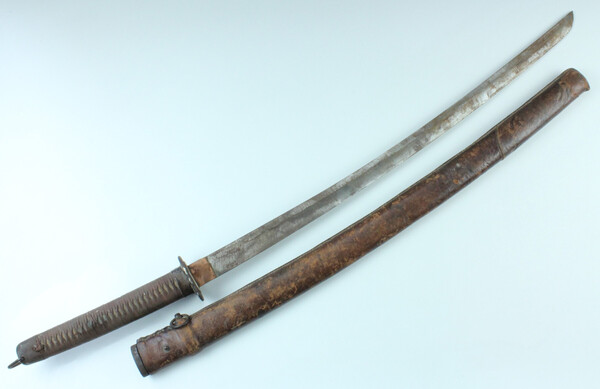
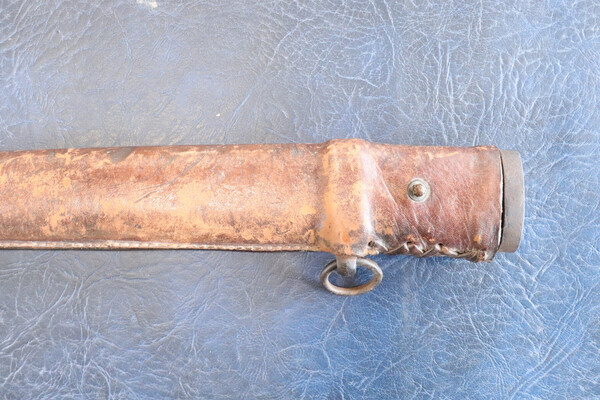
-
Translation of markings on WWII era katana
Bruce Pennington replied to eraaij's topic in Military Swords of Japan
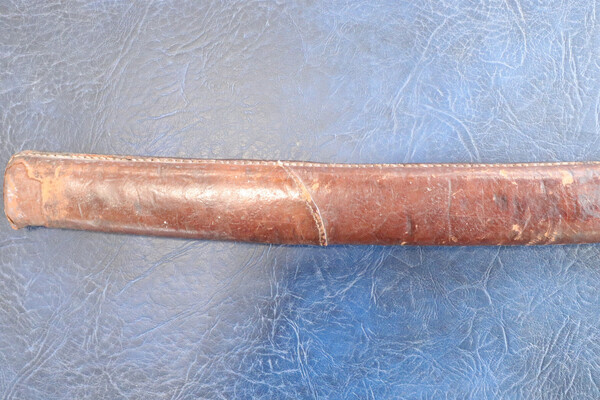
The leather covered wooden scabbards (saya) are seen throughout the war. They were "informal fittings". Leather over the metal saya is called "combat leather cover," (thanks again @BANGBANGSAN!) So, I imagine some guys would prefer these in the field, though we see plenty of pictures of officers in the field with the standard all-metal fittings uncovered. Like everything else, stuff like this was a personal option. Some chose it, others didn't. -
Incredible!
-
Another help with first Japanese sword
Bruce Pennington replied to Levallois's topic in Military Swords of Japan
"patina" on a nakago is simply oxidation. As a blade gets older, the rust gets darker and thicker. The dark rust isn't 'active' anymore, like fresh orange rust. You can find older blades without such patina, but when it is there, it can be used to estimate age.