Bruce Pennington
-
Posts
14,290 -
Joined
-
Last visited
-
Days Won
170
Content Type
Profiles
Forums
Events
Store
Downloads
Gallery
Everything posted by Bruce Pennington
-

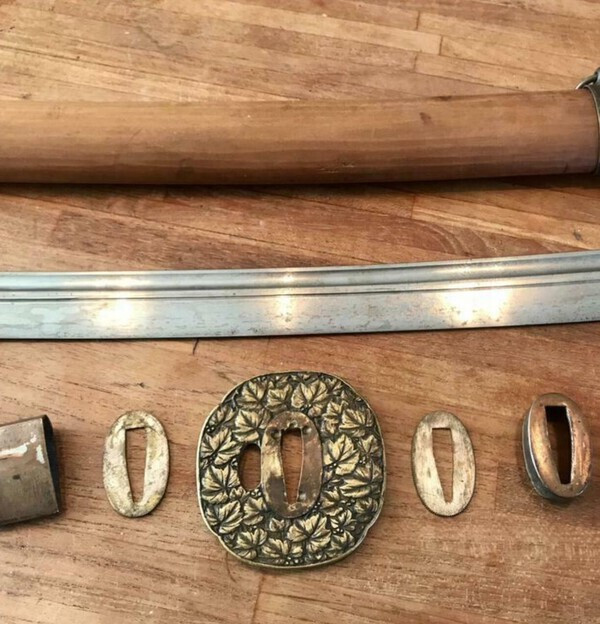
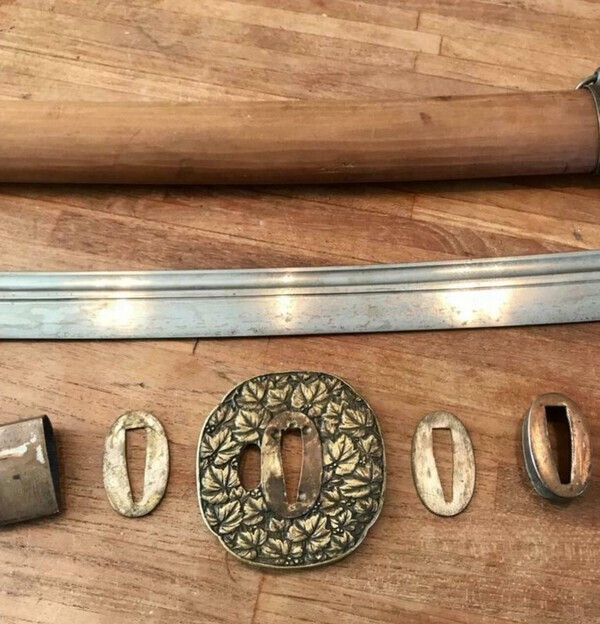
Bamboo Leaf pattern Tsuba on Gunto with old blade
Bruce Pennington replied to Baka Gaijin's topic in Military Swords of Japan
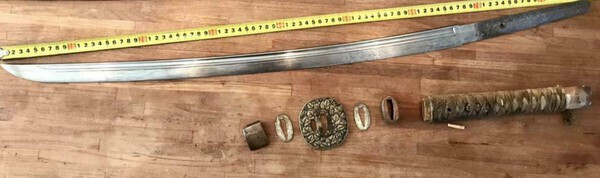
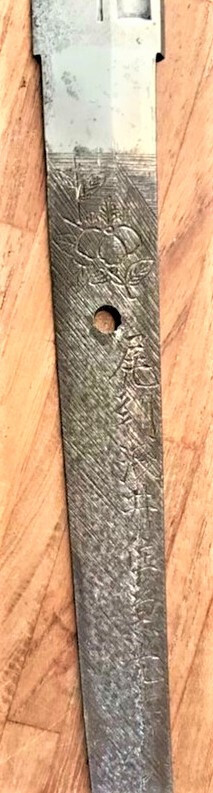
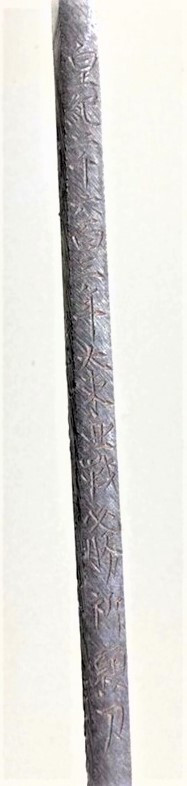
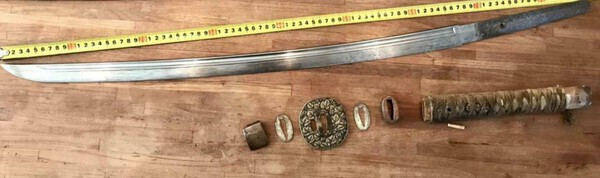
Ok, a new one - a 1943 Kanemitsu blade with a unique kiri engraving and LOOOONG inscription on the nakago mune that says "皇紀二千六百三年大東亜戦必勝祈願刀 – 2603 Imperial year (1943), a prayer sword for victory in the Greater East Asian War" thanks @Nobody! And thanks @Okan who found the gunto.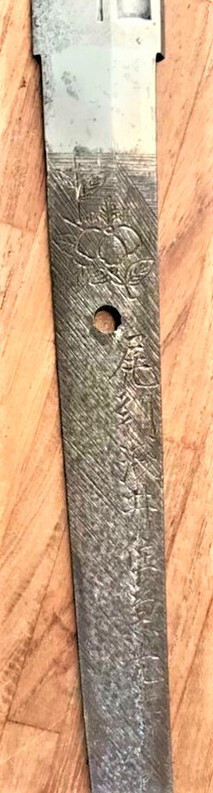

-
HUGE mune inscription, and mei, Please!
Bruce Pennington replied to Bruce Pennington's topic in Translation Assistance
Thanks go to Okan, he found it, but I know what you mean! Looking the kiri (Paulownia flower) in Fuller's book, he said: "Originally used by the Imperial Family but given to senior officers to denote their high rank. Found on naval kyu-gunto and parade sabres of Flag Officer (Admiral) rank, Diplomatic swords of Chokunin grade (appointment personally approved by the Emperor) plus the swords and dirks of Senior Railway Officials, the Imperial Household and Government-General of Korea" I don't know if that is the significance of this kiri, or if the flower held other significance for the Japanese aside from this. -
Thanks to @Okan for bringing this to my attention. Can't say I've ever seen this flower, which in other locations, often represents the holder is on Imperial household staff. But looking for translation of the mei and quite large mune inscription. Thanks guys!
-
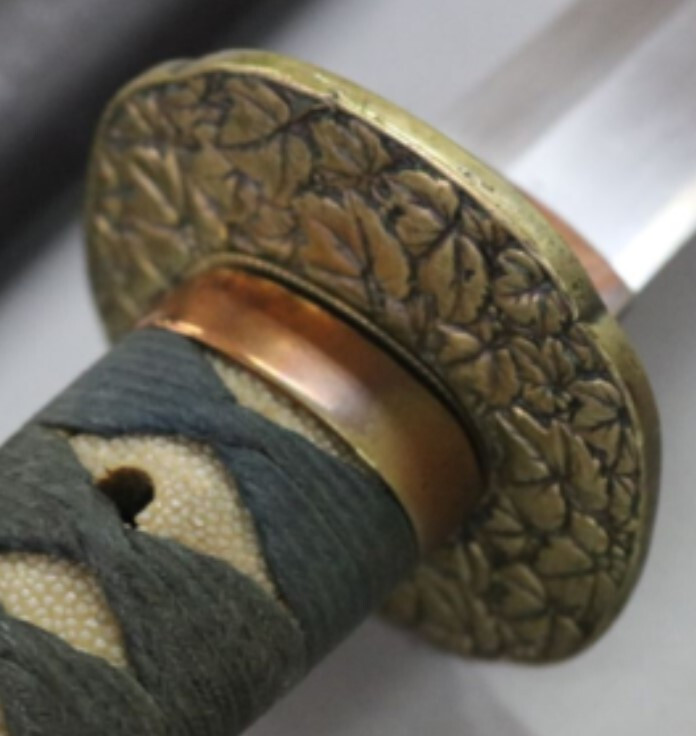
Hi Gabriella! I'm a little late to the discussion, and most of what can be said about your sword has been said already. But I'd like to elaborate on a couple of points. "Samurai Sword" is a term often used to label all Japanese swords. You can do some easy reading on the history of the Samurai HERE or other sites, but their official status ended in the late 1800's. I'm weak on the history of blade ownership during the centuries, but there were swords made in Japan as long as there were needs for them. For a period (memory fails me on the years) where only Samurai were allowed to carry swords, but that was not always the case. So there were several blades made over the centuries that were bought by non-Samurai as well. All swords built after 1876 were not made for Samurai, as that became illegal. Japan brought in Western experts and weapons after that, and for a time, Western-styled swords were used. But their weaknesses became evident in the Sino-Japanese and Ruso-Japanese wars. After many requests, the Japanese military opted to revive "Samurai-styled" swords. They had to revive the swordsmith industry to make blades again the old fashioned way. Manufacturing methods changed to meet the huge demand of numbers, but the style was preserved. All these blades were issued and sold to Army and Navy officers and sergeants, most of whom had no lineage whatsoever to the Samurai. It was simply their swords that were made in the fashion of the old Samurai sword. So, a more accurate name for them is simply "Japanese Sword." It looks like the fittings on yours are Navy, making this a "kaigunto" or Navy sword. Are they original to the sword or were they added when the handle was rebuilt? The handle end-cap (kabutogane) is a bit unique in that the hole for the sarute (tassle loop) was never drilled out! Also not common, is the leather covered saya (scabbard) for kaigunto. I own a couple myself, so they're not "rare" but not as commonly seen as the Army versions. You can see what kaigunto looks like and how they differ from Army gunto on Ohumara's site Here and Here.
-
Thanks @SteveM that makes sense, and explains the same kao on the seemingly different names.
-
Show Us Your High Class Gunto
Bruce Pennington replied to lonely panet's topic in Military Swords of Japan
Even the date is skillfully and artfully crafted! Truly gorgeous! -
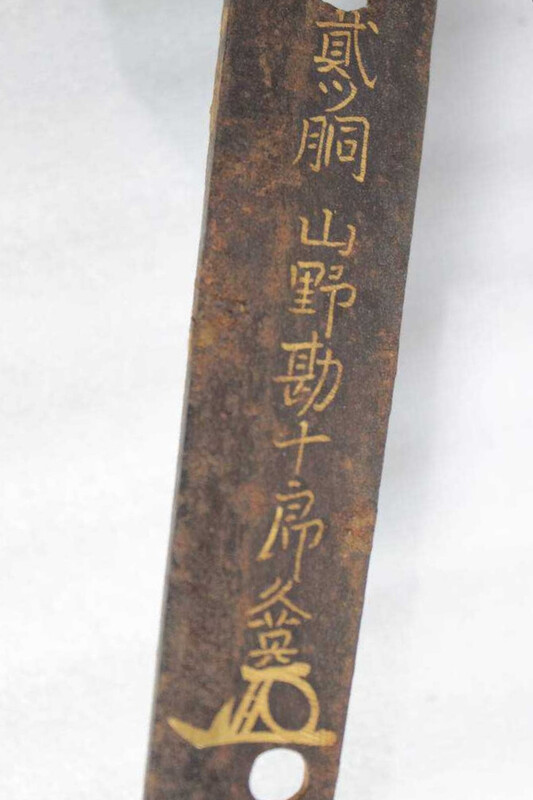
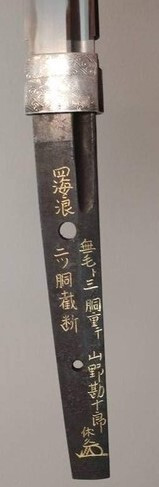
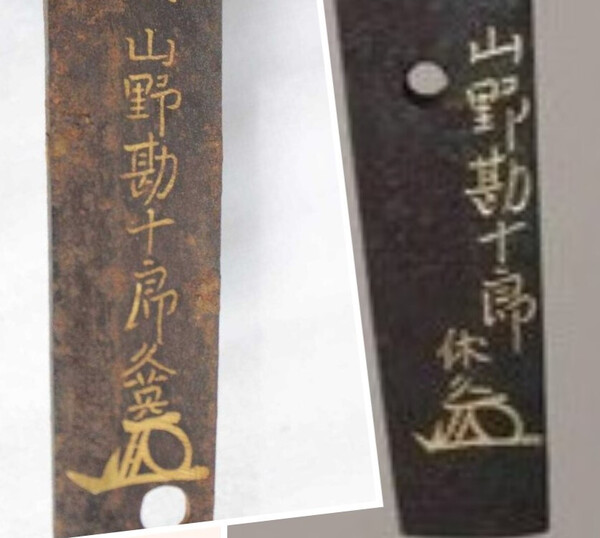
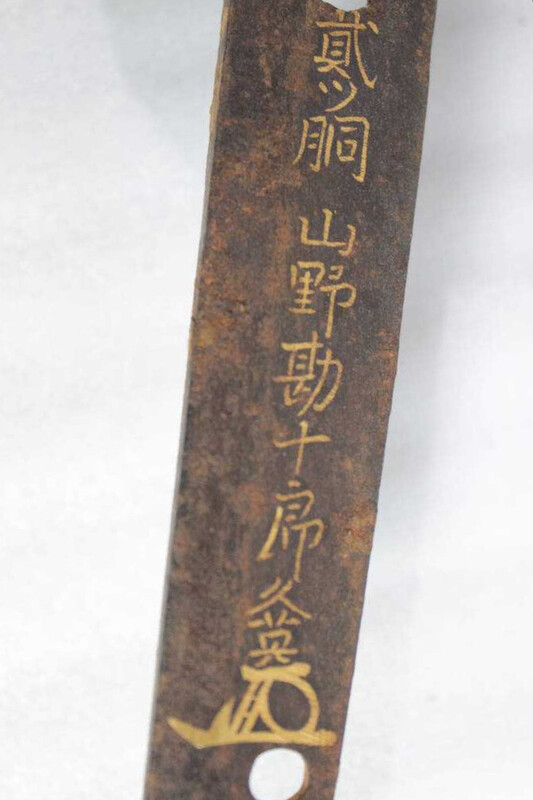
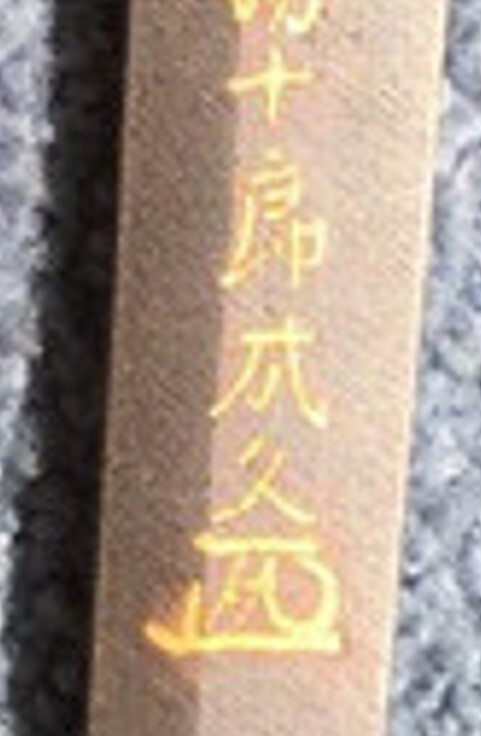
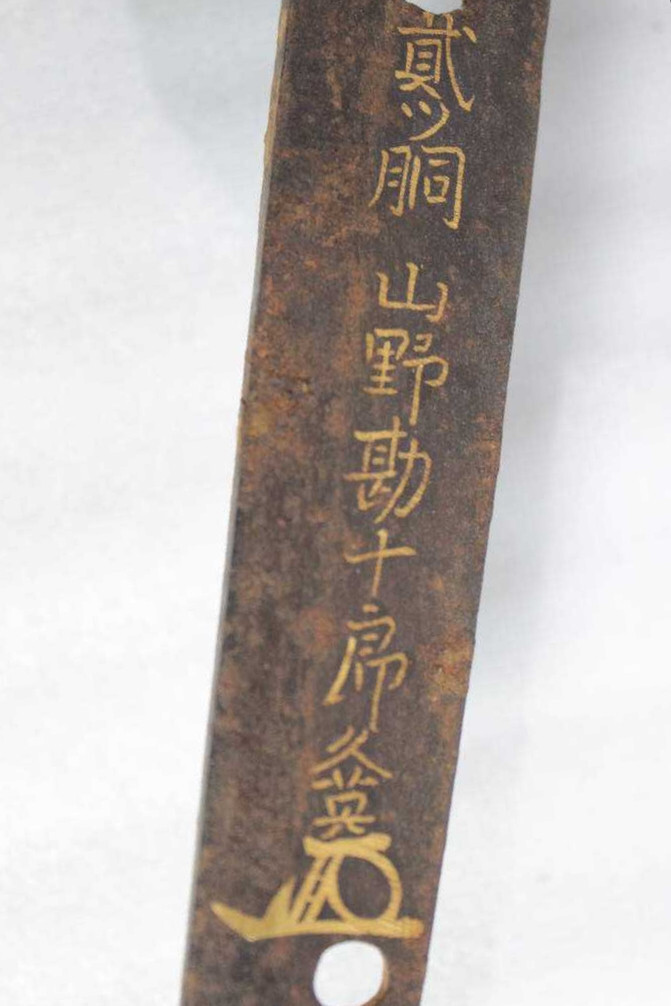
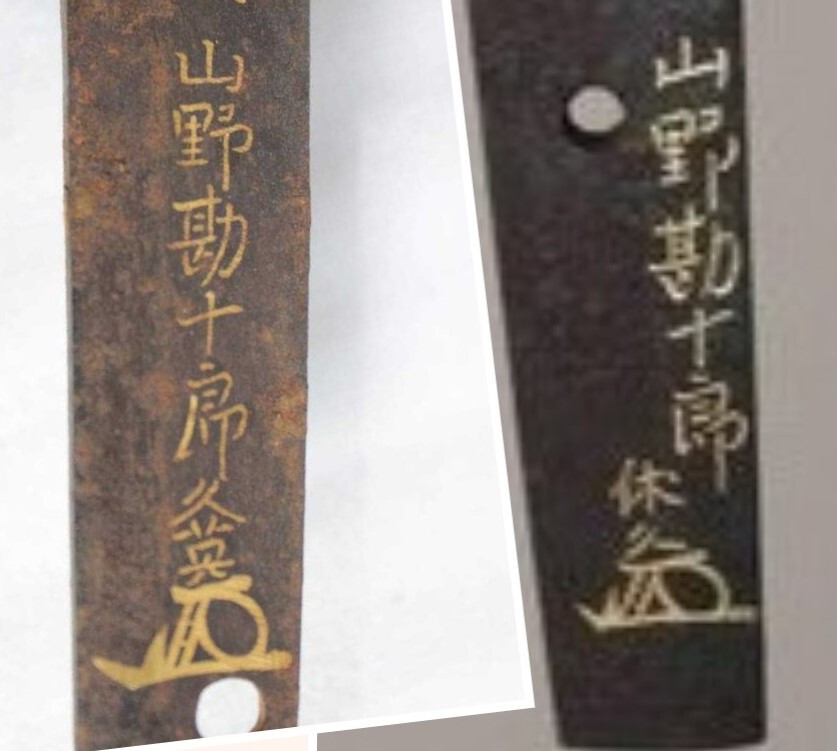
Sorry for the side track, but: Is that cutter mei from Hisahide? The kao is the same, but there's something different about the mei: Why would the last 2 kanji be reversed, and the other one, not "hisa", be different?
-
A transport soldier and sword
Bruce Pennington replied to k morita's topic in General Nihonto Related Discussion
@lonely panet After looking at my 32 drag, I might even lean more to a long, custom kyugunto. Mine: Kyu
.thumb.jpeg.f1c2bda65b3e4da699f1879e4128abf5.jpeg)
-
A transport soldier and sword
Bruce Pennington replied to k morita's topic in General Nihonto Related Discussion
@Stegel Seems long and skinny. The drag is strangley shaped. Maybe a Type 32? They made 2 models, KO - longer for cavalry, and Otsu - shorter for artilery/foot soldiers. Edit: On closer look, the end is rounded, but the very end of the drag is just darker for some reason. Quite large drag, though, like a 32.

-
Interesting. It is amazing the things people will fake.
-
Attention Mantetsu Owners: A Survey
Bruce Pennington replied to Bruce Pennington's topic in Military Swords of Japan
Trystan, I think it might be equally possible, in this example, that what we are seeing is a repair to a damaged nakago. For the diagonal mark on the original blade of the thread, everyone has pretty well covered the point - the massive majority of Mantetsu mune have this mark. I don't even have to do a scan of my files to say that. So, like Trystan's conclusion, probably original SMR Mantetsu, but when and where the bohi was added cannot be known. The polish removed any chance of old patina in the groove, but even if it had been there, we still wouldn't know if the factory did it, or a post-production shop did it for a customer. Enjoyable discussion guys, thanks for tossing it around! -
Attention Mantetsu Owners: A Survey
Bruce Pennington replied to Bruce Pennington's topic in Military Swords of Japan
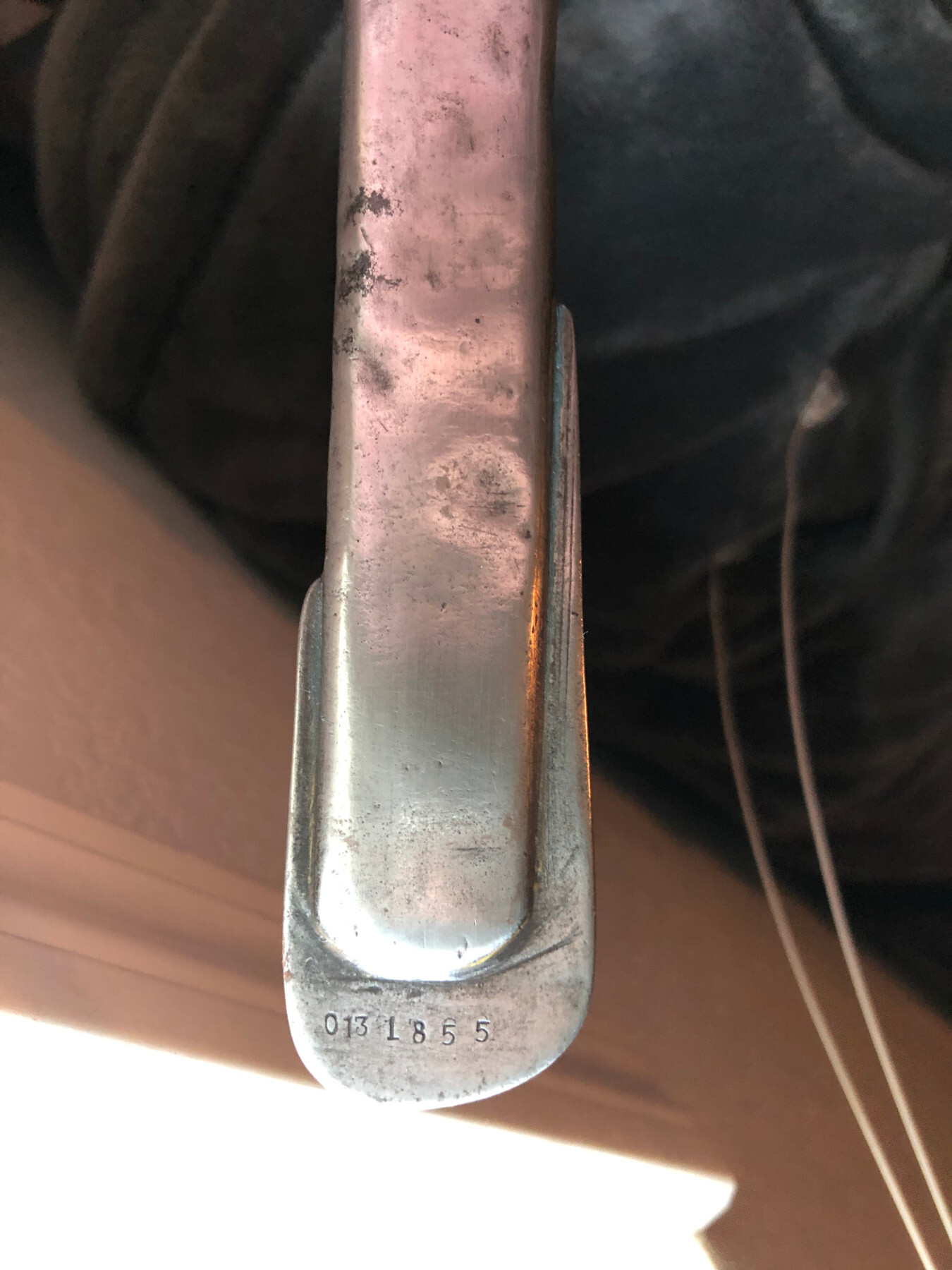
Well crap. They actually filed off the serial number!!!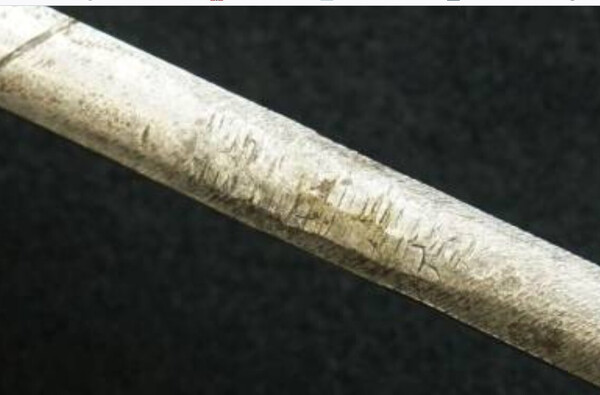
-
My Japanese Sword and it's a Gunto
Bruce Pennington replied to Erick_151's topic in Military Swords of Japan
There are some Chinese fakes with civil tsuba, but I'm not leaning that direction with these. None of them are on faked swords and they all have appropriate age. If they were on fake swords I'd lean that way, but these aren't. As to the quality, while we'd like to think the perfectionist culture of Japanese sword manufacture was unfailing, it's just not the case. There are many sword fittings with lower quality work to be found. -
Attention Mantetsu Owners: A Survey
Bruce Pennington replied to Bruce Pennington's topic in Military Swords of Japan
OMG!!! Peter, that is a first. Now, the hi could have been a customization after manufacture. He could have had a sword shop add it. This also could have been added recently when the polish was done. Or, as with the few custom SMR Mantetsu we've seen, it was a customer request from the factory. No way to know, but it does look good, doesn't it!!! Hey, any chance of getting a link to the original post. That serial number is quite faint. Clearly a "NA" but the number is too faint to read. Sometimes by going to the original site, it's just a hair more clear. If it's an auction that you'd like to keep quiet about, please just send it to me via PM. @Itomagoi -
Yellow or Gold Tassels on Gunto
Bruce Pennington replied to Bruce Pennington's topic in Military Swords of Japan
Thanks Rob! Good examples. Wonder what that document is? It doesn't look like a surrender tag. And why would someone have affixed a tassel to it? -
Interesting mention of this very thing in Jake Adelstein's "Tokyo Vice" He's describing the Yakuza: "Another large faction is made up of dowa, the former untouchable caste of Japan that handled butchering animals, making leather goods, and doing other “unclean” jobs. Even though the caste system is gone, racism toward dowa remains. Adelstein, Jake. Tokyo Vice (Vintage Crime/Black Lizard) (p. 87). Knopf Doubleday Publishing Group. Kindle Edition."
-
Help with date on cutting test please
Bruce Pennington replied to Sunny's topic in Translation Assistance
Rats. Didn't know, thanks. -
My Japanese Sword and it's a Gunto
Bruce Pennington replied to Erick_151's topic in Military Swords of Japan
Thanks for the added pics Eric! I cannot speak to the age of your blade, other guys will have to opine on that. The tsuba is only the 2nd one I've seen of this style. It could be that both yours and the other one I've seen are simply from a shop that made this style tsuba and used them when fitting a personal civil blade in military mounts. It also could be a 4th variant of the tsuba specifically made for the Gunzoku - the civilian branch of the military. If you don't know about them, just google the term. But they wore distinct military-looking uniforms and performed many functions for the active military. They had their own rank nomenclature that had equivalencies to military rank in it levels of hierarchy. I'm adding the three known variants of their tsuba for comparison. Quite a nice gunto you have there!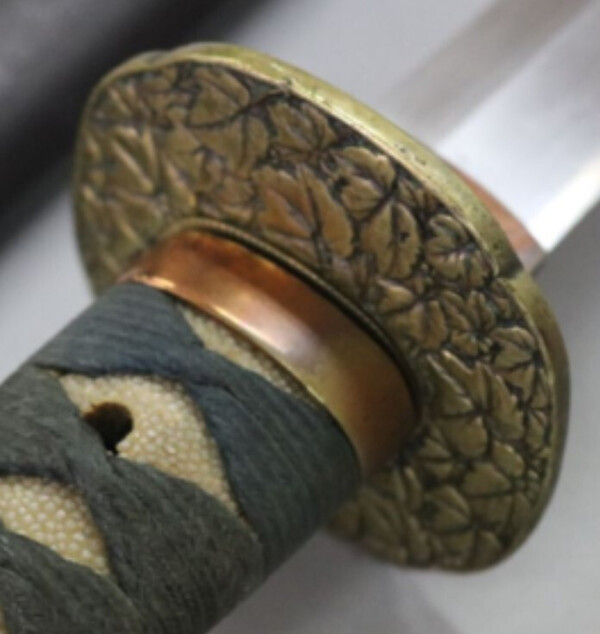

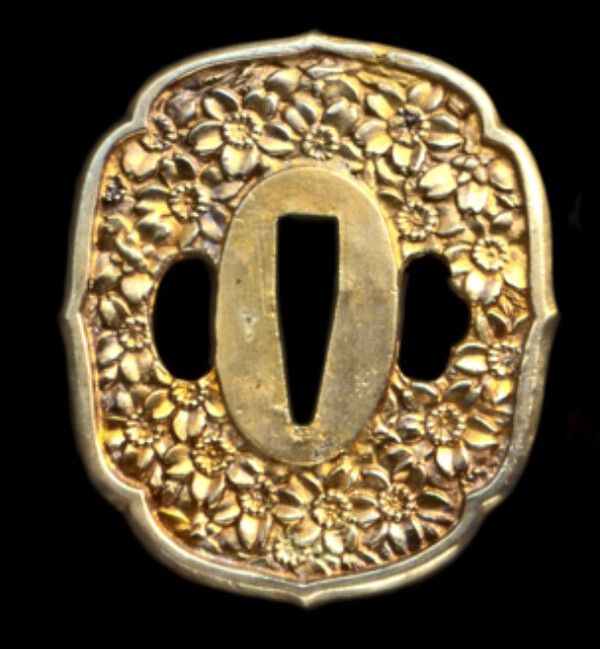
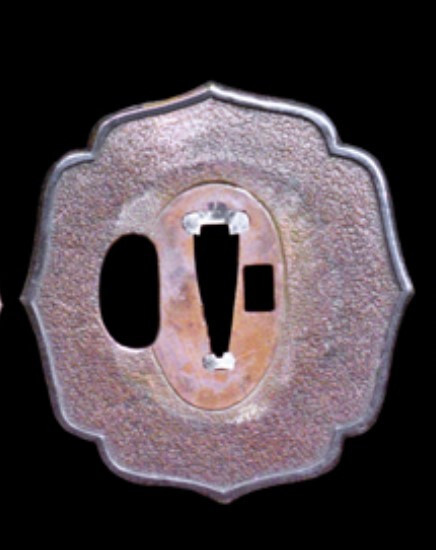
-
Thanks Steve. Downloaded and filed, now!
-
I'll check with @Grey Doffin and see if he has a copy, thanks!
-
Those are great, Gabe, thanks!
-
Help with date on cutting test please
Bruce Pennington replied to Sunny's topic in Translation Assistance
Steven, Do you have this blade? If not, do you have a full photo showing the cutting tester's kao at the bottom. Also need his name if you have it, thanks! -
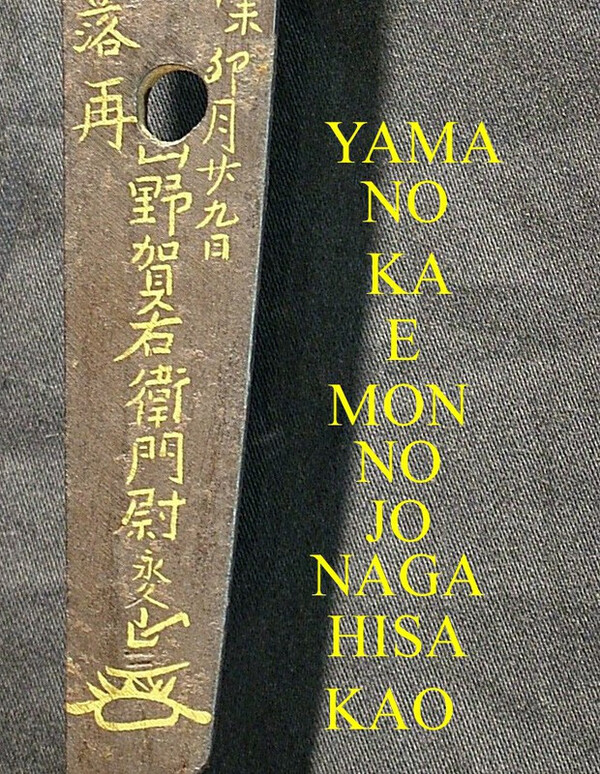
Found one by Nagahisa, 1655, posted by @Ed HERE.
-
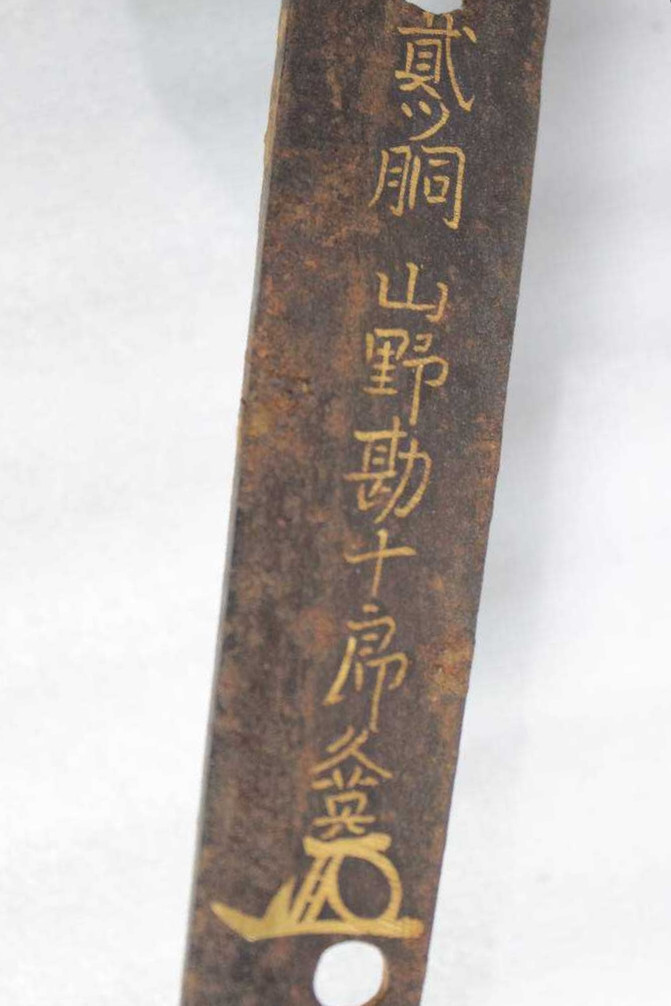
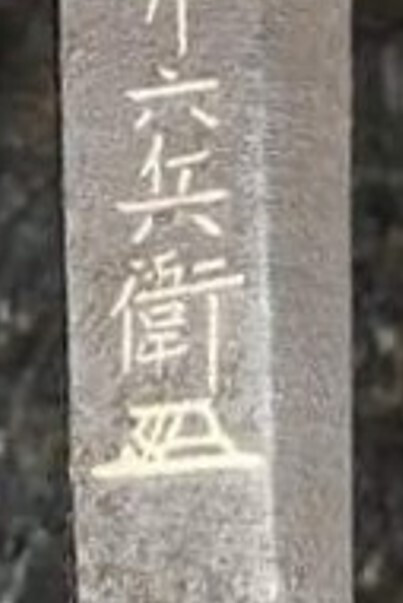
I've gotten interested in collecting the kao (kakihan) of cut testers. I have 4 on file now, and they have a particularly unique style that sets them apart from swordsmith kao. They all have horizontal lines on top and bottom and the writing between at casual glances seem the same, but with tiny variations to fit each tester's name, I suppose. If anyone has cut tester mei other than these 4, please post. I'd like to study them further, and collect their kao. Also, there has been a book mentioned on a thread somewhere that is about kao, in general. If anyone knows the name, please post. I probably need to get a copy. Thanks! Rokubei 1650 Narihisa 1660 Yoshizane (date?) Hisahide (date?)
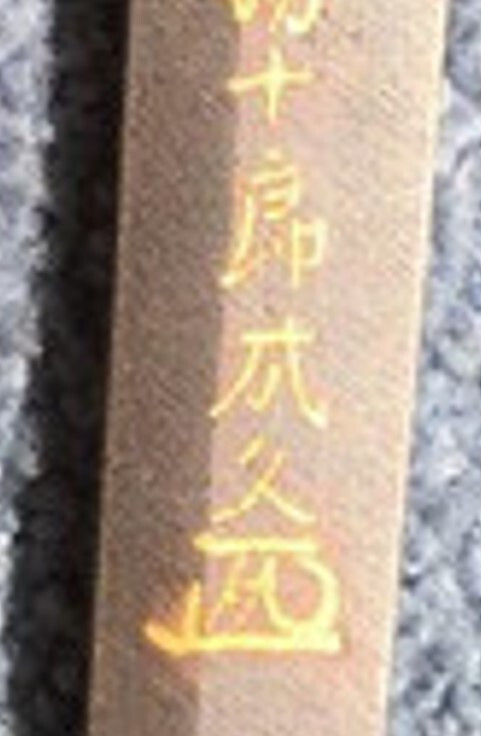
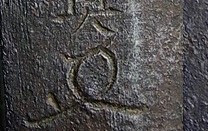
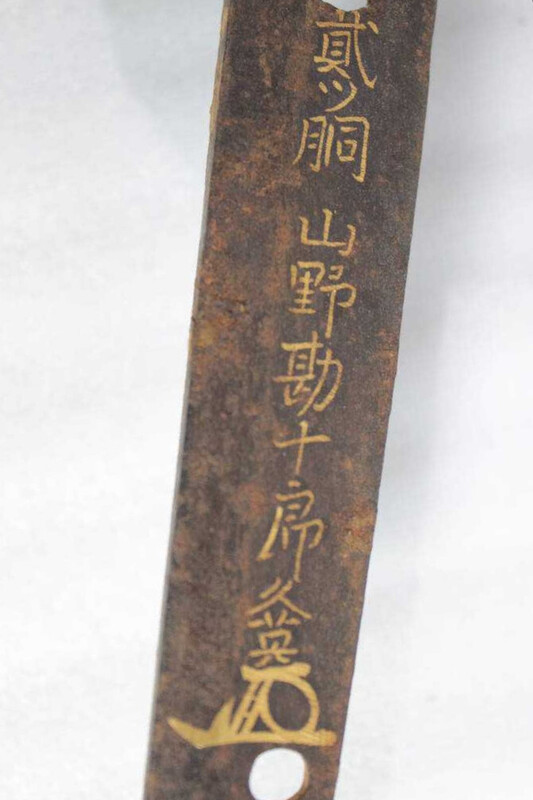
-
Good info! I have never paid much attention to the kakihan (kao) of these cut-testers. I have 4 on file now, and give them brief mention the Stamps Doc. But after taking a look at the 4, they seem to have a particular "style" to their kao that sets them apart from swordsmith kao. 3 of the 4 have horizontal lines on top and bottom. And even the stylized writing inside have similarities that are slightly different from smith kao. I think I'll start a thread on these to see if I can get more examples. I know there is a book out there on kakihan, as they are seen on other pieces, like tsuba. If anyone recalls the name of it, please post. I probably should look it up. Rokukei Hisahide Narihisa
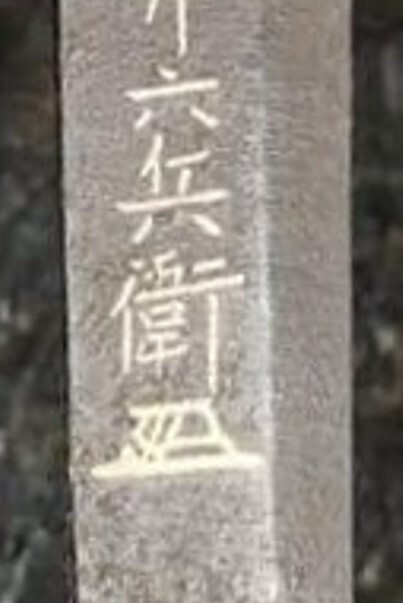

.jpeg.4858991def758492b11a15392d3030d1.jpeg)