


Grey Doffin
-
Posts
4,216 -
Joined
-
Last visited
-
Days Won
31
Content Type
Profiles
Forums
Events
Store
Downloads
Gallery
Everything posted by Grey Doffin
-

Translation Help With Kikumon Signature.
Grey Doffin replied to ChrisW's topic in Translation Assistance
Hi Chris, About having the sword polished and remounted: have you read the paragraph on the subject (I'm new to Japanese swords and I want to get my 1st sword polished and/or have koshirae made for it) in FAQ above? Grey -
Greetings From Az, Help With A Possible Type 98
Grey Doffin replied to croftonaviation's topic in Military Swords of Japan
Hi Tom, The sword is legit, the white paint is, I believe, not original, and the signature is Bizen Nagamitsu Saku. If correct (and it appears to be), this is a well known smith from WWII. Search the message board for Nagamitsu; you'll find lots to read. Make sure the pin is put back in the handle. Without the pin (mekugi) the blade can slide down inside the scabbard and shatter its point. If the pin is compromised, replace it. Grey -
Volumes 1 & 2 are iron; 3 & 4 will be Kinko. Grey
-
Jean, Look at the fuchi kashira and tsuka-ito, and the fitting on the scabbard. No way this isn't a fake. Grey
-
Sorry; this is a Chinese fake. Grey
-
jiberish Grey
-
PM sent Grey
-
I have 2 hardbound and 1 softbound copies on my site. Grey
-
My best guess: as the lacquer covers part of the seppa-dai (the area that would be invisible under the washers on either side), and because the lacquer would be degraded if this were mounted and because the seppa would be of uneven thickness because of the lacquer, rendering the tsuba impractical for use, this is something that was put together no earlier than late 19th and no later than post war years to be sold to a westerner. This was a simple iron tsuba that appears to be late Edo at the earliest, that has had the lacquer added later. Grey
-
Agree. The nakago hitsu-ana is too tall for the seppa-dai. Grey
-
Translation And Arsenal Stamps On A Friend's Sword
Grey Doffin replied to Stephen V's topic in Military Swords of Japan
Noshu Seki no Ju Hatori Masahiro Saku. Grey -
Trying To Find Out More About My Sword
Grey Doffin replied to Kip70's topic in Military Swords of Japan
This is, at best, something made in the islands to look like a Japanese sword but I think, much more likely, it is a Chinese fake made during the early days of ebay to sell to the unsuspecting. Grey -
Any Help Regarding My Sword Appreciated
Grey Doffin replied to xmr's topic in General Nihonto Related Discussion
Hi Alex, We are concerned by the black mark in your 1st picture just above, the one near the edge just below the point. If this is an opening in the skin, restoration makes no sense. If, however, it is just a spot on the surface, there is hope. Proper restoration (polish, new habaki, shira-saya, and a wooden blade to hold the original mounts together (you never put a newly polished sword back into the old mounts lest grit inside mar the polish)) will cost at least $2,000. Improper restoration (by an amateur) is a sin. There is nothing you can do yourself to restore the sword and lots you might try that can do serious damage; don't do that please. Here is a link to a care & etiquette site: http://www.nbthk-ab.org/Etiquette.htm Grey -
Hi Josh, I will never argue with someone who says buy books:-) However, if you have your heart set on owning something Samurai sword, start looking at tsuba. It is quite easy to find a real tsuba, well and artistically made, with a few hundred years of age to it, in good condition (rough shape is a sign of abuse, not age or history when talking of fittings), in the $100 to $200 price range. If you choose well, the tsuba will always be worth what you have in it. Choosing well is the result of study, which brings us back to books, museums, sword shows, and other collector's knowledge & collections. Grey
-
And very nearly worthless. I wouldn't recommend anyone buy these. Grey
-
Sword Gifted To Me. Any Opinions ?
Grey Doffin replied to Bencld's topic in General Nihonto Related Discussion
Hi Chris, Here is a care & etiquette brochure: http://www.nbthk-ab.org/Etiquette.htm You would be doing the sword a huge favor if you read it at least once. The sword would be nicer if it were properly polished but don't have that done unless and until you know a lot more than you now do and you're serious about the art of the sword; a polish before you're ready to appreciate and care for it will be wasted effort. And resist every urge to try to fix anything yourself; amateur attempts at repair often end in serious damage to the sword. Do some reading and ask questions; this is a fascinating study with a lot to appreciate. Maybe someday you'll know enough to understand what this sword is and then you can look into restoration. Grey -
Please Help With The First Two Characters Of This Mei
Grey Doffin replied to b.hennick's topic in Translation Assistance
Noshu Kunikane Saku, I think. Grey -
I have seen the same mistake made by a smith once before, when I was new to Nihonto. I was told that smiths weren't necessarily literate; that they would get someone to write out the mei and then use it to copy from. Maybe Hirotaka lost his place or was day dreaming. That is if this is a legitimate mei. Could also be a clumsy attempt at gimei. Grey
-
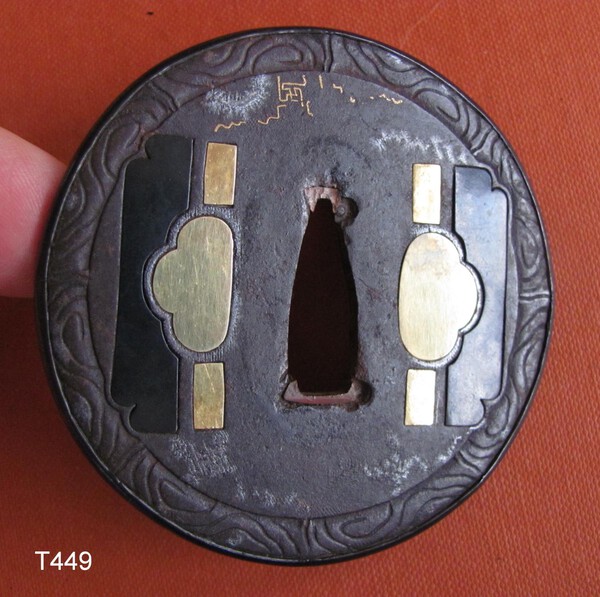
Here is one from my site. Aesthetics is the only reason that makes sense to me also. Grey
-
Does This Look Like The Real Deal To You Guys?
Grey Doffin replied to Matt300ZXT's topic in Military Swords of Japan
Hi Matt, If you want to buy a real Gunto you want this book. http://www.japaneseswordbooksandtsuba.com/store/books/b510-swords-imperial-Japan-1868-%E2%80%93-1945-cyclopedia-edition Grey -
Looking to the 5th picture just posted; is there a mune machi and does it line up with the ha machi? If the answer to either is no then I think this is a fake. Grey
-
Hi Eric, I would like to suggest a different option for you: look for and purchase an antique, Samurai sword in koshirae. If you do your homework and pick well, the sword you choose will retain its value; it should always be worth what you put into it. If, however, you assemble a set of lower end parts and pay someone to build the saya and tsuka for your sword with those parts, you will end up with something that is worth much less than what it cost you. Collectors look for original Samurai mounts, not something put together by someone in the west. I am troubled by the low quality of the dragon horimono on your sword; I wouldn't spend more money on it. But it is your decision. Grey
-
And that is XVNX, not XVIVX. I don't think N is a Roman Numeral so no idea what this is supposed to be. Grey
-
Translation Assistance Please For A Strange Signature
Grey Doffin replied to Bazza's topic in Translation Assistance
How about we split the difference and go with Yukisaki? Hawleys has one listed as working in Satsuma in early 19th century. The mei is given as Naminohira Yukisaki. Grey -
Need Help Tang Translation Of Old Wakizashi
Grey Doffin replied to sechan's topic in Translation Assistance
Hi Steve, This is one of thousands of swords made in late Koto and signed Sukesada; not possible to tie it to a particular smith. If it were by a master the signature would be completely different. If you google Sukesada sword I'm sure you'll find many examples of the better made pieces, and you should be able to see the difference. Grey

