Grey Doffin
-
Posts
4,236 -
Joined
-
Last visited
-
Days Won
31
Content Type
Profiles
Forums
Events
Store
Downloads
Gallery
Everything posted by Grey Doffin
-
Ikkanshi Tadatsuna katana, ubu, in polish, papered, & in koshirae for just less than $10K. https://www.japaneseswordbooksandtsuba.com/store/swords/q655-papered-long-ubu-katana-ikkanshi-tadatsuna Cheers, Grey
-
Hi Charles, Please tell us what you want to learn from the books and we can do a better job of recommending titles. Are you interested in blades or fittings, Nihonto in general or a specific time or school. Grey
-
Hi Jim, Pretty sure this is an older blade put into mounts from WWII. No one will be able to tell you too much more about it from pictures; it needs to be seen in hand by someone knowledgeable and honest. The advice you were given to not try to clean or fix anything was right on; don't do it. Make sure you put the bamboo peg back in the handle when you put the sword back together; it is very important. Grey
-
Hi Malcolm, It could be a 2 piece pressure fit (tapered male & female join) but the slot in one side suggests a 2 piece threaded join. When you apply gentle persuasion, keep in mind that it can be either a right or left hand thread. Grey
-

Oiling in humid environment
Grey Doffin replied to Xander Chia's topic in General Nihonto Related Discussion
Hi Xander, Nakago and tsuba in good condition shouldn't need oiling. The black patina is protective; it guards against rust. Grey -
Hi ?, If I had to guess I'd say late koto or early to mid shinto but so much is unknown. Grey
-
Hi, name please, If the sword has no serious problems/fatal flaws (a big if) it should be worth $750. Grey
-
More information about this potential Nagamitsu?
Grey Doffin replied to ZeroFlight's topic in Nihonto
Hi Dan, The sword, which is 100% real, is signed Yamato No Kuni Junin Nagamitsu. The paper (I believe that's what you're referring to as COA) is the license every sword in Japan needs to have. It has nothing to say about authenticity, just that it is a sword and what the signature says. This Nagamitsu is most likely not the Nagamitsu you've been reading about. The wakizashi looks to be early to mid Edo period: 17th or early 18th century. Who ever the smith was, he isn't one of the important ones. Nothing wrong with that, though; looks nice. Grey -
Mystery Wakizashi ( lots of pictures )
Grey Doffin replied to Absolute novice's topic in Military Swords of Japan
Hi Matthew, The handle is something someone in the west put together; everything else is original Japanese. This is an older, Samurai sword, not a WWII sword. If you can take a better picture of the tang with signature (rotate the orientation a quarter turn clockwise and use a raking light so the characters stand out), someone here will be able to tell you what it says. Do not attempt to clean or fix anything (looks like someone already tried to clean around the signature, which is unfortunate); well meaning amateurs often do serious damage. Grey -
Hi Nick, If the mei is right and there are no serious defects, a polish by a competent togishi is warranted, plus a paper also if you like. My 1st Nihonto, back in 1983 or 4 was a wakizashi by Mitsuhira; he did nice work. Here is the listing in Fujishiro. Grey

-
ISO a wakizashi or katana
Grey Doffin replied to Kyzen223's topic in Auctions and Online Sales or Sellers
What I said last week when another new collector asked the same question: I think you're setting yourself up for disappointment. Under $1K for a Nihonto will get you something that is either low to mediocre quality or a blade with serious problems. When the time comes to sell and move up, you'll have trouble recouping the investment. Double the investment and take the time while you're raising it to study. You'll know more, which will allow you to buy something worthy and pleasing to own. Grey -
Yes; Goo Gone. Find it at any hardware store. Grey
-
Thank you, Grey
-
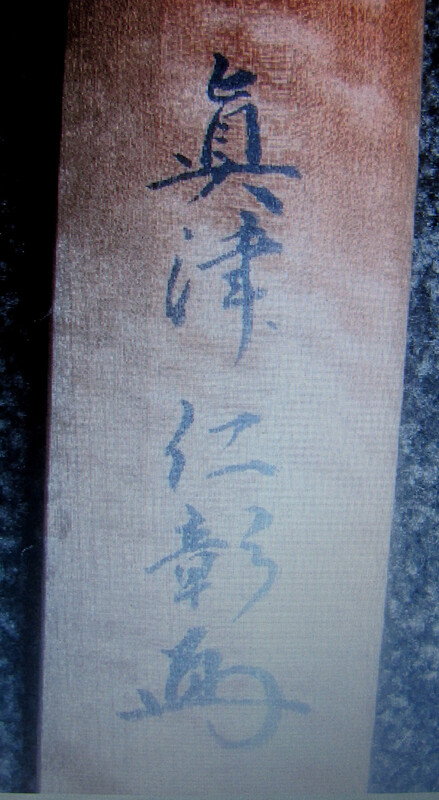
Hi guys, Can anyone tell me who has signed this sayagaki and who he is? Thanks, Grey
-
Looking for advice on authenticating this sword
Grey Doffin replied to twoscoops's topic in Military Swords of Japan
Hi Thomas, Yes; a legitimate sword and it looks like you have it reassembled correctly (unless the seppa (washers) are on in the wrong order, in which case I'm sure someone who knows these swords better than I do will point out). The red paint are likely numbers to help keep the parts together and they will tell you nothing about the sword's history. Grey -
Wakizashi Koshirae fitting ?
Grey Doffin replied to P34's topic in General Nihonto Related Discussion
Hi Patrick, You can have a completely new koshirae, with newly made parts, or you can buy antique parts and have them fit to a new saya and tsuka. Unless you try to do either of these on the cheap (then what's the point?), either can be quite expensive. This will be an expense that you likely will never recoup. For instance: if your sword in shirasaya is worth $3,000 and you spend $7,000 on the new koshirae, when done you should be able to sell the lot for $6,000. Collectors would rather have original samurai mounts, not something recently put together by a westerner. The task you have chosen is often the wish of a newbie; far less common with the experienced. But, you say, "I don't plan to sell the sword." Unless you plan to be buried with it, it will be sold, either by you or your family. As mentioned, a much better solution is to buy an existing koshirae you like to display beside your sword in its shirasaya, which is where your sword is best protected. Orphan koshirae (separated from their blades), even those of good quality, can usually be purchased for less than their parts would be worth if bought piece by piece. The theoretical $3,000 sword above could be paired with a $2,000 koshirae and little or no investment would be lost when the time comes to sell. One exception to this would be commissioning a koshirae from a well trained and talented artist. Much more expensive but justifiable for esthetic/artistic/what the hell; I can afford it reasons. Grey -
Your top 2 pictures appear to show the tsuka with a missing mekugi. If this is the case don't delay in replacing the pin; it is quite important. Grey
-
Yes, and don't delay. The pin is very important. Grey
-
Need help translating mei and tsuba signatures.
Grey Doffin replied to Auren_Stark's topic in Translation Assistance
BTW, never try to cut with this or similar swords. They can shatter on impact and become lethal shrapnel. Grey -
Sorry but I strongly disagree with Jimmy's last post. The most likely thing you will learn from buying cheap, out of polish swords and sending them to a polisher for windows and further polish if warranted is that you shouldn't have done it. There is a reason why the swords are cheap and out of polish. Beginners should take serious time for study, and they should resist the urge to buy speculative swords. Save your money for the day when you understand what you're spending it on. There will always be good Nihonto for sale; no need to be in a hurry. Grey
- 23 replies
-
- 11
-

-

-

-
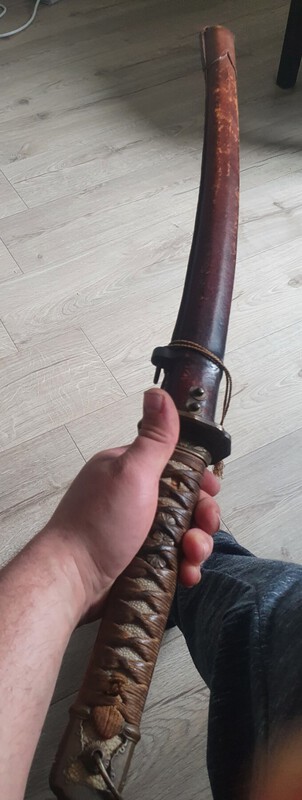
I am no authority on military swords but this looks terrible. Run away. Grey
-
Late (Meiji) and trying to appeal to western tastes. In my humbled opinion. Grey
-
Bishu Osafune Kiyo ? (tough to read upside down). Not a gunto; an earlier blade. Grey
-
Hi guys, Mark and I just took in a bunch of swords new to the market and a couple dozen kodogu also. If you're going to be here at the show be sure to stop by our tables for a peek. Going to be a very active show, I think. Grey
-
Tanto Aikuchi Silver Koshirae
Grey Doffin replied to Tsubafan's topic in General Nihonto Related Discussion
I think the koshirae is Meiji, if not later. The blade could be earlier. Grey