


xreflections
-
Posts
13 -
Joined
-
Last visited
xreflections's Achievements






-
Type 98 Shin Gunto and Kai Gunto - Ancestral blades?
xreflections replied to xreflections's topic in Nihonto
What do you recommend oiling it with? By damascus I mean the ripply pattern on the metal--I read that it could be seen on some Japanese blades: https://swordis.com/blog/jihada/?srsltid=AfmBOoqQV8Rd1ndSd0Nuh3JnMIQP0-w3LOH6N00WGqUKJgCOAmIf1-lG thanks! -
Type 98 Shin Gunto and Kai Gunto - Ancestral blades?
xreflections replied to xreflections's topic in Nihonto
Darn, I really thought the Kai Gunto might be original I looked at the wear on the scabbard and blade, and the seemingly good quality of the shakudo, and thought it looked real. -
Type 98 Shin Gunto and Kai Gunto - Ancestral blades?
xreflections replied to xreflections's topic in Nihonto
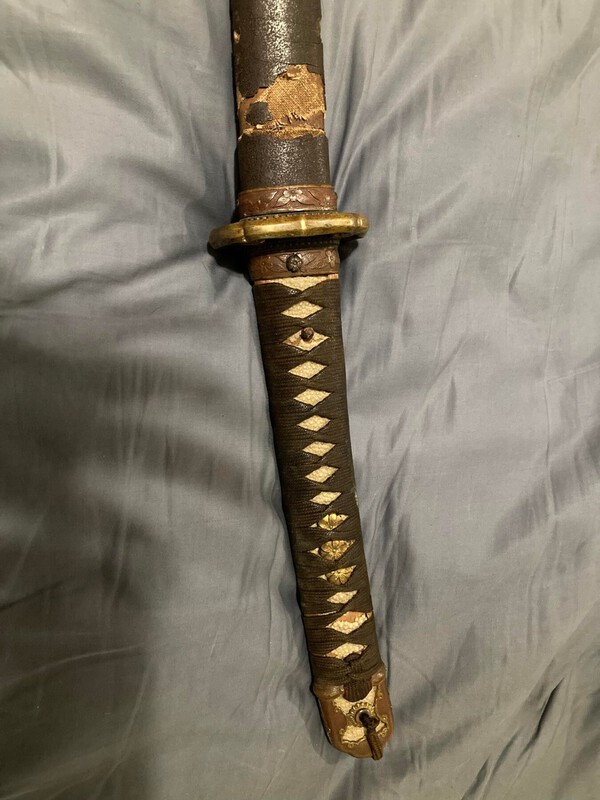
Photos of the Type 98


-
Type 98 Shin Gunto and Kai Gunto - Ancestral blades?
xreflections replied to xreflections's topic in Nihonto
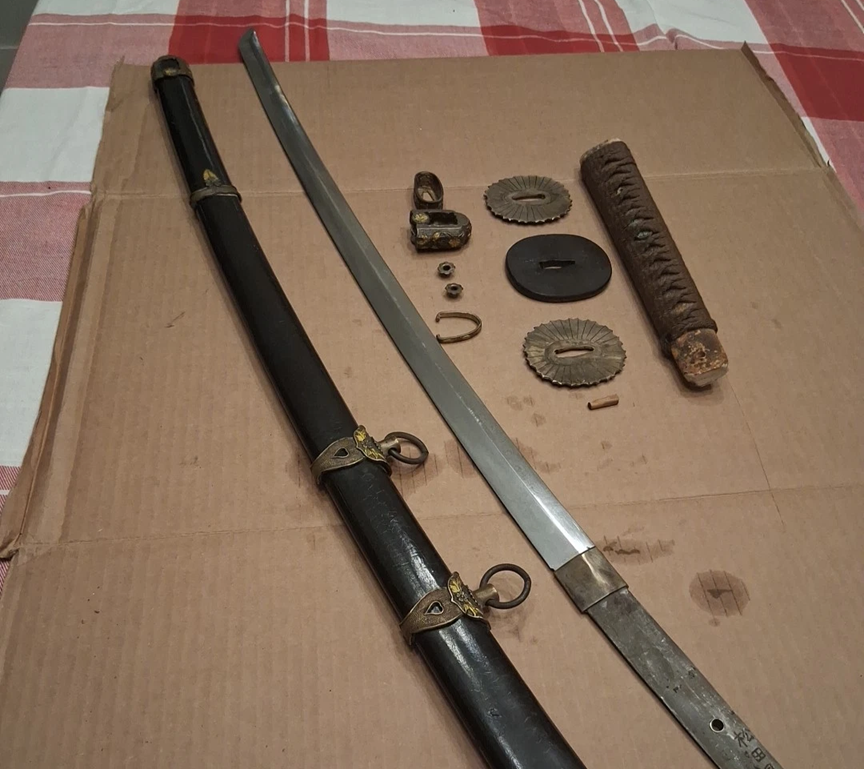
Here are more photos of the Kai Gunto. I'll be adding one more post below with more photos of the Type 98.


-
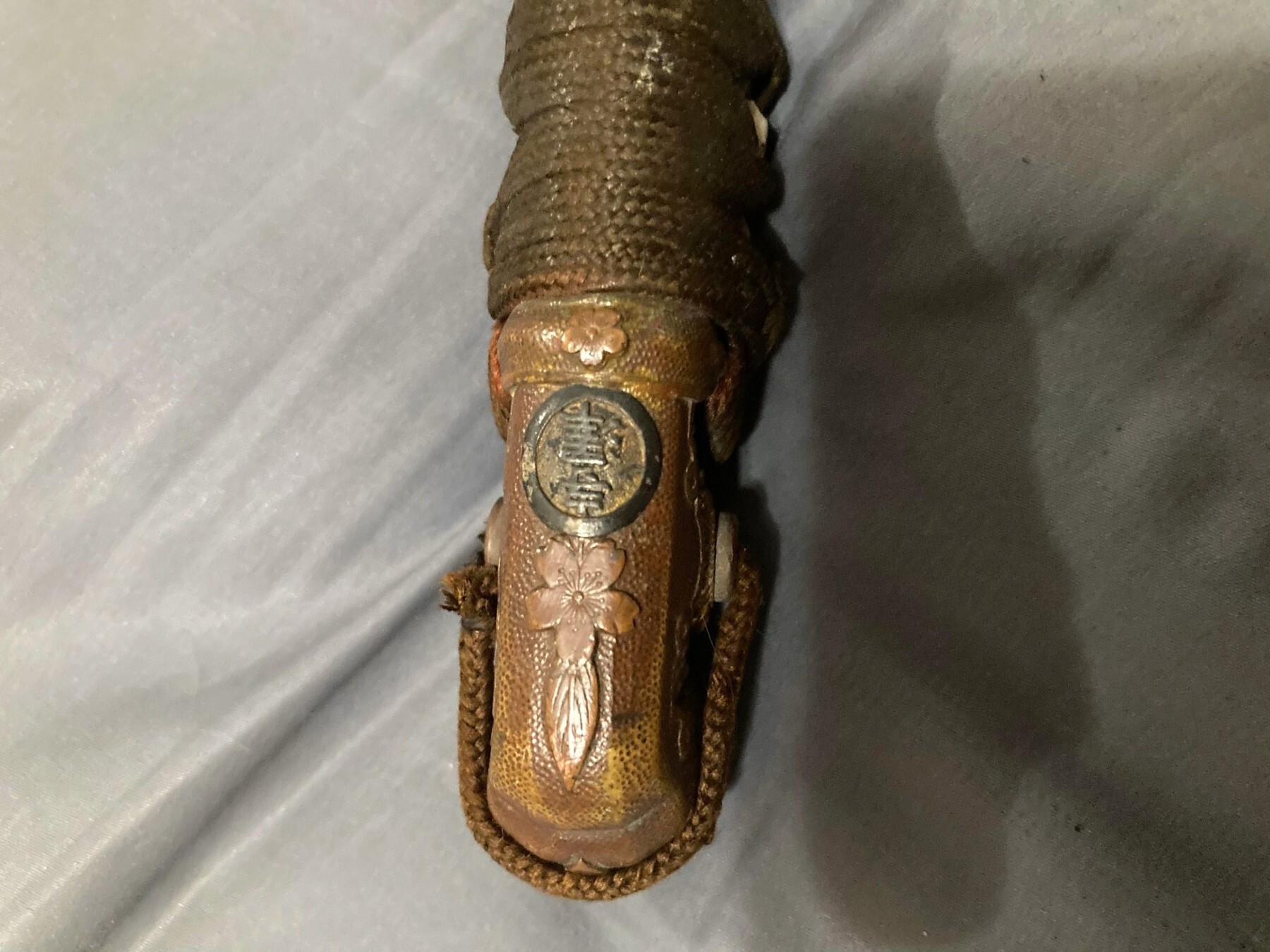
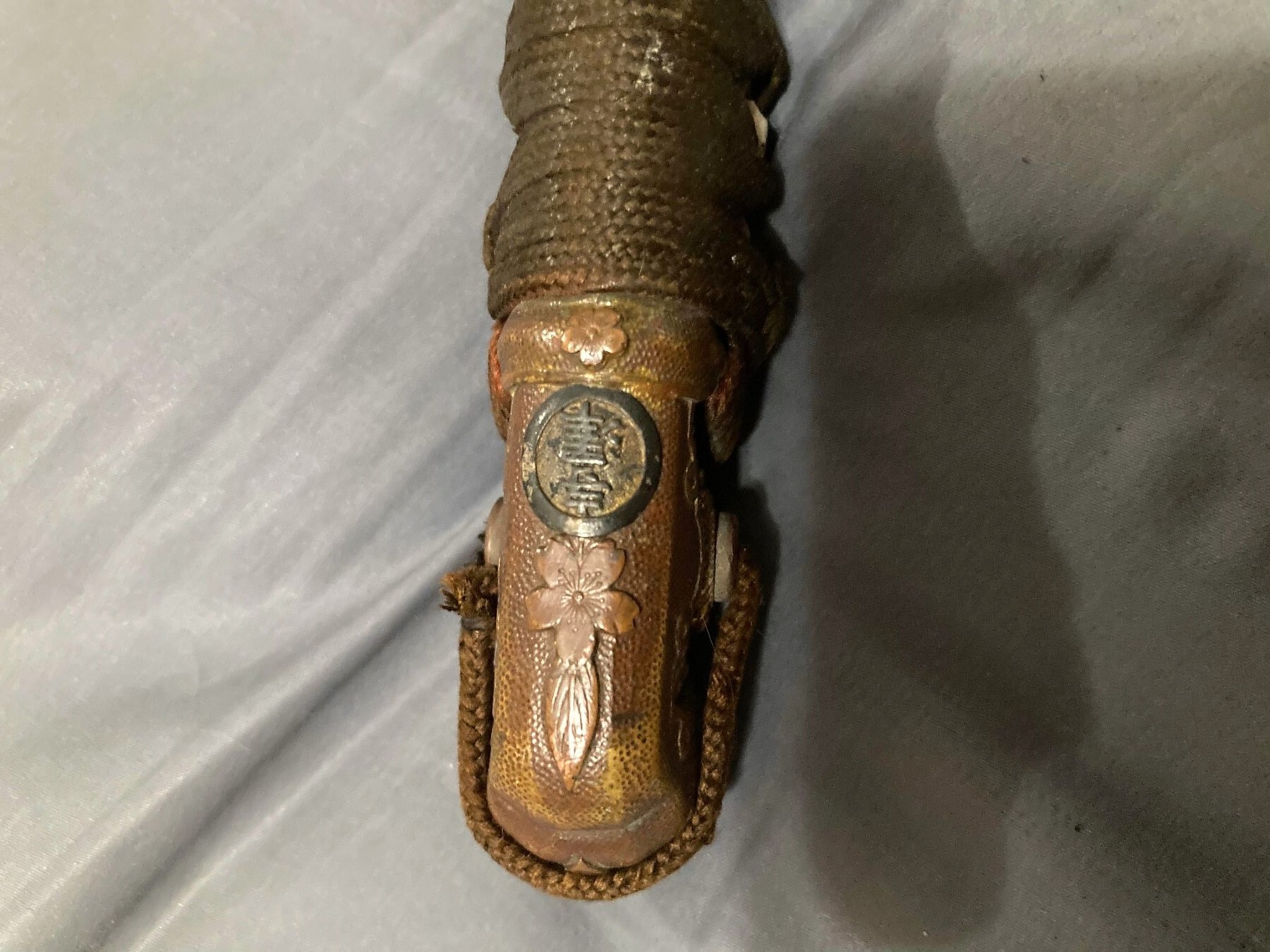
I've always loved swords and weaponry, and over the last several years, have had the fortune to find two WWII-era (I believe) swords. The Type 98 Shin Gunto was my first real sword I bought, for $500 from a local consignment store a few years ago. Wasn't described as anything. It has a small silver plaque affixed on the pommel (kabutogane?) with the family name of "Terasawa" in Kanji, or so I've been told by users in this forum, when I made the initial post about it. I haven't been able to remove the tang; I was able to successfully remove two bamboo pegs, but after gently tapping with a rubber mallet on the bottom of the guard, the metal and hilt still wouldn't budge, so I gave up. I didn't want to risk tearing the skinray skin, which seems rather dry and frail, or denting the guard. I'm going to try to reach out to a dojo that specializes in traditional Japanese swordfighting, but I'm again very hesitant to attempt trying to free the tang, if it might damage the separate components. I reached out to one a few years ago, after getting the advice of people here on this forum, but never heard back. And just decided it would be best, if I don't attempt to remove the hilt. My second sword is, what I believe to be a Kai Gunto. I've attached photos with the writing on the tang. The first thing I noticed is that the fittings seem like high-quality shakudo, and the blade itself appears to be similar to damascus steel (doing more research, I believe the correct name for the graining in the metal is jihada--it seems like it might be Mokume Hada or Itame Hada, and there's probbaly a different manufacturing technique than traditional damascus steel.). But when I saw that patterning, I was like, yeah, this is a special piece. I don't have experience collecting Japanese blades; I am very much a newcomer, and very much buy on instinct and whim (having handled antiques for years, and being able to estimate accurate signs of ageing in different materials, but having zero knowledge of katanas or traditional sword-making techniques). I paid about $350 for it, so I figure, even if it's not an older blade, it appears to be quite a high quality sword based upon the graining. But the patina looks consistent with antique metal. Thoughts or advice? How do you recommend preserving the lacquer and metal? I've used Renaissance Wax on other antiques, but obviously, don't want to do anything that would risk altering the integrity, historical value, or monetary value of the piece (like, if the Renaissance wax permanently darkened or fused the exposed underlayer of the lacquered sheath. I began removing some of the dark oily staining on the Type 98's blade using alcohol swabs a few years ago, which worked without seeming to affect the surface or shine of the underlying metal, but I didn't finish the job, so most of the residue is still there. Obviously, I don't want to use anything that might scratch the metal, erode any visible graining (this one does not have the same whorled effect as my Kai Gunto), or damage any patina. If these swords contain ancestral blades, is there a Japanese historical organization or group that might be interested in them? Even just getting detailed photos and documentation? I feel like, if these are 200+ year-old blades, their historical importance and symbolic clan importance kind of predates the WWII-era strife. I know these were probably brought to the US as trophies, but it kind of feels like I'm holding onto someone's family legacy. I would like to continue collecting Japanese swords and weapons, but being a total newcomer, I can't really tell if I'm getting good deals or not. Can anyone recommend tips, books, or resources for someone just starting out?
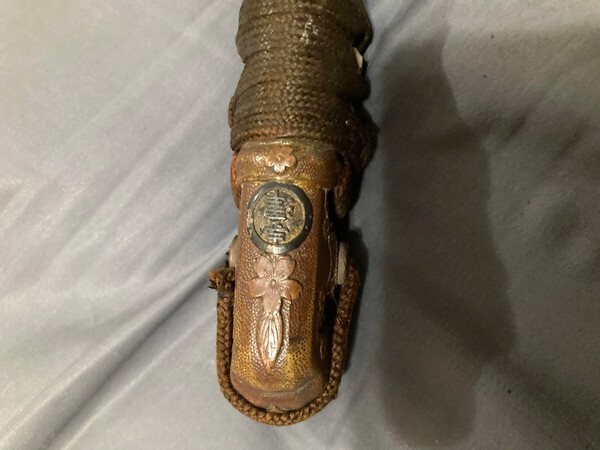

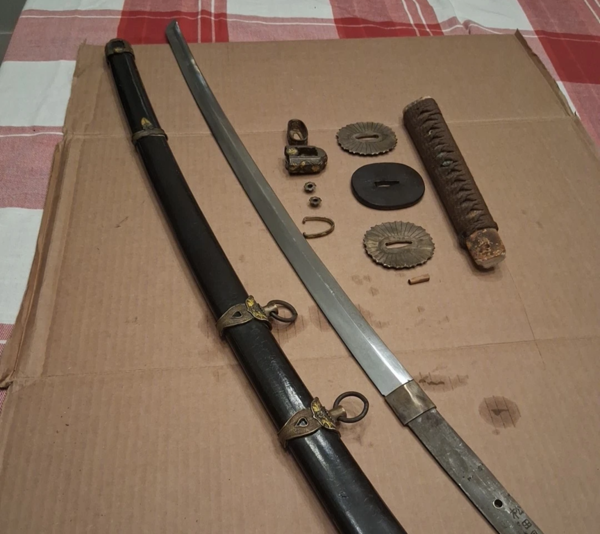

-
Sword found at resale store
xreflections replied to xreflections's topic in Military Swords of Japan
The peg is completely removed; I can see the hole in its entirety. The tsuba wiggles a little if I press against it, and each time I tried the tapping method by gripping the sword and striking my wrist, I heard a soft metal clang like it was going to come loose, but it didn't. -
Sword found at resale store
xreflections replied to xreflections's topic in Military Swords of Japan
Sorry for the delay. I still haven't been able to get dismantled, but the blade is 1/2 clean now. I'm going to call a place that offers classes in Japanese swordsmanship, and see if they might be able to help me dismantle it. -
Sword found at resale store
xreflections replied to xreflections's topic in Military Swords of Japan
Thank you. What kind of oil would you recommend using? -
Sword found at resale store
xreflections replied to xreflections's topic in Military Swords of Japan
I've been using cotton alcohol swabs. Is that all right? -
Sword found at resale store
xreflections replied to xreflections's topic in Military Swords of Japan
I'll try to dismantle it tomorrow. I worked on cleaning off some of the cosmoline tonight and I'll post pictures once it's fully cleaned. Should I use Renaissance Wax on the blade once it's cleaned? Thank you for all your help! I'll definitely keep my eye out for more swords from now on. -
Sword found at resale store
xreflections replied to xreflections's topic in Military Swords of Japan
I was able to remove the peg using a chopstick, but I'm having trouble removing the handle now. I watched some tutorials online, but I can't seem to get it off. -
Sword found at resale store
xreflections replied to xreflections's topic in Military Swords of Japan
For removing the blade, do you have recommendations on what materials I should use to remove the pegs? I looked online, but I don't have a brass punch or hammer. As well, how do I know which side of the peg to gently tap? I only see one peg as well--should there be a second one? -
I've always been interested in antique weapons, and today came across a sword at a resale store. It was $400, which was a lot for me, but I could tell right away that it was old. Sadly, the sheath is damaged (there is a cut right above the locking mechanism), with wear to the leather, but the mechanism still works. From my research, sounds like this might be WWII? This is my first sword, so I'd love to know more about it (and if it was worth what I paid) The blade is covered in a dark, greasy-looking (but dry) substance. There are no serial numbers on the blade or hilt, as far as I can tell, and I'm afraid to try dismantling it to check the tang.
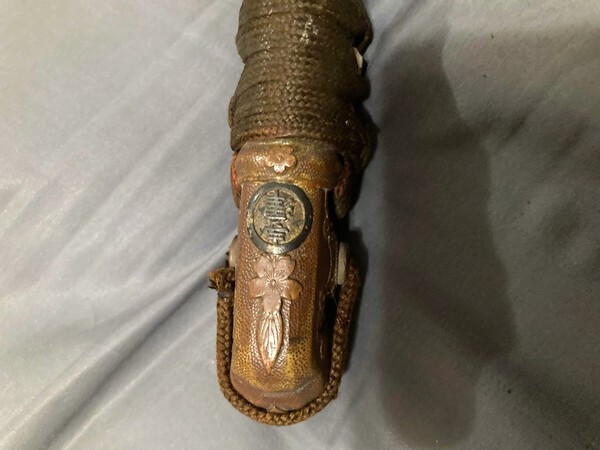
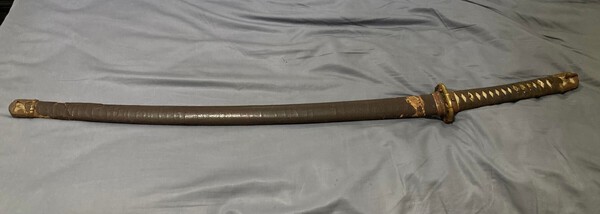
.thumb.jpg.83a96db231698ec0f13b28b4b49aac1d.jpg)
.thumb.jpg.73004c7eebd854db4dc19f4c3bbf864d.jpg)






.jpg.ce1b4d7276e6735b0fdc4886409b38e7.jpg)
.jpg.0846f4f779ba36e04adcba2ff52e0bab.jpg)


