Nobody
-
Posts
4,049 -
Joined
-
Last visited
-
Days Won
65
Content Type
Profiles
Forums
Events
Store
Downloads
Gallery
Everything posted by Nobody
-
Can someone ID what this is? use?
Nobody replied to John A Stuart's topic in General Nihonto Related Discussion
I found that 足銀 (ashigin?......unsure about its reading) is an old Chinese word. It means pure silver with more than 95 % fineness. But I think the item may be a replica of Chinese antique. -
They are 無銘 (Mumei; unsigned).
-
Can someone ID what this is? use?
Nobody replied to John A Stuart's topic in General Nihonto Related Discussion
It is a paperweight (文鎮; Bunchin) usually used for calligraphy. ex. http://page4.auctions.yahoo.co.jp/jp/auction/d69334215 -
Hi, The motif seems to be Chigai-Ya (違い矢; crossed arrows).

-
FYI; See the bottom of the page below. http://www.h4.dion.ne.jp/~t-ohmura/gunto_011.htm
-
Hi Simon, I think that the shop must be one on the site below. Masamune kogei bijutsu seisakusho (正宗工芸美術製作所) http://www.jtb.co.jp/kokunai/Sight.aspx ... gorytype=4 http://www.navida.ne.jp/snavi/33111_1.html And the smith may be, http://www.kcn-net.org/my_kamakura/mykama_35.html The shop seems to be one of tourist attractions. The smith is Yamamura Tsunahiro (山村綱廣) and he claims himself as 24th generation Masamune.
-
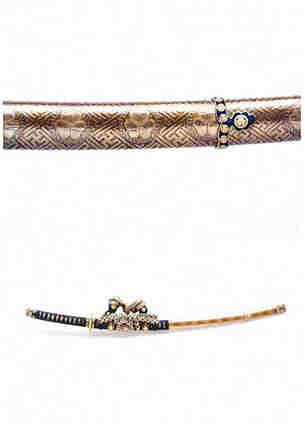
Nashiji Aoimon chirashi Itomaki Tachi koshirae (梨子地葵紋散糸巻太刀拵), mid Edo period, Nagoya City Museum
-
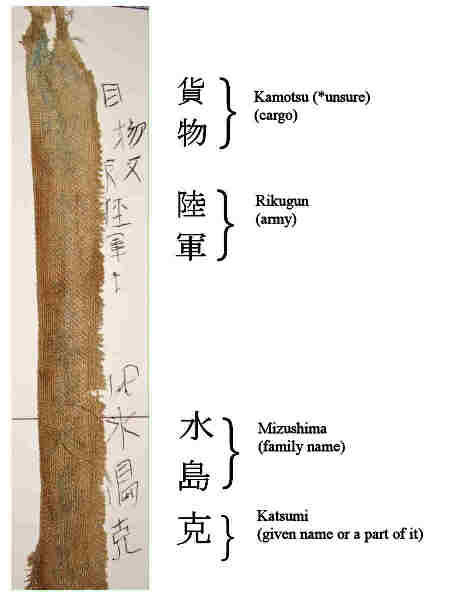
Surrender Tag can anyone help with a translation?
Nobody replied to pcfarrar's topic in General Nihonto Related Discussion
I think I could read some parts.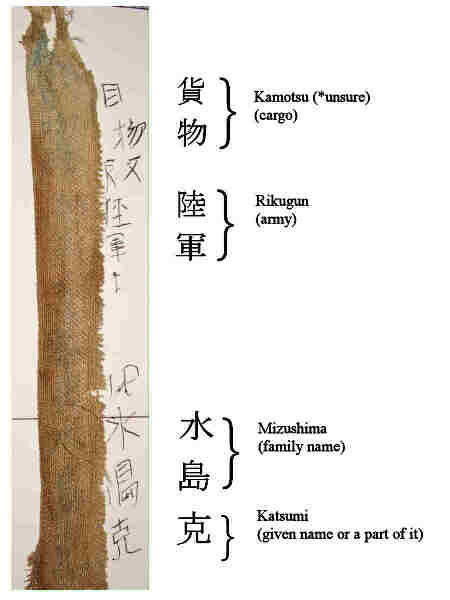
-
I am sorry it does not look right to me.
-
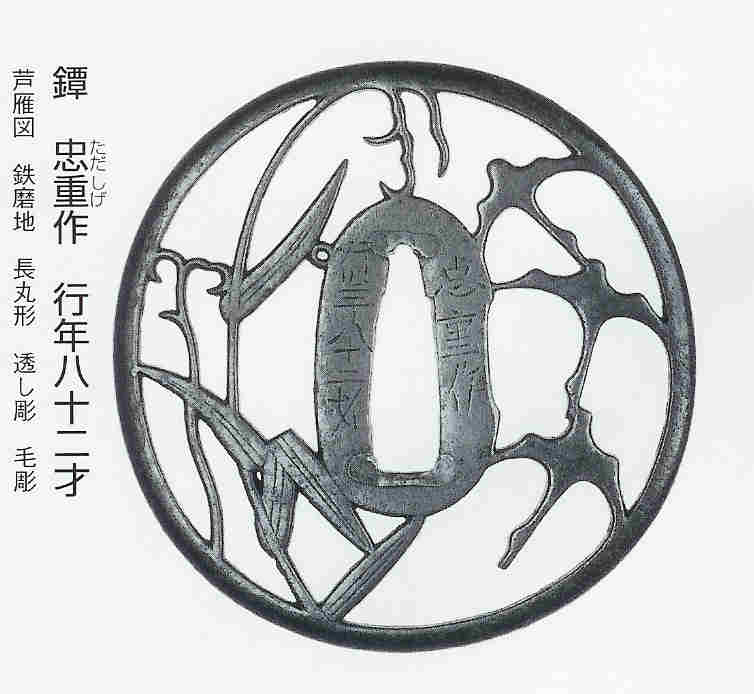
I found a similar motif yesterday on a magazine. Tadasige saku (忠重作).

-
Hi, It reads Hoshu Takata ju Hisamori (豊洲高田住久盛).
-
reads Shinano (no) kami Minamoto Nobuyosi (信濃守源信吉).
-
The date reads Showa ju roku (or hachi) nen ju ......LOST (昭和十六(or 八)年十......). It may be Oct., Nov., or Dec. in 1941 (or 1943). The name of the smith is Kanenori (兼則) as QuangD already reads.
-
The first part of it reads Tsukushi (筑紫), not Isukushi. It is same as Chikushu (筑州).
-
筵 is usually read as "mushiro". It means a mat or a rug. But sometimes it is better to be thought as a seat or a festive board. I translated it as a banquet this time.
-
This is my guess. 清風一掃月窺筵 Seihu issou (shi), Tsuki En (wo) ukagau. The fresh wind blows, the Moon peeps at the banquet.
-
Then, I will not distrub you for a while.
-
other possibilities for 冷泉; 1) reads Reisen which is a place name near Hakata in Fukuoka-ken. The smith Suetsugu Shigemitsu seems to be living in Fukuoka, no? 2) reads Reizei which is the name of a famous court noble.
-
Need help with translation...
Nobody replied to S.Haugtredet's topic in General Nihonto Related Discussion
Hi Guido, To tell the truth, I could not find anything without big helps of Google. NMB Bonenkai or Shinnenkai may be a good idea. I am always free. -
Need help with translation...
Nobody replied to S.Haugtredet's topic in General Nihonto Related Discussion
Guido, How did you study so many things? BTW, the Japanese proverb also has its origin in ancient China. There is the following phrase in Zhōu Yì (周易) in Zhōu (周) period (ca. 1046 B.C - 256 B.C.). "治而不忘乱" -
Yes, Go shu (江州) is an alias of Omi no kuni (近江国). As for the next translations; the left one; Yoshida Yahee saku (吉田弥兵衛作); made by Yoshida Yahee the right one; makihari (巻張); wrapping in a spiral (seems to be a process in making a barrel) Ref. http://www.home-nagahama.org/tepponosat ... aji2-1.htm
-
what are your favourite samurai films?
Nobody replied to kusunokimasahige's topic in General Nihonto Related Discussion
Ikiru is one of my favorite films. I am glad to find at least one person here who likes the film. :D -
The first photo; may be one's name, resds Motoshige (許重). The second photo; center one; Kunitomo Matashiro (國友又四郎), Masatoshi (昌睦), Tsuji (辻) right one; Go shu Kunitomo Kojuro (江州國友戸十郎), ? ? (當草) (cannot understand what it means) notes; Kunitomo is a place name in Go shu. Other descriptions may be names of makers except 當草.
-
Need help with translation...
Nobody replied to S.Haugtredet's topic in General Nihonto Related Discussion
Now, I am for Nobuyori. FYI; http://www.e-sword.jp/sale/0650/0650_2006syousai.htm -
Need help with translation...
Nobody replied to S.Haugtredet's topic in General Nihonto Related Discussion
Ah yes, maybe you are right. Nobuyori (信仍) is listed on the Swordsmith Database.