Nobody
-
Posts
4,164 -
Joined
-
Last visited
-
Days Won
70
Content Type
Profiles
Forums
Events
Store
Downloads
Gallery
Everything posted by Nobody
-
See the last part of the page below. http://www.nihontokanjipages.com/common_kanji.html
-
The other information from the text is not so special. The following translation does not include the first paragraph of the text, because it mentions only about general background of Masamune. There is a Shumei (朱銘) by Honami Kojo (本阿弥光常) on the nakago of Masamune’s style. Although the length is a little less than 2 shaku (尺), it has a good sweep with a strong sori (反り). Its jimon (地文) is mokume (杢目) mixed with itame (板目), and it has thick ji-nie (地沸) and chikei (地景). Hamon is notare and choji-midare, and it looks dynamic with thick nie and strong kinsuji/inazuma. Boshi (鋩子) on its omote side looks like kaen (火炎).
-
Hi, I forgot to post to this thread. On page 157-158 of the book "Masamune - a Genius and his Lineage", there is an article about the ko-dachi. And it mentions a part of its history, which is something like this. When the 5th shogun Tokugawa Tsunayoshi (徳川綱吉) went to Kii (紀伊) in the 4th month of 1697, he gave the sword to Tokuwaga Mitsusada (徳川光貞) of Kii Tokugawa family. The sword descends to the family since then.
-
Hi Doug, The Tamemei (為銘) reads as follows; Sonoda Sanemasa no tame ni kore o tsukuru (為園田實政造之 = for Sonoda Sanemasa, (I) made this.). Sonoda Sanemasa (園田實政) was the person for whom the sword was made. However, I could be wrong about the last kanji (之).
-
The date on the tsuba is "Keicho ju-go nen (慶長拾五年 = 1610)" as Mikolaj says.
-
That Tadayoshi may be the 3rd.
-
The mei looks Tadayoshi to me. That is "Hizen no kuni ju Tadayoshi saku (肥前國住 忠吉作)". BTW, if it means the famous Tadayoshi 1st, did he really make such a tsuba? What do tsuba experts think?
-
At first, I also thought of Kiri (paulownia). But Kiri does not match snow, because Kiri is a deciduous tree and it loses the leaves in winter.
-
According to the explanation on the ref. page; Karahana (唐花) does not mean any specific flowers but only an imaginary flower with the taste of Tang. Its original motif came from the Tang Dynasty and was already used in Nara period in Japan.
-
Maybe better news Cranes repressent 1,000 years and Minogame represent 10,000 years of life in the world of legend.
-
I was unsure about the upper part. Maybe snow as Pete says? As for the lower part, I think it is Karahana and not Sakura. Karahana; http://www.otomiya.com/kamon/kika/karahana.htm
-
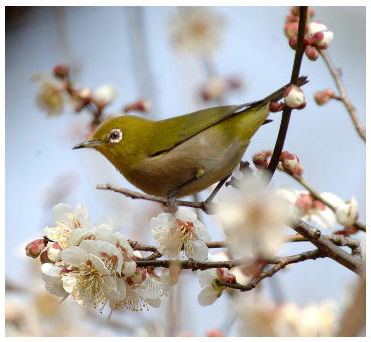
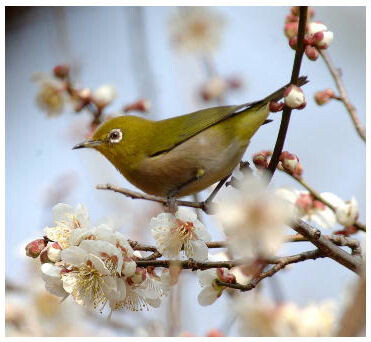
As you might notice, there is a bird on the upper tsuba. So, the motif may be Ume and Uguisu (warbler)(梅に鶯). BTW, At least, the bird had been thought to be an Uguisu for the motif, but now it is believed that actually the bird is a Mejiro (white-eye).
-
I am unsure, but had a mei been removed?
-
Can't find it for some reason so...
Nobody replied to Henry Wilson's topic in General Nihonto Related Discussion
Here you are. http://www.touken.or.jp/english/timetable.html -
The sword is unsigned (無銘: mumei). Its province and era are thought to be Sagami no kuni (相模国) and around Koka (弘化: 1844-1848) respectively.
-
resembling but different tsuba on Yahoo auction. http://page18.auctions.yahoo.co.jp/jp/auction/w5614023
-
Hi, The koshirae looks Han-dachi Koshirae to me.
-
Hi Reinier, Maybe you should read the following two links first. Then you will understand 90 % of the paper. http://www.geocities.com/alchemyst/origami.htm http://www.afuresearch.com/glossary1.htm
-
FUKUBE TETSUZÔ ? Needs help on this one...
Nobody replied to Carlo Giuseppe Tacchini's topic in Nihonto
You know Hyotan Tetsu. So, it will be easy to explain. Kanji for "Hyotan Tetsu" are "瓢箪鉄". Hyotan means gourd and its another name is Fukube. I assume that the soemei was usually written as "Hyotan Tetsu (o) motte tsukuru (以瓢箪鉄造)". Incorrect reading for it may be "motte (以) Fukube (瓢箪) Tetsuzo (鉄造)".
-
The name could be pronounced as "Toko (桃江) or Toukou".
-
The sayagaki reads as follows; 川口陟識 (Kawaguchi Noboru shirusu). means Kawaguchi Noboru wrote (this). 識 also reads shiki as Ted mentioned.
-
Hi, The date refers to the kakogaki without doubt.
-
Here are translations. But I am still unsure about the mei. 素銅(suaka = pure copper), 磨地(migaki-ji = smooth surface), 木瓜形(mokko-gata), 片切彫(katakiri-bori), 金銀色絵(kin gin iroe = iroe with gold and silver), 象嵌(zogan = inlay), 片櫃(kata-hitsu = single hitsu-ana) 銘(mei) 伊東深水画意(Ito Shinsui gai = inspired by pictures of Ito Shinsui) 雪洲刻???(Sesshu kizamu??? = Sesshu carved???) 昭和酉乙年新春吉日(Showa tori-kinoto nen shinshun kichijitsu = a lucky day of the new year 1969) 寒山誌(Kanzan shirusu = Kanzan wrote) (+花押)
-
On the top of the box: tsuba (鐔) Sumida-gawa no zu (隅田川之図) = picture of Sumida-gawa (river Sumida)
-
Hi, The 3rd kanji is the given name of Mr. Kawaguchi.