Jump to content

Shugyosha

Members
  • Posts

    2,915
  • Joined

  • Last visited

  • Days Won

    12

Everything posted by Shugyosha

  1. Hi Ed, I'll have a go at filling in some of the gaps: Hamon: 中直ぐ刃調 に 小乱れ交じり - Chu suguba chyo ni ko midare majiri - Chu suguba style mixed with ko midare. Boshi: 細 - hoso - thin, narrow. 焼 きつめ風 yakitsume style. So thin suguba with no turnback (kaeri). Nakago: 個 - this kanji is linked to the number previously and is the appropriate article used when counting holes. So this section reads "Mekugi ana mitsu ko". Date: as you realised the last column gives an approximate date in this case "Mei Wa goro". 頃 = goro = around or about. I hope that helps. 頑張って下さい!!
  2. If it's an NTHK paper, the stamps of the judges should be on the part with the blade's description.
  3. Hi Krystian, The first part is: 向鶴透鐔 無銘 (土佐) Muku tsuru sukashi tsuba mu mei (Tosa) - Unsigned Tosa school, sukashi tsuba with cranes face to face. Unfortunately, the kanji in the description are a bit too fluid for me - I think I can make out "iron ground" (地鉄) at the start and "ji sukashi" (地透) at the end, but I can't help with the parts in the middle. Sorry. Best regards, John
  4. Ray, I really don't know what you are talking about. I quoted you because you were implying that I was making defamatory statements about Aoi and that that was my reason for posting and I felt that I needed to clarify why I posted what I did. I can't see what point you are trying to make - my post was about you and your attitude towards Kurt. I can't see anything in the previous thread that warned Kurt not to buy the sword because it had a large crack in the tip. Lots of people looked at the thread, a number commented, none picked up on the crack. Sadly, Ray I'm not your buddy and I probably never will be as I have a distaste for being patronised and find the ability to empathise with one's fellow man to be an important quality in the friends I choose. Best, John
  5. Ray, I wouldn't have posted at all if it hadn't been for the attitude taken by you towards Kurt's misfortune and I certainly did not post out of any desire to defame Aoi Art. I hope that you never find yourself in a similar position to Kurt because I suspect that you would require a good deal more sympathy than you gave to him. Kurt, How much out of pocket will you be with the refund? My feeling is get rid. The sword has next to no value in its current state and you will be stuck with it as there will be little chance of selling it on except at a huge discount: take the smaller hit on the shipping/ fees but get your money back, put it down to experience and use the money to buy a better blade - go see Mr Singer about his Hizento. Best, John
  6. It's pretty clear in Kurt's original post in this thread but not particularly so in Aoi's. Even if I blow the page up to 400% then it still doesn't jump off the page, though the magic of hindsight does make it easier to spot. We all live in a world where we expect to buy and sell at a distance without the benefit of a hands on examination and something as significant as this flaw ought to have been pointed out by Aoi, as they do with hagire. I don't know what the Iaidoka amongst us think, but if they suggested that this blade was suitable for Iaido practice as was suggested in the original thread, then that too may be material. For me anyway, by stating that the blade is suitable for Iaido practice implies that it is structurally sound Best wishes to Kurt and I hope that this gets resolved quickly. Best, John
  7. Has it been moved to their archive site? https://www.aoijapan.net/
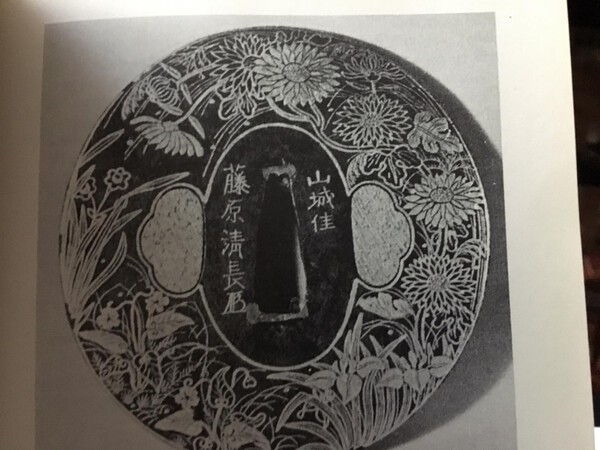
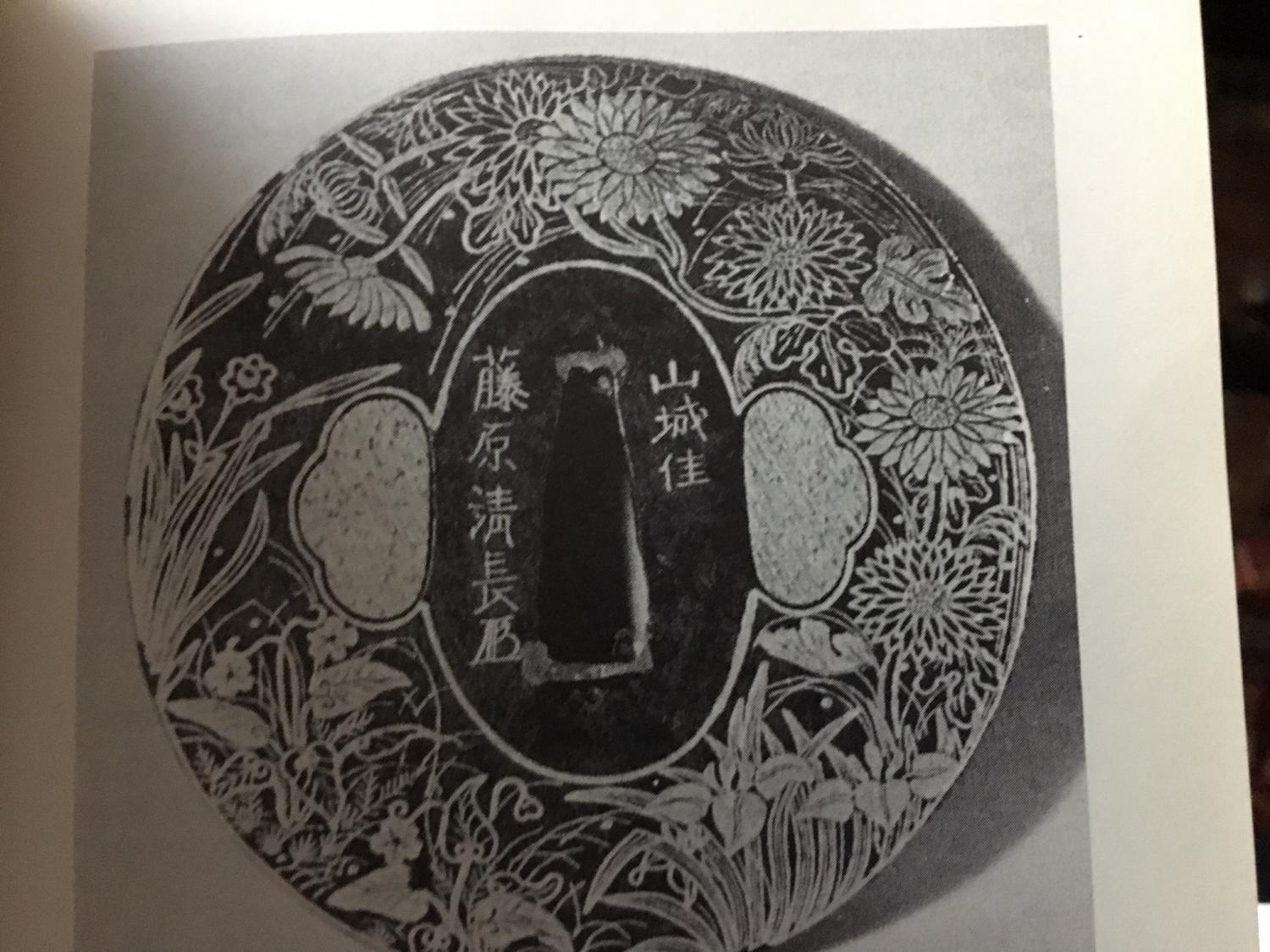
  8. From Markus Sesko's Swordsmiths of Japan: HŌJU (宝寿), Bunsei (文政, 1818-1830), Dewa – “Yonezawa-jū Katō Hōju kore o tsukuru” (米沢住加藤宝寿造之), “Katō Hōju tsukuru” (加藤宝寿造), real name Katō Sukeshirō (加藤助四郎), according to tradition the son of Katō Kunihide (国秀) who was active around Bunka (文化, 1804-1818), dense and somewhat standing-out ko-mokume, gunome-midare, suguha, chūjō-saku. To explain - the listing uses the simplified (modern) versions of the kanji on this sword. It gives the period of his work, some examples of his signature and lineage, his work style (refer to the glossary in the "Research" tab above if this doesn't make sense) and his ranking according to Fujishiro in Nihon Toko Jiten, some information can be found here: http://www.nihonto.ca/ratings.html Best, John
  9. Hi Bob, Just sent over my $50. What you said: big thanks to Brian for providing a great resource and to Jean and the other moderators for doing a great job of wrangling the forumites. Best, John
  10. Hi Chris, I think that if this was a Hizen sword from the Kanbun era it would have konuka hada. I'm not sure I can make the hada out clearly in the picture. Also I would expect a komaru boshi. There's a lovely nidai Masahiro on Grey's website if you want an example. http://www.japaneseswordbooksandtsuba.com/store/swords/k58-large-wakizashi-hizen-masahiro-tokubetsu-hozon One of the problems with shinshinto swords (and to some extent shinto also) is that they can be a bit generic and the lack of a signature doesn't help. I suspect this might be why no one has taken the plunge with an attribution so far...and I'm not going to either. Suguba hamon and indestinct hada don't give many clues as to school, though the overall sugata does suggest that kanbun era is a possibility age wise and I doubt that it's much older than this. Some better pictures of the hada and boshi might help, but in the absence of any distinguishing marks, I suspect you might have a John Doe here. Best, John
  11. Hi Chris, 長曽祢興里入道乕徹 Nagasone Okisato Nyudo Kotetsu. Best, John
  12. Hi Simon, Pete is correct - sorry read off the wrong line. Best, John
  13. Hi Simon, It reads (right hand side) 蓋雲堂 Zuiundō. Apparently the maker's art name, or one of them. (left hand side) 濱[ ] 直随 Hamano Naoyuki plus kao. I think that the "Hamano" part of the signature uses archaic kanji and I can't find copies of the "no" part on line and Hamano often comes up 浜野. The signature looks like it might be good and matches well with one in Markus Sesko's Signatures of Japanese Sword Fittings Artists. Best, John
  14. Hi Geoffry, See this thread: http://www.militaria.co.za/nmb/topic/23499-help-with-translation-of-mei-please/ Best, John
  15. Hi Kurt, I'm with Jean on this: they don't look like the same hand to me. Have you compared the workmanship on the blades? Best, John
  16. Hi Grev, Maybe something like "the achievement of [placing] ko sukashi within a well forged iron ground was [the smith's] forte/ speciality". Sorry, I think that needed placing in the context of the previous and following lines. I think the last line might read..."in addition, the raising of a small rim and the placement of the thickness of the ground are skillful". I'm sure one of the better linguists can improve on this and I hope I havent' twisted the meaning too much. Best, John
  17. Shugyosha

    Unusual Tsuba

    I've just spotted this one on Seiyudo which has the same kakihan as Peter's. http://www.seiyudo.com/tu-100517.htm Attribution is Kyo Kenjo according to the origami (京 献 上).
  18. Looks like it has been thinned down on the nakago mune side to me. It would be hard to get the kanji that close to the edge without more metal to scribe on. Other than that, just a bit rough.
  19. Yay Gary, you're really great!!! ...but you are confusing good luck with acumen - anyone can turn a profit on a no brainer deal like that.
  20. Shugyosha

    Unusual Tsuba

    Hi Peter, I have had this tsuba for a while but never got around to researching it. It had occurred to me that the gold work was added to jazz up an older piece and that the kakihan was the goldsmith's but I wasn't sure how to look up a kakihan without having an artist's name. I'm not sure whether the kakihan are identical but they do have a passing similarity.
  21. Hi Bill, With the second character of the Nengo period eliminated by the second mekugi ana, a bit of detective work is necessary. The first character of the Nengo is a variation on 正. Markus Sesko lists a smith signing Soshu Ju Hiromitsu (3rd generation) working in 正長 (Shōchō), 1428-1429. So we have 正長二年二月日 - Shōchō, ni nen, ni gatsu, hi. A day in February in the second year of Shōchō. There are other Nengo periods that begin with this character but they are either too early or too late for any of the Soshu smiths signing this way, so I'm confident that this is a decent bet. Best, John
  22. Hi Erwin, 尾州住川 添?? [ ]広. Well it definitely begins with "Bishū (Owari) ju kawa". Maybe Kawazoe but I'm not sure and I can't make out the next kanji and it ends with "hiro". I can't find anyone signing this way in Markus Sesko's Japanese Swordsmiths but maybe someone with sharper eyes can help. Best regards, John
  23. Well, if he believes that it is genuine, he probably ought to get it polished and get the signature authenticated. According to Markus Sesko, there are only four signed Masamune blades that are definitely attributable to Gorō Nyūdō Masamune, so if he has a fifth, that would really be something. I'm sure he has a good reason for not bothering to get an expert opinion of the signature. That said, I suppose he could beieve that it is a genuine example by one of these smiths: MASAMUNE (正宗), Eishō (永正, 1504-1521), Sagami – “Sōshū-jū Yamanouchi-jū Masamune” (相州住山内住 正宗), “Sōshū-jū Gorō Nyūdō Masamune” (相州住五郎入道正宗), “Masamune” (正宗), nickname Yamanouchi-Masamune (山内正宗) MASAMUNE (正宗), Kan´ō (観応, 1350-1352), Musashi – “Bushū-jū Masamune” (武州住正宗), “Masamune” (正宗), according to tradition the student of the Kenmu-era (建武, 1334-1338) Tameyoshi (為吉) MASAMUNE (正宗), Daiei (大永, 1521-1528), Musashi – “Bushū-jū Masamune” (武州住正宗), “Shitahara-jū Masamune” (下原住正宗), “Masamune” (正宗), Shitahara school, mostly a hiro-suguha MASAMUNE (正宗), Keichō (慶長, 1596-1615), Musashi – “Tosa no Kami Fujiwara Masamune” (土佐守藤原正宗), Shitahara school, probably the same smith as “Hitachi no Kami Fujiwara Masamune,” chūjō-saku MASAMUNE (正宗), Keichō (慶長, 1596-1615), Musashi – “Hitachi no Kami Fujiwara Masamune” (常陸守藤原正宗), Shitahara school, probably the same smith as Tosa no Kami Fujiwara Masamune MASAMUNE (正宗), 1st gen., Enbun (延文, 1356-1361), Bingo – “Bishū-jū Masamune saku” (備州住正宗作), Ko-Mihara school, according to tradition the son of the 2nd gen. Masaie (正家), standing-out itame-nagare, suguha with ashi, yō and sunagashi MASAMUNE (正宗), 2nd gen., Eitoku (永徳, 1381-1384), Bingo – “Masamune” (正宗), Mihara school, it is said that he signed first with Masasada (正貞) MASAMUNE (正宗), 3rd gen., Bunmei (文明, 1469-1487), Bingo – “Masamune” (正宗), “Bingo no Kuni Masamune saku” (備後国正宗作), Kai-Mihara group, he was noticeably later active than the 2nd gen. but he is nevertheless listed as 3rd gen. Bingo-Masamune, mostly a suguha-hotsure and a long kaeri, also a ko-midare or gunome, chūjō-saku MASAMUNE (正宗), Eitoku (永徳, 1381-1384), Yamashiro → SHIGEMITSU (重光), Eitoku (永徳, 1381-1384), Yamashiro MASAMUNE (正宗), Ōei (応永, 1394-1428), Yamashiro – “Masamune” (正宗), he lived in Rakutō (洛東), i.e. in the eastern Kyōto MASAMUNE (正宗), Eikyō (永享, 1429-1441), Ōshū – “Gassan-jū Masamune” (月山住正宗), Gassan school MASAMUNE (正宗), Tenbun (天文, 1532-1555), Yamato – “Fujiwara-jū Masamune” (藤原住正宗), Kanabō school (金房) MASAMUNE (正宗), Tenshō (天正, 1573-1592), Yamato – “Washū Nanto-jū Fujiwara Masamune” (和州南都住 藤原正宗), Kanabō school, gunome-midare, suguha mixed with ko-ashi, wazamono MASAMUNE (正宗), active period unknown (kotō), Echizen – “Masamune” (正宗)
×
×
  • Create New...