Guido
-
Posts
3,242 -
Joined
-
Days Won
99
Content Type
Profiles
Forums
Events
Store
Downloads
Gallery
Everything posted by Guido
-
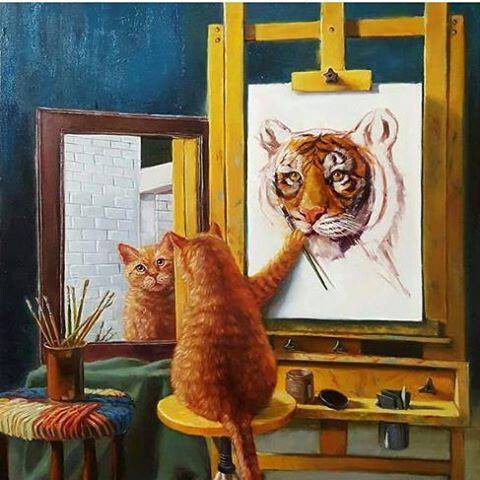
Barry's hint seems to have gone unnoticed (with one exception). We're going from *porn* to *I have a wiener, too!*. Again.
-
I think Mr. Ogura is the young gentlemen who does the photographs (among other things) - you don't see him in the shop often. The name of one of the new staff is Matsuzawa Kengo.
-
Daimyō could appoint zuryō themselves, but as I mentioned before, the title had to be approved by the imperial court – which it usually did, for a fee. The higher the title, the higher the fee. Not only samurai, but also sword smiths became eligible to apply for and receive such a honorary title. Kinmichi (Kanemichi) 金道, who founded the Mishina 三品 school, received the title Iga no kami on the 19'th day of the 2'nd month Bunroku 3 (1594), and worked also for the court from that time onwards. Shortly before the battle of Sekigahara, Tokugawa Ieyasu ordered 1,000 tachi from him, and due to the skillful management of all the workers, he was granted with the honorary title nihon kaji sōshō 日本鍛冶惣匠, lit. “master swordsmith of Japan”. With that title, he had a certain influence at court on the granting of honorary titles for other swordsmiths. The title and the advisory function at the imperial court were hereditary, and held by successive Kinmichi generations until the bakumatsu era. It is said that they earned more money by acting as intermediaries for titles, than by selling swords.
-
IMO it's clearly made of ivory, and certainly not in Japan (pigs are not native to Japan, the zodiac anmial was always depicted as a wild boar). The generic "signature" and awkward placement of the himotoshi (holes) point towards Hongkong or China, undoubtly made after 1947. I can't imagine any museum or the like would be interested. Sorry.
-
I thought I made it clear that those were official titles used from the early Nara period on, sorry for the confusion. Awarding gubernatorial titles as purely honorary titles started in the Muromachi period, and became common in the Edo period; mostly given to daimyō and other high ranking samurai, but it also includes sword smiths. They had to be confirmed by the imperial court, but that was more or less only a formality (and paying a sufficient fee).
-
I have no reliable information about that, but since the titles daisuke and shōsuke were seldomly given during and after the Ashikaga 足利 rule, the three highest titles were no kami, no suke, and daijō. After the Ōnin war 応仁乱, the zuryō became in most cases merely honorific, awarded for merits in battle etc., and the holders had no jurisdiction over the respective provinces. There were, for instance, several Bizen no kami 備前守 and Shinano no kami 信濃守 at the same time. (Some exceptions applied, like the Shimazu 島津, daimyō of Kagoshima 鹿児島, who bore the hereditary title of Satsuma no kami 薩摩守.)
-
The most commonly encountered (honorary) titles of sword smiths are no kami 守, no suke 介, and daijō 大掾. Daijō is often transcribed as no daijō – even in Japanese publications – which is patently wrong. This will become clear when we look at the actual gubernatorial titles they are based on. Japan was divided into 54 kuni 国, or provinces, at the time of the Taika reform. Some of those kuni were divided later, and some were added, so that in 823 AD the number was 68, which didn’t change until the Meiji 明治 restoration in 1868. The kuni were ranked, according to their size, as taikoku 大国, jōkoku 上国, chūkoku 中国 and gekoku 下国. Originally governed by officials with the kabane 姓 (heriditary court title) kuni no miyatsuko 国造 (territorial lords) and inagi 稲置 (squires overseeing lesser estates of the emperor), of which emperor Jimmu 神武天皇 had appointed 144, they were replaced during the reign of emperor Kōtoku 孝徳天皇 in the early Nara period 奈良時代 by the kokushi 国司. The kokushi, gubernatorial officials, were headed by a kokushu 国守, governor, and the titles they held are called zuryō 受領. The zuryō were (in descending order): no kami 守 (governor, title of the kokushu) no suke 介 (vice governor) no jō 掾 no sakan 目 no shijō 史生 The possessive predicate “no” の is not written, but always pronounced. Depending on the size of the province, the titles below “no kami” were further differentiated, using either the prefixes dai 大 or shō 小 - in these cases “no” isn’t used/pronounced: daisuke 大介 shōsuke 小介 daijō 大掾 shōjō 小掾 daisakan 大目 shōsakan 小目 daishijō 大史生 shōshijō 小史生 Sorry for the unsolicited history and language lesson, but this “no daijō” mistake irks me without end …
-
Since all members of the imperial family are accounted for, I think it's highly unlikely she is of "royal" descent.
-
Nope, just a regular sword registration/license.
-
Yeah, we all know that Ford is pretty ignorant of other cultures, especially the Japanese. To be on the safe side - and *really* make your case - you also should call him a racist.
-
Soft metal tsuba = gloves, iron tsuba = no gloves. Price isn't an issue, I've handled Nobuie and Kaneie without gloves, no problem.
-
Japanese Antique Sword-A Famous Fighter's Sword
Guido replied to timelag's topic in For Sale or Trade
The main market for Chinese fakes isn't overseas, but China itself. Actually, I've seen more Chinese duped into buying what they think are priceless treasures, than I've read complaints about Chinese fakes on NMB. For that reason alone I'll give "Charlie" the benefit of doubt; from what he wrote so far, he seems to be a victim, not a perpetrator. -
I'm not Darcy , but every other year, i.e. the next one will be in 2018, then 2020 and so on.
-
Japanese Antique Sword-A Famous Fighter's Sword
Guido replied to timelag's topic in For Sale or Trade
You guys can be really cruel with a non-native English speaker, so let’s stop having fun on his expense, and beating around the bush. Chuan Qin-xiānsheng, I’m reasonably sure that all your items are fake. I used to live in Beijing for almost 9 years, and have seen countless similar, artificially aged items. For starters, I recommend to read the book 中国刀剑 by 皇甫江 to get an idea of how genuine Chinese edged weapons look. I also can give you the contact details of a very knowledgeable antique dealer in Pānjiāyuán, just PM me. He’s a long time personal friend of mine, and received an MA in Oriental Art from Heidelberg University, Germany – the only dealer in Beijing I vouch for 100%. -
Too blurred to read with confidence, but my impression is "Shigetsugu".
-
樋 = groove; it can mean gutter, but I doubt they had that in mind ...
-
This sums up post # 26 perfectly:

-
I'm in, e-book sounds great.
-
As Ken M., the most epic troll on the internet, put it: “There are more cells in the human brain than there are brains in the human body!”
-
The dragons are chasing the flaming pearl of wisom.
-
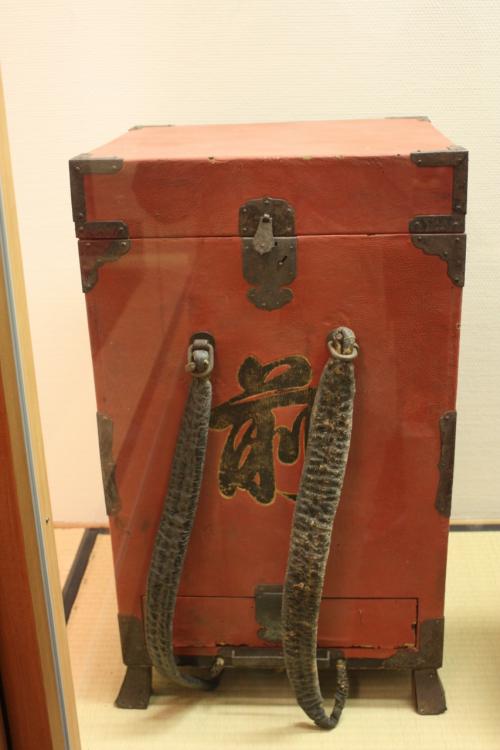
Some yoroibitsu had indeed shoulder straps, but more common are those with handles at the sides than could be folded up, and a pole put through them, thus being carried by two people.
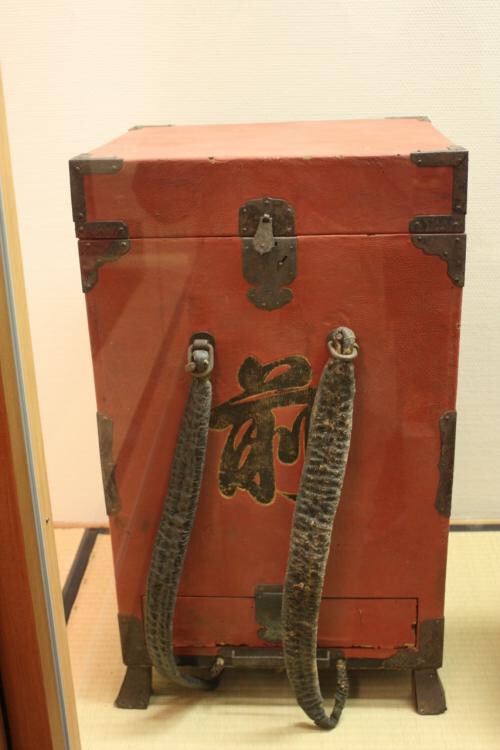
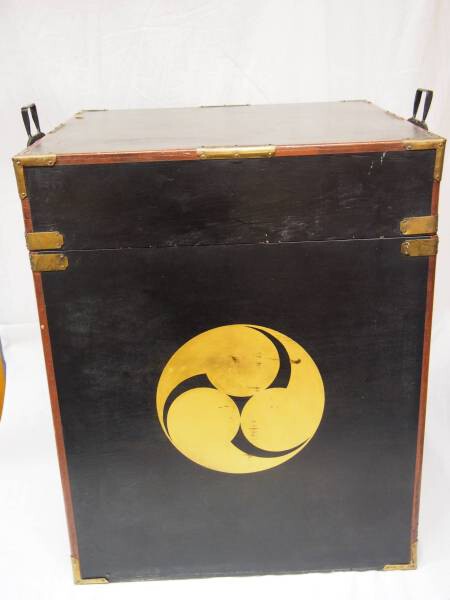
-
So, how did it get there in the first place?
-
I don't hate you. It's more like

-
I’m pretty sure the second one is 峯 (mine/HŌ) – maybe that helps narrowing the maker down.
-
The “standard / average length” during the Edo period was called teisun 定寸; it’s 2 shaku 3 sun 5 bu (71.2 cm) for katana, and 8 sun 5 bu (25.8 cm) for tantō. Tantō longer than teisun are called sunnobi-tantô 寸延び短刀, and less than teisun sunzumari-tantô 寸詰まり短刀. Wakizashi over 1 shaku 8 sun, or 54.5 cm, are called ō-wakizashi 大脇指. Tachi of more than 3 shaku (90.9 cm) are referred to as ōdachi 大太刀, whereas tachi under 2 shaku (60.6 cm) are called kodachi 小太刀.