Guido
-
Posts
3,242 -
Joined
-
Days Won
99
Content Type
Profiles
Forums
Events
Store
Downloads
Gallery
Everything posted by Guido
-
That's the way a sword is intended to be used, with one hand - which probably is the case here. However, it's not a proper length classification; on a tōrokushō - or shinsa papers - it most certainly would by called a wakizashi.
-
23.5" = 59.69 cm = 1 shaku 9 bu 7 sun = wakizashi
-
Why are you interested in buying this blade? Does it fit in your collection, does it have features you like, does it somehow "speak" to you? If so, and the price is set at a point that takes the ware into consideration, go for it. If, OTOH, the ware really bothers you, it doesn't matter if others say it's minor, or common in this particular school, or that it's partially hidden under the habaki. You know it's there, and there will be a little nagging voice in the back of your head, telling you so every day. A nihontō may have flaws yet retain its uniqueness and original quality, or it may suffer minor damage that severely compromises its merits. Every collector must answer to his own satisfaction to what extent the ugliness of the flaw mars the beauty or rarity of the piece. Despite all that may be said in order to clarify the factors and to fix guidelines, the ultimate decision about the acquisition of flawed nihontō is no less subjective than it would be were they undamaged.
-
The jigane of Uda blades has a tendency to be rough and/or coarse, and visible lamination lines are more or less to be expected, especially towards the mune.
-
The description says it's sea turtle shell (鼈甲, bekkō).
-
Yes, they are both legit and trustworthy. I visited their booth at the DTI just a couple of days ago. Have bought from them in the past, althoug not online. All their items are papered.
-
He often adds the "we recommend this xxx" to items for sale when he thinks he's offering something for a reasonable price (but not neccesarily cheaply). Actually you might be eligible for a discount from him, considering how often you promote his website here .
-
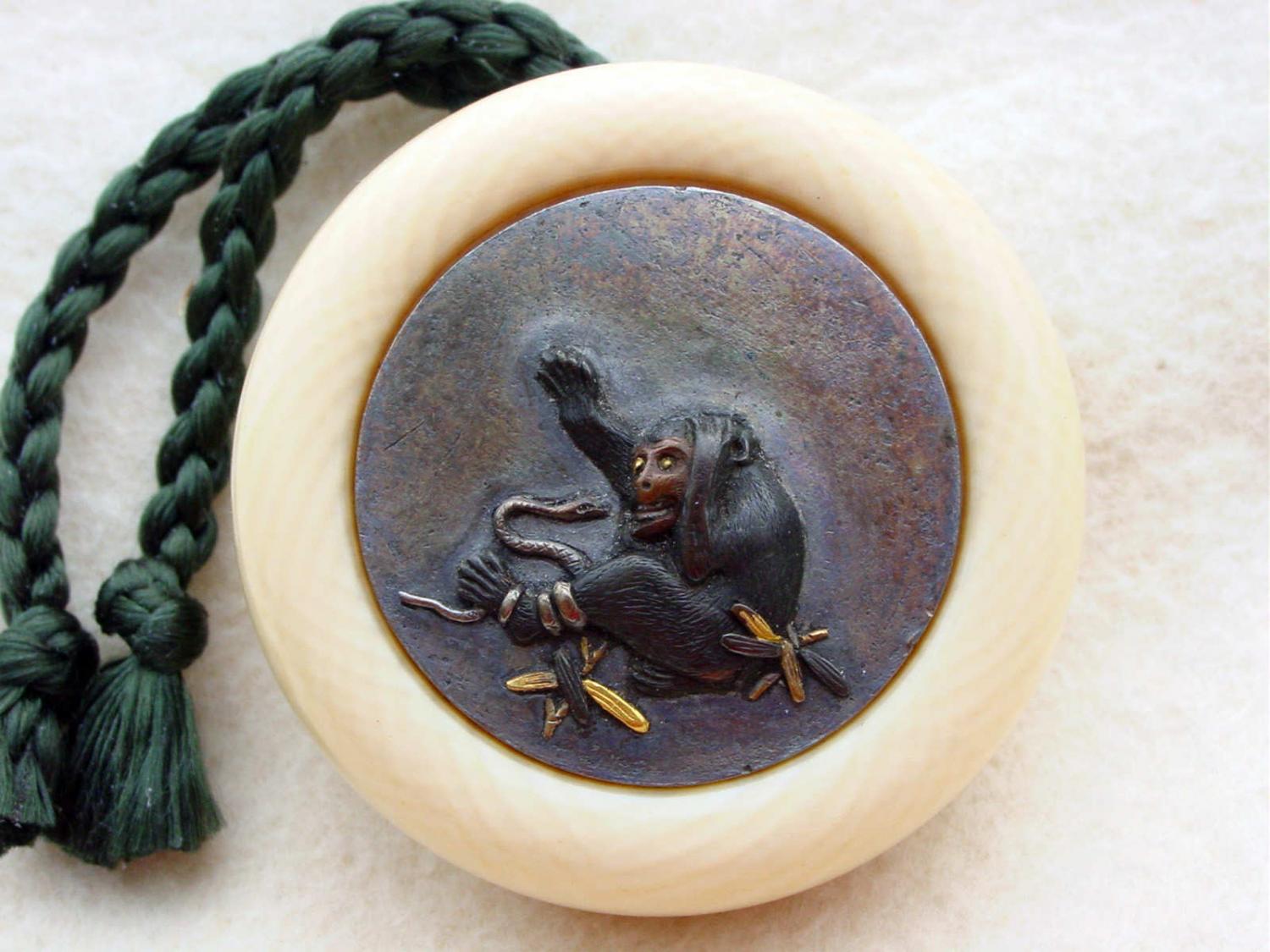
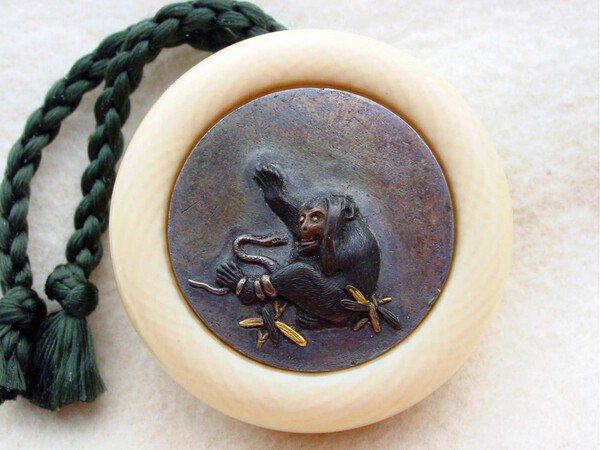
I photoshopped the monkey and snake netsuke a little to make the Schreger lines I talked about above more visible. In this case the piece of ivory was obviously selected to show the pattern as kind of a "frame" for the netsuke.
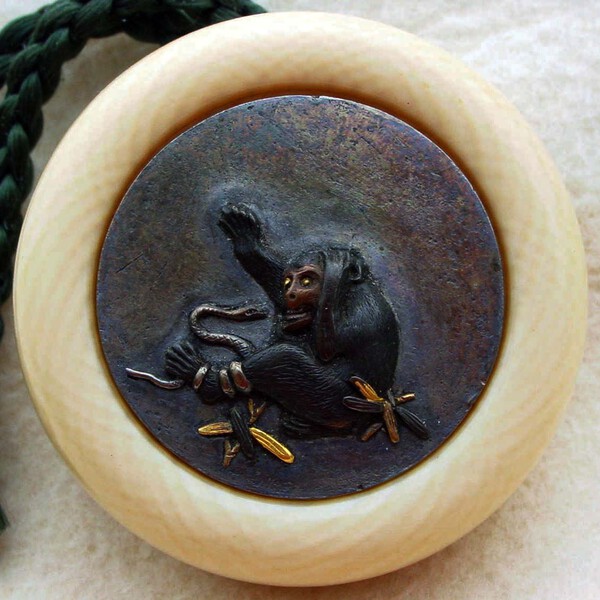
-
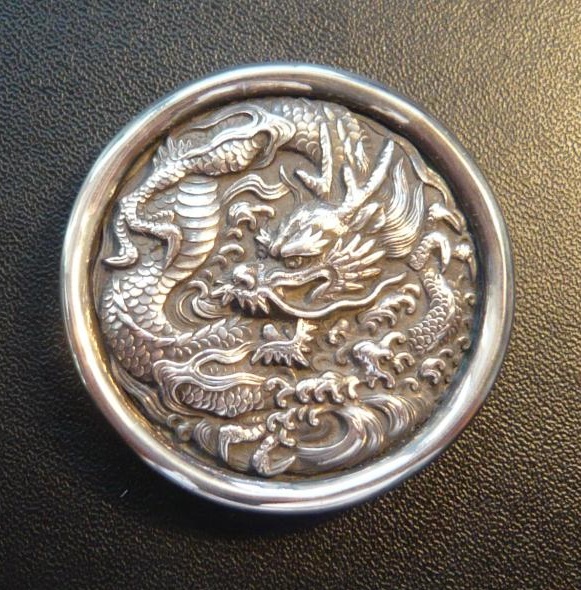
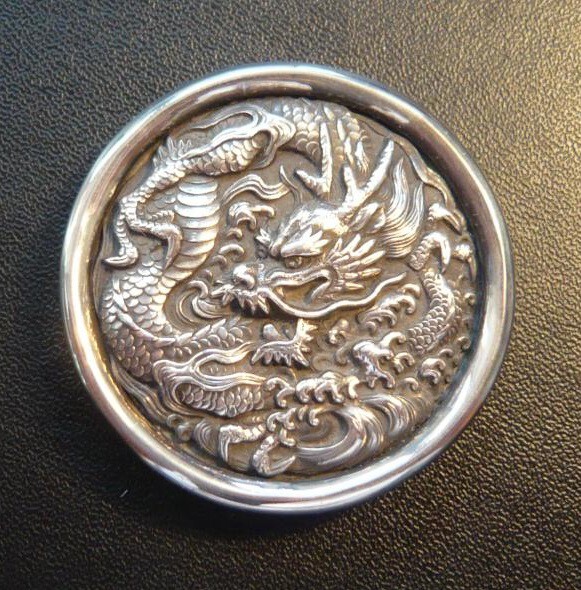
Not a few tōsōgu artists turned to making the lids for kagamibuta-netsuke after the ban of swords, so for those who'd like to reason themselves into collecting netsuke, too, here's the golden bridge . I bought the dragon, btw, from a fellow forumite; it's a little unusual because it's entirely made from silver - no ivory bowl - and I'm very happy with it. Keep your eyes peeled, and they will come along!
-
One of those occasions you're probably not happy that I agree . The kappa and monkey/tengu netsuke are also definately made in China, not only the execution, but especially the material is a dead giveaway.
-
Ed, there's absolutely nothing wrong with contemporary netsuke, it's basically the same principle as shinsakutō. Contemporary doesn't mean fake, although many on the market unfortunately are.
-
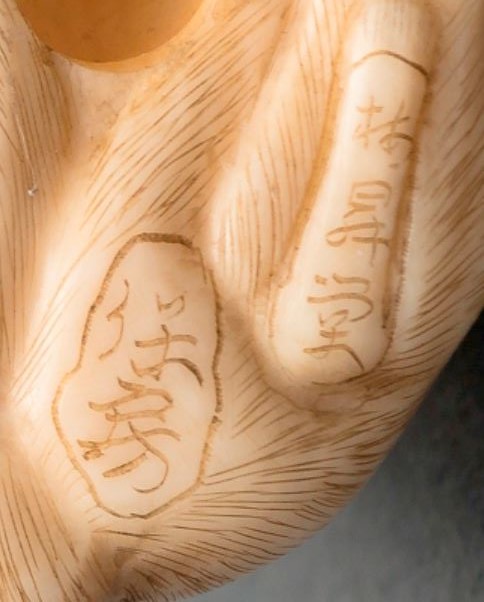
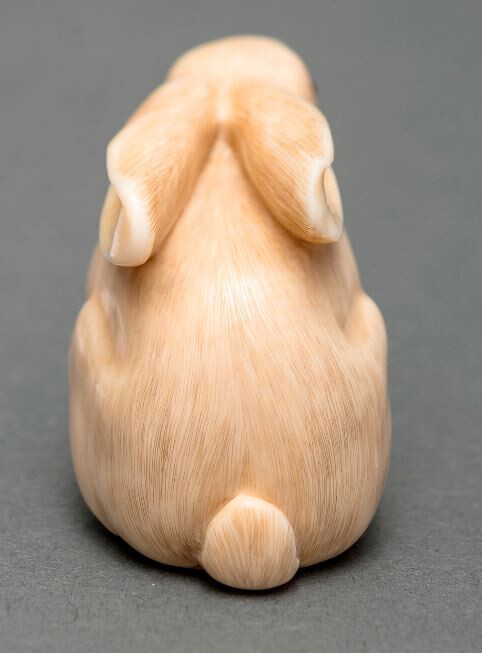
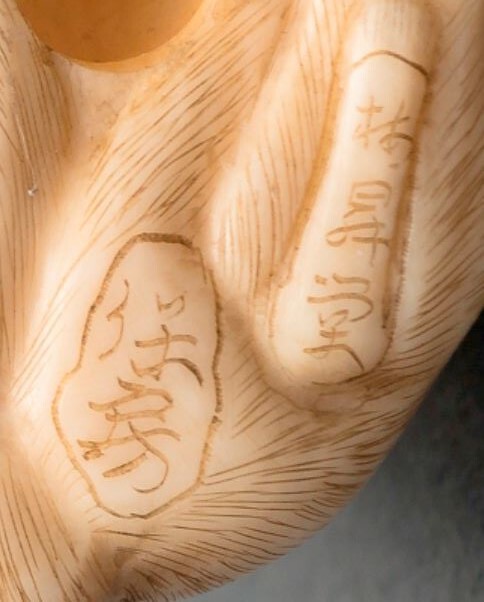
You're absolutely on spot, this netsuke is very reminiscent of Kaigyokusai Masatsugu. Quite frankly, Yasufusa's usual netsuke are not always that stellar, although his work was displayed at (and is part of the collection of) the National Museum in Tōkyō. He was a member of the Baishōdō group that was founded by (his cousin) Bishū's grandfather. This one is therefore signed 梅昇堂保房 Baishōdō Yasufusa.
-
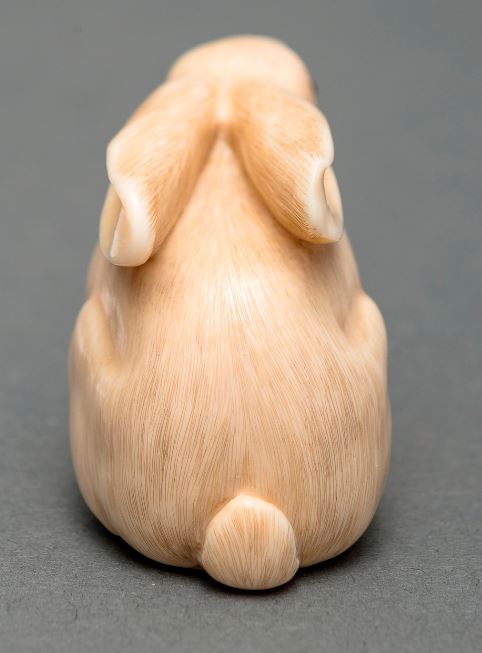
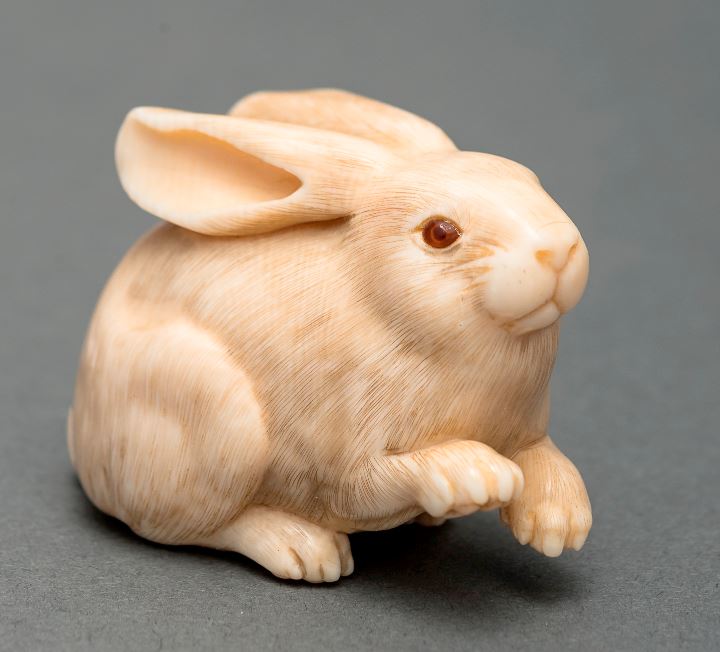
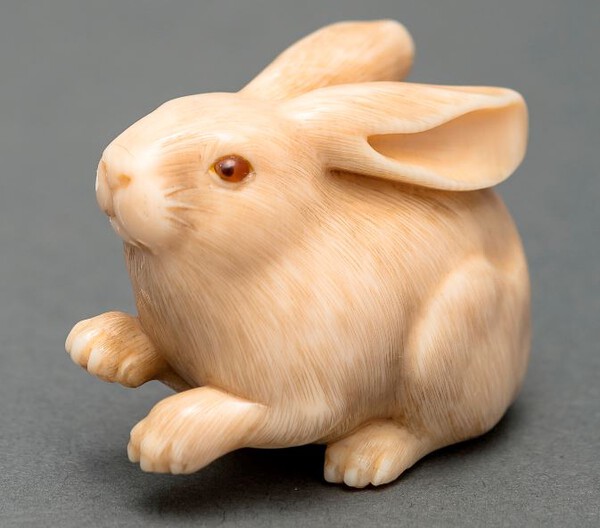
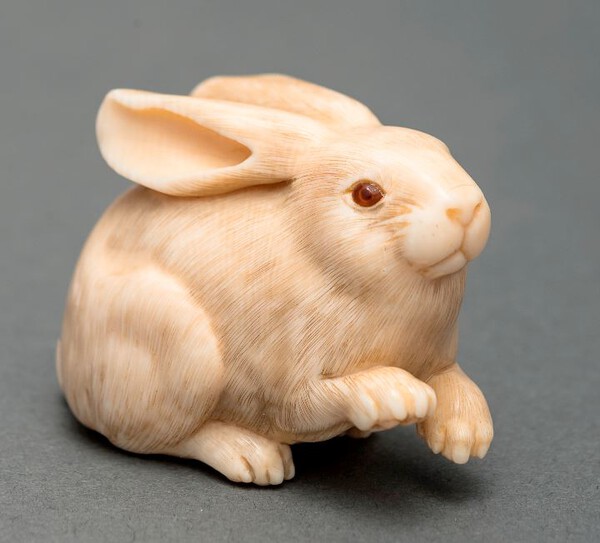
Picking up on Ed's contemporary netsuke: like with swords and fittings, I'm more into antique netsuke. My "youngest" ones are the wooden sheep by Masanao Shinzan (although that one also approached 100 years fast) I posted above, and this hare by Yasufusa (about 40 years old):
-
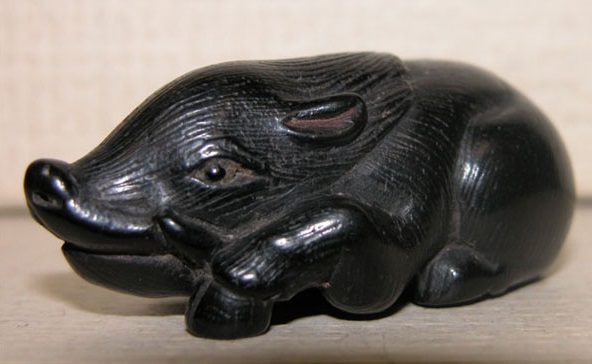
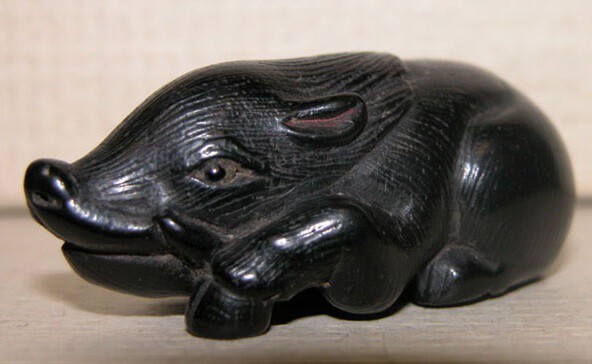
Here's another one from my netsuke box , same material:
-
DOESN'T LOOK LIKE THAT TO ME.
-
Mods, I think it's time to let the hammer fall and lock this thread - this continuing nonsense is almost unbearable ...
-
A good indication to spot a fake is the placement of the himotoshi, holes. If a cord is put through them, would the netsuke properly "sit" on the obi? Does the placement of the holes look natural and doesn't interfere with the design? The rat, for instance, just begs to have "natural" himotoshi where the tail meets the body, and no holes at all. The standing man should have holes in his back, instead he was given two buttholes that would make him dangling upside down on the obi.
-
Thanks for being a good sport, John! Unfortunately the close-ups confirm that all the netsuke are made somewhere else than Japan, probably China, Hongkong or Korea, and not too long ago. The ojime is real and old, though.
-
At first glance it looks like cast resin to me. Can you see Schreger lines anywhere that would indicate ivory? If not, you might try the hot needle test: a red hot glowing needle will not harm ivory, but melt plastic.
-
You would be incredibly lucky to get a quality netsuke for a couple of hundreds - yes, it's like with almost all other Japanese art, it doesn't come cheap.
-
Probably because I'm a genius. That, and collecting netsuke for even a longer time than swords and fittings. Actually I thought you pulled that pic off the net, I didn't realize that those are your items. Sorry, I would have refrained from commenting.
-
Only potentially, Piers . But joking aside, if someone is into paying $ 250.- a night at conventions and $ 500.- just to get into the door, and discussions with people who actually take pride in knowing sh*t about Japanese art, history, culture and language - yes, then it might be of interest. You know why I left. The noise to signal ratio is simply too much for me.
-
It's made of kurogaki (black persimmon); although not a common material, it's also not exceptionally rare. It was - besides boar tusks - the favorite material of the Iwami carvers.
-
Even while living in Tokyo and owning a car, I mostly used public transportation. There's almost no place in Japan where you can't get by train, subway, or bus. However, they usually stop running around 11:00 pm, that's why the taxi fares go up at that time.