Guido
-
Posts
3,242 -
Joined
-
Days Won
99
Content Type
Profiles
Forums
Events
Store
Downloads
Gallery
Everything posted by Guido
-
Page 205? A slightly revised, later version of my article can also be found on NMB: http://www.militaria.co.za/nmb/forum/30-Japanese-sword-laws-and-importexport/ I should update in regard to shipping, btw.
-
Well, the tōrokushō (which indeed shouldn't be with the blade if it's outside Japan) clearly states "yari".
-
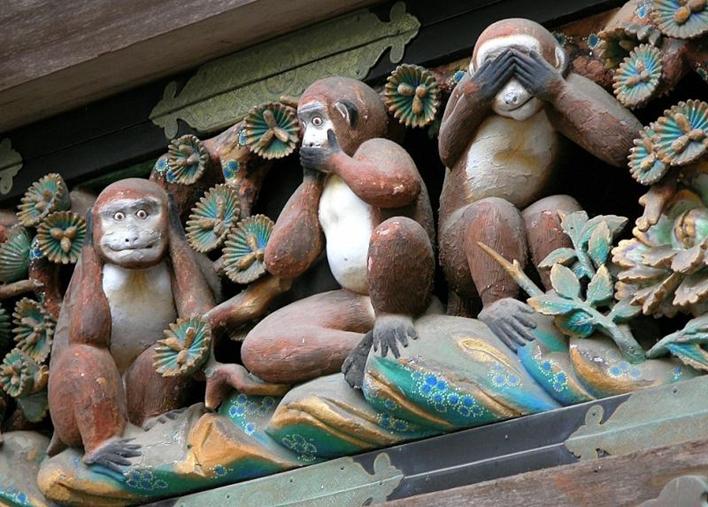
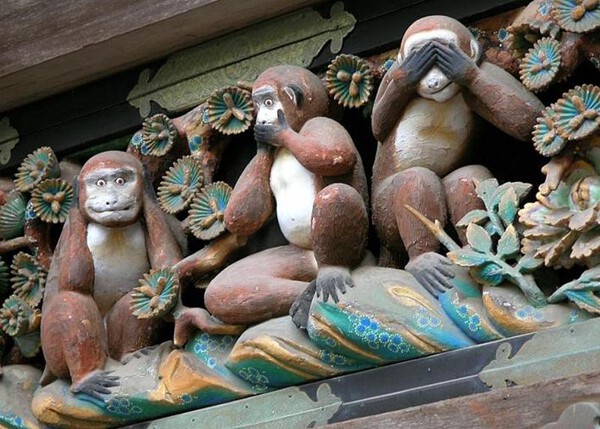
"-zaru -ざる" is an archaic negative verb conjugation, and is pronounced the same as zaru, the vocalized form of saru 猿, monkey. The famous three wise monkeys at Nikkō's Tōshōgū use this word play for an old proverb: mizaru, kikazaru, iwazaru 見ざる, 聞かざる, 言わざる – don't see, don't hear, don't speak [evil]. Maybe this is a similar word play, nozaru – although I don't know what it might stand for.
-
Yet another sighting of Elvis: the "doctor's sword". Some scholars – among them Robert Fleischel, the owner of Sagemonoya in Tōkyō - spent considerable time and effort to research those bokutō. He admits that we still have no reliable evidence about exactly how and why bokutō were used, although some show nicks and dents that are conclusive with them having played a role as self-defense items. There are some paintings that show porters and attendants carrying dagger-like objects that seem to be bokutō. However, there's irrefutable evidence that doctors of samurai status of course were allowed to carry real swords, and indeed did. Non-samurai, including doctors, were not allowed, and might have carried a bokutō. But we don't call a Rolex a "dentist's watch", just because some dentists wear them.
-
Well, this one isn't, i.e. the two sides are of different shape; it's also of typical yari shape.
-
Nihon No Bi: Nihonto (The Japanese Sword)
Guido replied to Paul Martin's topic in General Nihonto Related Discussion
What a well thought through response, Brian! Btw, today I saw Elvis at a local nasi goreng stall, where he flashed his premium customer card ... -
Translation Assistance - Child's Katana (I Think)
Guido replied to TroyCHunt's topic in Translation Assistance
This is also not entirely correct. Tango no sekku was celebrated on May 5'th since the Nara period; it became children's day in 1948. Until the end of the Edo period, it was celebrated only by samurai families, and mostly helmets were displayed (and carp streamers), but not swords. At the age of between 10 and 16, usually at 13, boys participated in gempuku, the coming-of-age ceremony. They were presented with their first adult clothes, an adult name, and their hairstyles were changed to the adult style; at that time they also received their sword(s) (and maybe armor). Gempuku at an early age was in most cases celebrated only in higher ranking families to make succession to a title easier etc., and it also meant a higher financial burden, because the (expensive) adult clothing and swords had to be downscaled; when the boy grew, appropriately sized items had to be substituted for the smaller ones. If we encounter a downsized sword, we therefore can assume that it was made for a young boy from an important family; that it was made for the boy's day is indeed highly unlikely. -
Nihon No Bi: Nihonto (The Japanese Sword)
Guido replied to Paul Martin's topic in General Nihonto Related Discussion
Gakken Co., Ltd. is a major publisher with annual sales of about US$ 10 billion. I doubt very much that they loose any sleep over a group of (maybe) 50 customers. -
I'm with Paul, this fukure isn't a "fatal flaw". It can be closed with an umegane. This is usually done by a smith, not a polisher, and is quite expensive. If it isn't an important sword, it makes financially no sense. However, I have to admit that I don't know the current market value of flesh-eating swords.
-
translation Please Help Decipher Mei (Navy Kyu-Gunto)
Guido replied to djmorgz's topic in Translation Assistance
天正二二年八月日 = Tenshō 4'th year, a day in the 8'th month (August 1576) I'm not 100% sure about the year: since 四 (4) is considered an unlucky number, it sometimes was written 二二 (2 + 2), which might be the case here. The province is 備州 Bishū (備前 Bizen), the town is 長船 Osafune, the smith 祐定 Sukesada, and 作 saku means "made by". -
translation Please Help Decipher Mei (Navy Kyu-Gunto)
Guido replied to djmorgz's topic in Translation Assistance
備州長船祐定作 = Bishū Osafune Sukesada saku -
Not my field of collecting, so I'm not really up to date on this development indeed.
-
Why would they do that? Anyhow, Takano-san is at the DTI every year, you could show / have it shown to him in November.
-
But I have to agree, Edo period Japan was nothing like Nazi Germany - it was more like present day North Korea: A completely isolated country, its citizens are not allowed to leave it; a class system with a ruling military and government class, and impoverished farmers; the calendar is counted by the ruling family; a limited number of approved haircuts; possessing a bible is punishable by death; corruption is rampant; there are checkpoints on roads, you need a travel permit to go to another town; books have to be approved by censors; and most importantly, there are no dishwashers.
-
Uhm, where exactly did Ford do that?
-
As Japanese symbolism is right up my alley, and I spent considerable time studying it, I'd love to learn about those subversive elements that I apparently have missed so far.
-
I Inherited A Sword When I Purchased A Japanese Home
Guido replied to CodeWarrior's topic in Nihonto
Cory, nice house in a great location, I envy you (even taking into consideration the huge amount of work you have to put into the renovation). The chest, btw, is called katanadansu. The sword, however, is a Chinese fake. If you browse NMB, you'll soon recognize all the tell-tale signs. -
Just out of curiosity: how did you learn about my evil twin?
-
The way I read it, the sword is indeed dedicated to the Meiji shrine, and was made from steel left over from the construction.
-
Try the 大徳川展 catalog of the National Museum. Or ask Mr. Google.

-
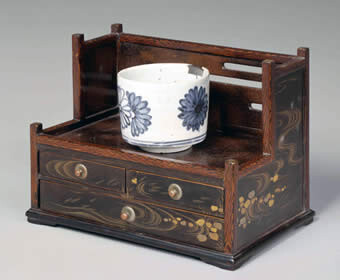
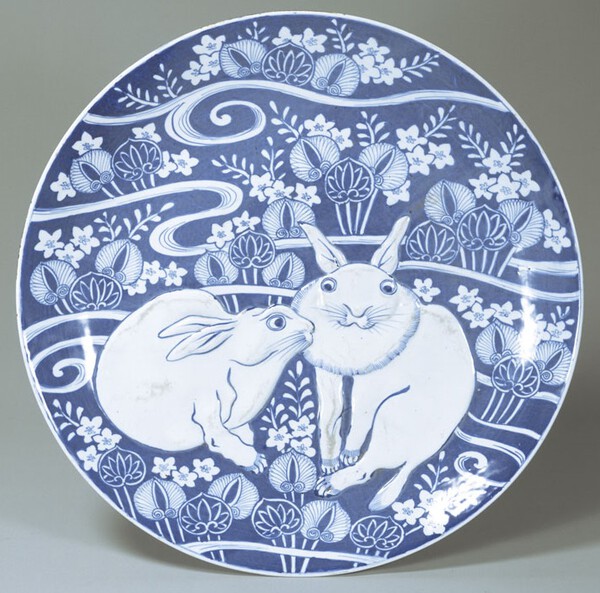
It's called 葵に水 aoi ni mizu and was not an uncommon motif; it is also seen on items of the Tokugawa family, especially lacquer ware and kimono.
-
Does nobody read the NMB articles anymore? http://www.militaria.co.za/nmb/forum/79-wazamono/ I'm not sure how you came to that conclusion, could you elaborate?
-
I'm not sure, but at least 10 years ago; I have a tsuba (without papers at that time) that I submitted for both at the same time in 2005.
-
One could apply for hozon and tokubetsu hozon at the same time in the past already, have done it a couple of times.
-
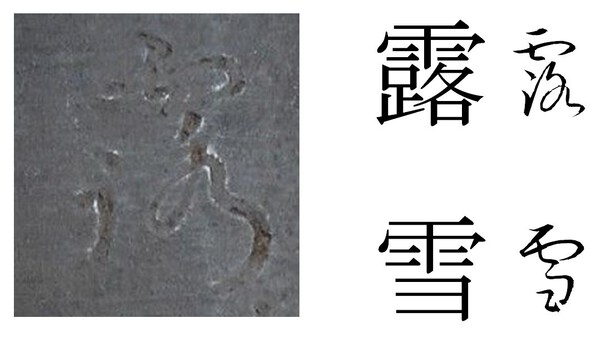
I have to agree, it's indeed more likely tsuyu than yuki. Plus, you have much better eyesight than me (or a better monitor) !