Guido
-
Posts
3,242 -
Joined
-
Days Won
99
Content Type
Profiles
Forums
Events
Store
Downloads
Gallery
Everything posted by Guido
-
The menuki are modern reproductions, Stephen. You can buy them from Namikawa Heibei for 3,500 Yen IIRC.
-
If one focuses only on quality, there should be nothing wrong with buying a suriage blade Muromachi or later. The only reason to not buying it is that it will not receive tokubetsu hozon papers (although I used to own such a sword; it only got th because it was considered an outstanding work). I think you just contradicted yourself, Jean .
-
Probably just a typo, Ford, I guess he meant "... before plating the tsuba in iron" - a secrect technique for which also the 1st gen. Hizen Tadayoshi was famous.
-
What Alex said. Furthermore, in this price range I would expect a sword to have NBTHK papers at the tokubetsu hozon level.
-
50th birthday.
-
応正次五十寿記念需 I think 応 is in this case pronounced irae 応 (え).
-

-
I'm with Grey, 重成.
-
Looks like 次廣 to me.
-
Oh, I forgot to point out that the charts of the link / posted here only show the most common characters used for names, and are therefore far from complete; Markus' book lists 4,000 characters in tensho.
-
It’s basically the same, the 体 tai after てん書 tensho just meaning something along the lines of “style”. Tensho Charts sounds good.
-
I may have the statistics somewhere at home, but am travelling now and have no access. Anyhow, if you take into consideration that the kotō period lasted for about 700 years, and the shintō period less than 200 years (mostly in a time of peace, and the number of smiths sharply declining from the Genroku period on), I think it’s safe to assume that more kotō are extant than shintō.
-
"Charts"? May I suggest "Tensho(tai)"?
-
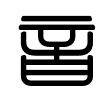
Sorry, but I have to throw in the towel. I think Steve is right, some of the inlay is missing, not only the one that's obvious. Furthermore, it seems to be a mixture of tenshotai and maybe kointai, since the character 音 is written that way, and not in "formal" tenshotai (see attachment).
-
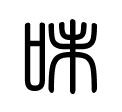
I think it’s 咊 (attachment A) instead of 味 (attachment B ).

-
The criteria to receive jūyō are much more strict for shintō – they basically have to be ubu zaimei and in flawless condition; kotō are not held to that high standard. There are less shintō than kotō anyhow, so it’s the relative rarity that makes jūyō shintō more expensive.
-
Yes, I own it, and it is quite helpful - if you already have a general idea about how kanji are constructed, and are able to identify radicals.
-
It's usually the other way around.
-
Copy and paste?
-
Mr. Tsuruta has a Special feature column in every description; on the Japanese website it says 特徴 tokuchō (which can be translated as “special feature”, but “characteristics” would be the more appropriate term IMO).
-
>>Sigh<< We had this kind of "discussion" already a couple of times, i.e. you insisting on using Japanese words / kanji the way you / "English speaking people" decided on, and not in the Japanese lexical definition. Whatever floats your boat, you can call a jitte / jutte Bob, Frank, or Bill for all I care. German speaking people call a cell phone a "handy", and they are totally baffled when finding out that for English speaking people it isn't a noun, that they use this word for something easily or effectively used, convenient etc. But at least they don't tell English speakers that they know better because they use it that way for many years now. Anyhow, feel free to use your parallel universe-Japanese as you see fit, but be prepared for me telling those who care for the correct linguistic and cultural contest the true meaning, regardless of your personal attacks, armchair second hand knowledge, and obvious ignorance. I will, however, promise that I'll let other forumites make up their own minds, and will not directly reply to your outlandish comments on my posts anymore.
-
Sorry, Eric, but this is getting bizarre – because a misconception is put into print by people who obviously lack command of the Japanese language, and are not familiar with the relevant literature written by native speakers, doesn’t make it a fact. https://ja.wiktionary.org/wiki/%E5%8D%81%E6%89%8B https://kotobank.jp/word/%E5%8D%81%E6%89%8B-74161#E5.A4.A7.E8.BE.9E.E6.9E.97.20.E7.AC.AC.E4.B8.89.E7.89.88 http://note.chiebukuro.yahoo.co.jp/detail/n4025
-
They are one and the same thing, just different pronounciations for the kanji 十手.
-
This thread just begs to be made into a movie, I'm reasonably sure it will be more successful than Schindler's List!
-
If you make notes of how to pronounce Japanese words just for yourself, anything goes, I guess, but that doesn’t mean everybody else understands you. To be understood, a recognized transcription system is needed, and the Hepburn romanization system (although not officially approved) is the most widely used method, and is regarded as the best to render Japanese pronunciation for Western speakers. To add a “y” in front of an “e” originates with native English speakers for the benefit of not confusing the pronounciation of “e” and “i”. You only have look through some recent posts on this board to see koshirae written koshirai, or hakogaki hakogake. No, the world will not descend into chaos due to that, but if Japanese words are being used, why not use a transcription that makes sense to all readers of this international message board? I’m probably making a few more enemies by posting one of my favorite jokes, but so be it : How to you call someone who speaks three languages? Trilingual. How to you call someone who speaks two languages? Bilingual. How to you call someone who speaks only one language? American.