Guido
-
Posts
3,242 -
Joined
-
Days Won
99
Content Type
Profiles
Forums
Events
Store
Downloads
Gallery
Everything posted by Guido
-
I missed in the first set of pictures that's it a yuigata 結形 kashira, so it's not kōbusho, which would have kind of downscaled handachi kashira and sayajiri. I also didn't see that the sayajiri is completely missing, leaving us without one important clue (was it really horn? And if so, was it original to the koshirae?). I therefore stick with my non-committal description.
-
I fit wasn't for the square sayajiri, I'd say toppei-koshirae without hesitation, especially because of the smallish tsuba and katatemaki tsuka (which seems to be kujira-hige 鯨髭, baleen). Kōbusho 講武所 (a late Edo period military school for hatamoto and gokenin) is another possibility, but usually the tsuba is larger, and the sayajiri looks almost like the kashira. Both types are from the bakumatsu period, and that's where I firmly place this koshirae. Ron, do you think it's possible that the saya has been shortened? Steve is right, the saya lacquer is called fuemaki-nuri (since the banded lacquer resembles a traditional Japanese flute, fue). Because of the (missing?) sayajiri, I'm playing it save, and call it a chairo fuemaki-nuri-saya wakizashi koshirae 茶色笛巻塗鞘脇差拵. P.S.: I think this fine koshirae deserves a nicer mekugi …
-
Does it have a hikae- mekugi-ana?
-
George, you use the word "seem" in every other sentence, but ask *me* to quote sources? Nice try ... Anyhow, I think Lance already nailed it. Crappy assembly and neglect made backup holes neccessary, at least in the minds of those wo thought swords were actually used. It's like wearing both a belt and suspenders because you assume your cheaply made pants might drop to your ankles while running a marathon. You haven't tried it yet, and chances are slim you ever will, but the precaution can't hurt. To sum my point of view up: there were reasons that it was thought a good idea to put two pegs through the hilts of later WWII swords, but they didn't come from actual expierence in "hard combat". There was extremely hard combat in the Sengoku period, and yet we don't see two holes being a standard back then. If you think swords played a major role in WWII combat, it should be easy for you to come up with evidence - not the other way around, I can't prove something that didn't happen.
-
I admit that I'm no expert, but what "hard combat" were swords subjected to in WWII, except for the occasional beheading of Chinese and POWs (although I wouldn't call that exactly "combat")? As I understand it, swords were used for symbolic and pschychological reasons, including leading charges with drawn swords by officers, but hardly to do any actual fighting. *** "Lt. Watanabe, you only killed 30 allied soldiers with your sword this time, usually it's more than 50 – how comes, considering that they are still too stupid to shoot you from a safe distance when you charge them screaming like a banshee?" "My mekugi broke." "Damn, we still can't afford metal ones, let's use two instead! Our ancestors didn't know what they were doing anyhow for a thousand years, using only one ..."
-
Not really, I never was good at physics. Or psychology, since I remember Keith Larman writing at length about the second mekugi, and how its safety function is actually neglectable, it being more of a feature to put the mind at ease. The proper nakago to tsuka fit is way more important holding the sword in place than that tiny bamboo pin; if stress is being put on the mekugi, the fit of the tsuka is off. Period swords with two mekugi are few and far between – if there indeed was a known problem with them breaking, those who actually used swords back in the day would have put a series of them in the nakago and tsuka, and not just one. I actually know the second mekugi-ana close to the nakago-jiri as hikae-mekugi-ana 控目釘孔, backup peg hole. Shinobi-ana 忍び孔, or hidden hole, not only sounds like a kinky sex practice, I also wonder if it's not a misnomer; or rather a wrongly used term. A second mekugi-ana that isn't used and therefore can't be seen, yes, makes sense, but a second hole where a mekugi goes through is anything but hidden.
-
What Is Happening To Nihonto Message Board?
Guido replied to Peter Bleed's topic in General Nihonto Related Discussion
The big difference is: you pay the dentist, you pay the restaurant, you pay the museum to provide said services. Try going to a restaurant and ask for a free meal because, well, they should take themselves less serious, and just cook the damn stuff because you are too lazy to do it yourself. Or imagnine the dentist treating you for free, and you get upset because he recommends to you brushing your teeth twice a day, calling him an elitist. But I'm not surprised some people come here and ask for free & instant gratification - I'm surprised that there are still enough people who are willing to provide answers despite that attitude. -
D T I 2015
Guido replied to Guido's topic in Sword Shows, Events, Community News and Legislation Issues
In any case, I think I can deal with a mob of Australians - the problem will be the mob of katana-joshi that, I'm afraid, will crowd the DTI this year. -
Well, Paul, it's actually a great business idea: maybe we should start the ei-doku bakamono tōken kenkyūkai 英独馬鹿者刀剣研究会 (sounds professional, doesn't it? And who will bother to investigate the name?), and issue papers for swords we want sell. You do the photos of the nakago, and I'll write up some fancy Japanese description.
-
The so called "juhō tōken kenkyū-kai" (銃砲刀剣研究会) is run by the sword shop Musashi-ya (むさし屋). Kobayashi Yukinobu (小林幸信) never was an official of the NBTHK, he's a (not very well known) polisher.
-
And there I was, waiting for the usual elitist replies. Thanks for ruining my day, Brian ...
-
James, I certainly didn't direct my comment towards you. I'm very much in agreement with what you wrote, especially when it comes to iron. There are a couple of people in the US who manage to ruin every iron tsuba they get their hands on. And it's grotesque that some (well, actually quite a lot) are later sold by the dozens as coming from the famous X-collection. They all have that same greyish, dull surface. The ooh'ing and aah'ing that they get almost hurts me physically. But they are cheap, and never get papered. There's no need for that when you are able to see the face of the Virgin Mother in them, and give the NBTHK a good bashing at the same time for being a bunch of idiots because they don't agree with your superior knowledge. The way it works is like this: you buy a tsuba on the cheap - because you don't have both the taste and funds for decent stuff - and start seeing "things" in it. The tsuba receives unfavorable comments on NMB, being called sub-standard contemporary amateur work. You submit it for NTHK shinsa and it gets pink-slipped. You then try to sell it, saying that the NTHK judged it to be a modern masterpiece. I'm not making this up, it happened right under our noses. Disgusting.
-
And just in case I'm misunderstood again: I thought I made it clear above that I have no problems with a carefully executed restoration by a professional - I'm more or less only playing devil's advocate in regard to papering by the NBTHK (having a good understanding of how they think, and not being familiar with the other organizations). I'm not attacking anyone's opinion, and especially not Ford's restoration.
-
Again, that's not what I said, I used the words "restored lacquer", i.e. bringing a dull and scratched saya back to its original state, not putting new lacquer on it. IMO that's pretty much the same thing that Ford did with the fuchigashira. There was one case last year I know of when the NBTHK was hesitant to paper a koshirae with restored lacquer because they thought it looked too new, assuming that it was completely re-lacquered. I didn't talk to the owner after that, so I don't know the outcome.
-
@ Ford: I'm delighted to hear that, I assumed that the NBTHK only papers mountings and fittings in original period condition. But if they can't tell the difference because of the quality of the restoration, it's a moot point indeed. @ Steve: well, that wasn't exactly my point, I wasn't talking about altering an item *after* papering. I've seen a couple of koshirae that received papers with worn and frayed original tsukamaki, and that had new, crisp tsukamaki done after that; the small b/w photos of the papers wouldn't give it away anyhow if it's a dark ito color. It's still kind of cheating, though, if sold to someone without telling him about it. Personally, I wouldn't have any problem with restoring the hilt binding, or the restoration of the fittings Ford did. However, it's not easy to draw a clear line.
-
This is a very interesting topic. While a nihontō is supposed to be in full polish, most collectors of tōsōgu expect that their items show some wear and/or rust, at least in the sukashi and nakago-ana. But the wear and corrosion must be slight and not so far advanced as to suggest imperfection. In other words, the signs of use must stop at the stage that supports authenticity, and go no further. My point is that perfect condition in tōsōgu is not the same unused and unworn state as perfect condition in lacquer, prints, and other categories. I would be extremely interested to learn if a professionally restored fuchigashira – like the one Ford showed us – would paper; and if two identical items are submitted to shinsa - one as is, one restored - which one would get the higher papers? I know that the NBTHK generally doesn't paper koshirae with restored lacquer of the saya, or new tsukamaki.
-
D T I 2015
Guido replied to Guido's topic in Sword Shows, Events, Community News and Legislation Issues
I hope among them is an Australian - English translator ... -
Nihon No Bi: Nihonto (The Japanese Sword)
Guido replied to Paul Martin's topic in General Nihonto Related Discussion
http://www.amazon.co.jp/gp/product/4054062946/ref=ox_sc_act_title_1?ie=UTF8&psc=1&smid=AN1VRQENFRJN5 -
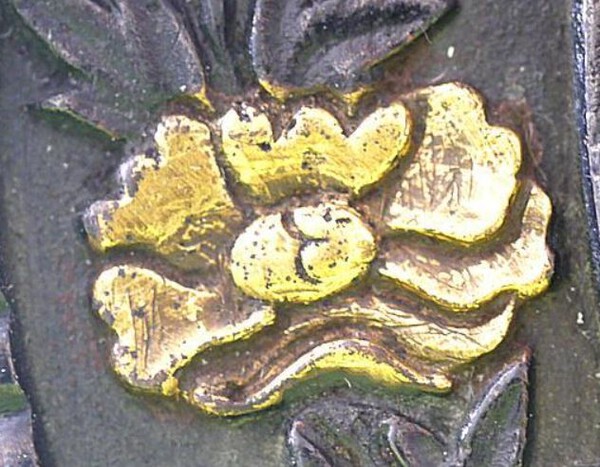
But why? "How to ruin a perfectly nice tsuba by applying acid, scratches, and a sloppy gold application?"
-
D T I 2015
Guido replied to Guido's topic in Sword Shows, Events, Community News and Legislation Issues
So, who is going? Just so I know if I can look forward to see some old friends, make some new ones, meet some who I only know from this forum - or going there in disguise.
-
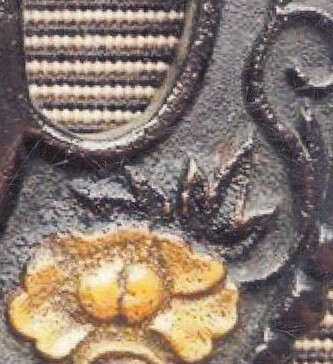
You're the one holding it in your hand, but this part, for instance, gives me the distinctive impression of casting (fuzzy edges, "bubbly" surface):
-
It's not an addition (i.e. it's part of the tsuba), so it's not a fukurin. Here's a thread that explains how one is made, and gives an example of an Odawara fukurin: http://www.militaria.co.za/nmb/topic/12603-fitting-a-fukurin-to-a-katchushi-style-tsuba/ My memory is slowly going down the drain, so I'm not sure if I remember correctly, but I think a beaded rim is called juzu-mimi. Btw: maybe I'm just seeing things, but the tsuba you posted looks cast to me.
-
Nihon No Bi: Nihonto (The Japanese Sword)
Guido replied to Paul Martin's topic in General Nihonto Related Discussion
Well, maybe because it's a minor retailer. No problem ordering it from Amazon Japan for the same price ... -
Page 205? A slightly revised, later version of my article can also be found on NMB: http://www.militaria.co.za/nmb/forum/30-Japanese-sword-laws-and-importexport/ I should update in regard to shipping, btw.