Bazza
-
Posts
2,873 -
Joined
-
Last visited
-
Days Won
28
Content Type
Profiles
Forums
Events
Store
Downloads
Gallery
Everything posted by Bazza
-
Brian said: > people who take advantage and refuse to contribute....gone AND SO SAY ALL OF US. Begone all who aren't in this for the spirit of camaraderie and knowledge in Nihonto. BEGONE. Be merciless Brian, merciless. We who are left and who have been here for many, many years will thank you for your devotion and Spirit. BaZZa.
- 56 replies
-
- 14
-

-

-

-

-
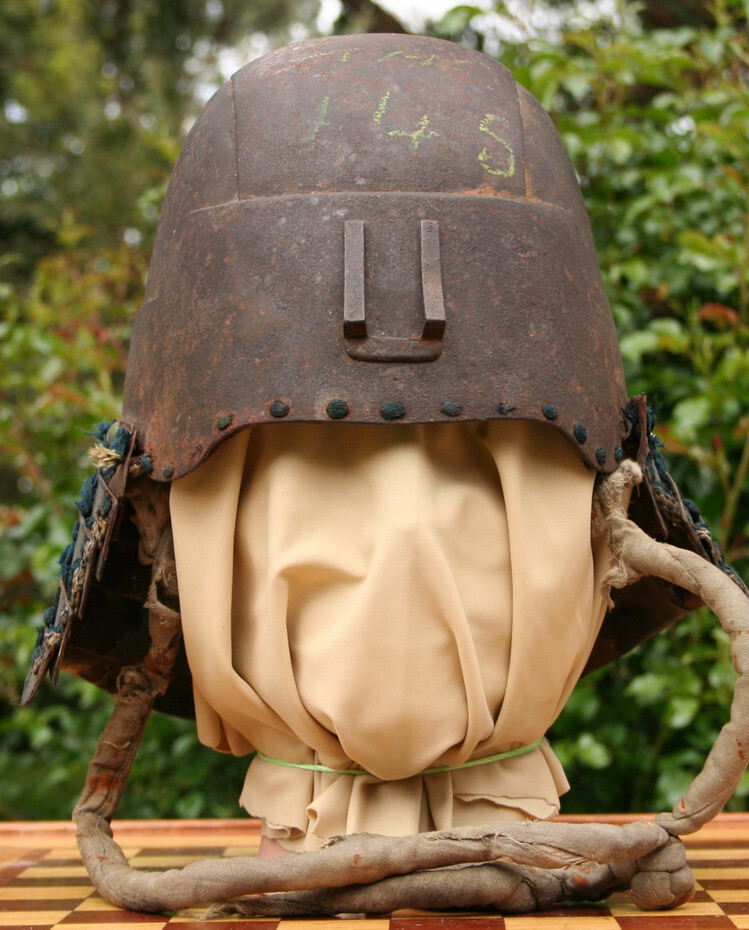
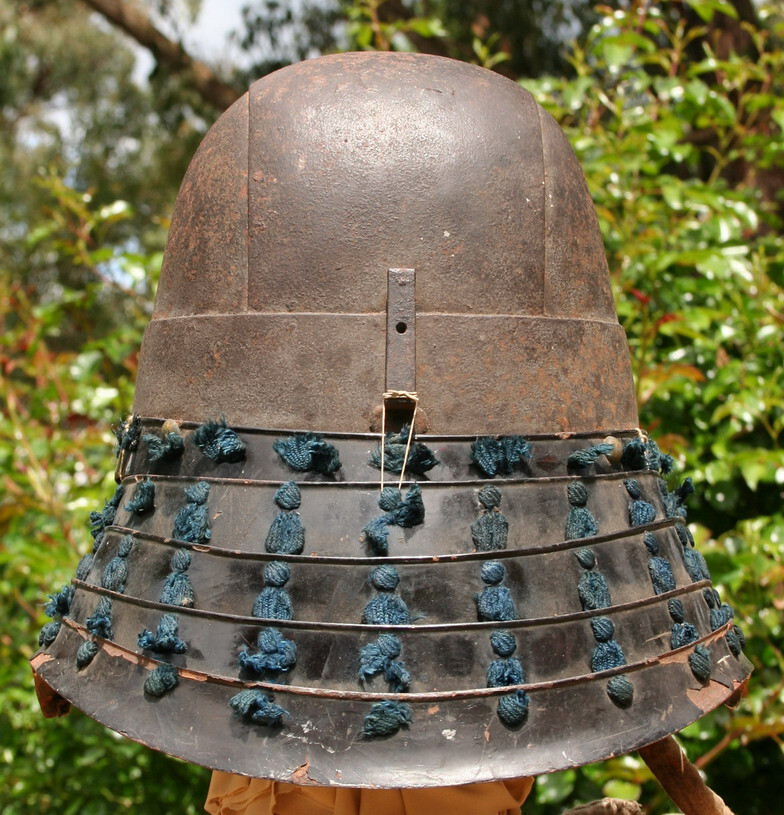
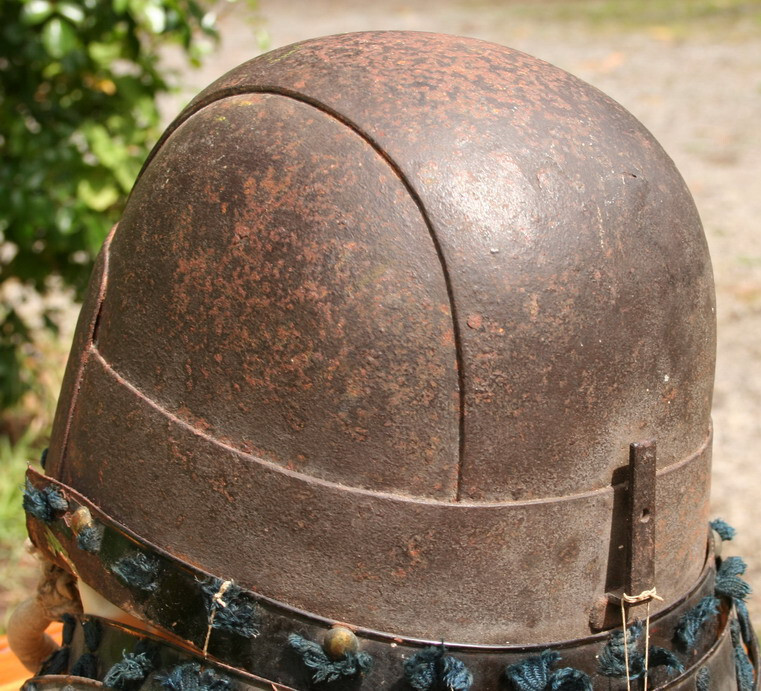
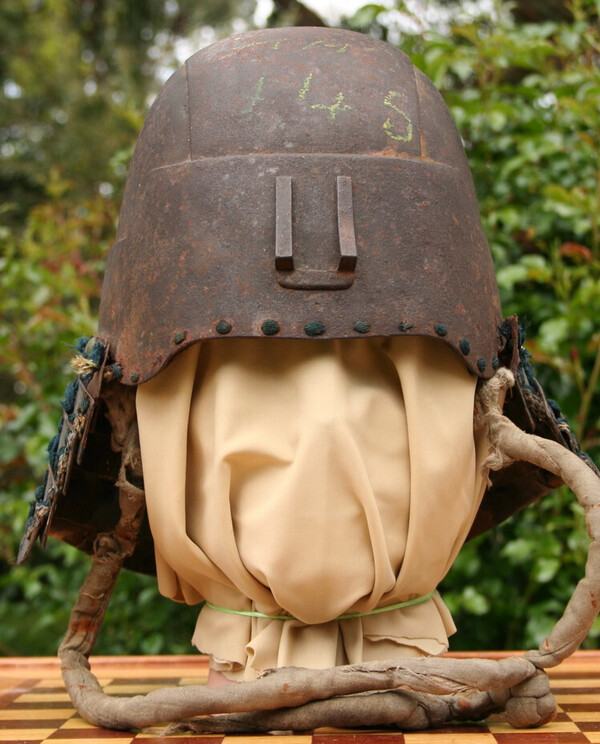
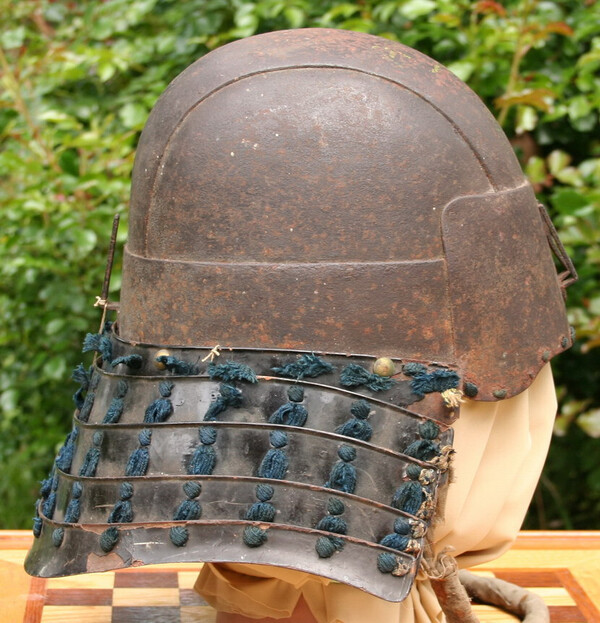
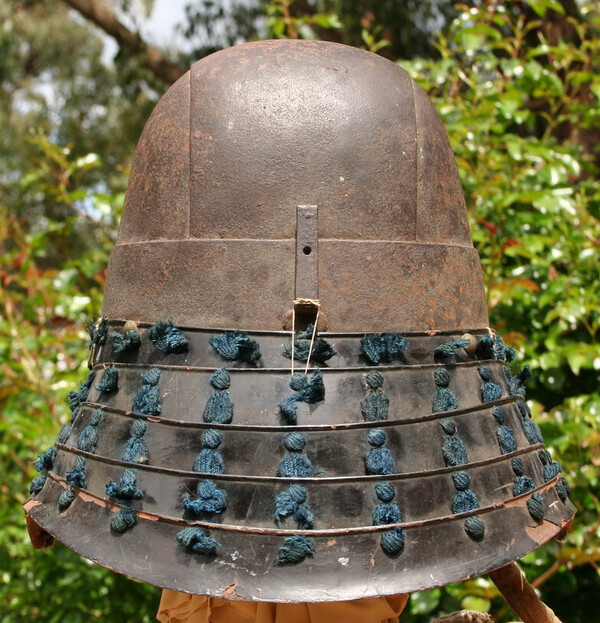
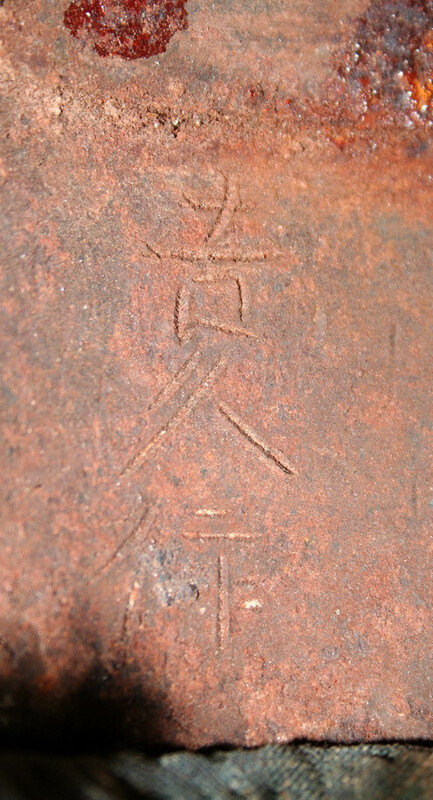
On 28th April Arthur G wrote: ================================================================= If you don't mind my asking, when was Yoshihisa active? And could you post some photos? ================================================================= Arthur, I believe he was active in the Momoyama period. Piers san once wrote that there were 15 YOSHIHISA smiths mentioned with those two characters. To canvass the discussions around this smith put HARUTA YOSHIHISA into the Forum search field. In the result is a thread from years ago that for the present discussion may have been missed: https://www.militaria.co.za/nmb/topic/26078-phase-composition-mapping-of-a-17th-century-Japanese-helmet/#comment-263581 I have attached photos of my helmet. An interesting observation is that the plate that goes over the top is thick at the front tapering to thin at the back. BaZZa.



-
Piers san wrote: > There is a type of 'mist' in Japan, especially during the rainy season, that seems to waft and fall like curtains of drizzle. I have read that the nukame hada of Hizentou can be described as 'mizzllng rain'. An English source: https://www.bbc.co.uk/programmes/articles/4wltytTwXR73XKR3DXq1VDh/mizzle-and-smirr-13-british-words-and-phrases-for-rain A misty drizzle. The term is commonly used in Devon and Cornwall to describe a mixture of fine drizzle and thick, saturating mist or fog. Although mizzle might seem like a clever portmanteau combining mist and drizzle, it likely derives from the Low German miseln or Dutch word for drizzle, miezelen. Also Nurie san's book: https://studyingjapaneseswords.com/2018/07/14/29main-seven-areas-of-sinto-sword-part2/ Hizen swords have "... Very fine Ji-hada (surface), sometimes called Nukame-hada." and Markus Sesko: https://nihonto.com/sixth-generation-tadayoshi/ "Two types of jihada are most commonly found on Hizen blades. They are the konuka-hada (rice grain) and the nukame-hada (misty drizzle). These types of hada consist of extremely tight mokume that has become known as the distinctive “Hizen-hada”. " I see this when I look at my Omidaijo Tadahiro katana (nidai). BaZZa.
-
Its an absolutely fascinating read about back in the day. BaZZa.
-
G'day Geoff, A good summary, thanks very much for taking the time to put it together. Is your Kanetaka the same as the smith in the Mino-to Taikan??? Could we please see a photo of both sides of the nakago?? I'm interested to see this as a friend of mine has a nice Kanetaka katana, from memory also in Shinguntou koshirae as yours is. I'll have to ask him for a photo. BaZZa.
-
Nice tsuba, at least oi loiks it. BUT, what is that little lump just at the end of the branch on the rhs of the first photo??? Tekkotsu??? BaZZa.

-
A 'stab' in the dark - is this kozuka by Goto Ichijo?? BaZZa.
-
Loved all this Arthur et al. Looking forward to the zunari write up as I have one by Haruta Yoshihisa. Barry Thomas aka BaZZa.
-
I have received the following email from a fellow member of an antique arms collectors’ group here in Melbourne, Australia, who would like to get in touch with the buyer of a Japanese Naval sword recently sold at auction in Perth, Australia. Pleas PM me for further details if you are the buyer. Thanks. Barry Thomas --------------------------------------------------------------------------------------------------------- Recently a Japanese sword was sold at Henry’s Military Collectables in Perth that was a Japanese Naval sword captured in Rabaul, Papua New Guinea. I lived in Rabaul for five years and was the local military historian. I also knew the underground Japanese Naval Headquarters systems very well. Having left the country, I returned later on and spent a further ten years working all over the country flying helicopters. Below is a link to where the Japanese Naval sword was sold. I would be grateful if you could give me any information on who in Perth purchased this, and whether they would be interested in selling the Rabaul sword. Yours faithfully, Terry McMahon. https://www.henrysmilitarycollectables.com.au/products/sold-items/ww2-Japanese-naval-surrender-sword-with-australian-provenance-sold.aspx
-
- 1
-
-
OTTOMH - BUSHU MASAKUNI... BaZZa.
-
Its a 'goofy' tiger - a good sign IMHO. Like a goofy Shishi. Good renditions of a creature hardly if ever seen. BaZZa.
-
Looks like an o-suriage hirazukuri wakizashi... Would truly need an in-hand examination and maybe a window?? BaZZa.
-
Mumei Nihonto — Seeking the knowledge of the experts
Bazza replied to AffectionateShop's topic in Nihonto
Agree, but perhaps more tanago, John??? Kijomomo has more of a 'kick' inward. BaZZa. -
Need help authenticating whether this blade is of value.
Bazza replied to VoidedAbyss's topic in Nihonto
I'm no 'real expert', but using the vernacular the point (kissaki) looks 'dicked with'. The bohi on an 'oily' looks interesting, but unless a 'real deal' can be done there are probably better value for money swords 'out there'. BaZZa. -
OK - try again. Could it be HAKUDO??? BaZZa. ======================================================= https://www.militaria.co.za/nmb/topic/43547-fake-or-fortune/#comment-450748 Posted February 4 I found this on the web: HAKUDO = An alloy of 70-80% copper and 20-30% tin. As is known from mirrors made of HAKUDO, the tin content is higher than in bronze. It sounds a bit surprizing that this alloy should have a silvery colour, considering the high copper content. I am sure @Ford Hallam could tell us all about HAKUDO. Regards, Jean C. THEN: Ford Hallam Posted February 6 Just passing by and thought I could add my 5 yen's worth Hakudo is indeed a high tin alloy, typically 20 to 23% tin. In it's usual cast alloy form it's incredibly hard and brittle so unlikely to be used in tosogu making, especially menuki which are worked up from flat sheet.
-
I have also read (ancient memory here) that the omodaka leaf reminded samurai of arrowheads, hence its popularity as a tsuba motif. BaZZa.
-
Colin, I chuckled when I read your question and said to myself "Now where in all the NMB was it??" A quick check showed 9 pages of KUNIKANE discussions!!! I knew it was a long time ago, so I went to page 9 and - VOILA: https://www.militaria.co.za/nmb/topic/6699-kunikane-genuine-of-fake-mei-on-katana/#comment-65485 Name: Peter Bleed Posted November 26, 2010 There are a great many bad Kunikane signatures out there, largely because the Kunikane 1 successfully started a long line of smiths that survived and was supported by the Date family. There were 14 generations in the main line. They practiced the style of the founder and enjoyed official support. The middle generations produced mumei swords that went right into the armory of the Date family. (Sendai meikan lists NO legitmate signatures from the 4th to 10th generations.) After the Meiji Restoration those unsigned swords were sold to an antiques dealer - apparently in Sendai - who had them signed --- mainly with the Master's name. Dealers refer to these as "Sendai Atobori." They can be viewed as "school"swords, but those "after signatures" are being removed nowadays. That is, they are being treated like "gimei." I am as sure as I can be that the sword that got this discussion started is not the work of Kunikane 1. Peter Sheer luck Colin, sheer luck. BaZZa.
-
Topical question - are they 'murder hornets' (Vespa mandarinia)? https://www.livescience.com/how-to-identify-murder-hornet.html BaZZa.
-
Could it be pewter??? BaZZa.
-
Kelly can still post to Victoria as the L-A-W law is a local Victorian State piece of insanity legislation and not a Federal Customs/Australian Border Force legal imposition. I should know as I and others do get swords into our Victorian state from overseas countries. I can't believe that the Japanese authorities prohibit posting swords to Victoria as it is most definitely not illegal to do so. BaZZa.
-
Without seeing the rest of it, the nakago photo suggests a 100% certainty as the mei seems to have been put on with some electric etching/engraving tool. The file mark style is not consistent with a Japanese tang. BaZZa.
-
NOooooooooo... BaZZa.
-
IMHO what we are seeing in this picture is not the hamon, but the yakiba outline. The apparent hamon (the white line) is the overspillof the hadori... BaZZa.
-
Peter et al, what I found interesting was the revelation (previous NMB discussions) that in the Meiji period a 'stack' of unsigned swords were found in a warehouse that were produced by the Kunikane line. These were subsequently 'signed' and marketed. A friend has a Kunikane katana that we put up at one of the Sydney, Australia, Shinsa (2011?) and it was pinked to late Edo Kunikane. I'll dig out the oshigata and reject slip and put them here for the conversation. BaZZa.
-
I believe it portrays the Bell of Miidera Temple: https://historyofjapan.co.uk/wiki/miidera/ Note the last story: Another tale relates to Benkei, who was the retainer of Miyamoto no Yoshitsune. The tale relates that when he was still a monk he sorely wanted to steal the bell to install it into his own monastery. He thought to roll the heavy bell down the hill, but fearing the monks would hear him and discover his theft he used his great strength to place the bell on one end of the cross-beam and his paper lantern on the other and proceeded the carry the heavy burden for seven miles. Eating a meal after arriving back at his temple, he then allows the monks to strike the bell. However, instead the bell made a cry of ‘I want to go back to Miidera!’ They hoped that sprinkling the bell with holy water would appease it, but still the bell longed for Miidera. Benkei grew angry and so he struck the bell as hard as he could hoping it would break, but it did not. All it did was cry again, ‘I want to go back to Miidera!’ He took the bell to the top of a mountain, kicking it down the slope. Benkei no longer wanting the bell. Eventually the priests of Miidera found their bell once more and hung it back in its rightful place. It is said though the bell never spoke again, and merely rung like other temple bells.3 It is a tale seen in tsuba, either as the bell itself or with Benkei. I'm sure someone else can extend this topic. BaZZa.