Kiipu
-
Posts
2,369 -
Joined
-
Last visited
-
Days Won
11
Content Type
Profiles
Forums
Events
Store
Downloads
Gallery
Everything posted by Kiipu
-
高木義人 Takagi Yoshito (1886-1956) It looks like he bought his sword fittings from the officers club. 高木義人 Right Tag 財團法人 = Zaidanhōjin = Foundation. 偕行社 = Kaikōsha (Army officers club). 酒保部 = Shuho-Bu = PX Store. The term 酒保 is a Japanese translation of the French cantine and German Feldschenke & Soldatenschenke. The literal translation in English is "liquor." Special thanks to Nick for the extra help in translating the term. 酒保
-
Ditto the above. 加藤則貞 = Katō Norisada Kato Norisada
-
I think these are the stylized characters 内山. This logo only appears on cavalry swords so far.
-
The characters are Thai script and the last four are numbers. FYI, the picture is upside down. XXX/๖๒๔๓ = XXX/6243.
-
It looks like an out of focus 一文字天秀鍛之 Ichimonji Amahide kitau kore. However, I will need "The A-Team" of @SteveM & @BANGBANGSAN to take a look at it and make sure I am not seeing things again. @mecox
-
 Glenn, on the large wooden scabbard, are those metal bands or is it just tape? What is inside the small wooden scabbard? The one with the label marked as below. 準備 = Junbi = Preparation. 刀第一六一號 = Sword Number 161. For your edification, below is a link to a brief article about handling Japanese swords. Manual Of How To Handle And Take Care Of Swords
 -
Minty copper NCO sword noted on social media platform
Kiipu replied to zook's topic in Military Swords of Japan
This Type 95 sword is the lowest known to have a 東 inspection mark on the blade. Prior to this, only the serial number appeared on the blade. For example, see serial number 71 for a comparison. Type 95 Nco Copper Hilt -
As I linked to above, the wartime zōhei-tō 造兵刀 came about via the Type 95. Mass production began in earnest in 1943 and more zōhei-tō were made late in the war than Type 95s. The Japanese army needed officer's swords and they needed lots of them. Hence the development of the zōhei-tō. It took the best features of the Type 95 and ported it over to the requirements of an officer's sword.
-
Thanks George. So this is what we have then. Iwashiro 岩代 is located in Fukushima Prefecture so it would have fallen under the RJT jurisdiction of Tōkyō 1st Arsenal. Production was small as they would have started with no prefix to the serial number and then added the katakana character FU フ later on. Yet this sword is only numbered at 37 and already has the prefix. Kinda like Hokkaidō 北海道 then, in that limited production took place in the prefecture. ☆ 岩代住正和 フ37 = ☆ Iwashiro jū Masakazu FU37 Iwashiro, Fukushima
-
It is an officer variant of the Type 95. The Type 95 was highly thought of by the army for its cutting ability. So a prototype was developed and tested that could be used by officers. I think @Shamsy could own one of the test pieces used in the sword's development. Short Development History of Type 95 Gunto, Post #212 造兵刀 Army Arsenal Blade @BANGBANGSAN
-
Do you have a link or picture of this marking?
-
Arsenal Mark on RJT sword Fittings
Kiipu replied to george trotter's topic in Military Swords of Japan
These three do fit in the timeline other than that the numbers are stamped upright. I think they should be included with the early starless Type 100 database. -
Henry, ditto what Geraint said. So as to save @Bruce Pennington the trouble, any markings on the other side of the tang, such as a date? 岡田兼定作 = Okada Kanesada saku. FYI, one can find him in the @mecox monograph below. Japanese Swordsmiths in Gifu 1937
-
@mecox covers this swordsmith in his latest monograph. Showa Period Swordsmiths of Ehime Prefecture
-
Bibliography of Japanese Modern Edged Weapons, 1868-1945
Kiipu replied to Kiipu's topic in Military Swords of Japan
While looking through my files, I ran across the following "Fixed Price List" from October 1996. As I think it is germane to the topic, I will post it here. -
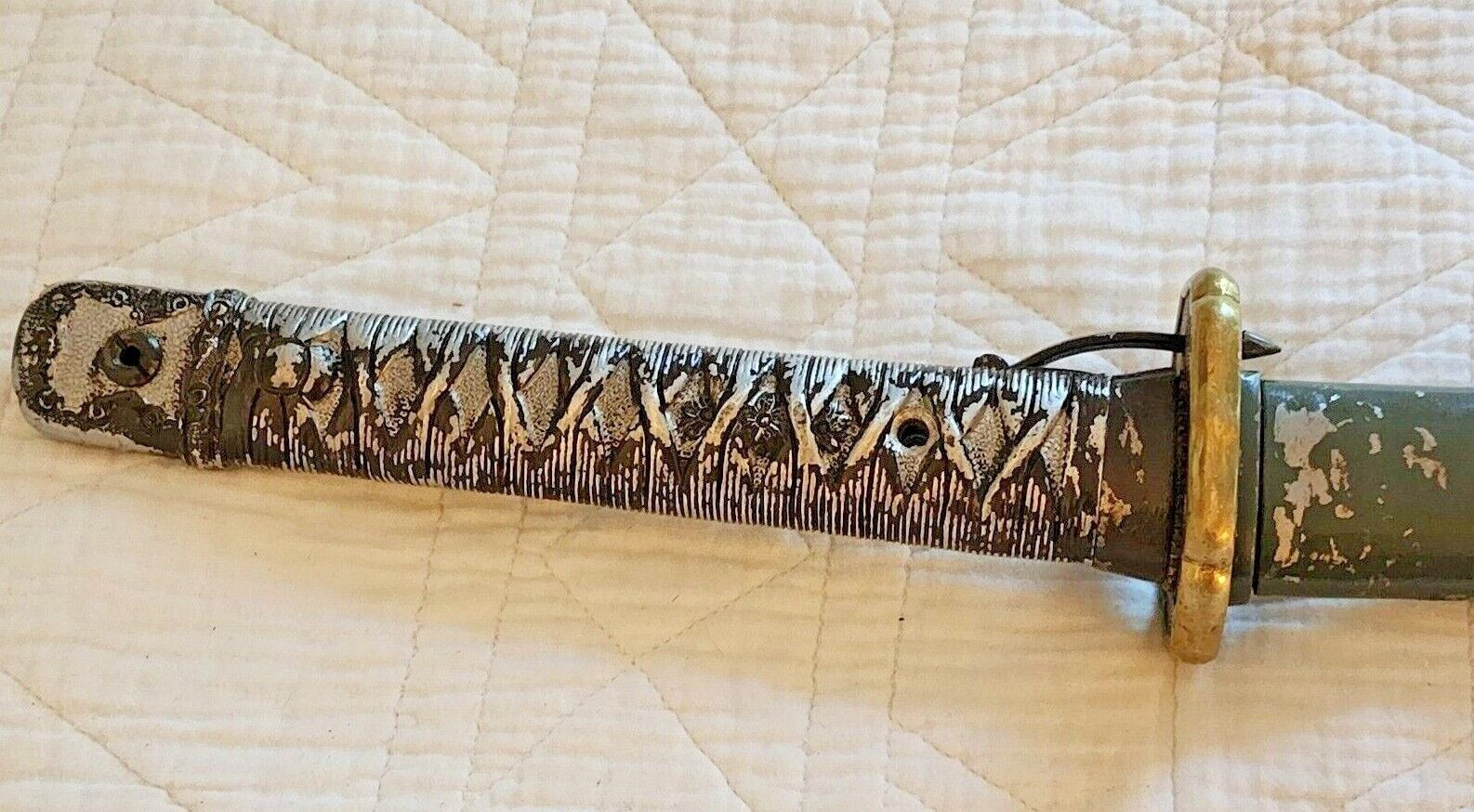
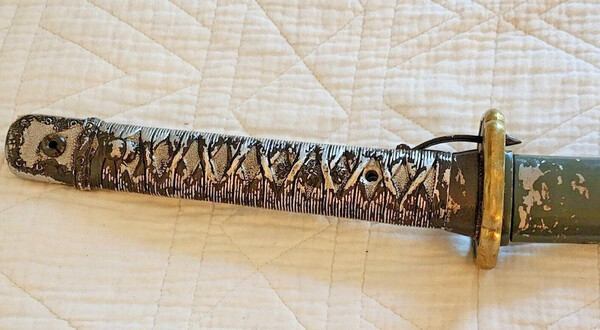
Looks good but it is a reproduction. This particular Iijima model has fooled many and I am seeing them deliberately aged. So far, they can be found in the 30K to 50K serial number range. Buyer beware!! WWII Japanese ARMY TYPE 95 NCO SWORD & MATCHING SCABBARD ARSENAL HALLMARKS X
-
Sadatsugu inscribed 龍王子 on some of the tangs and this translates as "dragon prince." This is probably why Mal translated 龍王 as "dragon prince." 王子 = ōji = prince.
-
What Trystan said above except Mal used "Dragon Prince" instead. Bruce, read page 10 for the explanation. 龍王 = Ryūō = Dragon King/Prince/Monarch/etc. @mecox
-
「関伝日本刀鍛錬技術保存会」井戸誠嗣会長のご協力により、昭和15年、当時の関町が発行した「刀都関」誌に、『 関刃物工業組合の厳重な検査に合格した刀身に「桜花に昭字」の刻印が打たれ、実用刀として天下無敵の好評を博している 』との記述が発見された。 With the cooperation of Ido Seiji 井戸・誠嗣, Chairman of the “Seki-Den Japanese Sword Forging Technique Preservation Society” 関伝日本刀鍛錬技術保存会, a description was found in "Tōto Seki" 刀都関, published by the Town of Seki in 1940, that said “The blade has passed the strict inspection of the "Seki Cutlery Manufacturers’ Society" 関刃物工業組合 and is stamped with “Sakurabana ni Shō ji” 桜花に昭字, and has gained an unrivaled reputation as a practical sword.” Source: 関・軍用日本刀 刀都関 = can be pronounced as either Tōto Seki or Katana no Miyako, Seki. 桜花に昭字 = Shō 昭 character within a cherry blossom. Nick states that it would be better to write it as either 桜の花に昭の字 or 桜の花に昭和の昭の字.
-
The phrase is coming from the 1956 movie called The Ten Commandments. It is spoken by the Pharaoh played by Yul Brynner. The Ten Commandments (1956 film)
-
So let it be written, so let it be done. Bruce, care to take a guess who said that? Cross-Reference Arisaka
-
The sword is not a reproduction. I downloaded the ferrule picture and can clearly see the 名 inspection mark. The picture is just a little pixelated and gives the impression of a "G" stamp.
-
Yoshitsugu 2
-
Bibliography of Japanese Modern Edged Weapons, 1868-1945
Kiipu replied to Kiipu's topic in Military Swords of Japan
Mal & Co., Ltd., has been burning the midnight oil so as to bring us his next missive on Japanese gendaitō swordsmiths. Ehime Prefecture is one of the four prefectures of Shikoku 四国 [four provinces]. This is the second tome by Mal that covers Shikoku. Cox, Malcolm E. Showa Period Swordsmiths of Ehime Prefecture 愛媛県. 2022. 134 pages. https://www.militaria.co.za/nmb/files/file/86-showa-period-swordsmiths-of-ehime-prefecture/ -
Mal, do you think this signature is using the new form? Japanese WWII OFFICER SHIN GUNTO - Tang Kanji and stamp