Gilles
-
Posts
528 -
Joined
-
Last visited
-
Days Won
1
Content Type
Profiles
Forums
Events
Store
Downloads
Gallery
Everything posted by Gilles
-
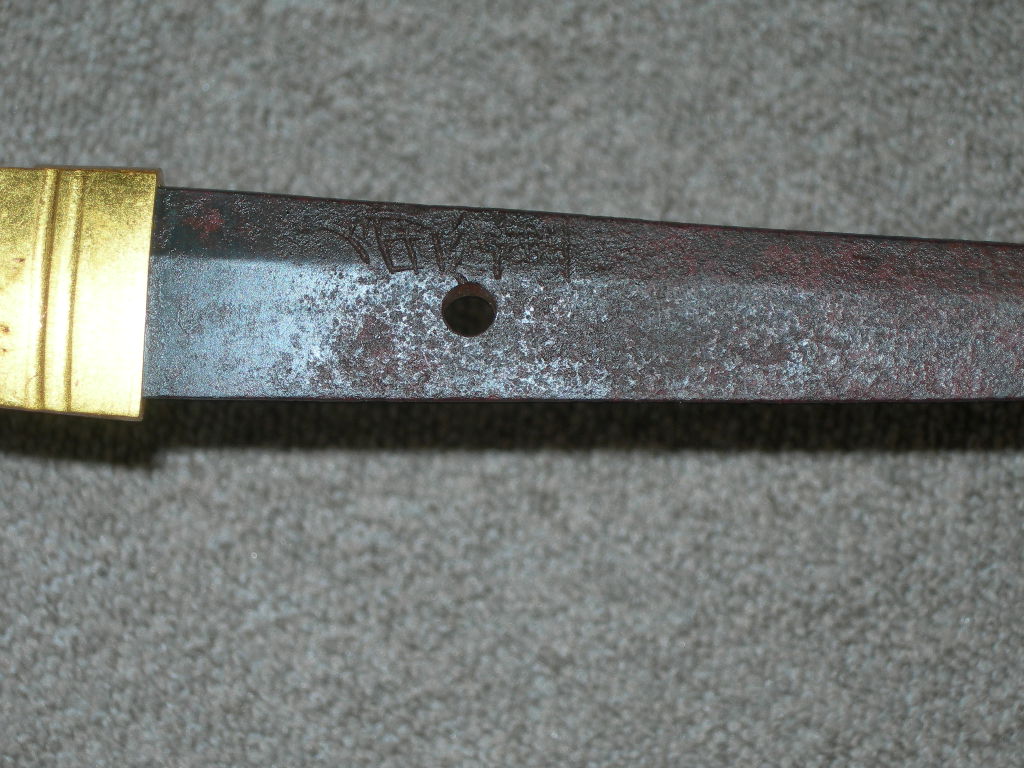
A better view of the mei of the swordmith.

-
Thank you Chris for your very rapid answer.
-
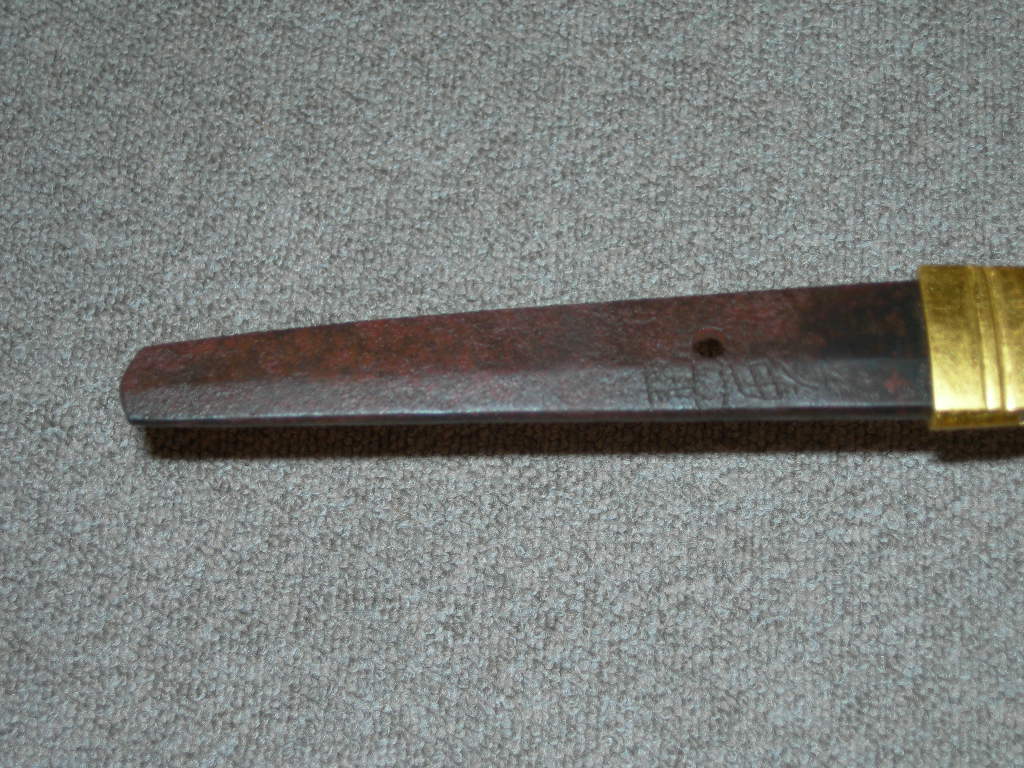
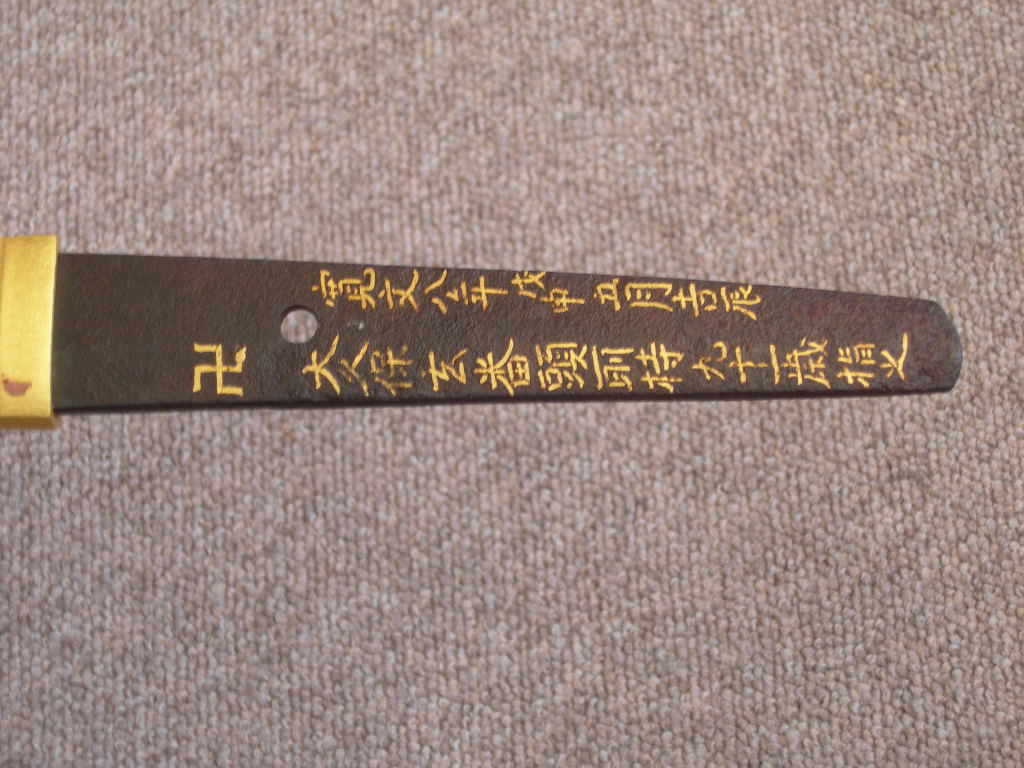
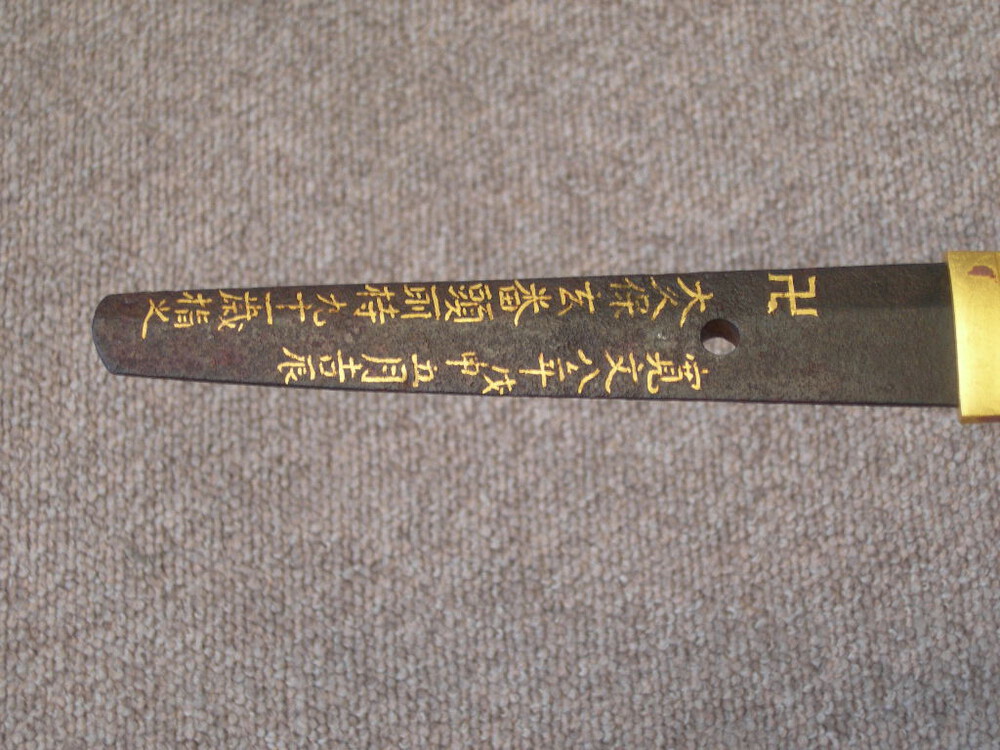
Gentlemen, Another translation for you. Please see the pictures of that sword. I assumed that the swordsmith is KANESHIGE. On the other side I see a date which should be KANBUN 8 ..... 5 month and may be a name of a man and its age. What is the exact translation ??? And why such a svastika ??? which is a buddhist emblem. About the date, is it the date when the sword was made or is it linked to the name ???? Why such a gold filling, for what purpose, because it does not look like a tameshigiri ?? Well, a lot of questions, that is why I ask your help again. Thank you for your participation. PS : the nakago shines because I have put some choji oil on it.


-
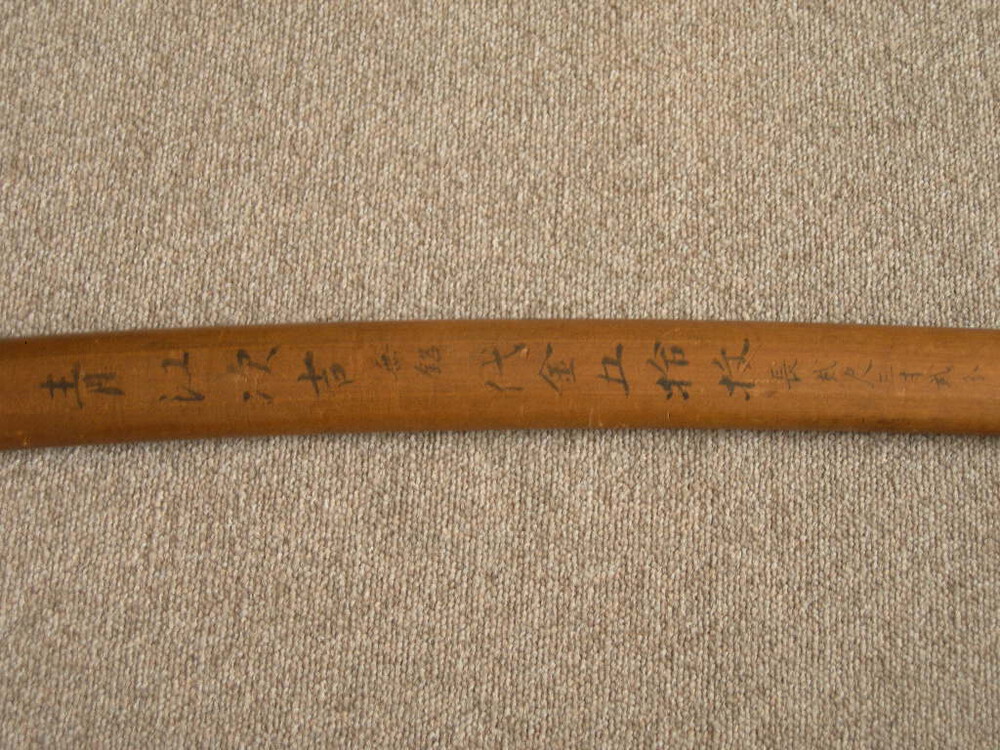
Gentlemen, I need your help. I bought a nice shinto katana in an old shirasaya with a sayagaki. Can you translate it ? I will post the mei of that sword today. Thank you very much,


-
Thank you Brian and Markus, it shows you the limit of my mastering of the english language. So let's go to buy another book from Markus and thank you my friend for your work. :D
-
Hello, Please help !!!!!! I've tried to order on amazon.co.uk or on amazon.com the last book written by our friend Markus but those books are in German language. Is there a simple way to order the english version ?
-
Dear Mariusz, I've seen quite a lot of fukuro yari signed that way. The other little yari I've seen during my wanderings are not signed with this big name. This is only my little experience as I am still a Japanese sword student..... :D
-
1st nihonto catalogue from Poland!
Gilles replied to Marius's topic in General Nihonto Related Discussion
I also ordered one. -
My deepest sympathy for all the affected people in Japan . I am relieved to know that Guido and Robert Hughes I met at the last Dai Token Ichi in Tokyo are both O.K. I hope that the other wonderful people I met over there are all safe.
-
I may add that Sarute were a plus for a sword. The Japanese army officers had to buy an army parade sword and a shin-gunto. It was the regulations at that time. Navy officers had to buy a Kai-gunto, a navy parade sword and a navy dagger. Of course during WWII, those regulations were may be less strictly enforced. But anyway, ordering a sword at that time was a costly affair. Especially for Japanese officers which were not known to win a lot of money. Every plus, like a gendai blade, thick seppas, pierced guard, nice sarute were kind of costly, so I assume that sarute made of fabric were less expensive that nice iron or copper ones. The tactical choice to make less noise is also relevant. Moreover, fabric sarute seemed to be more resistant than nice ones which were held by little "nails" (I don't know how to qualify that part in english) of 2mm on each side. Hope it helps.
-
Hello, It is a chinese DA DAO used by soldiers of the numerous chinese warlords before WWII. They had this kind of swords, a lot of different kinds exist and it was usually forged locally. The same kind was also used in Indo China. Hope it helps
-
Just to let you know that I will put one for sale on Ebay soon. :D
-
Ooopps, thank you Jean
-
Hello, Somebody on that board asked me to post the picture of this rare yari. I really can't remind me who (sorry for that), so true to my word here it is. :D

-
Happy new year Paul. Please PM me with the total price for sending it to France. I will Paypal you ASAP. Regards :D
-
Dear Ford, A really impressive work which makes me speechless. I can use the french term "oeuvre d'art".
-
I will also need one. Please put one aside for me.
-
Dai Token Ichi 2010
Gilles replied to Jean's topic in Sword Shows, Events, Community News and Legislation Issues
Will also be there from the 24th till 3rd. I will be happy to see you guys for real and take a few pints of asahi beer with you. -
Hello Darcy, All I can do for help is to take a Patron copy. So, count me in. Regards
-
Thank you gentlemen for all those badly needed details. Best regards,
-
I am reading this book for the second time and I like it very much. We are very far from what we are used to read about Japanese swords. The author tries to make us think and gives a wealth of detailed information. We would need more translated books like this one. A pleasure to read.
-
Thank you for your help Grey. Seems to be quite an unknown smith in fact. Best regards,
-
Thank you both of you for the help provided. It make sense now. Fujiwara Munenari seems to be a swordsmith also, do you know one with that name? Do you know this swordsmith Kanetoshi? I can't find him. Thank you again gentlemen for your help. Best regards,
-
Dear all, I have troubles to translate with exactitude this mei which seems to be a daisaku of Muneari and Kanetoshi. Can you help me? By the way, do you know those two smiths ? The date seems to be Meiji two but I don't understand the ideogram between the 2 and the Nen. In short, Help ! Best regards,


-
Dear Ford, Count me in, that is a great idea.