Gilles
-
Posts
528 -
Joined
-
Last visited
-
Days Won
1
Content Type
Profiles
Forums
Events
Store
Downloads
Gallery
Everything posted by Gilles
-
Thank you Patrick and Markus for those precisions. Dear markus, a big thanks for your pictures. It shows me exactly were to see. One more question please. Can anyone tell me why Tsuruta san refer to the shinogi line ? How can I understand the following sentence ? - the shape of the nakago line is not fit on the bottom of the nakago which means slightly different place, - If the shindig line on the nakago fit the end of the nakago or doesn’t have line on the nakago jiri You should understand the blade is fake. Best regards,
-
Gentleman, I have a kantei point to ask you about the shin-shinto swordsmith MOTOHIRA that I have trouble to grasp. On Aoi arts site Tsuruta san is selling a super nice wakizashi (please see the link below) and he is making to following assessment that I seem to understand but that I can't find on the provided pictures. - first, Tsuruta san is talking about the shinogi line in the nakago and I don't grasp the point he is explaning. - then, he writes "On the upper part of the nakago, one or two lines are engraved", I don't understand and i can't see those two lines.... Can someone explain me or show me pictures of the features I don't understand ? aoi art original text : Kantei:genuine Motohira:please look at the shindig line on the nakago. the shape of the nakago line is not fit on the bottom of the nakago which means slightly different place. On the upper part of the nakago, one or two lines are engraved. If the shindig line on the nakago fit the end of the nakago or doesn’t have line on the nakago jiri You should understand the blade is fake. http://www.aoijapan.com/wakizashi-oku-y ... motohira-2 Moreover, in the excellent book NIHON SHINSHINTO SHI by our friend Markus Sesko, he wrote that some blade show at the nakago-jiri one or two horizontal strokes which are regarded as secret chisel marks of the first generation Motohira. Can someone provide pictures about those marks ? Thank you for your active help. Best regards,
-
 I already know Jean that my knowledge of the english language is perfectible. But I still try.
 -
Markus, One more book bought. I warn you my friend, I will have no other choice than to denounce you to my wife. Soon, I will need to explane all that money spent on "those books of yours".
-
Out now: NIHON-SHINSHINTO-SHI
Gilles replied to Markus's topic in General Nihonto Related Discussion
Dear Markus, Thank you for that book. I have almost finished to read it and I have learnt a lot of new things. It is definetely a must for a collector of shin-shinto swords. Markus, you are such a prolific writer which a blessing for my knowledge about the Japanese sword but a curse for my wallet :D Thank you again my friend, -
Dear Mick, I have noticed quite often those lines across YARI nakago, usually situated at the end of it. Where are your lines and notches situated ? I make a difference between the lines accross the nakago and the notches. Some well versed people told me that those lines are there to point out the defects of a blade. One line per defect. Is this real, I just don't know About the notches, I have no answer. I would be interested to know what are the meaning of such markings.
-
Out now: NIHON-SHINSHINTO-SHI
Gilles replied to Markus's topic in General Nihonto Related Discussion
Super Markus, I will order it tomorrow. Thank you again for your astonishing work. -
IN NEED OF A TRANSLATION ON AN OLD SHIRASAYA
Gilles replied to Gilles's topic in Translation Assistance
Thank you for your answer Patrick. No nagaye with the blade Ken, just a complete shirasaya. Sorry for the twisted picture markus :D . Thank you very much gentlemen for all those much needed precisions. -
IN NEED OF A TRANSLATION ON AN OLD SHIRASAYA
Gilles replied to Gilles's topic in Translation Assistance
Thank you dear Kunitaro, So if I understand well this yari was made to be mounted as a kago yari ? Best regards, -
IN NEED OF A TRANSLATION ON AN OLD SHIRASAYA
Gilles replied to Gilles's topic in Translation Assistance
Oups, O.K. Patrick, thank you for those explanations. -
IN NEED OF A TRANSLATION ON AN OLD SHIRASAYA
Gilles replied to Gilles's topic in Translation Assistance
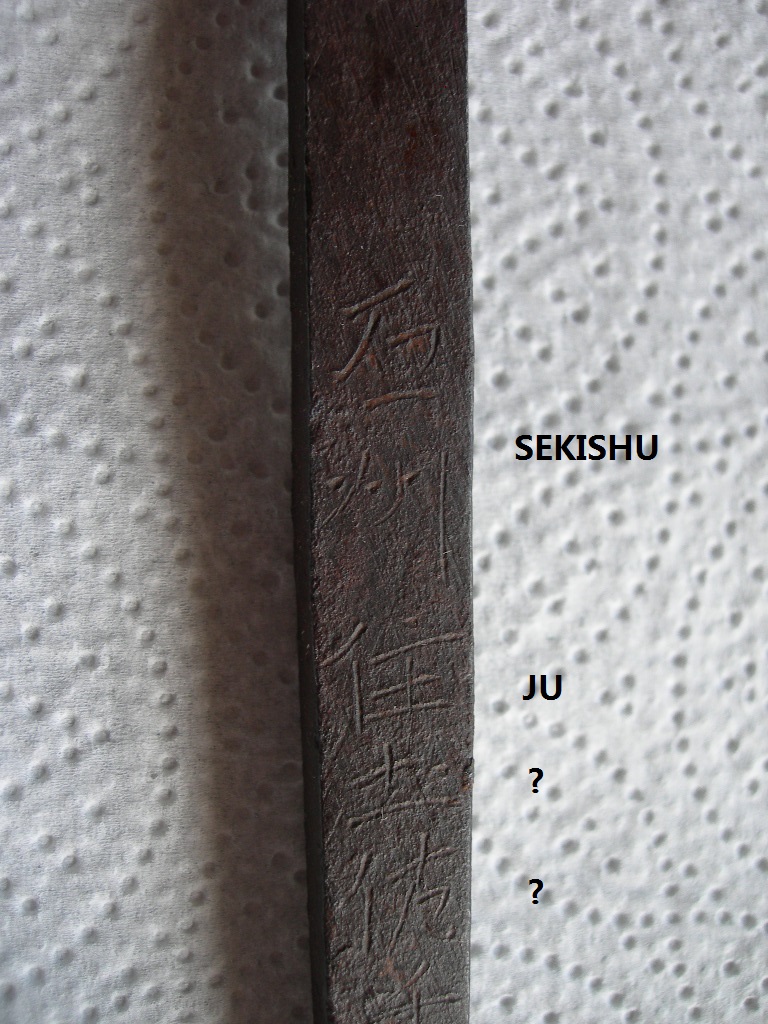
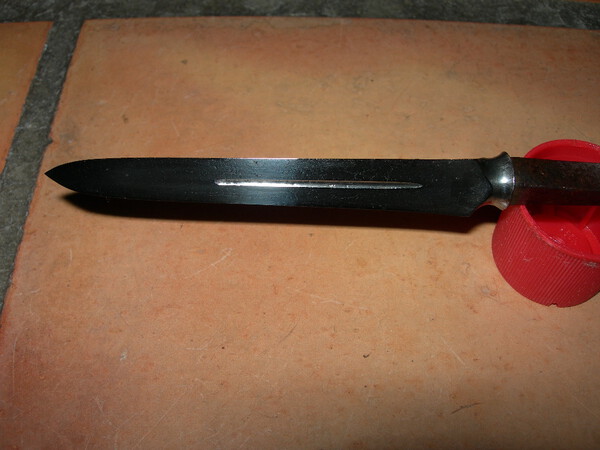
Thank you for your switf answer gentlemen, Dear Georges, it helps, Dear Markus, thank you very much for your translation. No dragon horimono visible, the blade is very slender with a nagasa of 10.5 cm and a total length of 36.5 cm. Not really the blade you will use to slay a dragon. Please have a look of that blade and its mei. can you translate the first two kanji ? The other beeing KANASHIGE SAKU. Best regards,

-
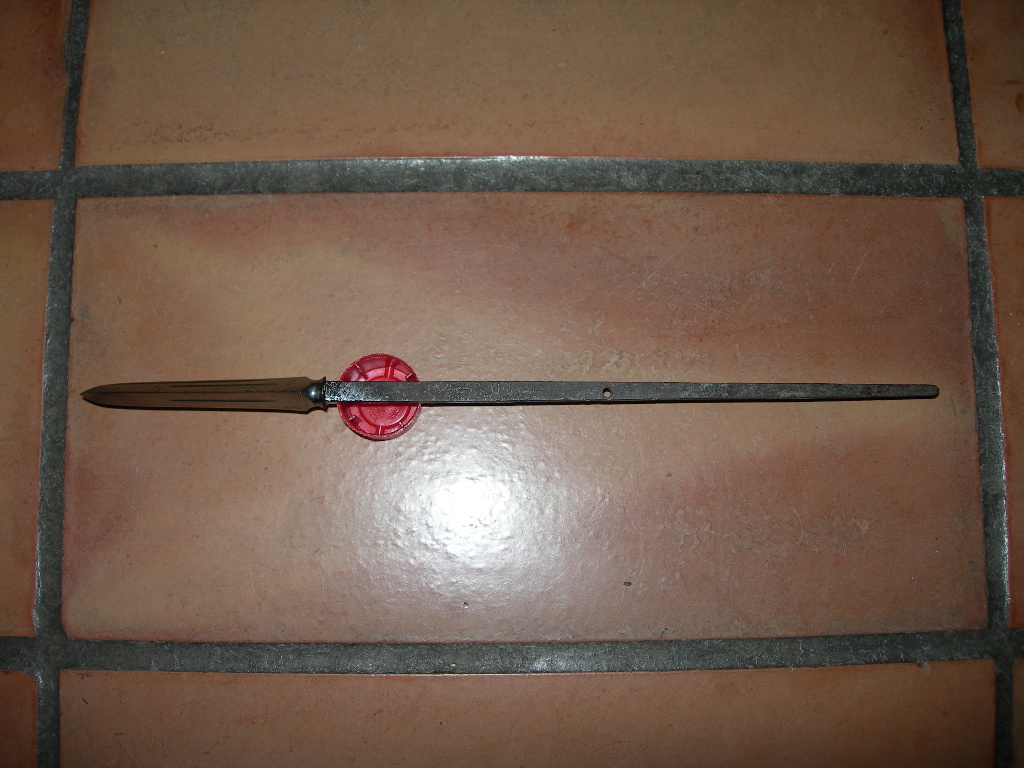
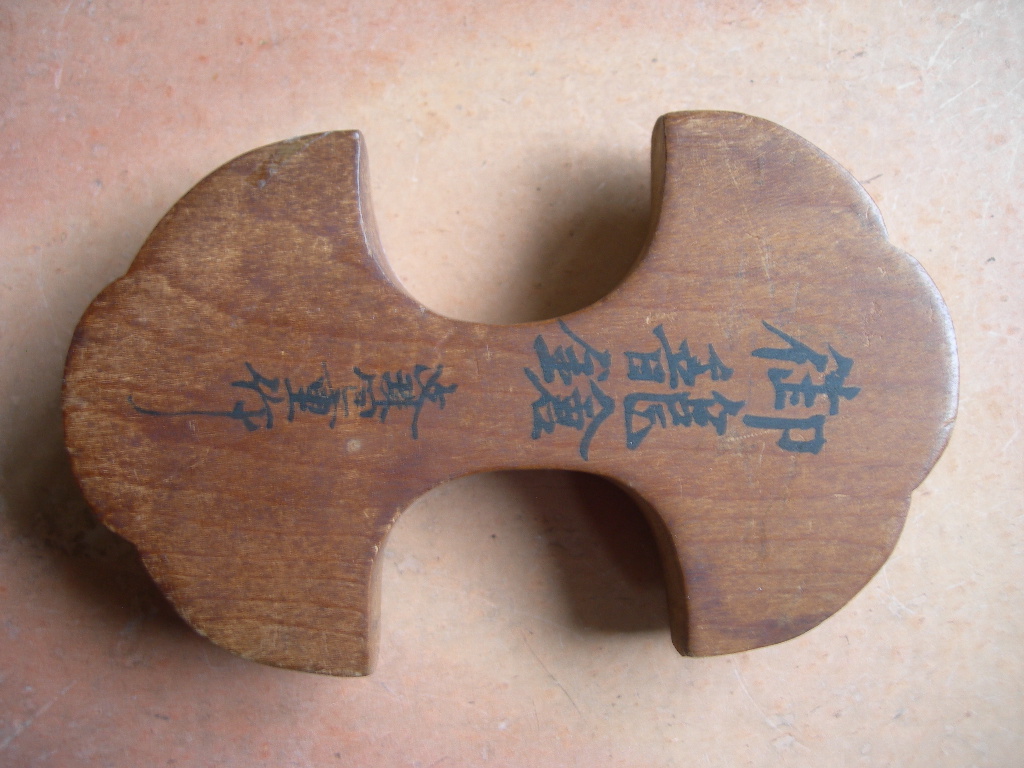
Hello gentlemen, I just acquired a little sankaku yari which was found on a old shirasaya. The cap of that shirasaya is quite uncommon. Several kanji are written. I can read the signature of that yari but that is all. Can you tell me what is the meaning of the bigger kanji and of the smaller kanji too which are located on the reverse of that saya? Last but not least, is someone able to tell me why this saya cap is shaped like this ? Thank you so much for your actice help. PS : the yari is signed KANESHIGE SAKU


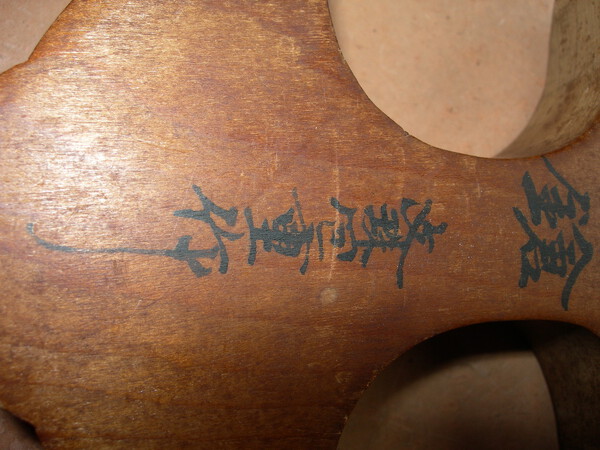
-
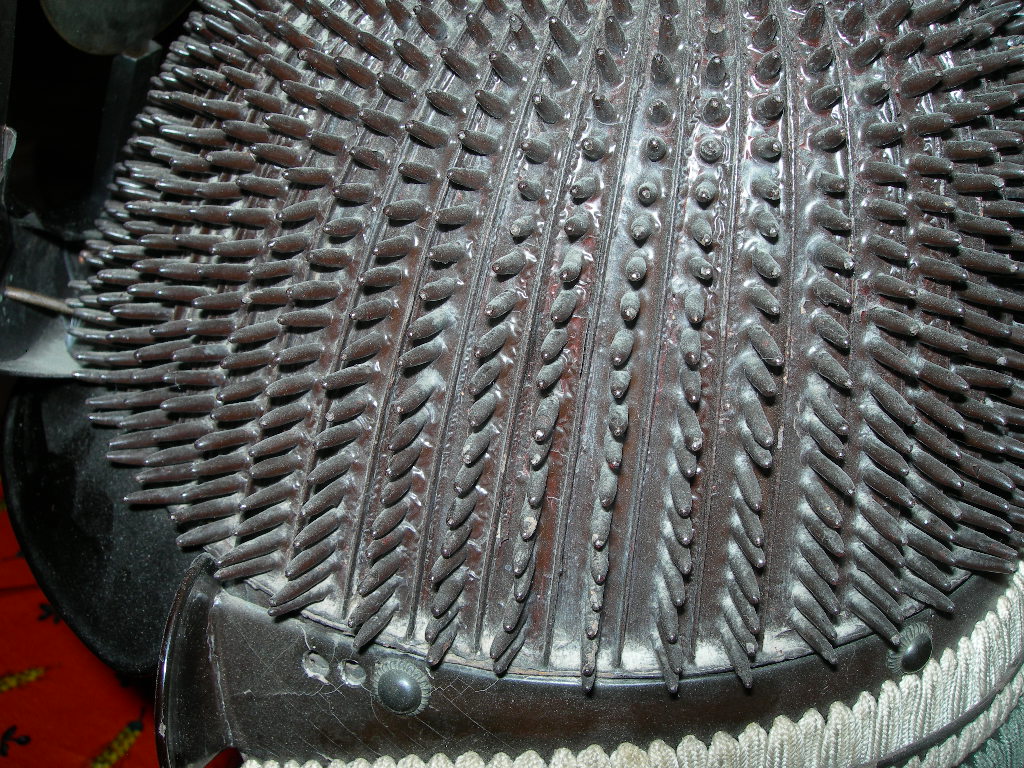
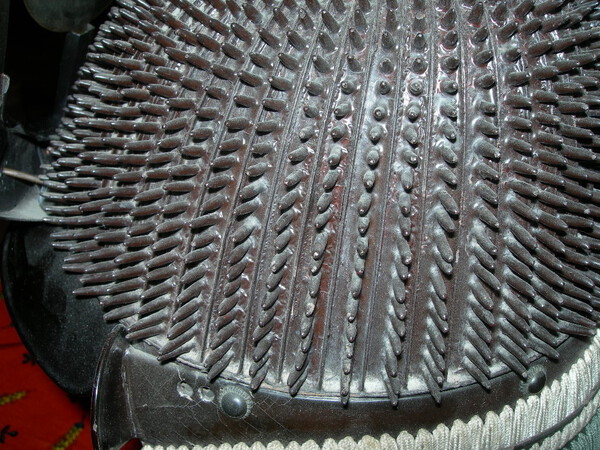
Gentlemen, Thank you for your explanations. Dear Uwe : I am not an expert but I am quite positive that the kuwagata dai was added not a long time ago. the good point is that it is made of shakudo. I will post detailed pictures this week end. Dear Ian : Thank you for all those details. I will check to see if this helmet is signed. This helmet is quite heavy due to all those pikes. If you want I can send picture of the inside. Best regards,
-
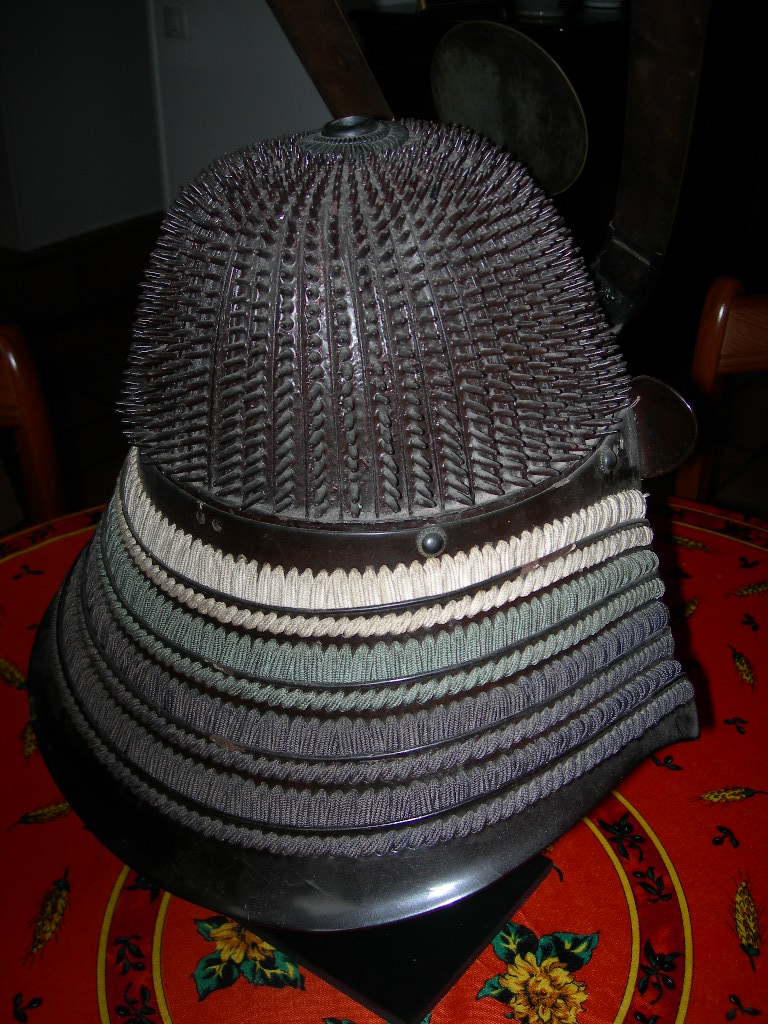
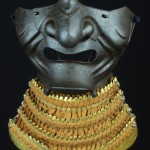
Dear all, I acquired lately a kabuto from another collector for decoration purpose (I know nothing about those nice things beeing more a sword guy). He told me that it was refurbished some years ago and a shikoro dating from the 19 th century was reconnected to the bowl which was older. Thus , I asked to you, knowledgeable people what do you think about this kabuto ? Please have a look to the pictures below. Thank you for your opinion. PS : sorry for the dust visible on the pictures
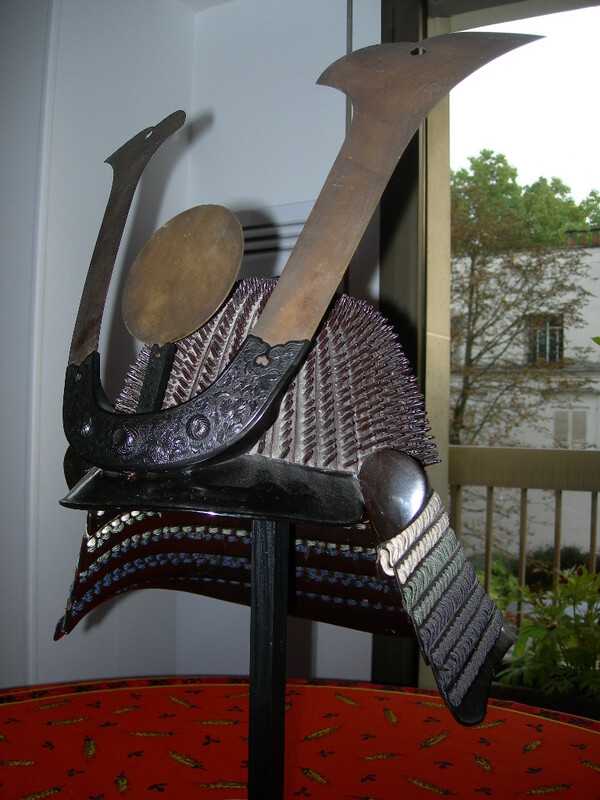
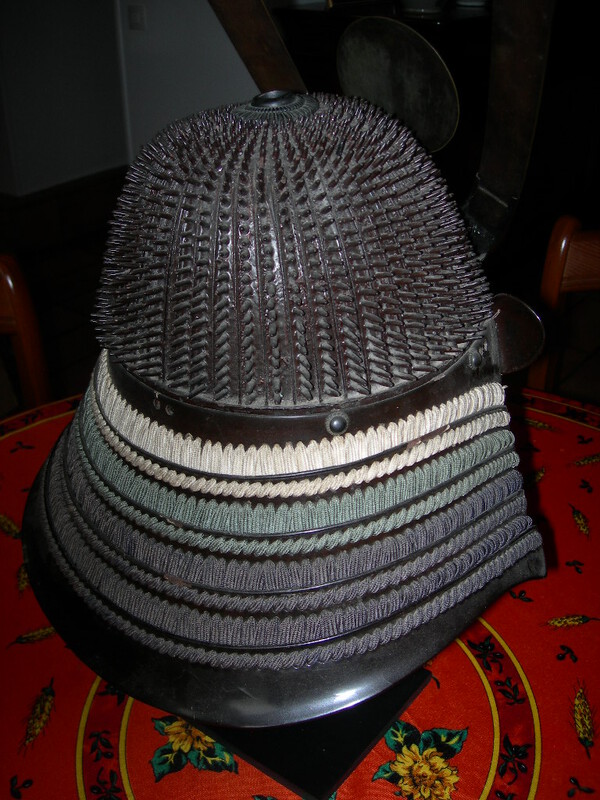
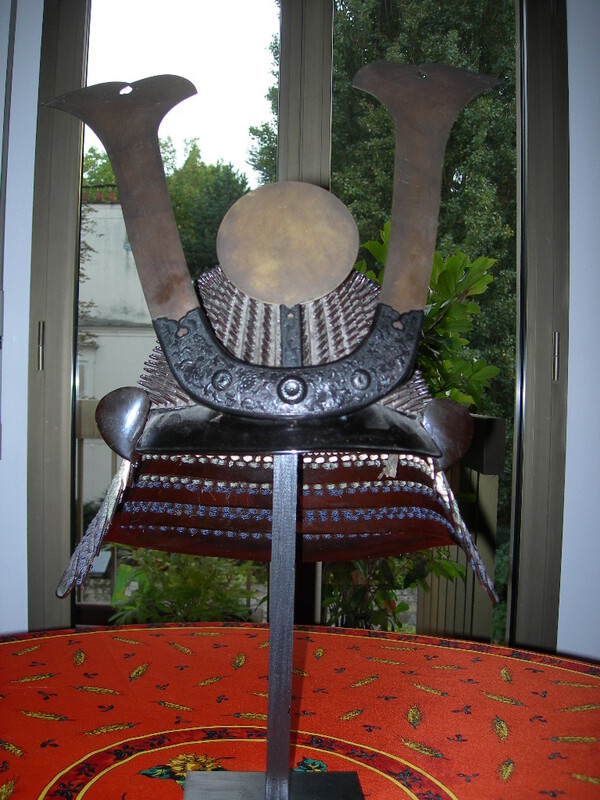
-
Hello Thierry, What a nice collection. Thank you for showing.
-
Dear George, I fully agree with you, sashi-komi tells you all. I asked quite the same question to a Japanese dealer three years ago in Tokyo. He smiled at me and told me that hadori/kesho was better to sale swords. If I remind me well, the excellent book "facts and fundamentals of Japanese swords" by Nobuo Nakahara, explane this. He said that a kesho polish has the advantage to bring out the jihada but has the disavantage to be able to hide all the blade's faults (page 85)........ As an eternal sword student, I definitely prefer a sashi-komi polish. :D
-
Strange indeed, I have also seen some of these items on the french market with different estimations / prices.......
-
Like Dirk and Brian, I would love to have more infos on that very interesting topic. If somebody can put some light on those two "forgotten" polisher families....
-
Dear Veli, I will say MITSU and perhaps KUNI.
-
Dear veli, I must say that I can't see a thing on the picture. There is a shade that hide nearly everything. Have you another picture ? Regards,
-
Gentlemen, I have planned to go to Toronto, Ottawa, Montreal and Quebec this summer. Is there some nice museums or antiques shop related to Japanese swords around ? I've heard that there is such museums in Toronto and may be in Montreal ? Can you tell me more about that ? Is there some place that I absolutely have to go ? All the best.
-
Dear Matt, This is quite incredible. It seems to be a wakizashi. Do we have here the daisho that this proud samurai wore at an advanced age ? Is it signed by a swordsmith ? Do you own that blade ? A good thing will be to join them again........ but I start to dream here Thank you for this input. the percentage of chance to find such a sword was quite low.
-
Thank you very much George, How come I missed that I've spotted this swordsmith in the Markus books "Index of Japanese swordsmith". I have the same data that is to say 1661/1673 Kanbun era.
-
Quick question on Kantei Volumes
Gilles replied to Markus's topic in General Nihonto Related Discussion
Super idea Markus :D -
Dear all, I am acquired a nice yari and I've stumbled upon three kanji on the signature. Can you help me ? I will appreciate a lot.