Gilles
-
Posts
528 -
Joined
-
Last visited
-
Days Won
1
Content Type
Profiles
Forums
Events
Store
Downloads
Gallery
Everything posted by Gilles
-
English INDEX of Gendai-toko-meikan.
Gilles replied to k morita's topic in General Nihonto Related Discussion
Dear Morita San, Your work will be very useful, thank you so much. -
Hello, The last book of Jim Dawson shows a sword like the one you have which still belongs to me. It can be found page 160 and 161 plates 13-17 and 13-18. Like other NMB members told you it is a field officer lightweight type. Imperial army high ranking officers usually used this type when the dress code of the army stipulated the wear of the shin-gunto. Usually the blade is machine made. The guard of my exemple have a pierced tsuba and this sword is very well made with all the details of a regular one. It is quite a scarce type not very common to find. Hope it helps.
-
Thank you very much to both of you gentlemen. It is very kind of you to have helped me on that topic.
-
Dear John, Yes, you are right, that is the idea. The exact translation in english from the french would be "among the flowers, the cherry tree (sakura) ; among the men the bushi (warrior). I found this sentence in an old french book dating from about 1880. The author heard that from an old Japanese samurai. I need to get the translation in order to order a bunchin in Japan from a swordsmith with that sentence.
-
Dear all, Is there someone kind enough to translate these words in Japanese "HANA WA SAKURA GI HITO WA BUSHI" ? Best regards,
-
I wish you a very good year 2010. May this board and its members continue for years.
-
Special issue from JSS/US
Gilles replied to Grey Doffin's topic in Sword Shows, Events, Community News and Legislation Issues
Dear Jean, See you soon. Please try to cure me Anyway, I am sure that your new purchase will be extremely interesting . -
Special issue from JSS/US
Gilles replied to Grey Doffin's topic in Sword Shows, Events, Community News and Legislation Issues
Dear Jean, My thirst of knowledge is the strongest. :D About my shin shinto addiction, I am dependent as ever -
Special issue from JSS/US
Gilles replied to Grey Doffin's topic in Sword Shows, Events, Community News and Legislation Issues
I just subscribed tonight using Paypal in order to participate for the translation and for publishing Japanese sword references and in order to help me in my never ending quest to know more about Japanese swords. :D -
Dear Guido, Reinhard, Franco, Eric, Kevin, John, Martin and Jacques. Thank you all for those explanations and details. To answer to Carlo, I did not make this statement on purpose, I am not that clever :lol: . I fully agree with you Guido, we can't always classify everything. About your glass wall example, I am still stuck on the wrong side. Anyway, I've learnt a lot with this topic and I wish to express my thanks to all of you. Gilles
-
Dear John, Kevin, Martin, Grey and Franco, Thank you very much for your explanations. I understand that there is only a thin line between the naginata naoshi and the nagamaki naoshi. Yet, as they haven't the same name they are supposed to be different. Thank you again for the time you spent on this very interesting topic. One last question please. Are the full tang koto nagamaki always signed (the non shortened ones or ubu ) ? I've heard something like that, is it just a tale ? Sorry for my poor english.
-
Gentlemen, I was wondering if nagamaki(s) are frequently seen on the market and if nagamaki(s) naoshi are also quite frequent ? Are they popular among collectors ? I understand from my readings that this type of blade were used mainly for combat in the 16th century and I will want to know if they were made like were made the swords (katanas) used at that time ? I mean with good quality tamahagane and made by well known swordsmiths ? Sorry for my poor english and my clumsy questions but I will really need some answers on that topic.
-
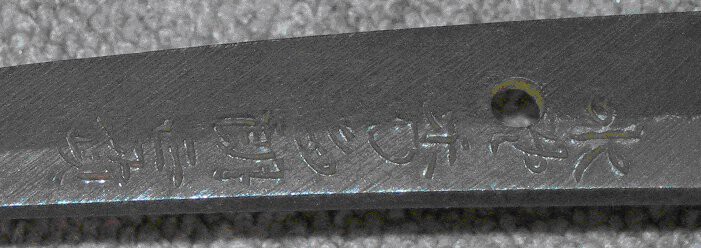
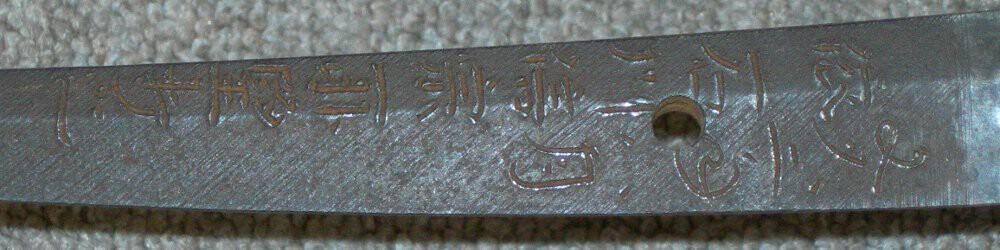
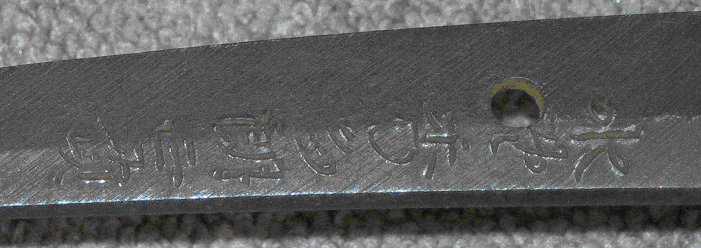
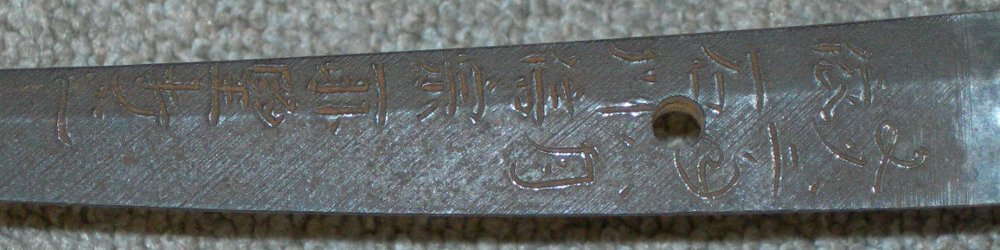
Dear Moriyama-san and Justin, Thank you so much for your help. I thought that the last kanji of the swordsmith name was NAO but here again I was not sure about that. This nice wakizashi has a very pronounced hitatsura hamon. This sword is well made and should be quite nice when it will be polished. If anyone can help for the unidentified kanji(s) or the identity of Ishikawa Nobumune who ordered that sword, I will appreciate a lot.
-
Hello all, I have bought this sword a while ago and I am about to send it to the polisher. I tried to translate it but alas, I could not figure out the whole signature and the real swordsmith. According to what I found: OMOTE : SUISHINSHI...MASANAO URA : BUNKYU NI NEN HACHI GATSU, the other line seems to be an attribution. Can you give me some details on the swordsmith? He is of the Suishinshi Masahide school but I could not exactly pinpoint him. I will really appreciate some help on this one. Regards