Katsujinken
-
Posts
824 -
Joined
-
Last visited
-
Days Won
3
Content Type
Profiles
Forums
Events
Store
Downloads
Gallery
Everything posted by Katsujinken
-
 Outside of Japan, you can work with a place like Nihonzashi, in Florida. It’s a Battodo dojo + traditional martial arts store. They sharpen modern production blades. Within Japan, there are no Chinese made shinken, so it’s just a matter of getting a lower grade polish on a shinsakuto, which is no problem. There’s no shortage of tameshigiri practice over there, so it’s a common need.
 -
Grey is correct. The “theories” are McDojo hogwash. :-)
-
Basically, yes. In the case of a nihonto that is pre-Meiji, it's essentially a question of quality and whether or not the risks/wear and tear to the sword inherent in the practice of Iai/kenjutsu outweigh its intrinsic value and potential preservation. For example, swords used for tameshigiri do need ot be sharpened periodically, which as we all know, shortens the life of the sword. It's essentially a consumable. Different folks have different opinions on this, of course. For a modern sword - a shinsakuto - it essentially comes down to whether or not the blade was intended as an art sword to begin with. Usually art swords are made with higher quality materials (e.g. the really good tamahagane ). So for shinsakuto it's basically about intention.
-
correlation of flaws with age?
Katsujinken replied to nickm's topic in General Nihonto Related Discussion
Some good stuff in this recent thread: http://www.militaria.co.za/nmb/topic/27429-captured-wwii-sword/?view=getnewpost&fromsearch=1 Otherwise, head over to his website, yuhindo.com, and read read read. -
correlation of flaws with age?
Katsujinken replied to nickm's topic in General Nihonto Related Discussion
Yes indeed! -
correlation of flaws with age?
Katsujinken replied to nickm's topic in General Nihonto Related Discussion
Darcy has written about this articulately and extensively, but, basically, the older a blade is, and the more prestigious the school/maker, the less a flaw should detract from its value (or paper potential). To be clear, this scale is exponential, and remains relatively flat til you are well into Nanbokucho territory. Anything Muromachi or younger and the flaws deduct value (aesthetic and otherwise) quickly. Shinto and onward better be perfect. -
Believe or not, I don’t envy George in this moment. It’s an incredibly tough spot. I agree with the advice given in this thread – family heirlooms are priceless in a way, but when we discover a new Da Vinci or fossil from a new species of dinosaur, we also a have a responsibility to history and those who will come after us. I sincerely wish George and his family the best, and again want to thank Darcy, Ted, Ray, and everyone else who contributed. In many other similar hobbies, George would likely have swum right into a school of sharks. Heck, in this hobby, if he’d gone to the wrong place, he’d have found predators waiting. So thanks be to everyone, and to Brian, for maintaining this space in the right spirit.
-
Bingo!
-
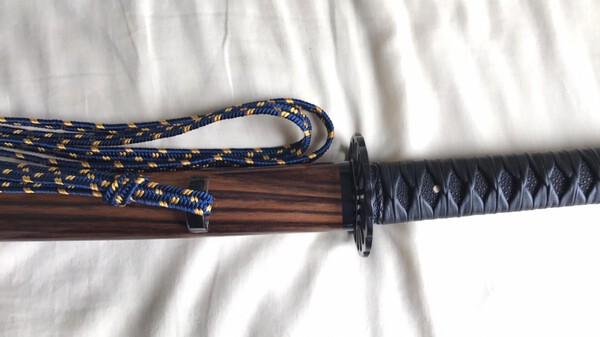
Walnut with clear lacquer.
-
I heard about this thread in person from another collector today (I don’t normally read this section), and I’m so glad I checked it out. My hat is off to Michael, Darcy, Ted, and everyone else involved in helping out. What a ride...
-
This is a fantastic thread!
-
Unless Aoi says in the listing that they will guarantee a paper, it’s safe to assume the blade won’t paper.
-
Questions For Long Time Collectors
Katsujinken replied to raynor's topic in General Nihonto Related Discussion
“For example does anyone know how long a well stored blade stay in polish before it starts fading? Must be decades.” Yep. With proper care, a polish should basically last forever. I have a blade that hasn’t been polished since it went Juyo in 1980. Looks like it was polished yesterday, in the best way. -
I’m curious about the sayagaki. If it’s legitimate that complicates things (sake sayagaki, anyone?). Seems more likely to be a forgery or perhaps a legitimate shirasaya that someone paired with this blade. Here’s a photo of the bottom of my Honma Junji sayagaki, written in 1983. I see some not insignificant differences, but would love for others with more experienced eyes to weigh in.
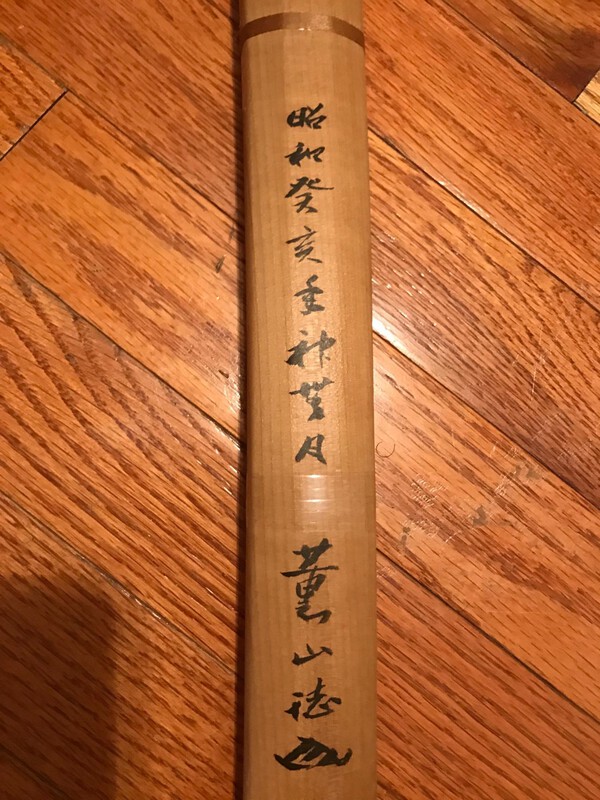
-
I think if you read Jussi’s post closely, where he lists the number of signed Kanemitsu blades, you will see the odds involved here. It is extremely unlikely this blade, if shoshin, sat hidden in Japan and then emerged without being repapered. But you never know. Do a bit of research – search this forum for “green papers” – and you will see that these papers can be problematic, especially when they attribute to such an important maker. I think it’s fair to describe many of us here as pragmatic optimists... but the emphasis is definitely on the pragmatic part. :-) I’d love to be wrong and certainly hope members with more expertise will contradict me.
-
Curious. Katana length, signed tachi mei. Kunzan sayagaki (apparently), signed, dated, ubu, and yet never repapered up from green. The nakago looks younger than early 1300s to me. My spidey sense is tingling.
-
I LOVE this one. And the box is just fantastic. Thanks for the write up!
-
I hope folks realize how lucky we are that Darcy publishes what he does. Obviously the methods here aren’t groundbreaking, but their application to this field absolutely is. As someone born in the 80s (a rarity in this field, it seems), this kind of data visualization speaks to me with real immediacy. It makes 100-page concepts from the classic books obvious in just a moment of close examination. This is just fantastic.
-
A classic NMB thread! Thanks for sharing! :-)
-
Without better photos of the swords, my best advice is to buy the blade you love the most. Ignore the fittings. They can all be changed later if that’s important to you. The blade is what you’re paying for. Make sure you can inspect the nakago of both blades to ensure it matches the papers.
-
My comment does not pertain to a specific school, so I must beg your forgiveness in advance. That said... I hate hitatsura. I think it’s tacky and garish, regardless of who made the blade. :-)
-
Apologies for the almost-pun, but I would never use Nevr Dull on a nihonto that is in polish. I do use it on my shinken, but that’s a totally different story.
-
NBTHK.
-
$10,000 up to $20,000 is a danger zone in terms of quality for the money. I’d say spend well under $10,000 or save money so you can go above $20,000. In between is a fraught middle ground where a lot of collectors run into trouble.
-
I actually think the biggest obstacle here is training data: there simply isn’t enough high quality training data (e.g. photos of sufficient quality and detail) to train a model that could approach the accuracy of a trained person – because in truth there aren’t enough swords! So, maybe some day, but as Ken said it’s far, far in the future.