Bruce Pennington
-
Posts
14,285 -
Joined
-
Last visited
-
Days Won
170
Content Type
Profiles
Forums
Events
Store
Downloads
Gallery
Everything posted by Bruce Pennington
-

Got this from an auction today
Bruce Pennington replied to Slimsmiple's topic in Auctions and Online Sales or Sellers
Yes, it's from his imgur link on his June 26 post. -
The date is 2603, August, so August of 1943.
-
Translation help on WWII Blade
Bruce Pennington replied to GetFuzzy2's topic in Military Swords of Japan
It's interesting that they used the slant /// for 30. On most gunto, that was 3 "5s". A half X or "<" was usually used for 10. Just another reminder to never say "always" with gunto! -
Machine divots around the nakago-ana
Bruce Pennington replied to ZH1980's topic in General Nihonto Related Discussion
I have seen this often. The tsuba wasn't made for the blade specifically, and the punches tighten the ana to the blade -
Translation help on WWII Blade
Bruce Pennington replied to GetFuzzy2's topic in Military Swords of Japan
Interested, too. /// III could be 18. Vern, love that screen-name! One of my favorite comics
-
An unusual method of attaching the leather snap strap. Posted by @Itomagoi HERE
-
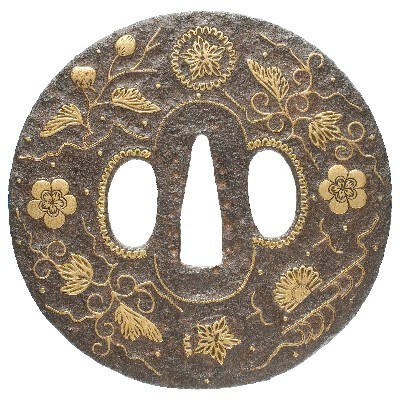
That's cool, Peter! I only have 2 tsuba with kiku motif, though different in design:

-
That is quite specific information about the swordsmith who made this. If you haven't removed the tsuka, how did you get the smith's name?
-
OUCH! That "Seki" hurts my eyes!!! The Showa stamp was a civil inspection stamp, not arsenal, however the blade was likely showato, though they were usually well made.
-
Ka Mon on Gendaito's Nakago
Bruce Pennington replied to Volker62's topic in Military Swords of Japan
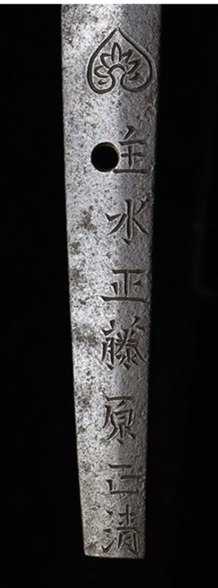
Ok, I have some. The "Date" family crest on an 18th century blade: There are the Tokugawa mon: 9th Generation The 1-leaf Tokugawa emblem From Sesko: Eighth Tokugawa-shôgun Yoshimune (徳川吉宗), 1684-1751)” was “unhappy with the general decline in the quality of blades at his time … his project that peaked in the 1721” was a “sword forging contest.” “There were four winners selected, namely … Masakiyo … Yasuyo … the 4th generation Nanki Shigekuni (南紀重国) and the Chikuzen smith Nobukuni Shigekane (信国重包).” … “The tang bears the single leaf of the Tokugawa aoi crest granted to the winners of the contest.”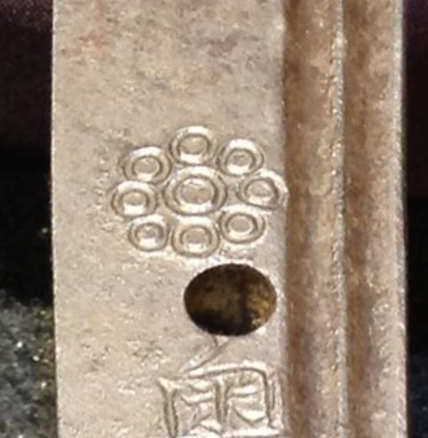


-
Ka Mon on Gendaito's Nakago
Bruce Pennington replied to Volker62's topic in Military Swords of Japan
Great topic for a thread, thanks Volker! I'll do some digging, but I think all the ones I have on file are from you! -
I like the look, too. There is a name for the shape, but I don't know it. Thomas, @Kiipu, can give you a fuller picture of the year range, but It's my gut feeling they were mostly produced in the mid-late 1930s when the demand for the traditional style became a reality, turning away from the Western styled sabers (kyugunto). @mecox another one for your Kokura list!
-
Thanks Conway. I have seen the Star A combo, but haven't saved them to file. I'll start with this one.
-
Gunto with horimono
Bruce Pennington replied to Gerry's topic in Auctions and Online Sales or Sellers
It's an old family blade, for guys looking for gunto with old blades. -
I'm sure there must be someone that can restore your saya (scabbard), I've never heard it discussed. There are a number of top polishers, but I don't think they are located in California.
-
They have a long history of making quality swords.
-
Got this from an auction today
Bruce Pennington replied to Slimsmiple's topic in Auctions and Online Sales or Sellers
-
Just came across this one from a post back in February by @Onigoroshi
-
Sarute Airforce / Paratroopers!?
Bruce Pennington replied to Itomagoi's topic in Military Swords of Japan
These were discussed at length here: While there are fakers out there making these, I have seen plenty, like this one, with lots of wear and tear. No one knows their true origin or use, so Richard Fuller's opinion is as authoritative as we can get. I have seen some that look quite worn on tsuka that look pristine, so my assumption is that some of them are added post-war, even if the sarute itself is wartime legit. -
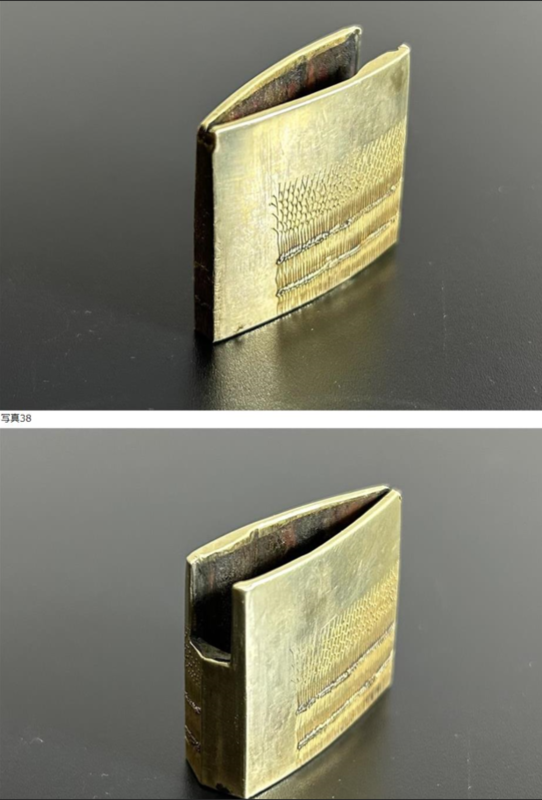
We've seen one of these already, but a nice example of the bamboo wall, found on this Buyee/Yahoo Auction

-
That's fantastic, Dave! And it confirms the idea that the oblong shapes are a stone wall!
-
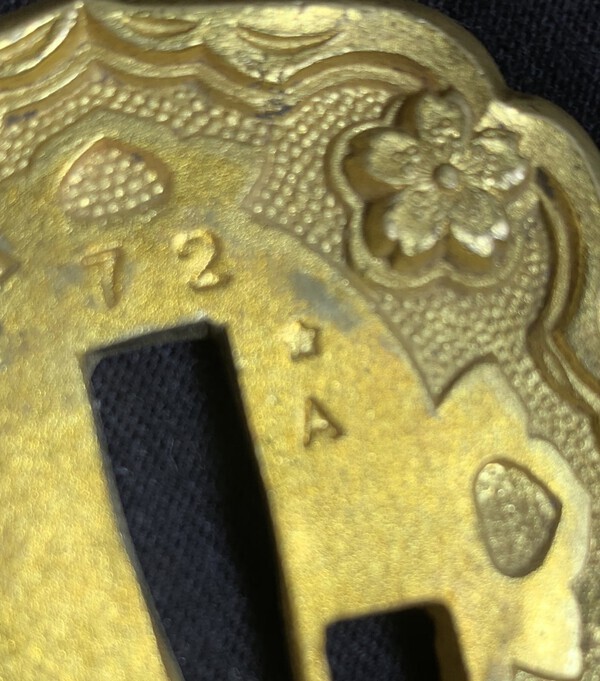
Yes, quite rare. I have a couple of single stars on seppa, and I want to say I've seen a double, but I cannot find it in my files, so this is the first on file now. Here are the 2 I have:

-
There are no obvious signs that this was fitted out for the War. Do yourself a favor and take it over to the Nihonto forum. There are lots of guys there that can evaluate the blade and give you ideas on a date range.
-
The one on the left is a stamp for private forges.
-
Yes, this was made by Suya Shoten Co., inspected by the Tokyo 1st inspectors, and approved by the Kokura Army Arsenal.