Bruce Pennington
-
Posts
14,668 -
Joined
-
Last visited
-
Days Won
176
Content Type
Profiles
Forums
Events
Store
Downloads
Gallery
Everything posted by Bruce Pennington
-
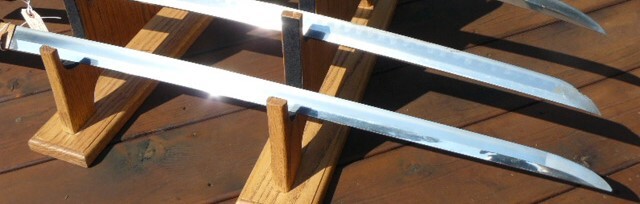
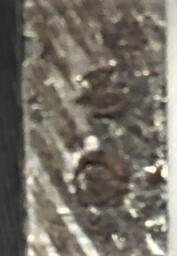
Oh, and for research/searh purposes, this blade has a Na and "30" stamped on the mune (posted over at Wehrmacht-awards)

-
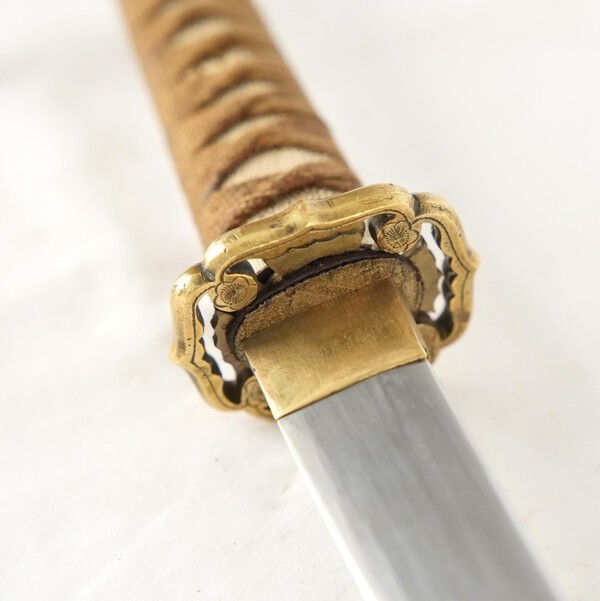
Hi Gareth! Thanks for the added pics of the black painted tsuba/seppa. I'll add a link of this to the Black Painted gunto thread. There are no swords specific to the Navy landing forces. But they would have been navy swords, not army, which the Type 3, or Rinji seishiki model is. That is an urban legend that got started decades ago. The tassel, if indeed all brown, indicates this sword was carried by the civilian branch of the army called Gunzoku. They wore military uniforms with Gunzoku rank and carried swords commensurate with their rank. You can read about the Rinji model here: Unveiling the Rinji seishiki Sword 1940 and History of the Mislabeled Type 3 About the Gunzoku brown tassel: The all-brown Tassel
-

SHOW US YOUR GUNTO HORIMONO
Bruce Pennington replied to IJASWORDS's topic in Military Swords of Japan
Here's one on a Kanemune blade, posted by @KB1107 HERE. -
Emergency Late War Officer Gunto
Bruce Pennington replied to Bruce Pennington's topic in Military Swords of Japan
Found this one on this California Auctioneers auction




-
Japanese World War 2 Samurai Sword Identification Help!
Bruce Pennington replied to Ben1's topic in Military Swords of Japan
Thanks for the update, Ben. I don't really study the smiths, but he's RJT qualified and likely made nice blades. Since the one I have has a showa stamp, we can see he made both traditional and non-traditional blades. His rating was ryōkō no retsu. That was the one in the green below. Some of the other guys may be able to give you a sense of it's meaning. If you'll post a couple of clear, close-ups showing the hamon (temper line) we MIGHT be able to make a guess. shinpin no retsu (神品の列) Supreme masterworks kihin-jōi (貴品上位) Superior precious works kihin no retsu (貴品の列) Precious works jōko no jōi (上工の上位) Superior master jōkō no retsu (上工の列) Master ryōkō no jōi (良工の上位) Superior skilled artisan ryōkō no retsu (良工の列) Skilled artisan- 9 replies
-
- 1
-

-
- gunto
- translation
- (and 1 more)
-
Tsunehira? with kakihan
Bruce Pennington replied to Bruce Pennington's topic in Translation Assistance
Thanks Moriyama-san! What an unusual practice. So no way to know if these were made during or after the war. He would have to have made them before the age of 20, though, to have been during the war. Thanks again guys! -
Japanese World War 2 Samurai Sword Identification Help!
Bruce Pennington replied to Ben1's topic in Military Swords of Japan
Looks like this is your guy: "KUNISHIGE (国茂), Shōwa (昭和, 1926-1989), Ōita – “Kunishige” (国茂), family name Takeuchi (竹内), rikugun-jumei-tōshō, ryōkō no retsu (Akihide)" Please remove the metal fittings from the blade and check above the smith name for a star stamp or any other small stamp. I only have one other of his blades on file and it has a Showa stamp. But he's listed as an RJT smith, so there could be a star. No date on the other side? As mentioned above, the fittings are Type 97 Japanese naval officer kaigunto. You can read about them on Ohmura's site and see other examples: http://ohmura-study.net/945.html- 9 replies
-
- 1
-

-
- gunto
- translation
- (and 1 more)
-
Nlf Gunto Discussion
Bruce Pennington replied to Bruce Pennington's topic in Military Swords of Japan
Interesting idea, John. Certainly possible! -
Tsunehira? with kakihan
Bruce Pennington replied to Bruce Pennington's topic in Translation Assistance
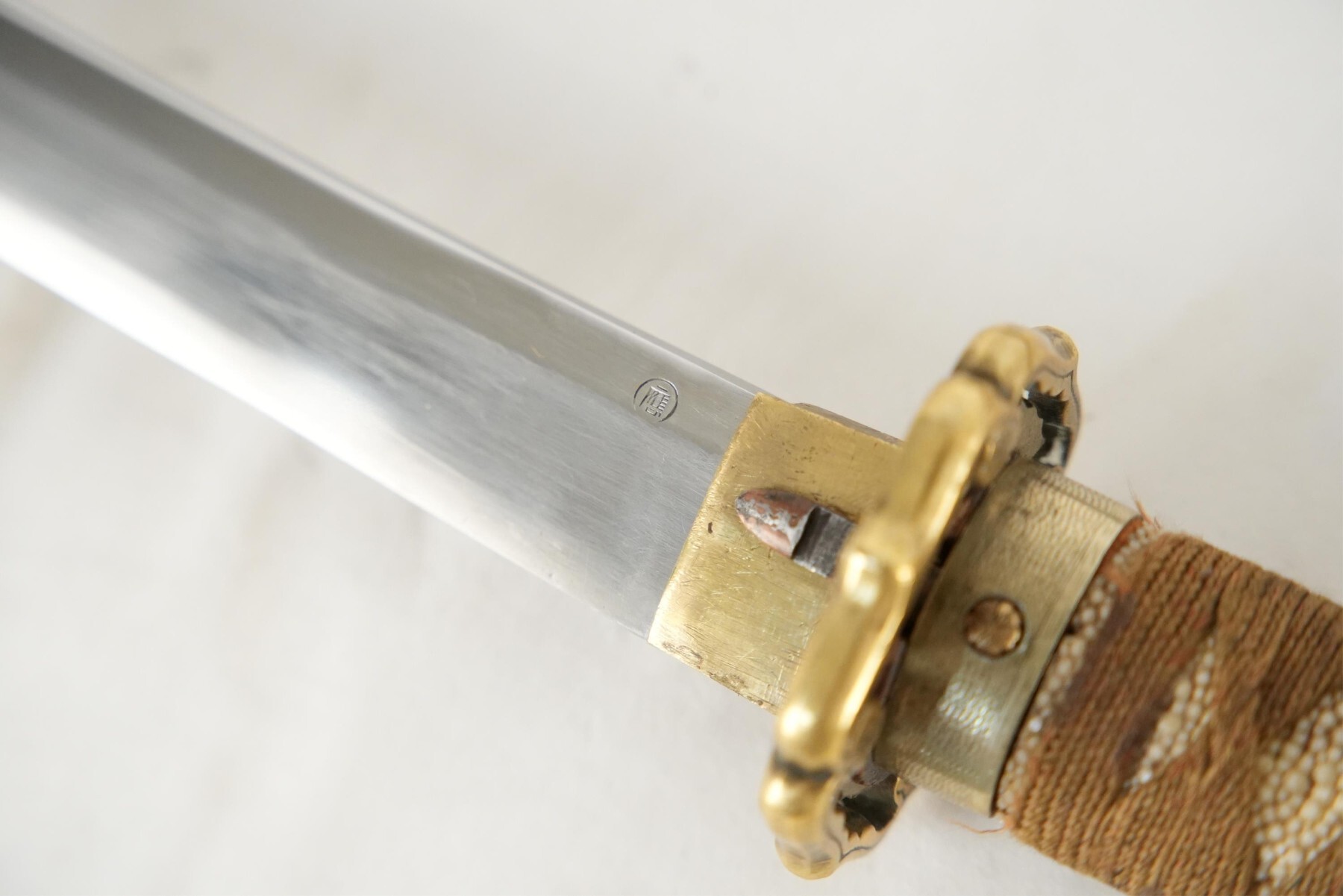
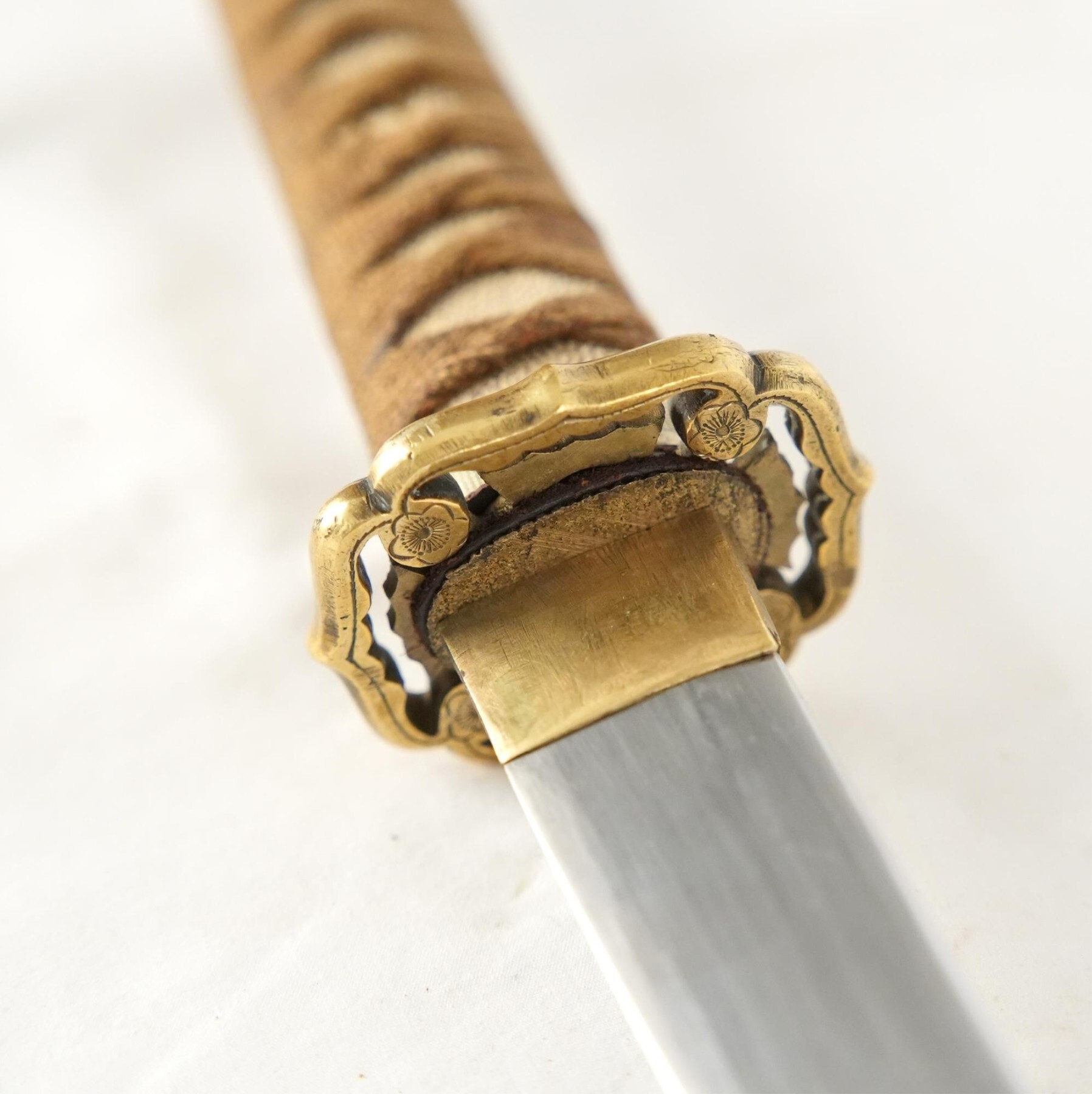
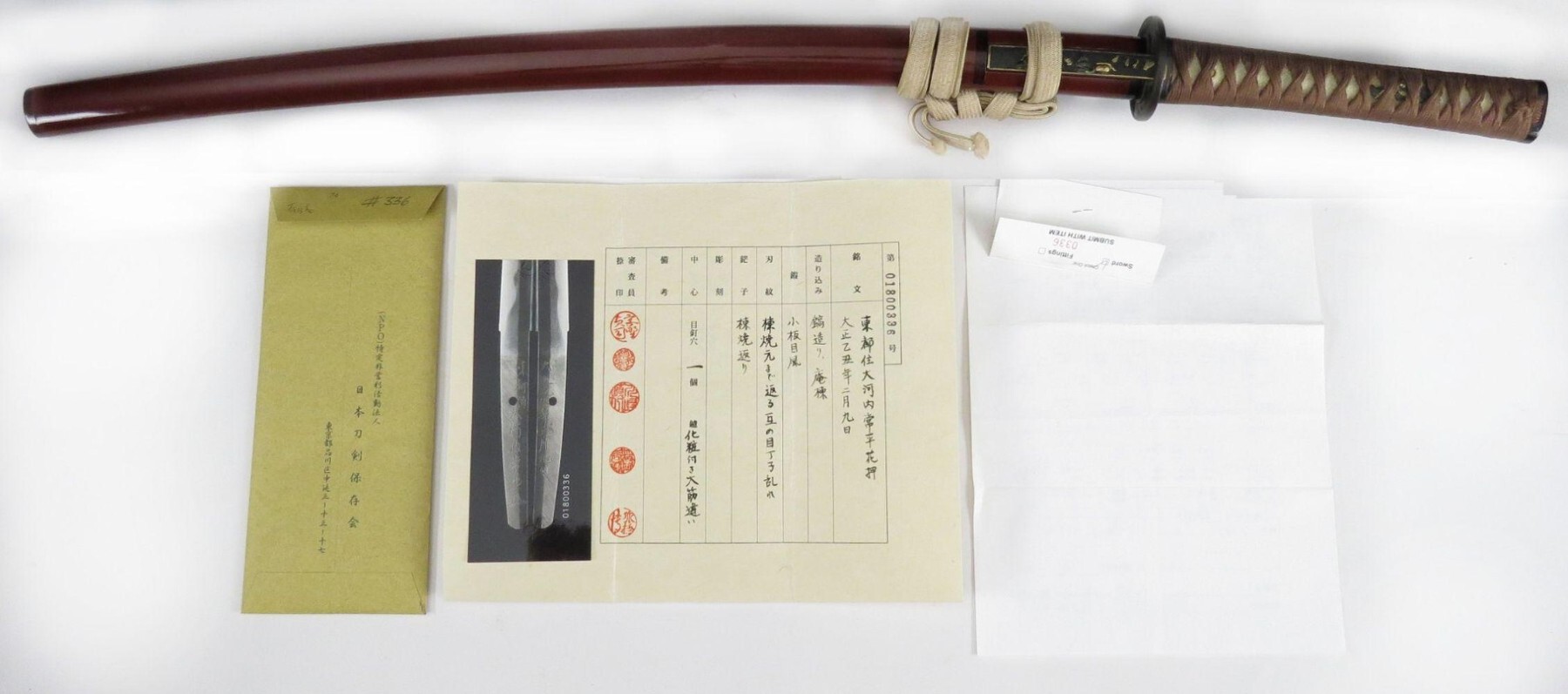
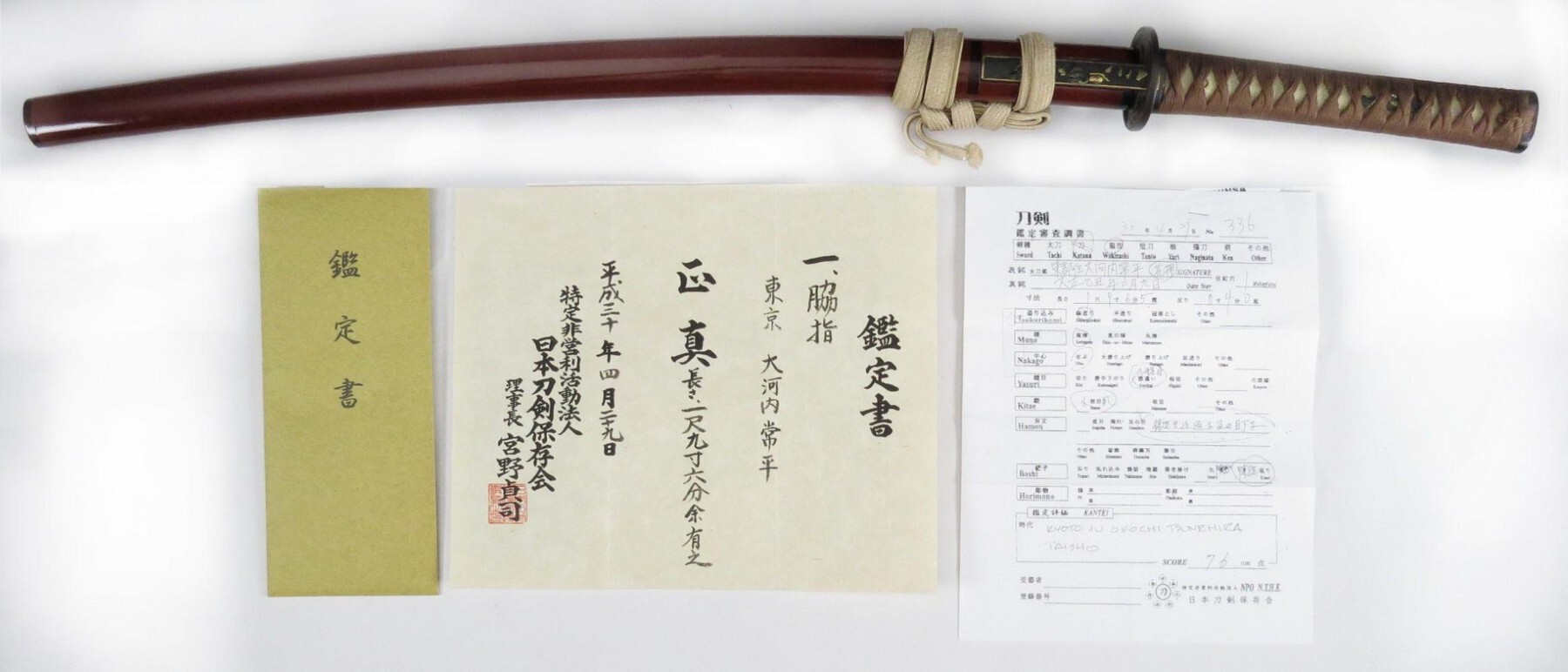
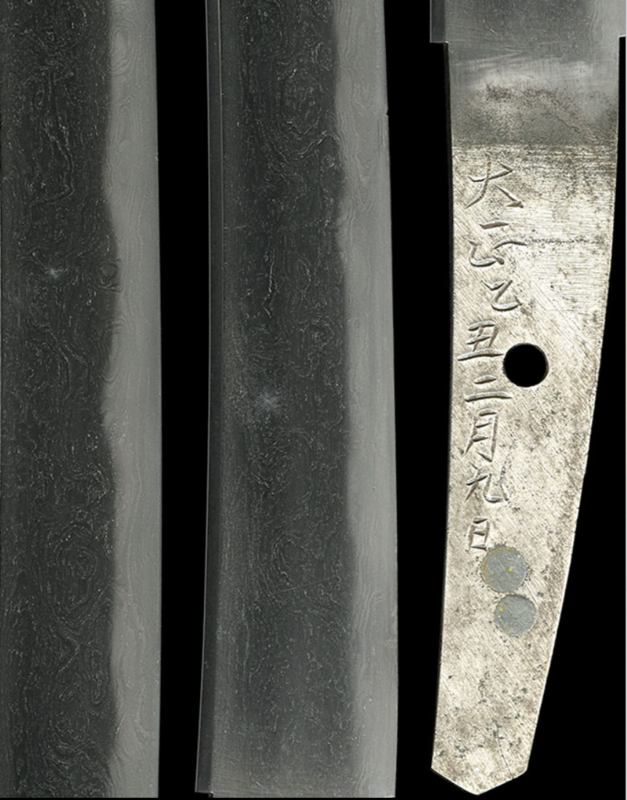
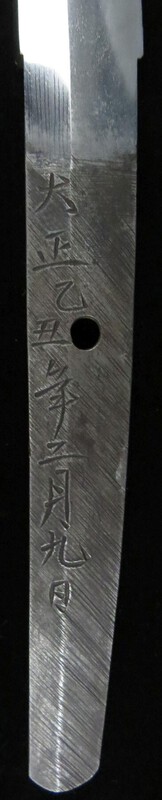
Ok. They thought that one to be gimei. Here's one linked to by @Nobody that is legit, with the same date: https://www.nipponto...swords6/KY332493.htm Can you tell me that date. I see it's Taisho, but cannot make out the year numbers. The guy was born in 1925 (https://entities.ocl...mR9VfQ8B6yvgDjd.html), so it can't be 1913 like the auction house said.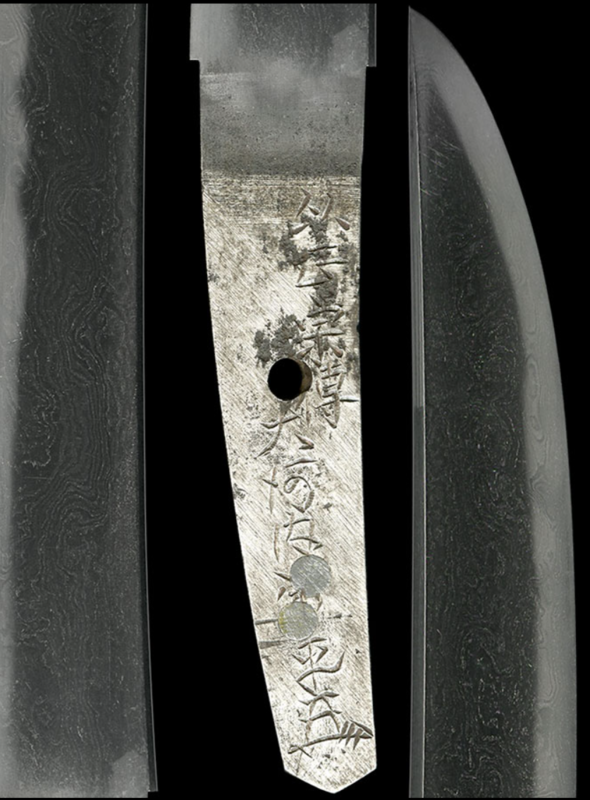
-
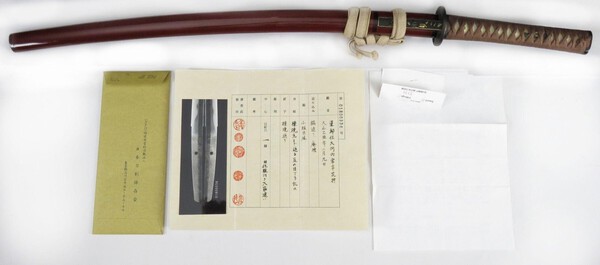
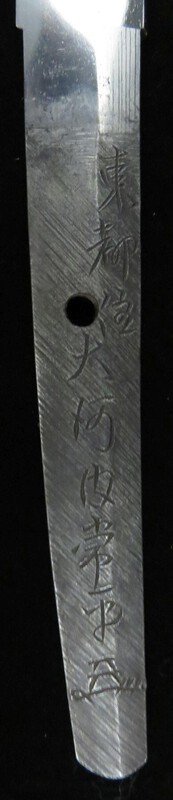
Hey guys! The auction house HERE is calling this "Tsunehira", dated 1913. I don't see a Tsunehira in Sesko in that date range. Do they have the name right?


-
Traditional Showato / Gendaito ??
Bruce Pennington replied to Ron M's topic in Military Swords of Japan
I cannot judge the showato vs gendaito question, but I can say that many WWII mei seem to have been written by modern medical doctors (can't read their writing!). I have checked 5 other of his blades, and the mei does vary a bit, but all of them have this 'sloppy' style. -
Thanks for checking, Mikko!
-
New variation of extended/patented ishizuke?
Bruce Pennington replied to RobCarter3's topic in Military Swords of Japan
Excellent! What a difference. You gave your Gunto new life. -
The close-in shots don't show them, but you can see them here:

-
Giving a nihonto some use ?
Bruce Pennington replied to Nicolas Maestre's topic in General Nihonto Related Discussion
I love the spirit and intent in this. We often talk about keeping our swords "as is" because it is in line with the life of the sword. If one really feels that way, then I compare our storing our swords in boxes to caging lions and tigers in cages. I love to see guys with restored vintage cars out on the weekend for a drive. They don't drive them everyday, and when they do get them out, it is done carefully, no hot-rodding. It keeps the car alive. They shouldn't be stored in a huge garage, never to roll again. I also respect those who fear the damage that may happen to a blade, which is why the 1704 violin or the 1934 Chevy is used by experienced people, very carefully. 2 cents -
Kao Questions
Bruce Pennington replied to Tsuba gardener's topic in General Nihonto Related Discussion
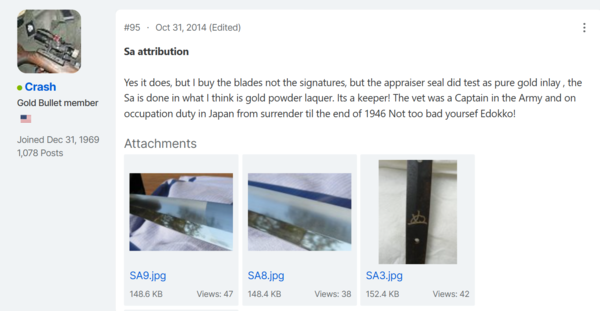
Les, Here is what I have from a Gunboards thread:


-
September 1943 Mikko, Interesting civil tsuba with that first one. Is the one still on it a standard Army tsuba, or something civil, too? Also, the small stamp about the date is the NA of the Nagoya Army Arsenal. Your photo cuts off the top of the nakago on the mei side. Is ther a stamp up higher?
-
The smith would be on the other side, Alex. Can you post it?
-
Gunto identification help needed
Bruce Pennington replied to Polaria's topic in Military Swords of Japan
Mikko, The photos are not very clear, not enough detail. But it is trying to be a civil sword re-fitted for WWII, as seen by the belt hanger (haikan) and tsuba (handguard). Cannot see the kabutogane well enough to tell if it is civil or military, but it appears pretty crudely made either way. Look here for real examples of WWII fittings: Standard Fittings -
Attention Mantetsu Owners: A Survey
Bruce Pennington replied to Bruce Pennington's topic in Military Swords of Japan
It's a real beauty, Peter! Thanks for posting! The small stamp on the kabutogane is the Tokyo 1st Army Arsenal inspector stamp. The mei is Koa Isshin Mantetesu made this Date: Spring 1942 Serial number: ノ302, or "NO 302". The NO series was right in the middle of the 1942 production year. If they counted the year by fiscal year (April to next Mar), it would put your blade around Oct of '42. If calendar year, it would be around Jun '42. You can read more on the following, but in short, the "W" or "M" was a half-way inspection stamp used by the army. The Mysterious W Stamp -
Kai Gunto identification help needed
Bruce Pennington replied to bigred96's topic in Military Swords of Japan
Isaac, Thanks for the added photos! We have 7 Yoshishige on file now - 1 just an oshigata; 4 in kaigunto; 2 in Type 98. 1 a 1942, the rest 1943. So, you're in good company! The large Seki stamp is found on non-traditionally made blades, but good quality. And Kaigunto, much more rare than Army gunto, go for much more than gunto. I just checked ebay and they are ranging from $1,600 to 3,800, depending on condition, blade, saya style, etc. -
Vitaly said: "Hello. I am new to Japanese weapons and ask respected experts to help me understand the authenticity of this Type 95. I will be very grateful for your answers. Best regards, wtim" Welcome Vitaly! So, this one gives me mixed feelings. Suya Shoten made quality gunto and the casting of the tsuba is low quality for a Suya gunto. Maybe a wartime replacement. I'm not worried about the black paint. I have 7 on file with various black paint schemes. Only 1 is confirmed to have been done post-war. The half-diamond just above the fuchi has no dimples. I searched my files and only 1 showed up in exactly the same place without dimples, and it too, is a Suya Shoten gunto. The saya end shape (not the drag, but the actual end that holds the blade tip) is a wee bet off. But after saying all that, everything else shapes up to be a legit Suya Shoten made Type 95. As a final check, I'd ask @Kiipu and/or @BANGBANGSAN if the serial number is correct for a Suya blade. I would also feel better with a good photo of the end of the blade showing the shape of the bohi (fuller groove).
-
Thanks Ray! I have 3 or 4 Masahiro on file with the same anchor stamp and the "hiro saku" kanji match. I'm listing it as a Masahiro. It's in souvenir fittings and he is the only "hiro" smith I've found in them.
-
Kai Gunto identification help needed
Bruce Pennington replied to bigred96's topic in Military Swords of Japan
Wow, Isaac, how do you like that! Similar Japanese numbers stamped on the tsuba, too. This one 155 and mine 15. Could you give me a full length nakago shot of the date? I can't see all the numbers in the photos above. -
Yes, Paris, it's fake. Wrong bohi for a Tokyo 1st blade, punched dimples in tsuka, thin, squared-off latch, wrong positioning of the serial number.