Bruce Pennington
-
Posts
14,334 -
Joined
-
Last visited
-
Days Won
171
Content Type
Profiles
Forums
Events
Store
Downloads
Gallery
Everything posted by Bruce Pennington
-

Tokyo 1st Army star stamped gunto
Bruce Pennington replied to Gerry's topic in Military Swords of Japan
@Gerry Thanks for the photo! Can we get a link so I can download more photos, like the date side and some overall shots? Sounds like you are familiar with the Type 95 stamps. This one is different. It is the Army's stamp indicating that the steel was provided to the smith by the Army, under the RJT system, and so it's tamahagane and the blade is gendaito. You can read some about the RJT program on this thread: And some about the star stamp in my Stamps of the Japanese Sword article free download. -
Eric, I haven't seen this design before, but I don't follow tsuba as a collector. You are sure to get some expert opinions on this forum, though. I would say the circled plant in the center is a family mon (crest). I suspect the other surrounding images have some meaning, but the other guys will have to chime in for that, too. Very interesting tsuba.
-
Show us your dragon horimono.
Bruce Pennington replied to Bryce's topic in General Nihonto Related Discussion
I'm surprised at how many are chiseled out of the steel vs cut into the blade. I don't follow the craft, so maybe it's common. @Jim Manley - don't want to sidetrack the thread, but could you PM me a couple of good photos of that habaki for the Habaki Art thread, or you are certainly welcome to post it yourself there. -
Help please
Bruce Pennington replied to William Jennings's topic in General Nihonto Related Discussion
There is a slight chance of this being a Mantetsu blade. Show him this video. It's extremely easy to remove the tsuka. They were made for easy removal. https://youtu.be/oFT5OMQr2vw -
Nlf Gunto Discussion
Bruce Pennington replied to Bruce Pennington's topic in Military Swords of Japan
Good to see you, John! Yes, a mystery. I speculate that the signed ones were war surplus, while the unsigned were made post-war. Another option is that the signed ones were made post war by experienced smiths and the unsigned by the staff of laborers trained by those smiths, similar to what happened with SMR. They had a couple or 3 actual smiths get the factory going, and trained the SMR team of workers to make blades. Some were signed by those smiths, while the rest went unsigned. But I just guessing. -
Nothing to worry about with the black paint. You can see several other gunto painted black on this thread: No one knows who was doing it or why, but the general consensus is that it was done during the war. The identifiable stamps are the stacked cannon balls of the Kokura Army Arsenal and the "KO" of their supervisory unit.
-
Oops! Thanks Mal, files corrected.
-
Help with Writing on Mune, Please!
Bruce Pennington replied to Bruce Pennington's topic in Translation Assistance
Wow, what a super inscription, thanks Moriyama-san! -
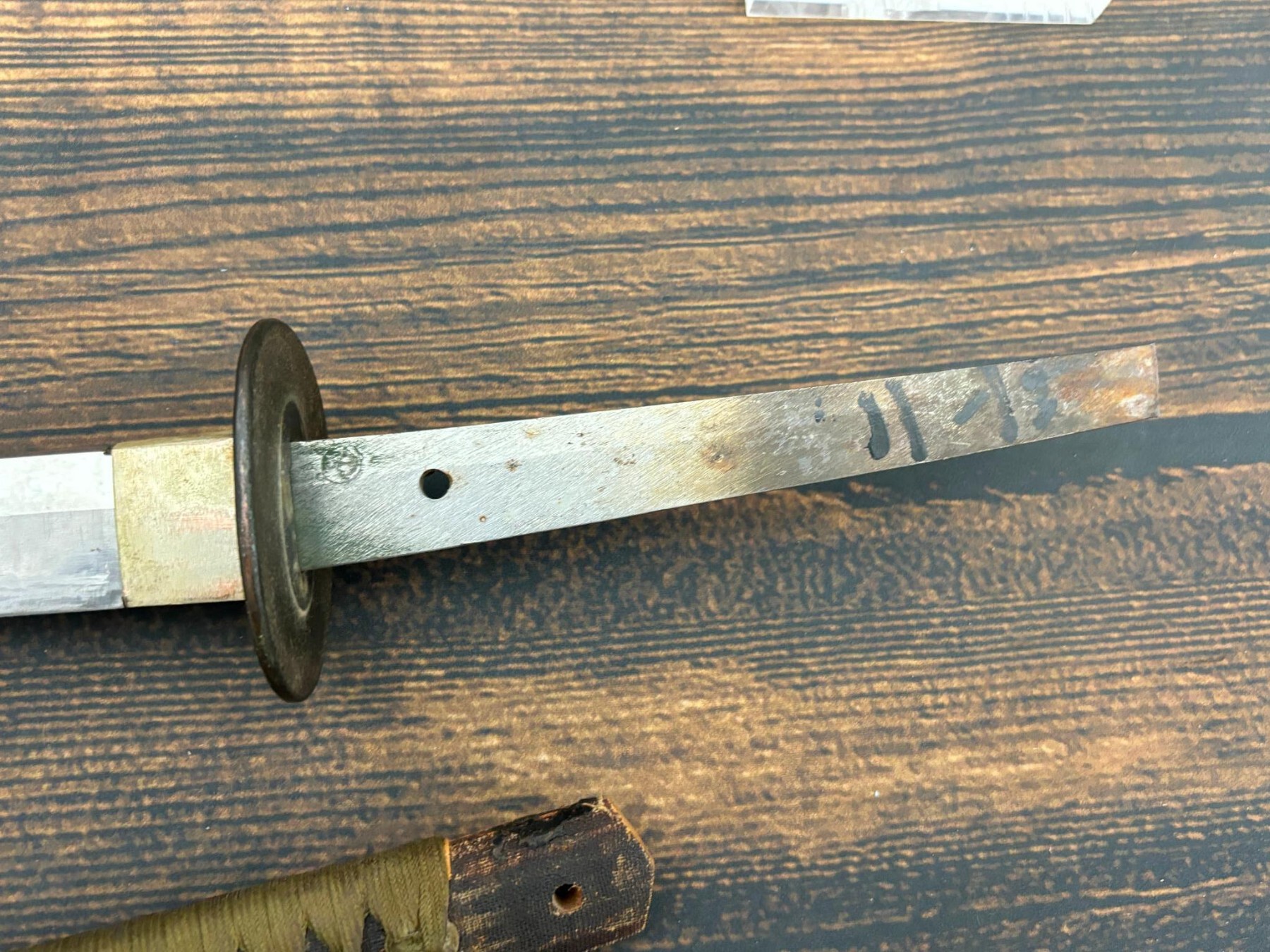
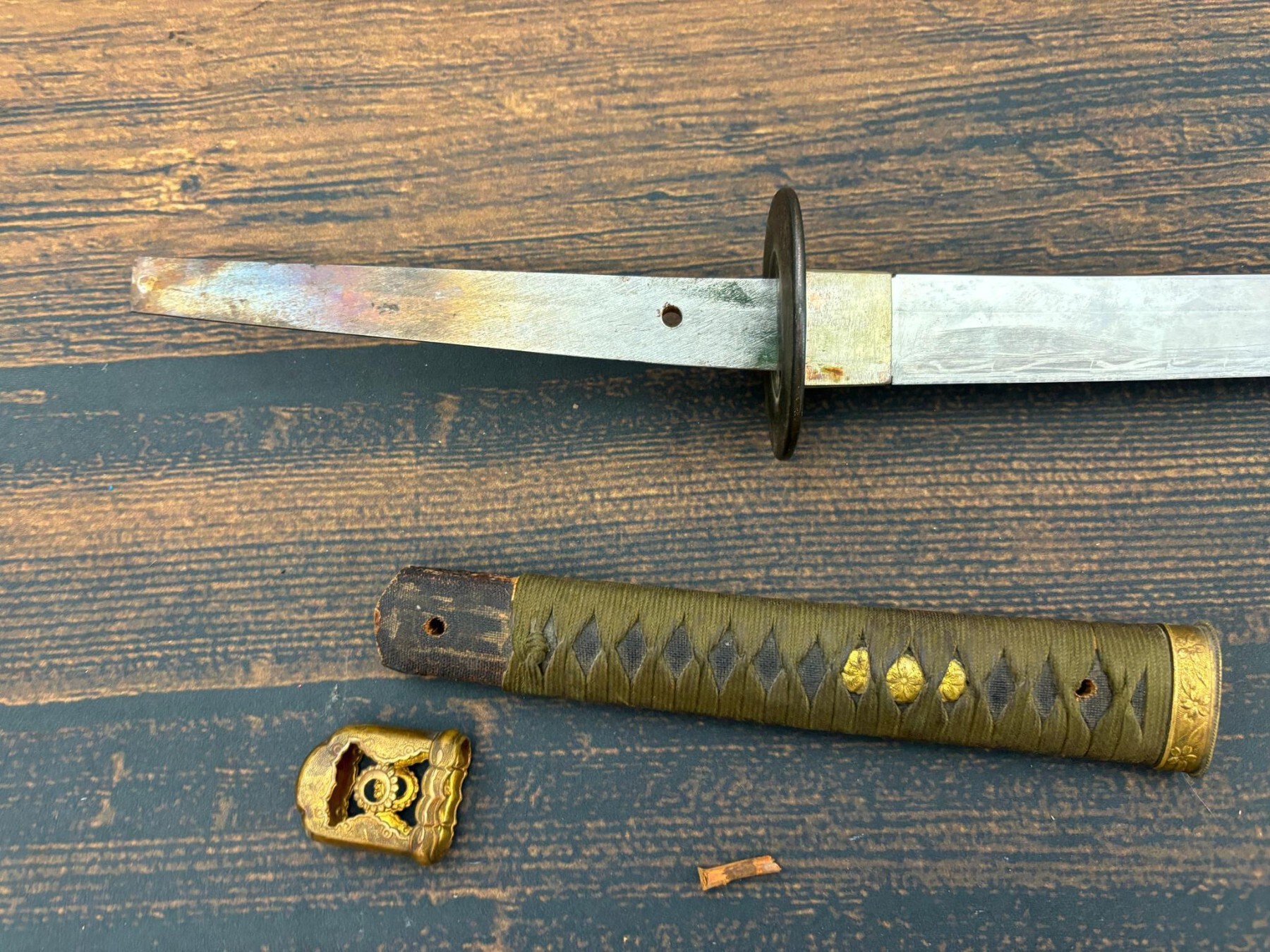
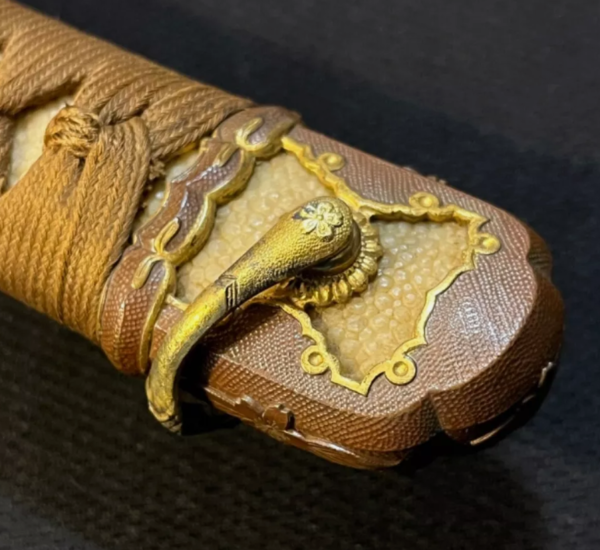
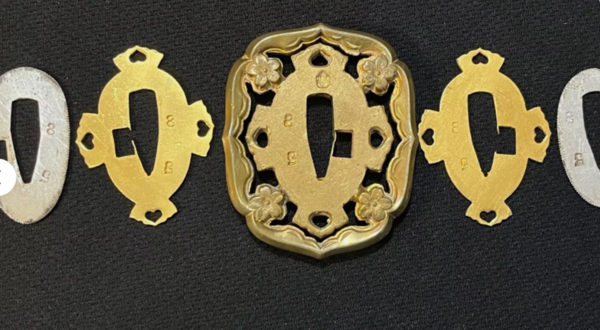
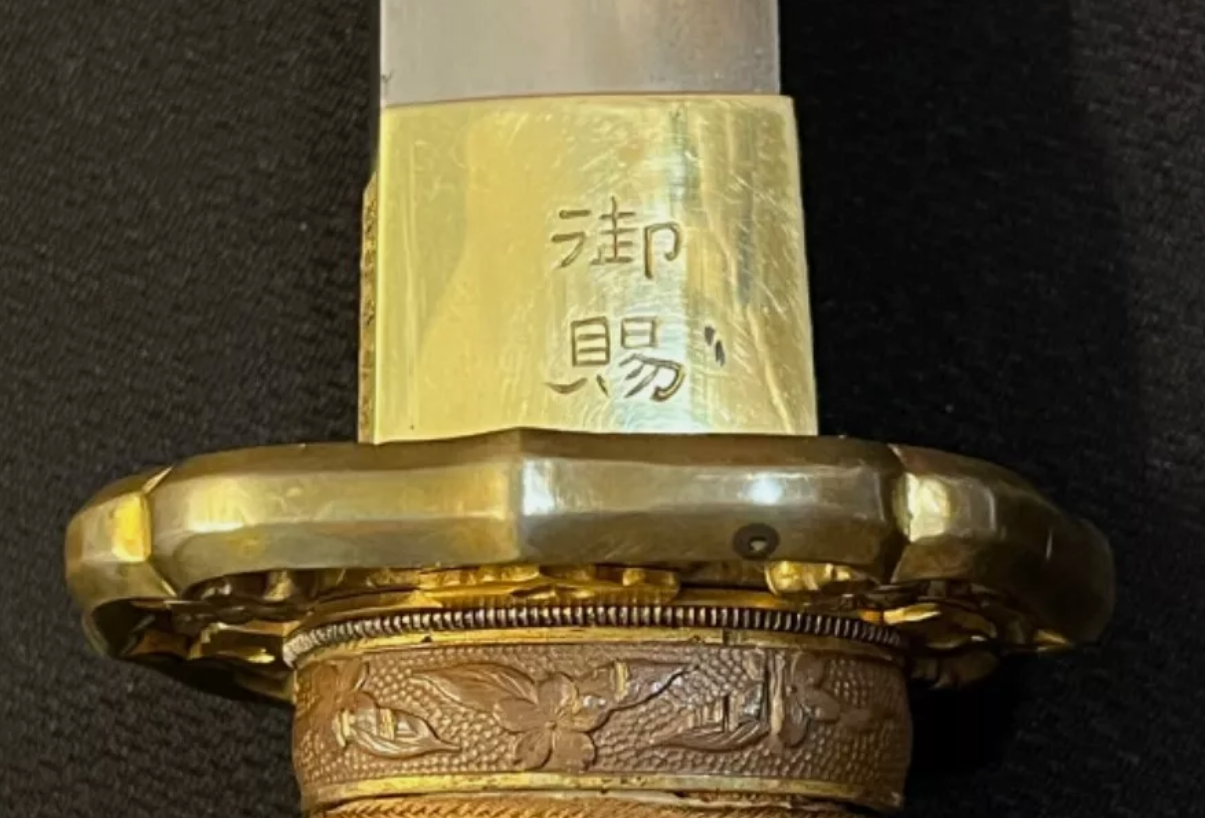
We need a dedicated Zoheito thread. I looked for one, with no luck. This one has the Kokura cannon balls and "Ko" stamps, and it's got a stamped "58" at the end of the nakago, blade tip down. It's in a quite unique Type 94, with "Imperial Gift" marked on the habaki. Being sold by St. Croix Blades HERE. Oh, also had the cheveron saurte (posted already on John's thread) and tsuba marked with the Suya Shoten shop logo: @mecox @BANGBANGSAN @Kiipu @PNSSHOGUN




-
Unknown significance of chevron design on Sarute
Bruce Pennington replied to PNSSHOGUN's topic in Military Swords of Japan
Here's a nice one, John. On a an "Imperial Gift" Type 94, with zoheito blade, being sold by St. Croix Blades HERE. The tsuba (assume all the fittings) are Suya Shoten:

-
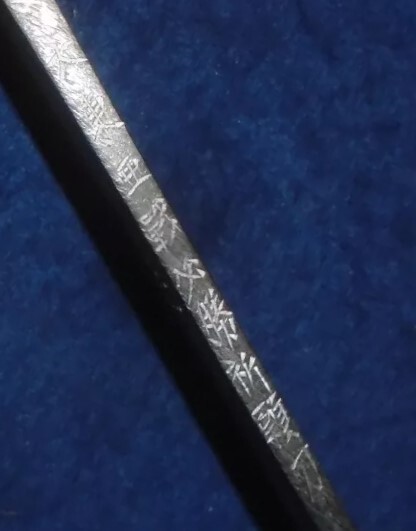
Found this on the mune of a Kanemitsu blade, for sale on this eBay page. It's actually quite a unique blade (assuming it's legit!) as the mei has a Kakihan. It's the first time I've seen a Kanemitsu kakihan. Here's the mune: Just for future searches, here's the mei and date:
.jpg.ee4d15eb20b706ce595102bbbef129cc.jpg)
.jpg.7b5718ddbffafe20a737b67fe41873ee.jpg)
.thumb.jpg.0451c27ac5b5588bafd6f63a12b68840.jpg)
-
Seems like I remember a conversation about that a while ago. Thanks for posting it here!
-
Help with signature on Kyu-gunto blade
Bruce Pennington replied to moriarty's topic in Translation Assistance
That would certainly point in the Polish direction, though, not proof, as the seller could have still gotten the sword from another who got it from China. Still, your link is the first bit of evidence I've seen. Here's the other side with the flag: -
Help with signature on Kyu-gunto blade
Bruce Pennington replied to moriarty's topic in Translation Assistance
I don't think anyone has pinned down just where these are coming from. My guess is China, though. Where there are flowers, they appear to be plum rather than cherry:

-
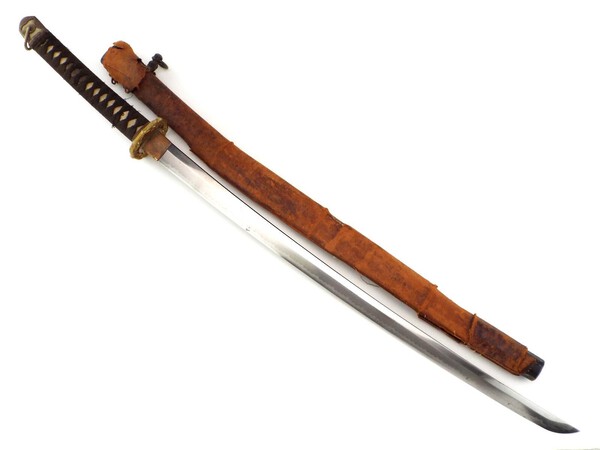
I think I've seen this before, but don't recall. The kabutogane was made without the normal sakura/leaves on the top and sides. It's on a large-Seki stamped Yoshihisa blade, no date. The large stamp was used to 1944, so, late war?


.thumb.jpg.a6b8b0c947aaf5bf844149589dce8aef.jpg)

-
Nlf Gunto Discussion
Bruce Pennington replied to Bruce Pennington's topic in Military Swords of Japan
First "26", found at this Burns Auction.


-
Showato mei help - with hot stamp
Bruce Pennington replied to Scogg's topic in Translation Assistance
Thanks Sam! Those fittings are classier than standard, so the owner likely paid a bit more for the rig. And yes, the painted numbers are 226 also. -
Showato mei help - with hot stamp
Bruce Pennington replied to Scogg's topic in Translation Assistance
Sam, I have 7 Kanehisa w/Kokuin on file. It's interesting that 5 of them were fitted with leather covered woode saya, 1 was in a kaigunto, and the other 1 was standard T98 fittings. What is this one fitted out in? The kokuin is actually his name "Kanehisa". -
Alex, Several of us at NMB put together an extensive write-up on the Mantetsu operation here - SMR - The Mantetsu Blade. It will likey explain all your questioins. Your Koa Isshin is number NA 716, dated Spring 1941. The "NA" series of production was the last in 1941, so it was more likely made in January-April of 1942. They used a Fiscal year in dating that began each April. And at 716, yours is now the last 1941 dated blade we have on file, before the 1942 numbers begin. The massive majority of them were suguha hamon (straight). We have some very rare examples with wavy hamon, but most are straight. I'd have to go re-read the article to see if it is mentioned how the blades were quenched, I don't recall, but I do recall some debates over the years where guys believe they were water quenched. That still wouldn't make them qualify as "traditionally made" though as they were made with Chinese (Manchurian) steel. SMR made a tube of softer steel and inserted a rod of hard steel, then electrically bonded them, before hammering out the sword shape. So, nothing there would be traditional. You've got a great sword there, and many of us really value the Mantetsu blades. @Kiipu @BANGBANGSAN
-
General Officer’s Sword Translation Help
Bruce Pennington replied to chgruener's topic in Translation Assistance
Posting nakago shot for posterity -
Help with signature on Kyu-gunto blade
Bruce Pennington replied to moriarty's topic in Translation Assistance
Maurice, Have you already purchased this? If so, try to get your money back. It is a well-known fake. I have several of these on file. They are usually found trying to be Type 95 NCOs, but I have a small number of Type 19s, like yours (not Kyu gunto), on file too. The side you are showing is a date - 1940 - and usually has a serial number at the bottom, like this: The other side should have some kanji and a flag, like this: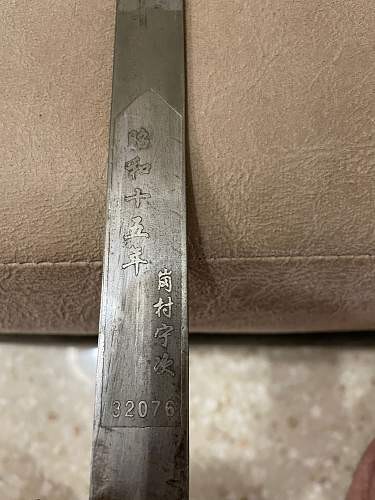

-
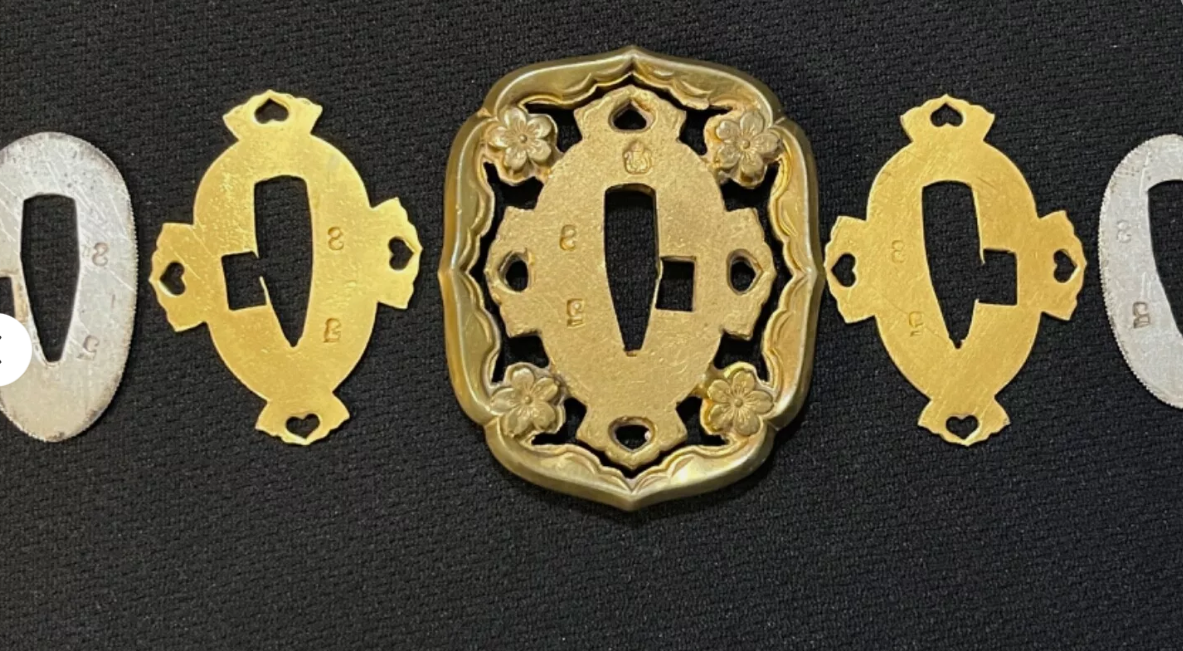
It is just something I track, and maybe others. There were a variety of ways that shops marked their fittings to keep them with a blade as it goes through the outfitting process. The Roman numerals are a little unique, but not rare.
-
Sarute Airforce / Paratroopers!?
Bruce Pennington replied to Itomagoi's topic in Military Swords of Japan
That was Nick Komiya's opinion as well. -
Yes, already saved to the files! Thanks, though!
-
Help identifying sword maker
Bruce Pennington replied to chillmech's topic in Military Swords of Japan
John, The Showa stamp was used by the Seki Cutlery Manufacturers Association from 1935 through 1942. The massive majority of dated blades were made in 1940-41. The presence of the stamp mostly likely means the blade wasn't made traditionally, however, there have been 1 or 2 known blades to receive Shinsa papers with the stamp. So, they are usually quality blades, even if showato.







.jpg.d6380a7f6bbb7a5e507b4422115fdac5.jpg)




.jpg.392d47d726570b0e80b14ff07398c766.jpg)