Bruce Pennington
-
Posts
14,039 -
Joined
-
Last visited
-
Days Won
169
Content Type
Profiles
Forums
Events
Store
Downloads
Gallery
Everything posted by Bruce Pennington
-
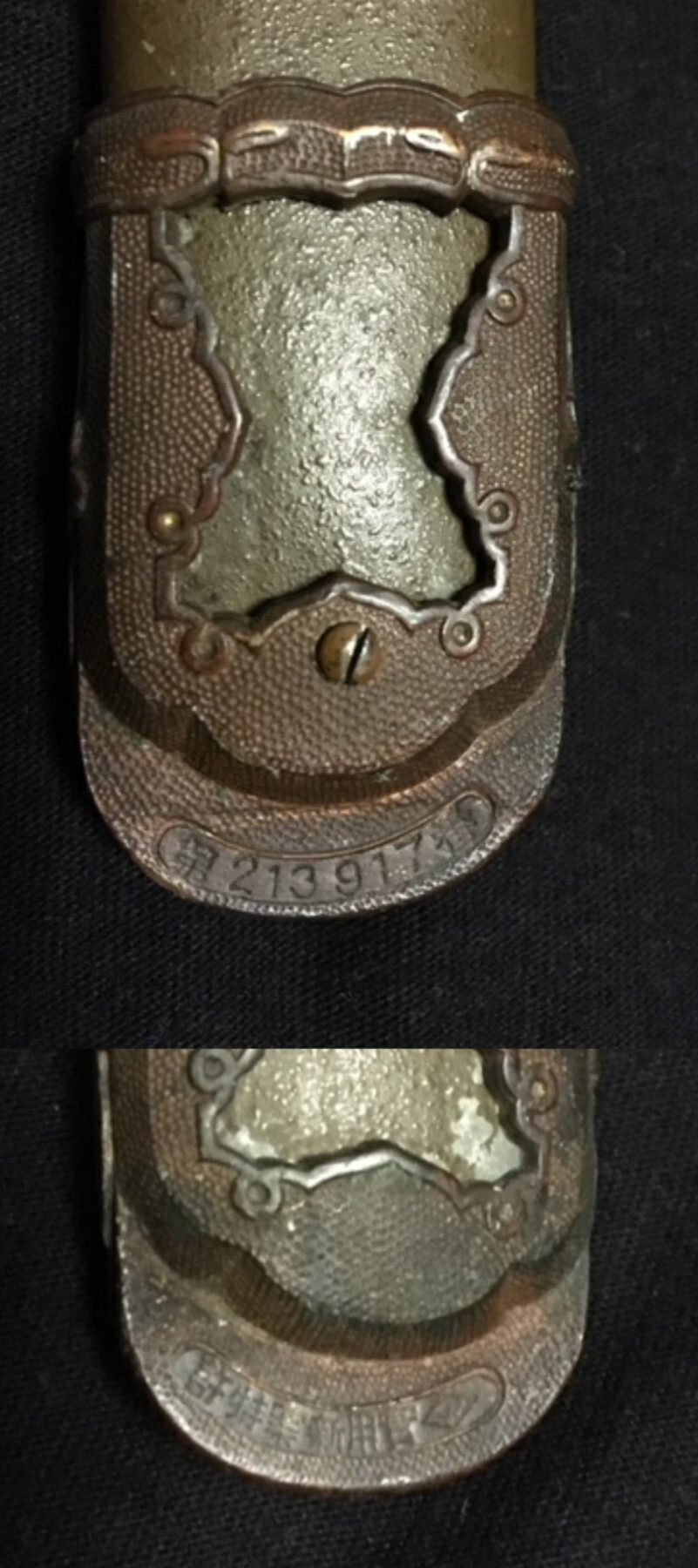
 Rob, That's some really high-end fittings! Gorgeous! Like Niel said,t they are the same number, made by the "Wakase Co." You'll see the "W" in diamond stamp on the back side. You will see the same stamp on some tsuba too, so they obviously made a range of koshirae parts, if not the whole kit. A couple more from the files, for comparison.


-
A Study: Yasukuni-to
Bruce Pennington replied to Bruce Pennington's topic in Military Swords of Japan
That's a great idea, Marc, thanks! But I had already ordered it a few days ago. -
You will find all your stamps on Ohmura’s site: http://ohmura-study.net/794.html
-
Tassels for Rinji Seishiki?
Bruce Pennington replied to Kolekt-To's topic in Military Swords of Japan
I think the examples have shown that the tassels were worn either with sarute or without. I suspect it was a shop option and maybe decided by the officer buying it, who knows! Here's another without sarute that looks original.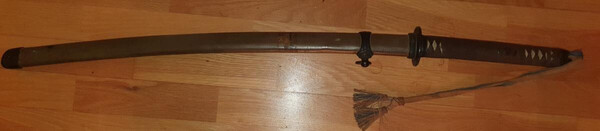

-
Another that isn't a beauty, but it's unique enough to note. On a Russian site - Guns.ru:


-
Richard Fuller's book, Japanese Military and Civil Swords and Dirks, pg 121, calls this a "1914 regulation pattern Commissioned officers naval parade sabre."
-
Ah yes! I looks great on my Mantetsu Steve!
-
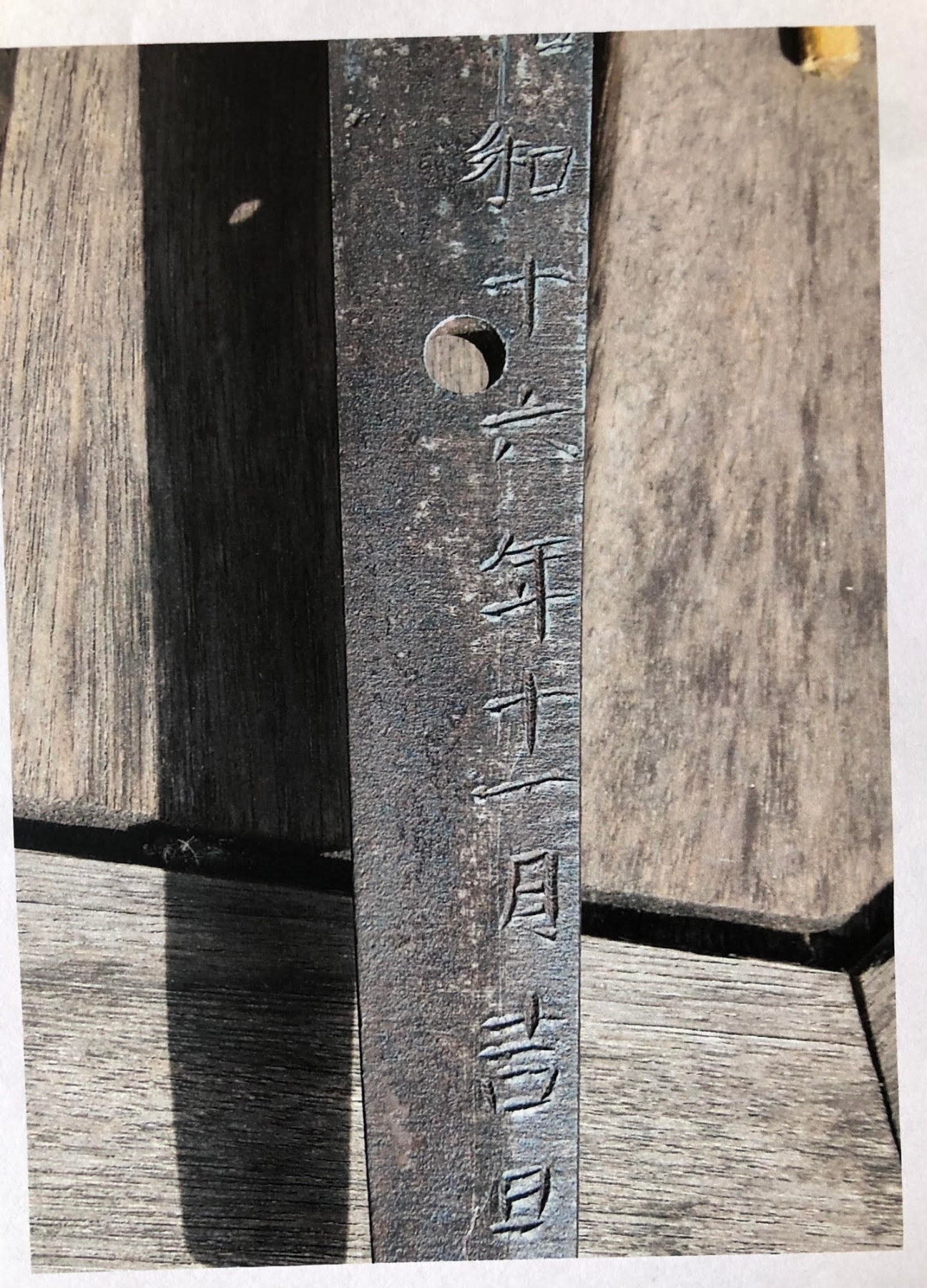
I need help with katana hilt translations-both sides
Bruce Pennington replied to gmheck's topic in Translation Assistance
Is there a Star stamp near the top, above the hole? -
A Study: Yasukuni-to
Bruce Pennington replied to Bruce Pennington's topic in Military Swords of Japan
A Yasuyoshi previously owned by a friend (noticed the kiri yasurime!)

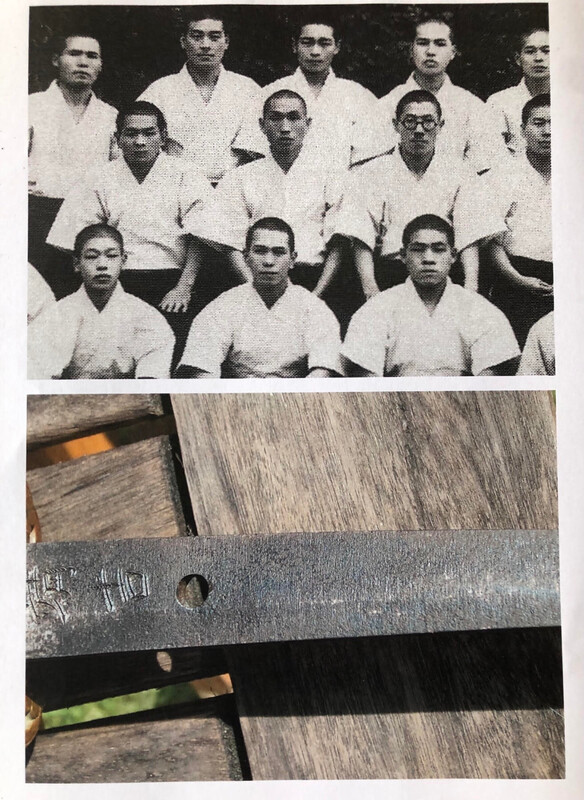

-
Need help identifying sword
Bruce Pennington replied to atoshiko's topic in Military Swords of Japan
Hey Ashley, what's this: Is it a stamped "15" with chalk/powder in it?
-
Inherited sword, legit? Tourist souvenir? or?
Bruce Pennington replied to HydroRacer's topic in Nihonto
Type 98 Japanese Officer sword (gunto). You can see great examples of the variations on Ohmura's site HERE Also, terrific glossaries and pages of info on TheJapanseseswordindex.com My experience with blades marked with the larger Seki stamp, like yours, is that they are really well made showato. You can see by the hamon that this smith put some effort into this blade. -
A Study: Yasukuni-to
Bruce Pennington replied to Bruce Pennington's topic in Military Swords of Japan
Small sample, but seems the kiri yasurime was preferred? -
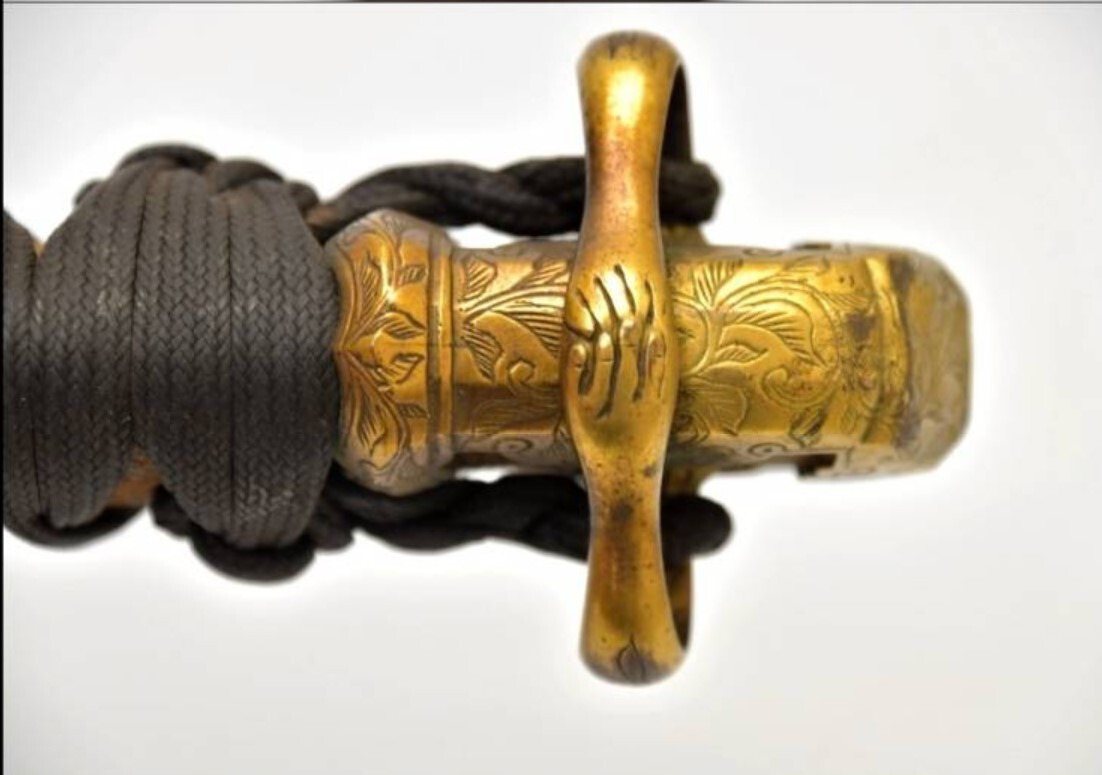
The 25 Year SMR presentation tachi all use a clasped/monkey hand (can't tell which) sarute:

-
Manchurian railway eye candy
Bruce Pennington replied to Stephen's topic in Military Swords of Japan
These have been identified as 25 Year Presentation swords for SMR employees. I have 3 others on file, and I believe Ohmura has one on his site. A 1939 A 1940 And a 1941


-
Manchurian railway eye candy
Bruce Pennington replied to Stephen's topic in Military Swords of Japan
Photos added for posterity
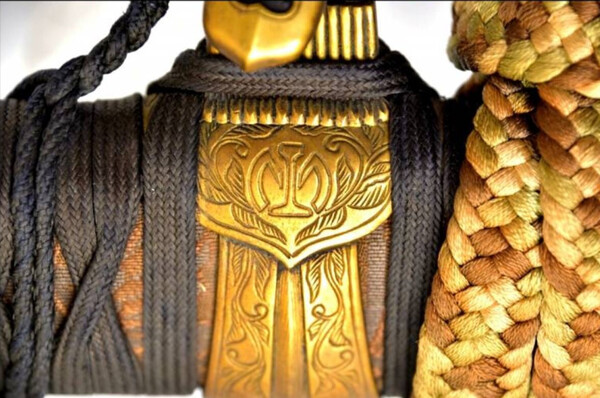
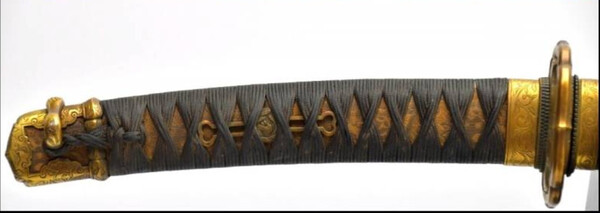


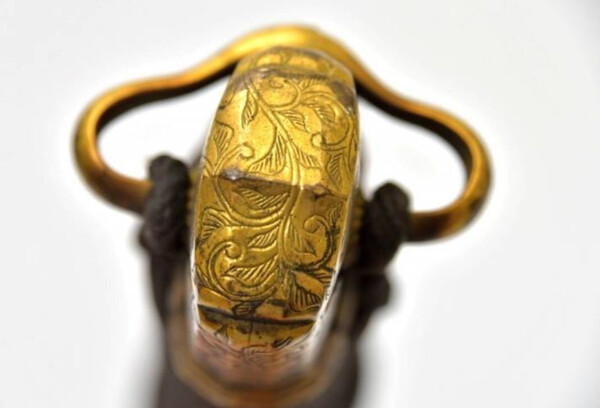

-
Thanks John, that's a great one. Haven't seen one of these with a "TO" stamp. @Kiipu - got any W stamped blades with a "TO"? As I filed this, the 2 Yoshiharu I have are both 1943 as is the single Yoshitani. The W-stamped Mantetsu are mostly 1942 and 1943, with 2 '44s.
-
Disassembly Advice
Bruce Pennington replied to LionsFan's topic in General Nihonto Related Discussion
If it were my sword I would want to know as much as possible. Seeing the nakago is a crucial part of determining the origin of the blade. If it is stuck, it’s simply rust. Get a rubber mallet and tap the hand guard until the handle and hand guard come off. I’ve done it numerous times. Sometimes the hand guard and spacers are simply fitted too snug. You will not harm anything by forcing them off. -
Good catch Chris! The eyelets on the leather saya cover look brand new, while the belt ring looks old. The kabutogane looks very poor (imitation) while the fuchi looks brand new. I think someone has taken a mumei blade, some old and new parts, and splashed this thing together.
-
WW2 sword last ditch
Bruce Pennington replied to Swords's topic in General Nihonto Related Discussion
EVERY sword has value! Maybe your question means - are these going for high prices? Post-COVID prices have rebounded. You can find them in the range Doug mentioned, but I think that's because the sellers don't know what they have. Pricing in the $1,400 range is more in-tune. Some are being sold for more than that. They are less common, not rare, but less common than the aluminum handled 95s, so simply on suppy-demand, they tend to ring up higher than the aluminums. -
Traditionally Made?
Bruce Pennington replied to Bruce Pennington's topic in General Nihonto Related Discussion
HA!!! Love it! I'd give it a "thumbs up" but I'm blocked, for some reason @Brian, from making any "Likes" etc. -
That's an interesting insight! So much of blade-making relies on precise temperatures at precise times. It figures that the quenching temp (and therefore season) was important. Flash forward to WWII where the quenching was industrially controlled, the "Spring" label must be a tip-o-the-hat to the old sword-making wisdom.
-
Traditionally Made?
Bruce Pennington replied to Bruce Pennington's topic in General Nihonto Related Discussion
Reminds me of the verse " and they shall beat their swords into plowshares, and their spears into pruning hooks; nation shall not lift up sword against nation, neither shall they learn war anymore." (Isaiah 2:4) So, not a "plowshare" but you get the picture! -
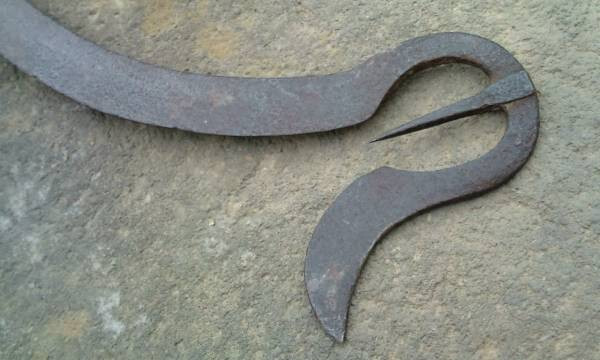
Any idea on what this is? I've seen a couple of them on Guns.ru. They don't seem to know either, although the running theory is some sort of ship boarding or un-boarding weapon.




-
Need help identifying sword
Bruce Pennington replied to atoshiko's topic in Military Swords of Japan
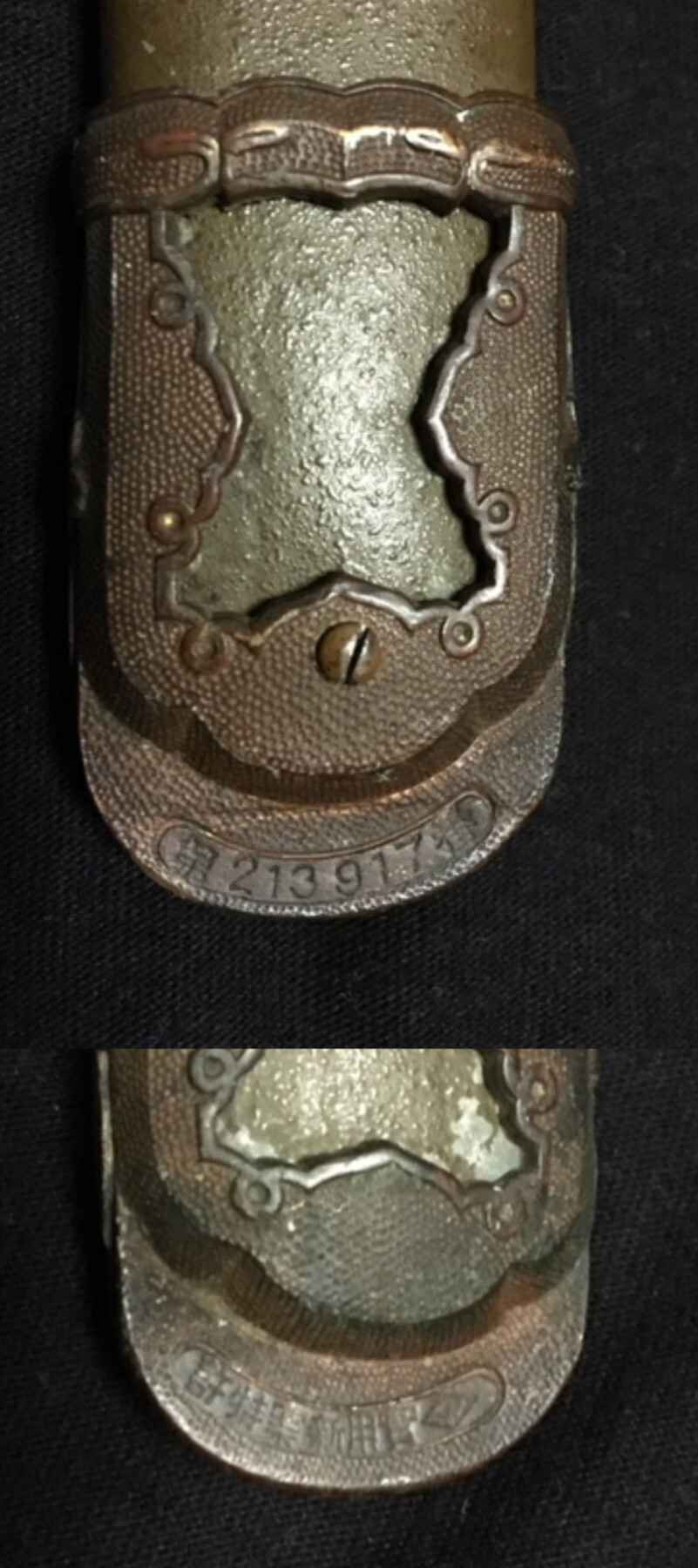
Ashley, Your sword is known as a Type 98 Japanese Officer sword. The metal fittings seem to be of the upgraded style - fat seppa (spacers around the handguard) and patented drag at the end of the saya (scabbard). Like Stephen asked, a photo of that drag would confirm it. I'd love to get full length photos of both sides of the naked nakago (tang), spacers and handguard removed. This smith made a variety of blades and that can sometimes be determined by small stamps at the top of the nakago, and even on the back edge. He was a registered "RJT" smith, and a star stamp at the top would confirm this blade as traditionally made for the RJT program. His blades also are found with Showa or Seki stamps, or none at all. So full photos would help. Here's an example of the patented drag: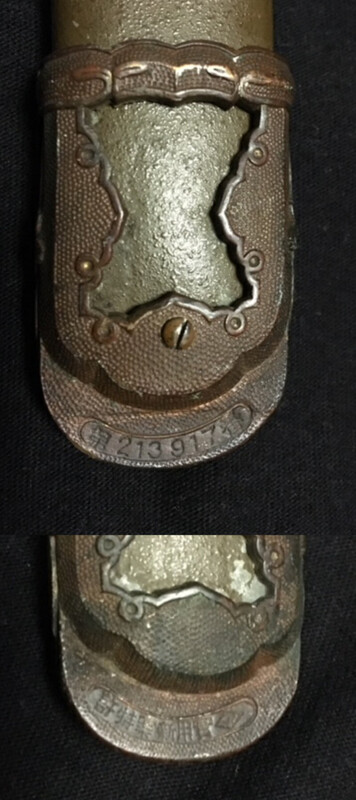
-
Yes, you do! Quite minty! Your "KI 122" or "キ122" is the earliest number in the KI series that I've come across so far. KI is right in the middle of the year's production, so with Fiscal year beginning in April, yours was likely made around October + or -. No one really knows why they predominantly used the "Spring" on the dates, but most of them do. 1943 was the transition year for the change in mei. About half still had the "Koa Isshin" slogan, while half show up without it. Again, not known why the change. Thanks for posting!