Bruce Pennington
-
Posts
14,236 -
Joined
-
Last visited
-
Days Won
169
Content Type
Profiles
Forums
Events
Store
Downloads
Gallery
Everything posted by Bruce Pennington
-

What is the meaning of this?
Bruce Pennington replied to Blade Refuge's topic in Translation Assistance
These are from a well-known faker who likes to put the date on the blade. The other side a a Japanese flag, and a character, but both are partially struck and polished off. Similar fake HERE. -
Don't know why no one has helped out with this one, Okan! There are a few oshigata examples on this Japaneseswordindex page, you might try making a collage of them side by side to check. But as a rookie, myself, on mei, I seem to find variations on even recognized legit mei. Hopefully someone skilled at this will help soon.
-
What is written on the habaki?
-
This was Thomas' thought too. After reviewing the 1944 production chart, I see Tokyo 1st produced a similar number of blades as the Osaka and Kokura arsenals, and I only have 7 Osaka and 6 Kokura stamped blades on file. So, I suppose the numbers of Tokyo 1st stamps should be inline with that, which would mean we really wouldn't see a great number of them out and about. And that fits the few examples we have seen of he stamping you describe. The numbers of Tokyo 1st, Osaka, and Kokura combined are still lower than I'd expect, which puzzles me some. I have roughly 100 Nagoya/small-seki blades on file. Knowing that they produced roughly 2/3's of all blades, then the combined To/Saka/Ko blades on record should be around 50. But I only have about 20 observed. That might simply be due to difficulties in sampling - I only see stamps that show up on NMB! I guess I'm ok for now. Thanks guys!
-
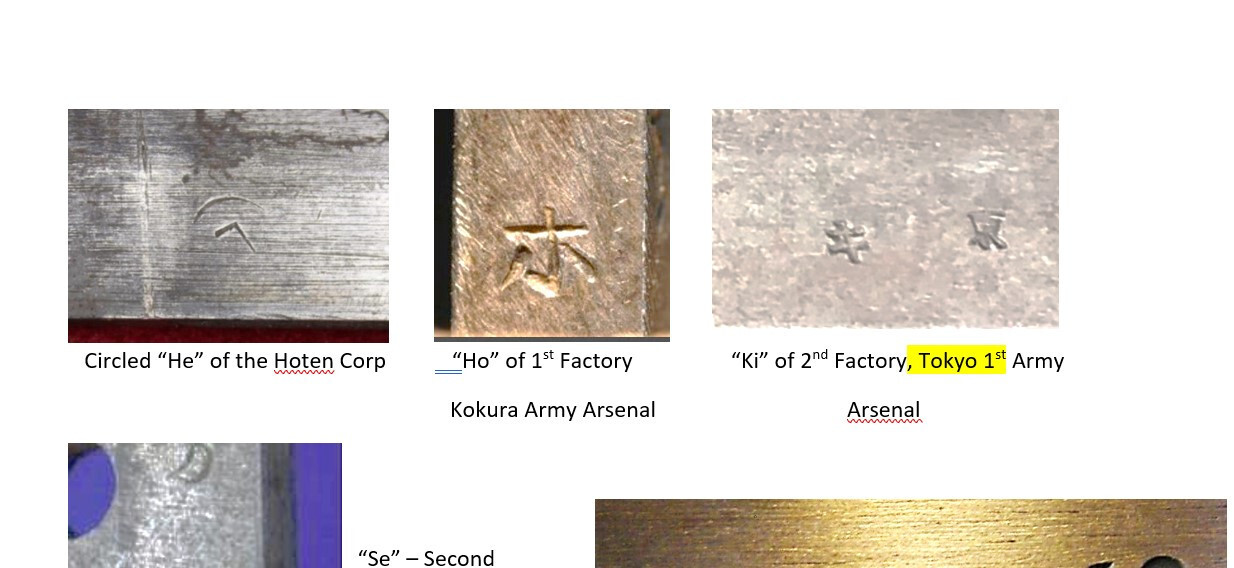
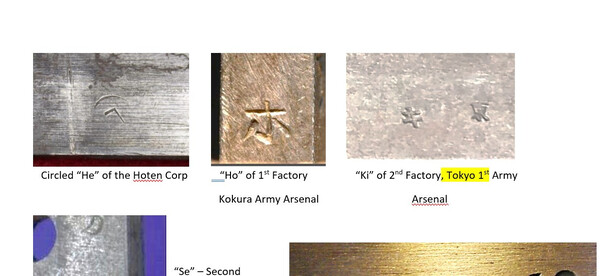
OOPS! Found an error in the Stamps of the Japanese Sword, ver 8.6. Page 13, I have the "KI" stamp as being the 2nd Factory of the 'Kokura' Army Arsenal. It should read the Tokyo 1st:
-
Well, now that you ask, I don't know if that is the latch or the button of the latch! Ha! But RJT fittings seem to almost always have the double release buttons for the latch.
-
Thanks Matt! Good luck with your sales.
-
seppa Translation and Interpretation Assistance
Bruce Pennington replied to robinalexander's topic in Translation Assistance
Wow, Rob! That first one looks like leaves! -
Colin, I get those 7's and 9's mixed up easily, too. It's actually September 1944. B.E.A.utiful blade! Interesting, though, it's got the double chuso. This discussion has gotten me to check the files. I have many star-stamped gendaito with small Seki and Na (Nagoya) stamps, so this is not unusual. What I did find, though, was that with only rare exception (maybe 1) all the small Seki stamps are being found only on RJT star-stamped blades! The large Seki stamp is different, and was used like the Showa stamp, prior to the Army's take-over of blade production in '42. I also checked the use of the "Na" stamp, and while it is found on RJT blades, it is mostly found on non-RJT blades more often. Hmmm..... The small Seki stamp was an inspector stamp for the Nagoya Arsenal. When Nagoya started using it, the Seki Cutlery Manufacturers Assoc stopped using it (the Large Seki). I believe they switched to the Gifu in Sakura stamp, but that is my speculation. But, it is interesting to observe that the Nagoya inspectors' small Seki, seems to be only found on RJT blades. Might have been created as an acceptance stamp by the Arsenal for the RJT system?
-
Matt, Do you know if I've recorded this one? I tried your site, but couldn't find the "Sold" items.
-
Interesting to see a tanto in military leather!
-
I have read a few stories of guys attempting to bring a gunto into into Japan with them. In each case, the sword was confiscated by customs police and held at the airport office until the individual returned to fly back home. So, it wasn't destroyed, but they wouldn't let the sword leave the airport, except to return home. I have seen Type 95s for sale on Yahoo/Buyee, so they must be allowing registrations for export, but I don't have any info on how that is taking place.
-
Ha! Rick beat me to this, but @Paz - you do realize you're posting this on the "MILITARY Swords of Japan" forum right? Sure, gunto don't sell for as much as a really fine, old nihonto, but honestly - that just means I can buy 4 gunto that I really like for the price of one nihonto! Love it! Seriously, 'showato swords' are the only thing on my list, ok, I do have a nihonto in gunto fittings, but that's a one-off. Oops, I have a gendaito in RS fittings too. But you know what I mean.
-
I thought this topic came up somewhere else recently and the answer was something to do with registering for international sale. Is that more in the ball-park?
-
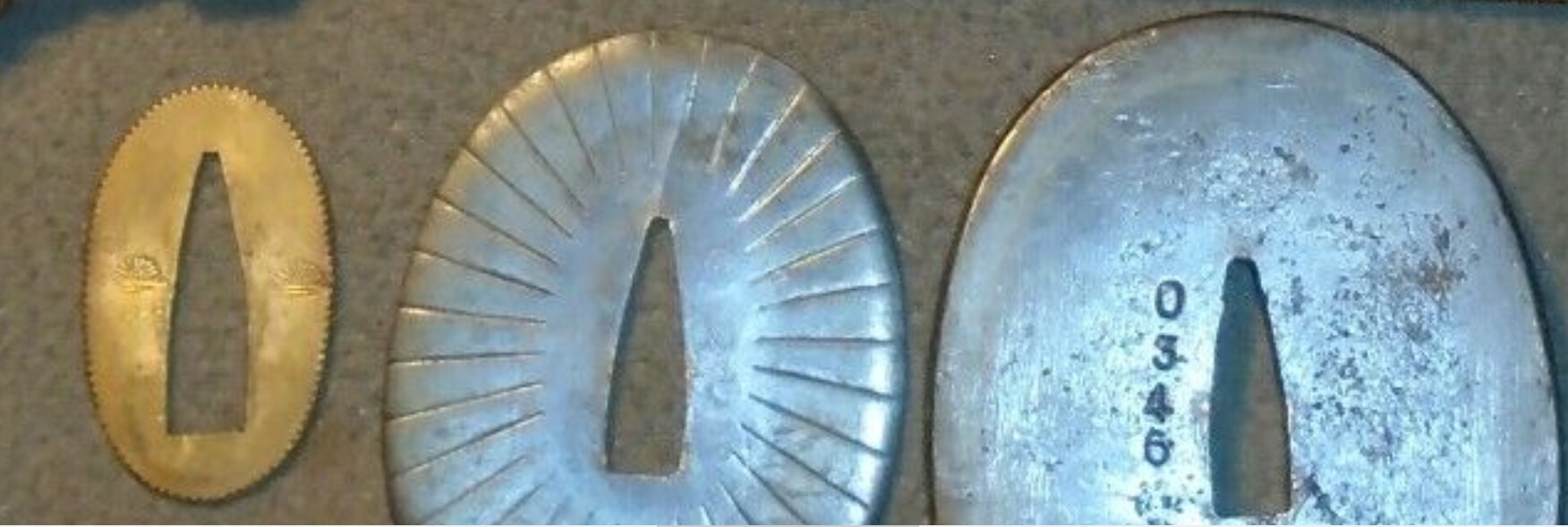
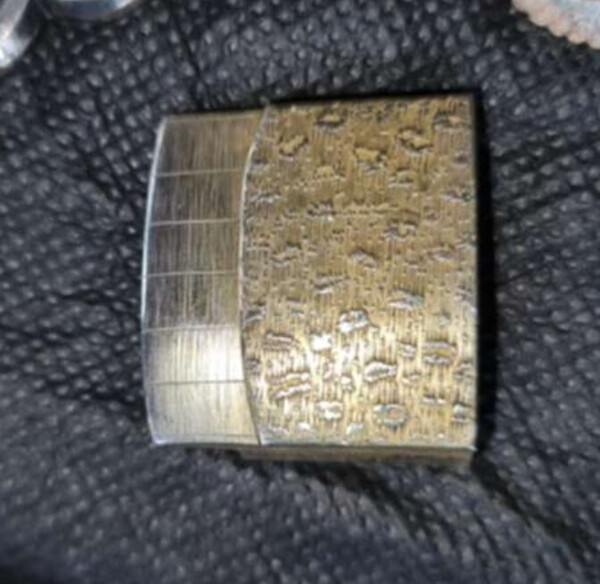
Something different, found HERE.
-
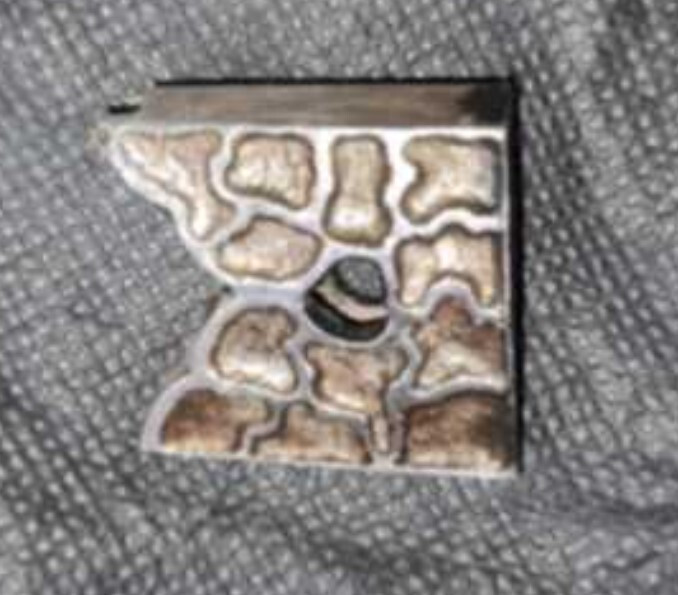
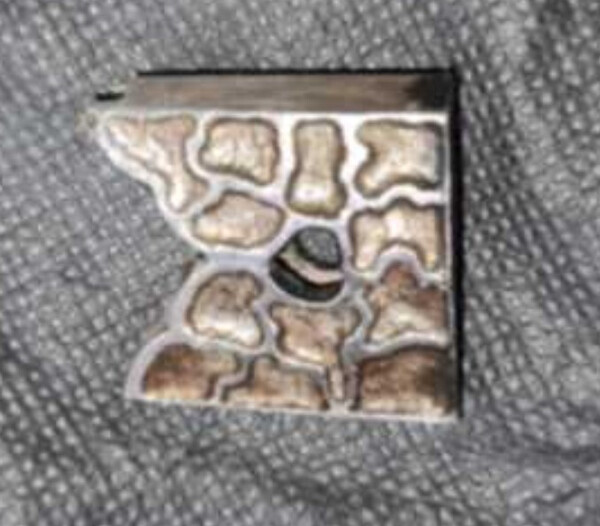
A unique take on the 'rock wall' or 'castle wall' them. Note the hole in the center. Found HERE.
-
Type 98 Gunto Authentication
Bruce Pennington replied to Jcremer24's topic in Military Swords of Japan
Interesting saya, though, with the haikan (ashi) on the reverse side! I've seen one other like this in the past year. -
The Type 8/19 'kyugunto' was officially replaced in 1934, so there is a year overlap with what Thomas stated. But even though the 'official' army sword after 1934 was the shingunto, officers were known to carry the kyugunto through the entire span of WWII (Dawson and Fuller both state this).
-
Help with ID- Type 98 Shin Gunto
Bruce Pennington replied to AndyG's topic in Military Swords of Japan
Thomas, great site! Know who runs it? If a smith is listed there, does that mean they were known to make gendaito? I cannot find him in either Slough or Sesko. Japaneseswordindex.com does have an oshigata that matches: http://japaneseswordindex.com/oshigata/sadaharu.jpg -
Help with ID- Type 98 Shin Gunto
Bruce Pennington replied to AndyG's topic in Military Swords of Japan
Hi Andy! Someone will help with the smith's name soon. The '3' on the nakago matches the '3' on all the other parts. So it's likely the shop that did the fittings put them there to keep them all together. All the parts are custom sized and fitted to each blades, so it is believed these were there to keep them together as the blade went through the production process. It is also possible the smith/forge/arsenal stamped the numbers on the blade and the fittings shops matched that number on all the parts. This was sometimes done with SMR Mantetsu blades. But we don't know for sure which it was for all the other examples, like yours, out there. I love that extra stamp on the wooden face of the tsuka (handle)! Maybe a shop logo? -
@Shamsy @Stegel may correct me, but this one is legit! I would even love to see if the paint is war-era or new. It has both the gold and red colors that seem to have significance. We are starting to believe that some of these painted gunto were done by the soldiers themselves. An interesting piece.
-
A Study: Minatogawa-to
Bruce Pennington replied to Bruce Pennington's topic in Military Swords of Japan
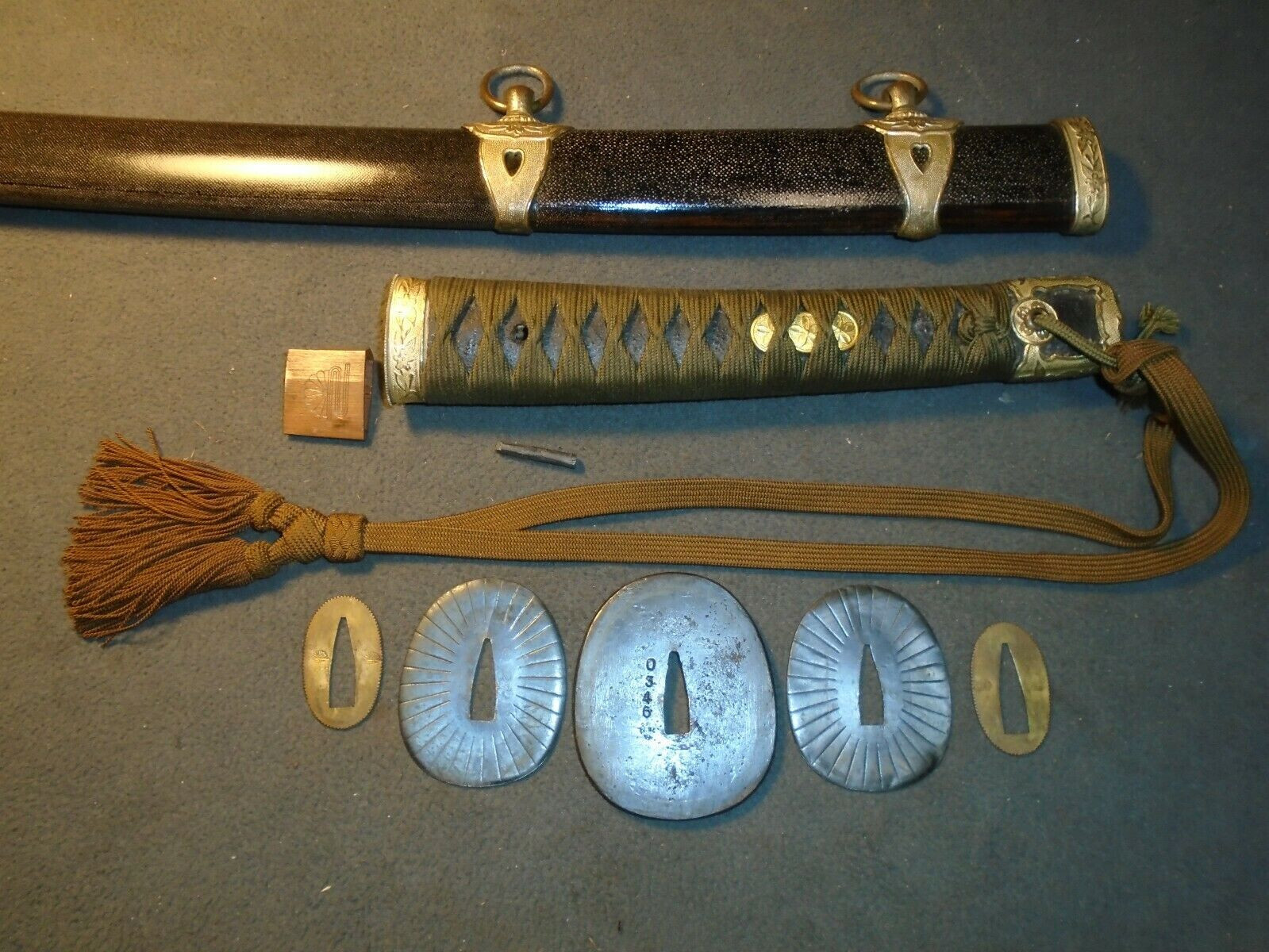
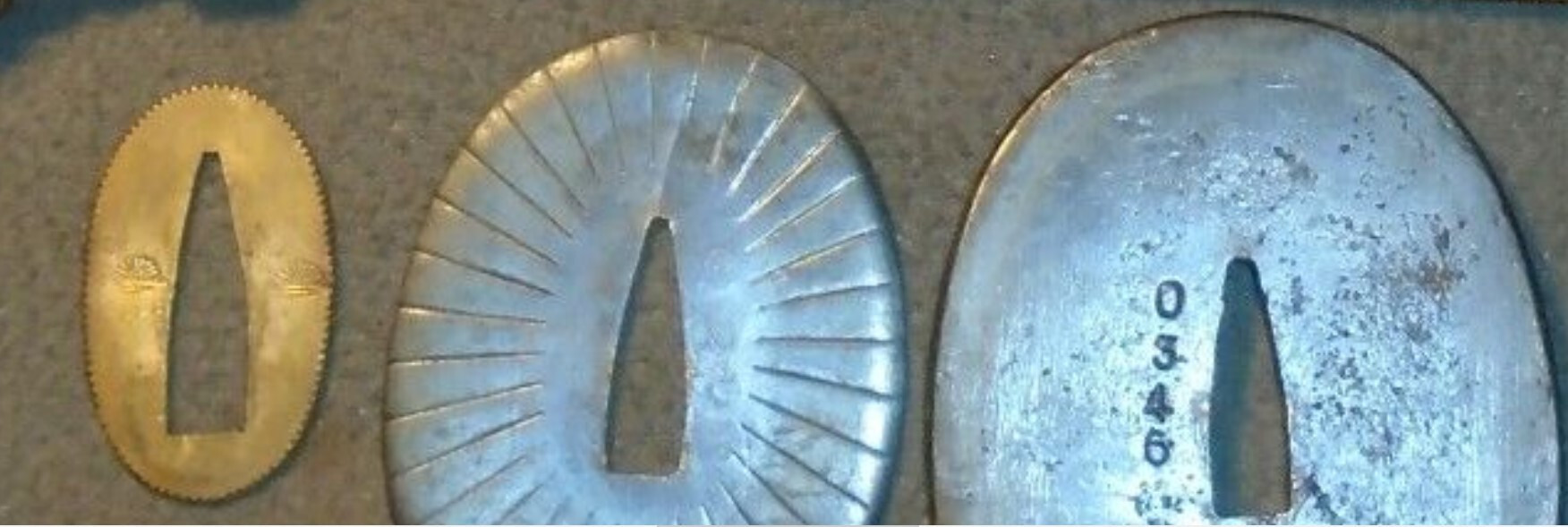
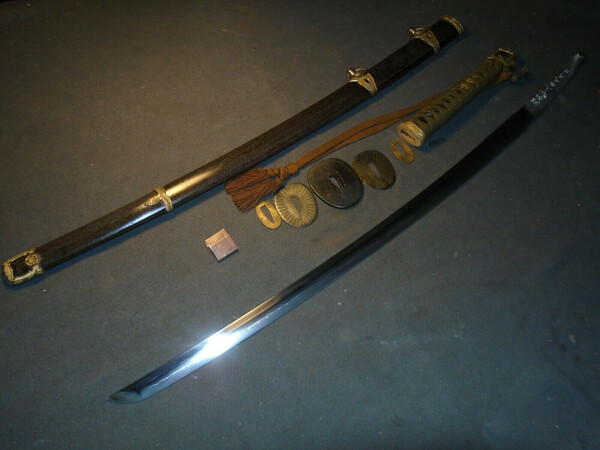
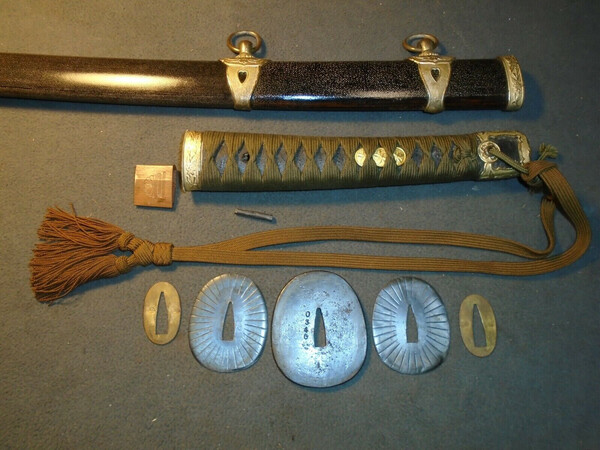
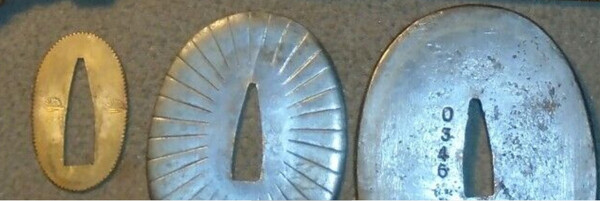
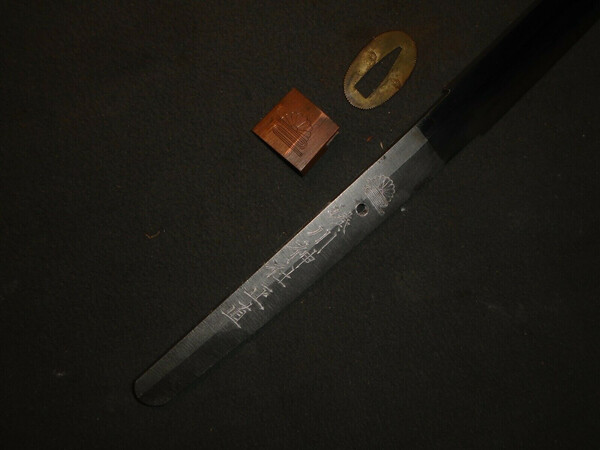
A Masanao, Sep '43, found by @drb 1643 on fleabay. Interesting feature - a kikusui on the small seppa; and a 1-piece fuchi/seppa.

-
Real or fabrication
Bruce Pennington replied to drb 1643's topic in Auctions and Online Sales or Sellers
Interesting piece, Tom! Thanks for posting! I has kikusi on a seppa! I've seen them on habaki, which this has also, and fuchi, but this is the first time I've seen it on a seppa. Also interesting is the 1-piece fuchi/seppa. There must have been a shop working navy, or near the Toyokawa Arsenal, that made these. I've seen a rare few on kaigunto, and then they are used in a big way on the post-war souvenir.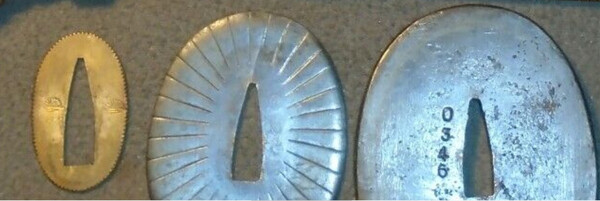
-
Military sword tang signature and stamp
Bruce Pennington replied to gasman's topic in Military Swords of Japan
How about a closer look at the hamon, Gary (the temper line). These with the large Seki stamp usually have nice patterns. Also, is that saya (scabbard) chromed? If not, looks like someone, likely post-war, removed the fittings and stripped the original paint down to the metal. Type 98 Japanese officer sword, if you haven't already figured that out. -
Thanks Peter, I could say the same about you, as well!