Peter Bleed
-
Posts
1,866 -
Joined
-
Last visited
-
Days Won
8
Content Type
Profiles
Forums
Events
Store
Downloads
Gallery
Everything posted by Peter Bleed
-
Jean. I think you are right. Certainly there was no heat. The final work must have involved very skillful use of a small hammer. For the deeper thickening, tho, I wonder if a larger hammer may have been used for the first coupe of rounds. A bigger hammer would make a deeper impact,especially if the iron was very soft. Some experimentation might be useful. Hmmm. All this to say, thanks for an interesting insight. Peter
-
Indeed, this is a wonderful tsuba. I am impressed that it probably was made with sekigane. And look, too, at how the wall is thickened ever so slightly below the flange at the margin itself. I wonder how he did that. Peter
-
How And Why Of Modern Collecting
Peter Bleed replied to Peter Bleed's topic in General Nihonto Related Discussion
Please allow me to say more about collecting. I find the topic of collecting interesting and under considered. Lots of people seem to think that sword collecting was easier/better in the days of the 1960s when veterans were moving to new homes and dumping their war souvenirs. Indeed, some larger collections were formed at that time, but IMHO , appreciating swords was not easy at that time. Say all the nice things you may about John, Yumoto’s book was a very weak reed (pardon the pun). Collectors at that time had to work very hard to master information that shortly later was made available to kids who played Pokkemon. There were very few sources of information and dissemination was slow. The quarterly JSSUS Newsletter really mattered. Contrast that to the current situation. Today every serious collector can – and should – visit Aoi Arts for a few minutes every day. I start on the Japanese side and use it to quickly practice some kanji. Shifting to the English version I get very nice descriptions and discussions of a couple of worthy items. After that I often drop by Andy Quirt’s site. Andy is an old friend but he also has real handy links to major American web sites. I am less adept with Nihon-go pages. Mebbe somebody can offer guidance. I’d welcome it! Peter -
Managed To See The Hamon Line ,will This Help Date It ?
Peter Bleed replied to matthew's topic in Nihonto
I bet it is by "KANEsometing" and dates to the 15somethings Peter -
This morning, in the ongoing discussion of masame hada, I confessed to buying a yari from a well-known Japanese internet dealer. Subsequently I received feedback from fellows I respect suggesting that this dealer purveys nothing of quality. At the same time that conversation was afoot, another truly expert collector gave us useful and carefully presented advice on a Japanese dealer he has found a trustworthy source of reasonably priced really good swords and fittings. This pair of posts provides an opportunity to consider the state modern Japanese sword collecting. All of us are basically “stamp collectors.” That is we all figure out what we like and then try to assemble examples of the range that is relevant to that topic. Like a lot of old time American sword collectors, I approach collecting like a treasure hunter. A major part of my hobby has been searching out swords. I like looking at stuff and I don’t mind finding it “as found.” Beyond that, I also like to figure out the history of particular swords especially if it exposes the history and culture of Japan. My focus most of the time is figuring out where, when, and how a sword was made. This is different from the “kantei approach to sword collecting”. Kantei is a game many Japanese play and one they have taught many non-Japanese collectors. The kantei approach to sword collecting involves understanding “quality”, knowing what is ‘good’, and acquiring pieces that meet those standards. Treasure hunters can use the structure and lore of kantei, but kantei collecting requires that you understand “quality”. That depends of working with experts, learning their values, and following their standards. Treasure hunting depends on learning to look for stuff and to recognize unappreciated stuff. Kantei collecting depends of looking at well-organized merchandise and competing with others who share your interests. Learning how to regularly visit sites of serious Japanese dealers is an important part of modern sword collecting. It helps us learn the values and availability of swords of interest to knowledgeable individuals. I think scanning low end web sites is also useful because it may reveal under-appreciated items that deserve attention. It will also show what kinds of stuff are leaving Japan because they fall below the standards of “kantei collectors”. That’s the stuff international treasure hunters will soon encounter in gun shows and antiques markets worldwide. Peter
-
Recommendation For Samurai-Nippon.net
Peter Bleed replied to Curran's topic in Auctions and Online Sales or Sellers
Curran, I, too, appreciate this advice. I have been rather afraid of dealing with 'serious' Japanese purveyors, but your advice makes it seem possible and wise. This site also seems very user friendly. Peter -
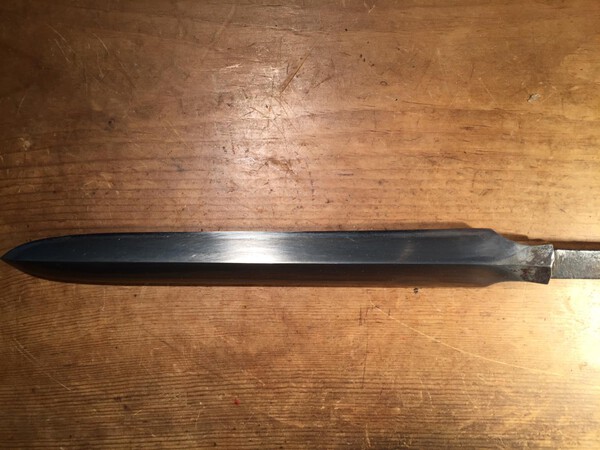
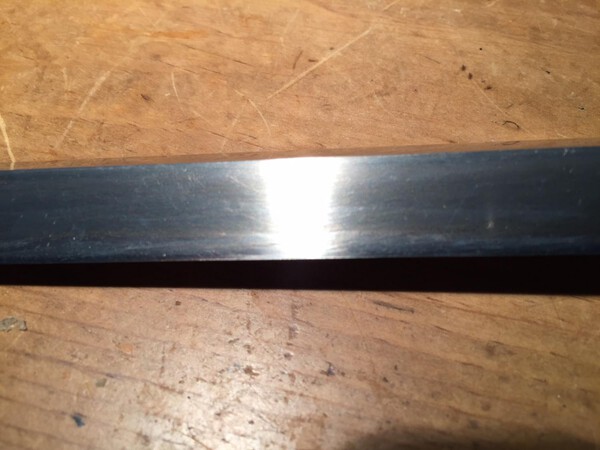
I have followed this discussion of masame with interest. I have recently acquired a piece that hope will add to the discussion. Perhaps I should be embarrassed to admit that I bought a spear from the much maligned Ebay dealer Daimyo54. Just after Christmas I noticed that he was offering a Niji-mei Kunikane yari with a Fujishiro origami. I do not own a Kunikane spear, and I was bored so I through in offer at less than half the posted price – And BINGO! The blade arrived smoothly and has provided me with a classic new purchase emotional roller coaster. When I finally realized that it was wrongly installed three ways, I figured out that it HAD once been fitted in a very elegant shirasaya. I’m still not sure it can be resurrected, but at least it fits, now. The nagago has a Niji-mei, but the origami, dated Heisei 11(1999), attributes the blade to Yamashiro Kami KK. That is the second generation and would be very nice, but I am skeptical. I bet that this judgement was based on “penmanship.” The KANE character has a pair of horizontal slashes rather than the complete “box”. This is how he second generation signed, and, In fact, the signature does rather look like the Nidai KK, but the signatures of the middle generations of the line have not been clarified. I am happy to consider that this is a “Kunikane School” blade. Finally, the blade was in sorry condition. The shape was largely intact, but there was some active red rust and the blade had been lightly buffed. I decided some “cleaning” was unavoidable. I did nothing heroic but it gave me an opportunity to look for masama hada. The spear unquestionably has a masame structure on the upper, ridged, surface, but it is not easy to see. Masame is not apparent on the flat surface, but Fujishiro-sama said that this blade has “masame hada.” Masame grain would make sense for a Kunikane attribution, but for the present discussion, we have to ask is masame is somehow usual/unavoidable for triangular blade like yari and ken. Yari are often described as having itame, but masame is common and especially common in ken blades. Peter
-
Thank you Piers! Indeed, i have tried to stay tuned into the Nihon-no-Katchu forum, but never seemed comfortably able to access it. The NMB - by contrast - is extremely user friendly. The links you forwarded suggest that improvements have been made. Indeed, I found Dave's discussion truly wonderful. Again, thank you. Peter
-
In a couple of weeks I will be joining my friend and colleague Doug Scott in some live fire experiments that he is doing to investigate 18th century flintlock projectiles. Essentially, he is using modern techniques – ballistic gel, chronograph, target control etc. - to study projectile ballistics. The major goal is to assemble information on how ball deformation varies with charge, range, and target. These data will ideally help interpret battlefield debris. And it is a lot of fun. To add to the mix I’m intending to bring a Dixie Gun Works .50 cal matchlock that I’ve owned for years, but never shot. This may be outside the control set, but I wonder if someone on the NMB might have experience with these guns that they will share. Likewise, if this kind of work is being done in Japan, I would appreciate background and contact information. Thanks Peter
-
Sword authorities make sure to note successive generations of swordsmiths who are marked by a single name that was passed down in an apparent family line. Such lines are positive for a couple of reasons:1) they substantiate traditional/ideal family values of the Edo era, 2) they reflect enduring - and laudable - feudal support for the line, and 3)practically they tend to have modern market appeal because they sell well to the folks for their area. Obviously the Sendai Kunikanes punch all of those tickets. What seems almost always to be the case, however, is that these "lines" seems to lose their quality after 2 or 3 generations. That is to say, by the third generation or so the holders of the name always seem to be rated as "chu-saku". (The OBVIOUS exception would be the Hizen Tadayoshis, but they had really great press agents!). The fall in stature might be real. Maybe the fire goes out after a while. It may also have to do with social changes that a marked the Edo period. Mebbe the sword business just wasn't big enough to support excellence. Beyond thos factors, however, sword assessment is a subjective field,so I also have to wonder, if these declines in judgement might not reflect the values and social expectations of recent sword authortities like Fujishiro-sama. In any case, Indeed, this is a great collector's project. Please keep us informed. Peter
-
This may sound like semantic hair splitting, but I think Tosho (and even most Katchushi) tsuba should best be attributed to a "style" rather than a "School." By that i mean that most swordsmith guards were made by independent artisans rather than by craftsmen who worked in groups that shared a vocabulary of motifs, techniques, and forms. Swordsmiths who made tsuba certainly referred to some regular features. They also met the needs of their customers and patrons, but they seem to have been less confined - and probably less refined - than the groups of fittings makers who operated from specific workshops. Oh, and BTW, I wouldn't call this a Tosho guard. Peter
-
What Kind Of Firing Mechanism Is This?
Peter Bleed replied to rkg's topic in Tanegashima / Teppo / Hinawajū
Richard you've gotta give us a better image. From what I see, my guess is that this was a minimally altered matchlock. A nipple seems to have been added to the "pan". And then to provide enough force to snap the cap, an auxilary steel spring was inserted in the brass spring. The extra spring is very neat, if not well crafted. I think this is an interesting gun. Thanks for showing it. Peter -
Sergei, A very nice tsuba which has generated a good discussion. Thank you Let me add three more possible explanations to your squarish nakago-ana. 1. It may for some reason been mounted upside down. Traces of this are not apparent but there is clear evidence that there was lots of work done to the ana. 2. Similarly, I wonder if it might have been mounted on a tachi. 3. Finally, is there any possibility that this guard spent some spent in China? Might it have been put on a Continental sword? Peter
-
# Peter Bleed # Kunikane
Peter Bleed replied to Stephen's topic in Auctions and Online Sales or Sellers
Well, gee. This seems like a lot of sword for the price quoted. It also looks like a classic example of "the new international Nihonto." To my eye is seems clearly to be a recently remounted blade. The polish seems fine. And with a toroku-sho that work seems likely to have been done in Japan. I have prattled on about the problem of "ato-mei Kunikanes" which have been - and are still - turned into mumei blades.In that situation, kin-zogan attributions might not be surprising. Altho I would be careful, maybe even suspicious. I can't say much about the sugata, altho the kissaki seems a bit long. The hada could happen, altho it is hardly stereotypical Sendai steel. This is a good deal, but I would still have to wonder why a sword like this - that has obviously been in Japan - does not have some manner of shinsa origami. Again, thanks for alerting me to this sword. These comments have been written in haste. Peter -
# Peter Bleed # Kunikane
Peter Bleed replied to Stephen's topic in Auctions and Online Sales or Sellers
Thank you, Stephen. I've had my ears off for a while... Peter -
Forgive me if I geek out, but I think that the edge you showed us may help use understand why mokame is often/occasionally mixed with itame in koto swords. It seems - and I can't claim deep expertise - that in Yamato blades, even including Hosho stuff that rather long masame sections end in swirls of itame and/or mokume. Your tsuba makes me think that those features reflect the ends of billets,... mebbe Peter
-
actually, I'd vote for the round Masahide, but given your interests in hada, I assume that you showed us the masame on the edge of the other guard. Peter
-
Stephan, The link is right here on the NMB since that is where Barry began his presentation. it is nmb/topic/22874. The JSSUS does not have a digital presence, but I certainly hope that people on the NMB will maintain their membership in "The" Sword Society. Peter
-
I sincerely hope that NMB members have seen and considered Barry Hennick’s wonderful presentation in the last JSSUS Newsletter. Barry essentially assembled and modestly edited a wonderful series of brief but pithy assessments about the tsuba aesthetics that developed on NMB last spring. Most of us will have seen this but having them pulled together really made them new and interesting. Barry removed the names so that the discussion is anonymous. That may be too bad since there were some very respectable voices in the thread. Still, taken as a whole, I think this discussion presented a worthy new assessment on how and why iron discs can be assessed aesthetically. Nice job, Barry! And “Good On You”, NMB! Peter
-
Jon, Thank you for this thread. It is great fun and has provided an opportunity for those of us so inclined to crack wise. Beyond that, I think this thread exactly presents an important aspect of "Non-Japanese Japanese sword Collecting". In Japan, if a person wants to collect swords he joins a group and visits dealers. Those sources guide a newbie into the topic. "Japanese" collectors, thus, learn to use the well-organized information. Outside of Japan, Japanese swords are presented in a much more chaotic nature. Due to the way Japanese swords have traveled internationally, great blades can end up right next to painted crosscut saws. "Non-Japanese Japanese sword collectors" have had to learn to deal with this complexity. We had to learn where dealers might put Japanese swords, and how they would be treated and valued. To do that we also had to learn about things like painted saw blades. (And actually, I mentioned the saw because I was really interested in the GREAT rapier blade. I suspect that that was the "bargain" on this table, But Stephan already made that observation.) That old style Japanese sword collecting is passing, but I have to admit that I still love 1) the complexity of the old stuff market, and 2) the adventure of discovery that is part of "non-Japanese Japanese sword collecting.. Peter
-
The NMB is fast, easy, and ALWAYS interesting. We move from real detailed and real deep to real general! I'm real glad the NMB is here. Peter
-
Maybe a bit high on the Ryokai -, but what was he asking for the painted saw? Peter
-
Experimental Archaeology - Close!
Peter Bleed replied to Peter Bleed's topic in General Nihonto Related Discussion
Stephen, Thanks for this tip. I just watched the Sorrell's piece and LOVED it. In general, I have kind of avoided Sorrell's stuff because it seems outside the "great tradition" of Nippon-to (Pass the Harbor Freight, please). In general, and more seriously, i think Sorrells and most American knife guys just don't get the basis of Japanese sword beauty. They've got the terminology and wonderful tools, but their stuff always seems flashy and new. In fact, however, I bet that if the language could be overcome, Sorrells would get along very well with working sword guys in Japan.Since the Kamakura era, they have basically been using the available technology to make worthy weaponry.(Once while visiting a noted fittings maker in Sendai, I saw a couple of bottles of Birchwood Casey Cold Gun Blue!). I thought Sorrells treatment of patination was wonderful. But his tsuba was a clunker! As long as "establishment" Japanese sword collecting sources present traditional aspects of sword aesthetics, I think we shouldn't ignore activities of non-Japanese workers. This piece on tsuba making is very useful. Thanks again. Peter -
This will probably be the last post in this series. The recreation is not “done”, but the effort is winding down. I've enjoyed it and I appreciate that NMB has allowed me to process it! Patination I was hoping that some nice “old” finish might survive on the saw blade I used for this project. In fact, however, once I started working with the blade, it turned out to be quite smooth and clear. Handling and modifying the surface also created dings and openings that needed repair. I’m sure that there are people who know how to create a pocked and pitted surface on new iron, but I wanted simply to darken the surface. Toward that end I soaked the guard in a bath of salty kitchen vinegar. After three days the guard had a fairly dark color, but there was not a hint of pitting. For the record, I did NOT subsequently put the patination bath on the dinner salad. Installing a Sekigane. As I continued working on the nakago-ana the hole itself got fairly big and the crimping marks I had added disappeared. To keep the tsuba usable, this would have been a situation where a sekigane would have to have been added. Sekigane are, of course, common. We see them all the time. Installing sekigane must have been a part of the kinko’s art. It seems to carry a fee and when I asked an acquaintance who did such work how it was done he said “Himitsu desu!” (“It’s a secret!”). Clearly this was an opportunity for experimentation! To see how sekigane were actually installed I significantly enlarged the blade end of the nakago-ana with a square box expansion. Then I cut a piece of heavy copper wire that basically filled that space. It was big enough to have to be tapped into the expanded end of the ana. Once it was in place, I simply pounded the copper flat and bingo! It may have been beginner’s luck, but the task took less than a minute. I also think that this sekigane would function just fine. It is very solidly implanted in the tsuba but big enough to need some removal to accommodate the blade in the next mounting. Thanks for listening Peter

-
Thank you Ray and All. This is very interesting. Wow! Peter