Peter Bleed
-
Posts
1,865 -
Joined
-
Last visited
-
Days Won
8
Content Type
Profiles
Forums
Events
Store
Downloads
Gallery
Everything posted by Peter Bleed
-
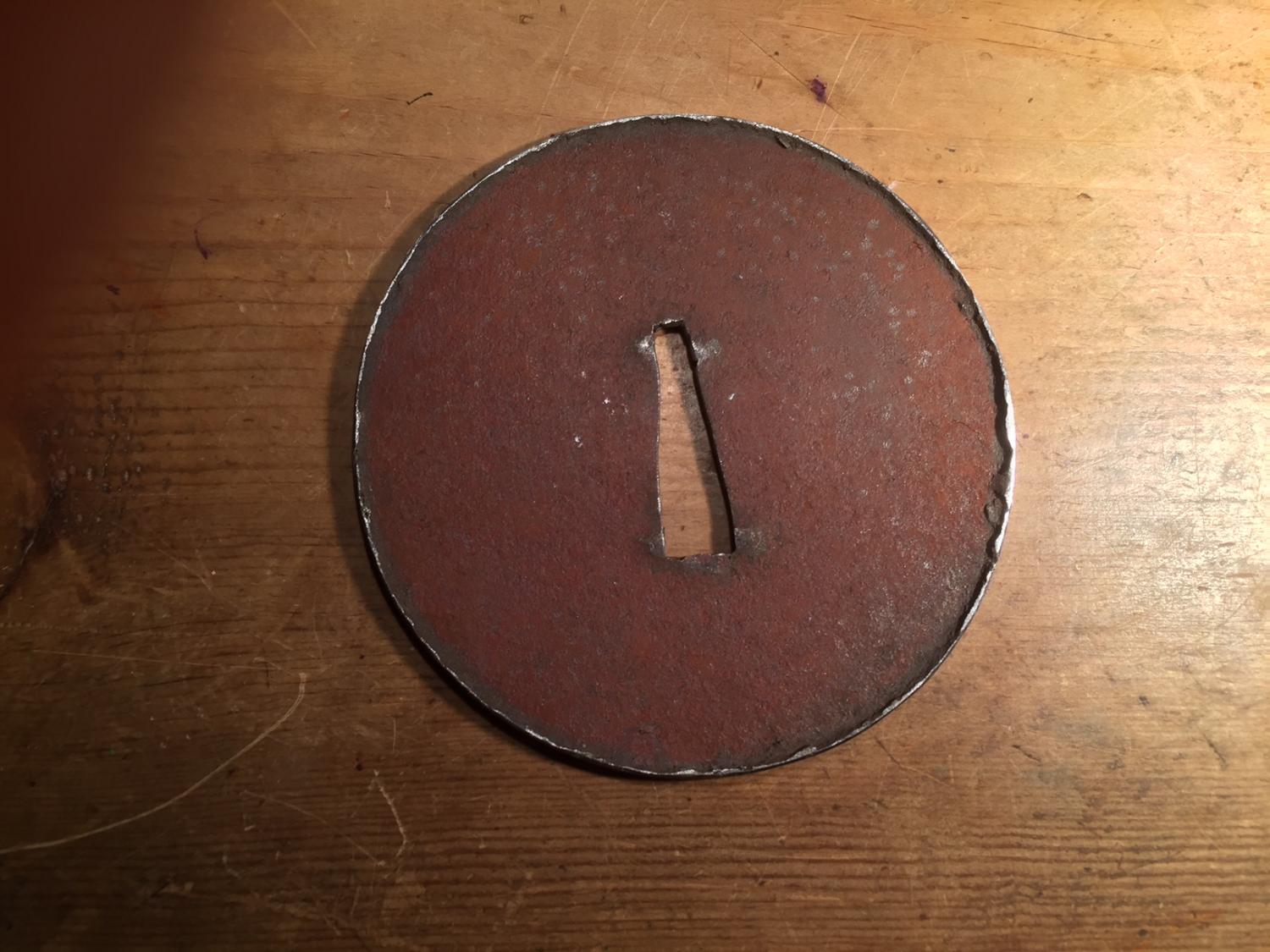
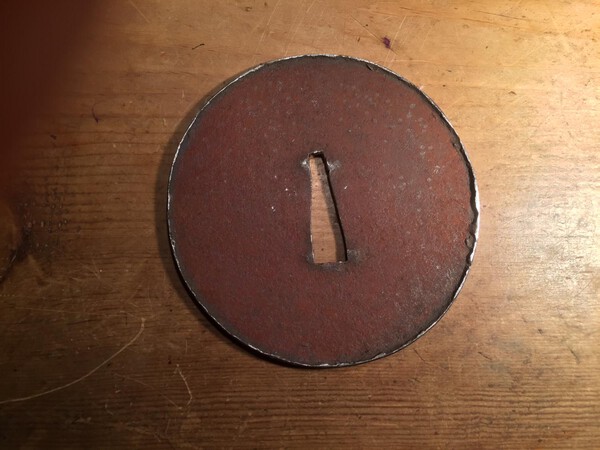
Please allow me to describe a next set of steps in my tsuba making endeavor. To clarify, my goal here is to gain insights into why tsuba look the way they do. My goal is NOT to pretend that I am an ancient artisan. I am also not trying to replicate anything. Rather I am enjoying making an object that will let me see and appreciate how simple iron tuba were created. I am sure that lots of the tosho tsuba we see are MUCH newer than they are supposed to be. They are still “being made” so if I am replicating anything, it is how these tsuba are faked! Again, the plate I have started with is an “old” saw. I don’t know if it “tamahagane”, but it had enough carbon to be hardened since I had to anneal it. I had hoped that it might have a laminated structure and the basis of an “old” pitted surface. So far I’ve seen no trace of those qualities. Making the Nakago-ana. I spent some time trying to create a nicely formed nakago-ana. This proved more difficult than I had expected. This is one of those things that we tend to under consider. I was specifically curious about the various modifications we see on the tang holes of old guards. I tried to finish the opening with dings and pinched crimps that were made to refit and adjust guards. Several of these disappeared as I increased the size of the hole. Making these marks took a lot of force. I had already raised the mimi ridge so working on an iron anvil would, I feared, upset the mimi ridge. Sword fitters probably had special small iron anvils. Without one of those, I worked on a flat wood surface. This process invariably caused the guard to become slightly cupped. With a wood mallet, this cupping could be largely removed. But I got some old tsuba out to look for this condition. Indeed, it seems that some old tosho tsuba do have a hint of cupping which I now have to suspected is the result of adjustments to the nagako-ana. Adding sukashi. I decided to add a simple pagoda cutout since it involved a variety of shapes. Placing the image on the plate probably deserved more thought and care than I gave it. Once I decided where it would go I started with drilled holes – which I will acknowledge were created with – ahhh – power assistance. In fact, I suspect that a well-tuned bow drill could cut holes rather easily. The hard part was turning the holes into other shapes. Again, I used files and saws. That is what I had and I also bet that those are the tools early tsuba makers used. They are finer and more easily controlled than chisels. However sukashi are created, the limited experience of this project suggests a couple of principles, “1. Round sukashi are easier to make than square ones.” and “2. Straight edges show irregularities that are lost on curving margins.”

- 1 reply
-
- 1
-

-
Experimental Archaeology
Peter Bleed replied to Peter Bleed's topic in General Nihonto Related Discussion
Chris, I'm sorry that I was not clear. I began this project, with a piece of "old" sheet iron from a premodern felling saw. Until well into the Edo period Japan produced a great deal of "bloom" or "bloomery" iron. Tamahagane was carbon rich bloom iron that was favored for swords and other cutlery such as saws. Peter -
Update On The Sword Shortage
Peter Bleed replied to Bruce Pennington's topic in Military Swords of Japan
In this context, it is worth remembering that writing in 1958 John Yumoto -page 138- said "Japanese officers could buy sound samurai swords forged 150 to 300 years ago for 150 to 300 yen ($40-to$75)" Peter -
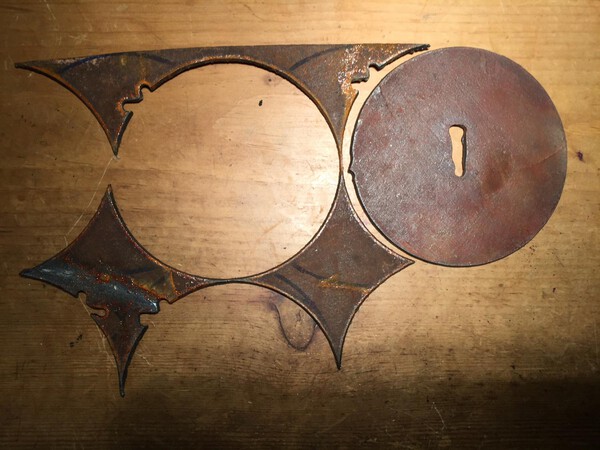
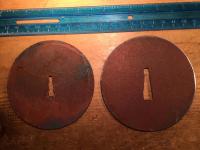
Dear Friends, I hope the NMB will allow me to use this season of charity and goodwill to discuss – or do I mean ‘confess’ – a bit of katana related effort that has recently occupied my time.I dare not call this effort ‘utsushi’ since I would be embarrassed to show the result to some folks who occasionally show up here. I will offer it “experimental archaeology”. Over the past couple of days I have been recreating a tosho sukashi tsuba. I am NOT trying to ‘fake’ anything. As an archaeologist, I fully expect that this thing I’ve been working on will outlast me to have a life of its own. But the artifact I have spent many, many hours would sell, if at all, for mebbe 75 bucks at the Chicago Sword Show so I am NOT in this for the money! I began this effort with a rusty old Japanese felling saw. I selected that starting point because years ago I had overheard a couple of Japanese sword guys say that old saws were the ideal resource for making tosho tsuba. Shortly later, I pulled this saw out of a pile of rust at the Sendai flea market. Give me no crap about destroying a cultural resource. This was a worn out tool from no more than the Meiji era. I moved this saw several times and even brought it with me here to retirement. Friends had suggested that modern cutting machines could make this project quick and easy. I did not want to simply show a computer some images from Sasano. Instead, I asked a local steel worker to use a plasma cutter to reduce the saw blade to a series of discs. He asked if that was all so I said that a central hole – and nakago-ana – would be handy. I free handed an outline and he used it to make me 10 discs. Diameters varied, but they were all just over 2mm thick. When I began to work on the first piece, it became obvious that it was of unworkably hardened steel. To deal with that, I used the historic forge at the Historic Arkansas Museum to anneal most of the blanks. After that had been done, the disc was more tractable. Still, forming the nakago-ana was a fair amount of work. I began by using some old Japanese needle files that I had found in country hardware stores and the Arai store near Ueno. Such tools used to be fairly rare, but I have discovered that Harbor Freight has them for sale cheap. Ko-tsuba-ko would have loved Harbor Freight! After roughly forming the ana I turned to cleaning up the edge. I did not take this task as seriously as I should have. I simply knocked off the scale and ash left by the cutting before starting to raise an uchikaeshi mimi. This is a remarkably easy process that took something like 30 minutes. I worked the edge cold and did not anneal the piece. It must have work hardened, but it felt pliable the whole time. My mimi easily got to be 3.5mm thick, but all of the thickening was right at the edge. The plate itself did not thicken toward the mimi as you sometime see on old guards. A couple of flaws and irregularities in the raised edge resulted from NOT entirely cleaning the margin. My bad. In general, my mimi is not as thick and solid as some tosho/katchushi. I think that may be partially due to the fact that I had not completely cleaned and smooth the perimeter edge. I also wonder if old tsuba makers may have initially flared the plate by working it hot… There is more to report, but I’ll stop now and see if anybody is listening. Peter
-
Update On The Sword Shortage
Peter Bleed replied to Bruce Pennington's topic in Military Swords of Japan
Indeed, Bruce, thanks. This is interesting in part because I have always assumed that there were always LOTS of swords. Peter -
For Review: 5Th-6Th C Sword Pommel
Peter Bleed replied to barnejp's topic in General Nihonto Related Discussion
I think I am interested in this discussion, but I feel like I am missing something. What are we looking at? What is this history of this object? What can we contribute to the discussion? And is this a legal acquired item? Peter -
Hada is wonderful, but lotta masame in the shinogi. I'd really like to see that nakago. As a guess, I wonder about Uda. Peter
-
Brief Advice/complaint
Peter Bleed replied to Vermithrax16's topic in Auctions and Online Sales or Sellers
Jeremiah. This is a useful discussion. Still, I am challenged by a couple of points. Let me make two specific responses. 1. If the community needs to be taught how to take digital images we need to be taught. If you are skilled in this regard, or if you have discovered what really needs to be shown, by all means offer guidance. 2.Going to the books should not be an annoyance. It should be the FIRST thing we do. It should be the activity that informs and guides all of our observations and judgements. Peter -
Bolt Action Tanegashima
Peter Bleed replied to Peter Bleed's topic in Tanegashima / Teppo / Hinawajū
Piers, Thanks. Indeed Sawada-san does show a single bolt action gun - looks like a Sakai unit - that was modified with a Type 13 Murata bolt action. That means I've seen 4, total. I also note that the Banzai guys mention bolt action reworks in one of their publications. Once again there seem to be diverse - and poorly organized - interest in Japanese arms. Do we happen to know if Murata-to were made by the same guy who developed the Murata rifles? Peter -
Registry Of Enlisted Family Swords?
Peter Bleed replied to acoyauh's topic in Military Swords of Japan
Jean Paul, You ask a very good question, but one that seems to have eluded the sword collecting community. Obviously there should be lists of officers, but we seem never to have found those lists and linked them with the "surrender tags" that are are/were commonly found on gunto.. I understand that Japanese pistol collectors DO have ways of researching names found on holsters. However that is done for pistols,it should work for gunto. It might also be worth asking for help from you local Japanese embassy. Best of luck. Peter -
The mune-machi (if that is what we are looking at) seem very deep. The Mune ware is a "honker" but I'd wonder why the machi is so big. Peter
-
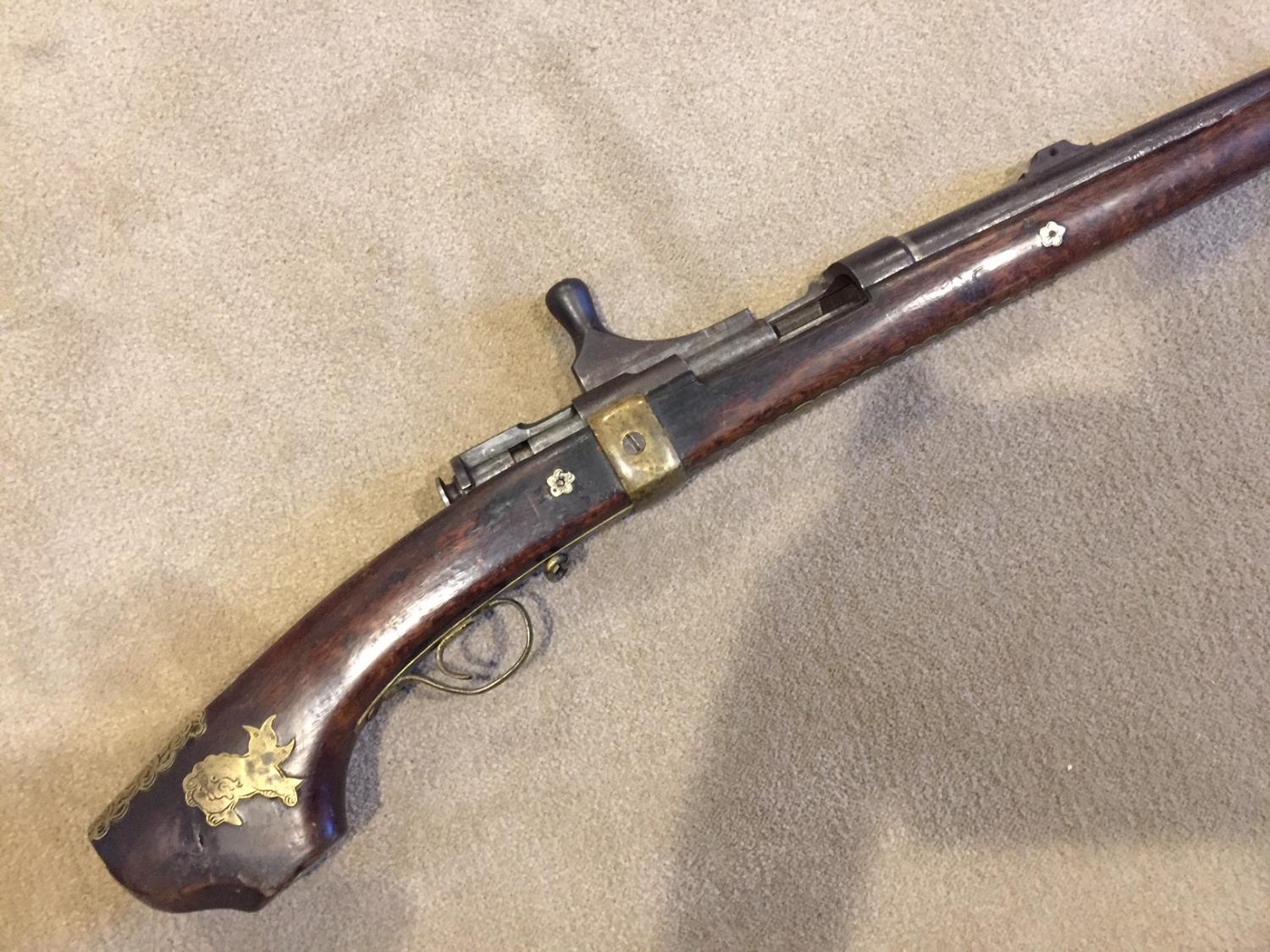
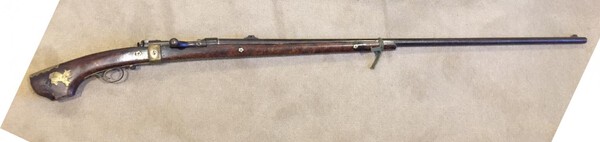
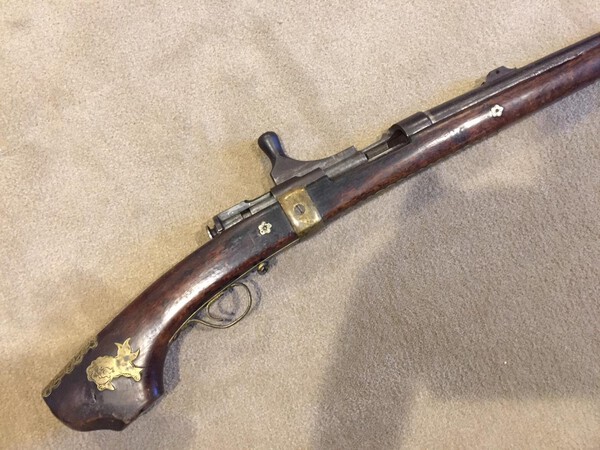
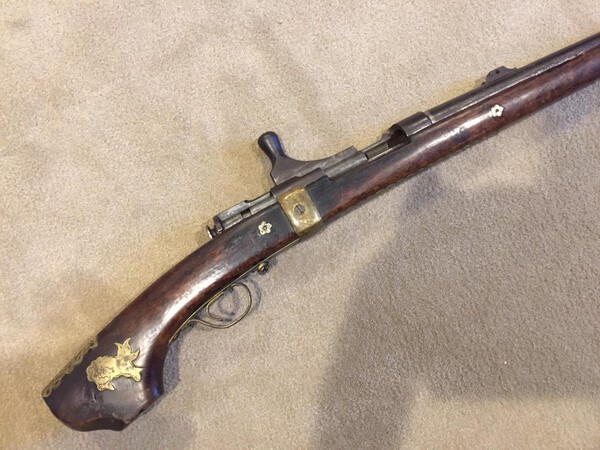
Listeros! Please allow me to spall off a new thread. The discussion of an interesting matchlock gun started by Redhugster resulted in worthy responses. Thank you, but to keep things focused, I’d like to open a thread for discussion of the bolt action modifications of Japanese firearms. I think it is fair to say that this NOT a topic that will be addressed in Japan. Bolt action modifications may be found in a museum or two in Japan. But I bet that they are rare over there and NOT the sort of thing that would be easy or popular to investigate. If the world is going to understand these things, it is up to GAIJIN to lead the way. If I am wrong in that regard, I would welcome access to Japanese publications that address this topic. To begin I will repost images of my gun. Overall it is 54” long with a barrel/action length of 43.5” It is totally unmarked. The bolt and action seem to conform to the Type 13 Murata, but without serial numbers and no vent hole behind the chamber. I don’t know how to measure the chamber. The barrel is round with a slightly enlarged breech end. It is smooth bore with an interior muzzle diameter of 12.7mm. Pretty odd. The barrel has solid front and rare sights appear very Japanese. The stock is Japanese oak with a number of “brass” inlays. It looks like it has been shortened to a “half stock” but it is fitted with a brass tip so it seems to have been done in Japan. If there are other observations that I should add, please let me know. I would be very interested in knowing when and why this gun was modified. Type 13 Muratas were obsolete by 1885, but this gun looks like it was essentially a civilian product. Is there literature on how guns were being modified and marketed in Meiji Japan? Peter
-
The latest edition of "Man at Arms" arrived to day with a nicely illustrated article by Paul Scarlata on "The Military Handguns of Imperial Japan Part I" Looks like a traditional version of the well-traveled story - Tanegashima, sakoku, imports, yahhh dahhh yahh dahhh. But it is nicely presented and clear evidence of collector interest in good Japanese arms. Peter
-
- 2
-
-
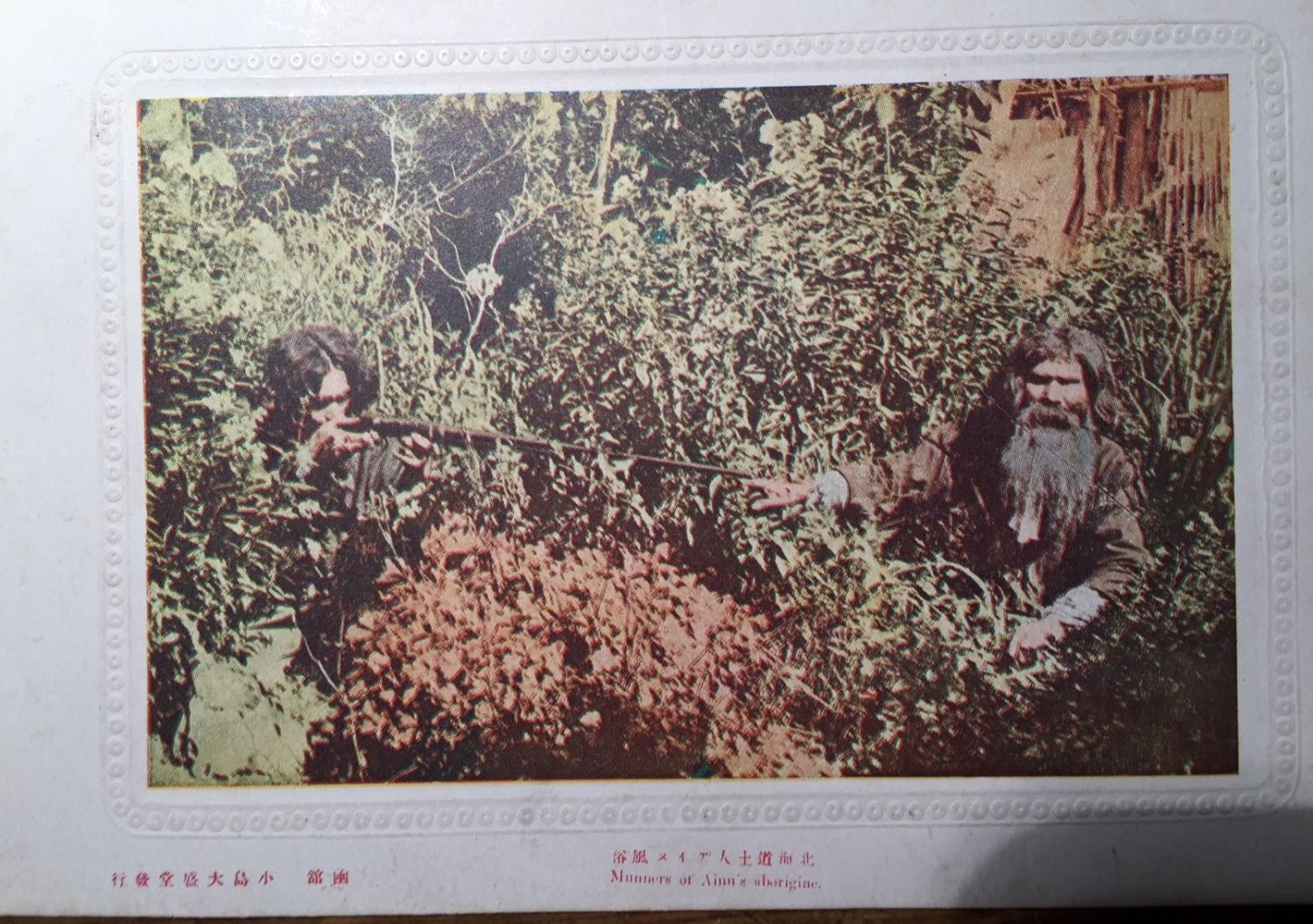
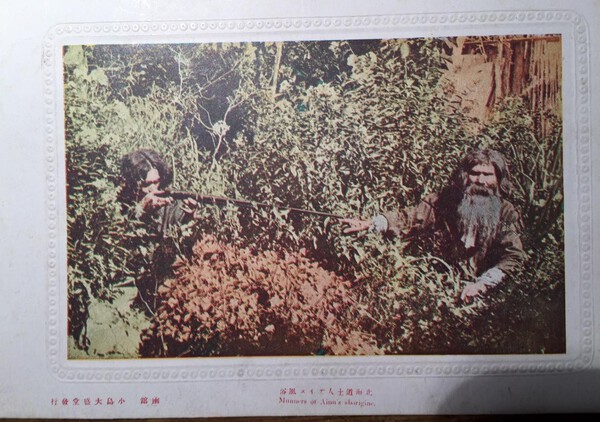
The issue of how Japan - and other matchlock using communities - modernized in the mid 19th century is a very interesting topic that has much to say about how technology evolves. I happen to have a matchlock that was modified with the addition of a Murata bolt. I love the suggestion that these changes were somehow linked to WWI! The post card presented below suggests to me that these gun were repurposed as hunting arms. Peter
-
Gotta love those Chinese subtitles! Peter
-
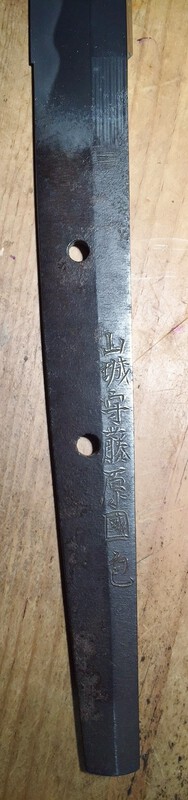
Dear Friends, Last week was terrific for the NMB! I enjoyed several good discussions, especially those on masame, the interesting (if problematical) niji-mei Kunikane, and discussions of which kinds of sword command value/respect. In the context of those issues, I had to get out – and look at with new eyes – at some swords. I hope you will allow me to present a discussion of one of those swords. This is a 26.5” (67.3cm) katana that I bought at Tampa several years ago. Two other collectors told me about it as I walked into the show. It was mounted in nonregulation gunto mounts. The Katana-mei says Yamashiro Kami Kunikane. This is the signature of the second Kunikane. Frankly this signature looks very good. It is well cut and the penmanship seems pretty good, although the placement might seem challenging, And there is no question that the machi have been moved up substantially. The sword is still a solid daito. On the other side is an inscription saying Raised/Shortened (I need help with the first kanji- thank you) Genjiro Kunikane. Genjiro was the third KK and the son of the number 2.This signature, also, looks very well cut altho Genjiro was maybe a bit inconsistent. I bought the sword and sent it to Japan for a polish and shinsa. After paying a lot of money and waiting a long time. It came back with nice new habaki and shirasaya, but NO PAPER! I was disappointed and asked my agent. He said the shinsa team (I think it was not from the NBTHK) judged it a very good sword but they would not verify the mei. They could not even informally suggest who made the sword or why it had this interesting inscription. Given that the blade was fully visible when it arrived I expressed disappointment that it had not been submitted to shinsa before polish. Getting bad news early would have been an advantage. There is no question that this IS a good sword, but it wasn’t the good sword I was hoping for. I did not wish to peddle it as a fake. So it has languished in my collection ever since. This was one of the swords I got out this week. It has a coarse gonome hamon with a couple of flat sections. It is nie rich and there is ample ji-nie. This may not look like “Kunikane style”, BUT the second KK did make swords this way. Likewise, if you are expecting masame hada, this sword is a challenge. A fast moving shinsa team would see itame. Looking closely, however, it is apparent that this sword has a masame grain. It has some hari-gane and sunagashi, both of which are features of straight grain. I’m still disappointed with the shinsa results, but this case leads me to an observation and a question. First, this sword may have presented the shinsa team with a problem that was outside their expertise. Shinsa teams deal with the categories and smiths that they consider valuable. The Kunikanes are not a hot topic. I’m sure that if I could show this sword to fellows in Sendai, they could tell me for about it and how/why swords were being shortened in Sendai. Second, I’m coming to believe that masame hada requires special polish. This sword looks good, but does not advertise its masame. I wonder if I should spend more money and wait some more time getting it polished by a guy who can pull out the grain. Thanks for listening. Peter

-
Good eye, Jacques! The kiri yasurimei could be all right, but I had not noticed the ana in the jiri. That does look suspicious and I am sorry I missed it! The style of the signature looks all right and I have assumed that atomei signatures would present something more than just the two characters. If somebody was trying to fake this signature, why didn't they also just move the jiri up enough to lose the hole. Odd. Peter
-
This looks to me like a classic Sendai shinto. Thankfully it has a simple niji-mei signature so it can easily be placed in the "school" . As far as I can tell, the niji-mei could have been made by any of the 4-10 generation. The mon on the habaki is a a common Date family crest. Peter
-
I, too, agree completely with Rich. Of course we should collect what we like and understand. The point I was trying to make is that market trends about "good" or bad" schools are social decisions.Individuals can decide what they like. If you want to buy swords that will do well on the market, you have to follow the tastes of major collectors, dealers, and taste makers. If you follow your own tastes you might have a great time and find some bargains, but investment values might be hard to predict. Schools that command high prices will be those accepted as the "preferred" ones. Many of the leading collectors and dealers operating out side of Japan now seem very sensitive to market trends and the tastes of the NBTHK shinsa teams. They really like Juyo certification - or better. These are the standards that define "good schools". It is standards like this that let "authorities" say that there are NO seriously collectible Shin-shinto. I mean please! Peter
-
Japanese sword collectors can follow one of two paths. They can either follow the establishment standard, do things the way they should (ie, the way prescribed by social leaders). OR they can strike out in a direction of their own choosing. We can either accept the great myths of sword collecting (e.g. the Gokaden) and study the standards of established authorities OR we can foolishly pursue categories that we happen to find interesting. Japanese society really likes fitting in. Japanese are not comfortable with conflict and disagreement. Successful Japanese have generally learned the social rules and followed them. The post WWII generation of "Non-Japanese collectors" followed different social rules and depended on rather incomplete information. That generation - and style of sword appreciation - is now passing. It is being replaced by "World collectors" who depend on well organized markets that are generally controlled by - or at least sensitive to - Japanese leaders. In this situation, serious collectors need to understand which categories the leadership approves of. These decisions are social NOT rational. If you want to collect like a Japanese, all you have to do is learn the rules, find a comfortable social position, and trust your leaders. They will tell you what is good and bad. Peter
-
Given the stimulating Bitcoin buzz going on elsewhere o the NMB this is a an interesting discussion. As an easily grasped "interesting" type, good clean gunto probably have better marketability than other generic sword categories. This makes them relatively liquid. Still, I am not sure they should be considered "good investments." They may not consistently meet the legal requirements that would let them to be traded internationally as "antiques". And more importantly, even if there is a future market in Japan for "militaria", gunto with machine-made blades are never going to enjoy support from Japan. Will there be a dependable worldwide market for WWII era Japanese weapons? I'm not so sure. Peter
-
Please allow me to beg the advice of the NMB on a topic that is – I have decided – NOT about Japanese swords, but which may be within the interests and expertise of some people who visit this forum. A couple of months ago I bought a military sword that looked like it might be an early Japanese parade sword. The sword was missing the pommel and was in rough shape but I thought there might be some remnants of Chinese character on the surface that had been below the missing pommel. The owner also described a restoration plan that I thought would do more harm and good, so I got the project. DUMB! Once again I will say that I wish there was a lot more literature on Chinese swords, but I have convinced myself that this incomplete unit is Chinese rather than Japanese. Can anyone endorse or correct that conclusion. Beyond that, I would like some guidance on the missing pommel. Please note the length of the surviving tang. Are there any pictures of Republic/War Lord era Chinese swords that that might suggest what the missing fitting looked like? Finally, if I were to decide that this restoration is beyond me, can anyone suggest someone who could do it – or who might want to own this bad boy. Thank you for your attention! Peter

-
Seki Kaneshige P
-
Japanese Matchlock Help!
Peter Bleed replied to Novice Son's topic in Tanegashima / Teppo / Hinawajū
Bob, If you wants information about the worth of Japanese matchlock I would tell him that prices are 1) highly diverse (mainly because the guns are highly diverse), and 2) generally falling. As accurate as those two points may be, readers of this thread might want to note a gun being offered at an upcoming auction. https://www.rockislandauction.com/detail/72/3324/attractive-cased-exhibitionoffering-grade-Japanese-matchlock Peter -
Jeremiah, Thanks for the response. It is frustrating to work up a piece for the NMB only to have it apparently read but ignored.Maybe I have a knack for presenting ideas and objects that others don't care about. Let me go a bit farther about masame. Basically, I think it is hard for most of us to SEE masame - especially in koto swords. It is possible that masame needs to be polished appropriately to be really apparent. If a polisher does not "bring it out" it may be hard to see. Furthermore, koto masame may be essentially different from the straight grained steel of the shinto era. At the last Chicago show I brought a freind's sword that I was just pretty sure was a candidate for a Hosho blade. I begged opinions from lots of "senior collectors", but NOBODY called attention to the masa. Truth to tell, there was some itame mixed in there and that is what people saw until I pointed out the straight grain.(Glad there will be a real shinsa next year!) I think some Sendai Kunikane smiths may have used something like contrastive steeL I have a 12th tanto that seems to fit that suspicion. Peter