Shamsy
-
Posts
1,403 -
Joined
-
Last visited
-
Days Won
12
Content Type
Profiles
Forums
Events
Store
Downloads
Gallery
Everything posted by Shamsy
-
Big assumption, Bruce. One I don't agree with. You're entirely forgetting what was done with Type 32 when they were returned to the arsenal. Sometimes a coincidence is just that. You've made a fair leap from 'only 6000 apart' to 'only 128 apart'. There were definitely mistamping of swords and saya. Plenty of evidence of that. I could certainly believe that numbers like 12354 and 12345 were accidentally done in the factory. There is, however, no evidence that I am aware of that the arsenals would just slap together a 'close enough' saya that they just happened to have lying around. Would be a simple matter to grind down the throat and restamp, as we sadly see a number of unscrupulous dealers already doing. Can I believe that after a battle that a NCO with a damaged sword/saya collected one from a deceased and used that? Absolutely. Need to see where the idea of wartime separation of swords and sayas was sourced too. Seems stupid and dangerous to take a bunch of swords out of scabbard, pile them together then let soldiers grab one from each pile. Why? I'm not saying this didn't happen as I don't have the proof it didn't, but all the photo's in those same books show piles of swords in their sheaths (quite sensibly so). The idea that dealers separated swords later to make them look nicer seems more likely. I'd be keen to see if there are an average of more matched swords than mismatched. Seems to me that mismatched are less common than matched, but anecdotal evidence is useless.
-
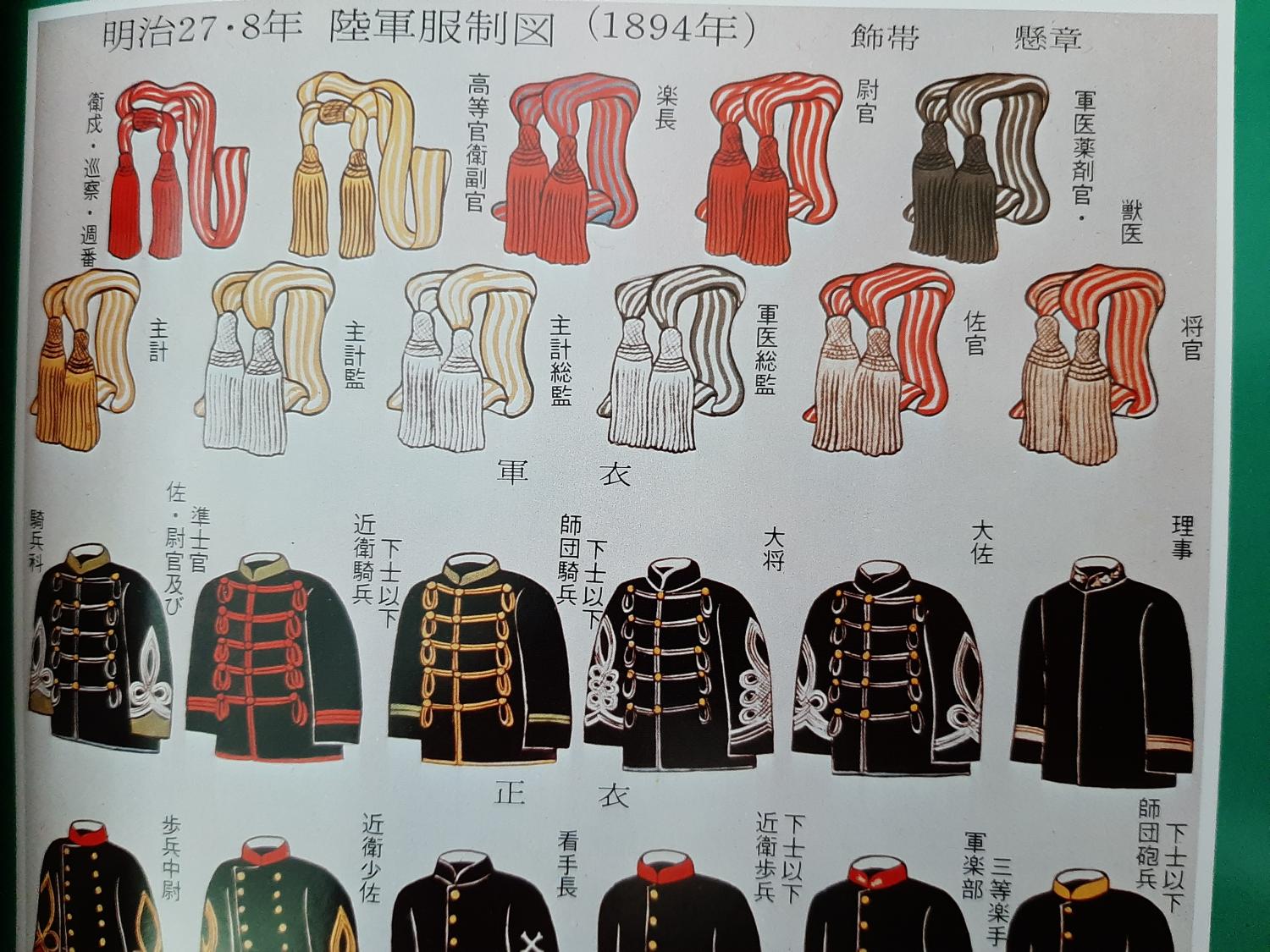
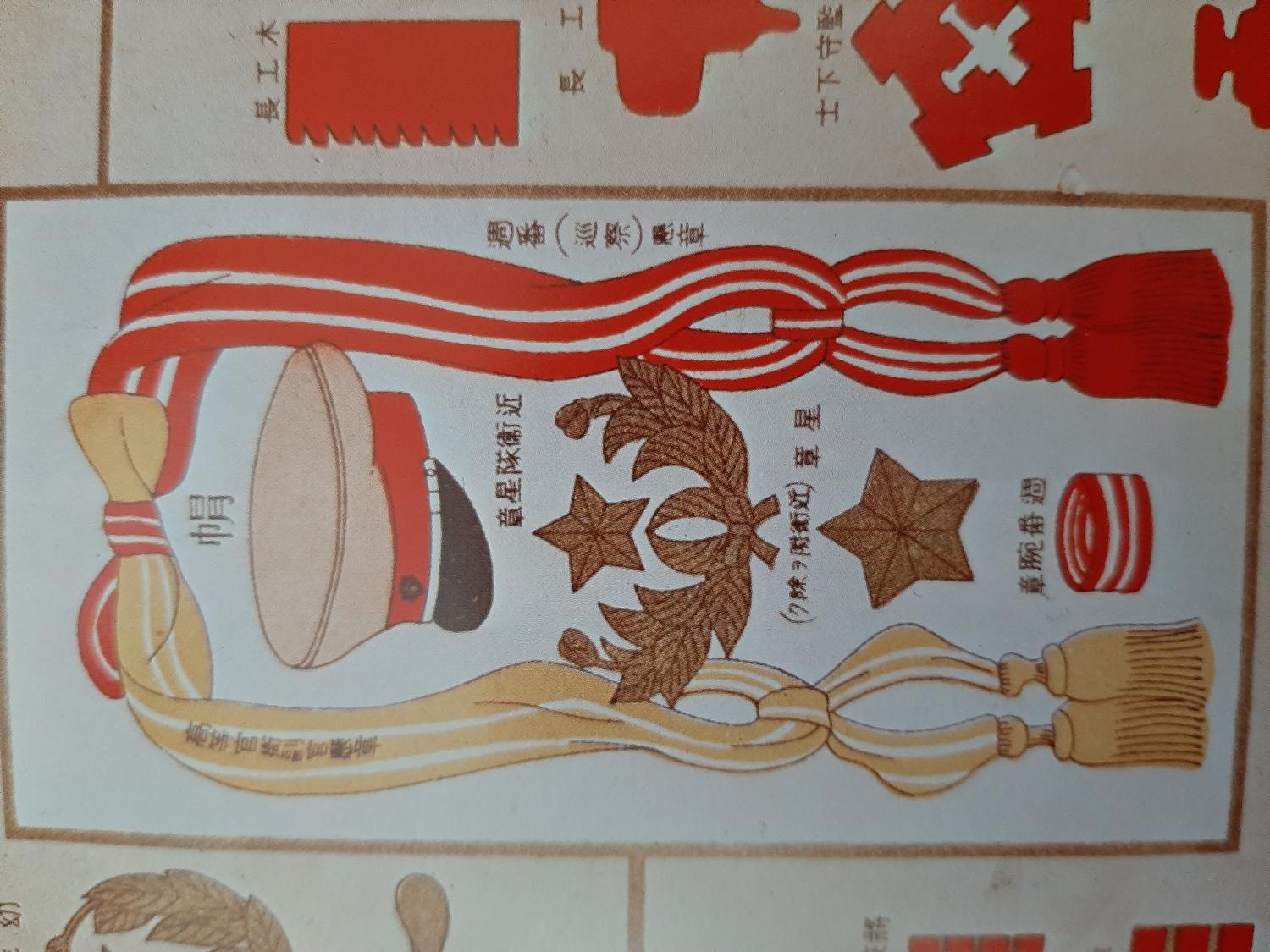
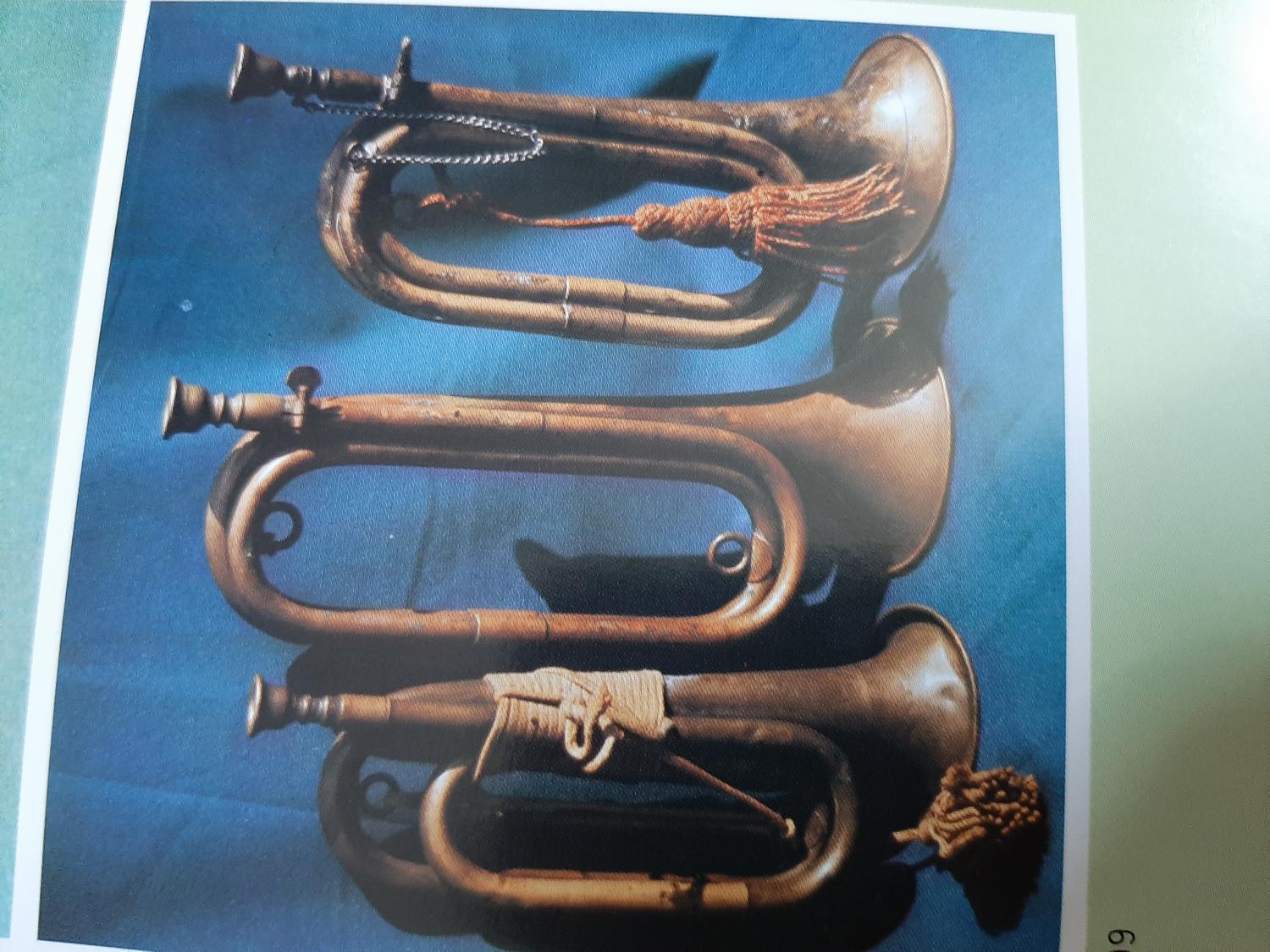
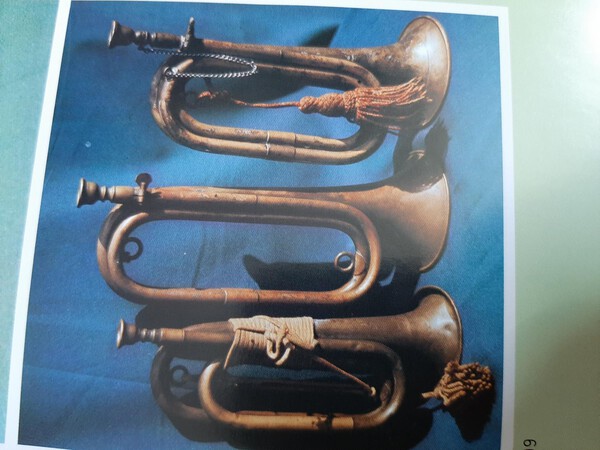
Basically only related via the subject of tassels, but here are a few pictures I found in a book detailing Japanese military and navy equipment. The illustration shows... not sure what they are called, but basically belt tassels used with dress uniform, not sword tassels. The only yellow I could find was naval. Sorry, not my area of expertise by a long shot, this is more of an interest post.
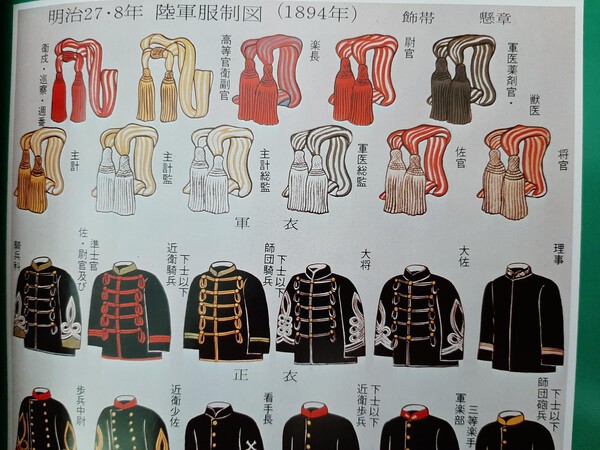
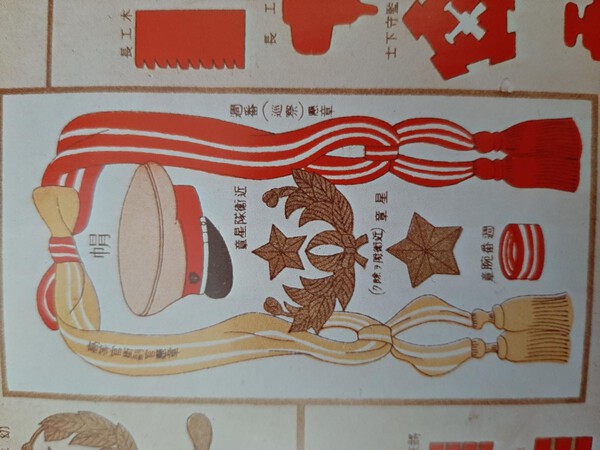
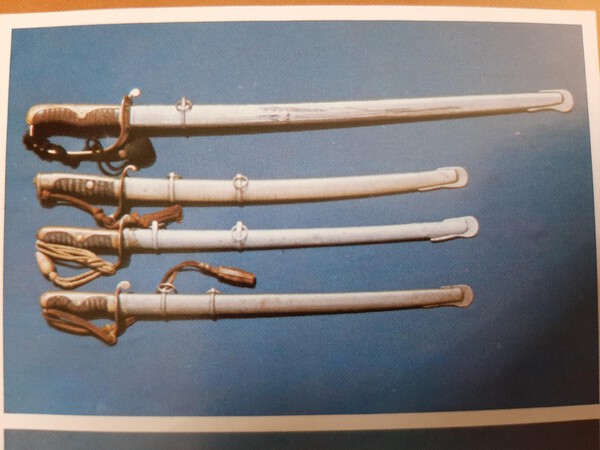
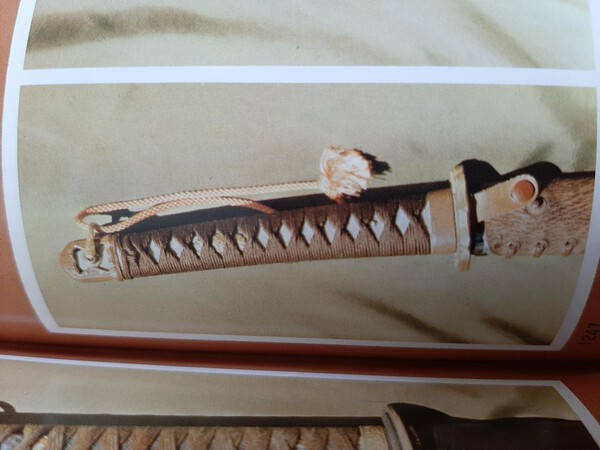
-
International shipping is terribly slow. I'd not want to risk something going missing
-
Probably wouldn't state that you touch the blades with your hands here.
-
 Yep, that sums it up. A Type 95 blade, cut, drilled and ground down to fit Type 98 fittings that are not intended for the blade. Why and precisely when will never be known. Enjoy it as part of your family's history, Aaron. It's great to have these sort of heirlooms to pass on.
 -
Open work tsuba is slightly more promising than if it were closed. Could be a standard mumei machine blade or something a little better. Hard to tell.
-
Looks like a small hole or chip. Worth checking out though. Can find stamps in all kinds of places.
-
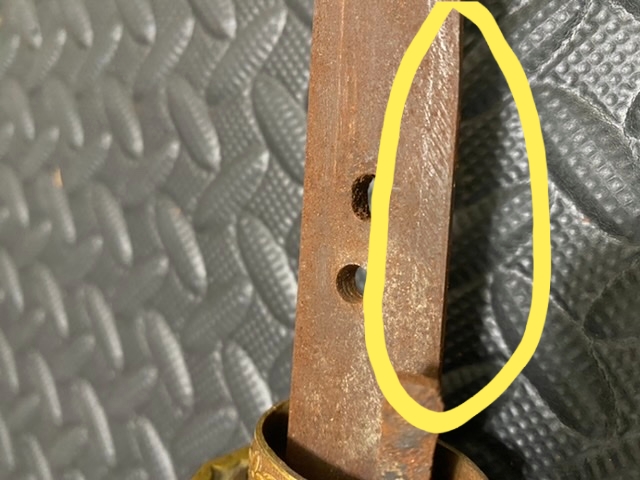
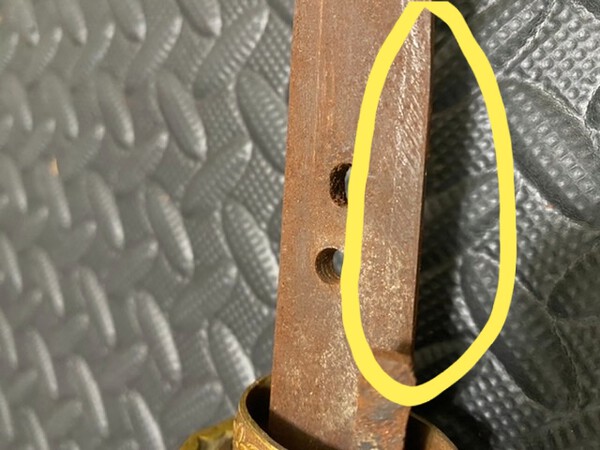
Trystan has already posted a link to these, so no shock horror for anyone who has actually read the thread. This is plainly a repurposed 95 blade as the serial number, extra hole and cut-down nakago demonstrates. It is therefore entirely different to one of the unstamped arsenal blades which I believe are what you are referring to, Hamish? This is why we are discussing it. ------------------------------ The photos are not great, but the third one in in the post following Hamish's post clearly show where the nakago has been ground down. The blade was made to fit the tsuka, not the other way around. The second drilled hole is particularly crude, too. The original still shows the thread from the screw that used to hold the 95 tsuka.
-
I'm of the more skeptical side, though the NCO blade are good blades and as already stated, it seems far more likely that an NCO blade would be placed in an officers koshirae than the other way around. Remembering that there was a 'Rent a 95' program and a private purchase scheme. I can easily believe that an officer would buy a 95 and have the koshirae changed to reduce the (not really sure of the term to use... shame? Embarrassment?) of having a piece of issued equipment as his private purchase equipment, even though it was a temporary measure. I cannot see that the other way around, keeping the 95 koshirae and replacing the 95 blade. Field work is also possible, though I'm not sure that 'borrowing' issued equipment owned by the emperor would have been a particularly acceptable practice. In short, I think it's plausible for 95 blades to appear in 98 koshirae, but not the other way around. More detailed shots are always welcome though, as there is sadly always going to be a degree of skepticism due to the trend of dealers mixing fittings and blades to create 'rare' variations of swords.
-
Yes, some of the Pattern 1 95 have the extra numbers. The examples I'm thinking of are not 95s though. One is a very crude sword with 95 characteristics, the other is a crude sword all covered in leather.
-
I have two very late war swords, one with serial numbers on the habaki and one with serial numbers on the blade. It's not unheard of with the mess of swords, especially late war.
-
Thanks Stegal for adding the extra bits of info! And so sorry Neil! I totally forgot that I was going to check when your sword was made. I've not got the best memory as it is and I'm fairly tired to top it all off.
-
You would do well to steer clear of eBay if you're looking for good swords. There are a good few members here who deal swords at good prices and without the 'hidden' surprises eBay usually entails. Their knowledge is far superior to most of the eBay sellers too, and they can help you find something worth owning. There are also a number of merchant sites you can find listed under the introduction page who have a good reputation and good stock. It gets repetitive always saying it, but you'd be doing yourself a favor to do s little more digging before you buy anything. There are numerous styles, levels of quality, iconic swords and smiths... there is a recent thread Neil started about iconic works of WW2 which should be your starting point. Good luck.
-
Hi Dan, Glad you enjoyed the exert. I'm not sure exactly where the phrase originated. It's not really a polite term for an idiot though, more an alternative to saying 'it should be obvious', 'plain as day' or as a distinct Aussie alternative, 'it's a no-brainer'. Something so self evident that you can state reasoning beyond any doubt. I've thought about the layout more am I think a homogeneous set of sub headings for each sword, with a description and some narrative under each would be a good structure.
-
I can't definitively prove it, it's only my opinion based on what I consider basic logic. I could probably make one of these myself if I had the spare NCO parts and an officer blade with a hole at least close to the needed fit. Or just stuff it in and don't add a habaki, then it's easy to fit a lot more sword blades. Always an exception to the rule of course! One may be genuine, wartime fitted for whatever reason. However, this to me is much like the island sword issue. Unless the sword comes directly from veteran you trust, it's just another questionable 'who knows'. I think the original sword Tom posted is a little more interesting because of the lack of stamping. We're it properly fitted with an NCO habaki I'd consider revising my opinion on THAT sword only. But I find the missing habaki such an obvious issue. If monkey reads this I guarantee there will be a new influx of these 'rare' swords. That guy has bodged so many swords with mixed parts...
-
There have been a number of these on eBay within the last few years. Some are very poorly constructed and obviously put together with a conveniently fitting blade. My opinion to date is that these are post war put together. I'll note up front that Stegal and I do not agree on that opinion. At least, he does not rhink they are all put together. Logically, I cannot see any reason why a forged blade would be fitted in a mass produced koshirae. But What about the officer private purchases? That was due to a shortage of swords, sure. But I think that was primarily the blades, not the koshirae. As far as I am aware, fittings were never an issue as a private purchase, so why have a good blade fitted to a mass produced koshirae? Why not get a koshirae made? NCO upgrades? The Type 95 was issued equipment, not owned by the NCO. I imagine switching the blade would be frowned upon. NCO bring your own sword program? In the photographs I've seen, the NCOs all carry civilian swords, some with leather covers. I again can't believe that the army would fit your own blade to military owned fittings. I do think it is interesting that the fuchi and saya are unstamped, but that is not so rare as to convince me. The missing habaki is very suspicious to me. The habaki created the seal to the saya and could have easily been fitted. We know swords are shortened in the field, so I find the absence inconceivable. I suspect that carrying around a sword that looked like issued NCO equipment would be considered very shameful. Nick has alluded to this with the rinji, saying that the army had to really sell it as 'superior' for officers to accept it, as it was considered the 'poor man's sword. My thoughts are that these are all put together and sold as 'rare' to part the hopeful from their cash. This Is my own opinion, but I'd be pleased to discuss. Edit: More examples! They pretty much highlight exactly why I have issues with the suggestion they are anything but put together swords. I mean, those examples are all stamped, some have serial numbers on the saya. There is no consistency. Some look to be well fitting, others are missing core components like the habaki, probably because it would be too hard to fit one and the blade couldn't be modified without leaving evidence it was recently done.
-
A question... would it be better to present the information under uniformed sub-headings? For other swords or variations, should I speak to each part of the sword, even if it were just 'saya is identical to standard Pattern 2' for example, or would it be better to only include the points of difference? E.g. Main heading Tsuba Saya Habaki Blade Sarute Paint Actually, I'll tidy this up with some examples to make the proposals easier to understand later. Just thinking about the best way to present info.
-
Hens teeth Neil! I've seen one other that appeared to be mostly intact, though it may have been split. I don't know if there are any other genuine examples entirely intact.
-
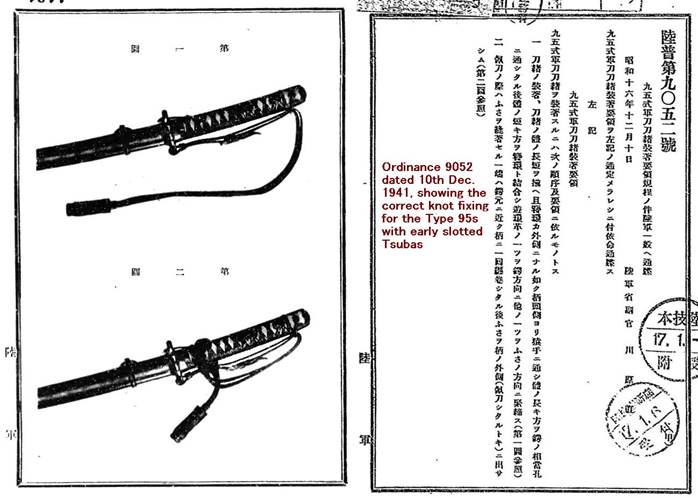
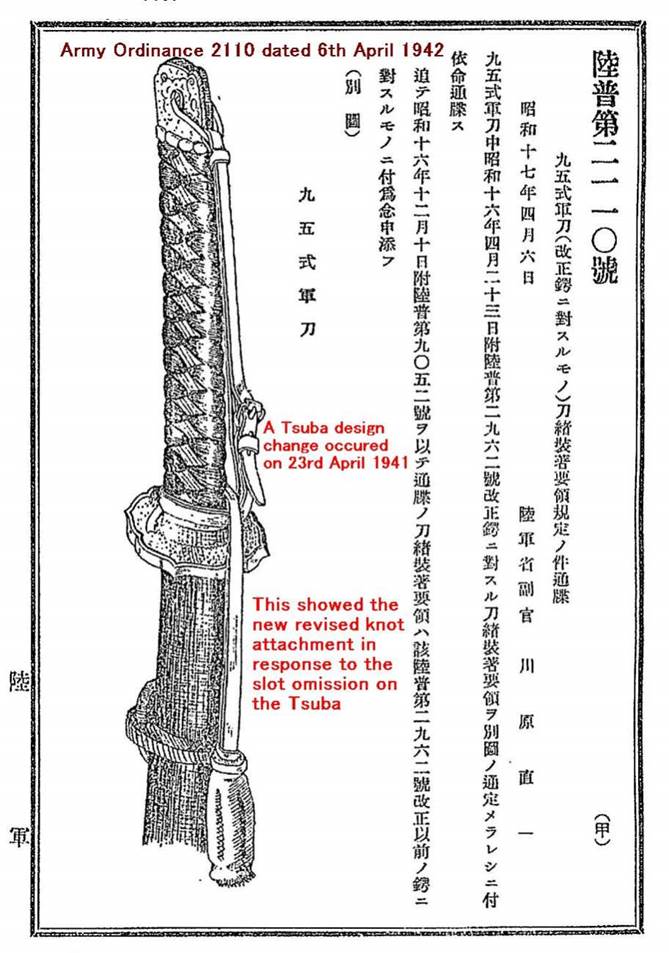
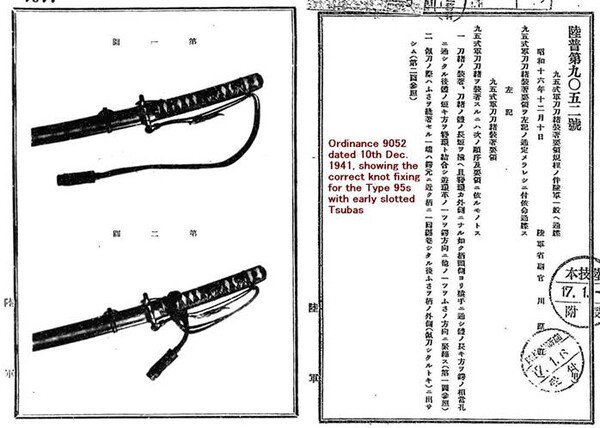
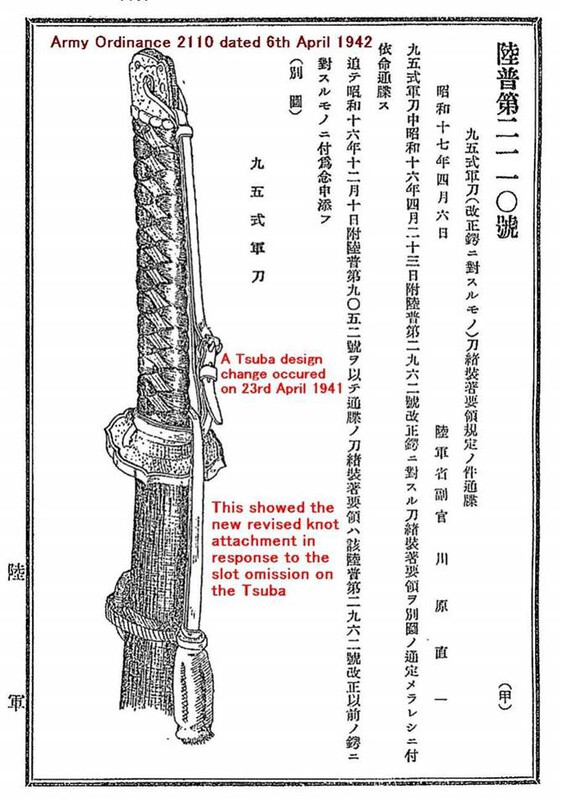
Here you go Neil. The original regulation with two images and the revision with a larger image. These are courtesy of Nick of course. It will take me a little longer to guess the year of manufacturer, as I will need to cross reference a few charts.
-
Neil, I can try to figure that out when I find the pictures of the knots. No Bruce, the use of the almite was definitely not used on all aluminum handle swords. It was certainly used on the particular transitional sword the exert is referring to and probably some earlier swords. Like the practice of undercoating saya, it appears to have ceased at some point in favour of expediency. Yes, Gifu are different again and their early swords have the shifted ito design, but that's a whole new subject! Even the mirrored ito design on the Pattern 2 is not homogeneous across subcontractors.
-
Thank you for the kind words, gentlemen. You're correct Neil, the tassel passed through the second hole on the tsuba. If I get the opportunity tomorrow, I will post a picture of the army regulations showing the two proscribed methods of attaching the tassel. These were previously posted by Nick,obtained from the national archives. Lovely looking Pattern 2 example, very clean. Serial number?
-
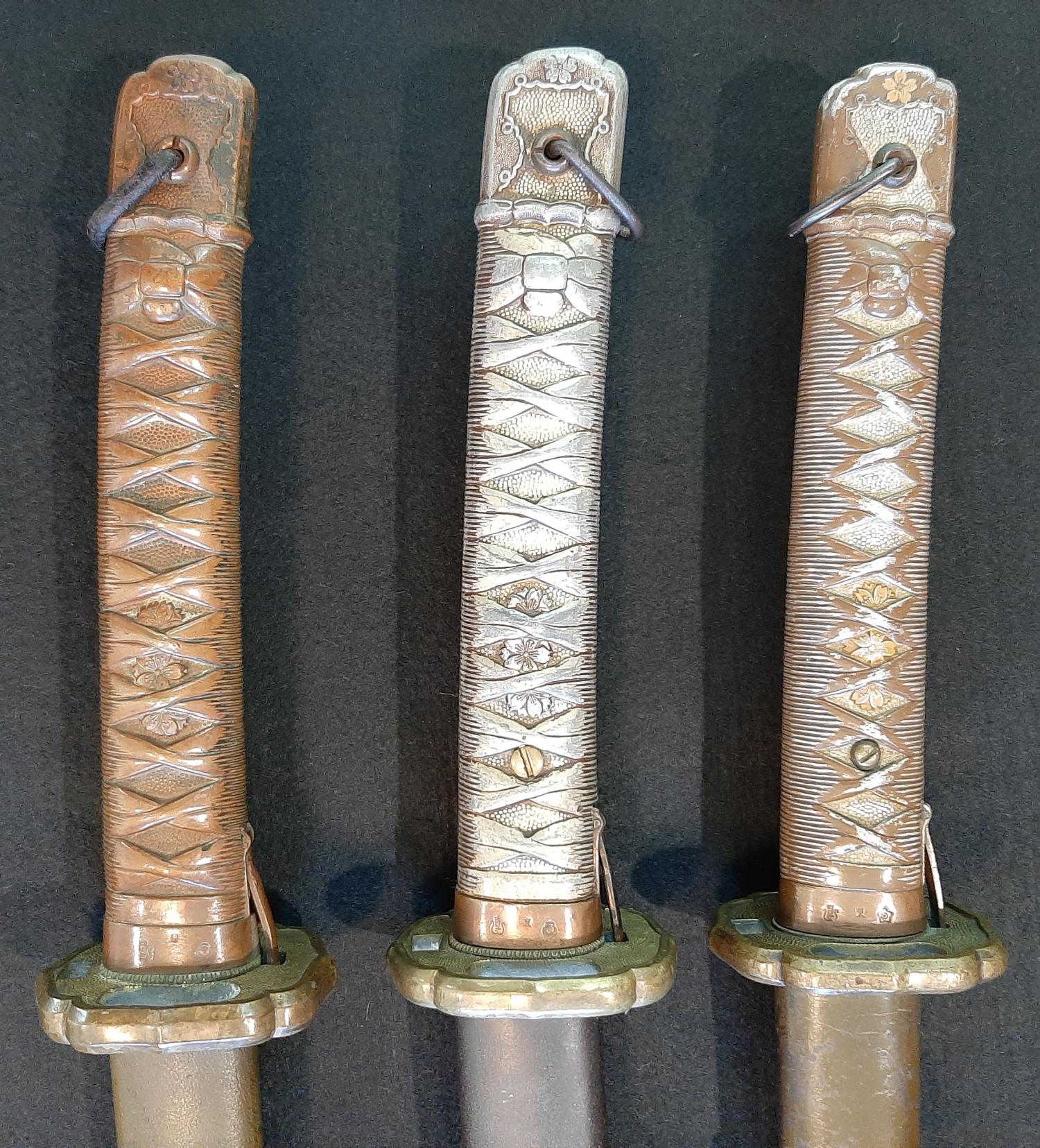
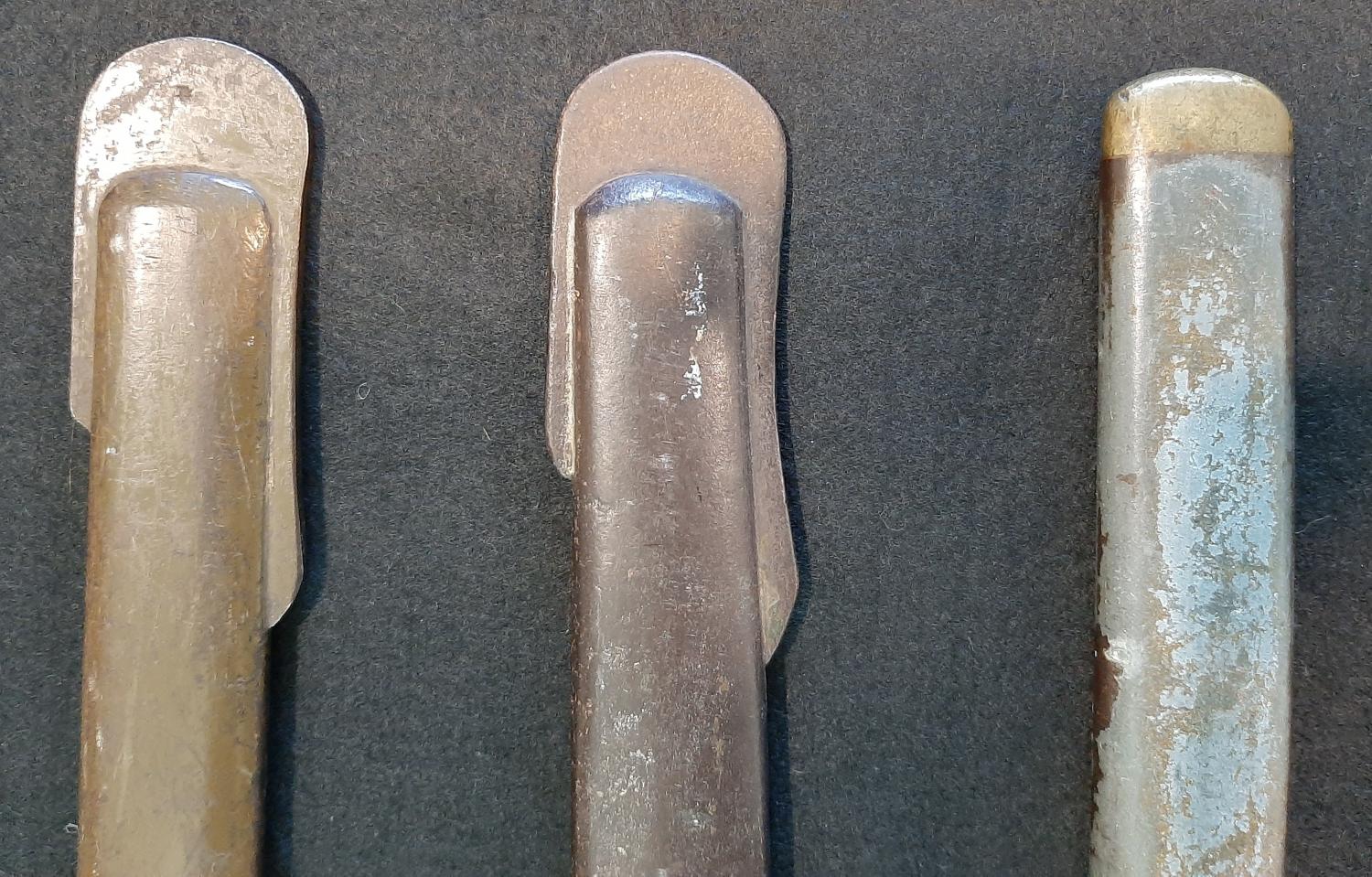
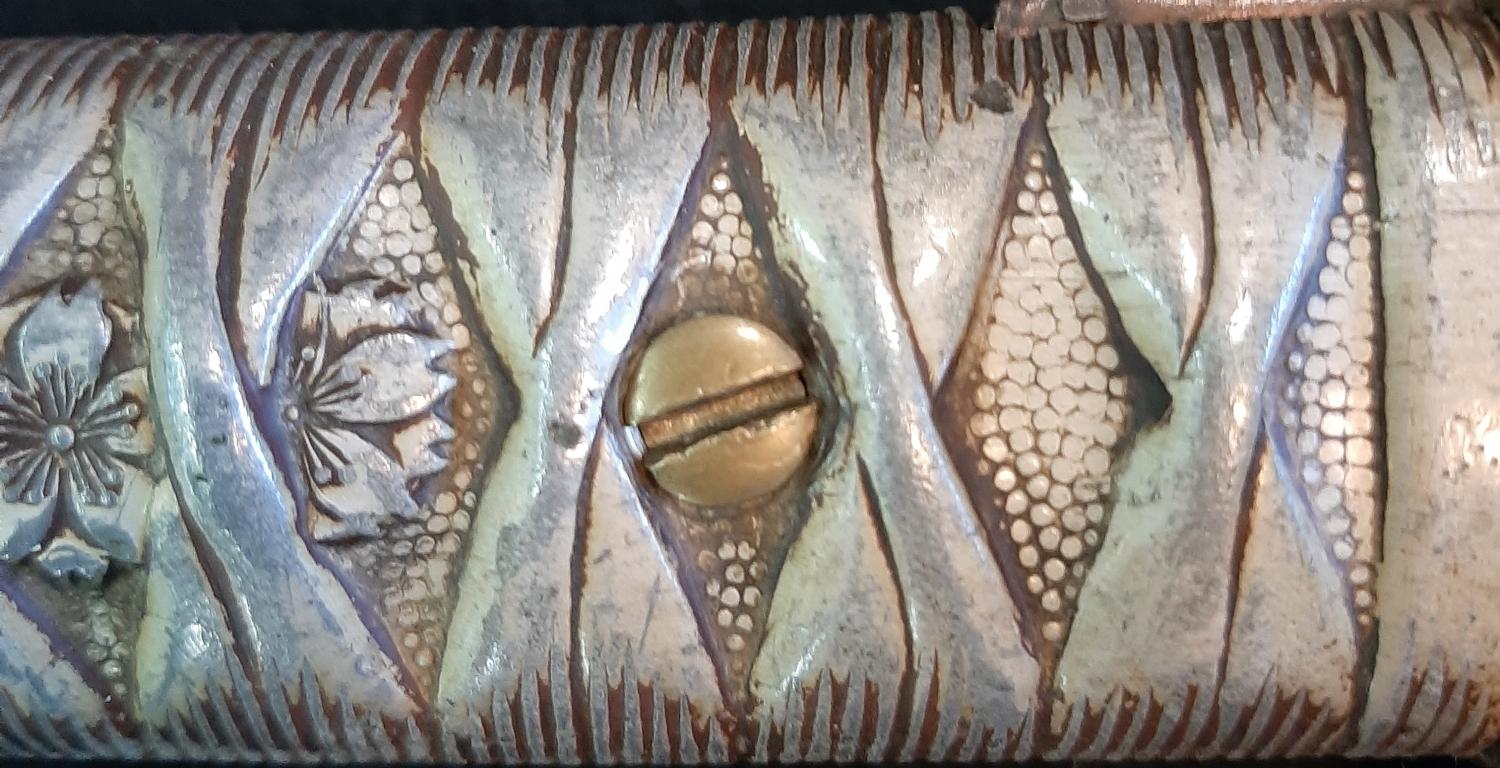
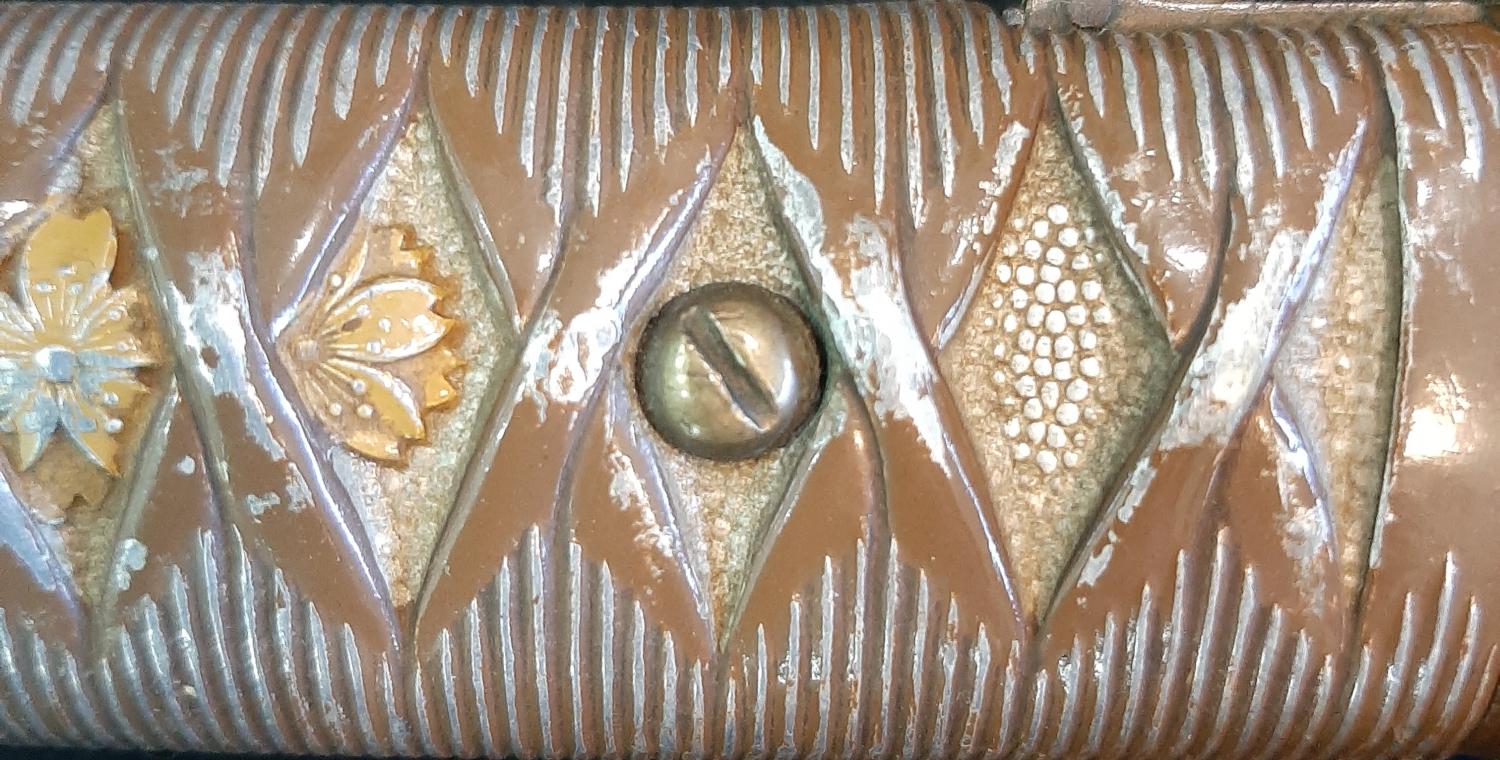
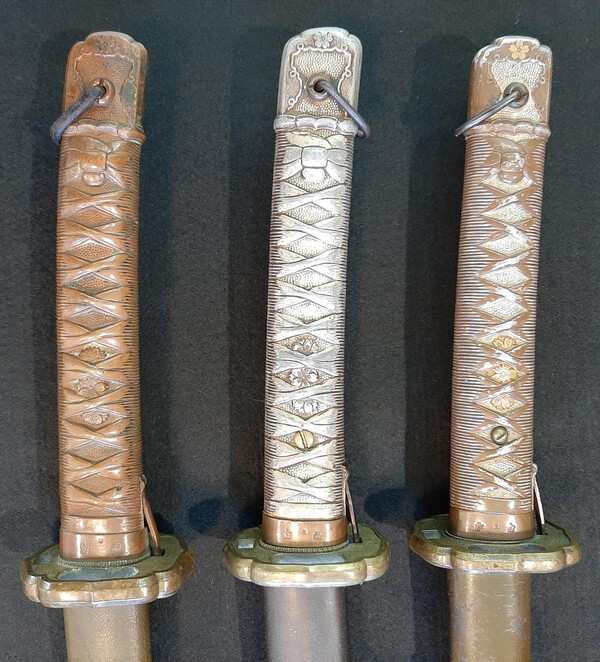
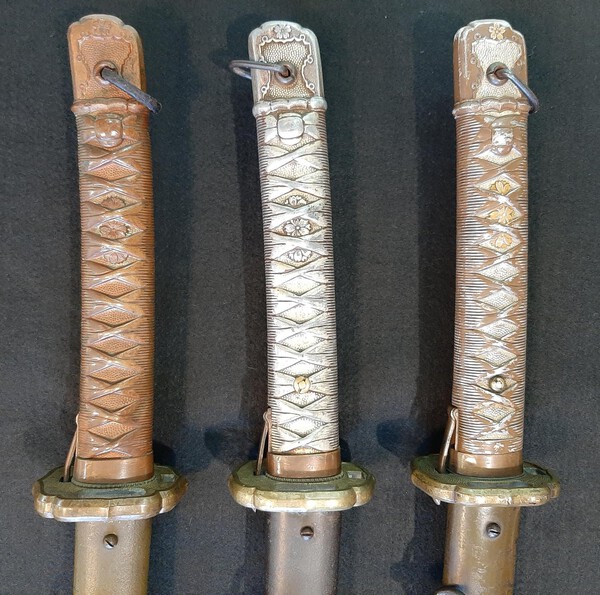
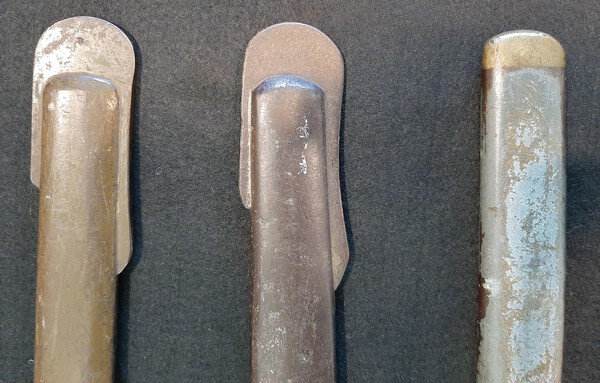
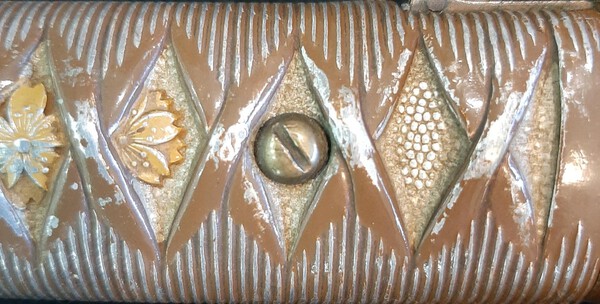
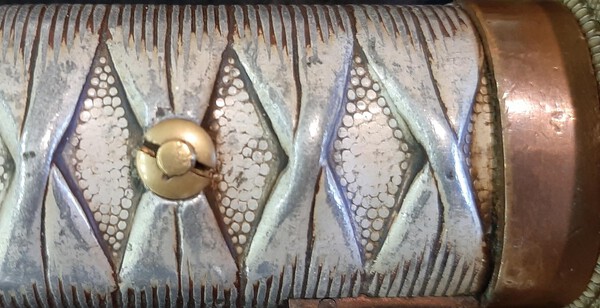
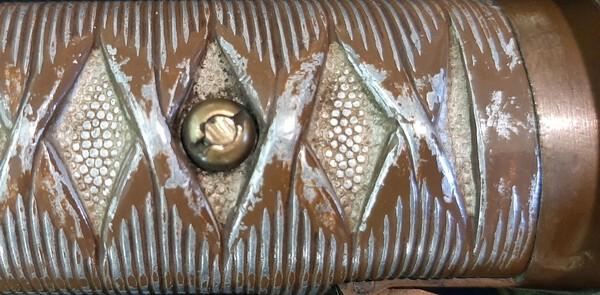
Hello everyone, A few months back Brian asked for an article regarding Pattern 5, 6, 7 and 8 following on from a lengthy thread. Were I to do that, I would be posting a small book. So instead, I am offering a smaller alternative, regarding one of the many variations to the eight main patterns recognised by collectors. I tend to keep information pretty close. I am offering this exert for two reasons: I would like some feedback regarding the information - is it interesting? Is it too detailed? Not enough detail? Is the format accessible? - constructive feedback would be appreciated Secondly, if you enjoy reading this article and learn anything, check out this thread http://www.militaria.co.za/nmb/topic/31297-gofundme-for-brian-send-him-to-dti-2020/ If it were not for the tireless efforts of Brian, most of us would be isolated and without the ability to draw on the vast array of knowledge and experience of the board. I ask you to consider making a small contribution to this thank you gift as a show of appreciation for providing a platform for sharing and learning. Transition Model Type 95 On the 5th of July 1938* the Pattern 1 Type 95 NCO sword was retired from production, to be replaced with the Pattern 2. There is a less documented ‘transitional model’ of sword which rests between the Pattern 1 and Pattern 2 Type 95, in which a number of differentiating details can be observed. Some of these are in line with the Pattern 1 and others the Pattern 2, but are distinct enough to warrant further discussion of this sword independently of the patterns, but with reference to each.. Foremost, the material used to cast the tsuka changes from copper to aluminium. Nick provides us with the following insight into this: “Since the outbreak of the China Incident in July 1937, copper and brass needed to be saved wherever possible, but luckily Japan had a comparatively generous supply of aluminium, so copper was replaced with aluminium throughout industrial production at this time. All copper coins were exchanged with aluminium ones and even the China Incident War Medal was considered for production in aluminium before settling on recycling old bronze coins.” This aluminium tsuka is often observed with a distinct brass/brown colouration, which is often and incorrectly mistaken for staining or patina. This is a thin layer of Almite, which was used to protect the aluminium from degradation. Once again, Nick has kindly provided an answer to the research community. Nick observes that: "Since 1923, the Japanese had been using Almite instead of aluminum, as aluminum corroded too quickly... Unless aluminum was in this color, it was not accepted as decent quality in the 1930s." A second retention screw was added to the tsuka to complement the sarute nut and better secure the blade to the tsuka. This presented a problem, as the cast Pattern 1 tsuka was designed to correctly replicate the tsukamaki of officer swords in the hineri maki style. As both sides of the tsuka are not ‘mirrored’, the drilling of the hole for the additional retention screw resulted in the screw piercing the sunken same diamond on one side but the protruding ito on the other. As one can imagine, this did not allow for the nut to securely engage a flat surface of the aluminium tsuka without a degree of protrusion on the obverse ito side. This was a less than ideal situation and the author observes that this second retention screw nut is often damaged on known examples, perhaps due to the exposed location? Another important detail to note is that the design of this screw differs to that which is used on the Pattern 2, 3 and 4 swords, which are, relatively speaking, consistent. The head of the screw is wider and also less protruding, lacking the dome shape of later screws and nuts. The tsuba on this transitional model continued to use the 11mm thick brass tsuba as per the Pattern 1, while the Pattern 2 introduced a thinner, 9mm brass tsuba*. Nick states that: “The only possible and likely reconciliation is that mixing of old and new specs occurred to use up remaining stock of old Tsubas and Seppas.” The author concedes that this may be the case and would explain the very limited number of this transitional pattern observed. The habaki of this transitional model continues to exhibit the open half where the mune-machi rests. This is a characteristic of the Pattern 1 which ends completely with the introduction of the Pattern 2. The leather sarute used on Pattern 1 swords (though most examples seen nowadays have been fitted with a wire replacement) was replaced by a triangular shaped wire sarute for this transitional model. To the author’s knowledge, there is no evidence that leather was ever employed. The reason for this change should be obvious to even the most unimaginative individual - excessive wear and lack of integrity of the leather sarute. The saya of the transitional model bears all the hallmarks of the Pattern 2 saya. The main difference observed between the Pattern 1 saya and the transitional model is the revised drag; from the copper plug to the well-known integral steel drag observed on the Pattern 2. The positioning of the suspension ring was not adjusted remaining 6.5cm from the bottom of the saya throat fitting. Though consistency of the positioning of the hanging ring appears to be lacking throughout the manufacturing of the Type 95, Pattern 2 suspension rings are usually situated 1cm higher at 5.5cm. It should be noted that the practice of undercoating the saya with a grey base-paint continued for the transitional model, with most known examples exhibiting minimal traces of the green/brown regulation outer layer, but often a generous amount of the grey base paint remains over the raw steel. These transitional swords exhibit a very limited serial number range. Pattern 1 swords have been observed by the author up to the 7,000 range, while the earliest Pattern 2 sword the author has observed begins in the 7900 range. We can then infer from this that there were likely less than one 800 of these transitional swords produced. As with the Pattern 1, these transitional swords are all stamped with the Suya and Kokura stamps on the fuchi and a To inspection mark on the blade, fuchi and saya throat.The transitional sword had a short run and Nick observes that: “On 24th June 1939, the tape wrap pattern for the grip was changed, so both sides had identical patterns and was easier to ensure a tight fit of the fuchi to the lower end of the grip.” There are of course exceptions and variations, but these will be covered elsewhere under the subcontractor and swords they pertain to. Index: *an asterisk denotest this information was obtained from the research of Nick Komiya, who very kindly allowed me to use his research in my work Italics denote an opinion, supposition or conjecture without any basis in documentation or evidence Patterns in order - 1 Copper handle, 2 Aluminium handle - brass tsuba, 3 Aluminium handle - iron tsuba, 4 Aluminium handle - side latch, 5, Wooden handle- steel saya, 6 Wooden handle - wooden saya, 7 Wooden ring handle, 8 Ito wrapped handle

- 114 replies
-
- 10
-

-

-
Looking for Advice - All Opinions Welcome!
Shamsy replied to Bruce Pennington's topic in Military Swords of Japan
Michael, I can relate to that. I sold a gentleman a good gendaito out of polish for $1,200AUD a few years ago. I considered that a pretty good price and he was just starting out. The sword was not bad or flawed, just not looked after post war so had some scuff and stains. A polish would have been, in my opinion, not worth the cost and effort. There was enough left to make it a worthy beginners piece and potential future project. Even a session with uchigo powder would have worked wonders (I never did that, but I'm wiser now). I had the sword returned. The gentleman spoke to a local dealer who called it junk and in turn sold him real junk. Cheap, oil tempers that got a run on the buffing wheel so they were very shiny. Lesson learned. I sold it to a friend and he was absolutely delighted because he recognised a good sword for what it was. -
You're not looking hard enough then, or perhaps you simply 'must' have a perfect polished example? If you're happy to take an imperfect Yasakuni in old polish from one of the lesser rated smiths, you'll hardly break the bank.
-
Looking for Advice - All Opinions Welcome!
Shamsy replied to Bruce Pennington's topic in Military Swords of Japan
I think that a great price for a Rinji Sheishiki and I'm sure you could get 800 as resale. I'd not mess around with it too much myself. You probably know my feelings about swapping parts around. The most I would do is remove the obvious modern replacement parts and replace with modern, but accurate parts. In the case of a resale, I'd leave as is. Late war they may be, but gotta love the Rinji!