Shamsy
-
Posts
1,403 -
Joined
-
Last visited
-
Days Won
12
Content Type
Profiles
Forums
Events
Store
Downloads
Gallery
Everything posted by Shamsy
-
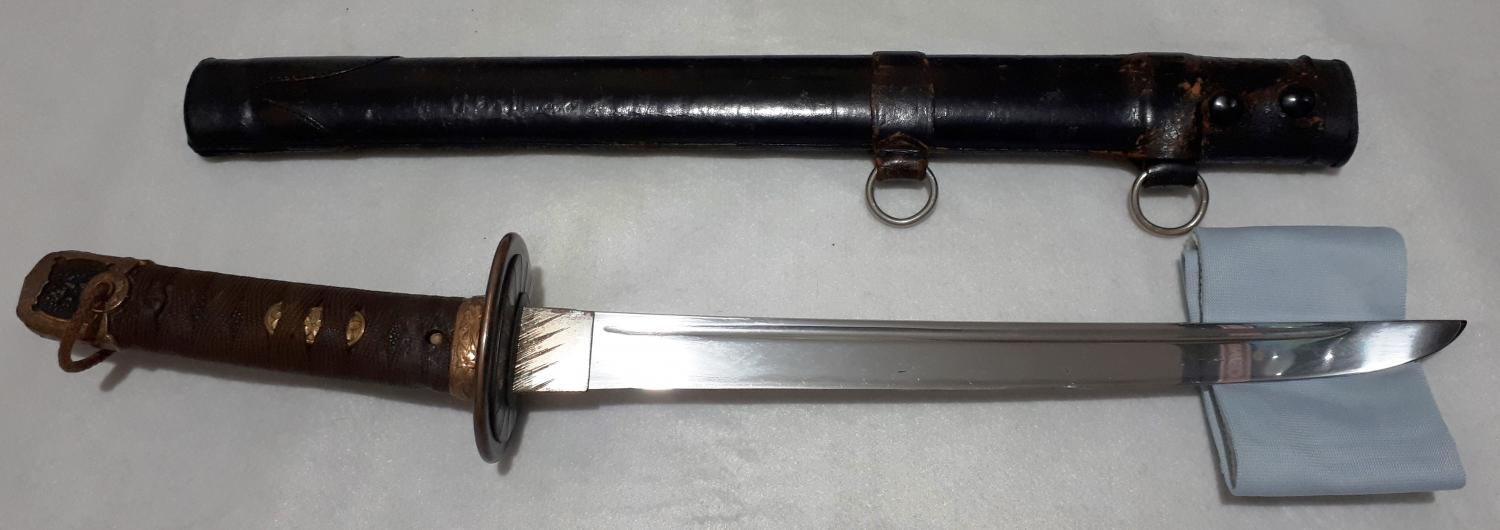
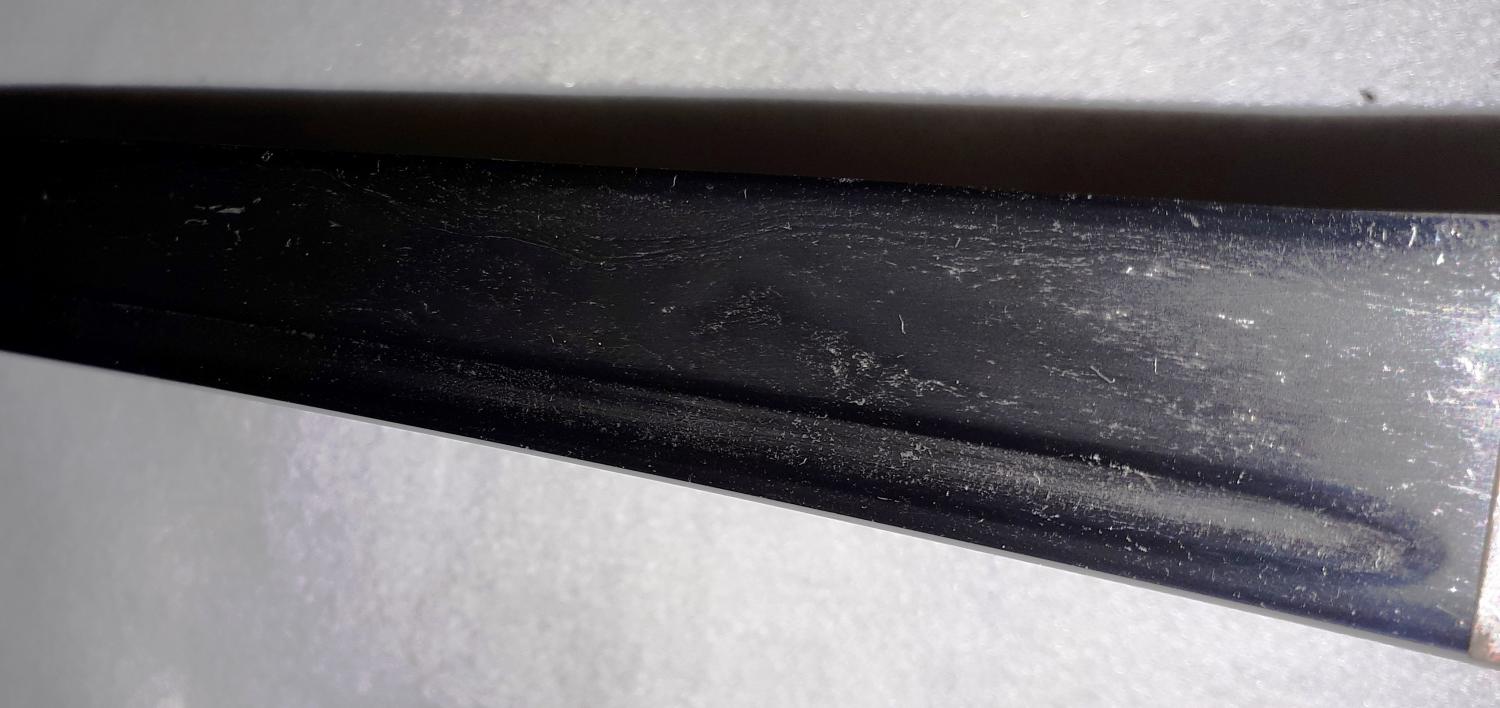
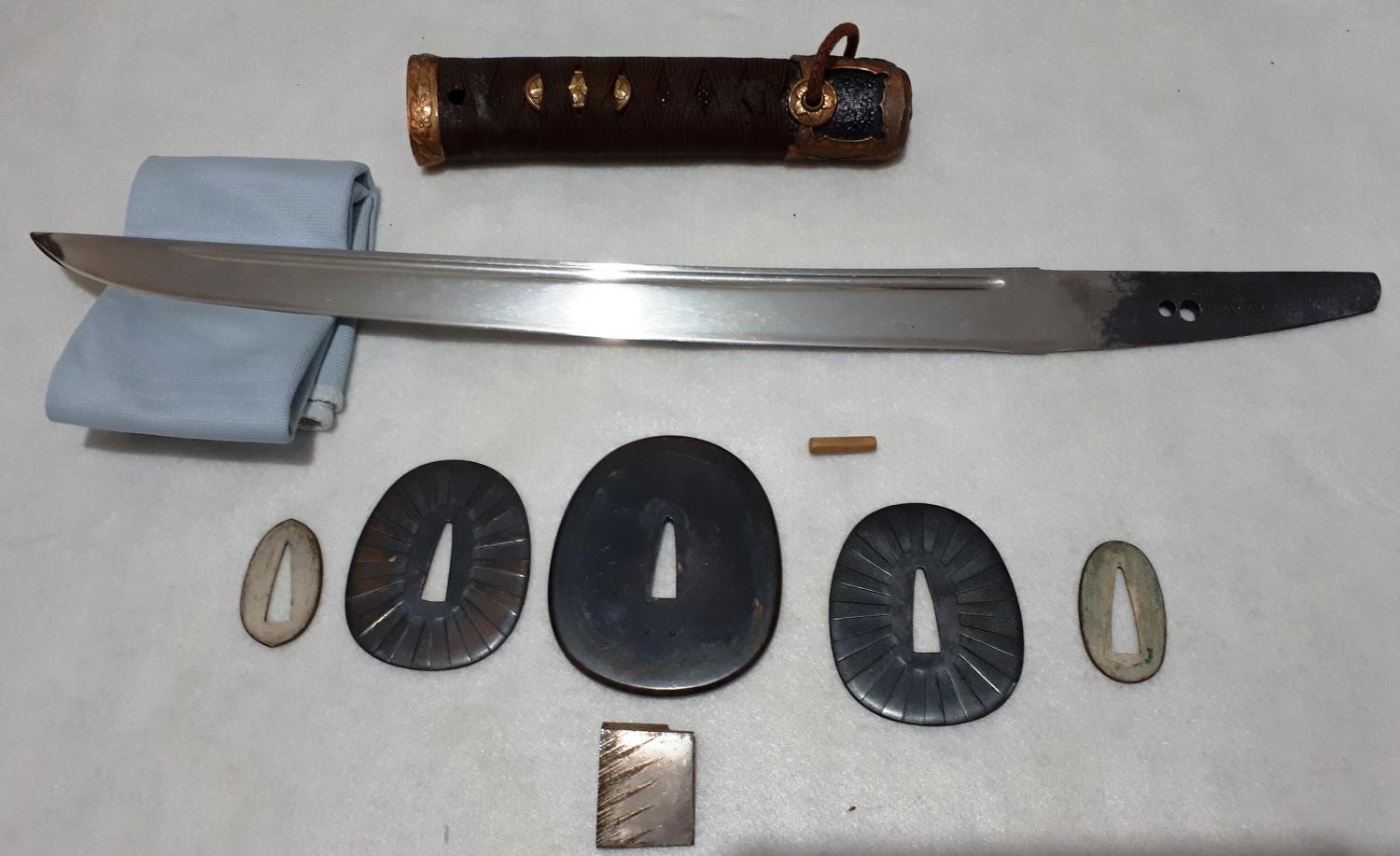
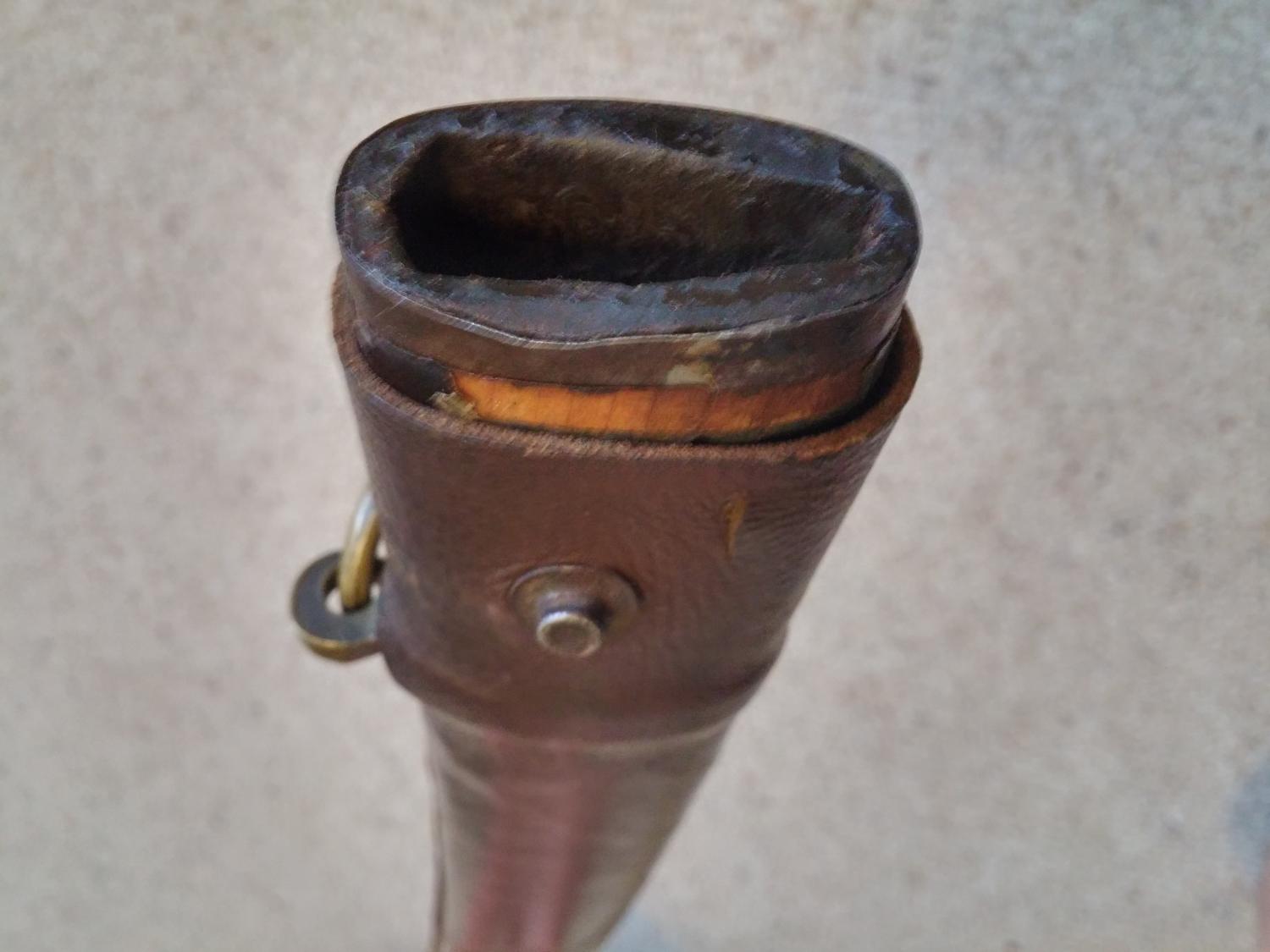
Would need a few photos, better quality and not on a black background. You'd also have to take out the throat of the saya and see photograph the copper tab that the screw goes through. Patina is also a good tell, though there are some near mint examples, so not as accurate. I'll not speculate since you own the sword, but I have a hypothesis of what you'll find.
-
 They are very fond of those flags. The same design is used on the fake 95 habaki. The good thing is that the patina look like it has been very deliberately applied too. Unlike real patina, which I've never seen replicated well.
 -
Thank you. It's a beautiful old piece and clearly was held in high esteem by whoever mounted it for military use. As was pointed out to me, the exact classification of what was considered a wakizashi and tanto changed over time, but this was a tanto when it was made and should still be considered such. As far as my experience goes, I've never seen another military mounting like it. Just a gorgeous blade and lovely (for military) fittings of great quality. I don't really collect outside of 95s now, but this is something I've never been able to bring myself to part with.
-
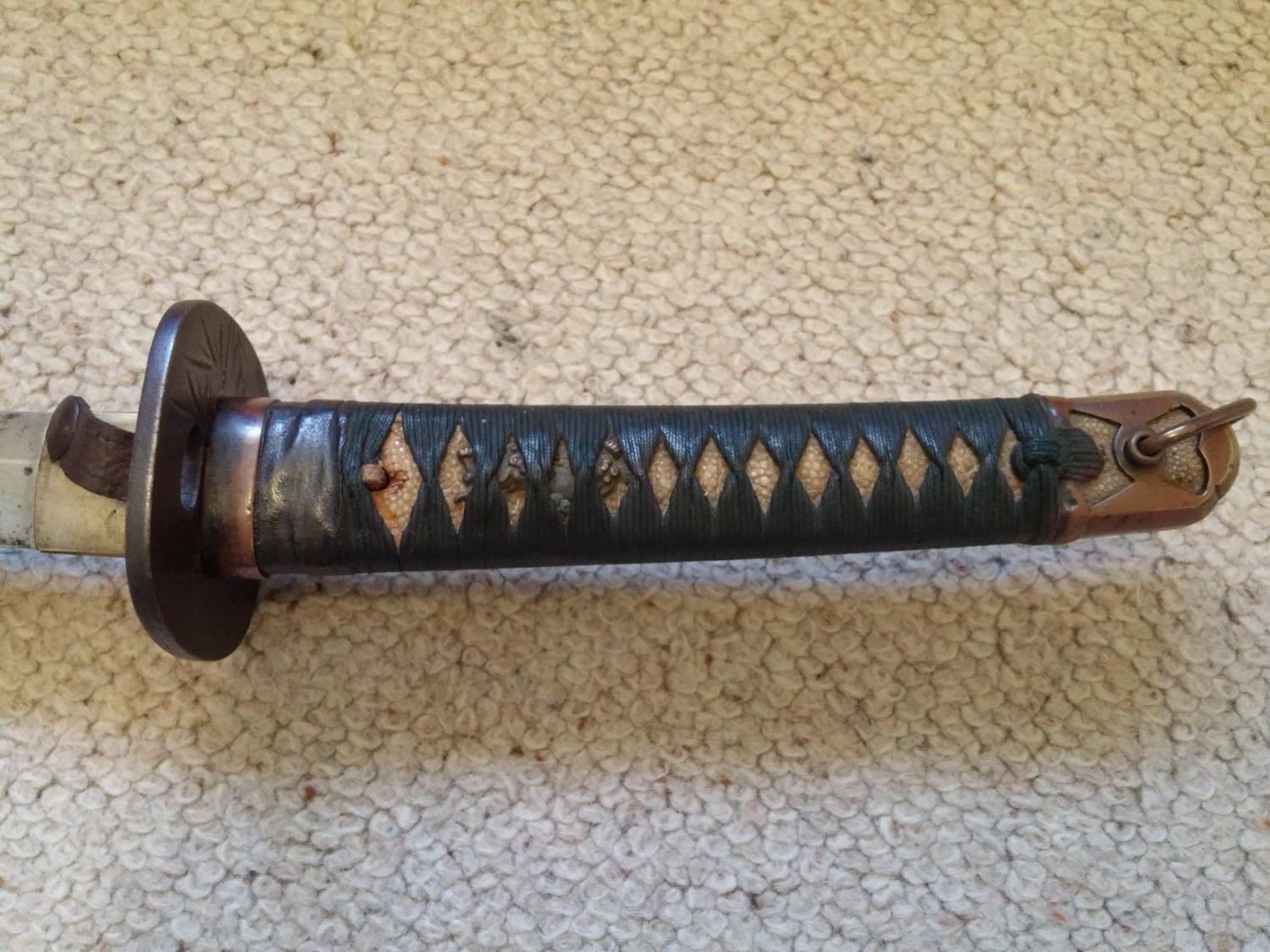
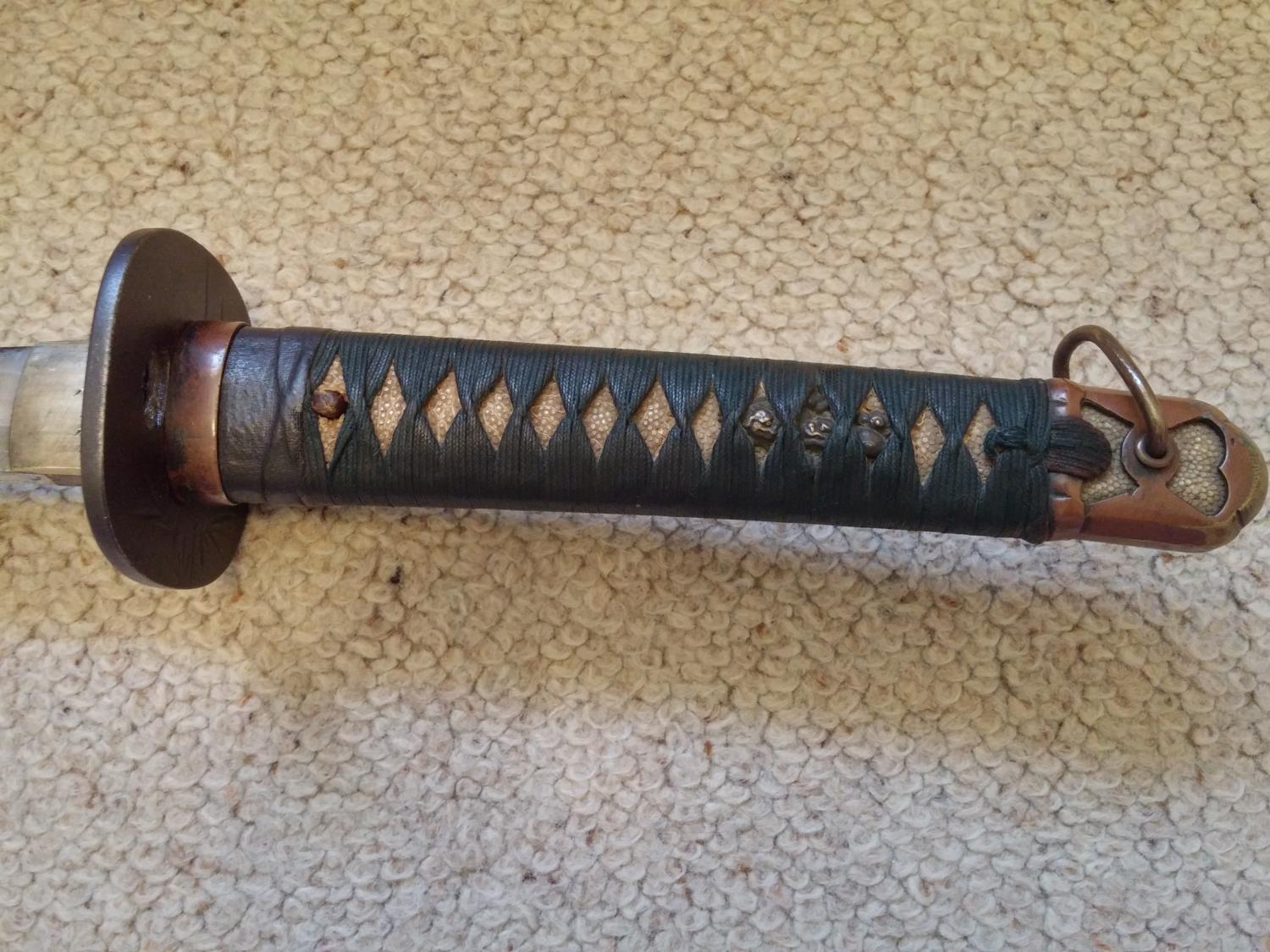
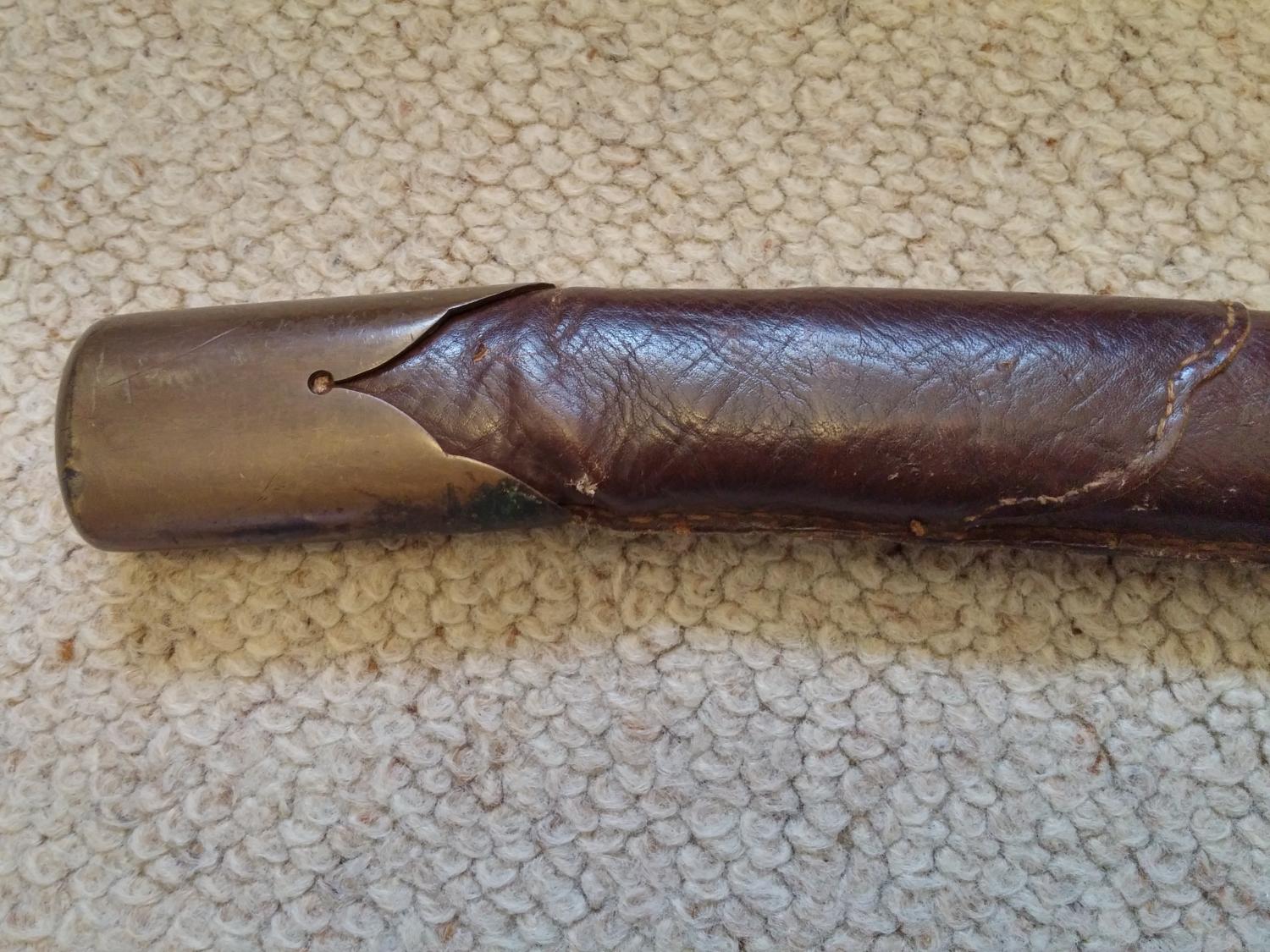
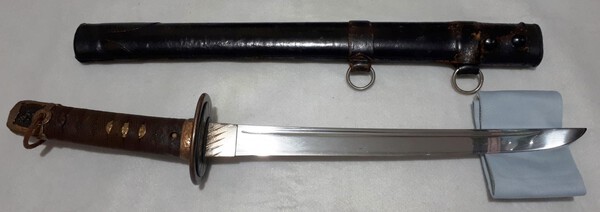
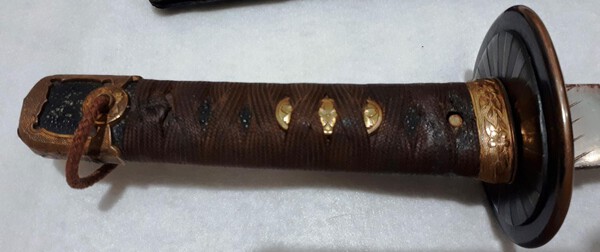
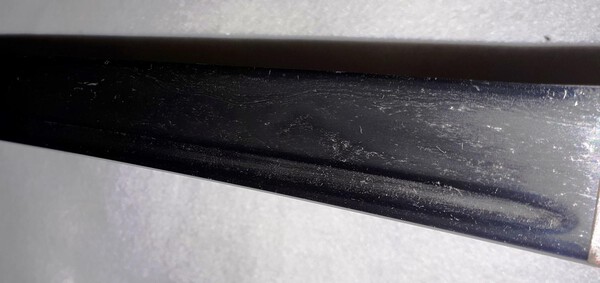
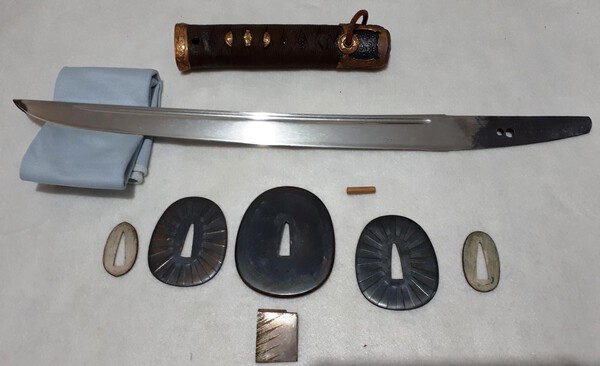
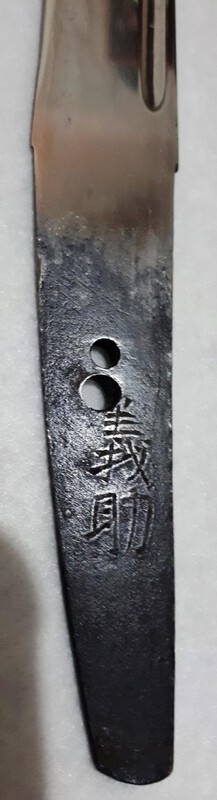
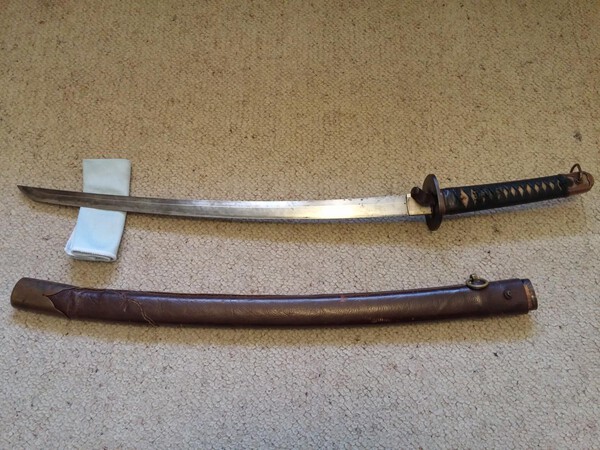
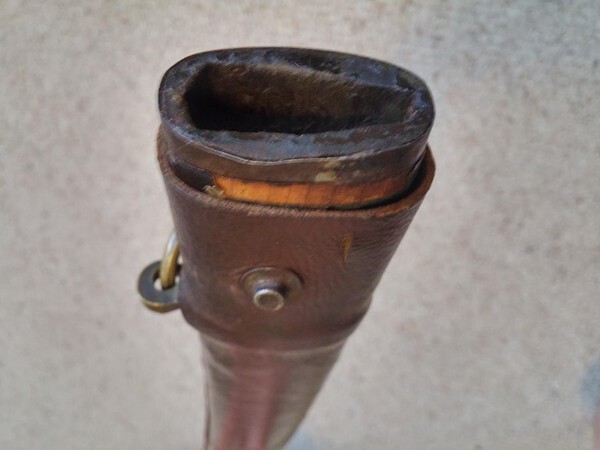
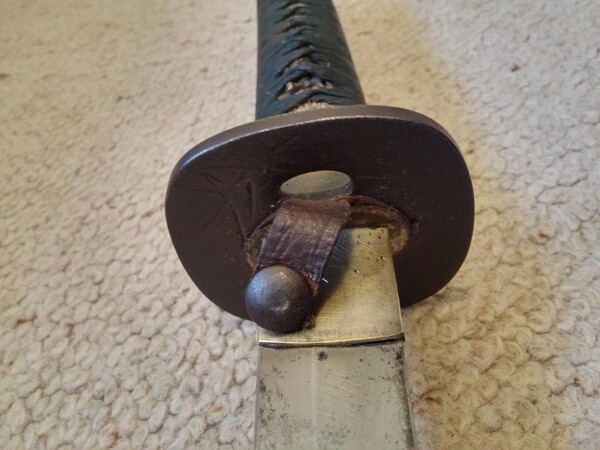
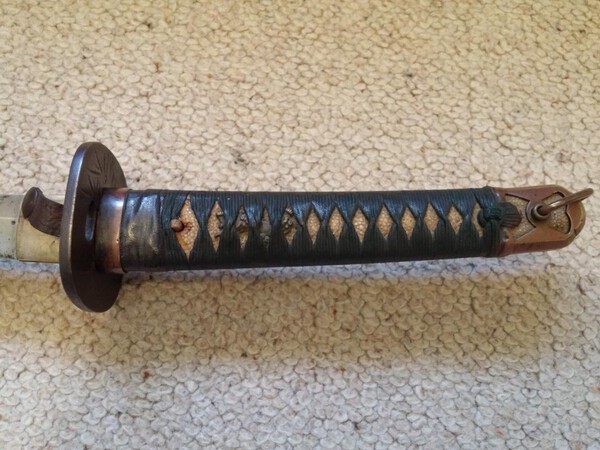
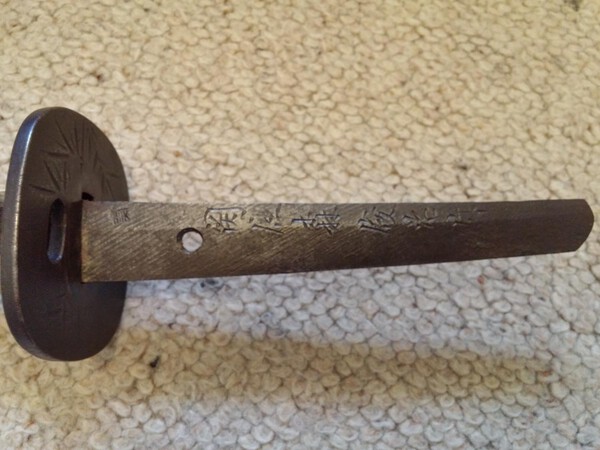
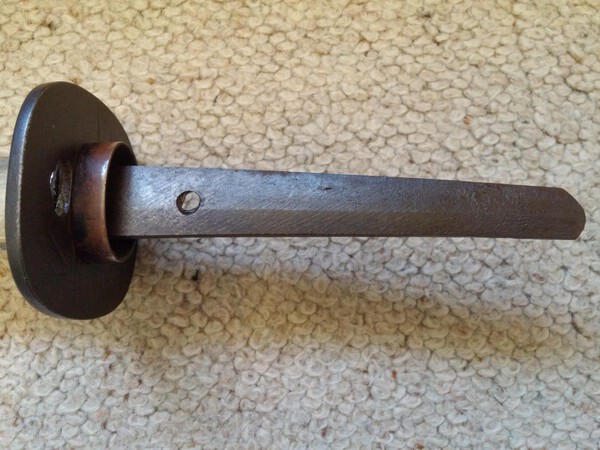
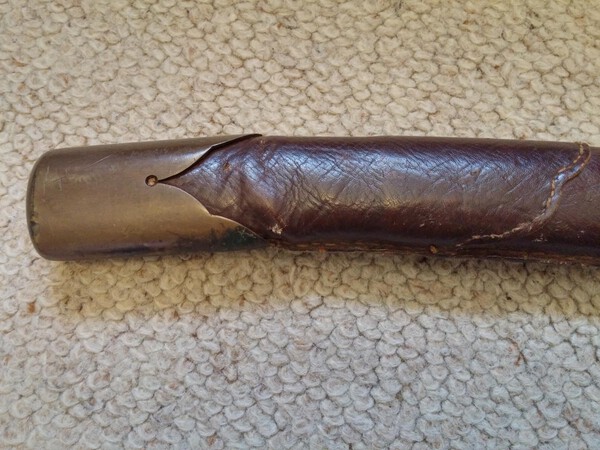
After derailing the original intent of the thread, thought I'd better post a couple. The first is a otanto in naval mounts. Cord sarute, high quality koshirae, the tsuka being much smaller and thinner, appropriately sized to the tanto. Some of the metal components aren't magnetic. Can't exactly test it, but I suspect that the habaki, seppa and maybe the carrying rings are silver. The blade was translated as Yoshisuke by Ray and Peter Bleed provided some additional info. Late Muromachi era hirazukuri otanto. Almost certainly an old family sword that would have been carried proudly by a relative. Second is in the possession of someone who was on the board for a time after I passed it on. It is a Seki stamped wakizashi, nicely but minimalist mounted. Another nice little detail is the false saya extension you can see where the leather has bent. The saya ends and a block of wood has been fitted under the combat cover. As alluded to by Brian, it is very rare to find a wakizashi that was made specifically for the war.

-
I know the idea of scarcity is subjective, but I my humble opinion, very rare is a stretch. Uncommon bordering on rare I think is more likely. However, tanto mounted in full military sword koshiare, now that is very rare.
-
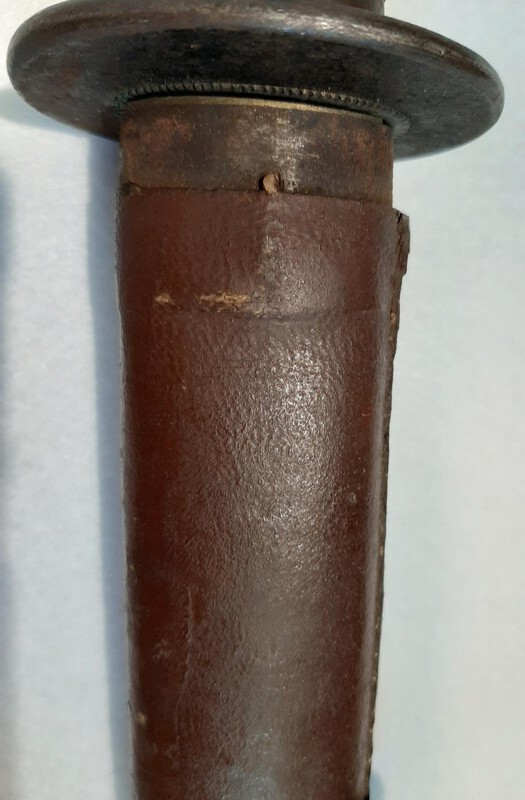
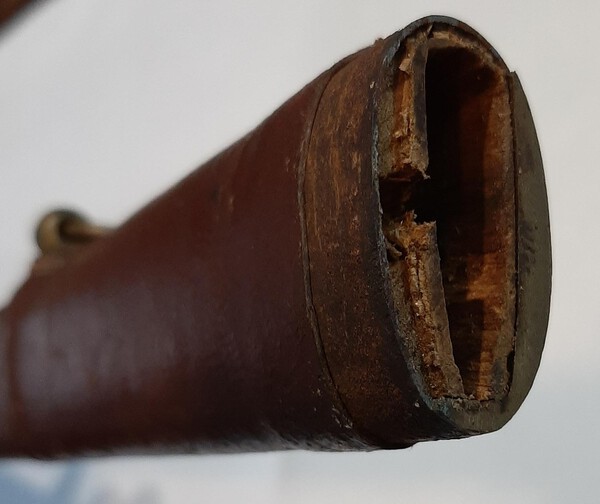
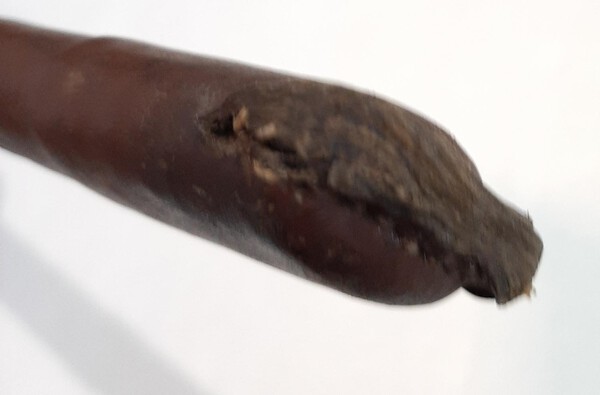
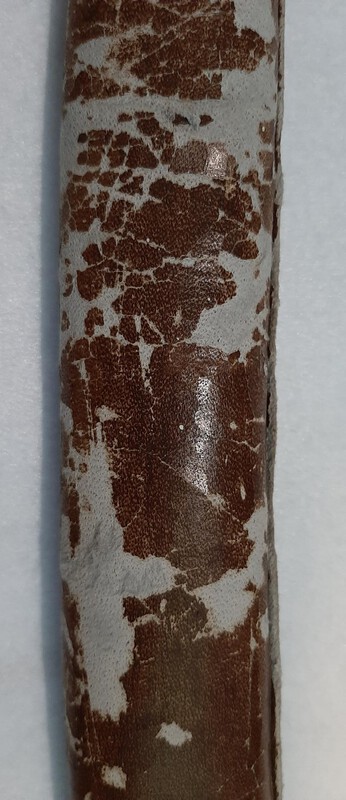
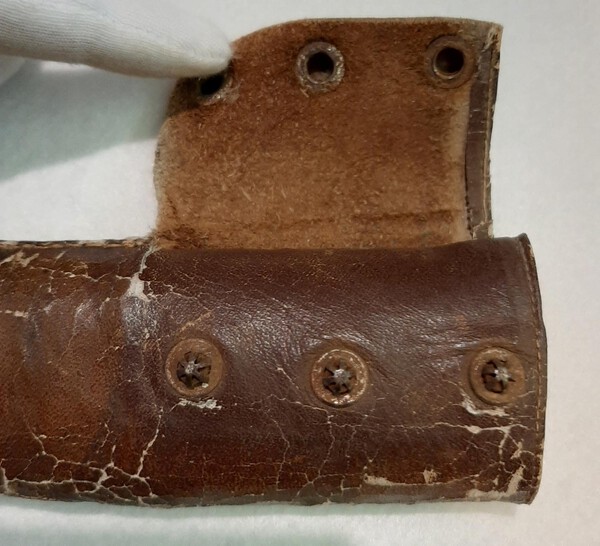
I'll post my two 'not quite leather' saya covers today when I can as an edit to this. I think one is paper too. Okay, well I'm not really so sure now. I think the thin one in the first three pictures is paper. It's brittle, dry and doesn't feel or sound like leather at all. The other is some sort of... fake leather maybe? The way it is cracked and peeling... Anyone that knows more about leather than me please chime in!
-
For the particular ones I've posted, Bruce, I think those that are not painted were painted, but subsequently have lost the paint. Mine has small traces of black paint, but it is almost all worn away.
-
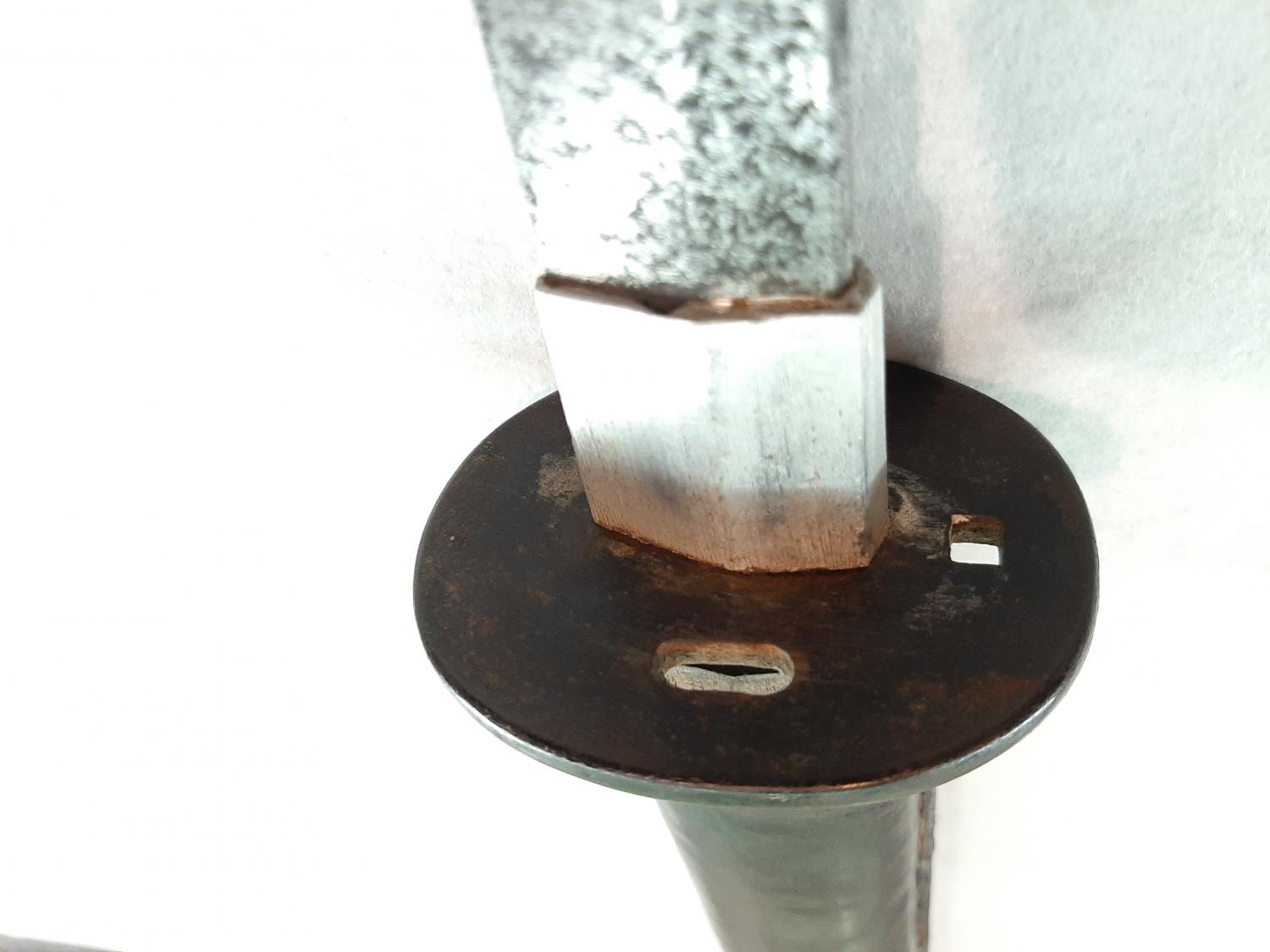
I will get some more photos later today of the habaki. I'm not sure whether it was cast on or not, but the part that appears to have run could also be a bent section of the aluminum/white metal, as Brian suggested. No hammering, Chris. I'm Not sure it would come off anyway, as the nakago is no doubt rusty and I can't remove the tsuka without destroying it anyway. I'd rather preserve it as is.
-
The tsuba is definitely not a Type 95 one. Different holes and shape, just a superficial resemblance.
-
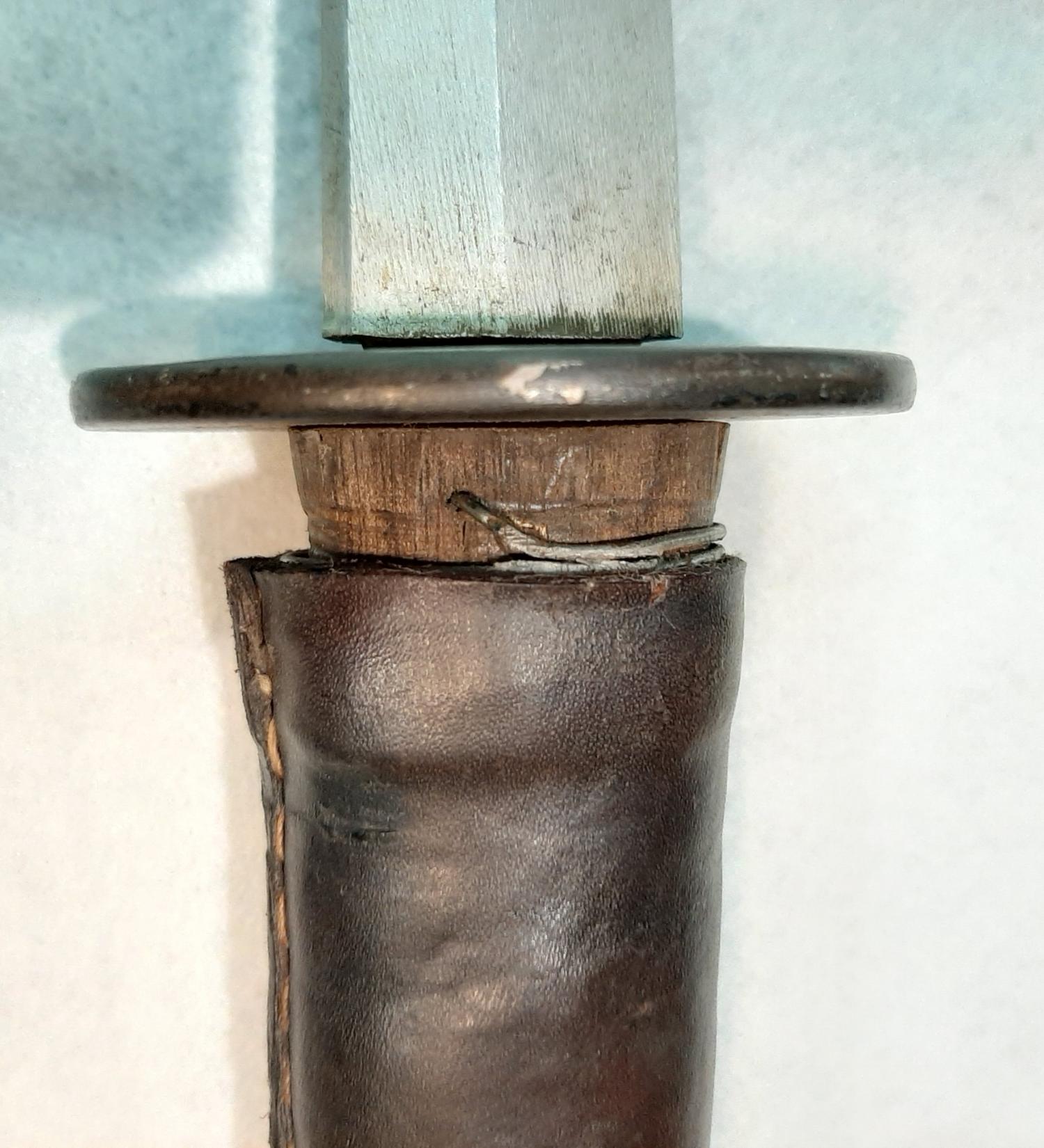
From what I can tell, that's actually a hole in the edge of the habaki. So maybe it is removable? Very hard to tell, I'd always thought it was cast on, but perhaps not? I'm not really keen to remove the stitching, because it is original and the leather is so dry and brittle I'm still not guaranteed that it will remove without cracking or snapping. I'd rather leave it original than satisfy curiosity, though the idea of an x-ray would be great, if I could find somewhere willing to do it to a beat up sword. Thanks for the extra shares regarding aluminum habaki. It's always good to hear about bits like that which confirm that it isn't unique to this sword. If it had been properly preserved the last 60 years or so, it would probably be my favorite sword. There's just something I really like about it, which is hard to define.
-
I'll do a comparison tomorrow, Trystan, but I don't think it's the same. I'm not sure where I'd go in Aus for that, Dave. There is some stigma about any kind of weapons here. I'd probably get arrested unfortunately. I'm not really sure where else to go that I could get an x-ray done.
-
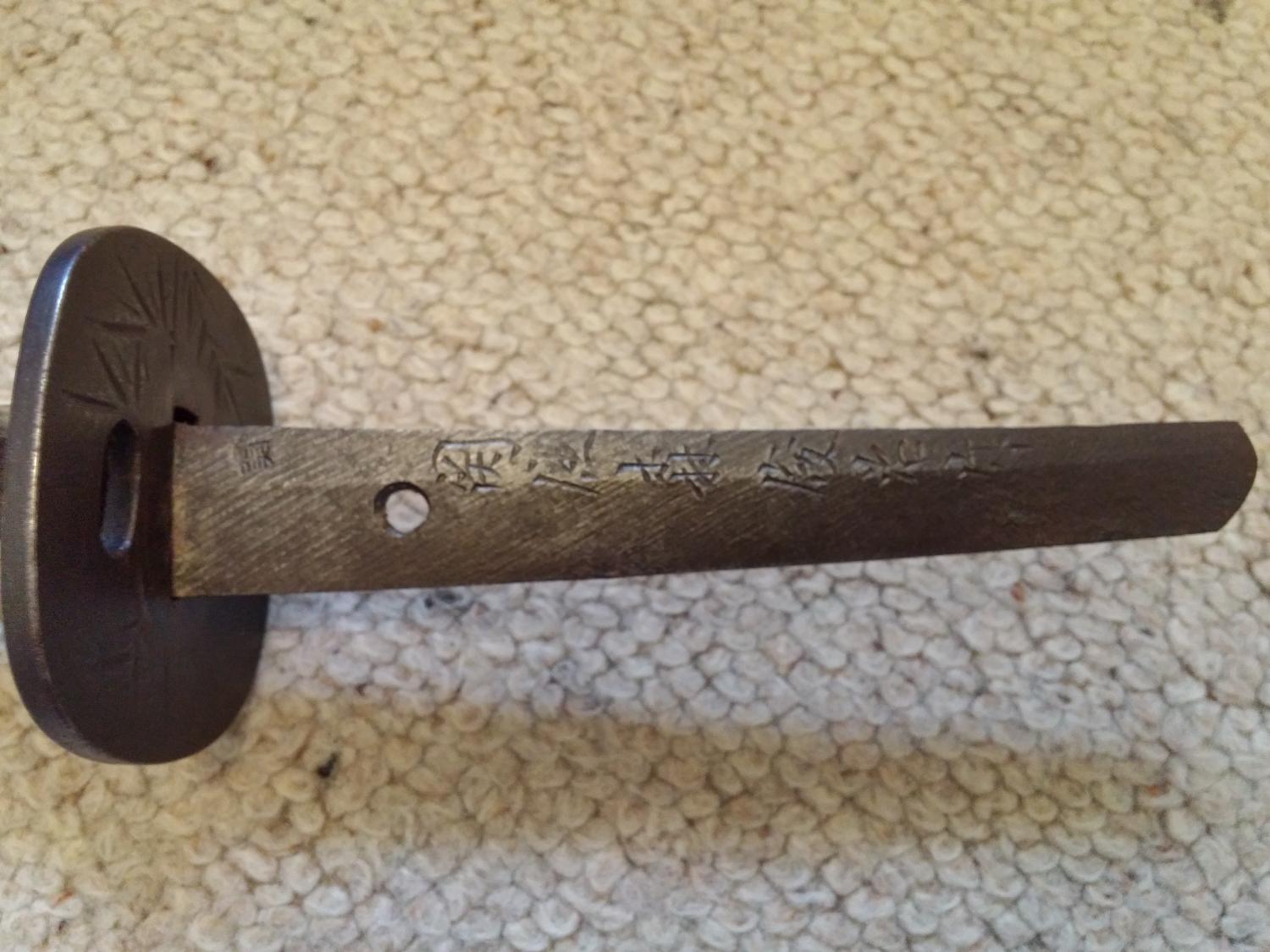
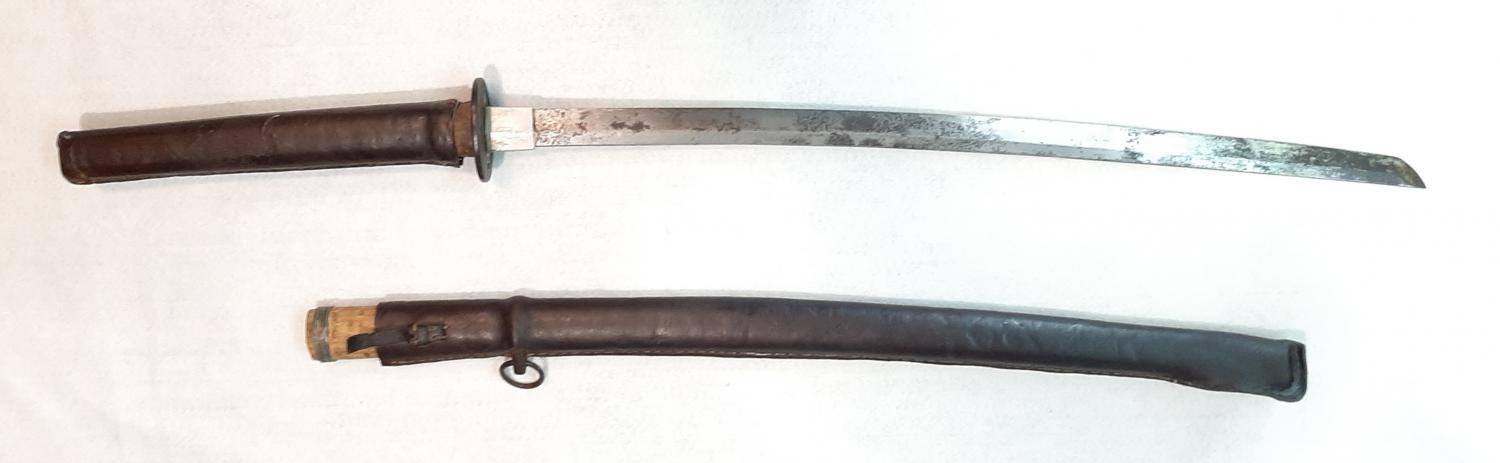
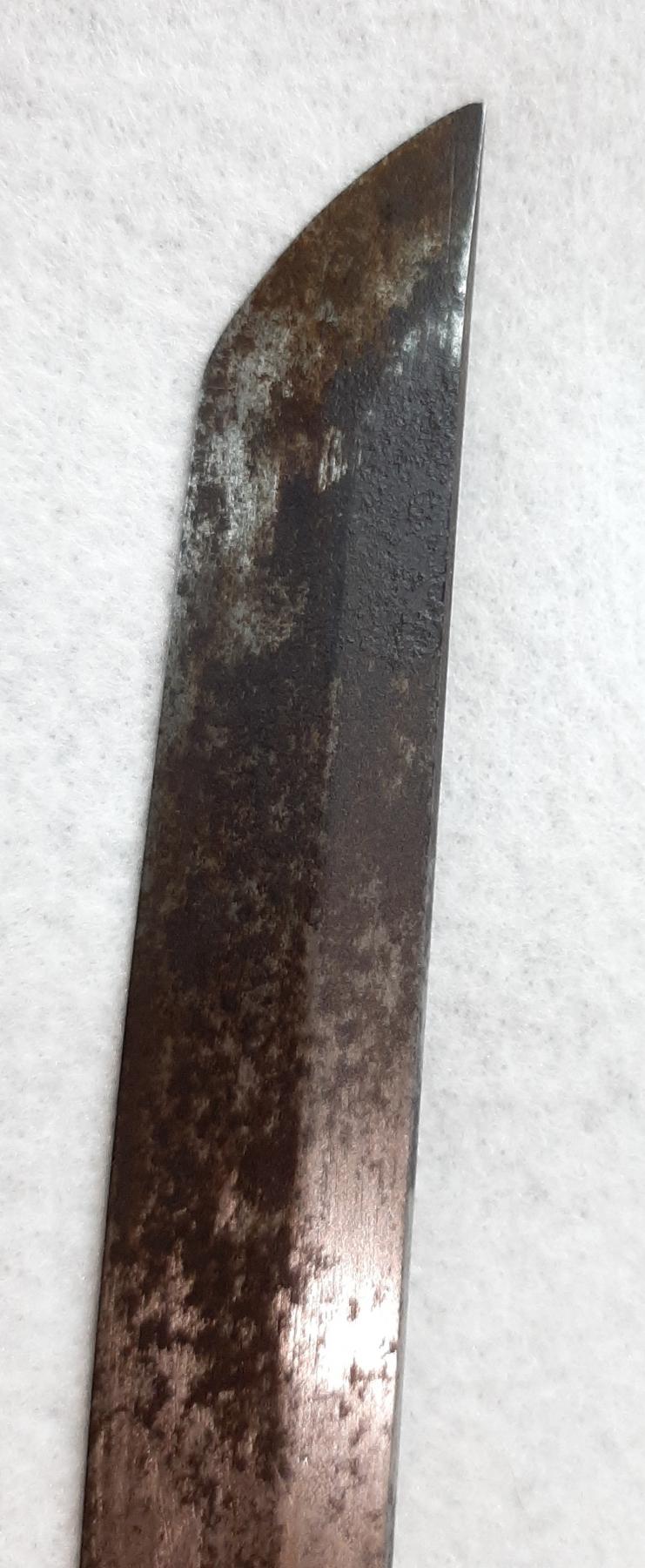
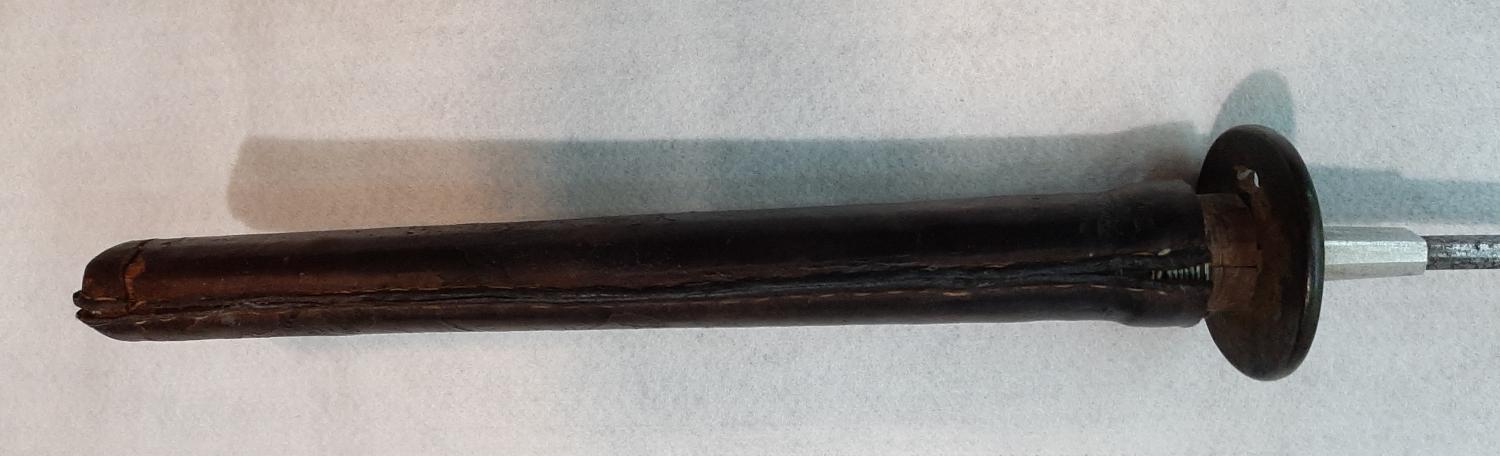
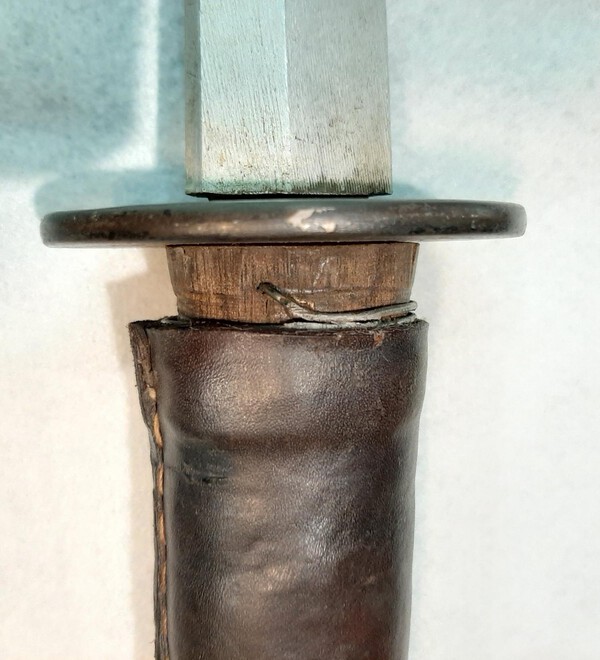
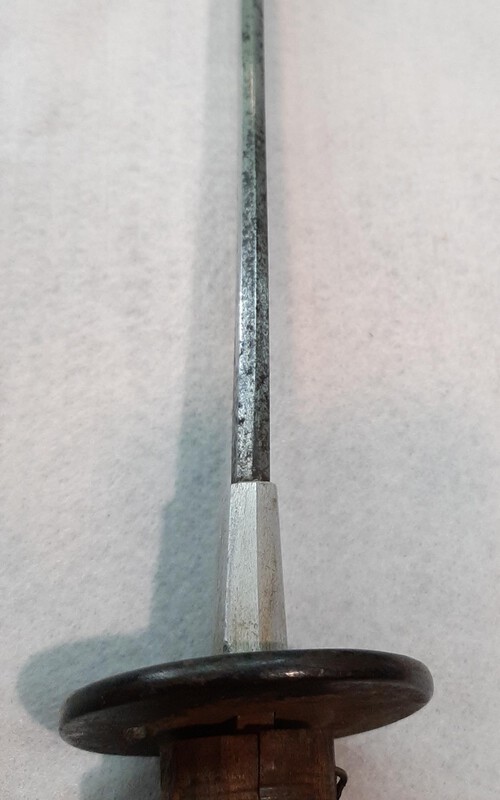
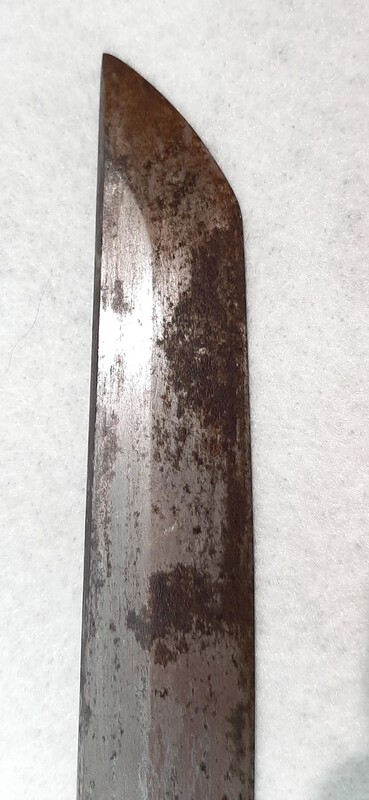
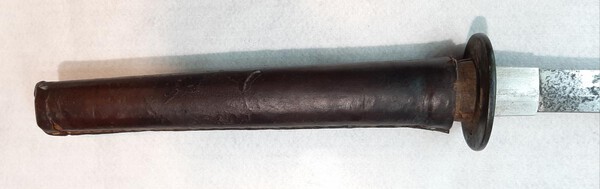
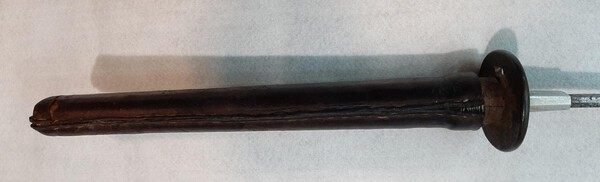
Just a quick share of a sword I've got. I was going to put this in the island thread, but it's Japanese, so not really appropriate there. It's not a stunner and sadly it's in very poor condition, but I've always had an unusual love of this sword. I got it years ago from a dealer, who in turn got it from an Australian shed. Our climate is not friendly, so it's quite badly corroded and the leather and wood have shrunken while the leather is rock hard. I've tried quite a few leather treatments, but I think it is what it is. The sword had an aluminum habaki which looks to be cast onto the blade. That's a bit unusual. There is also the number 188 stamped on the blade. Because of the shrunken leather, you can see a few details of the saya construction. The pegs, shape, wire wrap reinforcement that's been welded. I REALLY want to see the nakago. I'm not expecting to find a signature, but I'd like to see the shape. However, no way I could get the leather cover off intact and I assume there is a peg.






-
Hello all, I saw this sword for sale and I had to share. It's so rare it has been previously unheard of. It's not published or recorded in any of the IJA archives. It's going so cheaply too, with a Buy it now option. I'd add it to my own collection, but I spent all my money buying toilet paper. https://www.ebay.com/itm/RARE-WWII-Japanese-Japanese-NCO-SWORD-BRASS-HANDLE-PRODUCED-AFTER-COPPER-HANDLE/114204744094?_mwBanner=1&ul_ref=https%3A%2F%2Frover.ebay.com%2Frover%2F0%2Fe11021.m43.l1120%2F7%3Feuid%3Daa18cfe1c6ee4956a3ac959abea2ed5f%26bu%3D44251905433%26ut%3DRU%26segname%3D11021%26crd%3D20200429072702%26osub%3D-1%7E1%26ch%3Dosgood%26loc%3Dhttps%253A%252F%252Fwww.ebay.com%252Fulk%252Fitm%252F114204744094%26sojTags%3Dbu%3Dbu%2Cut%3Dut%2Cch%3Dch%2Csegname%3Dsegname%2Ccrd%3Dcrd%2Curl%3Dloc%2Cosub%3Dosub%26srcrot%3De11021.m43.l1120%26rvr_id%3D0%26rvr_ts%3Dc7c35b041710a8669fa07d65ffe425e2&ul_noapp=true&pageci=c11de9fb-f415-4d57-af57-c9f3c657503c
-
The infamous NCO black saya strikes again
Shamsy replied to zook's topic in Military Swords of Japan
The saya is vulcanised rubber from memory. We think maybe a prototype, using different materials to see if they were suitable. Just a theory though, No real evidence. -
The infamous NCO black saya strikes again
Shamsy replied to zook's topic in Military Swords of Japan
Ah yeah, standard for pattern 6, 7 and 8. That's the metal parts of the saya. Thin steel, painted black. You Can also find the saya painted black too. -
The infamous NCO black saya strikes again
Shamsy replied to zook's topic in Military Swords of Japan
No, I don't think I have, Bruno. Is it one of the pattern 6, 7 or 8? Do you have a picture or link? -
The infamous NCO black saya strikes again
Shamsy replied to zook's topic in Military Swords of Japan
I agree, Bruno. There are some very common areas of wear on the scabbard of 95s. They almost always have at least a little bit of wear in these key areas and in a consistent pattern. Where I see a sword without that wear or at least signs of it starting (excluding mint examples), I'm always suspicious. It's a good way to tell a sword apart. The sword listed by Showa has wear, but it's in the wrong places, about where one would expect to see wear where a repainted scabbard is doctored to appear aged. Anyway, I don't believe any swords from pattern 5 or earlier were originally black. It is my belief that some were period repaint (as with the snow camouflage), while others are post war to try and cash in on a 'variation'. It doesn't help that Dawson's lists them as a rare. I'm sure some 'book experts' I so dislike (and perhaps some real experts) will disagree, which is why I started posting examples on the other thread, so I can at least have some sort of evidence-based argument, beyond my own observations which I never bothered to record. -
Thanks Dave. I remembered you sharing that a while back so included PoW on my list. Good to have the extract in the thread for reference.
-
WW2 Japan TAIWAN COLONIAL SONIN SWORD "SIGNED" W/PORTAPEE
Shamsy replied to baldi1942's topic in Sold Archive
I read it in a very halting manner, Piers. Almost as though there is a full stop after each word. It's not hard to read per say, but it's harder to take in the information. -
I'll just clarifying something, which may just be something I'm doing. When I refer to an 'island sword', I've come to consider this a catch all phrase for; Collaborator/PETA swords PoW camp made swords Souvaneer swords Japanese made field swords Field repaired or field made koshirae The only thing I don't include is post war Chinese fakes. So when I'm saying 'looks like an island sword' I'm saying I have no idea exactly what it is, but I don't believe it is fake (as in post war deception). The sword you asked about, Trystan, I would call an island sword.
-
I believe Stegel and i share the same opinion. Some of these have been added post war, but a few are genuine. The sword you've provided as a reference, Trystan, is one of the genuine examples. That is a genuine copper handle and blade but with a replacement tsuba. As the pattern 1 tsuka is thicker than usual, the few replacements of iron I've seen have usually been thicker themselves. They also have the second screw added, which I will speculate occurred when the tsuba was replaced, likely at an arsenal. However, a number of copper tsuka have been sold in the last two or three years. When they turn up on a pattern 2 or 3 sword, I call shenanigans. I know monkey has also swapped parts around, including coppers, which was posted as an example somewhere on this forum. Short version: some genuine, some not. All genuine ones seem to also have iron tsuka replacement, but the rest of the sword is full pattern 1 parts. Anything else, be very suspicious.
-
Gee, that's a hard one (though they usually are). It has a lot of elements of several sword models, like the RS kabuto gane, but then the thin tsuka reminds me of the pattern 7 tsuka. If the wrap was different I'd say probably go down the RS path two, but I don't think there's enough there to relate it. Like 95s, there are a lot of swords with a few 95 characteristics, but that doesn't make them close enough to be 95s. Ultimately, I think the nakago and odd habaki probably pushed me to say it falls into that very broad range of swords known as 'island'. It definitely has the look of genuine age though, so I doubt it is a Chinese knock off.
-
The infamous NCO black saya strikes again
Shamsy replied to zook's topic in Military Swords of Japan
That's a bakerlite handle, Dave. It now belongs to a member here and I was lucky enough to get a good look over it. The scabbard is a kind of rubber. As far as I have seen, it is entirely unique. Quick edit to add that the quality of the finish on the pattern 5 95 varied considerably. Some were well carved, smooth and oiled/varnished. Others are very rough and unfinished wood. The Jinsen ones are slightly different again and almost look like a different kind of timber, but are of the lower quality finish. There are so many small variations on pattern 5, it's a really interesting one to study. -
The infamous NCO black saya strikes again
Shamsy replied to zook's topic in Military Swords of Japan
Cheers Dan -
The infamous NCO black saya strikes again
Shamsy replied to zook's topic in Military Swords of Japan
Would be good to post this in the original thread, Dan. I was compiling a list of repainted black to provide some evidence that the black paint is period, not original. Of course, an obviously recent painting does not need to be included, as it does not lend any credence to my theory.