Dave R
-
Posts
1,691 -
Joined
-
Last visited
-
Days Won
11
Content Type
Profiles
Forums
Events
Store
Downloads
Gallery
Everything posted by Dave R
-
Depending on where you are. There is a meeting tonight, 19.30 to 21.00 at the Royal Armouries Leeds, in the Library, where you can get an informed opinion of the sword if you bring it along. Please note, security have a habit of locking the doors once they think we are all in, so earlier is better than later.
-
Just like it should be then. I wondered a little with you describing it as loose.
-
A distinctly Chinese martial arts style to this one. Put together from found items, but not necessarily to deceive, but rather more for use. A cut down sabre blade?
-
How close a fit is the Tsuba round the Nakago?
-
Satsuma-age, which is also the term for a type of fishcake apparently.... http://www.ksky.ne.jp/~sumie99/suriage.html
-

Diference Between Hoso Suguha / Ito Suguha?
Dave R replied to vajo's topic in General Nihonto Related Discussion
This possibly explains one of my blades, a very open grained Mumei Wakizashi which looked to have no hamon. Then after cleaning an apparent hamon appeared at about the thickness of a piece of wire. -
I make my own rice glue, which is not very difficult at all. I would suggest using a "sticky rice" as is sold for sushi..... I don't know how well another rice such as basmati would work, and for what it costs why use any other.
-
It looks very like a traditional Chinese style suspension mount for a Dao. Could be a captured or imported sword mounted for Chinese use.
-
Looks like a nice clean piece. When it arrives give it a good shake, if it does not rattle then you paid the higher end of a fair price. If it rattles, not so good, but as Mr P. says they are worth what you are willing to pay.
-
I doubt it will be etched, that's more a thing for the Western style Kyu-Gunto. Possibly oil tempered though, so a genuine hamon without much activity. With it being unsigned the probability of it being traditionally forged is low. You have probably seen this before....

-
9 circles? I got a couple of theirs, and they are pretty decent.
-
Seppa are about the only thing I will buy from China, they do some fairly decent ones cheaper than I can make them for, equally online martial arts suppliers do them (probably Chinese made as well). Bear in mind, you should always have an even number of seppa, in pairs with one either side of the tuba. I have read elsewhere that a spacer seppa made from bamboo leaf is within tradition.
-
Personally I am damn glad they can't! I think we would find it hard to give them houseroom if they could... One of those blades where you really wonder about polishing, recovering the original beauty,vs retaining the history.
-
Nice looking sword. Looking at how often you see them worn or carried at the trail, I am surprised we don't see more very worn ishizuki.

-
You have my admiration sir, folding all the hishigami like that. I confess that I went for the folded strip and cut to shape style of hishigami on my own Tsuka-maki project. I will be trying something different next time.
-
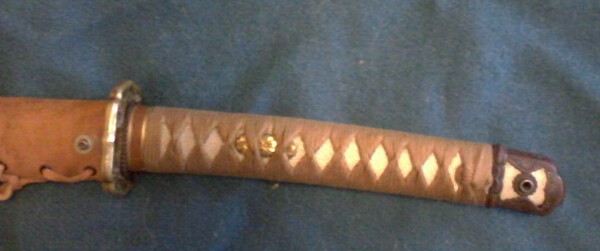
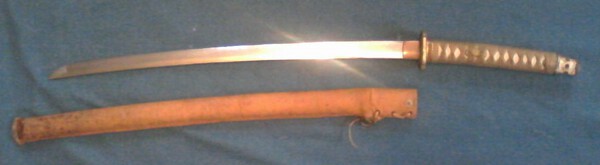
After some thought I have tried swapping out the kabutogane for a more robust example, which lacks the gilding but is more in proportion.
-
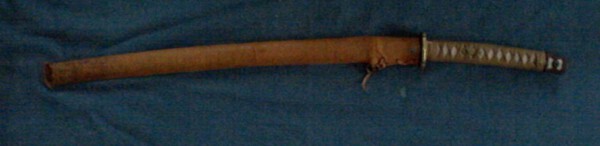
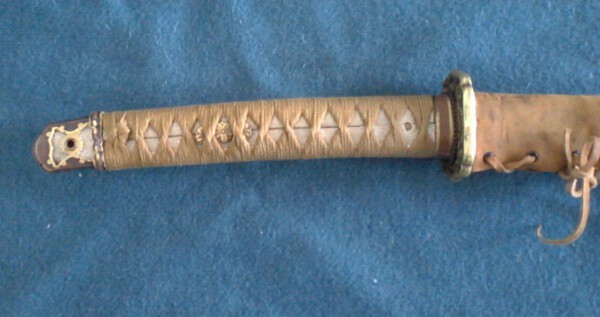
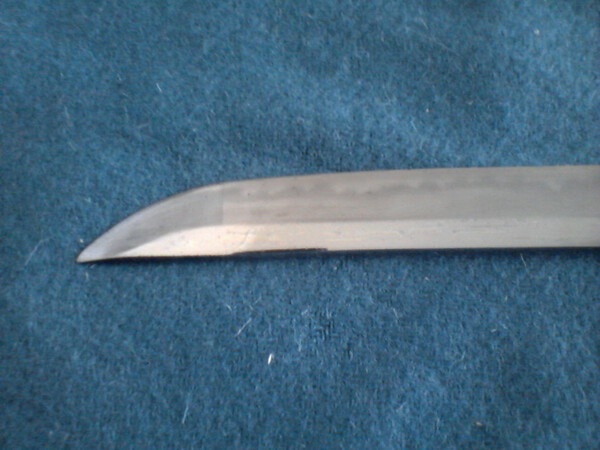
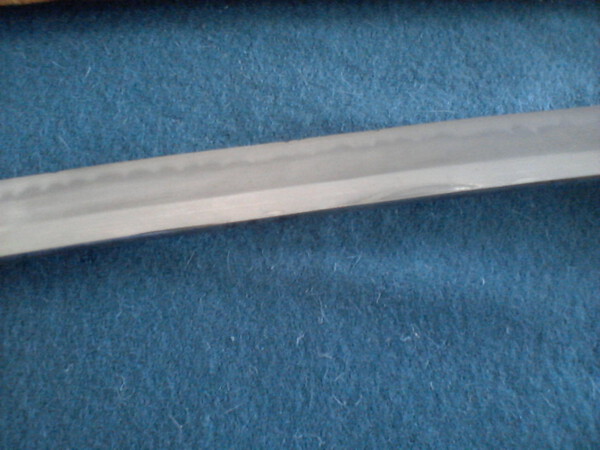
And here it is now, cleaned and remounted. I am not wonderfully happy about the Ito, having gone for cotton rather than silk.... But really I don't think it worth paying more for the Ito than I did for the blade. If it really bugs me I can always re do it. There is a general feeling among the Northern To-Ken members that the blade is Taisho or Showa made in Seki, and probably not tamahagane. Possibly had an earlier life as a Kyu-Gunto, and then into a Shin-Gunto .
-
To me, this looks like a custom order rather than a refurbished NCO blade. Face it, serious research into Shin-Gunto is in its infancy, we have a lot to find out. Also I would quote the old phrase used in the UK whenever there was a complaint or question about something odd or substandard, " haven't you heard, there is a war on!"
-
Which gives a handy indication of if the pieces left Japan together. Not the numbers so much, but do the parts fit without rattling.
-
Wire sarute are common, clasped hands etc were options to bling up the sword. You also get silk cord sarute, which used to be thought to be field modifications but are now known to be yet another standard fitting. You can even find leather thong used as the sarute. Private purchase items can vary a lot depending on the wealth of the officer.
-
You need/want to see it without the grease, methinks!
-
Could it have been plated post war? Something that I have seen done even to a Nihonto in Buke-zukuri, (in the Royal Armouries no less.)
-
Soldered, or cast on. Some wartime blades seem to have had the habaki cast "in situ" in a white metal. An area worth more investigation.
-
To elaborate on what I think most likely. If a hole is drilled in steel without lubrication, in a hurry or with a blunt drill bit a lot of heat is generated by friction.Enough in fact to cause discolouration! Any or all of these scenarios fit in with late war production.
-
Probably related to the second mekugi-ana at the nakago-jiri. Either a heat treatment to soften the steel, or more likely a quick and dirty drill job that friction heated up the nakago there.