mecox
-
Posts
986 -
Joined
-
Last visited
-
Days Won
16
Content Type
Profiles
Forums
Events
Store
Downloads
Gallery
Everything posted by mecox
-
Bruce, careful please I dont think I made that definitive statement. I did say "indicated' after 1940, and its referring to navy establishments and some later blades dont have it. BTW this is a compilation, it ain't the Bible.
-
Carl, you may have a winner there. Here is some background for comparison. be great to see the blade.


-
Kokuhō, Jūyō Bunkazai, Jūyō Bijutsuhin Index
mecox replied to Jussi Ekholm's topic in General Nihonto Related Discussion
Congratulations, an impressive compilation. -
I have found this John Slough book both interesting and very useful and am aware of how much background checking and cross-checking is required. But I did find a very minor error that I had to check to save confusion. Results of 1941 6th shinsakuto exhibition for Shinoda Ujifusa and Niwa Kanehisa (pages 218, 219, 227, 233) they are listed as from "Aichi" when it should be "Gifu".
-
Interesting.... is this your #2......blue hard cover, 1000 copies, 2001 Slough?

-
maybe KUNI UJI SAKU......useful to see the whole nakago. Older sword? with a creeping tateware?
-
Emergency Late War Officer Gunto
mecox replied to Bruce Pennington's topic in Military Swords of Japan
Looks like menuki also is replacement and also the kabuto gane looks like a gunto saya kojiri? -
Attention Mantetsu Owners: A Survey
mecox replied to Bruce Pennington's topic in Military Swords of Japan
Bruce that mei cutting on the winter blade looks pretty rough......more like a copy? -
Attention Mantetsu Owners: A Survey
mecox replied to Bruce Pennington's topic in Military Swords of Japan
Date is Showa Mizuno-e Uma Haru Spring (March-April) year of Horse (1942) Below date: Taka Nobu Yaku Kore (Takanobu Yaki-iye Kore) "Takanobu did the yaki-ire" -
Great to see......it was mine and I sold it 2 years ago. What an excellent description !!
-
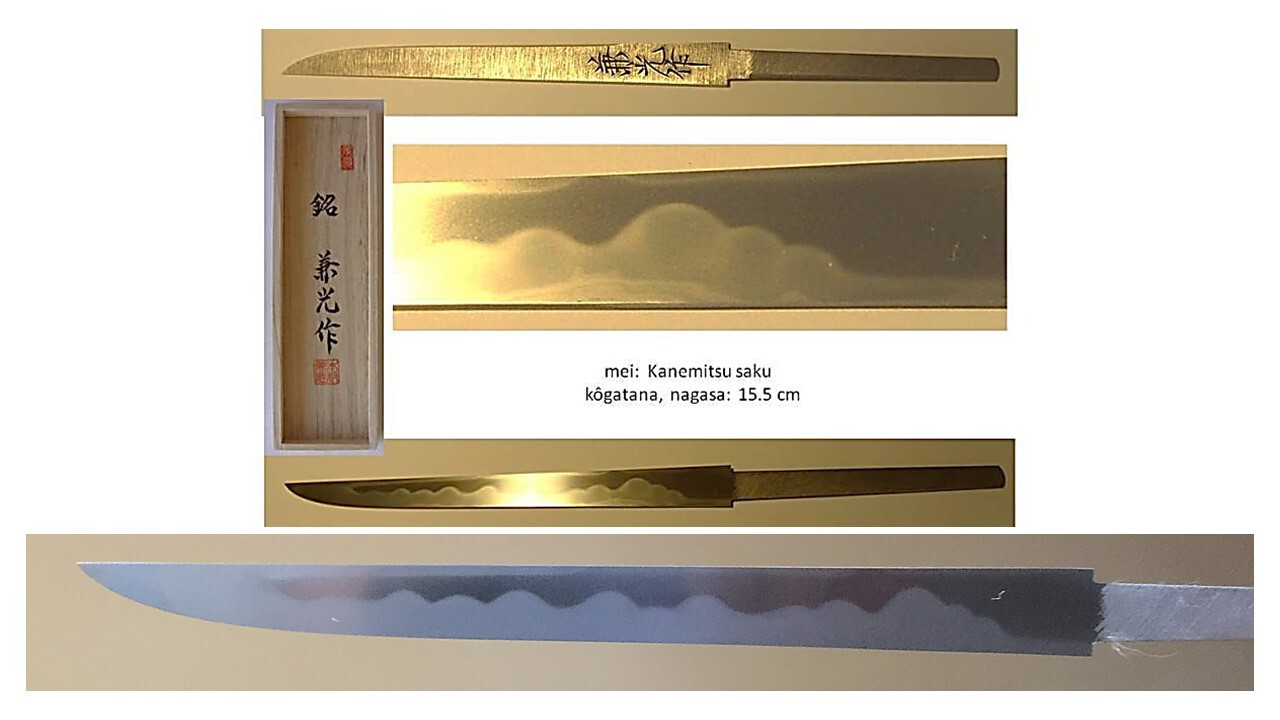
Kogatana by Kimura Kanemitsu of Yatsushiro, Kumamoto Pref

-
Why not the large Fijian war club called a "wau"
.thumb.jpg.5034c1c7c88090905baa35547a7fa3b9.jpg)
-
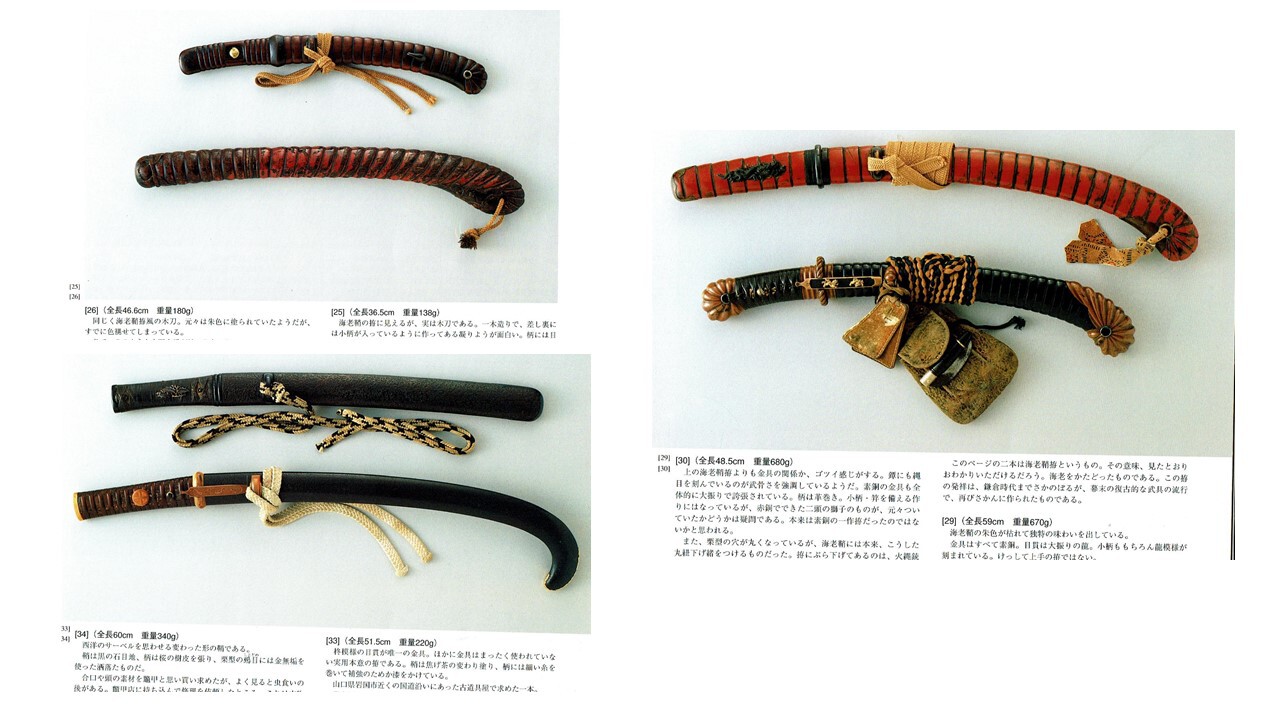
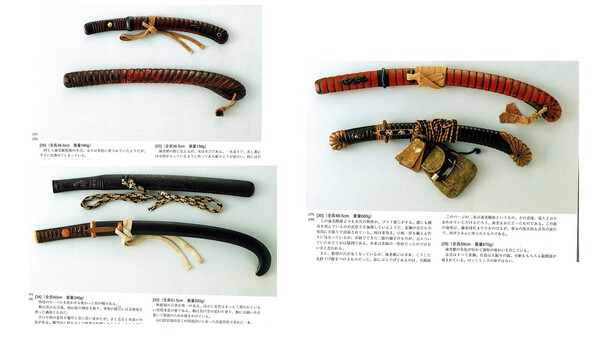
Ron, here's some tanto koshirae with similar concept.
-
Yes I am referring to registered at prefecture level for a Torokusho. We seem to see some WW2 swords now with stamps, which I dont think was the case 3-5 years ago.
-
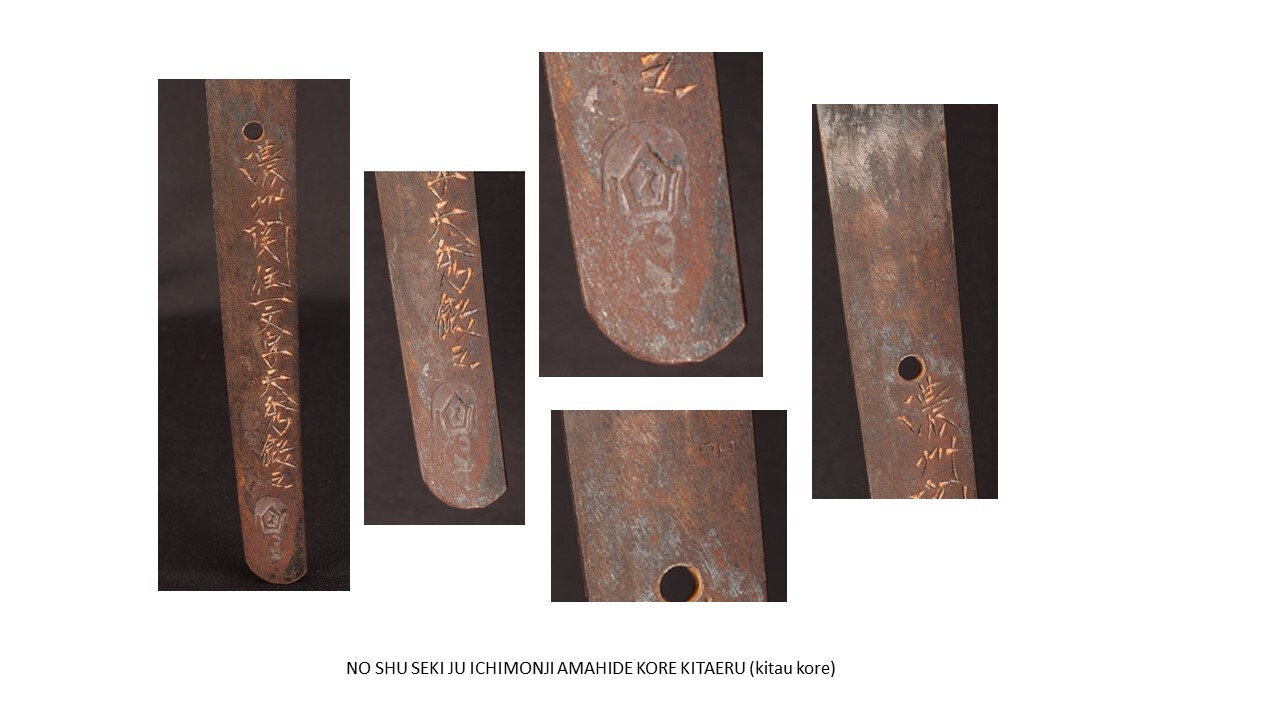
I am interested to see recently (last 6 months) gunto on some Japan based auctions that have Torokusho and have stamps. There were two with Sho/sakura stamp and also this Amahide on Yahoo Japan. The sword is shingunto with leather/wood saya, has a long mei plus the "Ama" kokuin, but at the top of the nakago are 2 small stamped squares. They look like top half of a "Seki" stamp. It has a torokusho dated Reiwa 2 July (that is 2020). The paper lists the mei and in brackets "kokuin" but does not mention the stamp/s. The mei includes "kitau kore". Was this a "recently found" sword? Does this mean Japanese regulations are now more flexible?

-
The Kanezane is typical mei (old form of "zane") and his kokuin. The Kanehisa looks to be O-Sawa Kanichi Kanehisa who was a co-student of Kojima Kanemichi with Kanezane, but the kokuin would be unrelated to this. This kokuin clearly has the 2 kanji of his swordsmith name. Not clear: Kanehisa was a student with Kanezane in the Kanemichi Mon
-
Sure, and they are all the old form that he used on his mei.
-
Its just recently come to my attention there is some variation in kanji of Seki swordsmith Asano Kanezane. In his mei on his swords he uses an old style of “zane” 眞. The kanji I have been using generated by my software is the modern form 真, and this "zane" can also be read as "masa". Some older published documents also use the modern form of his name, e.g. the 1944 list of Seki swordsmith registrations, and a 1952 Seki newspaper article. The modern form is also used in a 2003 table for Seki tosho that I received from Seki. However, the older form is used in a 1940 Seki city publication about swordsmiths, and the 1942 Dai Nihon Token Shoko Meikan (business directory). Unfortunately, I have used the modern form in the recent article we published in NMB on the Seki Kojima swordsmiths. Not a major error, but please be aware of it. So his name is Asano Shinichi Kanezane 浅野 新一 兼 眞
-
Yurie, this is an impressive series of cameos on the whole history of the Japanese sword. I have started reading them only recently, and it has taken a bit of time to get the feel as they jump around a bit. But there is much valuable information in them plus some amusing anecdotes. I hope you have plans to pull it all together some time. Cheers, Mal
-
Following Piers suggestion...."Aki no go" should be read as "Yasuki (or Yasugi) no go" which is Yasuki No. 2. This seems to have been steel made in Shimane where there were traditionally used satetsu, and in the early war various Seki toshi used it (e.g. Kanemichi). Ujifusa wrote the kanji but later they used a kokuin hot stamp. The following site has some good history, and the different types of steel. Hitachi was formed in 1937 by companies merging. https://historyrazors.wordpress.com/2016/09/06/hitachi-y-s-s-yasuki-speciality-steel/
-
Hyaku ren "Hundred Times Forged"
mecox replied to Bruce Pennington's topic in Translation Assistance
The term "tanren" is used for the forge and for the forging process, but its also used for "hard training" e.g. in all the martial arts such as kendo or judo. Sword martial arts also use a heavy wood sword called tanrenbo for building stamina. Tanren now gets used for disciplining, and also for many exercise regimes.....there is also a tanren bra for womens training. Following that "hyakuren" gets used for something that is well done, well tempered, also well made, and not the literal meaning of "100". So its possible this is a motto for a particular sword workshop, or tanren, meaning "well made product". Maybe.... Mal -
Thats a good lead re Yasuki steel. This toshi is Shinoda Hiroshi Ujifusa. In 1942 list he is Chu saku.
-
Neil, looks to be Mino Ujifusa Aki ni go probably Hawley UJI 25 not sure what the "Aki ni go" is at the moment Mal
-
Maybe something to do with etiquette and indoor formal wear for the wakizashi. Mal In fact the koshirae is for formal wear with black shaudo tsuba/fuchi and kozuka, and black polished horn kashira. Menuki is a circle 2 bar mon, one user as Ashikaga daimyo.
-
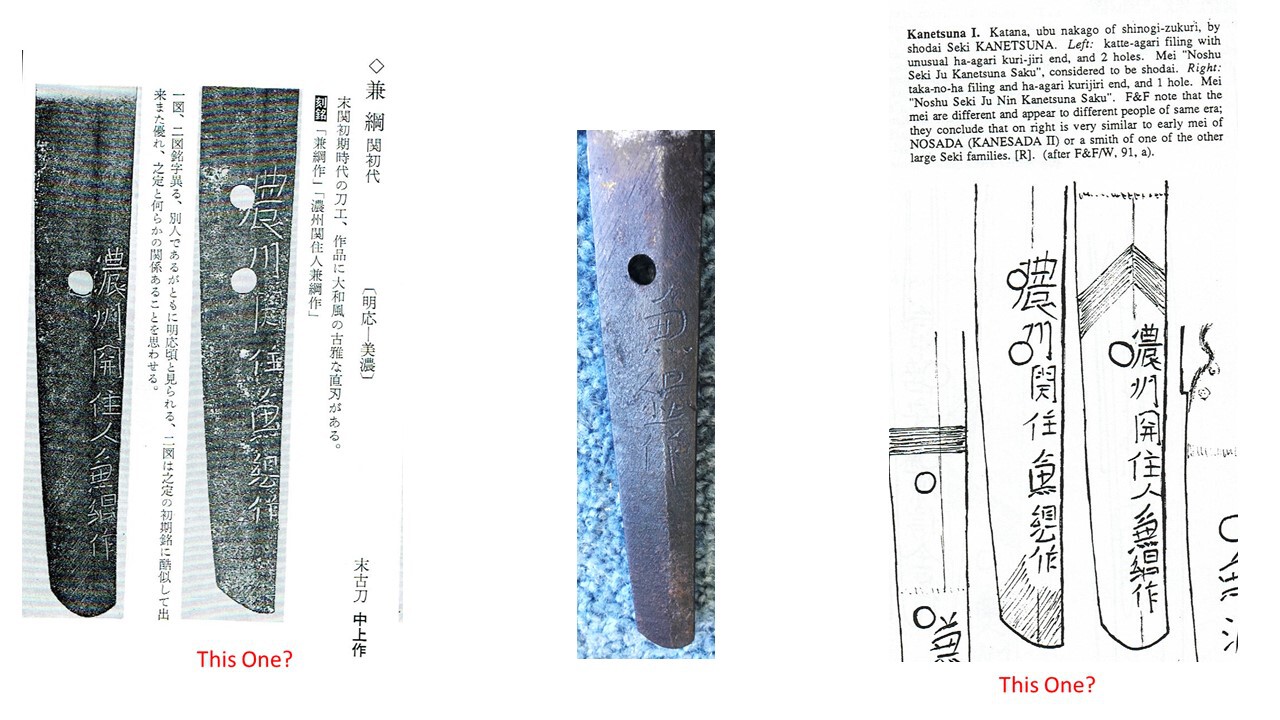
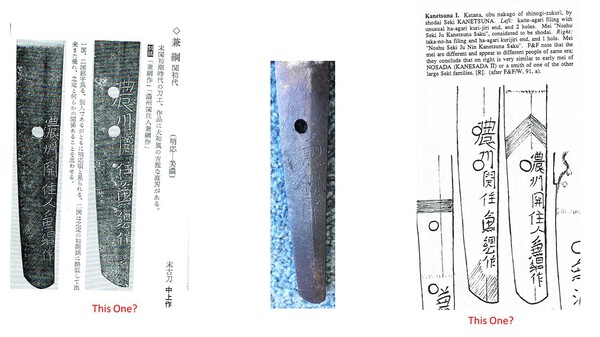
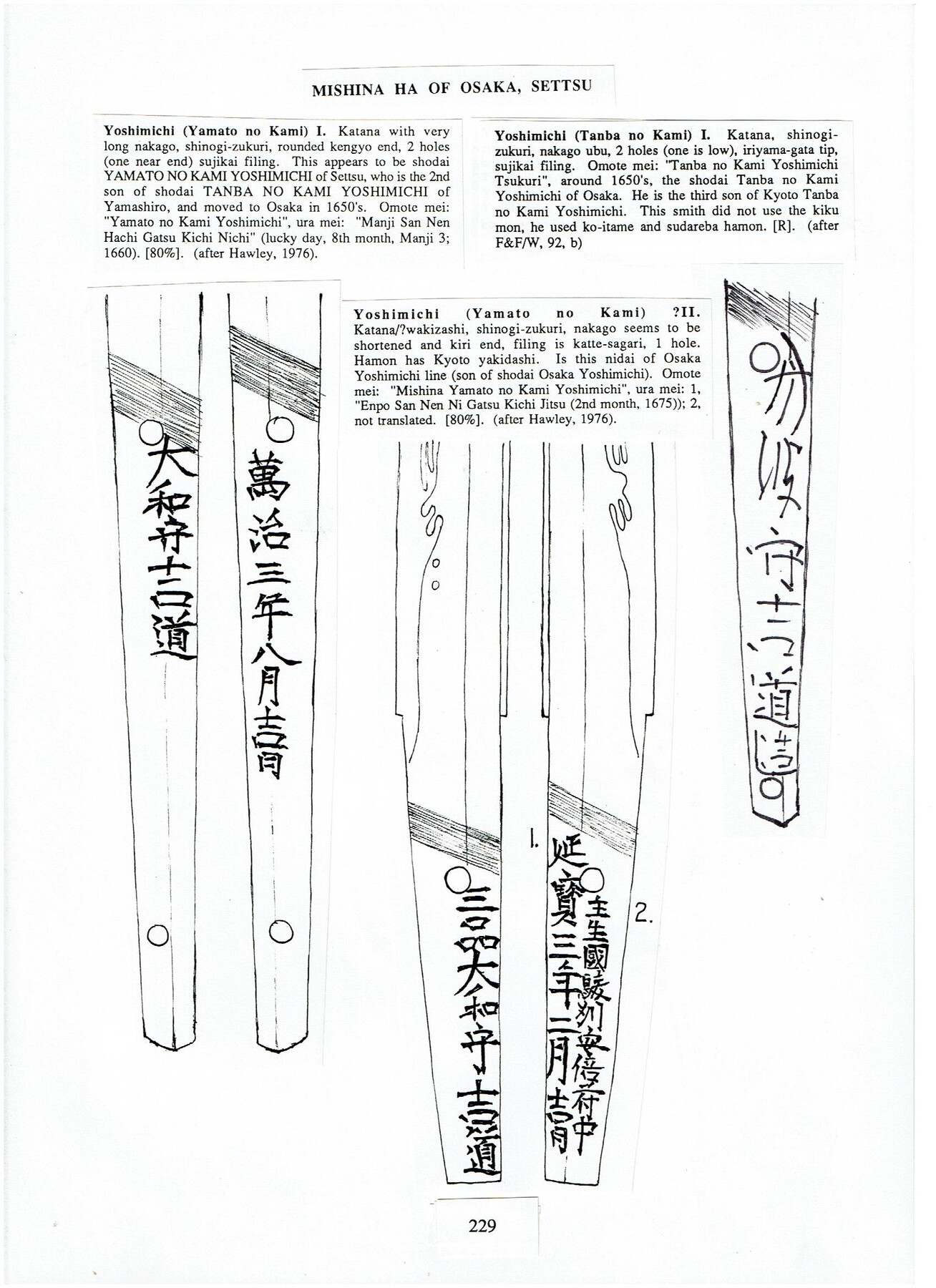
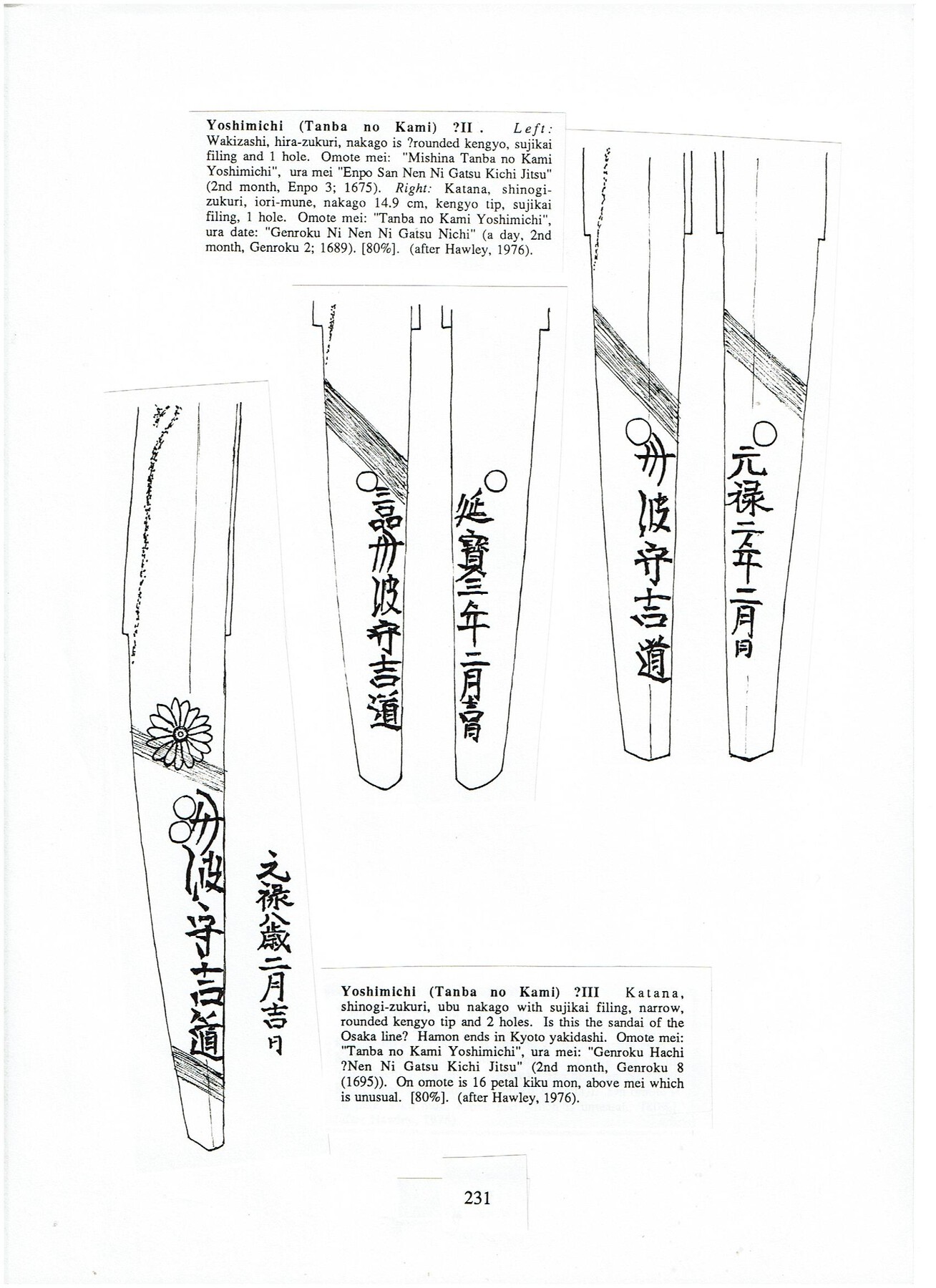
A difficult mei. The best we could do was late Mino (Sue-Seki) Kanetsuna in Fujishiro (1991) Nihon Koto Jiten page 85 with trans by HA watson . And also that strange mysterious book Mino-to (1993) by Malcolm Cox page 213 end of Koto.



.jpg.49017d550031cd6432fc8575b20b04c6.jpg)