mecox
-
Posts
992 -
Joined
-
Last visited
-
Days Won
16
Content Type
Profiles
Forums
Events
Store
Downloads
Gallery
Everything posted by mecox
-
@cookiemonstah47 Khalid, Yoshitada was from Saga (Hizen) in Kyushu. The following paper from NMB Downloads has some info and context:
-
@Bruce Pennington my understanding with both NA and KO stamps: Na / Ho (名/ホ): externally made blades collected by Nagoya inspectors, then delivered to Kokura Arsenal, and “processed” presumably polished, in Factory No.1. Often sent elsewhere for mounting. This stamp combination started late 1941, peaked in 1942, and declined in 1943 and not seen in 1944.
-
Many visitors and members of NMB have questions but are not aware of the substantial amount of information provided by members in the DOWNLOADS (link is in bar at top of main page). To assist awareness here is a list of papers I have submitted. MEC sword papers NMB.pdf
- 1 reply
-
- 6
-

-

-

-
Arsenal Mark on RJT sword Fittings
mecox replied to george trotter's topic in Military Swords of Japan
There is a paper on Tokyo Masakuni and family in NMB Downloads.......... -
@Shay this is IDO HIDETOSHI of Seki, Gifu. He is in the AMAHIDE workshop. Look for AMAHIDE in the NMB Downloads found at top of page. It also says "made with Tokushu steel"

-
Looks to be three wartime KANETADA in Gifu, and all seen to have used Seki stamp. Kanetada Ishihara Keiichi, born 1920 and in Seki registration list. 兼忠 石原 銈一. Kanetada Yamada Koichi, born 1926, not in registration list (but in Sesko). 兼忠 山田 耕市. Kanetada Ueda, the subject here, not is registration list, and no other info found, so looks undocumented. His mei is cut 植田 兼忠 .
-
Justin, your mei looks to read as : Seki ju Yoshida Yoshitsugu saku 関住吉田吉次作 with SEKI stamp. As noted by Bruce likely to be around 1942. He looks to be average wartime smith. This sword has "budget" army koshirae, but of note has bohi, which would cost a bit more. YOSHITSUGU 吉次: real name Yoshida Jinrō (吉田任郎). Born Meiji 43 (1910) December 16. Registered as Seki smith on Showa 16 (1941) May 6 (age 30). Common mei: (“Yoshitsugu” “1944”), (“Yoshida Yoshitsugu”), (“Noshi Seki ju Yoshida Yoshitsugu saku”). see: [Slough p.202] see NMB post below which has a naval kaigunto dated 1944.
-
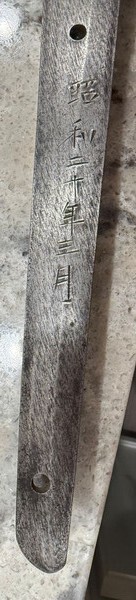
Daniel, as noted by Conway it is made by Yoshifusa and an arsenal blade very late in war March 1945, and probably a Seki smith. However, there are 3 listed smiths of that name and kanji. But it is likely to be one the the first two. YOSHIFUSA 義房: real name Yoshida Sadao (吉田貞夫) . Born Taisho 12 ( 1923) February 12. Registered as Seki smith Showa 18 (1943) November 8 (age 20). he was from Kamo-gun, Tahara-mura to the east of Seki. YOSHIFUSA 義房: real name Sugimoto Fusao (杉本房夫) . Born Taisho 6 (1917) September 13. Registered as Seki smith Showa 19 (1944) February 2 (age 26). he was from Seki-machi, Kichimoto-cho (or Yoshimoto-cho). YOSHIFUSA 義房: real name Mitsuwa Mitsugu (三輪 貢) (also read as Miwa Ko). He is in a 1940 list a living in Seki-machi, Daimon-cho (boarding there). But he is not is Seki registration list. However, he looks to be registered as Ujinaga 氏命 with same given name and address. Must have changed his name. Born Taisho 12 (1923) registered Showa 15 (1940) June 29. So would not be him. As noted by Bruce, he shows the type on rinji seishiki mounts (koshirae) the blade would be in. As late war it would be made at Nagoya Arsenal (and likely to have 名 "na" stamp). They typing has 2 holes in nakago, signed tachi-mei with date on reverse. Mostly the hamon was suguha (straight edge) and often artificial. Your blade looks in good condition, but maybe not the original saya. Does it fit well, or sloppy?

-
@dgm2026 Daniel, I agree with Matt above. Is there a signature (mei) on the blade? Can you post a close up pic.
-
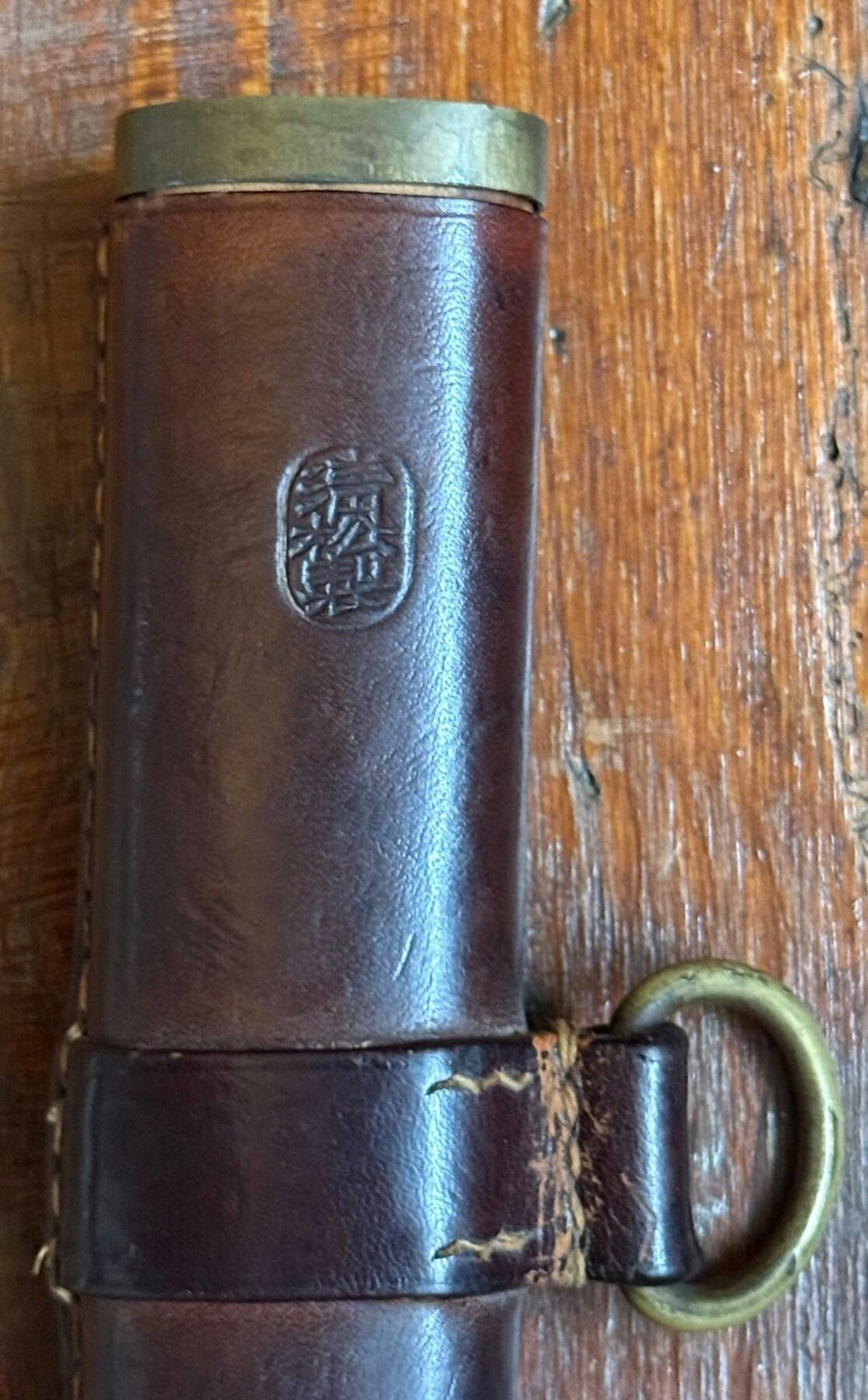
@Bruce Pennington Bruce, did you see this stamp on Facebook? On leather covered saya.
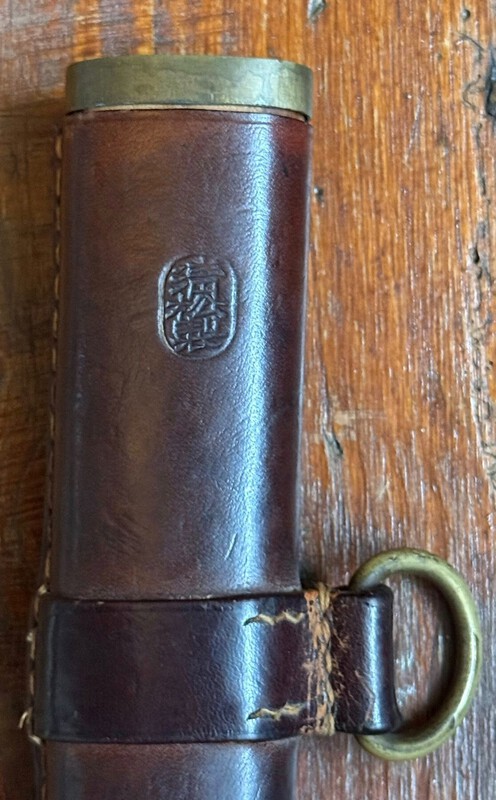
-
Any information on this would be appreciated
mecox replied to blueblue's topic in Military Swords of Japan
@blueblue Darcy, I looked at the surrender tag, and not sure if an interesting story here. Right column: NAGATOMI BUTAI 長富 部隊 looks to be military group (butai). Does this mean an infantry group commanded by an officer Nagatomi? Left column: ISHII TAII 石井 大尉 owners name Ishi = family name Taii = rank (captain) I think these are correct, but need confirmation.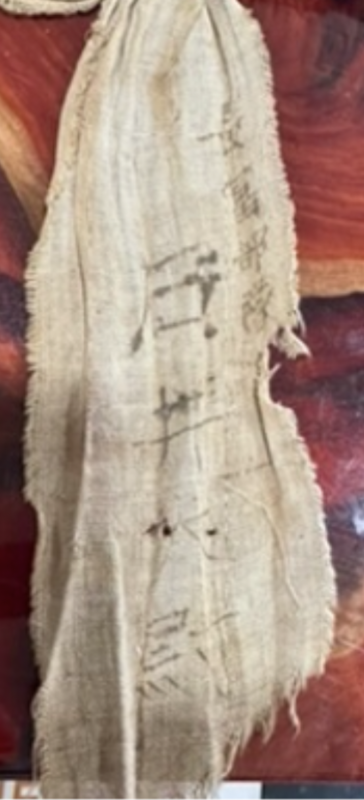
-
@MaoriToa Kia'ora Will, welcome to the site. To get a quick idea of your tsuba, have a look at a paper "Sukashi Iron Tusba" found in NBM Downloads, at the top of the main page.
-
Any information on this would be appreciated
mecox replied to blueblue's topic in Military Swords of Japan
@blueblue Darcy, looks to be a well made WW2 oil tempered blade, from a well trained smith. The mei reads: Noshu Seki ju nin Kojima Kanenori kin saku 濃州関住人小島兼則謹作 Respectfully made by Kojima Kanenori a resident of Seki. Family name Kojima, smith name Kanenori. He worked in Seki City in Gifu. It has a Seki stamp showing made around 1942-43. See NMB Downloads se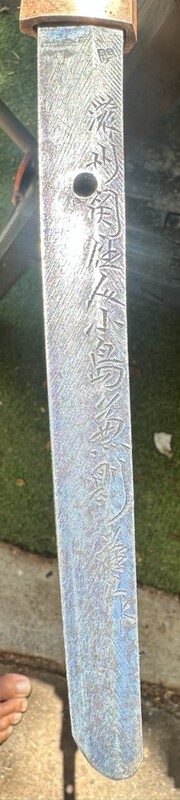
-
Jace, as per Moriyama san above probably is: 備前國助包 - Bizen no Kuni Sukekane Bizen is current Okayama. There were around 8 plus smiths of that name from around 1200 to late 1800's. Close up pic of sword hilt (nakago) without handle (tsuka) would be helpful
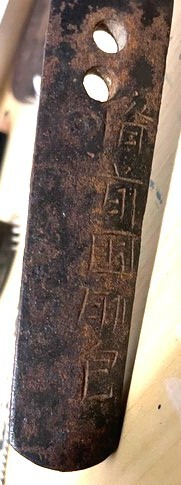
-
I am aware of that. The point is more about continuing to work there I believe.
-
Japanese Swords and the Making of Japan's First Foreign Swordsmith | Japan Forward interesting dedication under sensei Mukansa Kubo Yoshihira in inland Hiroshima
-
Bruce, thats the man, and he was a key smith in the Seki Amahide workshop. Ido Toshimi Hidetoshi (井戸俊三秀俊) was born in Seki on 14 June, 1915 (Taisho 4). He registered in Seki on 14 July, 1940 (Showa 15) with a group of 3 (S15.07.14) at age 25. His address at the time was Hioshi-cho, Seki-machi. In the 1942 Tosho Banzuke ranking by Kurihara Hikosaburo he is in the 6th seat (Chuge Saku “Ryoko no Joi”) of 7 seats. He is not listed as making swords post-war. See the Amahide paper in NMB Downloads at top of page.
-
Seki ju Ishihara Kanenao saku KANENAO (兼直), real name Ishihara Kanenao (石原金直), born May 25th 1908, he studied under Amachi Suzuichi (天地鈴市) and worked as a guntō smith. Registered as a Seki tosho 27 October, 1939 (Showa 14) age 31. Early in the war made some stainless steel Takayama-to. Examples and background in Japanese Naval Swords, Part 1, in NMB Downloads (top of page).
-
Clinton, as noted Yoshisada from Seki. Produced a lot. WW2 made, not traditional methods, this one is in wartime civilian mounts. There were earlier posts on him.
-
@Dekabyu Rugger, from pics looks like a good example of work by Kanezane with complete fittings. Possibly has been rebound, but well done. Maybe a stamp (Seki) has been filed off above signature? Others can comment on value. For more info and background to Asano Kanezane see this paper in NMB Downloads (at top of page):
-
Assistance request in translating a Mei
mecox replied to CuriousNewbie's topic in Translation Assistance
@CuriousNewbie Jay , as noted by Ray your sword is made by Masayasu. and dated 1942. For interest are there any stamp marks on it? For more examples of his work and background see this paper from NMB Downloads (at top of page): -
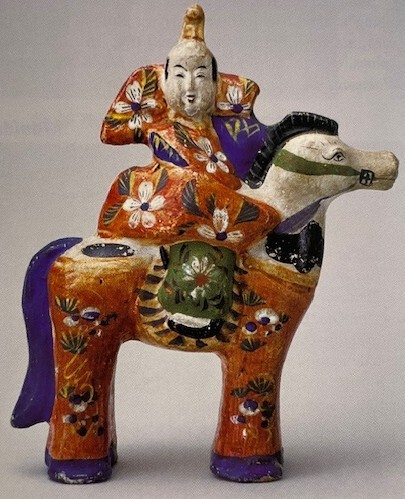
John, rather confusing and I needed to check with wife, as I had/have no idea. As often occurs basic problems relate to words/characters originally from China. But it seems basically 午 UMA (or in Chinese Wu/Go) is the zodiac year 午年 and 馬 UMA is the animal (and the kanji represents its mane and legs). So your stamp is the animal horse? Looking further, in Chinese zodiac 午 was also used to indicate time and direction. There is shougo 正午 (shougo in Japanese) for “noon” (also called the hour of the horse), 午前 (gozen in Japanese) for “morning” and 午後 (gogo) for “afternoon”. Up to the Edo period a day was divided into 12 segments called “koku”.
-
Cheers for 2026 Year of the Horse 午 Uma
-
Maybe looks like 鯨 恒 dont know how to read , but its not about whales!
-
Top looks like Fujiwara 藤原 but not too skilfull