Ed
-
Posts
1,858 -
Joined
-
Last visited
-
Days Won
44
Content Type
Profiles
Forums
Events
Store
Downloads
Gallery
Everything posted by Ed
-
Yeah, I don't have the book anymore. I let it go as it only had a very few tsuba in it. If it had had many katchushi examples I would have held onto it.
-
Congratulations. There is a lesson to be learned here for both new and old. There are big, and small name legitimate pieces from Japan (aren't they all) which do not have papers. Simply coming out of Japan or from a dealer without papers is no guarantee one way or the other of their legitimacy. Of course not all are legitimate, but for people to make such broad, sweeping claims is preposterous. This tsuba is in your face proof. It frustrates me every time I hear someone say with such intransigent authority, "If it is a big name and no papers it is gimei", or "If it came out of Japan and doesn't have papers, it's gimei", "it it is from a dealer and has no papers, it's gimei", or "Big name, no papers = no sale". I have brought many un-papered swords and fittings from Japan, which later went on to receive various levels of papers, from Hozon to Juyo. It has been my experience that there is only one rule for this hobby that is set in stone, and that is "nothing is set in stone".
- 63 replies
-
- 15
-

-
Attention Mantetsu Owners: A Survey
Ed replied to Bruce Pennington's topic in Military Swords of Japan
Bruce, you are welcome to go to my website and the ones from there. -
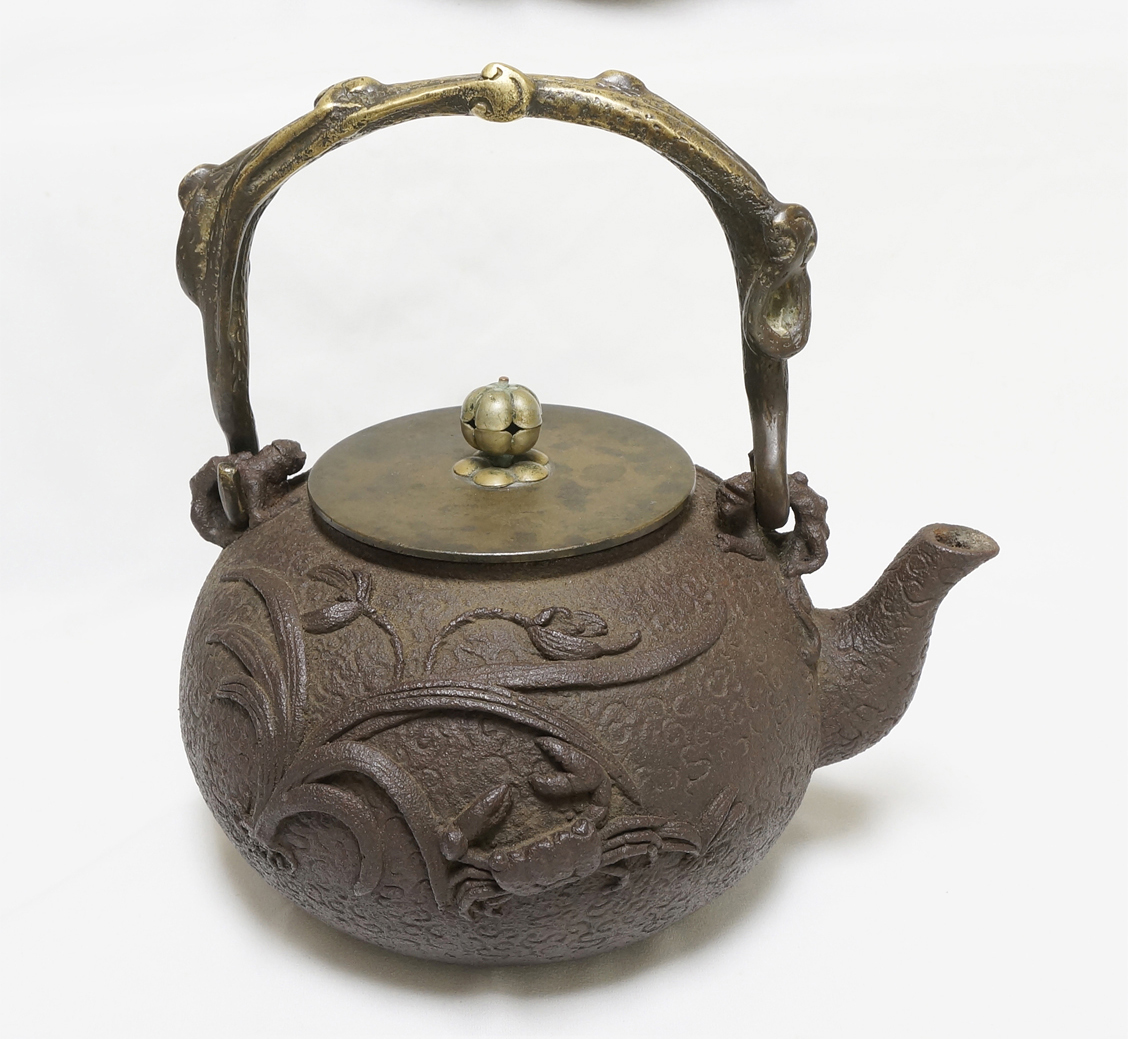
We were recently discussing a tsuba with both orchid and crab depicted together, and how unusual it is too see them paired together. Saw this on Aoi today, a kettle with yep you guessed it crab and orchid together.


-
- 2
-
-
Odd one for sure. At least now I don't feel so bad for having looked at it forever trying to figure it out before asking for help. Thanks to all.
-
Thanks Matt. Meaning ?
-
Hi all, Just checking back. I appreciate all the input. Now you guys have given me more to ponder, I was thinking the mei (left side) read Tomosuke. Yet, I can find no reference to a maker by that name, and tomonuno is extremely odd. I have seen the Ryūgyokusai 柳玉斎 , but as you stated, this is not the same. Piers, could you be a bit more specific and tell me how 柳玉亭 Reads? Thanks, Ed
-
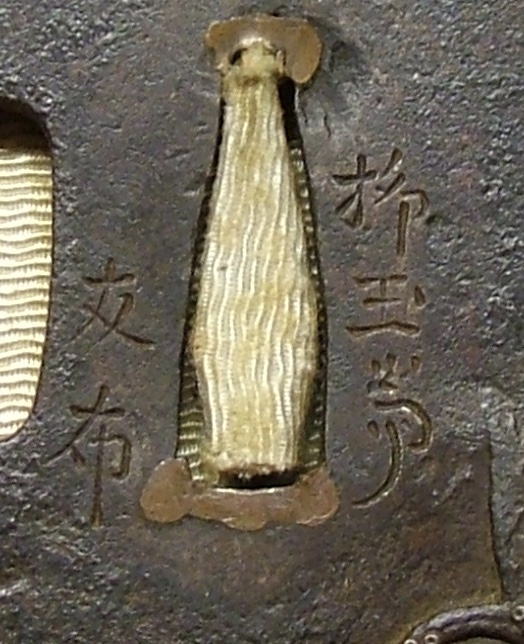
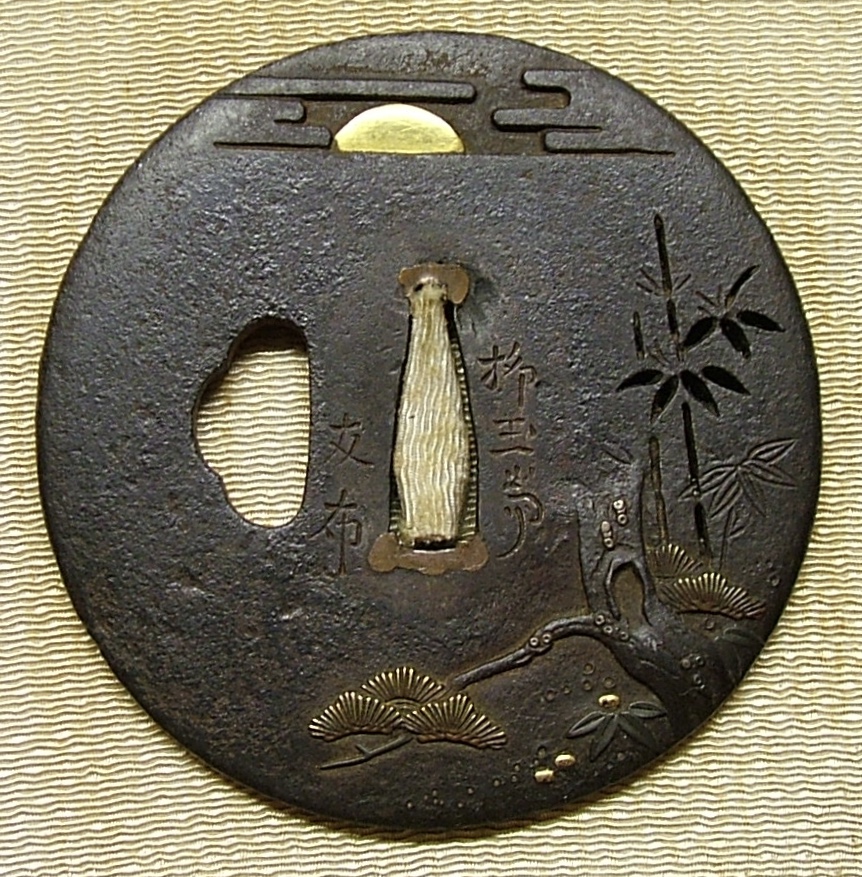
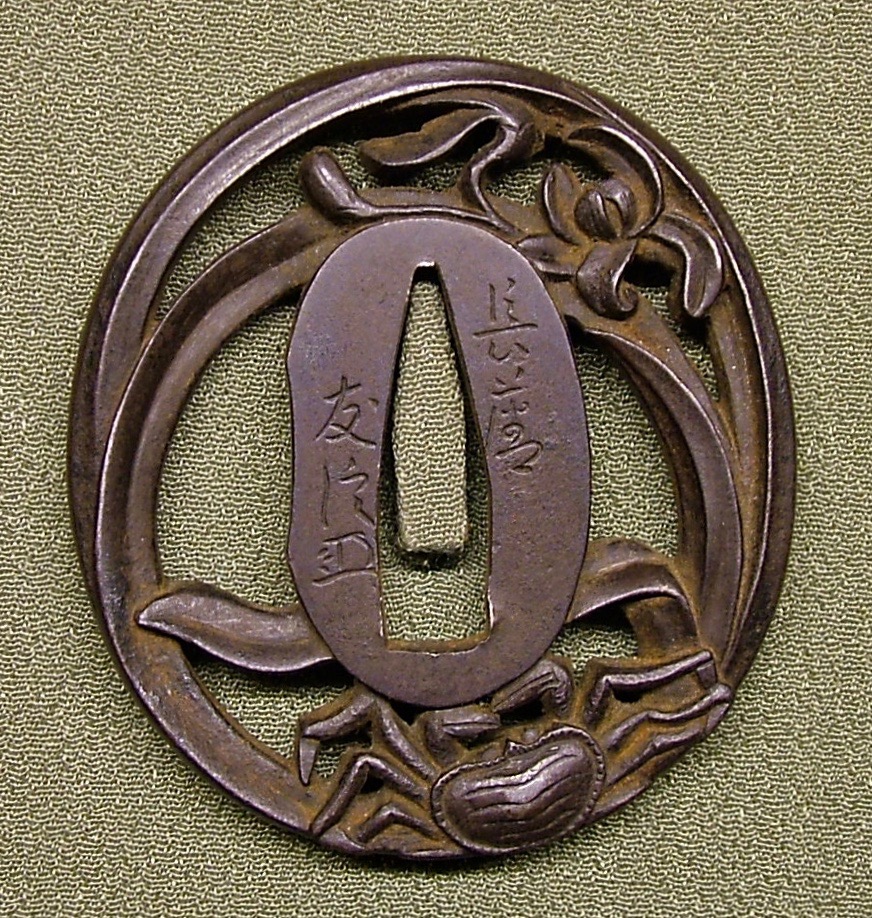
...with part of this mei, please. The three kanji on the right have me stumped. I saw a long ago post where the top kanji was "Yanagi" and read ryu (?), but the other two kanji are different so not sure on reading. Any help would be greatly appreciated. I have included the entire tsuba for those who may wish to have a look.


-
2nd that! Go Tirado.
-
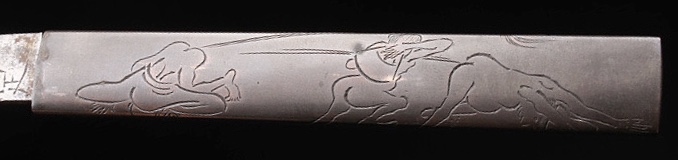
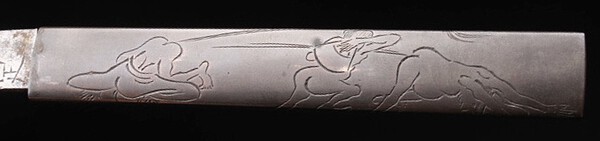
.....for those who like unusual. Not sure of the subject, not sure I want to know! Looks like er, water sports ????? https://page.auctions.yahoo.co.jp/jp/auction/g275029526
-
Piers, Nope, these came from Texas
-
Couple of new additions:
-
Baz, Nice and very similar, even signed "chohan" as mine is. I think yours , like mine depicts ran or orchid opposed to iris.
-
As far as the low estimates, pure marketing ploy. Bait, hoping to draw you in.
-
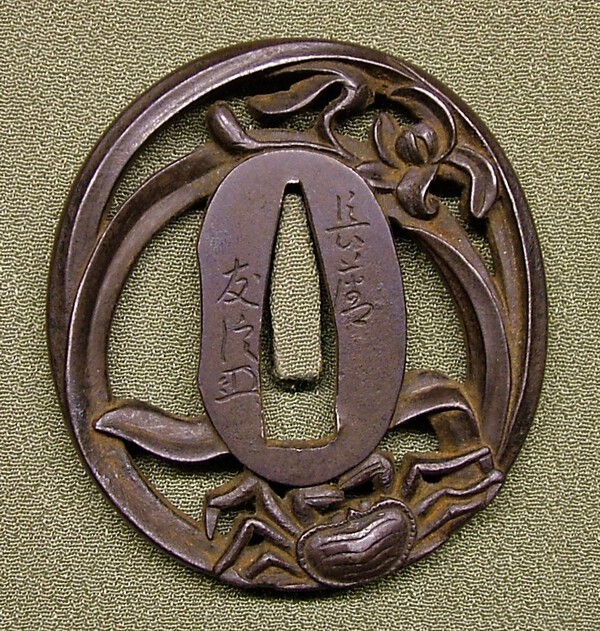
Morita Sama, Thank you very much for your translation assistance. You are "The Man" !!! Grev, thanks for your attempt, I was aware that was a kao, but should have stated that to avoid confusion. It was the "Han" and "Nobu" characters which were killing me. I don't know that I would have ever figured out those two. They had me doing the old I thought the tsuba had a Choshu feel, but couldn't pin point it. It is a nice little tsuba, unusual in that it depicts a crab with the orchid. Have seen many with either, but this is the first one I have seen with this pairing. Only downside is it has a little of the patination rubbed off on a few high spots. Nothing major, but still. Here is a photo if anyone is interested:

-
Nah, it ain't cast. It is hard to translate though .
-
...on this tsuba mei? It has me stumped. On the right side the first character looks like it could be the naga character 長, as seen in Choshu. The second, I have no idea, certainly not shu. After from the "Tomo" character I am leaning toward a variant of Yoshi 好 as seen on pg. 2011 of Haynes, H. 10179.0 - 1081.0. But that is just a wild guess. Thanks.

-
The last group of sorts (that I am aware of) was when Dr. Ford was still alive. We met north of Houston 4-5 times a year, but after he passed, so did the meetings. Prior to that there used to be a large club with shows and the works. When Mike moved to San Antonio, he held a couple of shows, but obviously it didn't work out. There is one NMB member who attempted to resurrect the Houston show some years back, but I think he determined it was not feasible. He may pop in here and give a better explanation (I think he did explain previously when Adam(?) was thinking of starting a show in Dallas).
-
Wish I had seen this prior to buying it.
-
The point is that it is shown with a branch, not a head.
-
A good example for the Kubikiri vs Hanagatana (Nata) debate.
-
My condolences as well. Very sad news.
-
Morita San, Very fitting for this kozuka. Thank you for the translation. Ed
-
John, anything is possible and I have no clue. Certainly not high quality work, but I would like determine the translation of the Kanji.
-
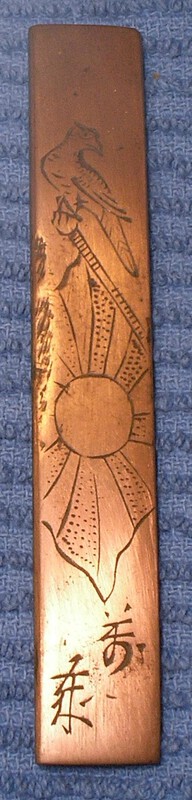
Was sent this photo of what appears to be a Military kozuka. Thought I would post it here for those of you military colectors who did not see it in the translation section. Don't know anything about it other than what you see. Guessing the kanji are a patriotic slogan, but if so, not one I am familiar with.